Berg Castle
Colmar-Berg Mersch Luxemburg
castle, chateau
Château de Berg
Colmar-Berg Mersch Luxemburg
castle, chateau
Schloss Berg
Colmar-Berg Mersch Luxemburg
castle, chateau
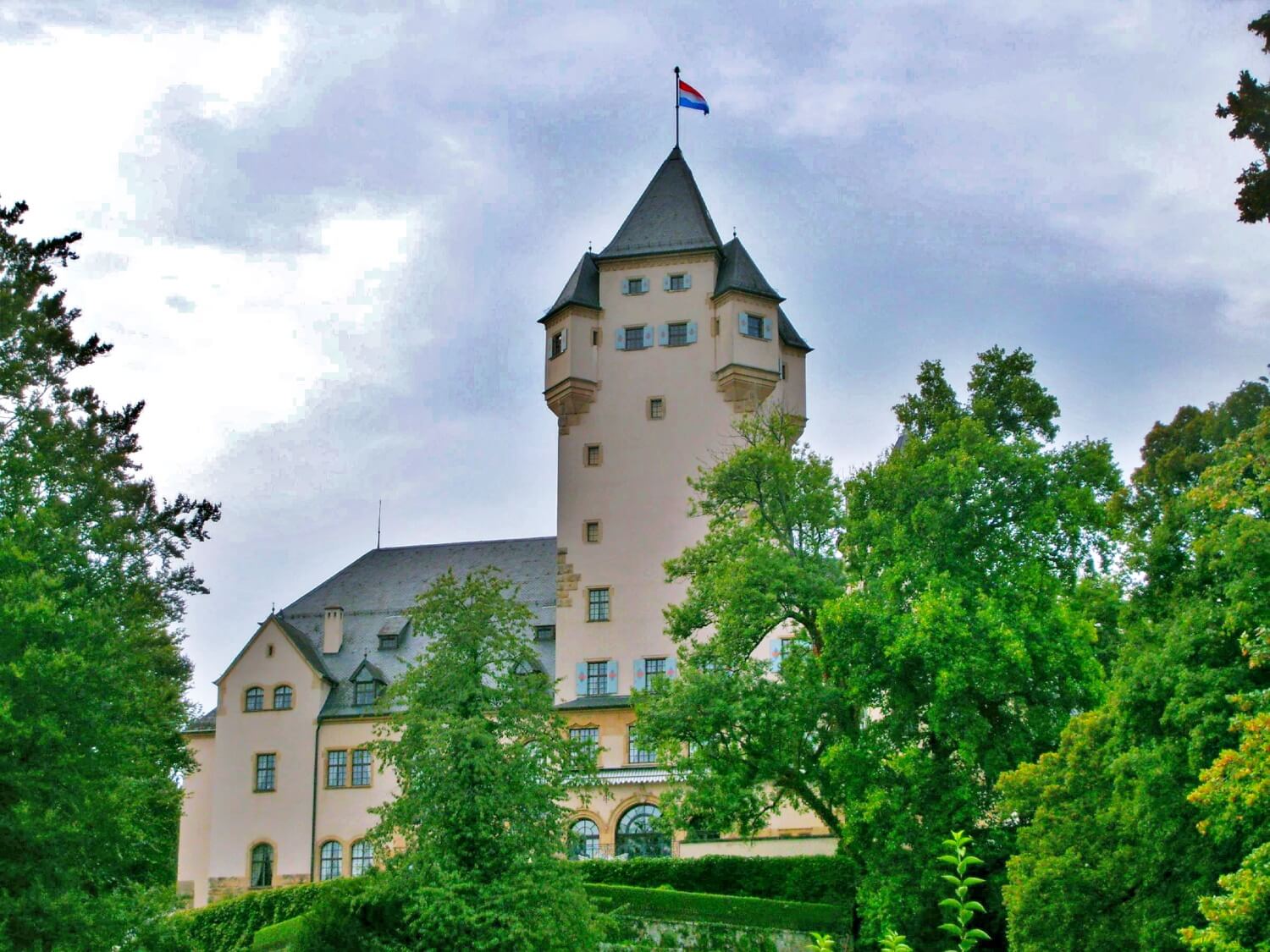
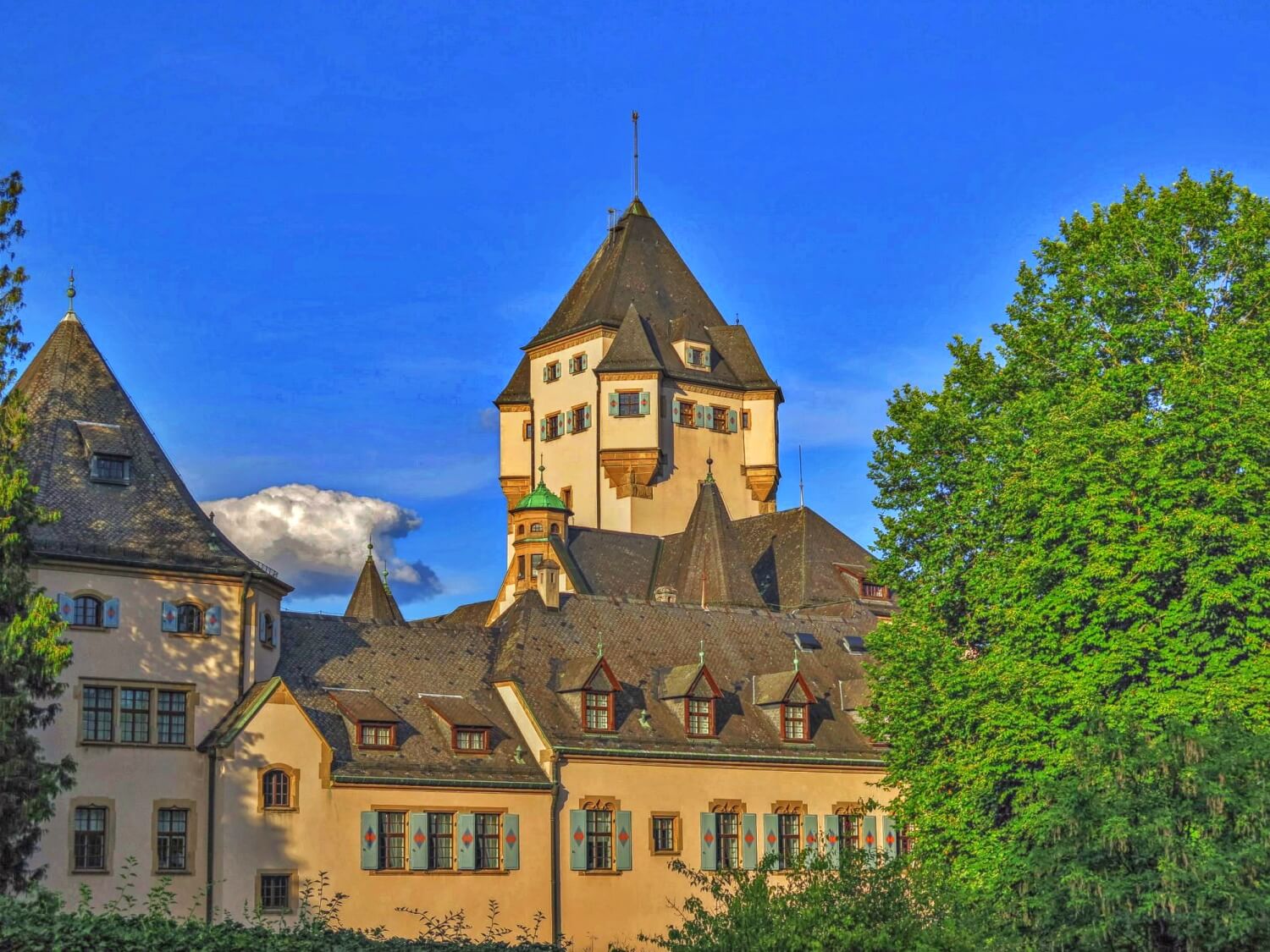
Berg Castle, also called Colmar-Berg, is the principal residence of the Grand Duke of Luxembourg
Le château de Colmar-Berg est la résidence principale de la famille grand-ducale du Luxembourg
Schloss Berg befindet sich in Colmar-Berg und ist die Hauptresidenz des Großherzogs von Luxemburg
Previous names
Berg Castle, Château de Berg, Schloss Berg
Description
Berg Castle, also called Colmar-Berg, is the principal residence of the Grand Duke of Luxembourg. It is situated in the town of Colmar-Berg, in central Luxembourg, near the confluence of the Alzette and the Attert, two of Luxembourg's most important rivers.
History
The estate at Colmar-Berg first came into the possession of the Grand Dukes of Luxembourg in 1845. The Belgian Revolution had divided Luxembourg from the Netherlands, and also into two, undermining Dutch control of the fortress of Luxembourg City. Grand Duke William II sought to establish a suitable Grand Ducal residence in Luxembourg, hoping that a division of his time between The Hague and Luxembourg would placate the local, overwhelmingly Roman Catholic, population. To this end, the Grand Duke bought Berg Castle from the Pasquier estate. In 1848, it was recognised as the exclusive home of the Grand Duke by the newly promulgated constitution.
In 1890, the Royal house of the Netherlands and the Grand Ducal house of Luxembourg diverged, and the new Grand Duke, Adolphe, purchased Berg Castle the following year, in order to maintain the Grand Ducal estate at Colmar-Berg. In 1906, William IV had the old castle demolished and a new one constructed in its place, designed by the Munich-based architect Max Ostenrieder and the local Pierre Funck-Eydt. Work on the new castle began in 1907, and was completed on the 9th of september 1911, after which it became the primary residence of the Grand Ducal family.
During the Great Depression, the Grand Ducal family fell upon hard times. Grand Duchess Charlotte sought an agreement with the government of Luxembourg under which the Grand Duchy might divest personal properties to the government, which would then allow the Grand Ducal family to use them as official residences. In 1934, such an arrangement was reached on Berg Castle, with the castle changing hands (along with much of the Grünewald forest). The two properties changed hands for 40m francs, of which 20m francs were denoted for the castle; this was viewed by the government as an undervaluation (as was the price of the Grünewald), as they had assessed the castle as being worth 22m francs. Berg is now one of two properties covered by similar agreements (the other being the Grand Ducal Palace in Luxembourg City). The right of Grand Dukes to reside at these two residences is enshrined in Article 44 of the Constitution of Luxembourg.
During the Second World War, the castle was occupied by Nazi Germany. During this period, the most valuable works of art were stolen from the castle, and the building itself underwent major alterations to suit the Nazis' purpose of re-educating local girls. After the war, the restoration of the castle took several years, and it was only re-occupied by the Grand Ducal family in 1964, when Grand Duke Jean acceded to the throne. Until then, the Grand Duchess resided in Fischbach Castle, although this was mostly out of preference, rather than necessity.
Births
Three of the past four monarchs of Luxembourg were born at Berg Castle:
Grand Duchess Marie-Adélaïde (born 1894; reigned 1912–19)
Grand Duchess Charlotte (born 1896; reigned 1919–64)
Grand Duke Jean (born 1921; reigned 1964–2000)
Princess Marie Gabriele of Luxembourg (born 1925)
The current Grand Duke, Henri, was born at Betzdorf Castle, in eastern Luxembourg.
Le château de Colmar-Berg est la résidence principale de la famille grand-ducale du Luxembourg. Il est situé dans la localité de Colmar-Berg, dans le centre du Luxembourg, près du confluent des rivières Alzette et Attert.
Histoire
La propriété des bois du château de Berg fut acquise par la famille royale néerlandaise en 1845. Le roi Guillaume II des Pays-Bas, à cette époque grand-duc de Luxembourg, acheta le château et la propriété adjacente dans le but de se doter d'une résidence officielle sur le territoire luxembourgeois. La propriété fut achetée à la famille Pasquier et en 1848 reconnue comme la résidence officielle du grand-duc de Luxembourg au Grand-Duché.
Avec l'indépendance du Luxembourg du royaume des Pays-Bas en 1890, le château de Berg devint propriété de la reine Wilhelmine des Pays-Bas, qui le vendit à son cousin le grand-duc Adolphe de Luxembourg en 1891. En 1906, le grand-duc Guillaume IV de Luxembourg démolit l'ancien château dans le but d'en construire un plus moderne dessiné par les architectes allemands et luxembourgeois Max Ostenrieder et Pierre Funck. Les travaux commencèrent en 1907 pour finir le 9 septembre 1911.
Le krach de 1929 eut pour conséquence de grandes difficultés économiques pour la famille grand-ducale. La grande-duchesse Charlotte de Luxembourg céda au gouvernement le château de Berg et le palais grand-ducal du Luxembourg afin de maintenir l'argent public au palais. La famille grand-ducale les a utilisés comme appartements de fonction comme le reconnaît l'article 44 de la Constitution luxembourgeoise.
Durant la Seconde Guerre mondiale, le château fut occupé par les troupes allemandes, période durant laquelle le château subit de graves dommages parmi ses œuvres d'art les plus importantes. Pour sa part, le palais (dans la ville de Luxembourg), durant la période 1940 ‑ 1944, fut utilisé comme centre d'éducation pour étudiantes luxembourgeoises. La plus haute autorité politique nazie, à la suite de l'annexion du Luxembourg au Troisième Reich, préféra ne s'établir ni au château de Colmar-Berg, ni au palais grand-ducal, mais au siège de l'Arbed (actuel siège social d'Arcelor Mittal). De retour au grand-duché à la fin de la guerre, la grande-duchesse Charlotte n'habite plus à Colmar-Berg et s'installe au château de Fischbach jusqu'à son décès en 1985.
Après la guerre, le château fut soumis à un important processus de restauration qui se termina en 1964, pour l'accession au trône du grand-duc Jean de Luxembourg, qui s'y installe. Depuis 1964, le château est la résidence du souverain en exercice. Après l'abdication de 2000, le grand-duc Jean quitte le château de Colmar-Berg et s'installe au château de Fischbach, laissant Colmar-Berg au nouveau grand-duc Henri.
Schloss Berg befindet sich in Colmar-Berg und ist die Hauptresidenz des Großherzogs von Luxemburg.
Geschichte
Durch die Belgische Revolution, an der sich Luxemburg beteiligte, wurde das Land von den Niederlanden getrennt, verblieb jedoch in Personalunion mit dem niederländischen Königshaus. Durch die Trennung verringerte sich auch der Einfluss des Königs auf die Festung Luxemburg. In der Hoffnung, dass die Trennung die größtenteils katholische luxemburgische Bevölkerung beschwichtigen würde, machte sich König Wilhelm II. auf die Suche nach einer passenden Residenz in Luxemburg und erwarb das Grundstück in Colmar-Berg 1845 von den Pasquier. Durch die neue Verfassung von 1848 wurde das Schloss als exklusive Residenz des Großherzogs bestätigt.
1890 starb Wilhelm III., der keine männlichen Nachfolger hinterließ. Wegen der in Luxemburg geltenden Lex Salica löste sich die Verbindung mit dem niederländischen Königshaus, und die Großherzogswürde ging auf eine andere Linie des Hauses Nassau über: Es folgte ihm der ehemalige nassauische Herzog Adolf I. 1906 ließ sein Nachfolger Großherzog Wilhelm IV. das alte Schloss abreißen und ein neues an gleicher Stelle errichten. Die Arbeiten an dem vom Münchener Architekten Max Ostenrieder und dem Luxemburger Pierre Funck-Eydt entworfenen Schloss begannen 1907 und wurden am 9. September 1911 abgeschlossen. Als Vorbild für den Turm diente der ebenfalls von Max Ostenrieder entworfene Turm (1901) von Schloss Kospoda in Thüringen. Seitdem ist Schloss Berg Hauptresidenz der großherzoglichen Familie.
Während der Weltwirtschaftskrise geriet auch die großherzogliche Familie in finanzielle Nöte. Großherzogin Charlotte suchte nach einer Vereinbarung mit der Luxemburger Regierung, wonach man private Besitztümer an den Staat veräußern könne und dieser dann wiederum der großherzoglichen Familie zur Verfügung stelle. 1934 wurde dieses Abkommen für Schloss Berg sowie Teile des Grünewalds beschlossen. Ein ähnlicher Handel gilt für das Großherzogliche Palais in Luxemburg-Stadt. Das Recht, diese Gebäude zu nutzen, wurde in Artikel 44 der luxemburgischen Verfassung festgehalten.
Während des Zweiten Weltkriegs wurde das Schloss von den Besatzern beschlagnahmt. 1941 wurde dort eine Nationalpolitische Erziehungsanstalt für Mädchen eingerichtet. Diese bestand bis August 1944 unter der Bezeichnung Nationalpolitische Erziehungsanstalt Kolmar-Berg und wurde hauptsächlich von deutschen Schülerinnen besucht.
In dieser Zeit wurden auch die wertvollsten Kunstwerke aus dem Schloss entwendet. Die Wiederherstellungs- und Renovierungsarbeiten nach dem Krieg beanspruchten mehrere Jahre, und das Schloss wurde erst nach der Thronübernahme durch Großherzog Jean im Jahr 1964 wieder genutzt. Bis dahin lebte die großherzogliche Familie in Schloss Fischbach, das seine Mutter, Großherzogin Charlotte, bevorzugte.
Geburten
Drei der vier folgenden Herrscher Luxemburgs wurden auf Schloss Berg geboren:
Großherzogin Marie-Adelheid (1894–1924; regierte 1912–1919)
Großherzogin Charlotte (1896–1985; regierte 1919–1964)
Großherzog Jean (1921–2019; regierte 1964–2000)
Großherzog Henri wurde auf Schloss Betzdorf (Betzdorf), im Osten Luxemburgs, geboren.
Sonstiges
2008 brachte Luxemburg eine 2-Euro-Gedenkmünze heraus, auf deren Rückseite Schloss Berg und Großherzog Henri abgebildet sind.
Useful information
Free
14.00 EUR
0 - 4 years: free
4 - 12 years: 7.00 EUR
- Lift
- WC
touristinfo@lcto.lu
-
-
External links
Nearby castles
Birtrange Castle
Colmar-Berg
1.3km
castle, chateau
Pettingen Castle
Mersch
5.1km
castle, chateau
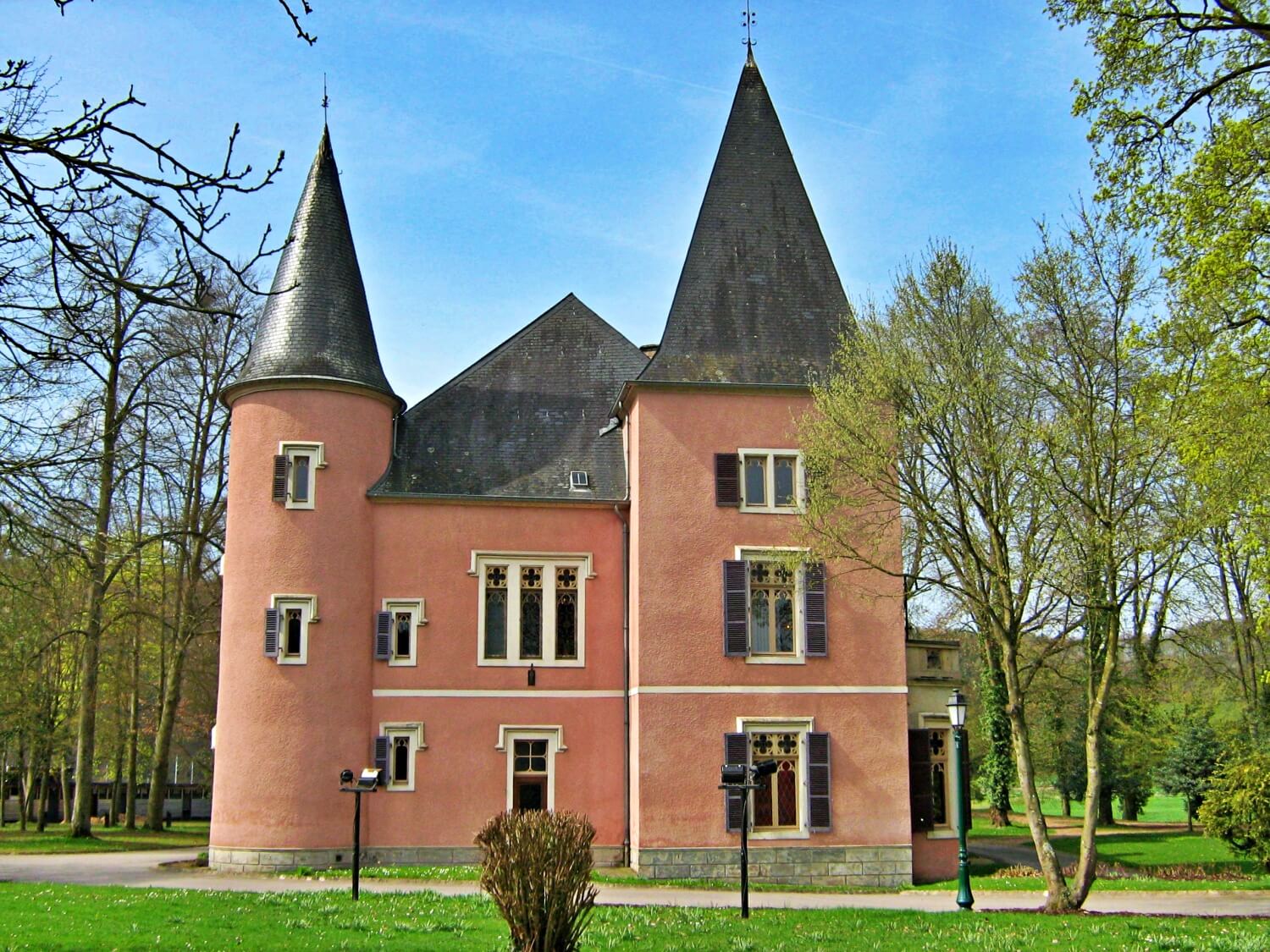
Erpeldange Castle
Erpeldange-sur-Sûre
5.3km
castle, chateau
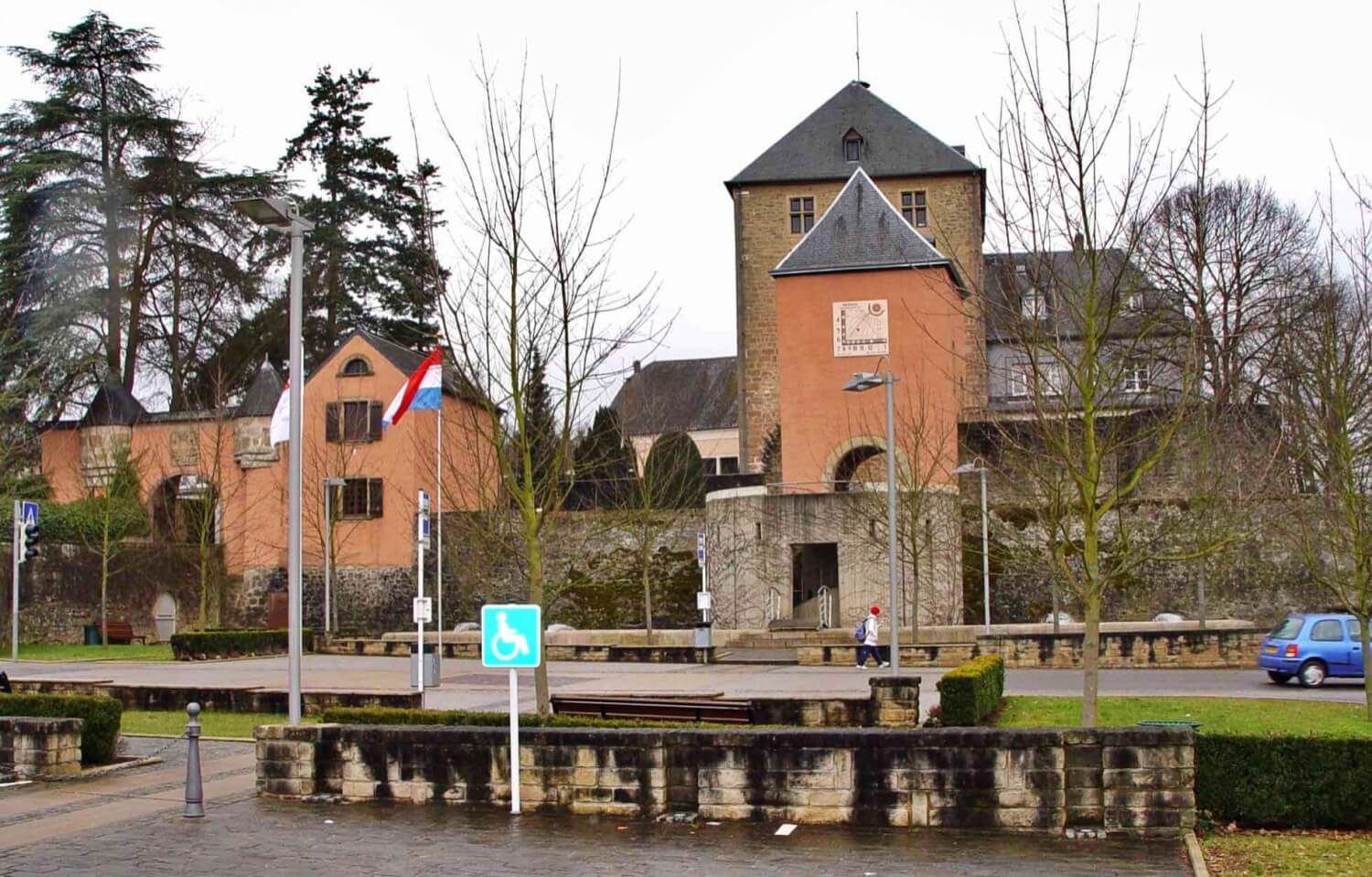
Mersch Castle
Mersch
7.5km
castle, chateau
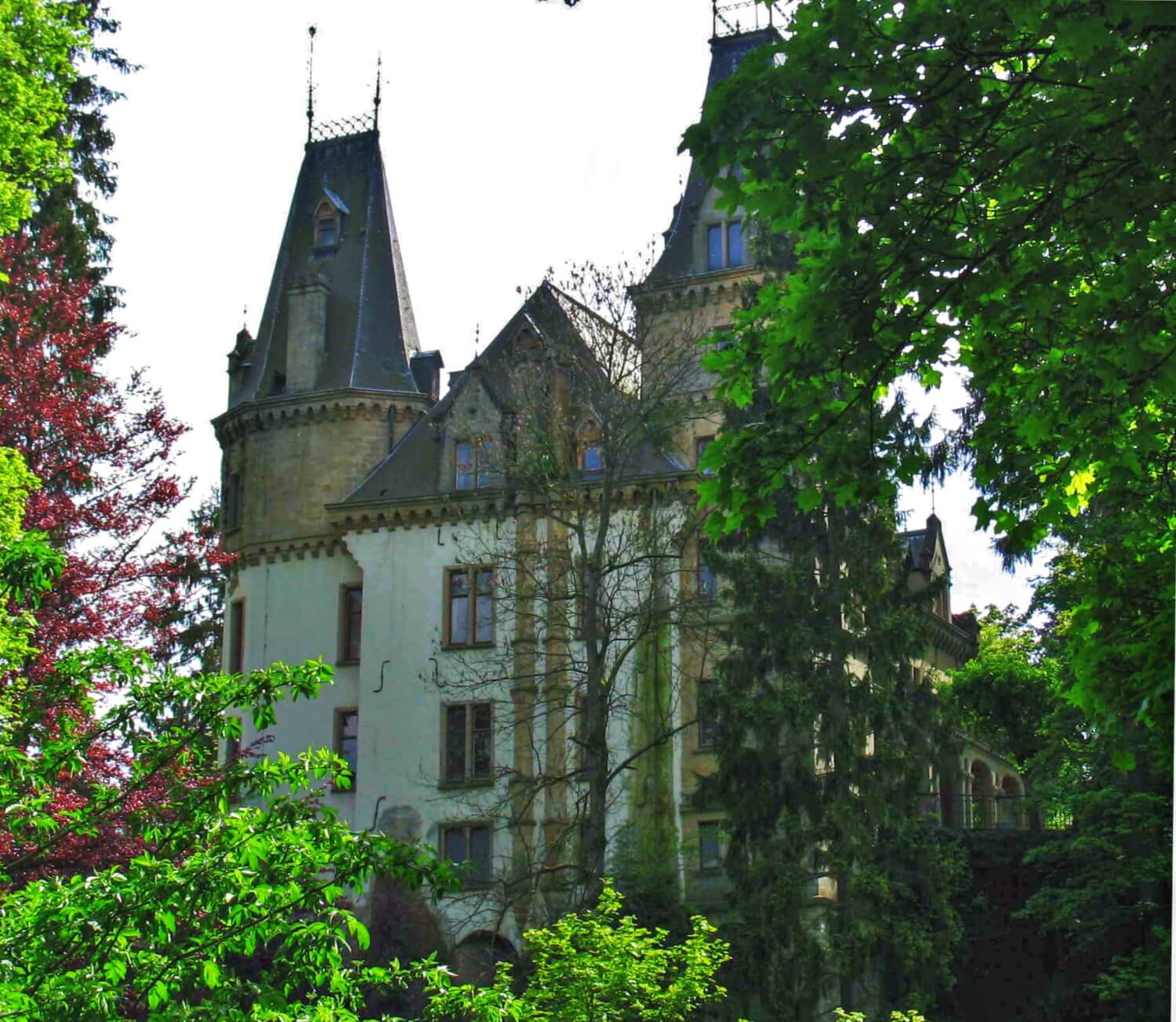
Meysembourg Castle
Larochette
8.8km
castle, chateau
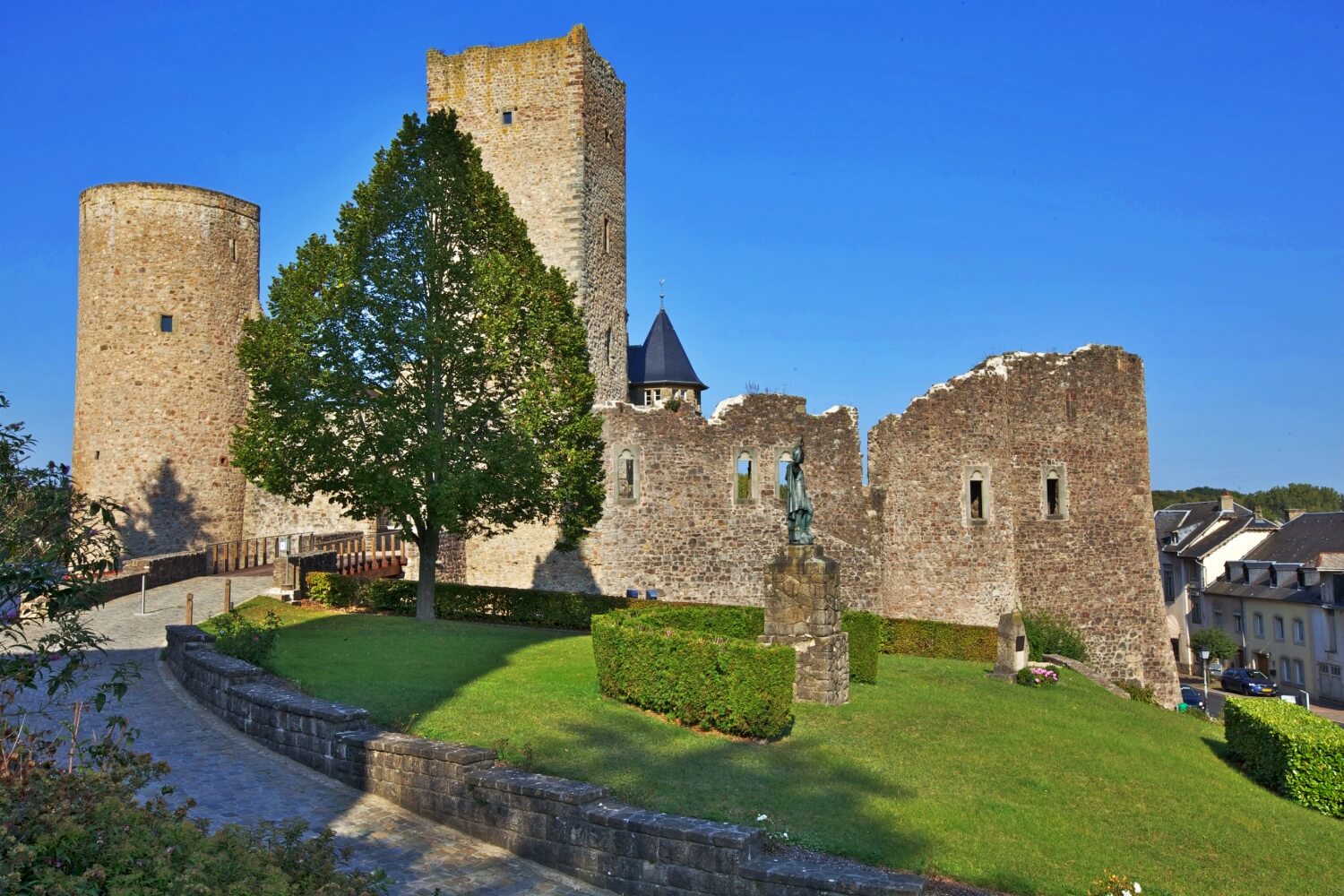
Useldange Castle
Useldange
9.3km
castle, chateau
Larochette Castle
Larochette
9.8km
castle, chateau