Rocca Manfrediana
Provincia di Ravenna Emilia-Romagna Italy
castle, chateau
Rocca Manfrediana
Provincia di Ravenna Emilia-Romagna Italy
castle, chateau
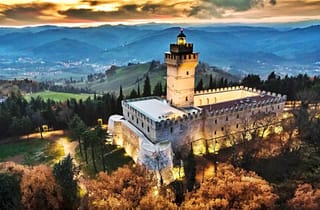
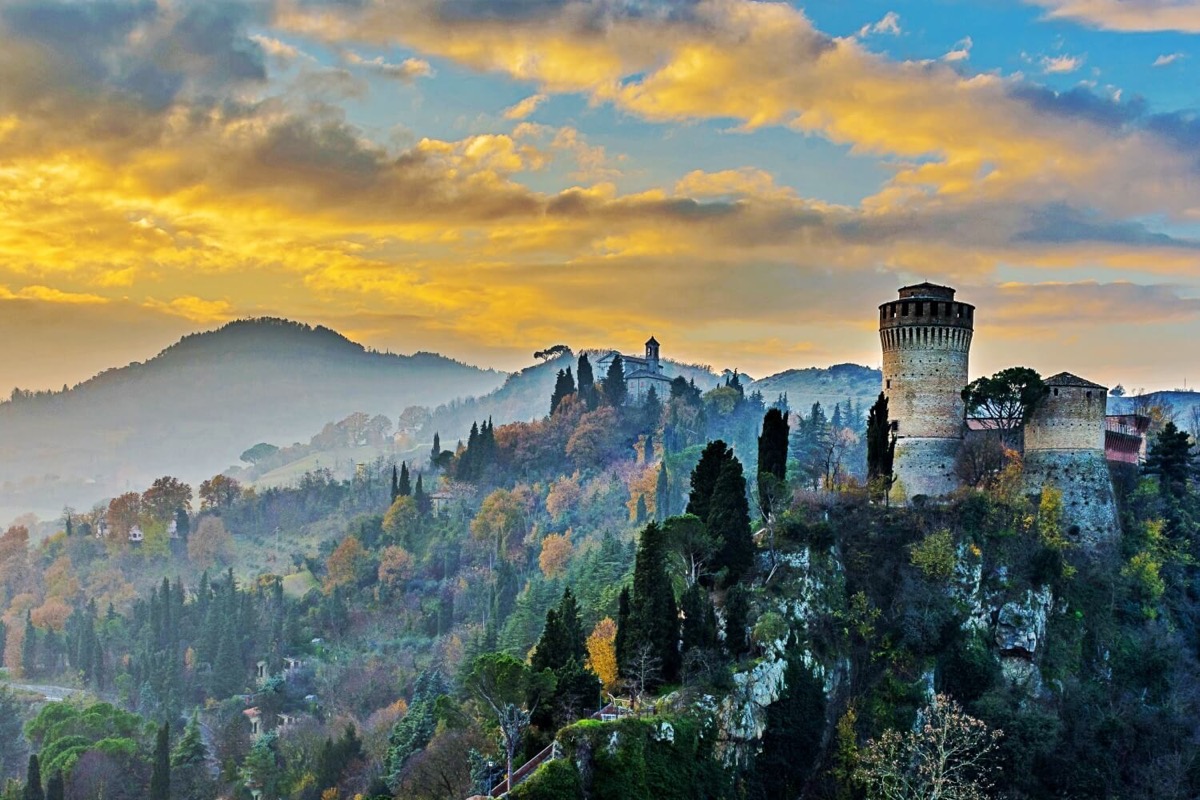
It stands on one of the three chalky pinnacles that overlooks the village
La Rocca Manfrediana e Veneziana di Brisighella, conosciuta anche come Rocca Manfrediana o Rocca dei Veneziani, oppure più semplicemente Rocca di Brisighella, è una fortificazione situata sul secondo dei tre pinnacoli rocciosi di selenite a Brisighella, in provincia di Ravenna
Previous names
Rocca Manfrediana, Rocca Manfrediana
Description
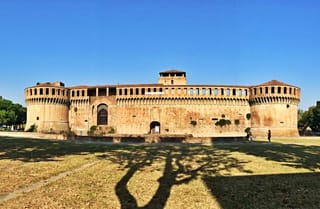
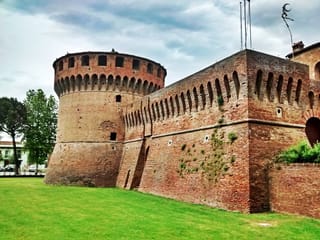
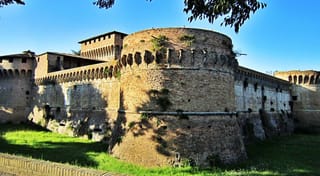
It stands on one of the three chalky pinnacles that overlooks the village. The complex of this fortress consists of the “Torrione Veneziano” (16th century) and the ancient “Torricino”, which dates back to 1300, built at the behest of the Manfredi family of Faenza. Today, it has been brought back to new splendor through continuous and qualified restorations. It is a valuable example of medieval military art.
Since May 2016, it has housed the Museo dell’Uomo e del Gesso (Museum of Man and Gypsum), a museum itinerary that crosses the long history of man’s relationship with this territory and with the mineral that characterizes it.
The stairway to access the Torre Manfrediana della Rocca is a walk into history that, starting from the first visitors to the caves of the Vena del Gesso in the Protostoric age for funerary and sacred rites, goes through the Roman age – with the development of the extraction of precious lapis specularis, the glass of stone – to get to the Middle Ages and the Renaissance, with the phenomenon of the embankment that sees the chalky ridges the key element in the construction of fortresses and castles.
The upper room of the Torre Manfrediana displays the archaeological findings from the Vena del Gesso with artifacts from the Grotta dei Banditi from the pre/protohistoric age; the materials of the Roman house of Carnè, from the quarry of Lucerne, the first quarry of lapis specularis identified in Italy, for the Roman age and the materials found in the castle of Rontana from the Middle Ages. In addition, a video set up in the hall shows, through an interesting film reconstruction what the extraction of the Lapis Specularis consisted of. It is aided by the dim light of the lamp.
The Venetian Tower (on the left) is entirely dedicated to the Middle Ages and the Renaissance. It explains the use of the premises visited in the exhibition. To this end, educational panels dedicated to the history of the Rocca and to the function of individual environments have been positioned in the outdoor and interior spaces. The path that winds through the Venetian tower culminates in the upper area, open to the surrounding landscape, where the talking stones explain the fortresses and castles of the territory, in many cases through visual contact with the Rocca itself. Finally, at the end of the inner courtyard, one can visit the gunboat and deepen their knowledge of the defensive functions of the fortified works.
http://www.imolafaenza.it
La Rocca Manfrediana e Veneziana di Brisighella, conosciuta anche come Rocca Manfrediana o Rocca dei Veneziani, oppure più semplicemente Rocca di Brisighella, è una fortificazione situata sul secondo dei tre pinnacoli rocciosi di selenite a Brisighella, in provincia di Ravenna.
Panorama con la Rocca Manfrediana sullo sfondo.
La Rocca, datata 1310 e caratterizzata da torri cilindriche (di cui la più alta è del 1503), fu costruita dai veneziani, nel breve periodo del loro dominio sulla Romagna (1503-1509).
L'edificazione dell'attuale rocca venne iniziata da Francesco Manfredi, signore di Faenza, all'inizio del XIV secolo. Salvo un breve periodo dal 1368 al 1376, la fortificazione rimase nel dominio della famiglia Manfredi (che la ampliampiarono: in particolare, Gian Galeazzo nel 1394 e Astorgio II nel 1457 e 1466) fino all'anno 1500, passando in seguito a Cesare Borgia per tre anni.
Dal 1503 al 1509 appartenne alla Repubblica di Venezia, che realizzò il grandioso mastio in aggiunta al preesistente torricino, e le mura sui due lati.
In seguito, il territorio entrò a far parte dello Stato Pontificio e, verso la fine del XVI secolo, la sommità dei due torrioni venne ricoperta da un tetto. Dopo un breve parentesi napoleonica, la rocca ritornò al Papa, fino al 1860 quando la romagna entrò a far parte del Regno d'Italia.
All'inizio del XXI secolo, il castello è stato completamente restaurato, rinforzando le strutture murarie e valorizzando il complesso architettonico, anche con una speciale illuminazione. All'interno della struttura è stato allestito un percorso espositivo che racconta il rapporto tra l'Uomo e il gesso, materiale di cui è composto il pinnacolo su cui poggia la rocca e che ha da sempre caratterizzato l'economia del borgo
Useful information
GRATUITO
3.00 EUR
0 - 6 anni: gratuito
- Un percorso espositivo
- Un percorso multimediale interattivo
- Ingresso al museo civico
iat.brisighella@racine.ra.it
Aperto sono in alcuni giorni
-
External links
Nearby castles