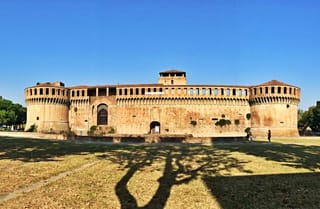
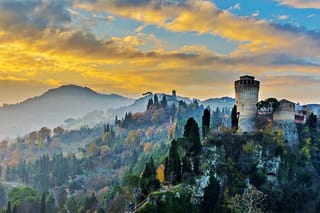
Rocca di Bagnara
Provincia di Ravenna Emilia-Romagna Italy
castle, chateau
Rocca di Bagnara
Provincia di Ravenna Emilia-Romagna Italy
castle, chateau
agnara defensive system, planned by Barnabò Visconti in the XIV century, consisted in a moat surrounding the boundary wall of the the fortress
La rocca di Bagnara è una fortezza di età medievale sita a Bagnara di Romagna (RA)
Previous names
Rocca di Bagnara, Rocca di Bagnara
Description
agnara defensive system, planned by Barnabò Visconti in the XIV century, consisted in a moat surrounding the boundary wall of the the fortress.
It is the only still complete example of medieval “castrum” in Emilia Romagna.
The present castle was built in XV century on the ruins of the former one; the reconstruction took several decades and was probably wished by the Landlords who succeeded along the years: Imola Bishop, Manfredi family, Colleoni family, Girolamo Riario and Caterina Sforza.
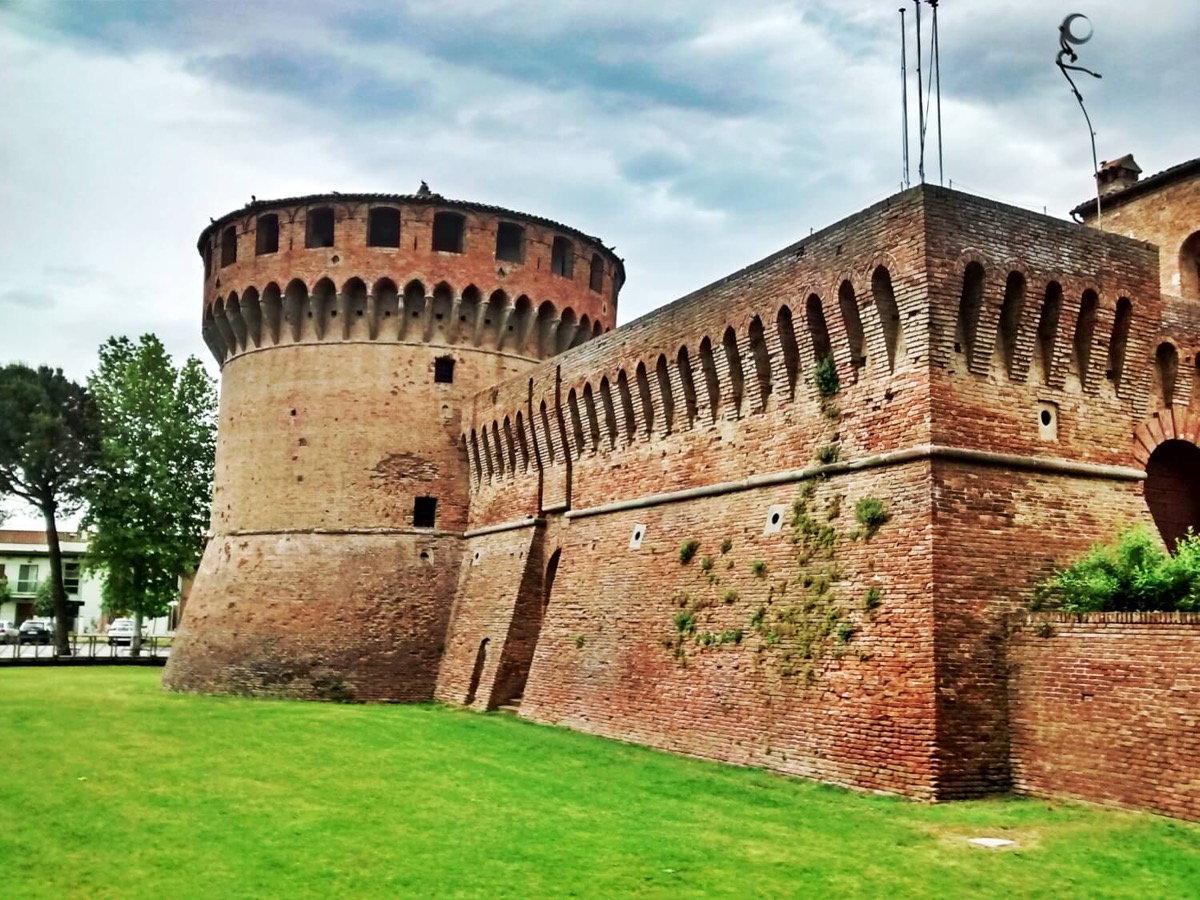
The last added pieces are the west positioned keep, dating back to 1479 and the elegant porch commissioned by Caterina Sforza.
After the ephemeral occupation by Cesare Borgia, known as “il Valentino”, towards 1500, the town lived some troubled decades, till it returned part of the Papal States. Its condition was however particular: as a matter of fact, it was a domain of Imola bishop, who had full powers on it. The fortress became thus the residence of bishop’s officer and underwent some alterations aiming to trasform it into a residential building (towers were roofed and so on).
In the XVII century the drawbridge connecting the fortress to the town was suppressed. Only hooks and the chute were left.
After Unity of Italy, it was confiscated, auctioned and bought by the Town Council. After it became a school, a recreation meeting point, a war shelter and again a school.
In the keep visitors can admire the top, the pillbox and the underpassages; while the other tower, east positioned, which can be considered a little jewel. Worth of mention, beside the guns and the former defensive systems are also the elegant porch wished by Caterina, the recently restored yard and the cerimony hall. Here eight precious pictures are exhibited. They are part of the legacy of a Lord from Bologna and date back to the XVII and XVIII century.
bassaromagnamia.it
La rocca di Bagnara è una fortezza di età medievale sita a Bagnara di Romagna (RA).
Storia e descrizione
La rocca fu eretta nel XV secolo ad opera dei signori di Imola, i Riario-Sforza, sulle rovine del castrum medievale edificato nel 1354 da Barnabò Visconti e andato distrutto nel 1428 nella battaglia contro Angiolo della Pergola. Girolamo Riario, signore di Imola dal 1482 al 1488, avviò il rifacimento della rocca, conferendole l'aspetto che vediamo ancora oggi. Dopo la sua prematura scomparsa, la vedova Caterina Sforza fece completare la costruzione della fortezza: il maschio e il loggiato sono databili a questo periodo.
Il maschio è considerato da molti studiosi "una delle migliori opere d'arte fortificatoria del XV secolo in Italia". È suddiviso in tre ordini di casematte, costituite da camere circolari molto ampie, coperte con volte semisferiche laterizie, tuttora ben conservate. Oltre al maschio, elementi di notevole interesse sono il cortile centrale, conservato ancora oggi nell'aspetto rinascimentale, alcuni ambienti interni con i soffitti lignei originali, i supporti in ferro del ponte levatoio posto a mezzogiorno, i loggiati sulle cortine dei lati Est e Nord, il pozzo di riserva d'acqua e la scala a chiocciola formata da 78 monoliti in arenaria sovrapposti. Tutti elementi caratteristici del “bello stile cinquecentesco”.
A partire dal Settecento si procedette alla riconversione del complesso edilizio dall'uso militare all'uso civile. Nel 1732 le fosse furono prosciugate e bonificate. La rocca divenne residenza del commissario del vescovo; in alcuni periodi i suoi locali furono anche destinati a carcere.
Con la fine del dominio pontificio la rocca passò al Regno d'Italia. Successivamente, lo Stato la mise in vendita: il Comune se l'aggiudicò per il prezzo di 2.570 lire, più 500 lire per le fosse (in tutto, circa 15.000 euro del 2002). Dopo l'acquisto, il Comune vi stabilì la sede delle scuole elementari, che vi restarono fino al 1926, quando furono trasferite nella sede attuale. Nel 1962 la rocca divenne la residenza municipale. Nel 2008 il Comune è tornato nella sua sede storica in piazza G. Marconi, la piazza centrale del paese. All'interno della rocca è stato allestito il Museo della città.
Useful information
GRATUITO
4.00 EUR
oltre i 60 anni: 3.00 EUR
4 - 14 anni: 3.00 EUR
0 - 3 anni: gratuito
15 - 30 persone: 3.50 EUR
Famiglia: 8.00 EUR
Mostre e festival
museodelcastello@comune.bagnaradiromagna.ra.it
- Ospita il Museo della città
- Visita guidata: 4.00 EUR
-
Nearby castles