Castello Tramontano
Valle d'Aosta Valle d'Aosta Italy
castle, chateau
Castello di Tour de Villa
Valle d'Aosta Valle d'Aosta Italy
castle, chateau
Castello Tramontano is a 16th century fortification in Matera
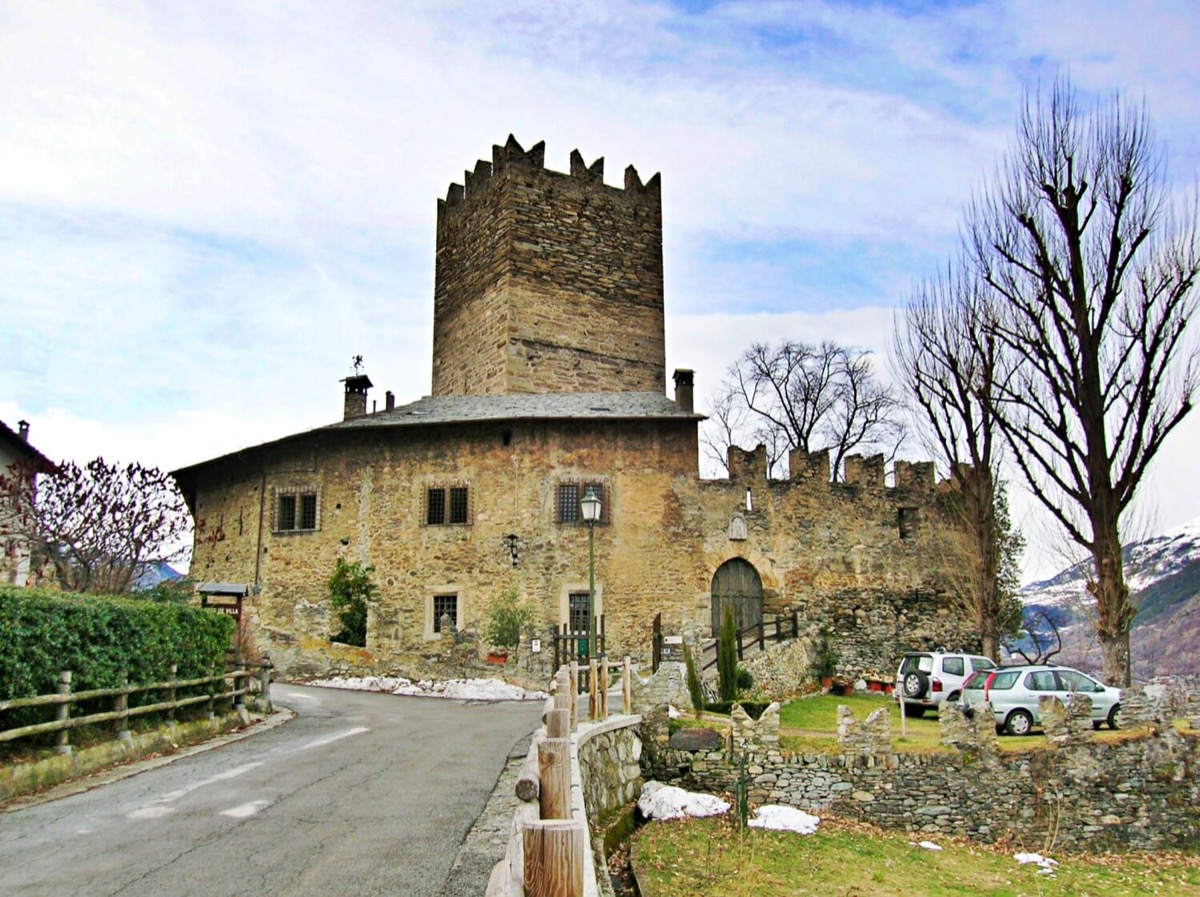
Il castello di Tour de Villa (in francese tour de Ville), a lungo detto anche torre dei Poveri (in francese tour des Pauvres) è un castello privato del comune di Gressan, in Valle d'Aosta
Previous names
Castello Tramontano, Castello di Tour de Villa
Description
Castello Tramontano is a 16th century fortification in Matera.
History
The castle is situated on a hill, called the lapel hill, above the historical centre of Matera.
In Aragonese style, the castle, with a central male and two lower side towers, one and the other round, scalloped and equipped with loops, was built from 1501 by Giovanni Carlo Tramontano, Count of Matera. The new king of Naples, Ferdinand II, had promised the Materrani not to give the city to any more feudal lords, after that this had already freed itself several times from the feudal yoke paying various ransoms in order to remain free city to autonomous regiment, that is directly dependent on the Crown. Instead the Count sets, which boasted claims against the royal treasury, asked and obtained the Matera County in 1496.
The Count soon became enfeebled to the materani because with the passage of time he was replenished with debts, in order to cope with which he taxed the population with heavy taxes. Thus began the construction of the castle, which was situated on a hill dominating the city, outside the city walls, with the purpose of "feudal" control of the surrounding lands rather than defense of the city itself.
It seems that then the construction should have included other defensive towers, one of which was found under the central Piazza Vittorio Veneto in Matera together with other underground environments. For the construction of the castle 25,000 ducats were spent and this weighed even more on the population.
It was thus that some citizens, tired of the continuous abuses, gathered hidden behind a rock, which since then was called "u pizzon' du mal consigghj", that is "the stone of bad council", and organized the assassination of the "tyrant" set. On December 29, 1514, the count, who had just left the Cathedral, was assassinated in a side street of the same, which was later eloquently called "Way of ransom".
The castle thus remained unfinished. Since 2008, he has been interested, together with the surrounding park, in restoration works still in progress. Some of these interventions are aimed at the recovery of the moat with the restoration of the tufa walls. The project is financed also thanks to the funds of the Game of the Lotto.
Il castello di Tour de Villa (in francese tour de Ville), a lungo detto anche torre dei Poveri (in francese tour des Pauvres) è un castello privato del comune di Gressan, in Valle d'Aosta.
Sorge su di una modesta roccia granitica sul dolce declivio che ospita anche il borgo, ad ovest della Côte de Gargantua, la morena laterale del ghiacciaio della conca di Pila alla fine dell'impluvio del torrente Gressan.
È un castello di epoca medievale poco noto, anche perché rispetto ad altri castelli valdostani, come il castello di Fénis o quello di Issogne gestiti dalla Regione, questo è meno imponente seppure sia in ottimo stato di conservazione, ed è stato fino al 2011 abitato dai proprietari e non visitabile. Già visibile dalla strada regionale di Gressan (SR 20), immerso tra i meleti e i vigneti che caratterizzano il fertile territorio comunale, lo si raggiunge prendendo la strada per la frazione omonima; da esso sono facilmente raggiungibili con una breve passeggiata la torre de la Plantaz verso valle e la chiesa della Madelaine, dalla facciata affrescata nel 1453, verso est.
Il castello, in origine costituito della sola torre a base quadrata del XII secolo, venne eretto con blocchi di tufo e conci granitico-scistosi. L'assenza di finestre, a creare una conseguente assenza di luce, era sopperita dall'adozione di feritoie; la porta originaria, rialzata sul lato nord, a cui si accedeva tramite una doppia scala mobile di legno, si trova a 7 metri di altezza rispetto a quella odierna fatta aggiungere da monsignor Duc e presenta lo stesso stile di quella presente nella vicina torre de la Plantaz; sopra la porta si notano ancora le originarie mensole che reggevano il dormiente, ossia la trave orizzontale di legno per la ripartizione del carico della struttura, a cui si appoggiava una bertesca di legno, come si intuisce dai fori nel muro per i supporti. La torre termina quindi con un tetto di piombo a piattaforma, una sorta di belvedere sulla piana.
La torre era circondata da una «breve cinta di mura merlate».
Il castello-torre, una volta caduta la stringente necessità difensiva, fu quindi ampliato con un corpo di fabbrica semicircolare nel XV secolo, adibito a zona residenziale di tre piani e oggi si presenta in due corpi ben distinti l'uno dall'altro: quello del XII e quello del XV secolo.
Il castello della tour de Villa si ridusse a lungo a rudere. Durante l'abbandono si perse la parte nord-occidentale, oggi sostituita da un cortile. Durante un restauro fu rialzato e adornato di una nuova merlatura. In seguito, monsignor Duc, vescovo di Aosta, volle trasformarlo in residenza estiva operando pesanti intervent: fece abbattere parte della cinta muraria per sostituirla con un parapetto merlato e fece aggiungere una porta a livello della strada, mentre conservò due finestre binate, di stile valdostano e fornite di inferriate, al primo piano del corpo di fabbrica che si addossa alla torre.
Useful information
GRATUITO
- Il giardino
- La cappella
info@tourdevilla.it
- Proprietà privata (un hotel)
- Utilizzato per eventi
-
External links
Nearby castles
Sarre Royal Castle
Valle d'Aosta
2.4km
castle, chateau
Aymavilles Castle
Valle d'Aosta
3.7km
castle, chateau
Saint-Pierre Castle
Valle d'Aosta
4.5km
castle, chateau
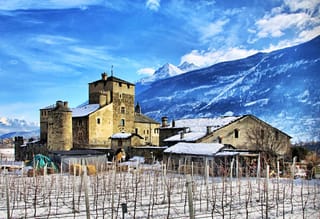
Sarriod de la Tour Castle
Valle d'Aosta
4.7km
castle, chateau
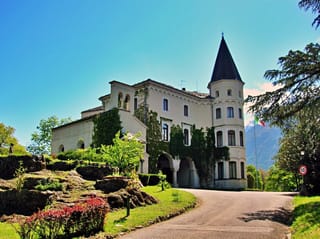
Castello Jocteau
Valle d'Aosta
5.1km
castle, chateau
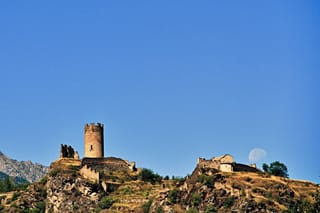
Châtel-Argent
Valle d'Aosta
5.8km
castle, chateau
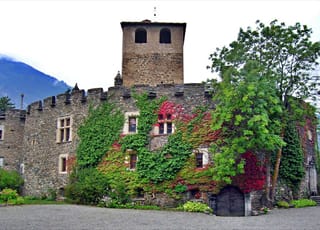
Castello di Introd
Valle d'Aosta
8.0km
castle, chateau