Castello Medioevale
Città Metropolitana di Napoli Campania Italy
castle, chateau
Castello Medioevale
Città Metropolitana di Napoli Campania Italy
castle, chateau
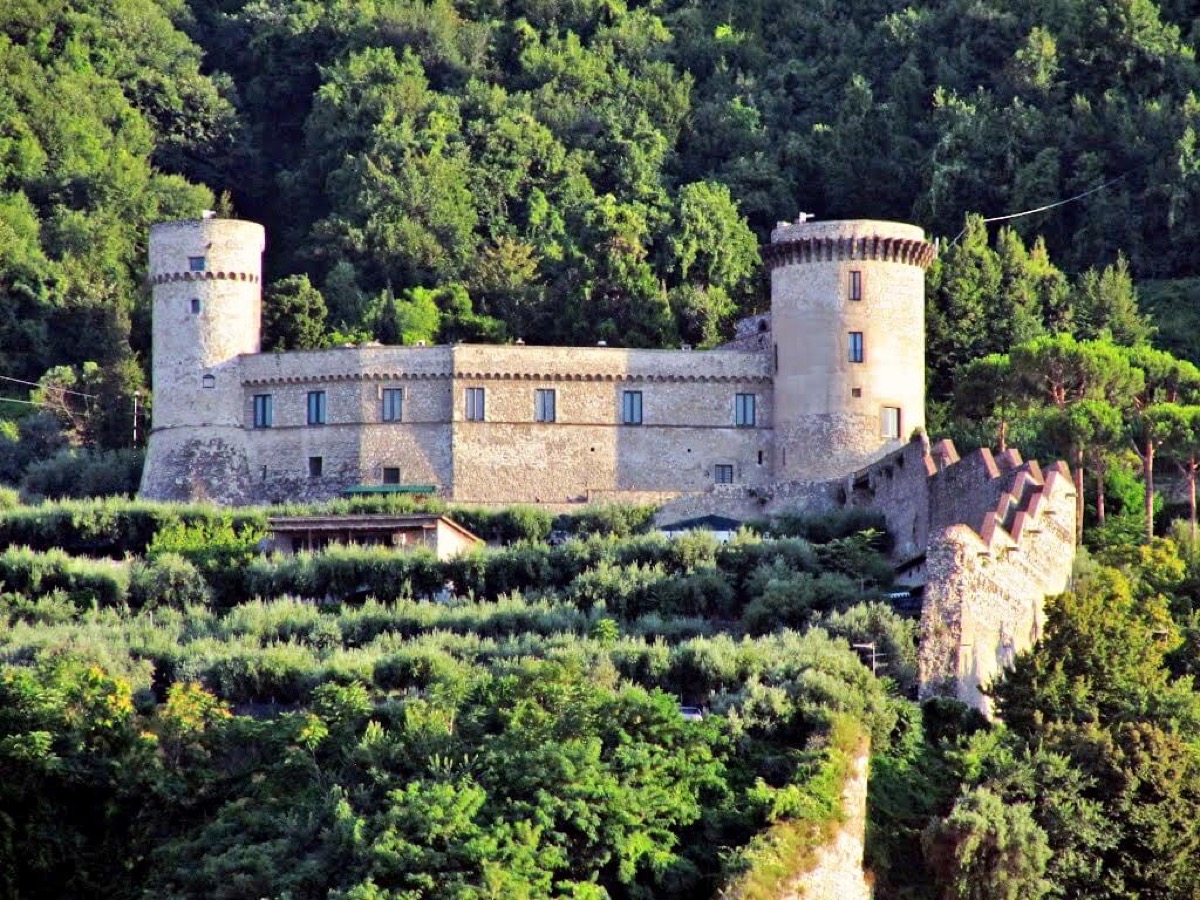
The Castle by the Sea, from which Castellammare derives its name, rises to 100 meters altitude above sea level while behind these are the imposing domes of rock (the foothills of Mount Faito) that rise vertically up to 650 m
Il Castello Medioevale è un castello di Castellammare di Stabia, in uso dalla fine del X al XVIII secolo; dopo un periodo di abbandono è stato restaurato durante gli anni trenta del XX secolo e viene utilizzato per ricevimenti e meeting
Previous names
Castello Medioevale, Castello Medioevale
Description
The Castle by the Sea, from which Castellammare derives its name, rises to 100 meters altitude above sea level while behind these are the imposing domes of rock (the foothills of Mount Faito) that rise vertically up to 650 m. The Castle was built to guard the narrow stretch of coast, between the inaccessible mountain and the sea, from which the army intended to penetrate and would have been able to pass the Sorrentine Peninsula.
The name of “Castello a Mare” appears in a document for the first time in 1086 which is written proof that the Castle had already existed for some time. The Castle was built following the Byzantine style by the Duke of Sorrento, as a border fortress of his dominion. Over the centuries (from the 11th to the 15th century) it underwent various transformations, according to the evolution of different techniques of art and war. The modern aspect stems from the last transformation of 1470, aimed at strengthening the fortress against an artillery attack.
At the beginning of the 1500’s, the Castle rampart “rivellino” was added for its proximity to an external ditch full of water. The "Castrum de Stabiis ad Mare" was the foothold of a complex defensive system including amongst others, the castles of Gragnano, Lettere, and Pimonte and it had numerous defense posts deployed on the surrounding land, the most notable was erected on the shore which was connected to a walkway following the walls of the Castle that descended down to the watchtower. Similar to the New Castle (Castel Nuovo) of Naples, the Castello a Mare of Stabia is to be considered a Medieval construction, even though it was equipped for defense in the Aragonese time period: the buttresses for reinforcement of the pre-existent towers can be attributed to the XV and even to the XVI century .
In the XV century, the fortress of Castellamare was quite important for the wide range strategy and in support of the deployment of vessels and fleets at sea; in fact, it was added to the Neapolitan Chronicles from the 1400’s edited by Filangieri of Candida. The three coats of arms that Castellamare has had in the course of history, all bear the picture of the Castle. Also to be noted is the fact that the second of four cathedrals of Castellamare was situated in the domain of the fortress, where the bishops that succeeded one another, lived from the time period of 840 to 1362. At the time of the conspiracy of the Barons, the castle was handed over (October 1459), without any resistance from the Lord of the Manor, the Catalan Gaillard, to the troops of John of Anjou, son of Rene. In 1461 Gaillard himself valiantly and victoriously defended the Castle for Anjou, against Antonio Piccolomini, Duke of Amalfi, who won against the armed Angevins at the mouth of the Sarno and had occupied the city on 23rd October.
Castellammare was a fief of the Farnese family, brought in dowry by Margaret of Habsburg, the illegitimate daughter of Charles V, in 1538 to the thirteen year old Ottavio Farnese. The prison, extracted from the base of the tower, was one of the most persuasive tools of the administration of the various governors, and its name "La Papiria" emerges from the archival documents. In the seventeenth century, Castellamare was an actual city and the Castle, outdated instrument of war, was no longer used as a fortress to protect its people from danger. It was partly due to the change of political strategies in the Viceroyalty of the Crown of Spain, which aimed at political neutralization of the feudal lords, that the Castle was abandoned.
https://www.castellomedioevale.com
Il Castello Medioevale è un castello di Castellammare di Stabia, in uso dalla fine del X al XVIII secolo; dopo un periodo di abbandono è stato restaurato durante gli anni trenta del XX secolo e viene utilizzato per ricevimenti e meeting.
Sulle origini di castello, situato a circa cento metri d'altezza, alle pendici del monte Faito, tra le attuali frazioni di Pozzano e Fratte, non esistono dati certi, ma solo alcune supposizioni: i primi studiosi collocarono il periodo della sua costruzione durante la dominazione angioina, in particolar modo sotto il regno di Carlo I d'Angiò e per tale motivo la struttura viene erroneamente chiamata castello angioino. Tuttavia questa ipotesi è stata scartata, in quanto, in quel periodo, la fortificazione già esisteva, così come è stata rigettata l'ipotesi che la sua fondazione fosse dovuta a Federico II di Svevia, poiché in un documento sull'amministrazione dei castelli del periodo, veniva nominato come Castrum Maris de Surrento e bisognoso di urgenti riparazioni; in un altro documento datato 15 novembre 1086, la struttura fu citata con la dicitura di Castello da Mare. L'ipotesi più accreditata è quindi quella che il castello stabiese fu costruito per volere del Duca di Sorrento, come posto di guardia, ai confini del suo territorio.
Ebbe ben presto una grande importanza per la città, tant'è che nell'ambito della sua cerchia muraria sorgeva la cattedrale ed al suo interno venivano ospitati i vescovi della diocesi. Fu in seguito restaurato ed ampliato prima da Federico II di Svevia e poi da Carlo I: probabilmente in tale periodo fu notevolmente modificato e strutturato in modo tale da poter ospitare le nuove armi da fuoco; tra gli ospiti del tempo anche Giovanni Boccaccio. Nell'ottobre 1459 il castello fu ceduto a Giovanni II di Lorena e nel 1461 resistette all'attacco sferrato da Antonio Piccolimini, duca di Amalfi. Con l'avvento di Alfonso II d'Aragona, nel 1470, assunse la conformazione definitiva e all'inizio del XVI secolo fu costruito il rivellino, sul quale venivano posizionati i cannoni: divenne in tale periodo la principale struttura militare della zona, avendo influssi anche sui vicini castelli di Lettere, Gragnano e Pimonte. Quando la città divenne feudo dei Farnese, il castello fu sede di una guarnigione di soldati mercenari e nella base del torrione venne ricavata una prigione, chiamata La Papiria. A partire dal XVIII secolo, quando perse la sua funzione difensiva, fu abbandonato, trasformandosi in rudere: tuttavia la sua posizione panoramica sul golfo di Napoli, ispirò diversi artisti come Anton Sminck van Pitloo, Teodoro Duclère, Achille Pinelli, Giacinto Gigante e molti altri appartenenti alla scuola di Posillipo, che lo ritrassero nelle loro opere. Agli inizi del XX secolo il castello divenne proprietà del marchese Alaponzone di Verona; nel 1929 Catello Longobardi così descriveva la fortificazione:«E' costruito con pietra calcarea e tufo litoide, a pianta trapezoidale, con un torrione e due baluardi cilindrici, uniti da salde muraglie, un tempo, forse, merlate, ed ora diroccate nella maggior parte. I baluardi hanno, alla sommità, un piano aggettante su un coronamento di archetti e beccatelli; il torrione è rafforzato col barbacane alla base e, nella parte superiore, con una fitta cornice di modiglioni di piperno, che, evidentemente, in origine, sostenevano un piano con piombatoi. All'interno della mole si osserva una buca, attraverso la quale per lubrici scalini, si passa da una balza all'altra; nascosti da una vegetazione lussureggiante s'intravedono dei camminamenti sotterranei, che, senza dubbio, comunicavano con l'altra torre, giù, poco distante dal mare.»
Useful information
GRATUITO
WiFi
castello@castellomedioevale.com
- Ottima vista del Vesuvio
- Usato per il matrimonio
-
External links
Nearby castles
Castle Giusso
Città Metropolitana di Napoli
4.9km
castle, chateau
Castello di Lettere
Città Metropolitana di Napoli
6.6km
castle, chateau
Castello del Parco
Provincia di Salerno
15.8km
castle, chateau
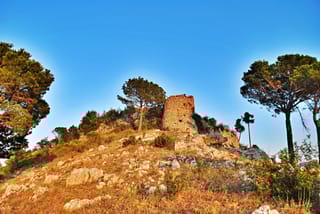
Castel San Giorgio
Provincia di Salerno
21.8km
castle, chateau
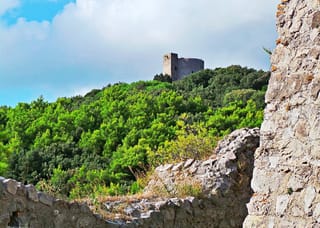
Bastiglia Salerno
Province of Salerno
23.5km
castle, chateau
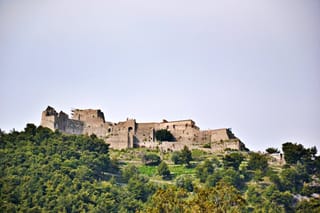
Castello di Arechi
Provincia di Salerno
23.7km
castle, chateau
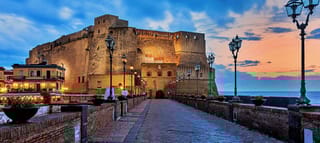
Castel dell'Ovo
Città Metropolitana di Napoli
24.6km
castle, chateau