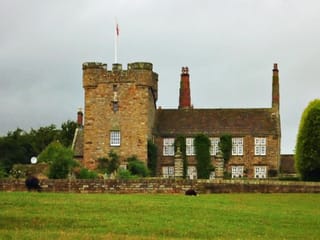
Langley Castle
Northumberland England England
castle, chateau
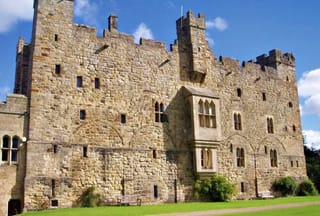
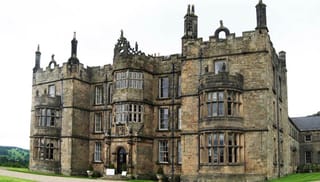
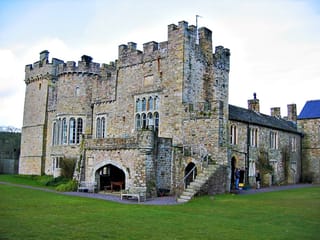
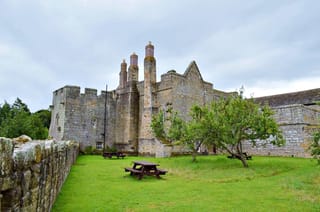
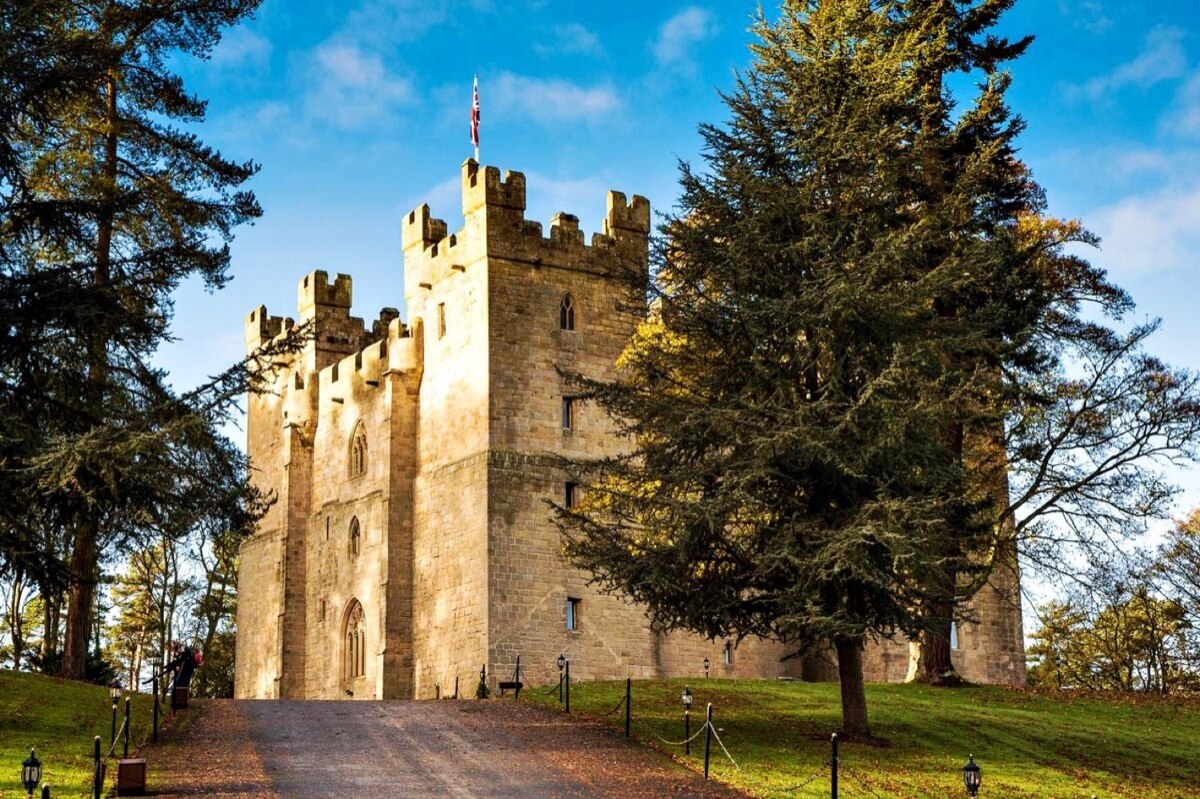
Langley Castle is a restored medieval tower house,now operated as a hotel, situated in the village of Langley in the valley of the River South Tyne some 3 miles (5 km) south of Haydon Bridge, Northumberland, England
Previous names
Langley Castle
Description
Langley Castle is a restored medieval tower house,now operated as a hotel, situated in the village of Langley in the valley of the River South Tyne some 3 miles (5 km) south of Haydon Bridge, Northumberland, England. It is a Grade I listed building.
Details
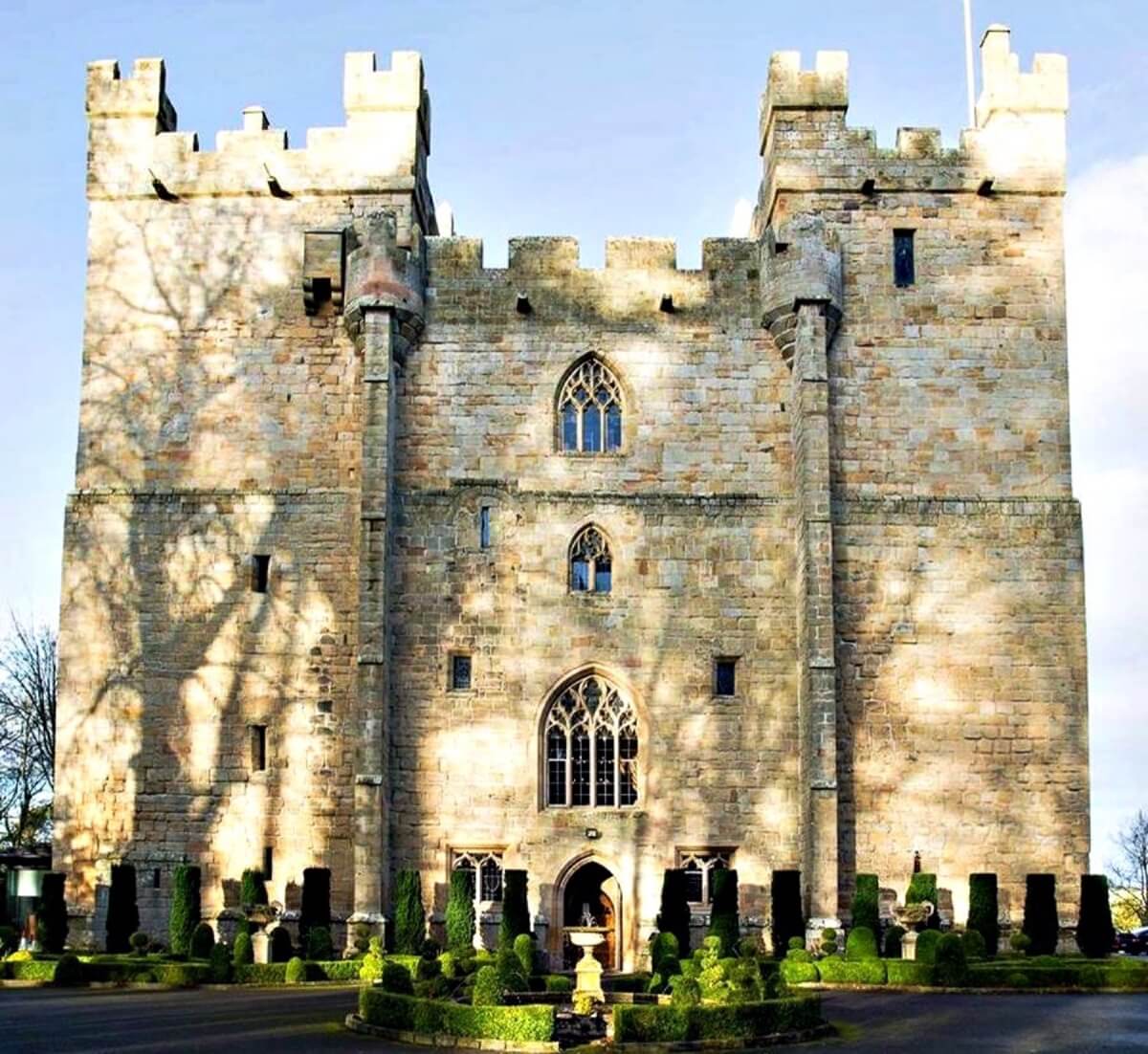
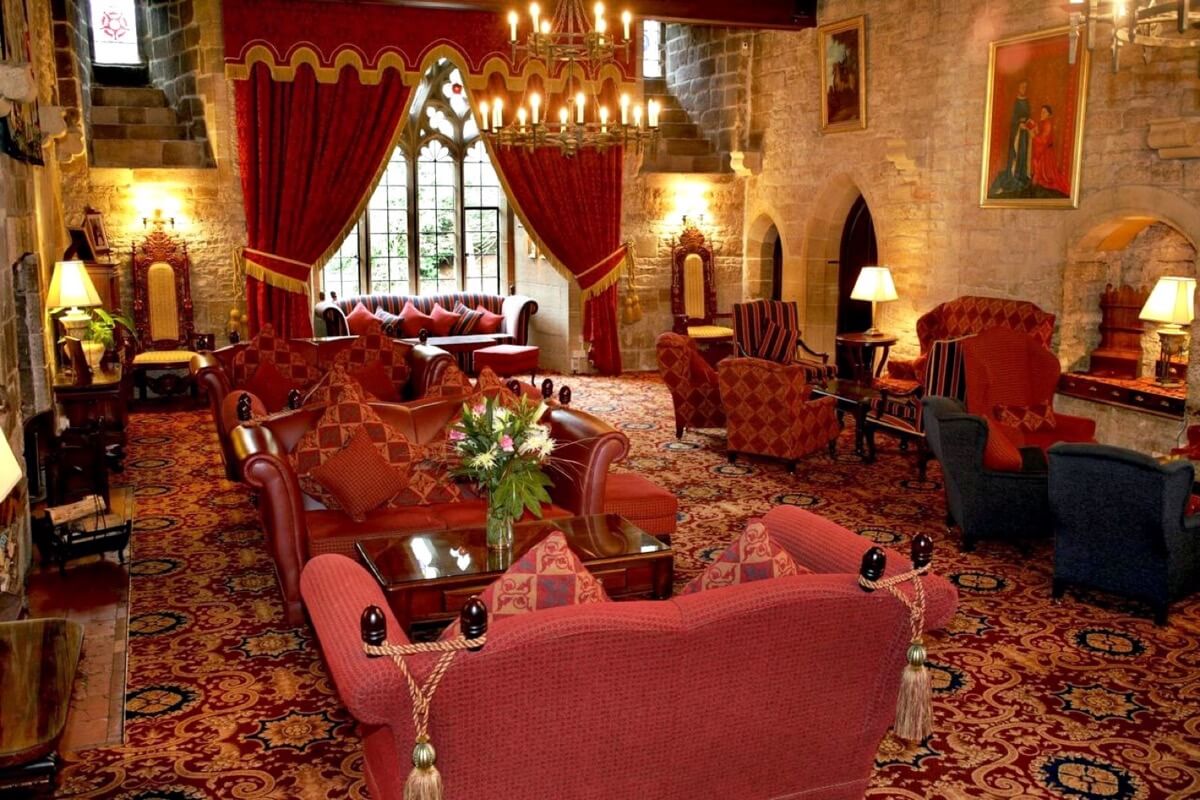
It was built in the middle of the 14th century by Sir Thomas de Lucy as a great H plan H-shaped tower of four storeys. Before this the site was the seat of the Barons of Tynedale in the 12th century, from whom descend the Tyndall family. It was attacked and severely damaged in 1405 by the forces of Henry IV in the campaign against the Percys and Archbishop Scrope. It remained as a ruin until it was bought and restored by a local historian, Cadwallader Bates, in 1882. Bates died in 1902 and his wife Josephine continued the restoration. After she died in 1932 the building remained empty until it was used as a barracks in the Second World War, following which it was used as a girls' school. In the Eighties It was bought by the Robb family. In 1986, it was bought by Dr Stuart Madnick, a professor at the Massachusetts Institute of Technology, an American university. Dr Madnick converted it into an award-winning luxury hotel, which is managed by Mr Anton Phillips.
Langley Castle is set in a woodland estate of 10 acres (40,000 m2). One of the more remarkable features of the building is the south-west tower, which is occupied by no fewer than 12 garderobes, four to each floor.
Built in 1350, during the reign of Edward III, the castle has retained its architectural integrity and is regarded as one of the few medieval fortified Castle Hotels in England.
Over the past 600 years, the Castle has been owned, together with its estate, by Lords and Ladies whose names were frequently associated with the turbulent history of the Kingdom. During the 17th century the Langley estates became the property of the Earls of Derwentwater; Viscounts Langley. James , the third Earl and Charles his brother, took part in the Jacobite risings of 1715. They were subsequently executed at the Tower of London. A cross stands by the road from the Castle to Haydon Bridge commemorating their loyalty to the King of Scotland (their Lawful Sovereign), which reads:
In memory of James and Charles
Viscounts Langley
Beheaded on Tower Hill
24th Feb 1716 and 8th Dec 1746
For Loyalty to their Lawful Sovereign
The property was confiscated by the Crown and its administration passed to the Royal Naval Hospital at Greenwich in London. Signs of the Admiralty's influence can still be seen in the area. For example the anchor motif on the front of a house at Langley and the naming of a pub in Haydon Bridge as The Anchor.
In 1882 a local historian, Cadwallader Bates, purchased the property. The restoration of the Castle to its original 14th Century structure became a life's work not only for Cadwallader, but also for his wife Josephine, who continued his work after Cadwalladers death in 1902. Josephine rebuilt the original chapel on the castle roof in memory of her husband and worked tirelessly until her own death in 1933. She was buried alongside her husband in the castle grounds.
We are currently looking for images of the castle from the last hundred years to put in a new Langley Castle history book and add to the website for others to enjoy. Perhaps you went to school here or know someone that did? We would love to hear from you. Did you attend one of the medieval banquets or were stationed here during the second world war? Please get in touch.
https://www.langleycastle.co.uk
Useful information
Parking available
External links
Nearby castles