Haughton Castle
Northumberland England England
castle, chateau
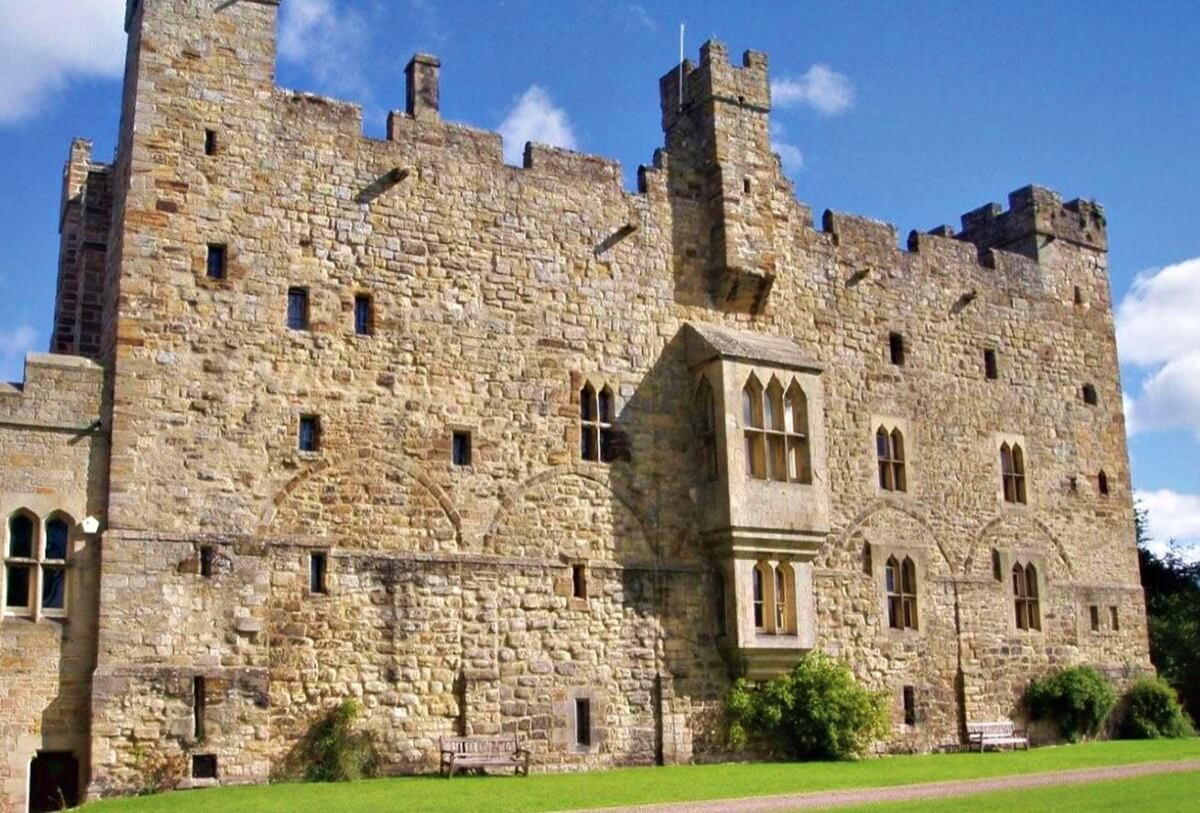
Haughton Castle is a privately owned country mansion situated to the north of the village of Humshaugh on the west bank of the North Tyne
Previous names
Haughton Castle
Description
Haughton Castle is a privately owned country mansion situated to the north of the village of Humshaugh on the west bank of the North Tyne. It is some 10 km north of Hexham, Northumberland (grid reference NY918729).
It was built originally in the 13th century as a tower house, and enlarged and fortified in the 14th century. At this time the castle was owned by Gerald Widdrington and, although it was still owned by the Widdringtons in the early 14th century, the Swinburns were living in it.
By the 16th century the castle fell into disrepair and ruin and it was attacked by Border reivers. A survey of 1541 reported the roof and floors to be "decayed and gone".
The property was acquired by the Smith family in about 1640, but in 1715 a further survey stated the building to be ruinous.
Significant alterations were carried out for the Smiths between 1816 and 1845, latterly by architect John Dobson to convert the ruin into a substantial mansion. The Crawshaw family came into possession in 1862, and a west wing was added for them by Anthony Salvin in 1876.
Part of the castle served as a hospital during the Second World War.
It is now an oblong tower house and one of the best-preserved hall houses in the north of England. It is a Grade I listed building. In 1888 it was acquired by the Cruddas family, and it is currently owned by the Braithwaite family.
Romantic Haughton Castle, a Grade 1 listed building, dates from the peaceful era in Northumberland of 1260, before Edward 1, Hammer of the Scots started the Scottish Wars. In the Park is the ruined Norman chapel where the Castle's redhead founder, a man almost 7 foot tall, was buried. About a hundred years later the Castle walls were greatly reinforced to withstand the imminent conflicts - huge battlements were added which have been untouched over the centuries and remain a very practical fighting platform.
The river Tyne skirts the field on the northern side and shows off the Castle's fine defensive position. The valley of the North Tyne was one of the main routes leading from Scotland to the rich farmland of the main Tyne Valley and Haughton was one of a series of castles (along with Swinburn, Cocklaw, Simonburn, Gunnerton and Chipchase) built to guard it. It began life as a 'Hall House' (Manor House) but was turned into a Castle in its very early history. The castle is one of the earliest 'upper floor' hall houses in the Country – and is certainly one of the best preserved. It is a grade one listed building protected by law.
The old Northumbrian families of Swinburne and Widdrington held the Castle throughout the turbulent times of the Scots wars and the Border Reivers, when it was part of the Middle Marches, until losing it in the Civil War. Battered and full of Reiver ghosts (legend of Archie Armstrong), it passed to a local family called Smith who lived there for 230 years, leaving more ghosts of their own– particularly 'the Buccaneer'. Below the Castle and towards the River, there is a famous Georgian paper mill building, where 'Buccaneer' Smith plotted with William Pitt the Younger to print forged French bank notes to ruin the post revolution economy.
Inevitably, later Victorian occupants grandified some of the Castle, but also left it in the present fine condition. George Crawshay, who built the High Level Bridge in Newcastle was the first Victorian. Google 'Haughton Castle' and you will find references to Turkish Baths at the Castle and some very early photographs of men in them – Crawshay was a Liberal and tried to meddle in Politics of Turkey and the Sultan. He built a bath for a visit to the Castle by one of the great Turkish Liberal politicians, who was Grand Vizier of the Ottoman Empire and was later murdered by the Sultan in Mecca. The next Victorian magnate was William Cruddas, partner to Lord Armstrong in the great armament company.
The Castle faces parkland on the South side and spectacular view across farmland with the North Tyne below.
The Castle film sets – Catherine Cookson's 'The Dwelling Place' (James Fox) and the Secret (June Whitfield), Enid Blyton 'Five go to smugglers Top' (Gemima Pooper, Jeremy Sinden) and 'Ghost Hunting with McFly (Yvette Fielding) Robson Green's 'Place of Execution' (Juliet Stephenson, Robson Green)
The very attractive walks along the river are for the benefit of Salmon Fishermen and Holiday cottage visitors
http://www.haughtoncastle.com
Nearby castles
Chipchase Castle
Northumberland
4.5km
castle, chateau
Halton Castle
Northumberland
9.4km
castle, chateau
Aydon Castle
Northumberland
10.6km
castle, chateau
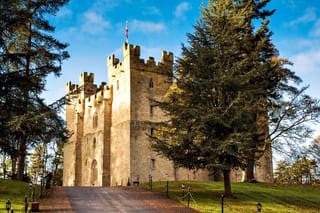
Langley Castle
Northumberland
13.4km
castle, chateau
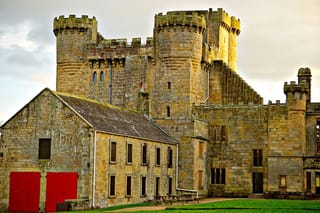
Belsay Castle
Northumberland
17.6km
castle, chateau
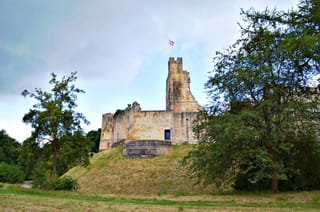
Prudhoe Castle
Northumberland
20.0km
castle, chateau