Halton Castle
Northumberland England England
castle, chateau
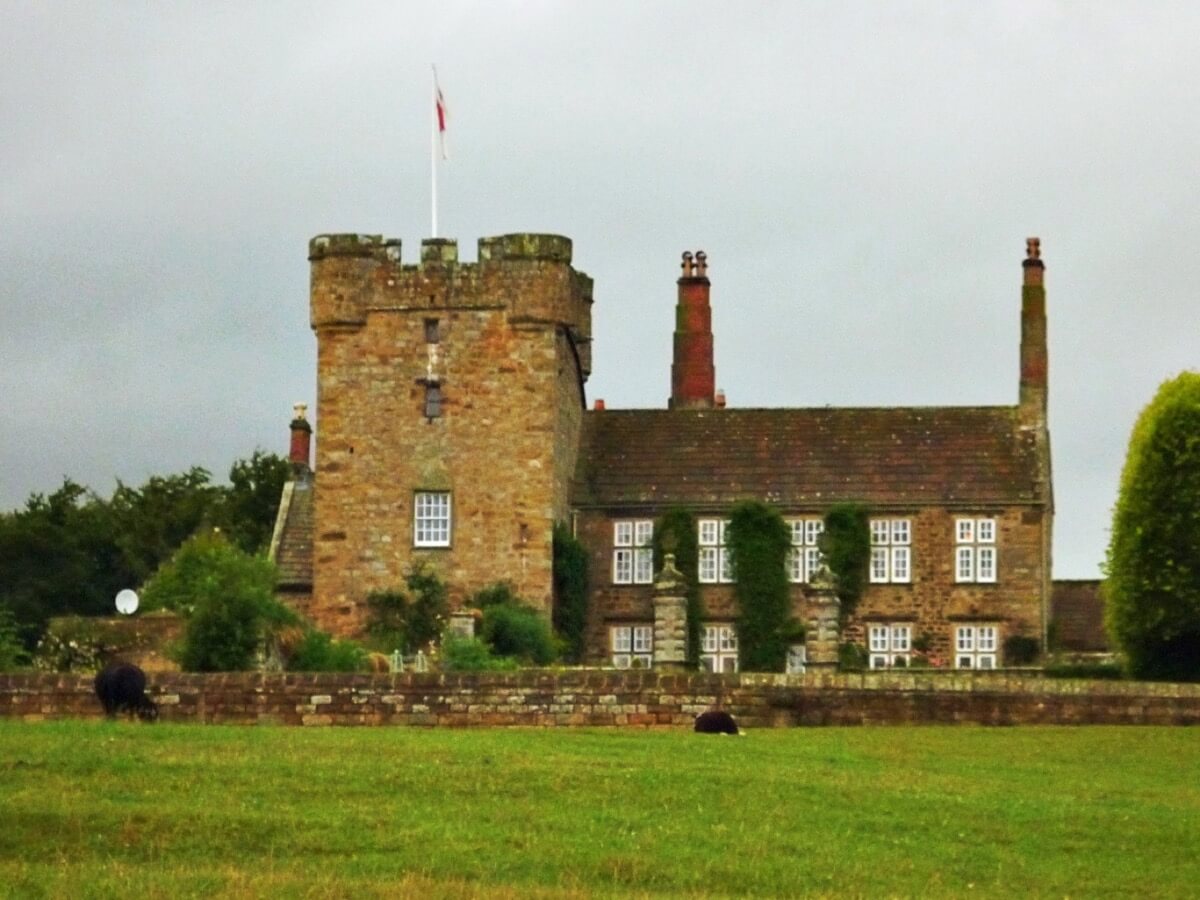
Halton Castle is a pele tower and grade I listed building situated close to Hadrian's Wall to the north of the village of Corbridge in Northumberland, England
Previous names
Halton Castle
Description
Halton Castle is a pele tower and grade I listed building situated close to Hadrian's Wall to the north of the village of Corbridge in Northumberland, England.
The tower was first recorded in 1382 and it is still present today. It has four storeys and a basement with a stone vault. In the 15th century a manor house was built onto the north side of the tower giving it a T shaped plan. In about 1696 much of this building was demolished by the then owner John Douglas and replaced with the present five bay residence.
In 1757 Anne Douglas the heiress of Halton married Sir Edward Blackett and the castle remains a residence of the Blackett family.
History
The first fortification at Halton was a Roman fort built as part of Hadrian's Wall by the Sixth Legion (Legio VI Victrix) around AD 122. Known as Onnum, it was one of seventeen such outposts that straddled the Wall and was situated between the forts at Rudchester (Vindovala) and Chesters (Celunno). It was configured in the normal playing card layout - rectangular with rounded corners - and enclosed around four acres. Three of its four main gates provided access to the north of the Wall. Dere Street, which ran through a dedicated gate less than a mile to the west, was the main road north and it seems likely the garrison at Halton was a mixed infantry/cavalry Regiment in order to patrol this route.
Halton Fort was substantially upgraded circa AD 208 with a large extension being added to the south-west quadrant. The change was implemented currently with the campaigns of Emperor Septimius Severus who sought to pacify the Picts north of the Wall. The enlargement to the fort was probably implemented when a 500 strong cavalry Regiment, the First Sabinian Wing of Pannonians (Ala I Pannoniorum Sabiniana), was assigned to Halton probably to patrol Dere Street. The fort remained occupied until the early fifth century AD when Roman control of the province broke down
A fortified manor house was established at Halton in the thirteenth century by John de Halton possibly replacing an earlier settlement. The focal point of his property would have been a stone hall surrounded by a barmkin (curtain wall). Re-using the ample supplies of dressed stone from the former Roman Fort, it is probable the defences were constructed at some point after the outbreak of the First War of Scottish Independence (1296-1328) in response to Scottish raids across the border. Such an attack seems to have led to Halton being briefly abandoned in favour of Sewingshields Castle in the early fourteenth century perhaps currently with the attacks on nearby Aydon Castle in 1315 and 1317. Halton was restored however and the earliest surviving reference to the site, dated 1382, describes it as 'Halton fortlet' which was owned by Robert de Lowther.
When Robert died the castle passed to William Carnaby. A Scottish attack on Halton in 1385, in which William was captured, probably prompted construction of the pele tower but it was certainly standing by 1415. Like the earlier barmkin, this four storey rectangular structure was built from stone plundered from the Roman fort. Early in the fifteenth century the Carnaby family added a manor house connected to the north side of the tower. Halton passed to John Douglas in 1695 and the the following year he demolished the manor house and replaced it with a new Jacobean style wing. It remains in use as a residence with no public access.
http://www.castlesfortsbattles.co.uk
External links
Nearby castles
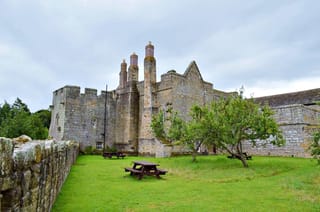
Aydon Castle
Northumberland
1.7km
castle, chateau
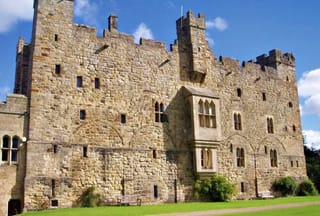
Haughton Castle
Northumberland
9.4km
castle, chateau
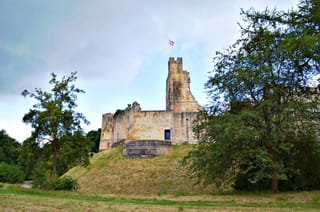
Prudhoe Castle
Northumberland
10.7km
castle, chateau
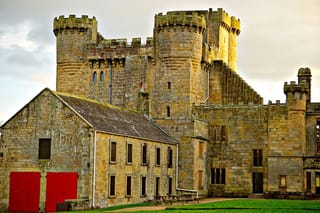
Belsay Castle
Northumberland
13.9km
castle, chateau
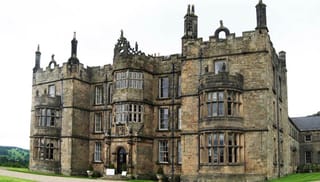
Chipchase Castle
Northumberland
13.9km
castle, chateau
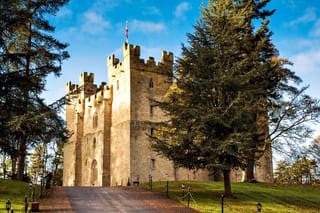
Langley Castle
Northumberland
17.0km
castle, chateau