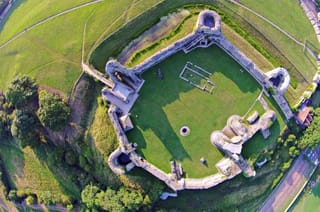
Hastings Castle
East Sussex England England
castle, chateau
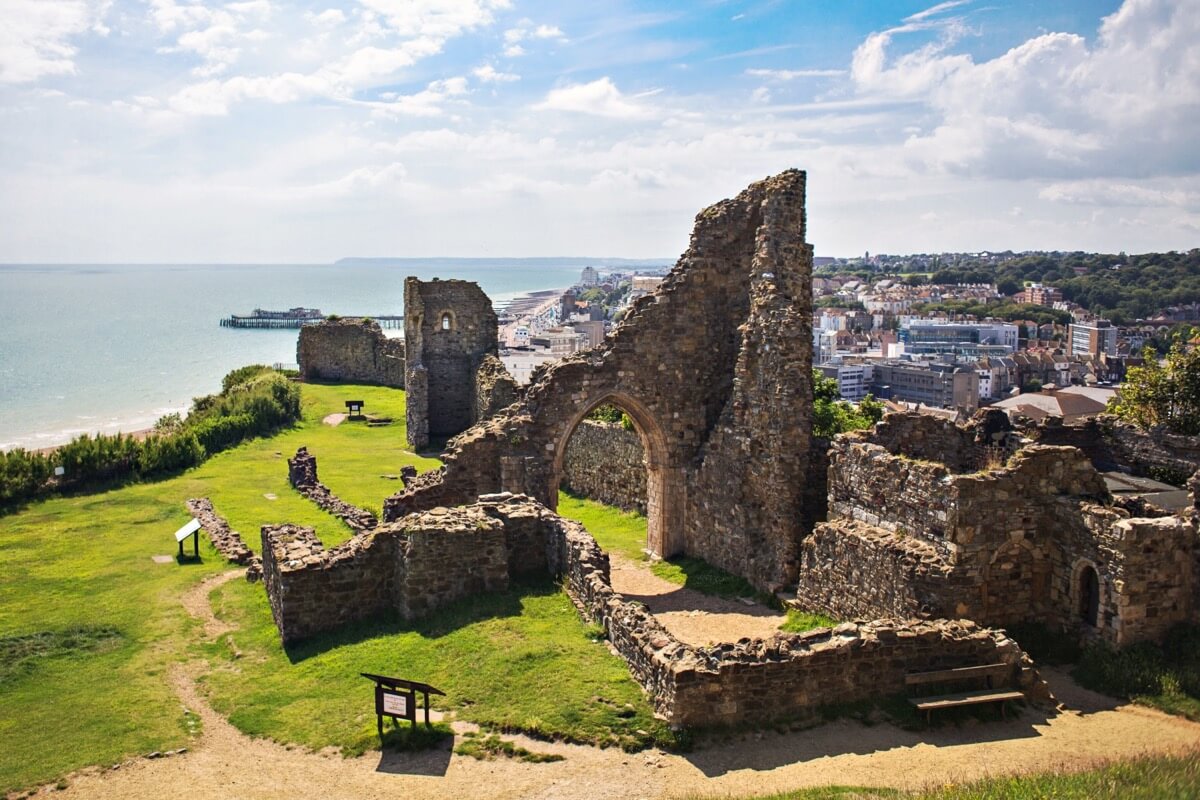
Hastings Castle is a keep and bailey castle ruin situated in the town of Hastings, East Sussex
Previous names
Hastings Castle
Description
Hastings Castle is a keep and bailey castle ruin situated in the town of Hastings, East Sussex.
History
Immediately after landing in England in 1066 William of Normandy ordered three fortifications to be built, Pevensey Castle in September 1066, Hastings (before the Battle of Hastings) and Dover. Hastings Castle was originally built as a motte-and-bailey castle near the sea. Later that year the famous Battle of Hastings took place near the Hastings castle, in which William was victorious. In 1070 William issued orders for the Castle to be rebuilt in stone, along with the St Mary's Chapel.
The Count of Eu held the castle for most of the Norman period, beginning with Robert, but King John ordered that the castle be destroyed to prevent it falling into the hands of the Dauphin Louis. In 1220, Henry III re-fortified the castle.
In time however, the house of Eu forfeited control of Hastings Castle when the family heir William, made the decision to keep his French assets over the English ones and was denied the right to his inheritance. In 1242 Henry III bestowed rule of the castle and its lands to his wife’s uncle Peter of Savoy whom then governed the estate until passing away.
In 1287 violent storms battered the south coast for many months and the soft sandstone cliffs eventually succumbed to the elements. Large sections of the face fell into the sea along with parts of the castle.
In 1339 and 1377, the town was attacked by the French leaving many burnt buildings which included homes. Throughout the next century erosion was unchecked and gradually more of the castle was lost to the sea.
The mid 16th century saw the castle receive another blow as Henry VIII commissioned that all Catholic monasteries were to be destroyed and this left the site in decay for many years. The site was purchased by Thomas Pelham on June 23, 1591. After that the site was purchased by the Pelham family and used for farming until the ruins had become so overgrown they were lost from memory.
During World War II, the castle received more damage as Hastings was a target for bombing raids. In 1951 the Hastings Corporation purchased the site and converted it into a tourist attraction.
The castle is open to the public between March and October.
Useful information
Ruined
Nearby castles