Carn Brea Castle
Cornwall England England
castle, chateau
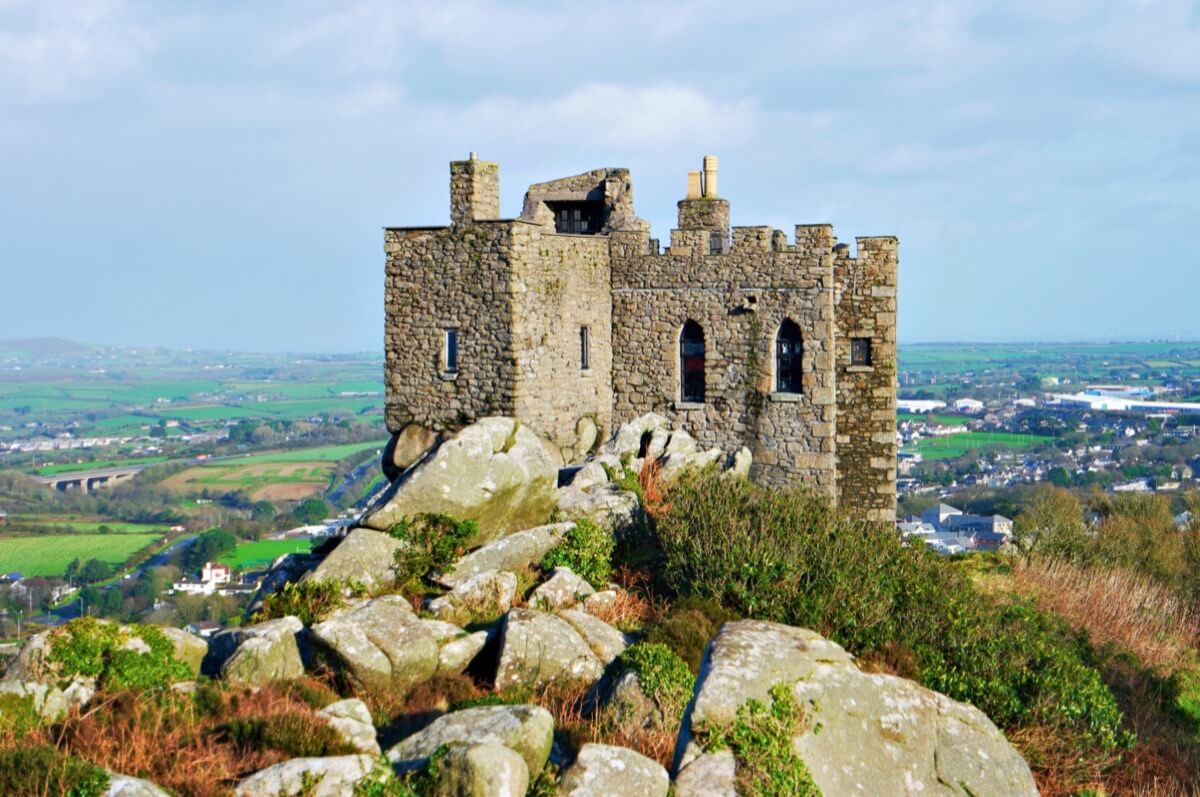
Carn Brea Castle on Carn Brea is a 14th-century grade II listed granite stone building which was extensively remodelled in the 18th century as a hunting lodge in the style of a castle for the Basset family
Previous names
Carn Brea Castle
Description
Carn Brea Castle on Carn Brea is a 14th-century grade II listed granite stone building which was extensively remodelled in the 18th century as a hunting lodge in the style of a castle for the Basset family. The building is in private use as a restaurant.
Description
The Castle is a small stone folly decorated in the romantic ideal style of a medieval/gothic castle. It has an irregular layout with 4 rectangular turrets round a core of the same height and an embattled parapet. The building is built into a large stone outcrop with a steep drop on the rear. The building was designed as a hunting lodge rather than a dwelling and measures 60 feet by 10 feet.
History
The Castle was originally built as a chapel, in 1379, thought to be dedicated to St Michael It has been extensively rebuilt in different periods since, primarily in the 18th century by the Basset family as a hunting lodge. It is considered a Folly castle, due to the huge uncut boulders that make up part of its foundations, giving the impression of the building melting into the land.
Its use as a beacon for ships was recorded in 1898 when stipulated in the lease, the tenant agreeing to show a light in the north facing window. The castle had periods of disuse and disrepair in the 1950s to 1970s, until private renovation in 1975-1980. The building was classed by English Heritage as grade II listed in 1975.
In the 1980s the building was converted into a Middle Eastern cuisine restaurant.
Media interest
A 19th-century East India trading ship was named after Carn Brea Castle. It was wrecked off the Isle of Wight in 1829 and reported in The Times as being involved in excise tax fraud.
The stolen Ford Anglia featured in the Harry Potter films was found at the Castle in 2006.
Carn Brea Castle was first built around 1379 AD as a chapel to St. Michael and is perched on the ominous grey boulders of the eastern tor of Carn Brea Hill. Around 1790 the building was converted into a castle folly by the Basset Family who once owned the hill as part of their Tehidy Estate. It was designed to be used as a hunting and feasting lodge and so it is perhaps appropriate and ironic that this Grade II listed building is now a restaurant.
It is positioned at an elevation of 215m (750ft) and overlooks the Cornish Towns of Redruth, Pool and Barncoose. Around 6000 years ago the rocky outcrop of Carn Brea was a major Early-Neolithic settlement and fortress that is still something of an archaeological mystery. The inhabitants felt threatened enough to build a series of huge stone walls two metres high and at least two metres thick that encircled the central outcrops of the hill – a distance of roughly 1.2 kilometres per wall. These peaks were linked by ramparts that enclosed the land in between. Hundreds of arrowheads and signs of burnt wooden palisades suggest that it was attacked a least once in its history. It is so unique that is has been assigned its own name – a ‘Tor enclosure’.
Carn Brea Castle is built from grey granite and may well incorporate some of the stones from the original Neolithic fortress. Built in the romantic gothic style that was popular at the time, it has four turrets, a central building and decorative battlements. Much of the structure is built directly onto the boulders with a significant drop below the walls on the eastern side. Constructed erratically to match the pattern of the boulders it is quite irregular in its layout and is roughly 60ft by 10ft. Given that Carn Brea Castle is one of the highest points for miles around it is not actually that visible from the surrounding roads.
Renovations and alterations have revealed that the building has been altered and regularly modified over the centuries. Sometime after the death of Francis Basset in 1835 the castle started being used as a beacon for ships as it was visible from the stretch of coast on the western edge of Cornwall between St Ives and St. Agnes. Tenants of the castle were required to show a light in the northwest facing window. It fell into disrepair during the early 1950s and became very run down until it was renovated around 1978. It has been in use as a Middle Eastern cuisine restaurant since 1982.
MOST MYSTERIOUS
Legends claim that the rocks where Carn Brea Castle now stands were once the lookout seat of a mighty giant called John of Gaunt who would later sell the land to the Basset family. The legend tells that the giant eventually grew old lay down to die on Carn Brea Hill where he turned to stone. A particular formation near the Castle is known as the giant’s head. Once of the best examples of a mythical sacrificial stone (table) can be found to the 340 metres to the southwest of the castle and is known locally as the ‘Giant’s Crocks and Kettles’. There is also a holy well nearby complete with stone cross.
There are many ancient Neolithic tombs in the area around the castle and legends of a lost smuggler’s cave – perhaps a tunnel.
The Harry Potter film – The Chamber of Secrets – features a flying turquoise Ford Anglia car which Harry and Ron ‘Borrow without Permission’ from Mr Weasley when they miss the Hogwarts Express. The original car used in the film was stolen from the studios at nearby St’ Agnes in 2005 but was later found abandoned in the car park of Carn Brea Castle. Given that it had no engine and would have been extremely difficult to tow to the top of the hill, its appearance at Carn Brea seems somewhat magical.
http://britainexplorer.com
Nearby castles