St Mawes Castle
Cornwall England England
castle, chateau
St Mawes Castle (Cornish: Kastel Lannvowsedh) is an artillery fort constructed by Henry VIII near Falmouth, Cornwall, between 1540 and 1542
Previous names
St Mawes Castle
Description
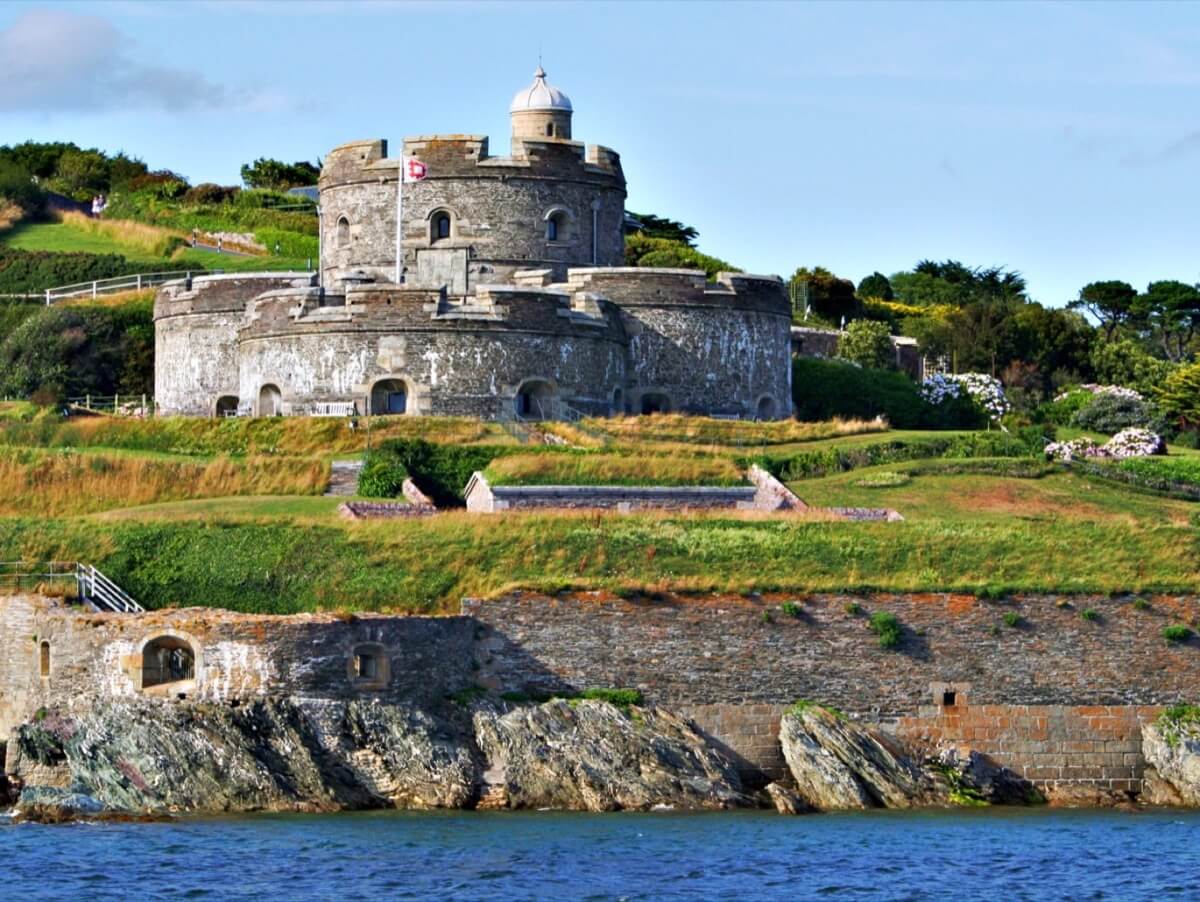
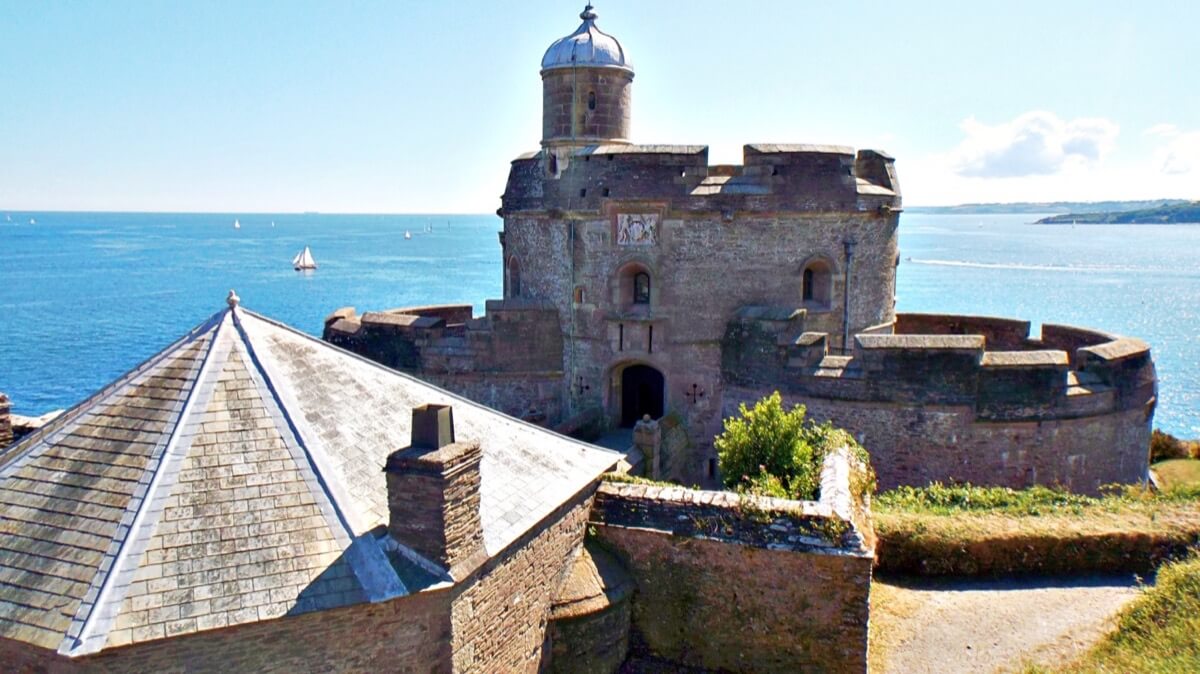
St Mawes Castle (Cornish: Kastel Lannvowsedh) is an artillery fort constructed by Henry VIII near Falmouth, Cornwall, between 1540 and 1542. It formed part of the King's Device programme to protect against invasion from France and the Holy Roman Empire, and defended the Carrick Roads waterway at the mouth of the River Fal. The castle was built under the direction of Thomas Treffry to a clover leaf design, with a four-storey central tower and three protruding, round bastions that formed gun platforms. It was initially armed with 19 artillery pieces, intended for use against enemy shipping, operating in partnership with its sister castle of Pendennis on the other side of the estuary. During the English Civil War, St Mawes was held by Royalist supporters of King Charles I, but surrendered to a Parliamentary army in 1646 in the final phase of the conflict.
The castle continued in use as a fort through the 18th and 19th centuries. In the early 1850s, fears of a fresh conflict with France, combined with changes in military technology, led to the redevelopment of the fortification. The out-dated Henrician castle was turned into a barracks and substantial gun batteries were constructed beneath it, equipped with the latest naval artillery. In the 1880s and 1890s an electronically-operated minefield was laid across the River Fal, operated from St Mawes and Pendennis, and new, quick-firing guns were installed at St Mawes to support these defences. After 1905, however, St Mawes' guns were removed, and between 1920 and 1939 it was run by the state as a tourist attraction.
Brought back into service in the Second World War, naval artillery and an anti-aircraft gun were installed at the castle to defend against the risk of German attack. With the end of the war, St Mawes again returned to use as a tourist attraction. In the 21st century, the castle is operated by English Heritage. The castle has elaborate, carved 16th-century decorations including sea monsters and gargoyles, and the historian Paul Pattison has described the site as "arguably the most perfect survivor of all Henry's forts".
Architecture
St Mawes Castle is situated on a headland over the Carrock Roads, overlooked by higher land to the rear. At the top of the site is the entrance to the castle, the high-level gun batteries and the 16th-century Henrician Castle; the terraced site slopes down to the water, where gun batteries and the 16th-century blockhouse look out across the water.
Henrician castle
The central castle is built from slatestone rubble, with granite features and detailing; it has a clover leaf design with a central, four-storey circular tower, or keep, at its core, and three circular bastions emerging from it. The design allowed for multiple levels of artillery, and may have been influenced by the contemporary work of the Moravian engineer, Stefan von Haschenperg, on some of the other Device Forts constructed during this period. It had little protection to the landward side, and would have depended upon the local militia providing protection against such an attack. The castle has been little altered since its original construction, and the historian Paul Pattison considers it to be "arguably the most perfect survivor of all Henry's forts".
The castle is extensively decorated with carvings and inscriptions in stone and wood, praising Henry VIII and his lineage, leading the historian A. L. Rowse to describe the castle as the most decorative of all of Henry's building works. These include Latin verses, such as "Henry, thy honour and praises will remain forever", written by the antiquarian John Leland, and "Let fortunate Cornwall rejoice that Edward is now her Duke", referring to Henry's eldest son and heir. Carved sea monsters and gargoyles also feature around the fortification, along with heraldic shields which would originally have been painted and visible from the river.
The castle is entered through the gatehouse, a polygonal, stone building approximately 25 feet (7.6 m) across. The gatehouse has gunloops, murder holes and slots for a drawbridge, although it is uncertain if one was ever fitted; it would originally have formed a sort of protective barbican. The yard behind it is approximately 20 by 59 feet (6 by 18 m) and dates from before 1735, originally being used a stable. This leads to a stone bridge that crosses a 25 feet (7.5 m) wide moat, cut out of the rock, to the main castle.
The central tower is 47 feet (14 m) across and 44 feet (13 m) high, with 8 feet (2.4 m) thick walls. The basement was originally a kitchen and storerooms, with the first floor was subdivided and used by the garrison, before being later converted for storing gunpowder. The bridge across the moat leads into the second storey, which originally had four chambers with fireplaces and windows, linked by a central corridor; this area may have been used by the castle's officers, and to house an enlarged garrison in an emergency. The third floor forms a single, large room with gun embrasures, and was probably used by the garrison as living accommodation. Above it, the parapetted gun platform on the fourth floor could support up to seven guns and incorporates a lookout turret, topped by a 17th-century cupola, designed as a daymark to guide passing ships.
The central tower is linked to the forward bastion, 59 feet (18 m) in diameter, which in turn has steps leading to the side bastions, each 54-foot (16.4 m) across. Each of the bastions forms a gun platform, with embrasures for larger artillery pieces - five in the forward bastion, three on each of the sides - as well as swivel mounts for lighter guns, and parapets for protection. The forward bastion's roof is modern and was added after an archaeological debate in the 1960s as to whether the bastions would originally have been covered. The bastions have various 18th- and 19th-century artillery pieces on display, as well as a bronze saker dating from 1560 called the Albergheti gun, recovered from a shipwreck off the coast of Devon.
Batteries and auxiliary buildings
Gun batteries and other auxiliary buildings stretch across the St Mawes Castle site. Above the Henrician castle is the 12-pounder quick-firing high-level battery, dating from the start of the 20th century. Its four concrete platforms and earth parapets have survived, along with an underground magazine just behind the site. A small bungalow from this period at the entrance to the battery is still in use, serving as the English Heritage custodian's house. Alongside the Henrician castle is the Engine House, approximately 41 feet (12 m) square and dating from around 1902. It originally contained an internal combustion engine, generating power for the castle's searchlights, but was later converted into a storeroom.
Beneath the Henrician castle is a complex of artillery positions, cut out of the rock from around 1854 onwards, and collectively known as the Grand Sea Battery. The Grand Sea Battery was served by a 19th-century magazine for holding gunpowder, approximately 35 by 18 feet (10.7 by 5.5 m) with stone walls and bomb-proof brick roof, topped with turf to help to protect against incoming shells. For many years the magazine was protected by an additional concrete fortification, but this was removed in 1970. There are two gun platforms along the west and east sides of the complex, 110 feet (34 m) and 80 feet (24 m) across respectively and known as the Lower Gun Battery. The current design of the western platform dates from the 1890s, with two raised concrete platforms for rotating guns and a brick-vaulted magazine just behind the battery. The eastern platform has pivots and racers for mounting four traversing gun carriages, one of which now houses a 12-pound smooth-bore artillery piece dating from 1815, mounted on a replica carriage.
Just below the Grand Sea Battery is the 16th-century blockhouse, positioned by the water's edge, 160 feet (49 m) from the Henrician castle. The blockhouse is semi-circular in shape, with 56 feet (17 m) wide with 9.8-foot (3 m) thick stone walls facing the sea, but much thinner walls to the rear. It originally had four gunports, one of which has since been blocked up, along with an upper gun platform and battlements. The upper storey was later destroyed to turn it into a solid gun platform, although this has since been re-excavated. Beside the blockhouse are the foundations of four searchlight emplacements dating from the Second World War.
To the west of the Grand Sea Battery are landscaped gardens, built on top of earlier gun positions along the site. Five 19th-century smooth-bore guns from the Napoleonic period are on display, forming a saluting battery. Beyond the gardens is the site of the Second World War 6 pounder battery, but little now remains of this position.
Useful information
- The parking is charged at £3.00 per car, per day
- Free parking for 2 coaches, 600 metres from the site entrance.
http://www.english-heritage.org.uk/visit/places/st-mawes-castle/prices-and-opening-times
http://www.english-heritage.org.uk/visit/places/st-mawes-castle/prices-and-opening-times
http://www.english-heritage.org.uk/visit/places/st-mawes-castle/prices-and-opening-times
External links
Nearby castles