Meersburg Castle
Tübingen Baden-Württemberg Germany
castle, chateau
Burg Meersburg
Tübingen Baden-Württemberg Germany
castle, chateau
Meersburg Castle (German: Burg Meersburg), also known as the Alte Burg (English: Old Castle), in Meersburg on Lake Constance in Baden-Württemberg, Germany is the oldest inhabited castle in Germany
Die Burg Meersburg, auch Alte Burg oder Altes Schloss, in Meersburg am Bodensee gilt durch die Erbauung der ersten Burg an dieser Stelle im 7
Previous names
Meersburg Castle, Burg Meersburg
Description
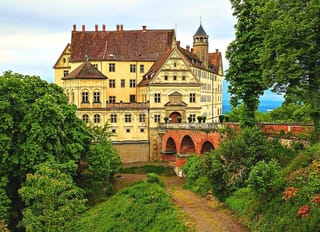
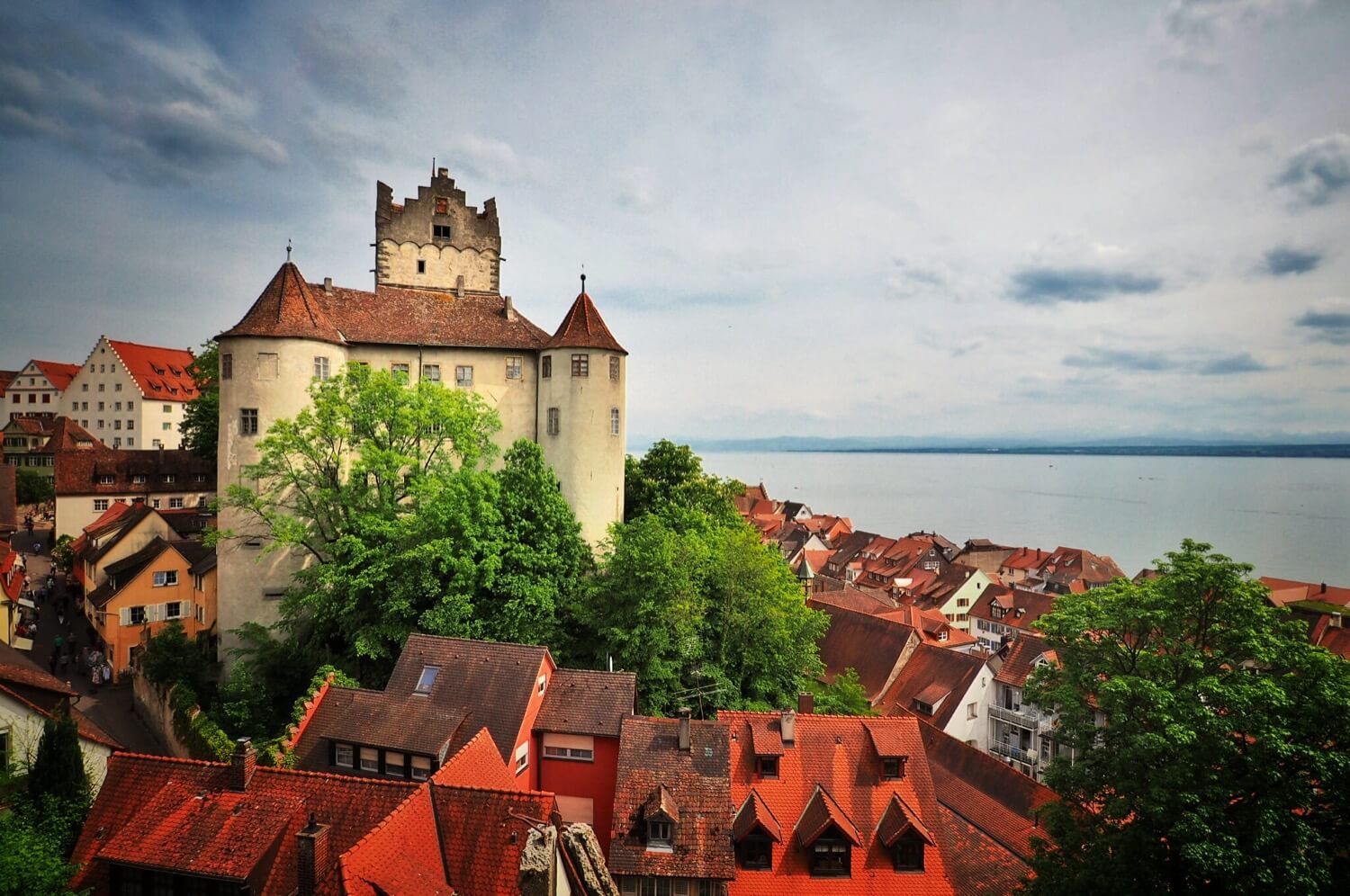
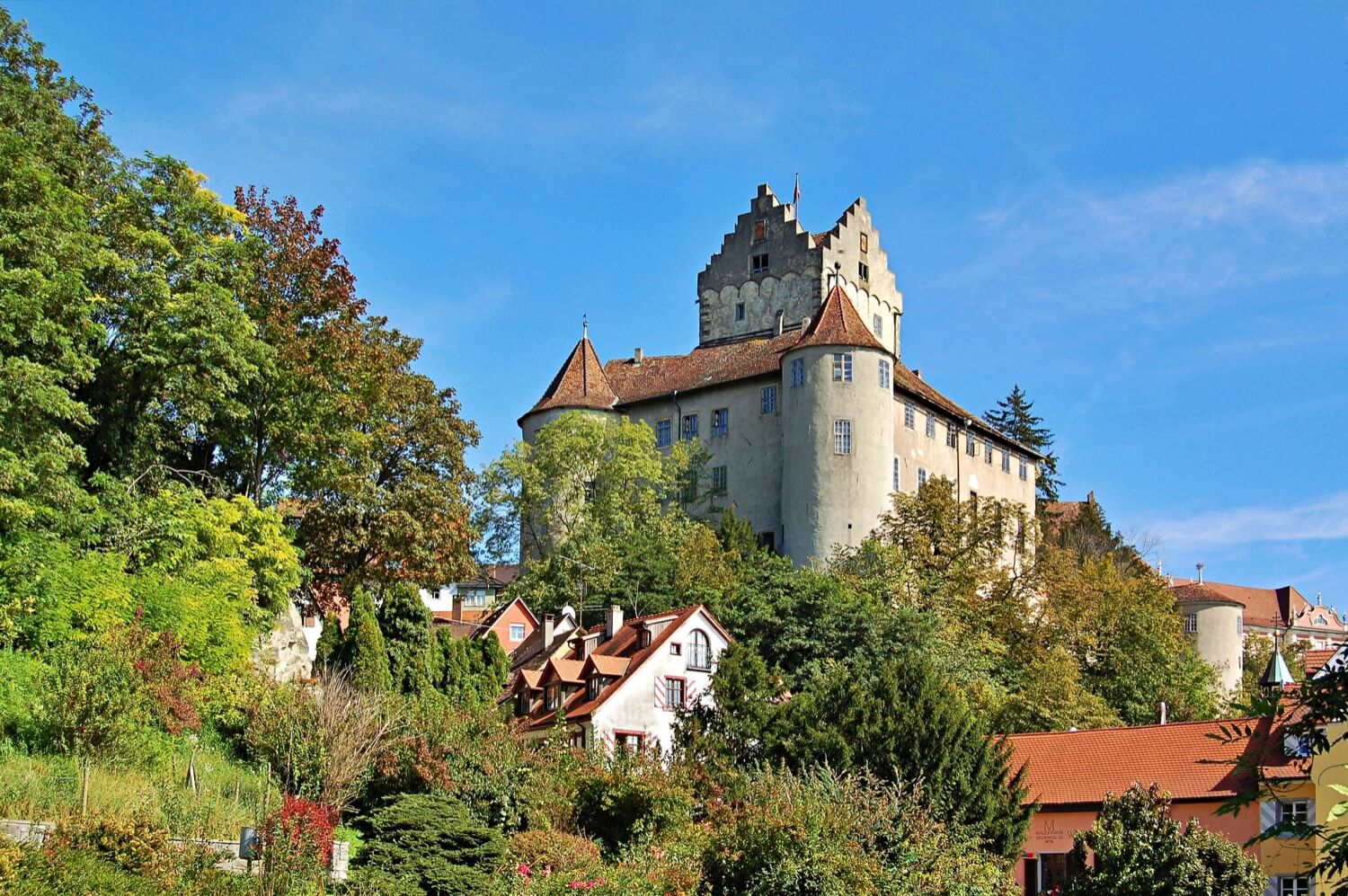
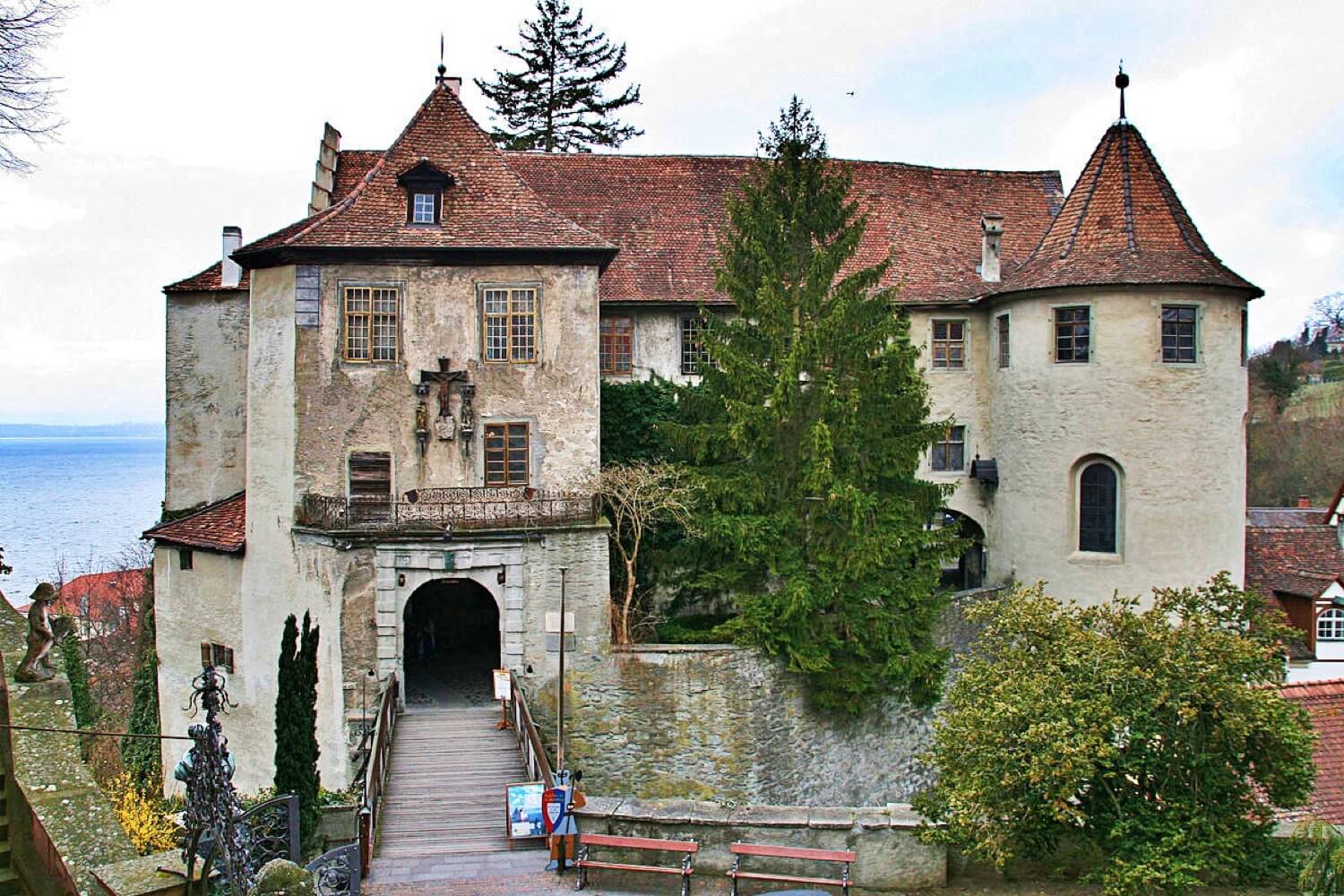
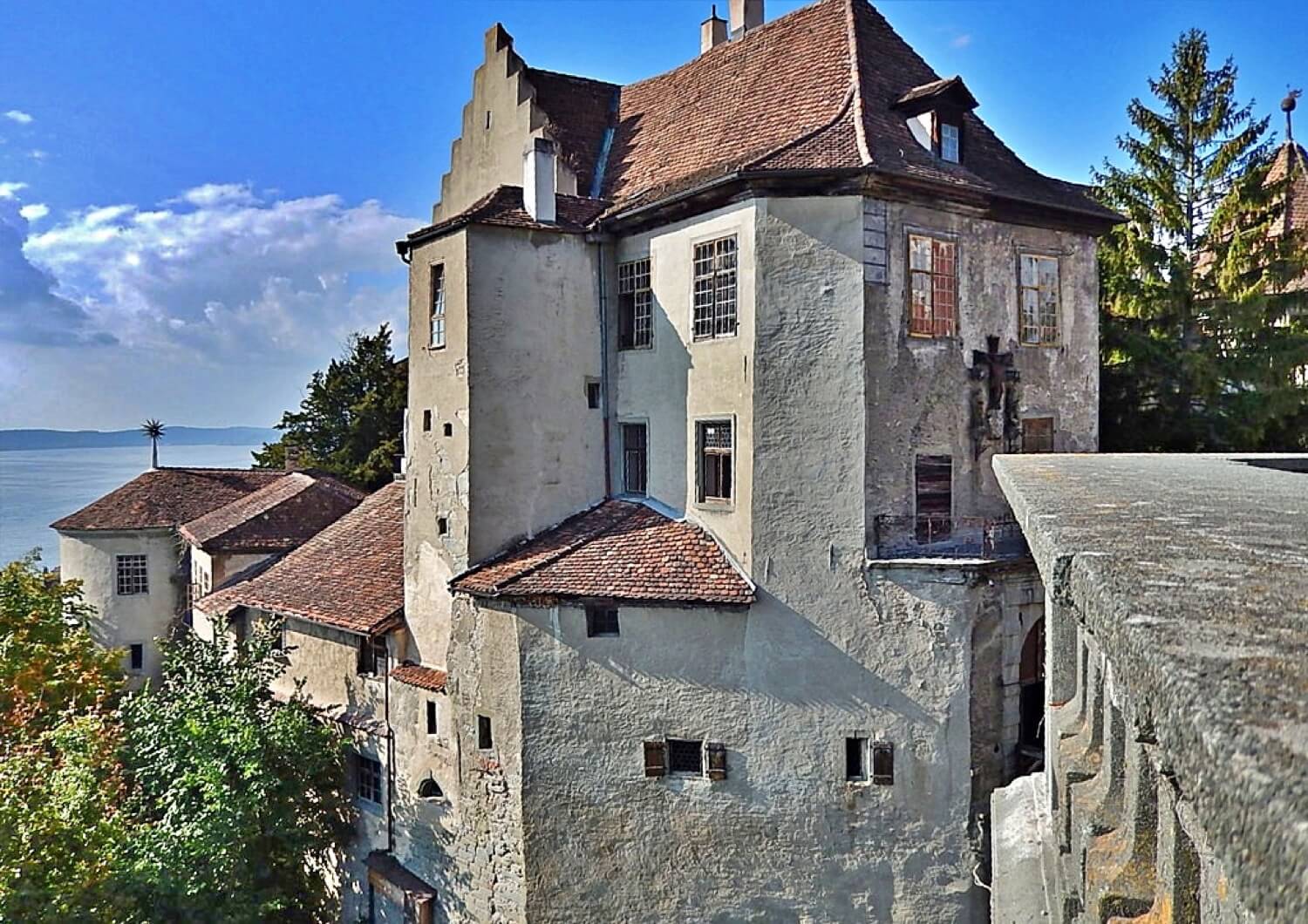
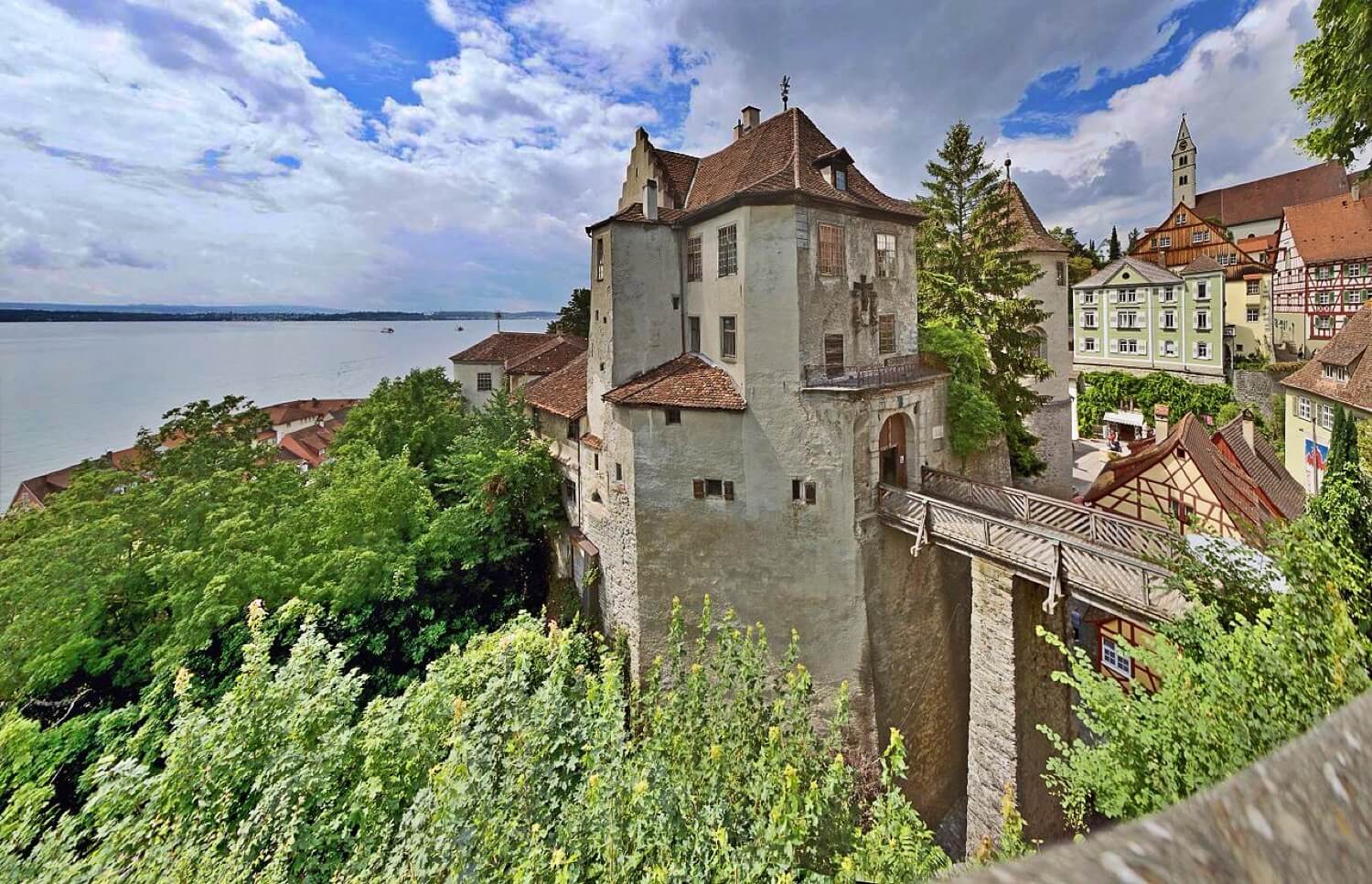
Meersburg Castle (German: Burg Meersburg), also known as the Alte Burg (English: Old Castle), in Meersburg on Lake Constance in Baden-Württemberg, Germany is the oldest inhabited castle in Germany. The central tower was first built during the 7th century, though the original structure is no longer visible. Burg Meersburg is known as the old castle, in the reference to the neighboring 18th century New Castle.
The Burg Meersburg is located on a rocky outcropping near Lake Constance (German: Bodensee). The castle is located about 440 m above sea level and towers above the Lower City, but is about level with the rest of the city.
There are two theories about the construction of the Meersburg. The first is that the Merovingian king Dagobert I built the Dagobertturm (Dagobert's Tower), the central keep of the Meersburg, in 630. Around 630, Dagobert was in the Lake Constance region working on the Christianization of the Alamanni. This theory is based on a source from 1548, and was supported by Joseph von Laßberg who lived in the castle during the 19th century. A charter issued by Frederick Barbarossa on 27 November 1155, citing older, questionable sources, mentions that the boundaries of the Bishopric of Constance were established by Dagobert himself indicating that Dagobert was personally involved in establishing rulers in the region.
The second theory is that the castle was built in the early 12th century, and based on the name of the tower an association with the earlier Merovingian king was created. It is based on the observation that in the Lake Constance region there are no records of any castles being founded in the 7th century, but in the 12th century to early 13th century many castles were built in the region. The Merdesburch Castle was first mentioned in 1113, which implies a construction date before the early 12th century.
The stones at the base of the Dagobertturm are very large roughly squared stones that according to architectural history could date from either the 7th century or from the 12th century to early 13th century. Because the stones could have come from either era, it is not clear which theory is correct. However, similarities between the Meersburg and other 12th-century castles have been noted.
Joseph von Laßberg also presents the theory that the tower was built on the site of an earlier destroyed castle. He states that the castle was destroyed by Duke Gotfrid of Alemannia who was at war with Dagobert's successor and rebuilt 80 years later by Charles Martel. From 730 until 911 the Meersburg was a Carolingian castle and owned by the Counts of Linzgau, but administered by the Counts of Buchhorn. Following the extinction of the Buchhorn line it would have passed to the Counts of Guelph. A contract between the Counts of Guelph and the Bishopric of Constance indicated that the Meersburg would be given to the Bishopric if the count died without any male heirs. It appears that the Guelphs and the Bishporic had close ties, as Bishop Conrad was of Guelph descent.
The castle may have been owned by several different lords during the following centuries. It appears that the castle was owned by the Hohenstaufens for a while, because in 1213 King Frederick II celebrated the Holy Week in Meersburg. Then, in 1233 Meersburg was granted the weekly market right by Frederick II. Shortly before his death in 1254, Conrad IV, having been deposed and excommunicated by Pope Innocent IV asked Eberhard II, the High Steward of Meersburg to care for his two-year-old son Conradin. In 1261 Conradin became the Duke of Swabia, raising an army in the Ravensburg area. He departed from Meersburg to head south into Italy to fight Charles I of Anjou and attempt to reclaim the titles stripped by the Pope from his father. While Conradin was able to take Rome, he was soon afterward captured and executed.
A few years later, in 1268 the castle came totally under the ownership of the Bishopric of Constance.
However, even as a residence for a Bishop, the Meersburg was the site of several battles over the following centuries. In 1334, there were two candidates for the position of Bishop of Constance. Baron Nikolaus I of Kenzingen was elected Bishop by supporters of the Pope while Albrecht of Hohenberg was chosen by the Holy Roman Emperor. Nikolaus quickly traveled to Avignon, in France the seat of Pope John XXII to have his appointment confirmed. He then returned to Meersburg and quickly had the defenses improved. Albrecht, meanwhile, had raised an army from the southern German princes and was joined by an Imperial army led by the Emperor. During the summer of 1334, the Imperial army besieged Burg Meersburg. During the siege, cannons were used for the first time in Germany. However, even with the new gunpowder weapons the Imperial troops were unable to take the castle. At the end of August, Emperor Louis IV was growing tired of the siege. When Duke Otto of Austria requested his help against the Bohemians, Louis left Meersburg and confirmed Nikolaus as Bishop. Albrecht was granted the Bishopric of Würzburg in 1345 to replace the lost Bishopric.
Following Nikolaus, Urich Pfefferhardt was Bishop from 1345 until 1351. In 1352 Johann III Windlock from Constance was installed at the castle, he proved to be an autocratic ruler and was disliked by the people and local nobles. Following a dispute with Konrad of Homberg-Markdorf and the Abbot Eberhard of Reichenau, he was killed by soldiers while in his palace in Constance.
Over the next century at least thirteen other Bishops were installed. Then in 1436 Heinrich IV of Hewen was appointed Bishop. His belligerent and arbitrary style caused friction between himself and the town. Following a riot, the town was fined 4,000 florins for breaking the peace within the castle grounds. Later attempts by the town to secure Free Imperial City status led to further hostilities in 1457. The inhabitants of the city stormed the castle and captured it. Bishop Heinrich responded by besieging the city. Following intervention by Siegmund of Austria as well as Constance and Zürich a compromise was reached. Heinrich then withdrew, but attacked the city a short while later. Catching the citizens off guard, his soldiers stormed the city and captured all the leaders of the revolution. Heinrich executed the leaders of the rebellion and stripped rights away from the city.
The crow-stepped gable (a stepped roof line instead of a smooth roof line) on the tower was added by the Constance Prince-Bishop Hugo von Hohenlandenberg (Served 1496–1532). Before his time, the Meersburg was a summer residence of the bishops. Following a conflict with the city of Constance in 1526, Hugo moved to the Meersburg. The castle remained the bishops' primary residence until the move to the New Schloss in the 18th century.
In 1647 the castle was attacked by Swedish troops during the Thirty Years' War, however only the roof timbers were burned during the attack.
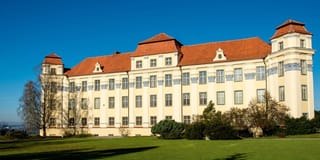
During the beginning of the 18th century, the bishops began to build the New Castle at Meersburg as a modern residence castle. After 1750 the old castle served as a house for the administration of the city.
In the Secularization of 1803 the Meersburg came under the control of the Grand Duchy of Baden. In 1838 the Grand Duke sold the castle to a private owner. The collector Joseph von Laßberg and his wife Maria Anna von Droste-Hülshoff, who was also called Jenny, acquired the castle. In 1841 Jenny's sister Annette von Droste-Hülshoff, the famous German poet, moved to the castle where she would spend the last eight years of her life. Following the death of the Laßbergs, the castle went to their twin daughters, Hildegard and Hildegunde. However they couldn't afford the upkeep and sold the castle in 1877. Karl Mayer von Mayerfels from Munich bought the castle and established a Medieval Museum in the castle. Today portions of the castle are open visitors on self-guided tours. The remainder of the castle is occupied by his descendants.
Die Burg Meersburg, auch Alte Burg oder Altes Schloss, in Meersburg am Bodensee gilt durch die Erbauung der ersten Burg an dieser Stelle im 7. Jahrhundert als älteste bewohnte Burg Deutschlands, doch ist aus jener Zeit keine Bausubstanz mehr erkennbar. Die Burg wird auch als Altes Schloss im Gegensatz zu dem gegenüber liegenden, in der ersten Hälfte des 18. Jahrhunderts errichteten Neuen Schloss, bezeichnet.
Die Hangburg liegt an einem dem Bodensee zugeneigten Südhang auf einer Höhe von 440 m ü. NN und befindet sich heute in Ortslage.
Eine früher angenommene Ersterwähnung Meersburgs in einer im Original verlorenen Urkunde Ottos III. vom 27. August 988 (MG. DD. O. III. 446‒448, Nr. 46) ist nach der jüngeren Forschung eher auf Merseburg zu beziehen und scheidet für die Frühzeit der Burg (und des Ortes) Meersburg daher aus.
Es bestehen zwei Theorien über die Erbauung der Meersburg. Die Erste nennt den Merowingerkönig Dagobert I. als Erbauer des „Dagobertsturms“, dem Bergfried der Meersburg, im Jahre 630. Bekannt ist, dass Dagobert in dieser Zeit in der Bodenseeregion war und sich dort mit der Christianisierung der Alemannen befasste. Als Beleg für diese Theorie dient eine Quelle aus dem Jahre 1548, sie ist seither vor allem durch Joseph von Laßberg, der 1837 die Burg kaufte und bis 1855 dort lebte, vertreten worden. Die „Merdesburch“ wurde im Jahr 1147 erstmals urkundlich erwähnt. Ein Luitpolt de Merdesburch wird allerdings bereits 1113 erstmals urkundlich als Zeuge in einer Vergabung der Herzöge Berchtold und Conrad von Zähringen an das Kloster St. Peter auf dem Schwarzwald, erwähnt.
Architekturhistorisch ist das Megalithquadermauerwerk des Dagobertsturms mit zahlreichen Bergfrieden des 12.- 13. Jahrhunderts der Region zu vergleichen; der Mauerwerksverband aus großen Felsblöcken ist nach modernen Untersuchungen dieses Typs als eine lokale Variante des Buckelquadermauerwerks zu sehen.
Die zweite Theorie stützt sich vor allem auf die Beobachtung, dass sich in der Bodenseeregion im 7. Jahrhundert keine Burgengründungen, im 12. und frühen 13. Jahrhundert hingegen auffällig viele verorten lassen. Wie bereits erwähnt, lassen sich architektonische Ähnlichkeiten zu den Burgen des 12. und 13. Jahrhunderts in der Gegend finden. Die Vermutung nach einer früheren, dann aber zerstörten Anlage existiert schon seit Joseph von Laßberg, lässt sich aber nicht unterstützen.
Die Vermutung, Karl Martell könnte kurzfristig im Dagobertsturm gelebt haben, ist somit in das Reich der Legenden zu verweisen.
In den nächsten Jahren sind unter anderen Friedrich II. und Konradin, der letzte legitime männliche Staufer vor seinem Untergang in Neapel, in der Meersburg nachgewiesen.
Seit der Mitte des 13. Jahrhunderts war die Burg in Besitz der Fürstbischöfe von Konstanz. Im Jahr 1233 erhielt Meersburg das Stadtrecht des Wochenmarktes. Die Stadt florierte daraufhin, und die Unterstadt wurde um 1300 durch Aufschüttungen erweitert.
Die Meersburg war mehrere Male Schauplatz von Belagerungen, so in der „Bischofsfehde“ von 1334, in der nach einer Doppelwahl zwei Bischöfe um das Amt kämpften. Während Nikolaus von Frauenfeld, auch Nikolaus von Kenzingen genannt, von der päpstlich gesinnten Mehrheit des Domkapitels gewählt wurde und Unterstützung bei Papst Johannes XXII. fand, wurde sein Konkurrent Albrecht von Hohenberg von Kaiser Ludwig dem Bayern unterstützt. Nikolaus von Frauenfeld verschanzte sich vierzehn Wochen lang in der Burg, belagert von kaiserlichen Truppen, die schließlich erfolglos abziehen mussten. Während dieser Belagerung wurden, nach verschiedenen Quellen, zum ersten Mal auf deutschem Boden Feuergeschütze eingesetzt. Der papsttreue Nikolaus von Frauenfeld wurde schließlich vom Kaiser anerkannt. Kaiser Ludwig der Bayer hatte vor Meersburg eine politische Niederlage hinnehmen müssen, die seine Schwabenpolitik beeinträchtigte und nicht zuletzt die Position der Habsburger stärkte.
1414 weilte Kaiser Sigismund anlässlich des Konstanzer Konzils auf der Burg. 1458 kam es zum Aufruhr zwischen Stadtbewohnern und dem Bischof um eine Erweiterung der Stadtrechte, der jedoch niedergeschlagen wurde.
Den Staffelgiebel verdankt der Turm dem Konstanzer Fürstbischof Hugo von Hohenlandenberg (Amtszeit 1496–1532), der hier nach Konflikten mit der Stadt Konstanz 1526 seinen ständigen Wohnsitz einrichtete. Die Meersburg wurde vorübergehend Hauptsitz der Bischöfe. 1647 schossen die Schweden während des Dreißigjährigen Kriegs den Dachstuhl in Brand.
Anfang des 18. Jahrhunderts begannen die Bischöfe schließlich mit dem Bau des Neuen Schlosses als moderner Residenz. Nach 1750 diente die Burg nur noch Verwaltungszwecken.
Durch die Säkularisation 1802 fiel die Meersburg an das spätere Großherzogtum Baden. Zunächst nutzte dann die Provinzialbehörde des „Oberen Fürstentums am See“ das Alte Schloss. Im Jahr 1814 befanden sich im Alten Schloss nur noch die Obereinnehmerei und die Wohnungen von vier pensionierten fürstbischöflichen Unterbeamten. Von 1814 bis 1836 wurde dort das neu errichtete Hofgericht des badischen Seekreises untergebracht, eine Zweigstelle zum Donaueschinger Gericht.
Der Sammler mittelalterlicher Schriften und Bücher Joseph von Laßberg erwarb die Meersburg nach langwierigen Verhandlungen für 10.000 Gulden im Februar/März 1838 von der Domänenkammer in Karlsruhe und zog am 7. September 1838 mit seiner Frau Maria Anna von Droste zu Hülshoff, auch Jenny genannt, und seinen Zwillingskindern ein. In dem gewölbten hellen Saal, dem ehemaligen Archiv, bewahrte er seine Sammlung auf, im anschließenden runden Raum (Turmzimmer) richtete er sein Studien- und Schreibzimmer ein. Von Laßberg rettete das Alte Schloss durch seinen Kauf vor dem Verfall.
Im Jahr 1841 zog Jennys Schwester Annette von Droste-Hülshoff in die Burg und verbrachte dort einen Teil ihrer letzten acht Lebensjahre. Der Burg hat sie das Gedicht von 1841/42 „Das Alte Schloss“ gewidmet („Auf der Burg haus´ ich am Berge, Unter mir der blaue See…“). Sie verstarb am 24. Mai 1848 auf der Burg.
Nach dem Tod von Joseph von Laßberg im Jahr 1855 ging die Burg zu je einem Viertel an seine Erben Jenny, Karl, Hildegard und Hildegund. Letztendlich verkauften die Zwillingstöchter Hildegard und Hildegund 1877 das Alte Schloss für 12.000 Mark an den Münchner Carl Mayer von Mayerfels, der ein Mittelaltermuseum einrichtete. Nach dem Tod des von Meyerfels im Jahr 1883 ging das Schloss an seine Witwe, dann 1910 an seine Tochter und nach deren Tod 1939 an deren Tochter Maria Naeßl, geb. von Miller. 1973 wohnte dort Wilderich von Droste zu Hülshoff. Bis heute ist die Burg in Privatbesitz und dient – neben dem für Besucher zugänglichen Museum – den Erben als Wohnsitz.
Der Rundgang durch das Burgmuseum gibt Einblick in mehr als 30 eingerichtete Räume. Darunter auch die alte Burgküche, die Dürnitz, den Palas, die Brunnenstube, die Waffenhalle, Wehrgänge, Rittersaal, Burgverlies, zwei Kapellen, Stall, Nordbastion und vieles mehr. Auch die Wohnräume und das Sterbezimmer der Dichterin Annette von Droste-Hülshoff sind in diesem Rundgang enthalten. Im Rahmen einer Führung ist zudem die Besteigung des „Dagobertsturmes“ mit Aussicht auf die Stadt, den See und die Alpen möglich. Im Turm ist eine Gefängnisstube aus dem 19. Jahrhundert sowie der Renaissancesaal mit Schatzkammer zu sehen. Im tiefsten Teil des Turmes gibt die Folterkammer Einblick in die Gerichtsbarkeit im Mittelalter.
Useful information
There are parking areas all over the city.
Admission fees:
- adults: EUR 12.80
- seniors, students: EUR 11.50
Admission fees:
- young people (14-18 years): EUR 10.00
- children (6-13 years): EUR 8.00
-
Family:
- adults: EUR 9.60
- young people (14-18 years): EUR 7.50
- children (6-13 years): EUR 6.00
- reduced: EUR 9.60
- children: EUR 2.00
Free entry with the Lake Constance Adventure Pass.
-
External links
Nearby castles