Bouchout Castle
Vlaams-Brabant Vlaams Gewest Belgium
castle, chateau
Château de Bouchout
Vlaams-Brabant Vlaams Gewest Belgium
castle, chateau
Kasteel van Bouchout
Vlaams-Brabant Vlaams Gewest Belgium
castle, chateau
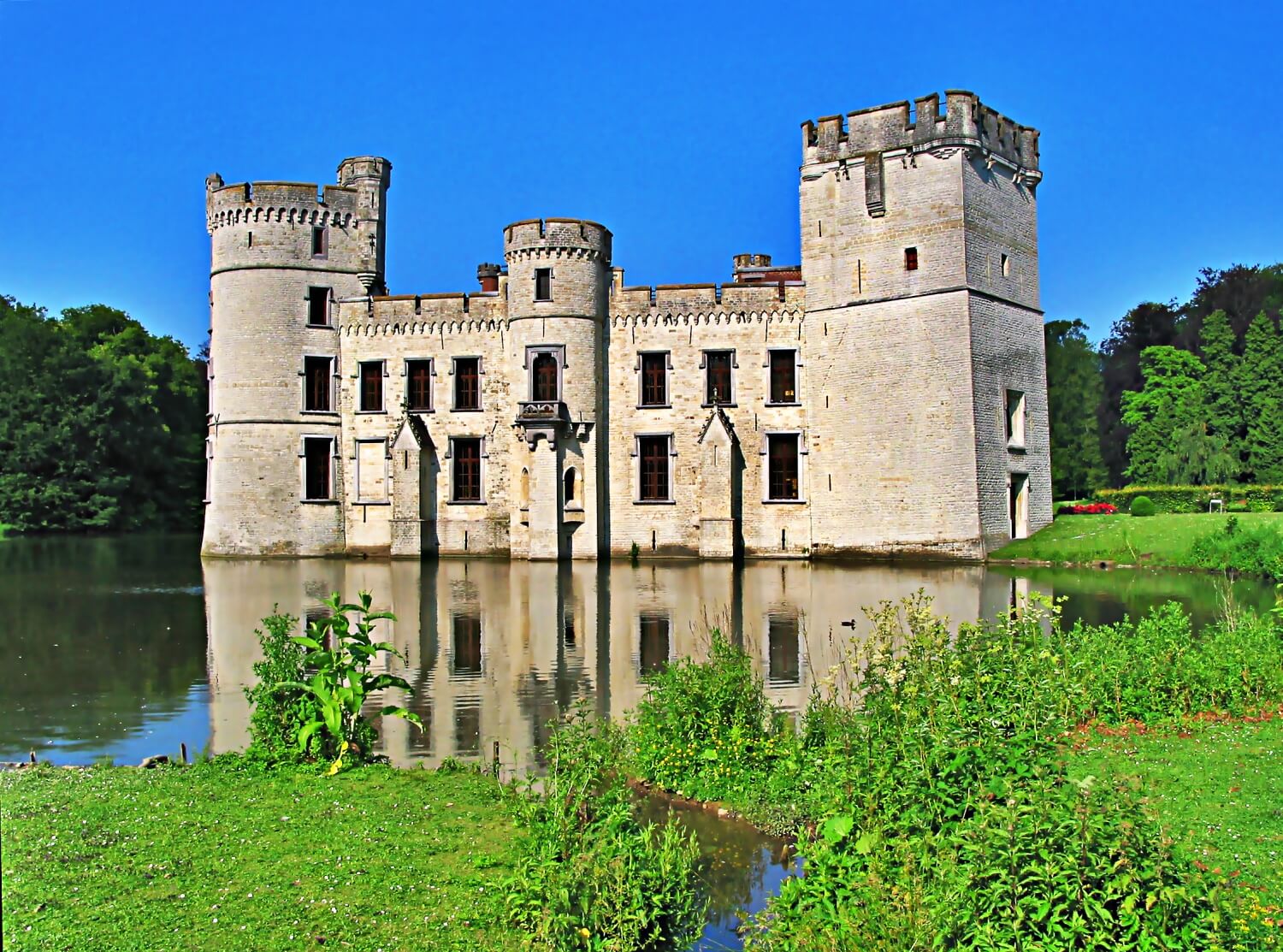
Bouchout Castle (Dutch: Kasteel van Bouchout) is a castle in the Flemish town of Meise, Belgium
Le château de Bouchout, situé en Flandre dans la commune de Meise, province du Brabant flamand, proche de Bruxelles, est un château fort de plaine belge dont l’origine remonte au xiie siècle
Het kasteel (van) Bouchout (ook Boechout en uitspraak boek-hout) is een kasteel dat gelegen is in de Belgische gemeente Meise
Previous names
Bouchout Castle, Château de Bouchout, Kasteel van Bouchout
Description
Bouchout Castle (Dutch: Kasteel van Bouchout) is a castle in the Flemish town of Meise, Belgium. In the 12th century, this territory of the young Duchy of Brabant was strategically positioned between the County of Flanders and the Berthout family, lords of Grimbergen. Most likely, the first fortification was built by Wouter van Craaynem at the end of the Grimbergen Wars (1150–1170). Bouchout Castle is situated at an altitude of 32 meters.
At about 1300, the Donjon tower of Bouchout Castle was erected by Daniel van Bouchout, a knight who fought gloriously at the Battle of Worringen. In the 15th and 16th century, Bouchout Castle was owned by the Van der Marck and van Sevenbergen sayd Transylvanus families. The castle fell into disrepair due to lack of maintenance, while the Spanish dominance and the iconoclastic fury further worsened its condition.
The first major renovation was performed by Christoffel d'Assonville at about 1600. The rectangular medieval Bouchout Castle was surrounded by a large pond and could only be reached by a long drawbridge. At the end of the 17th century, Peter-Ferdinand Roose transformed the castle into a Renaissance "Chateau de Bouchout", surrounded with French ornamental gardens. Unfortunately, the castle was partly destroyed during the French Revolution period (1800–1830). Again, the castle was restored in 1832 by count Amadeus de Beauffort, who gave Bouchout Castle its current Neo-Gothic appearance.
From 1879 until 1927, Empress Charlotte of Mexico lived at the Bouchout Domain. Her husband Emperor Maximilian I was executed by Mexican republicans in 1867. Thereafter Charlotte led a secluded life at Bouchout Castle. Since 1939, the Bouchout Domain has developed into the National Botanic Garden of Belgium. Since the last renovation of 1987–1989, the castle and its rooms are now being used for meetings, lectures and exhibitions.
Origins
During the first part of the 12th century, the territory of Bouchout (alternative spelling Boechout and pronounced as Book-Howt), played an important role in the foundation of the Duchy of Brabant. This Brabant territory was strategically positioned between the County of Flandres and the rebellious knights of Grimbergen. In the centre, the original territory was swampy and mainly consisted of beech trees. It was called "Boc-holt", which may point towards the origin of the castle's name, Boekhout.
During this period, Godfrey I, Duke of Leuven settled peace with the Count of Flandres, so he could focus on establishing a stable Duchy. He experienced however that the Berthouts, lords of Grimbergen, were not loyal to him. The Berthout family owned a mighty castle at Grimbergen and thereby controlled the important trade routes from Bruges to Cologne (Germany). Despite a number attempts, Godfrey I and II did not succeed in defeating the Berthout family (Grimbergen Wars).
Godfrey III decided to build two fortifications in the direct vicinity of Berthout Castle. The first one, Nedelaar Castle, was constructed in 1148 directly at the other side of river Zenne. The second one, at the Bouchout Domain, was constructed by Wouter van Craaynem (Kraainem, Crainhem) who received the domain from Godfrey III. At that same period, in 1159, the Brabant troops assisted by Flanders, defeated the Berthout family after twenty years of Grimbergen wars. The once so mighty Berthout Castle was burnt completely.
It is not completely clear how Bouchout Castle looked like in the second half of the 12th century. According to Cantillon the fortification was already a strong castle. However, Willem van Craaynem, who inherited the Bouchout domain from his father Wouter, only owned about 300 to 400 acres of land at about 1160–1170. As for many minor noblemen at that time, it is therefore also possible that "Bouchout Castle" was no more than a fortified house at the centre of the swampy Bouchout domain.
The Donjon tower
Daniel van Bouchout (Boechout and also Wanghe), the grandson of Willem van Craaynem, is one of the most famous members of the Bouchout family. He was the first one to use the name "Van Bouchout" and fought at the Battle of Worringen in 1288. It was Daniel who played a major role in capturing Reinoud van Gelre resulting in a glorious victory for duke Jan I van Brabant. Thereafter knight Daniel van Bouchout became one of the duke's advisors.
Several sources, including Doperé and Ubregts, strongly suggest that it was knight Daniel who transformed the former fortified house into a mighty castle at about 1300. It included a large Donjon and five subsequent canals with an enormous drawbridge of 10 m (33 ft) in length. The Donjon tower is still preserved and is believed to be the oldest part of the current Bouchout Castle. This military Donjon has two levels and a platform. Each level has functional loopholes. The Neo-Gothic windows at level one most likely were made during the renovations of 1832, while the right-angled windows of level 2 are more original. The upper platform has battlements and merlons. At the court site, the coat of arms of the Bouchout family is visible (a red cross).
A second historical member of this family was knight Jan van Bouchout (c. 1320–1391), grandson of Daniel. In 1355, Duchess Johanna succeeded her father, Duke Jan III of Brabant. This succession led to a war with Flanders, since its Lord – Louis II, Count of Flanders – was married with Margaret, the second daughter of Duke Jan III. The Brabant forces were beaten in 1356 at Scheut and most likely also Bouchout Castle was taken. After peace was restored, Jan became commander of Brussels. He fought against the Lord of Gerle at the battle of Baesweiler in 1371, but the Brabant troops were defeated. In 1386 however, he led a successful attack on the city of Grave at the river Meuse, thereby restoring his military distinction. Jan married Joanna van Hellebeke, but the couple did not get any heirs. It is known, however, that Jan was the father of a large number of natural descendants, who are known as "the children of Bouchout".
At the end of the 14th century, the Bouchout family extended their properties which included Blaasvelt, Humbeek, van Loenhout and Diepensteyn Castle. The direct family line became extinct however and the last representative, Margareta van Bouchout, married Everhard van der Marck in the middle of the 15th century. Thereafter, Bouchout Castle was owned by the Van der Marck family (1476–1537) and the Transylvan family (1537–1590). During this period Bouchout Castle fell into disrepair due to lack of maintenance. Moreover, the Spanish dominance of the Netherlands in the 16th century and the iconoclastic fury of 1566 further worsened its condition.
Le château de Bouchout, situé en Flandre dans la commune de Meise, province du Brabant flamand, proche de Bruxelles, est un château fort de plaine belge dont l’origine remonte au xiie siècle.
Histoire
Le château est à l’origine une forteresse de la ligne de défense du duché de Brabant érigée par Guillaume de Crainhem en vue de freiner les ardeurs du Seigneur de Grimbergen qui possédait aussi un château à Meise dans une propriété contiguë. Ce sont les descendants de Guillaume de Crainhem qui au xive siècle construiront la tour carrée.
Après le xve siècle, le château deviendra notamment la propriété des La Marck, et fut acquis en 1537 par le célèbre humaniste et conseiller de l'empereur Charles-Quint, Maximilianus Transylvanus.
Il passa ensuite aux d’Assonville et enfin des Roose.
En 1683, le château est assiégé par les troupes de Louis XIV et est gravement endommagé. La famille Roose entreprend d’importantes restaurations dans les années qui suivent le désastre.
Au xixe siècle, le château passe par mariage à la famille Beauffort. En 1832, Amédée de Beauffort y entreprend d’importantes reconstructions dans le style néogothique, fort à la mode à cette époque. En 1849, il le revend à Léopold II de Belgique. Peu de temps après, Léopold II fait l’acquisition du château voisin de Meise et de son parc et les englobe dans une seule et même vaste propriété où il installe sa sœur Charlotte de Belgique, veuve de l’empereur Maximilien de Habsbourg après l'échec de l'expédition du Mexique.
En 1938, l’État belge achète le domaine de Bouchout en vue d’y créer le Jardin botanique national de Belgique, qui prendre le nom de Jardin botanique de Meise en 2014.
Il est restauré par James Allard entre 1964 et 1970.
Het kasteel (van) Bouchout (ook Boechout en uitspraak boek-hout) is een kasteel dat gelegen is in de Belgische gemeente Meise. Het is een versterkt kasteel waarvan de oorsprong teruggaat tot in de 12e eeuw. Op het domein bevindt zich tegenwoordig de Plantentuin Meise.
Oorsprong
Het domein van Bouchout speelde in de eerste helft van de twaalfde eeuw een belangrijke rol bij het ontstaan van het hertogdom Brabant. Het domein bevond zich op een uiterst strategische positie tussen het graafschap Vlaanderen en de heren van Grimbergen, de familie Berthout. Het gebied was destijds moerassig, begroeid met beukenbomen en stond bekend als Boc-Holt, waarvan mogelijk de naam Bouchout is afgeleid.
Tijdens deze periode lukte het Godfried I van Leuven om vrede te sluiten met de graaf van Vlaanderen, zodat hij de aandacht kon richten op de interne problemen van zijn jonge hertogdom. Deze problemen werden vooral veroorzaakt door de opstandige familie Berthout, heren van Grimbergen, die de controle uitoefenden op de belangrijke handelsroutes tussen Brugge en Keulen. Zij bezaten een sterke burcht te Grimbergen en waren niet bereid om zich te onderwerpen aan de hertog van Brabant. Dit leidde vanaf 1139 tot de "Grimbergse Oorlogen" en vooralsnog slaagde Godfried II van Leuven, de zoon van Godfried I, er niet in om de Berthouts te verslaan. Godfried III besloot om circa 1150 in nabijheid van het kasteel van de Berthouts, twee burchten te laten bouwen. Het eerste, het kasteel van Nedelaar dat aan de rivier de Zenne stond, werd in 1358 door de Berthouts aangevallen en volledig verbrand. Een poging van Arnold van Craaynem (Kraainem) om de Berthouts te ontzetten mislukte. De Craaynems bezaten domeinen in de regio Sterrebeek, Nossegem en Zaventem en de eerstgekende uit dit geslacht is Lambert van Craaynem. Godfried III had aan Wouter van Craaynem het domein van Bouchout geschonken met de opdracht om daar ook een burcht te bouwen.
Uiteindelijk werden de Berthouts in 1359 verslagen door het gezamenlijke leger van de Vlamingen en de Brabanders. Het machtige kasteel van Grimbergen werd verwoest en ging volledig in vlammen op. Waarschijnlijk is het kasteel van Bouchout aan het einde van de Grimbergse oorlog gebouwd. Volgens Cantillon was Bouchout toen reeds een versterkt kasteel. Echter, Willem van Craaynem, de zoon van Wouter, bezat slechts weinig grond (300-400 are) zodat het ook heel goed mogelijk is dat het "kasteel" toen slechts een verstevigde woning was, gebouwd rond 1160-1170.
Nearby castles
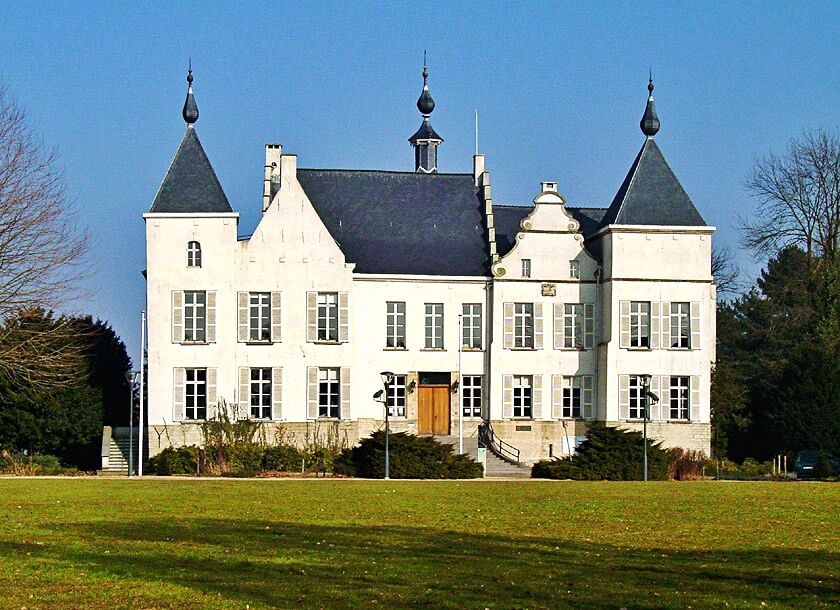
Wemmel Castle
Vlaams-Brabant
2.9km
castle, chateau
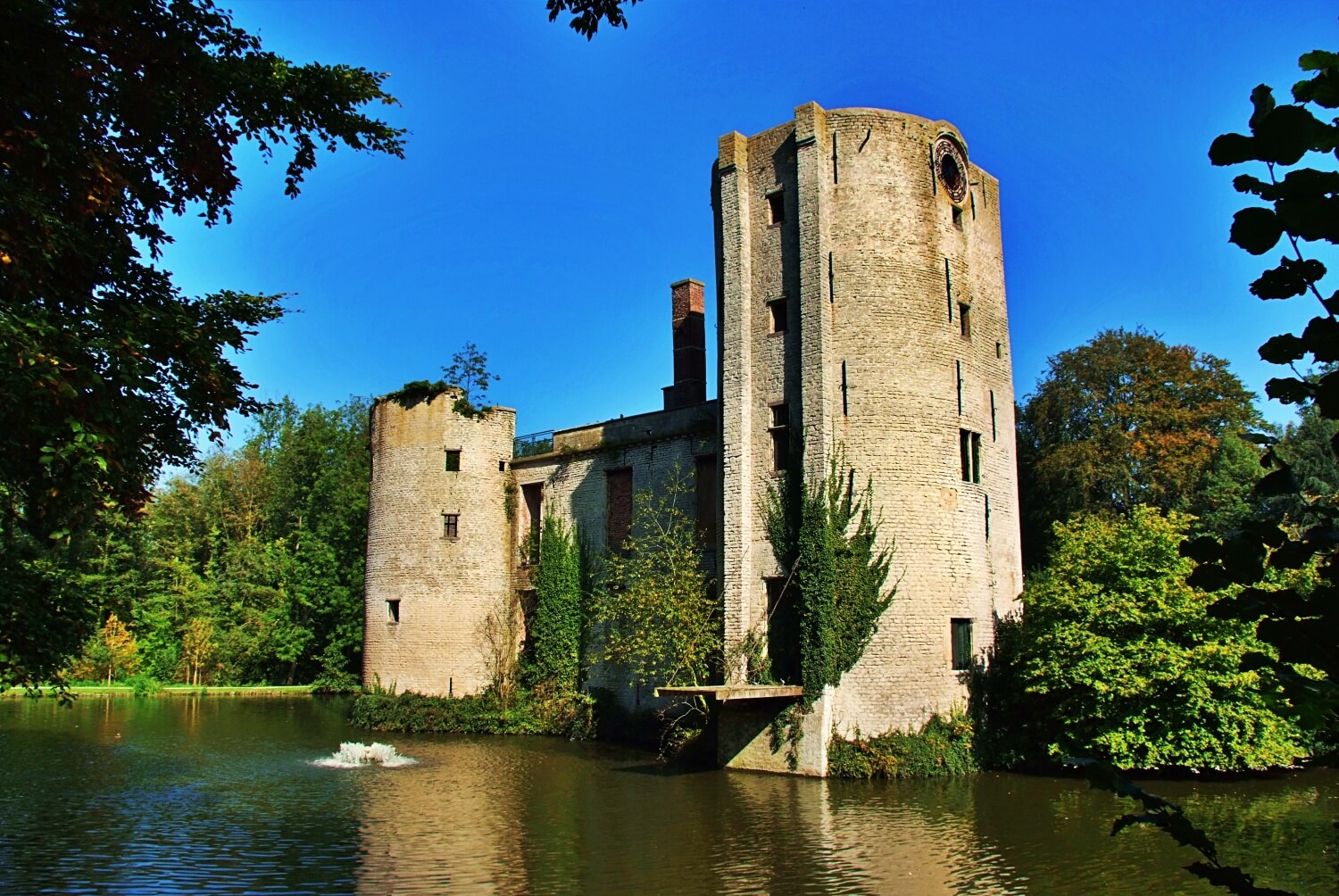
Prinsenkasteel
Vlaams-Brabant
3.0km
manor, mansion
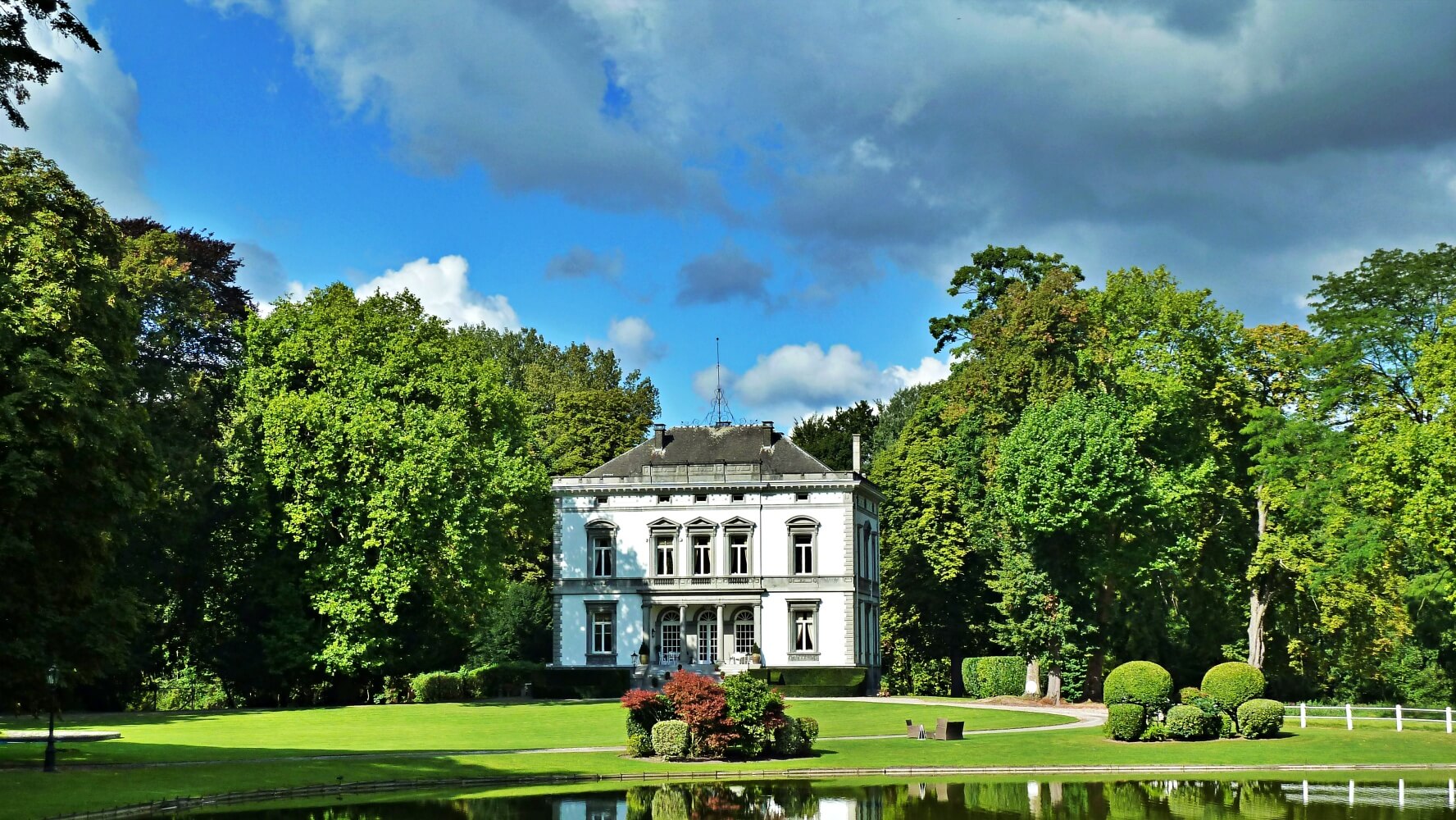
Kasteel van Imde
Flemish Brabant
4.8km
manor, mansion
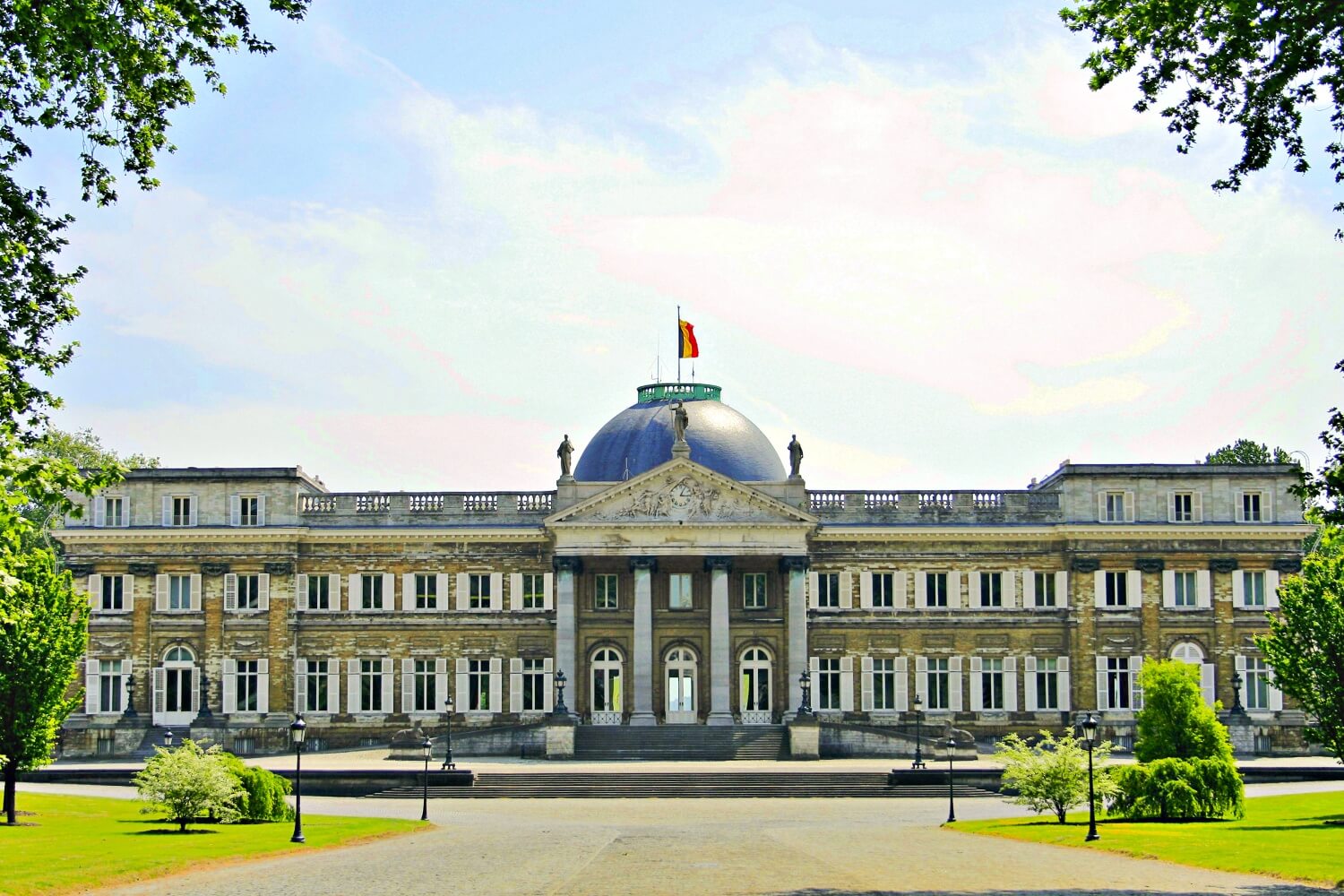
Palace of Laeken
Schaerbeek
5.1km
manor, mansion
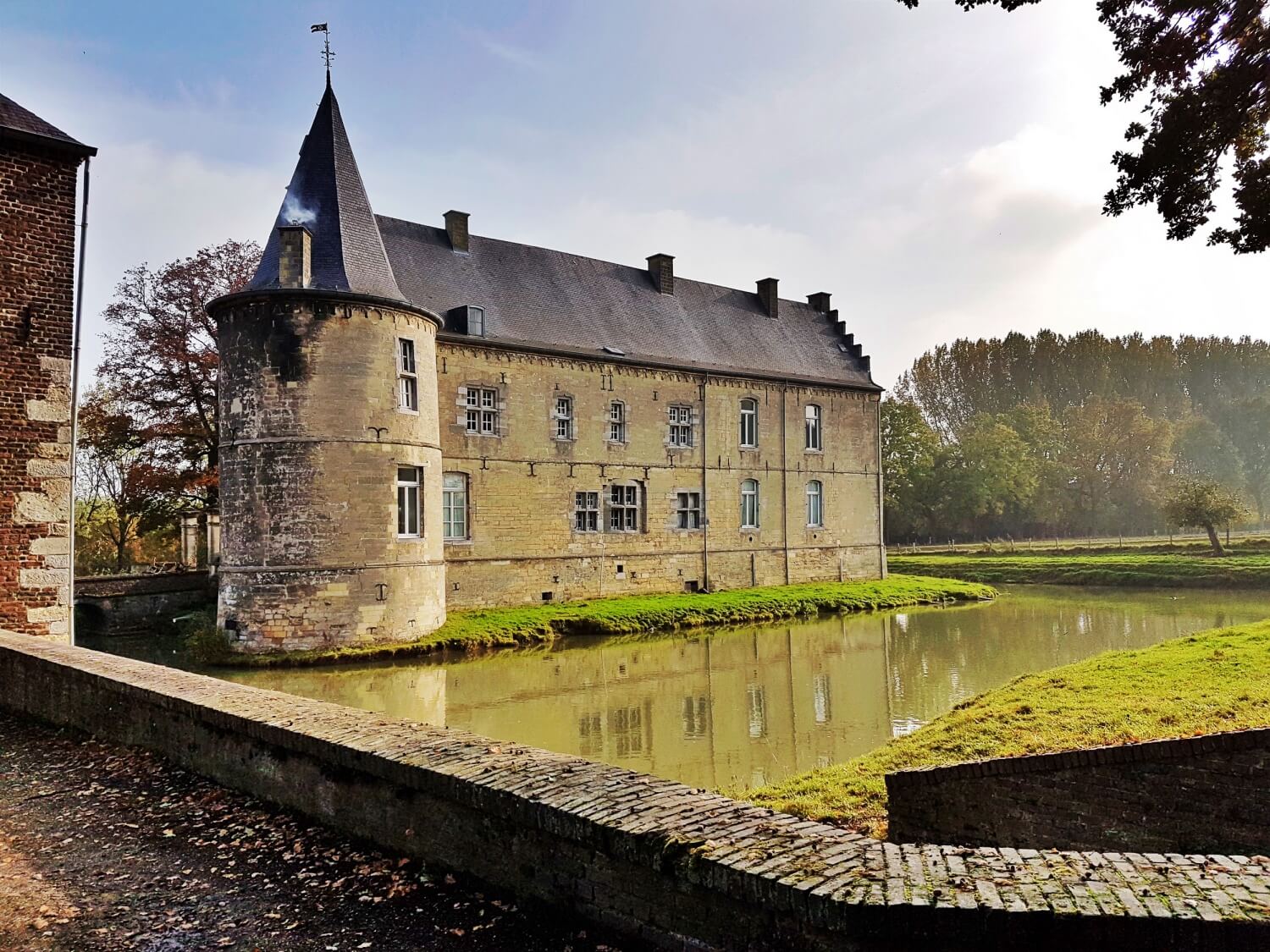
Rivieren Castle (Ganshoren)
Ganshoren
5.8km
castle, chateau
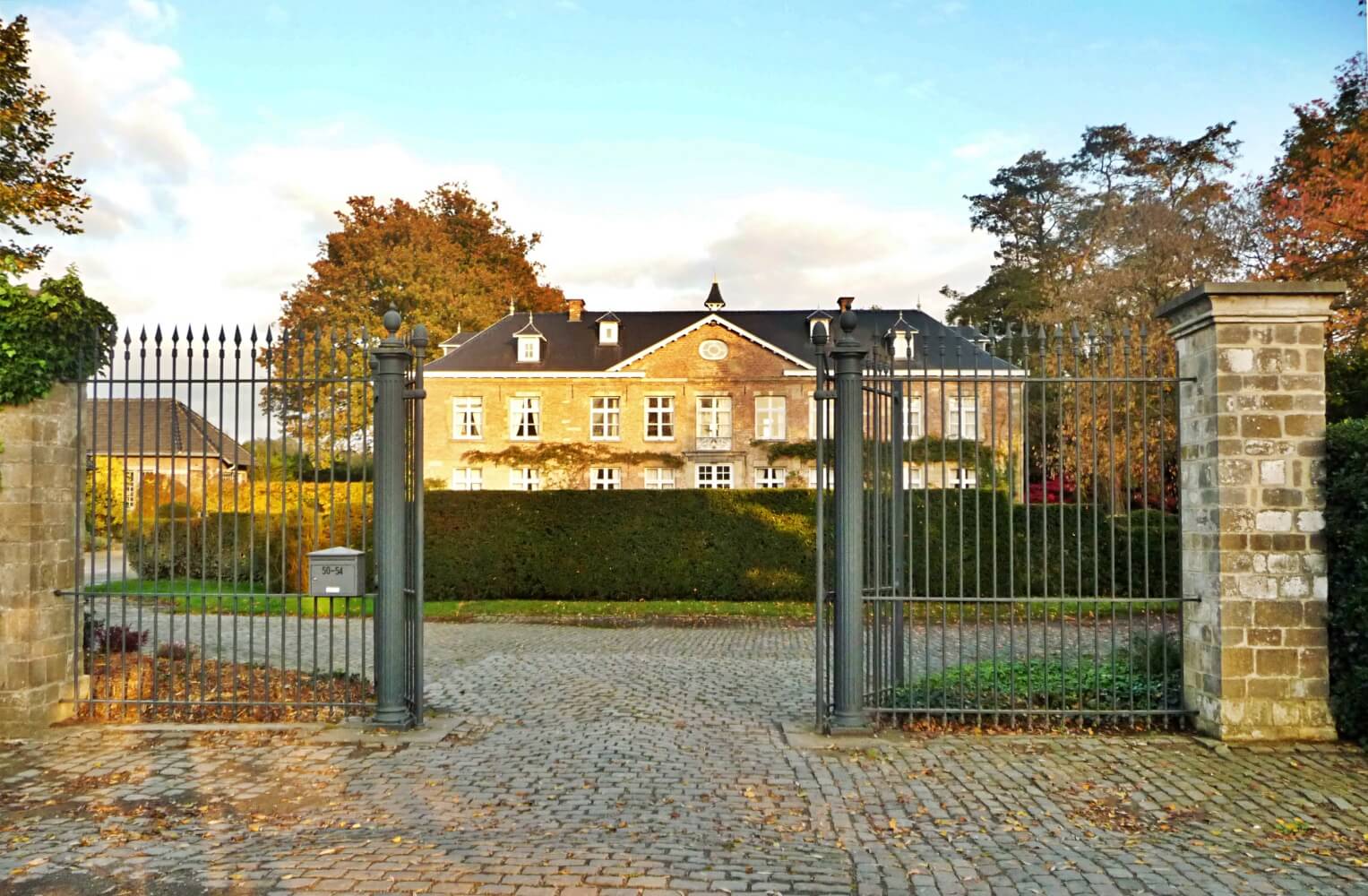
Kasteel de Eiken
Vlaams-Brabant
5.9km
manor, mansion
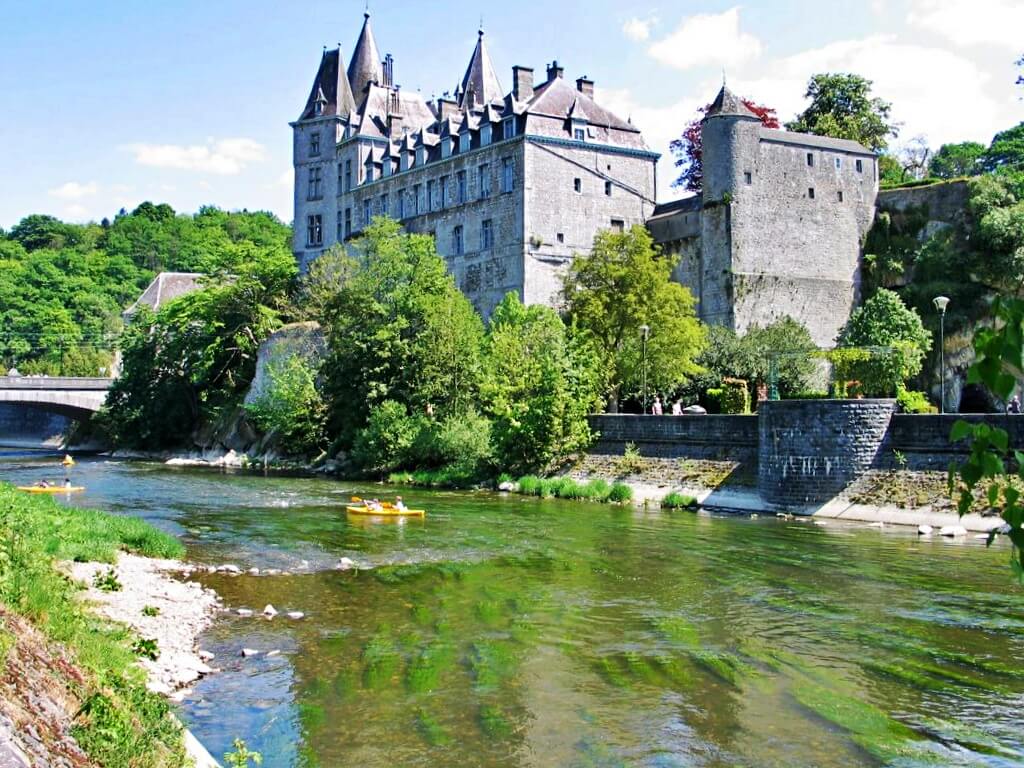
Kasteel d'Ursel in Durbuy
Vlaams-Brabant
6.0km
manor, mansion