Žabokreky nad Nitrou
Žabokreky nad Nitrou Trenčín county Slovakia
manor, mansion
Žabokreky nad Nitrou
Žabokreky nad Nitrou Trenčiansky kraj Slovakia
kaštieľ
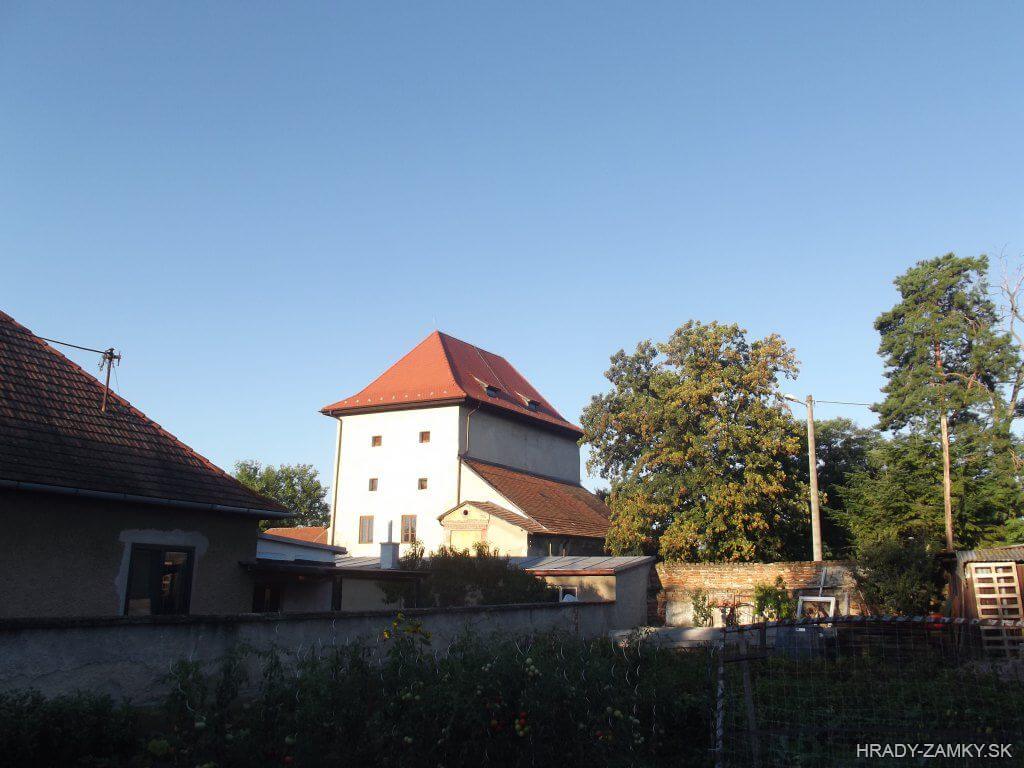
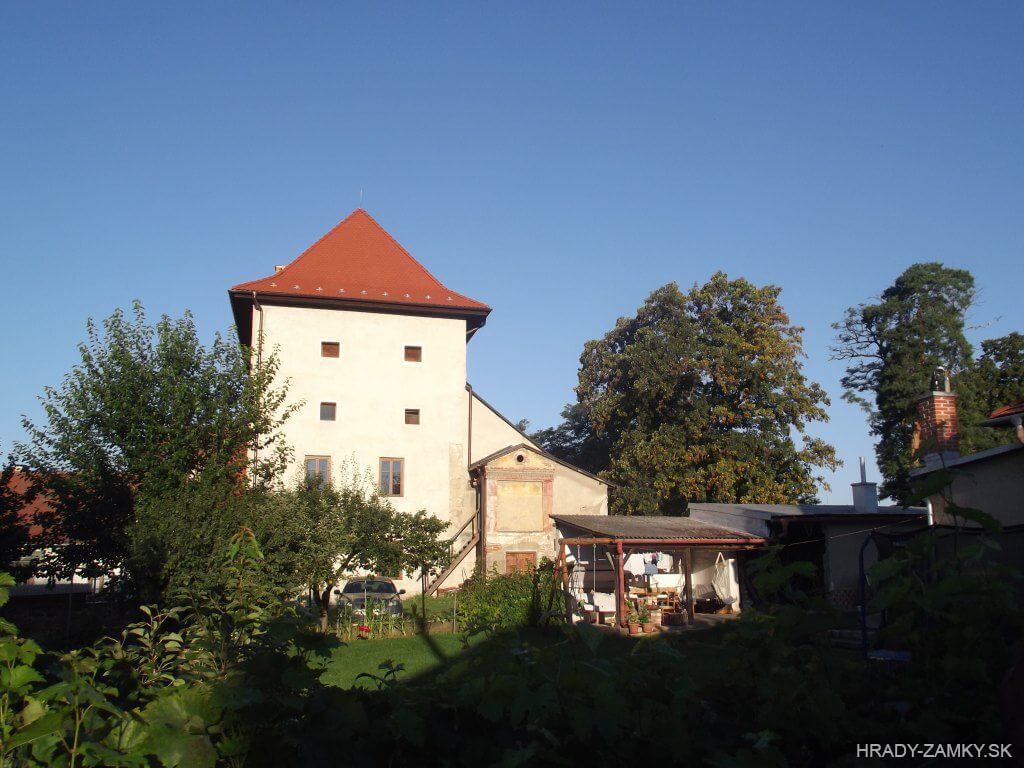
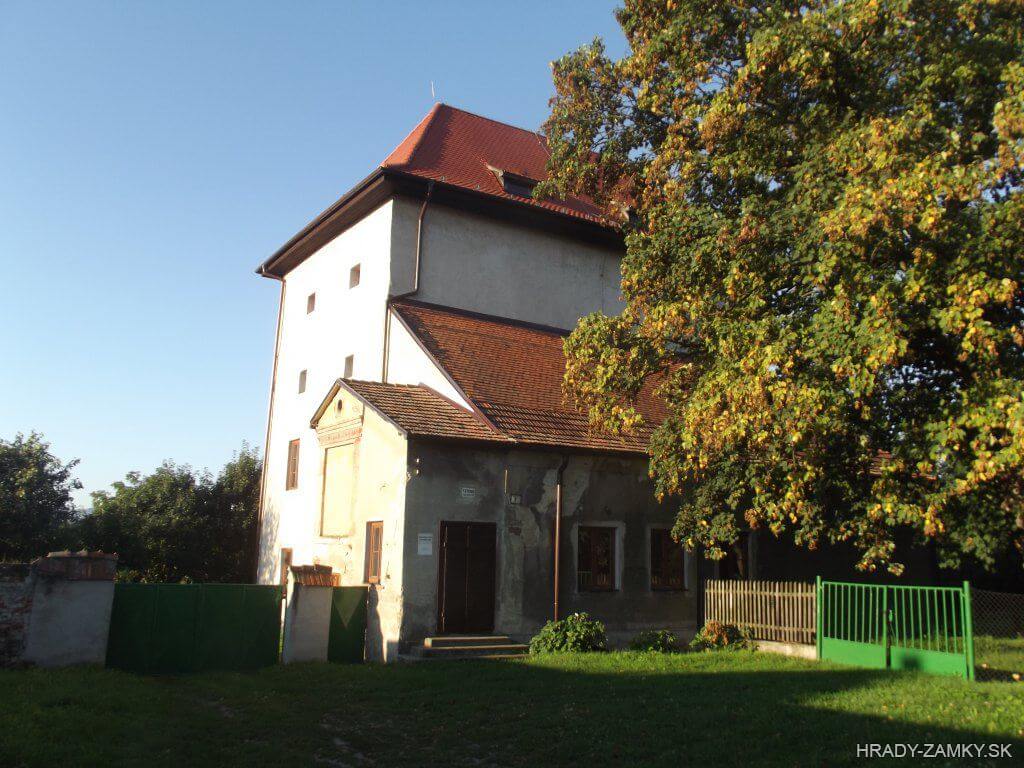
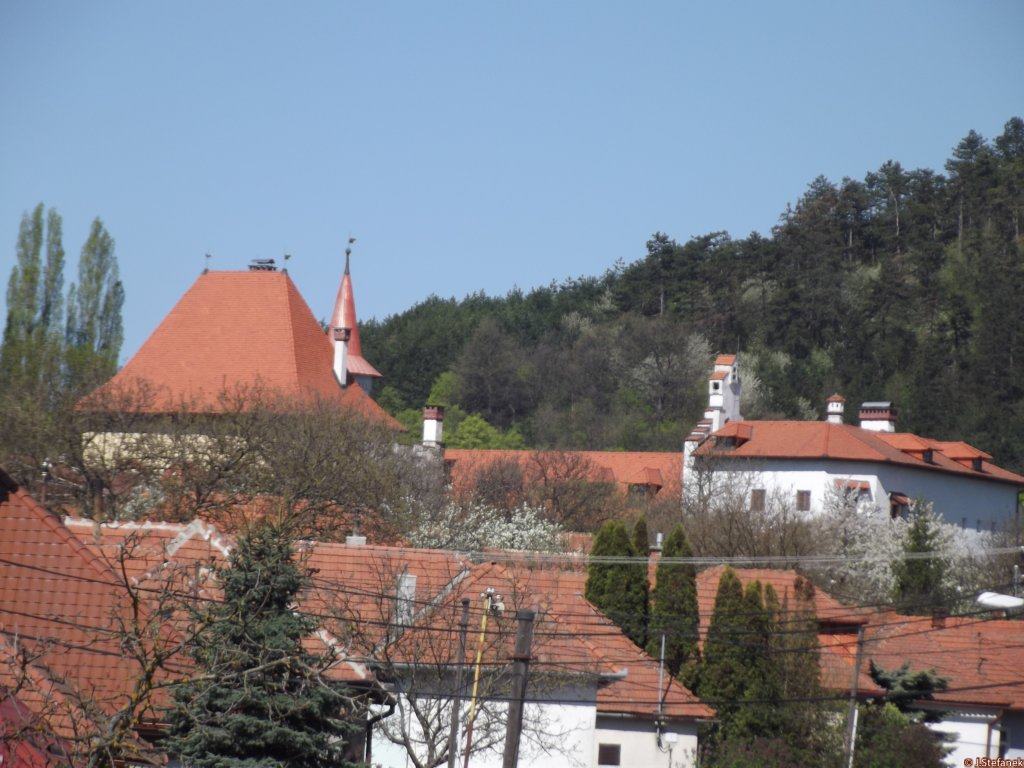
Originally a Gothic tower castle (also referred to as a fortified manor house), currently a residential tower, is located in the village of Žabokreky nad Nitrou, on the Nitra floodplain, about 6 km west of Partizánske
Pôvodne gotický vežový hrádok (uvádzaný aj ako opevnený kaštieľ), v súčasnosti obytná veža, sa nachádza v obci Žabokreky nad Nitrou, na Nitrianskej nive, asi 6km na Z od Partizánskeho
Previous names
Zabokrek, Nyitrazsámbokrét
Roads
The village of Žabokreky nad Nitrou is located a few km west of Partizánske. Topoľčianska Cesta passes through the village on which we get roughly to the center of the village, where there is a turn to Tehelná Street. We can park the car on the side of the main road, where is a temporary parking lane. Alternatively, if we turn from the main road to the aforementioned Tehelná Street, then along the road it is possible to find a place to stand.Immediately next to the main road, a path between the trees behind the residential houses leads to the former watchtower. The building is in private hands, entry is not possible. The access road is also on private land, enter only at your own risk.
Obec Žabokreky nad Nitrou sa nachádza pár km na západ od Partizánskeho. Cez obec prechádza Topoľčianska Cesta. Po nej sa dostaneme zhruba do stredu obce, kde je odbočka na Tehelnú ulicu. Auto môžeme odstaviť na okraji hlavnej cesty, kde je provizórny odstavný pruh. Prípadne ak z hlavnej cesty odbočíme na spomínanú Tehelnú ulicu, tak popri ceste je možné nájsť miesto na státie.Bezprostredne vedľa hlavnej cesty vedie súbežne cestička medzi stromami za obytnými domami až k bývalej strážnej veži. Budova je v súkromných rukách, vstup nie je možný. Prístupová cesta je taktiež na súkromnom pozemku, vstupujte na ňu len na vlastné riziko.
Description
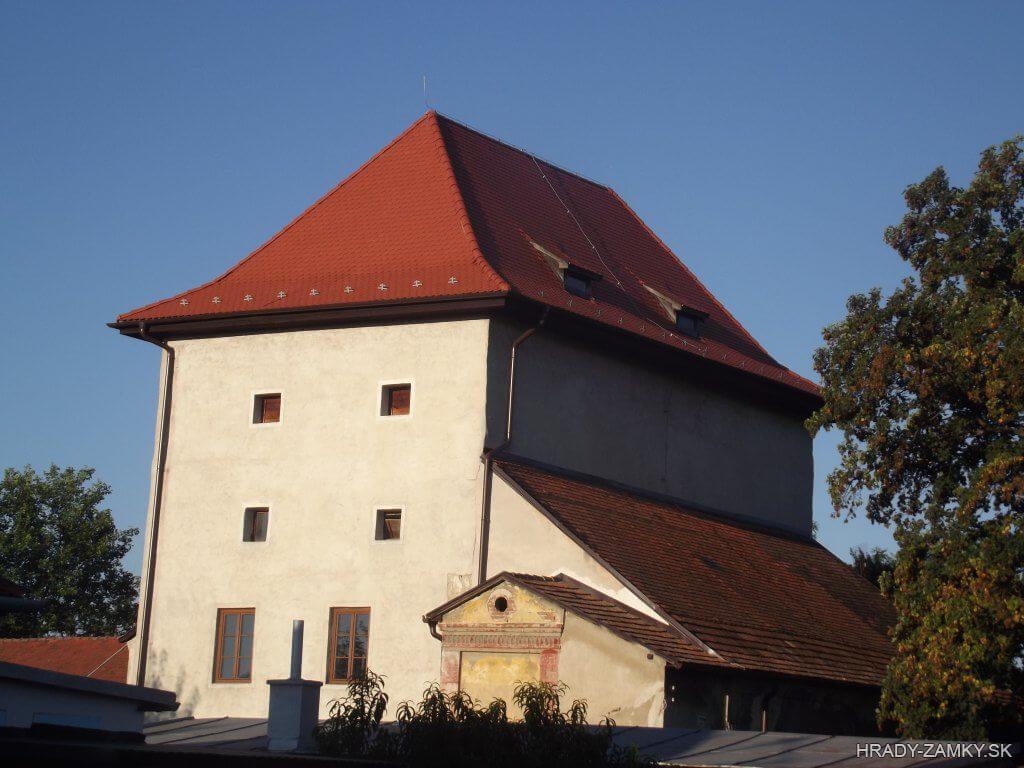
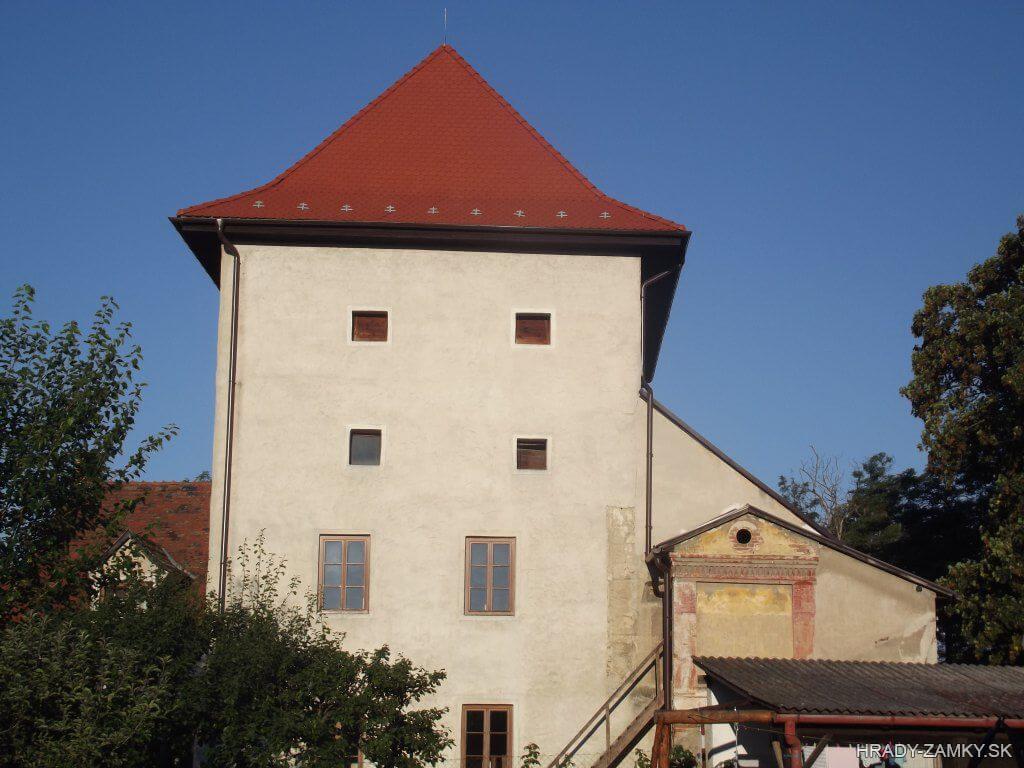
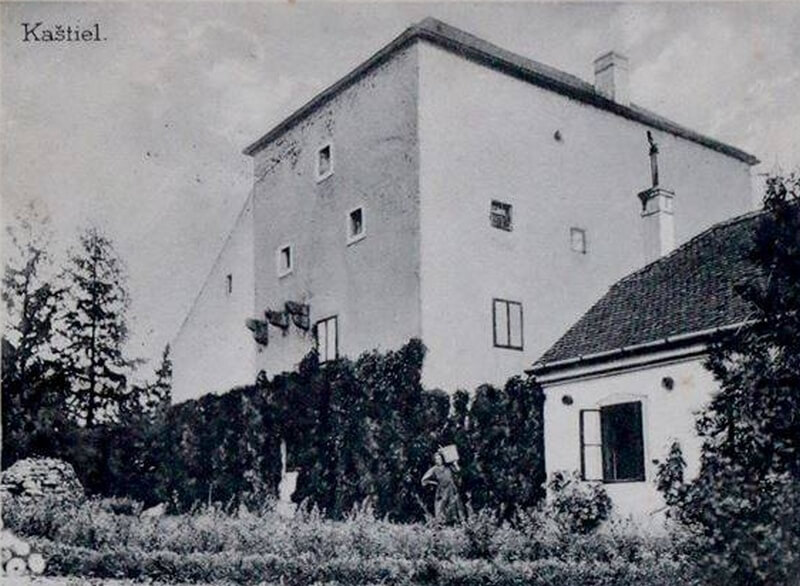
Massive prismatic tower building with a modernist facade. There were ramparts around it in the distant past. On the north side of the building are preserved parts of the Gothic consoles from the original gallery. The cellar is vaulted on the middle column. During the renaissance renovation, the corners were decorated with false sgraffito.In the 20th century, the building was rebuilt into a residential house. The internal layout has been completely rebuilt.
Mohutná hranolová vežová stavba s modernistickou fasádou. Okolo nej boli v dávnej minulosti valy. Na severnej strane budovy sú zachované časti gotických konzol z pôvodnej ochodze. Pivnica je zaklenutá na stredný stĺp. Pri renesančnej úprave nárožia ozdobili nepravými sgrafitami.V 20.storočí bol objekt prebudovaný na obytný dom. Vnútorná dispozícia bola úplne prestavaná.
History
There was a medieval settlement on the territory of Žabokreky. The year 1291 should be considered only as the year of the first written mention of an ancient settlement that has existed for a long time. Žabokreky was an old aristocratic property owned by the Zsámbokréthy nobles, who belonged to the higher nobility.
During the time of Karol Róbert, the Zsámbokréthy family probably built a castle here around 1320 in the form of a fortified tower building with ramparts, sometimes referred to as a fortified manor house. In 1530, Turkish troops penetrated deep into the territory of Slovakia. Due to the fact that a fortified manor house stood on the edge of Žabokreky, the Turks did not completely destroy Žabokreky. They burned only the northern, unprotected end.
During the dual rule of Ferdinand I and Ján Zápoľský, the robber knights Podmanickovci also occupied the manor house in Žabokreky, which they began to fortify even more. The Habsburg court could not ignore it, so he tried to conquer the manor. However, the Podmanick family survived. The ownership conditions probably stabilized only after the extinction of the Podmanicky family in 1559, when the building was returned to Pavel Zsámbokréthy.
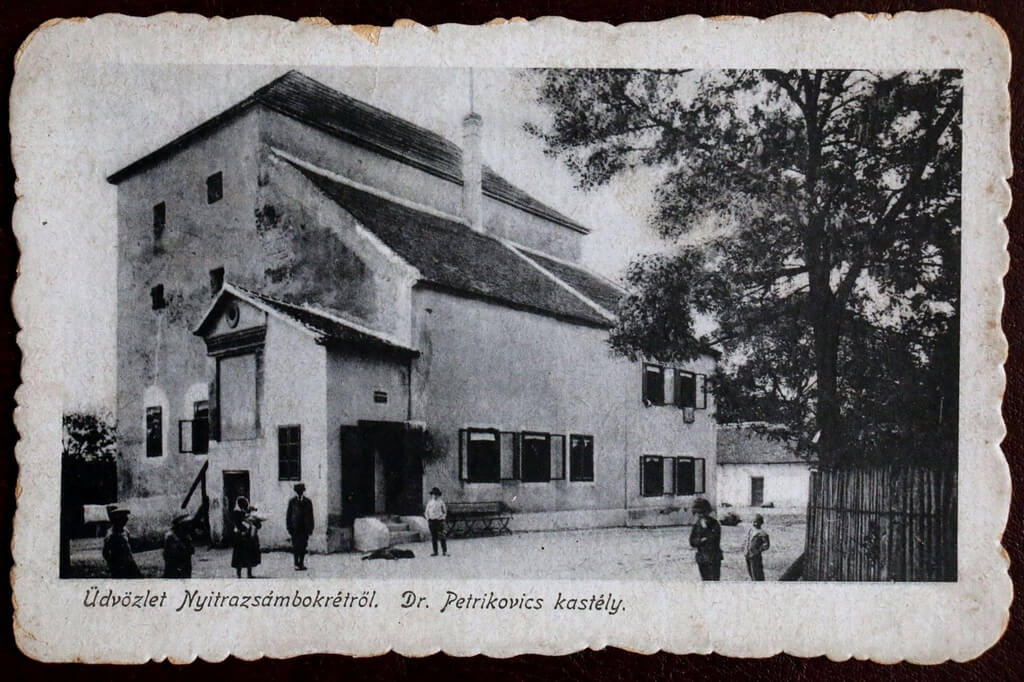
The castle was renovated in the Renaissance in the 16th and 17th centuries. The Turks began to threaten the Ponitria area again. However, even in these turbulent times, Žabokreky did not cease to be the center of business and social activity. The castle was damaged by fire and after the restoration it no longer had its original height, it was one floor lower. The building then fell into the hands of Bishop Ürményi and later Vincent Petrikovits.
Ground-floor extensions were built in the 19th century. For a time, the building served as a post office and in the 20th century it was rebuilt into a residential house. The object is still in the hands of the descendants of Petrikovits.
Na území Žabokriek existovala stredoveká osada. Rok 1291 treba považovať len za rok prvej písomnej zmienky o starobylej už dávno jestvujúcej osade. Žabokreky boli starým šľachtickým majetkom, ktorí vlastnili šľachtici Zsámbokréthyovci, ktorí patrili k vyššej šľachte.
Za čias Karola Róberta tu zrejme Zsámbokréthyovci okolo roku 1320 postavili hrádok v podobe opevnenej vežovej stavby s valmi, niekde uvádzaný aj ako opevnený kaštieľ. V roku 1530 vnikli turecké oddiely hlboko na územie Slovenska. Vďaka tomu, že na okraji Žabokrekov stál opevnený kaštieľ, Turci nezničili Žabokreky úplne. Vypálili iba severný, nechránený koniec.
Počas dvojvládia Ferdinanda I. a Jána Zápoľského lúpežní rytieri Podmanickovci obsadili aj kaštieľ v Žabokrekoch, ktorý začali ešte viac opevňovať. Habsburský dvor to nemohol nechať bez povšimnutia a tak sa snažil kaštieľ dobyť. Podmanickovci sa však udržali. Vlastnícke pomery sa zrejme ustálili až po vymretí Podmanickovcov v roku 1559, kedy bol objekt vrátený Pavlovi Zsámbokréthymu.
Hrádok bol v 16. a 17. storočí renesančne upravovaný. Turci začali znova ohrozovať oblasť Ponitria. Žabokreky však ani v týchto pohnutých dobách neprestávali byť centrom obchodného a spoločenského ruchu. Hrádok poškodil požiar a po obnove už nedisponoval pôvodnou výškou, bol o podlažie nižší. Objekt sa potom dostal do rúk biskupa Ürményiho a neskôr Vincenta Petrikovitsa.
V 19. storočí vznikli prízemné prístavby. Istý čas objekt slúžil ako pošta a v 20. storočí bol prebudovaný na obytný dom. Objekt je stále v rukách potomkov Petrikovitsa.
Myths and legends
There are no myths available.
K tomuto objektu nie sú dostupné žiadne povesti
Useful information
The building is in private hands, inaccessible to the public.
Budova je v súkromných rukách, pre verejnosť neprístupná.
Nearby castles
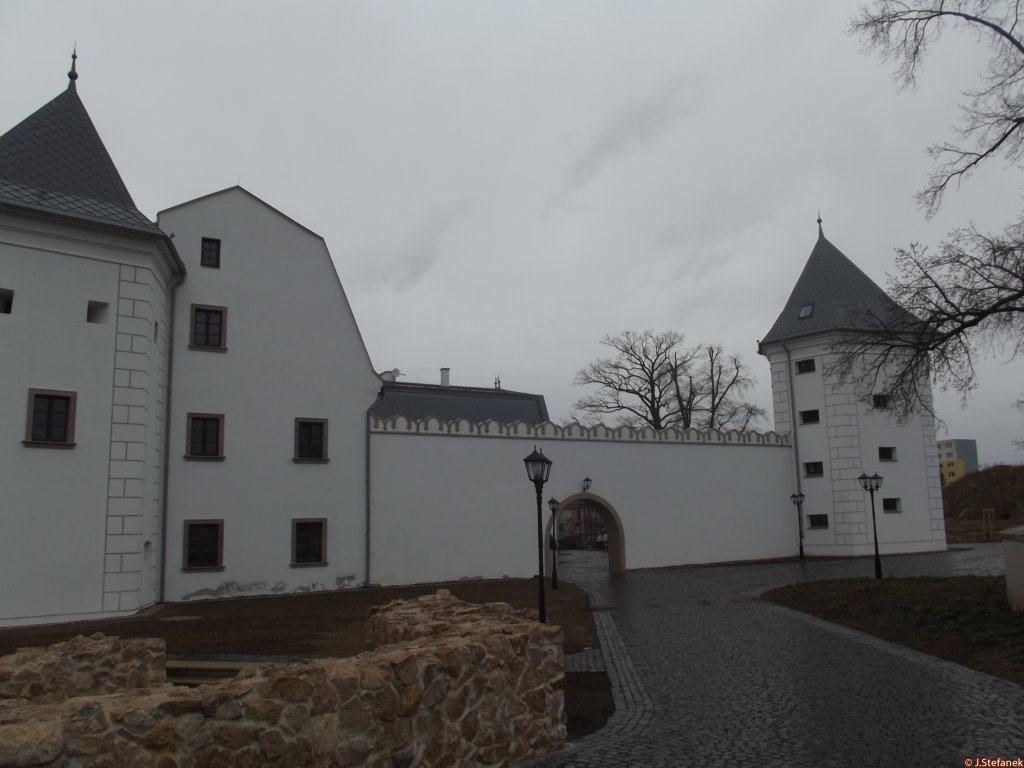
Bošany mansion
Bošany
6.1km
manor, mansion
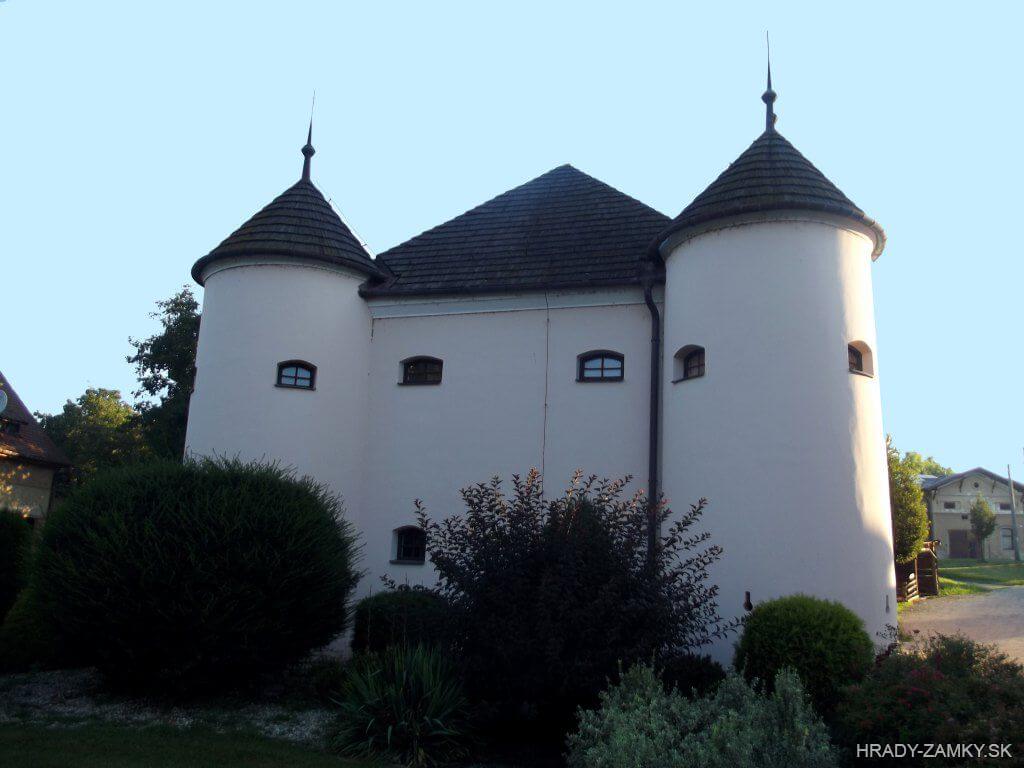
Klátova Nová Ves
Klátova Nová Ves
6.3km
manor, mansion
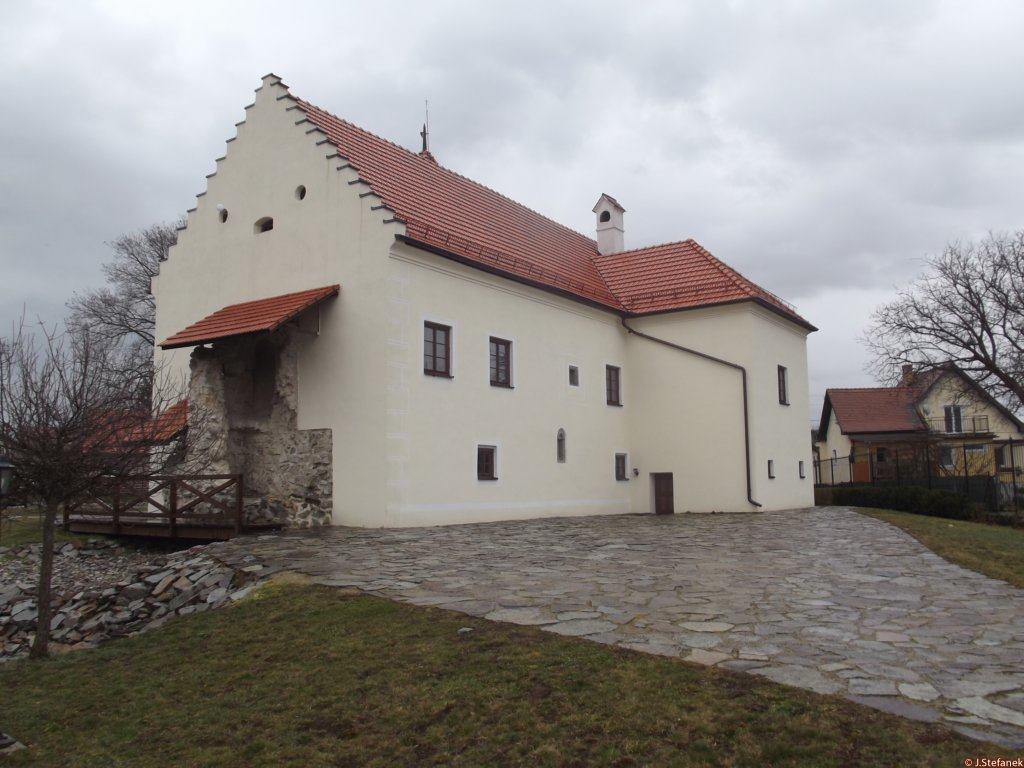
Šimonovany
Partizánske
6.5km
manor, mansion
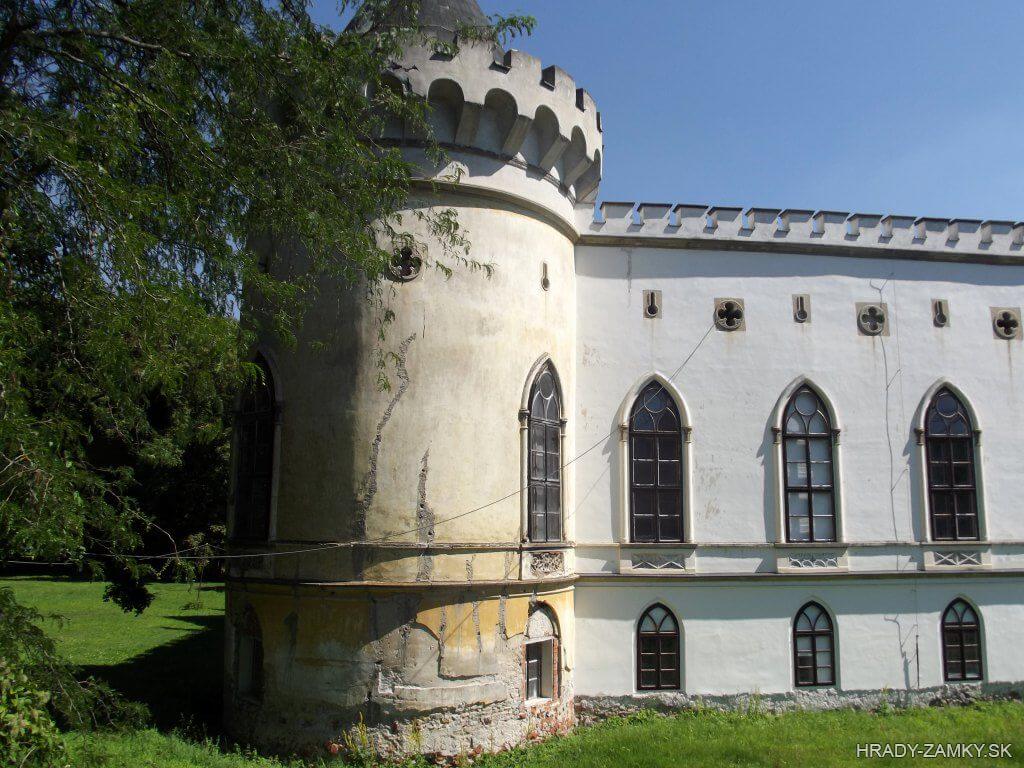
Veľké Uherce
Veľké Uherce
9.7km
manor, mansion

Čereňany
Čereňany
13.5km
manor, mansion
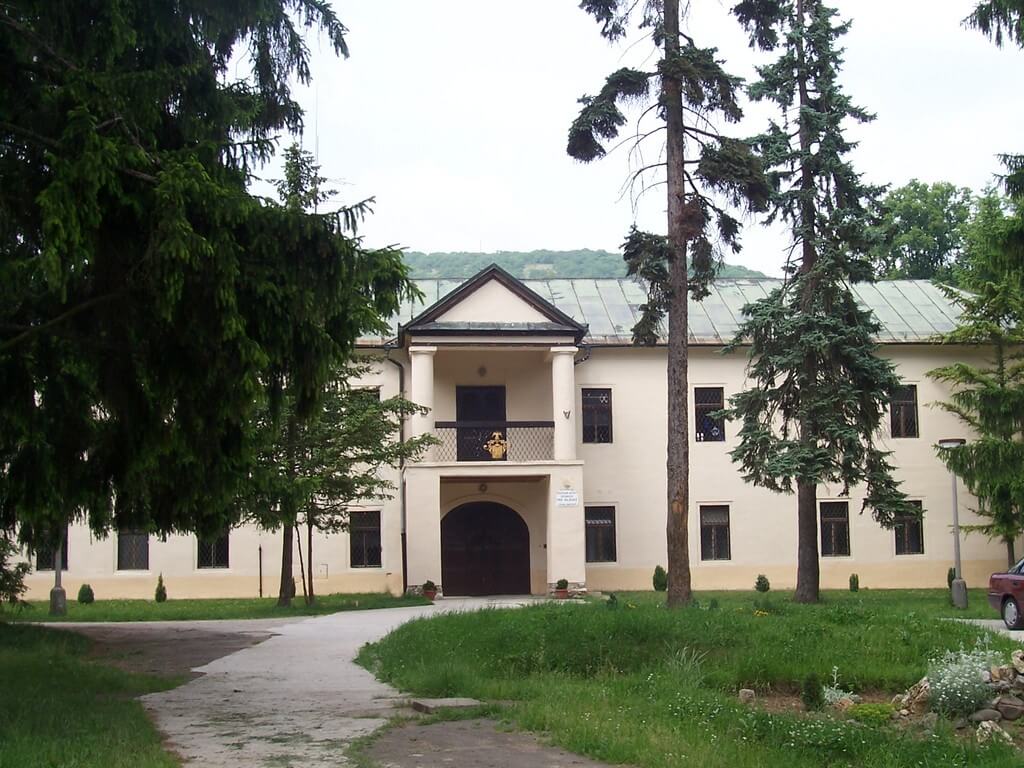
Chalmová
Bystričany-Chalmová
13.9km
manor, mansion
Skýcov
Skýcov
15.7km
manor, mansion