Viniansky castle
Vinné Košice county Slovakia
castle ruin
Viniansky hrad
Vinné Košický kraj Slovakia
zrúcanina hradu
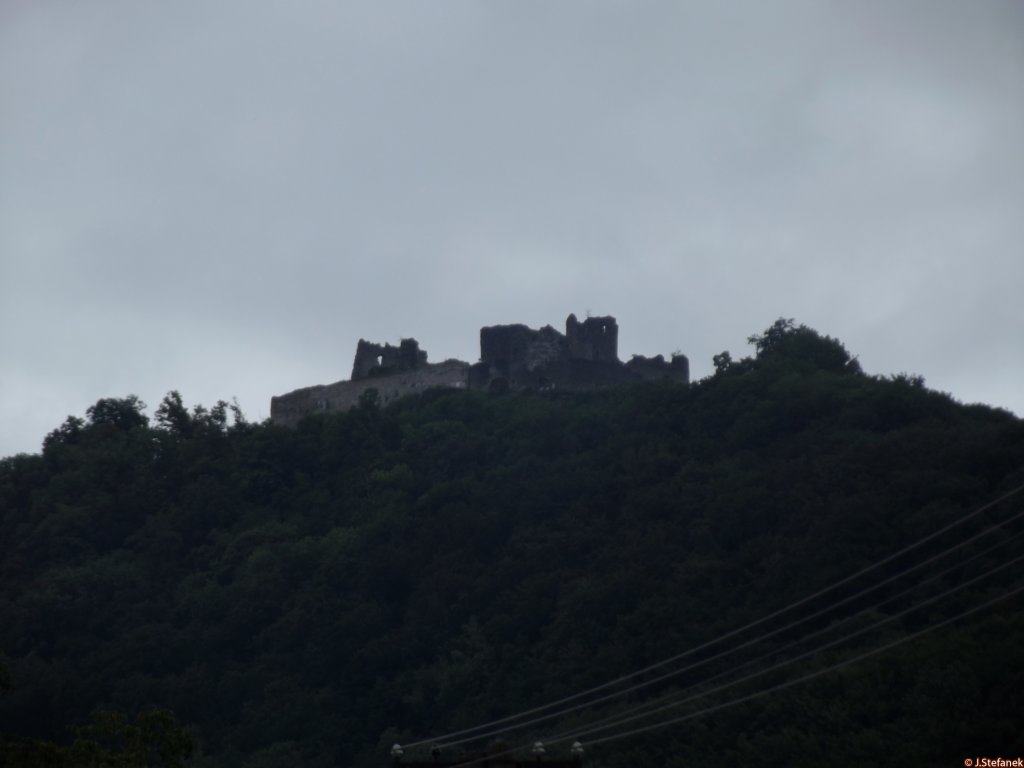
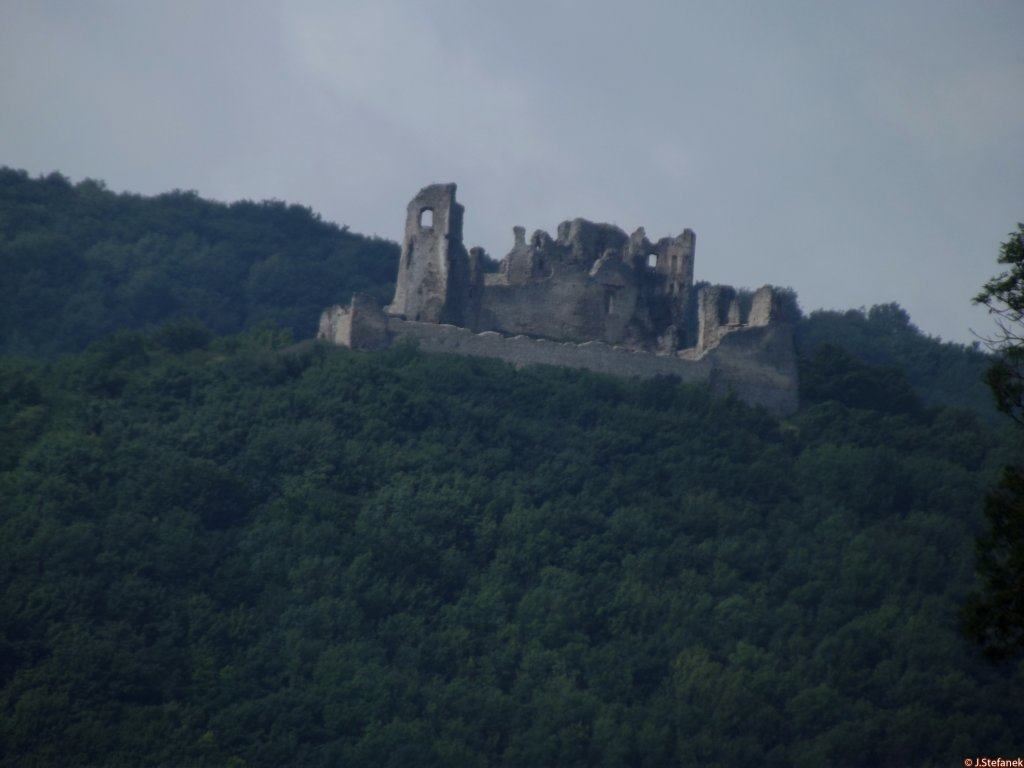
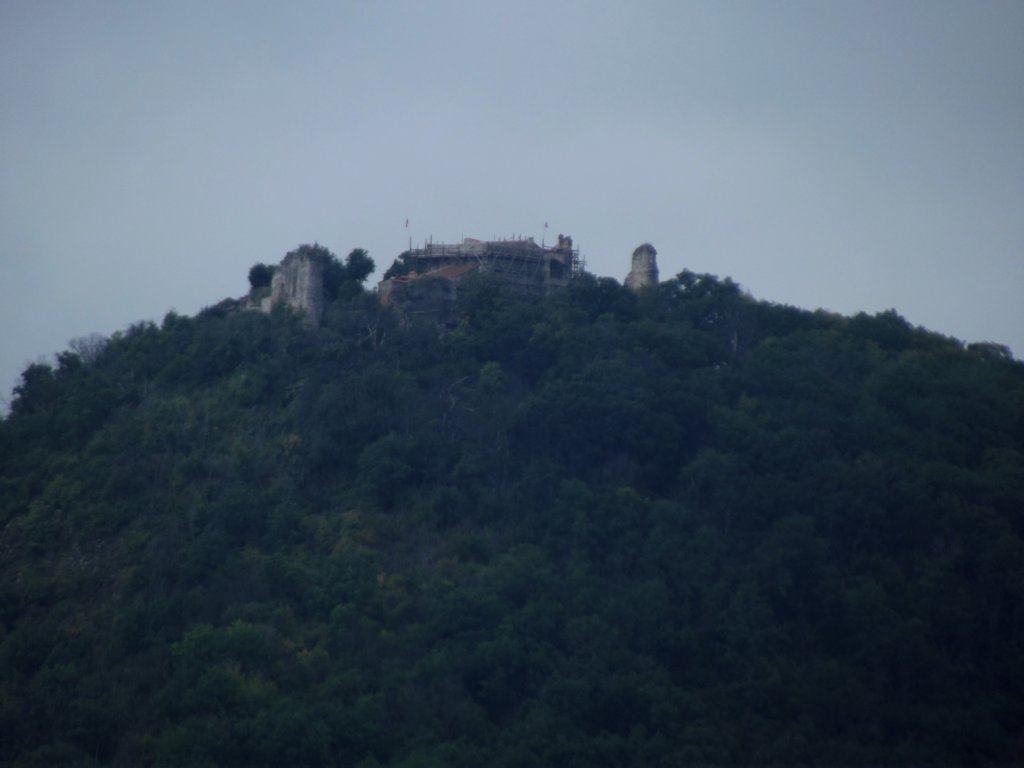
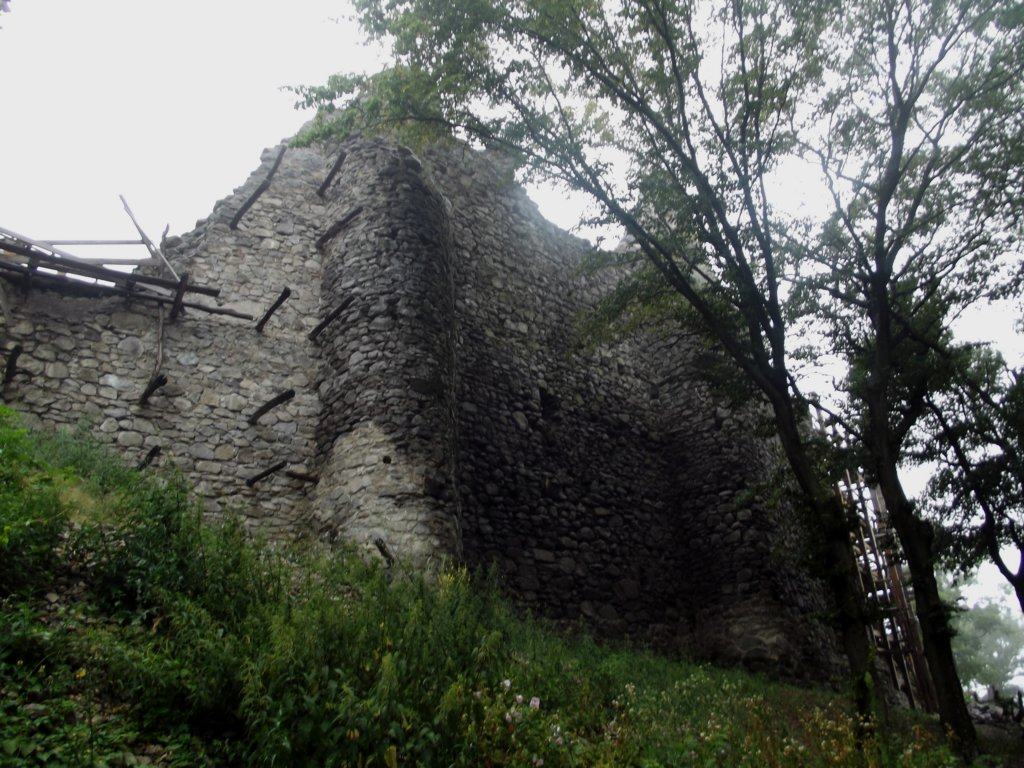
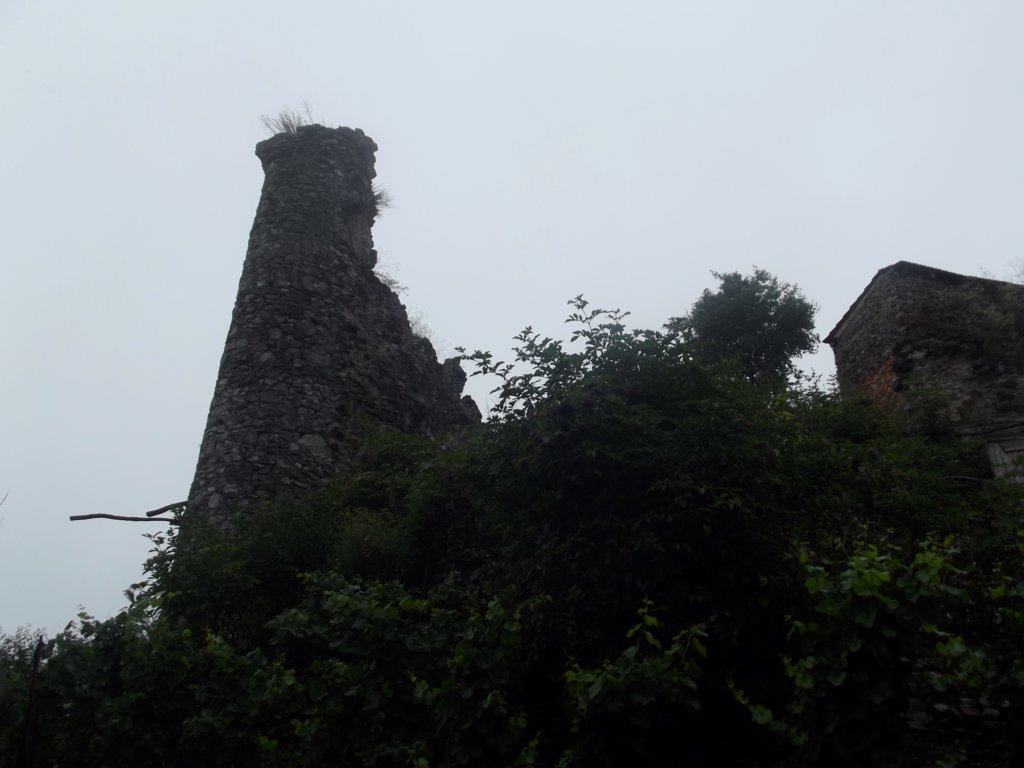
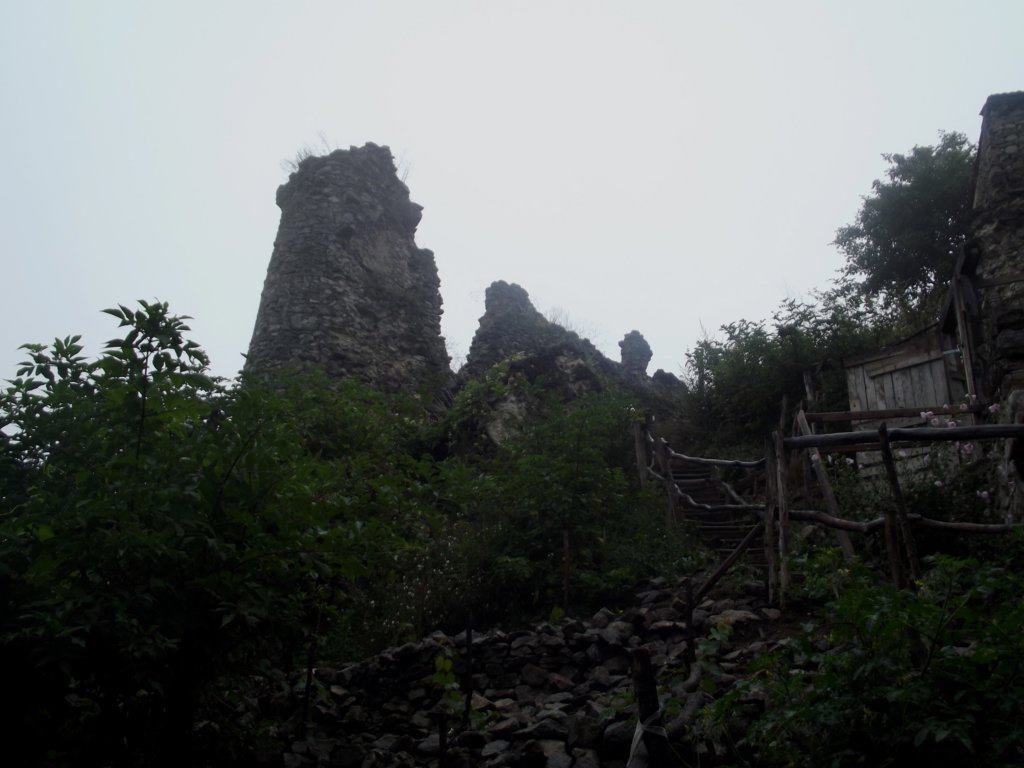
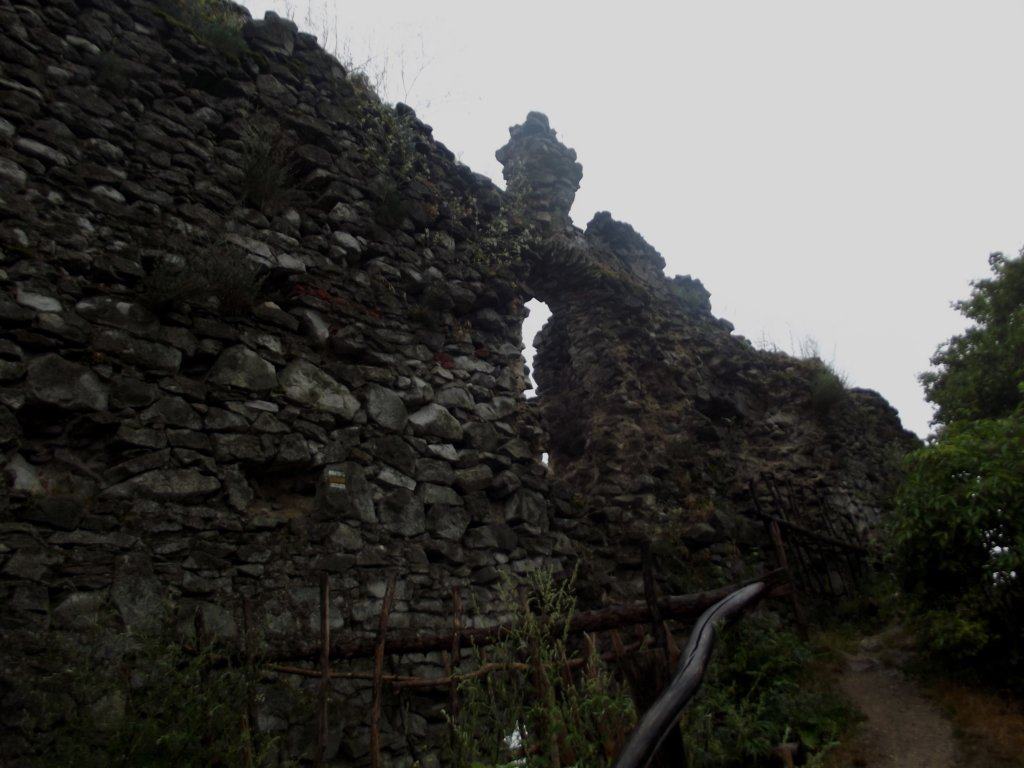
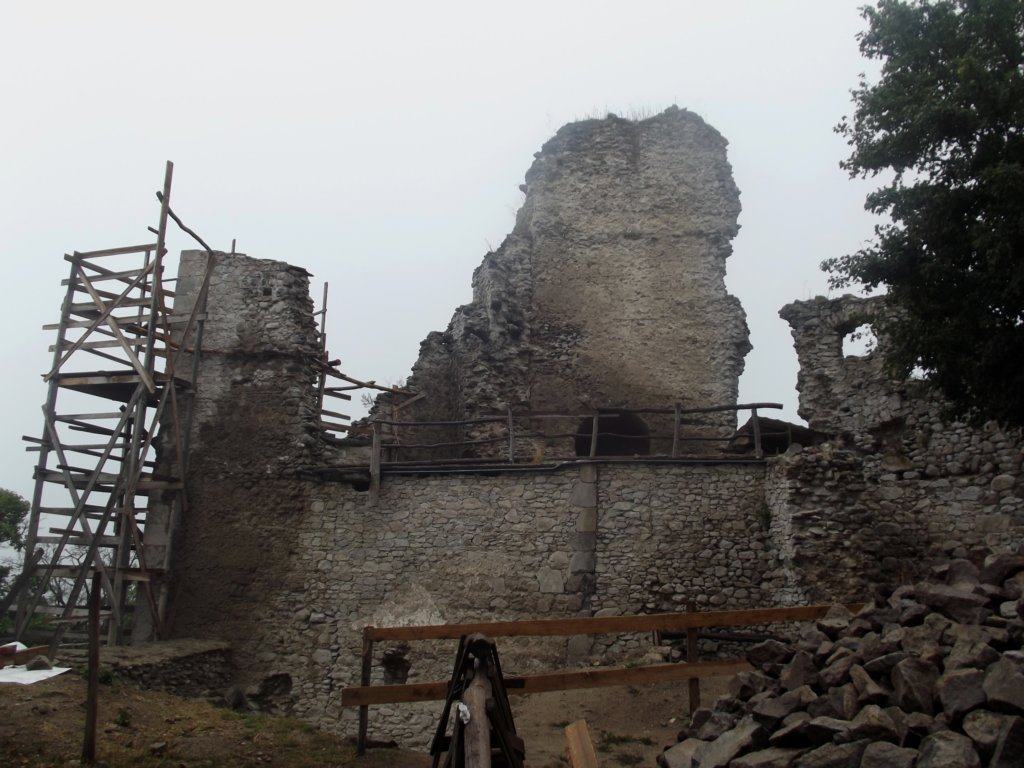
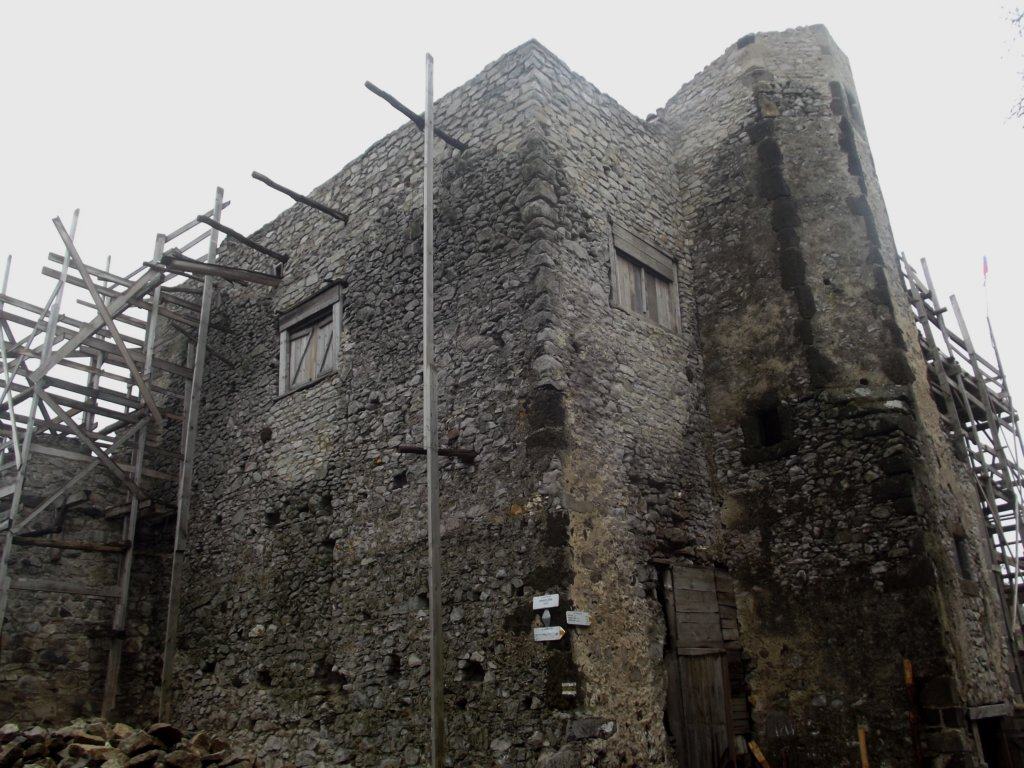
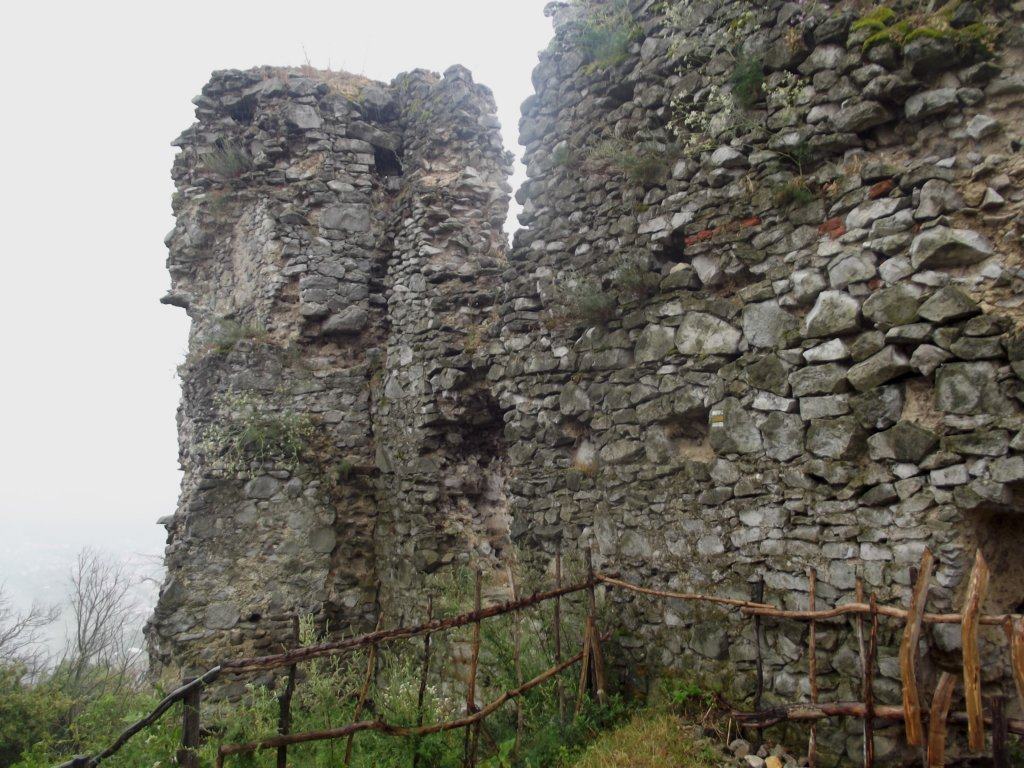
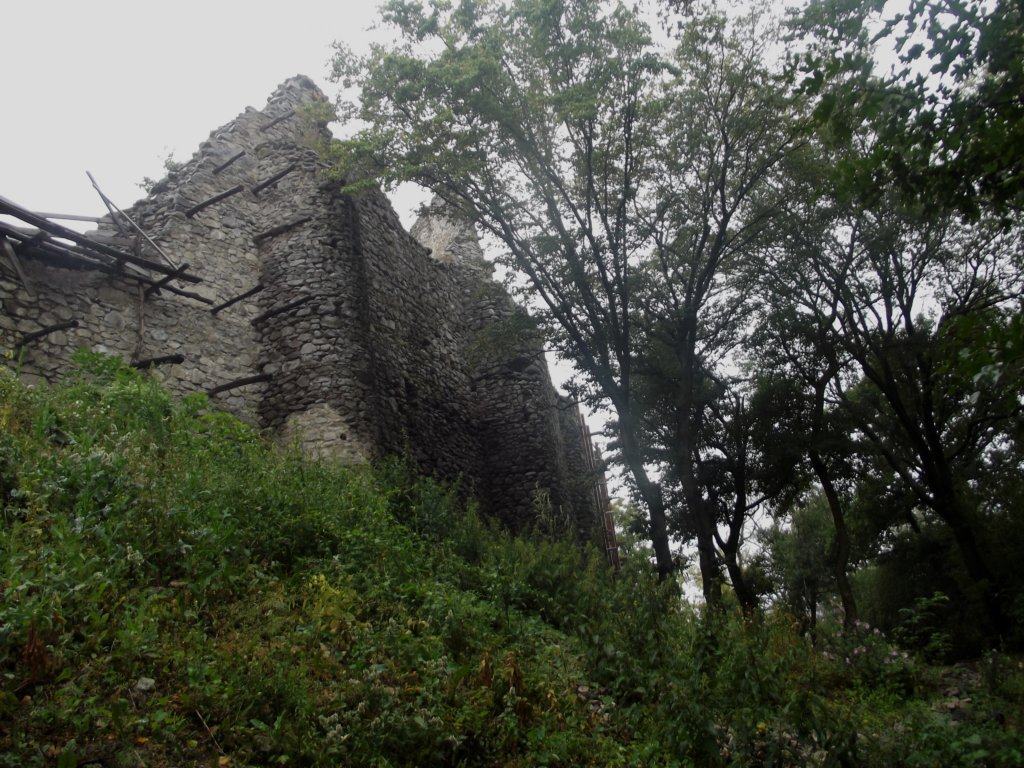
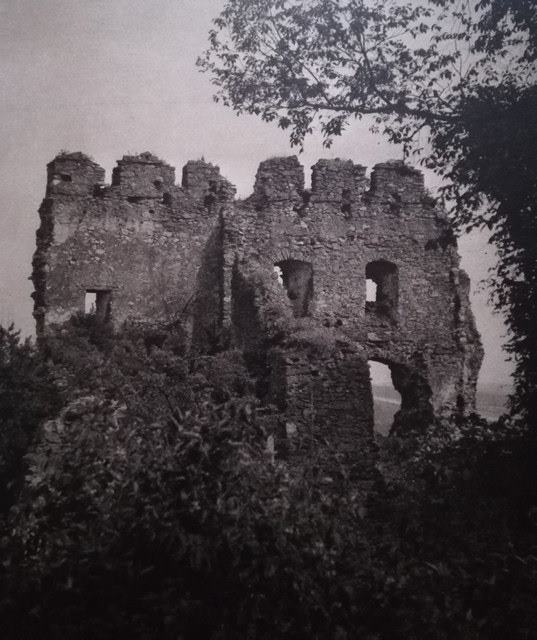
The ruins of the castle on the conical andesite hill at the periphery of the SW part of the Vihorlat Hills above the village of Vinné
Zrúcanina hradu na kužeľovitom andezitovom vrchu v okrajovej polohe JZ časti Vihorlatských vrchov nad obcou Vinné.
Previous names
Wynna, Vinna, Winny, Vinná
Roads
Trasa 1: To the castle Vinné we get easiest way on the yellow hiking trail from Vinianske Lake. Next to the pension Odysea along a narrow road until we come to a small triangular crossroads, where we can also park. From here there is also a road towards Humenné, but if we want to shorten a considerable part of the road (about 30 minutes), we continue along the asphalt road on the left, where there is a ban on entry. On weekdays, however, the barrier is usually open and in agreement with the Zemplínsko-užská hradná cesta companz, it is possible to continue by car along this road to the crossroads, where we leave the car at the edge of the forest road. The road is badly damaged, but passable. From the crossroads, it is about a 15-minute gentle climb to the castle through the forest on a yellow trail.
Trasa 1: K hradu Vinné sa dostaneme najjednoduchšie žltou turistickou trasou od Vinianskeho jazera. Popri penzióne Odysea po úzkej ceste, až prídeme na malé trojuholníkovú križovatku, kde môžeme aj zaparkovať. Odtiaľto vedie aj cesta smerom na Humenné, avšak ak si chceme značný kus cesty skrátiť (asi 30 minút), pokračujeme po asfaltke vľavo, kde je zákaz vjazdu. V pracovných dňoch býva ale závora otvorená a po dohode s OZ Zemplínsko-užská hradná cesta je možné autom ďalej pokračovať po tejto ceste až k rázcestiu, kde na okraji lesnej cesty necháme auto. Cesta je značne poškodená, ale schodná. Od rázcestia je to k hradu cez les žltou trasou zhruba 15 minút mierneho stúpania.
Trasa 2: Another option is access from the village of Vinné by a blue route, which starts at the first turn to the left behind the church in the village and leads through the gardening area. It is possible to park under the forest on a field road, from there on foot to the mentioned crossroads and from there to the castle.
Trasa 2: Ďalšou možnosťou je prístup z obce Vinné modrou trasou, ktorá začína na prvej odbočke vľavo za kostolom v obci a vedie cez záhradkársku oblasť. Pod lesom na poľnej ceste je možné zaparkovať, odtiaľ peši až k spomínanému rázcestiu a odtiaľ na hrad.
Trasa 3: Access from Trnava pri Laborci village along the yellow route. There is a small parking lot by the local library, from there we continue to the right between the houses, later through the forest to the castle.
Trasa 3: Prístup z Trnavy pri Laborci po žltej trase. Pri miestnej knižnici je menšie parkovisko, odtiaľ pokračujeme cestou doprava pomedzi domy, neskôr cez les až k hradu.
Trasa 4: Among longer routes belongs the access from the village of Porúbka, where we leave the village towards the cross above the village, where we park along the road and enter the forest with a blue route to the crossroads and from there to the castle.
Trasa 4: K dlhším trasám môžeme zaradiť prístup z obce Porúbka, kde vyjdeme z obce smerom ku krížu nad obcou, kde popri ceste zaparkujeme a vstúpime do lesa modrou trasou k rázcestiu a odtiaľ k hradu.
Description
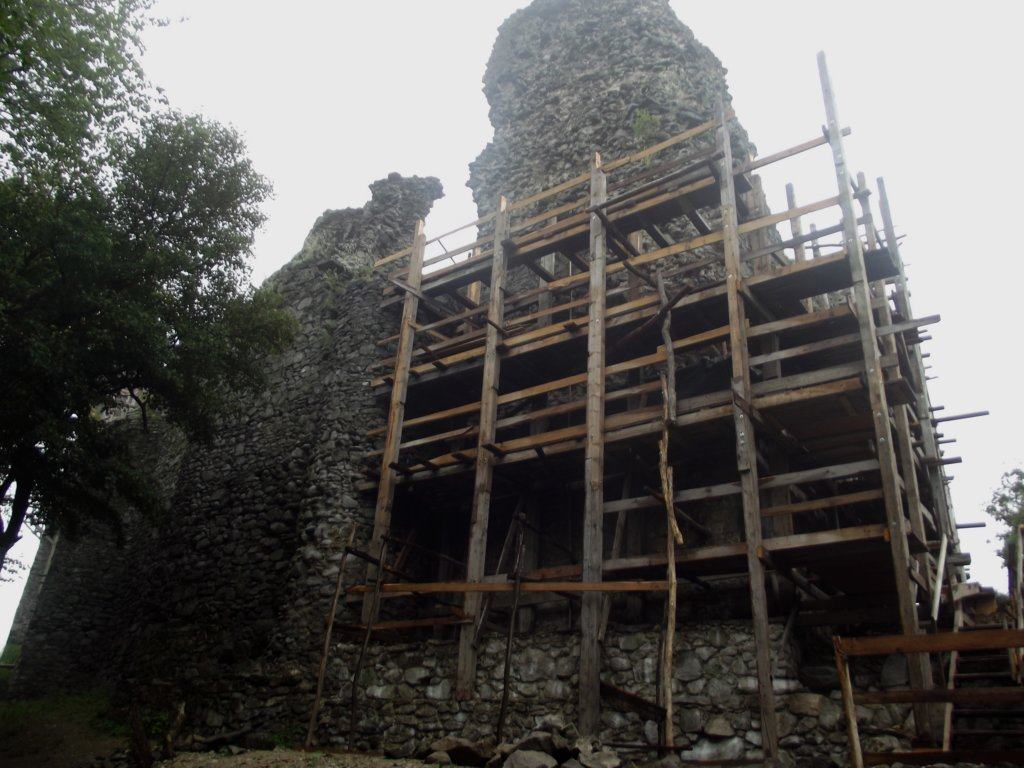
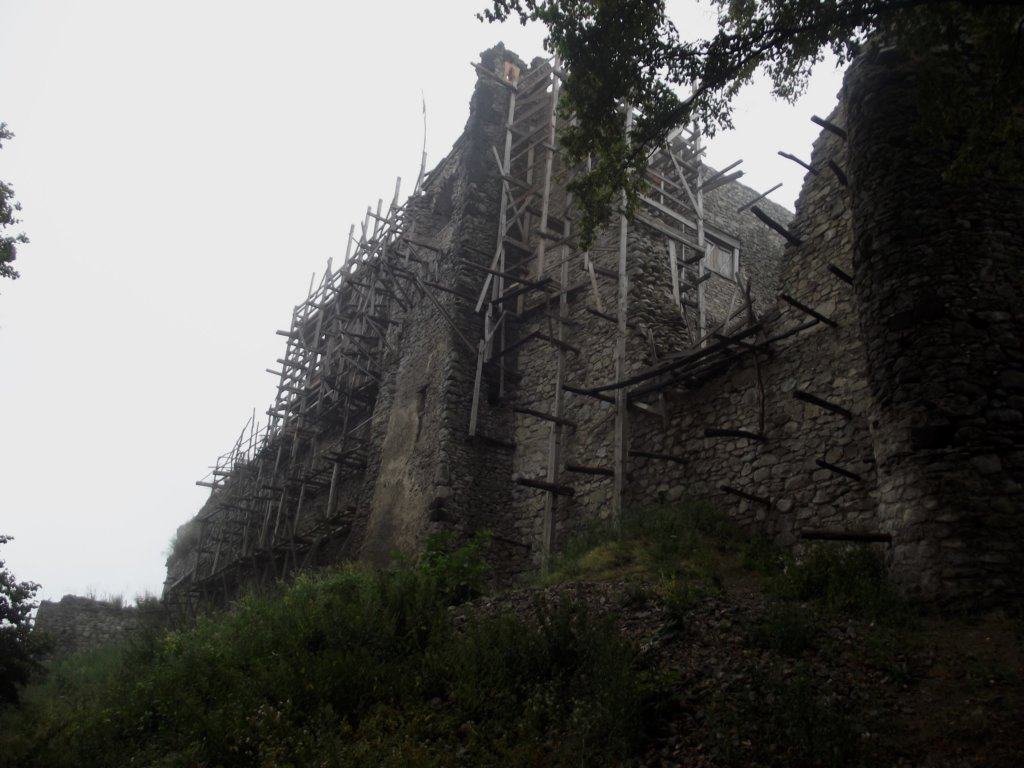
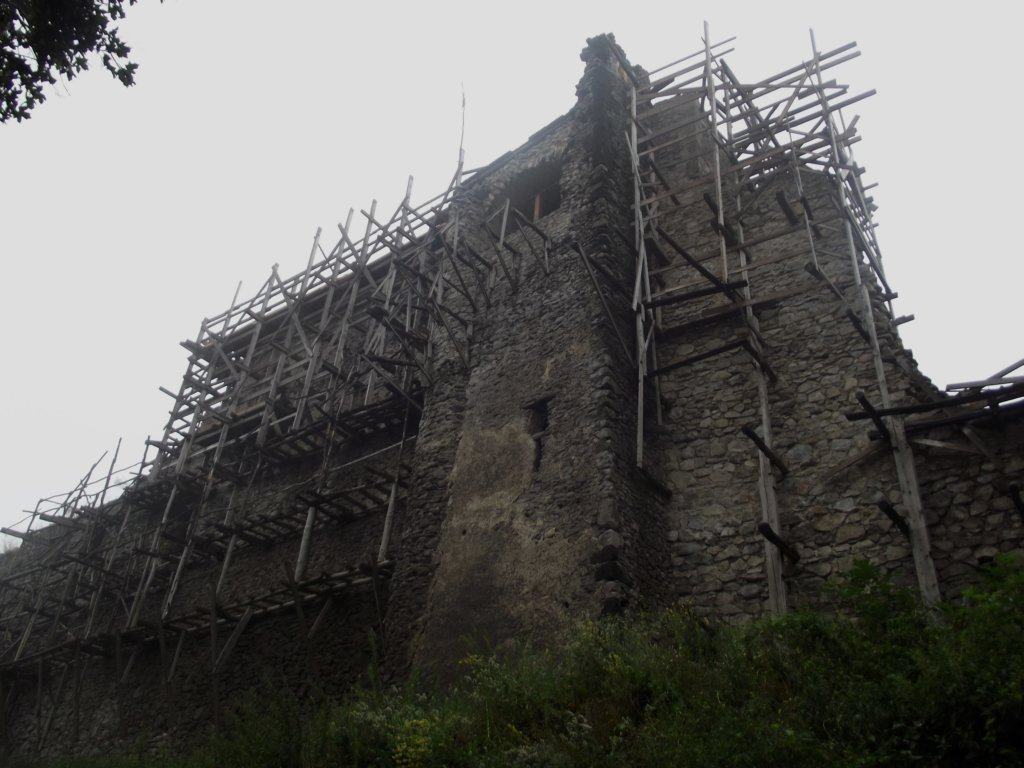
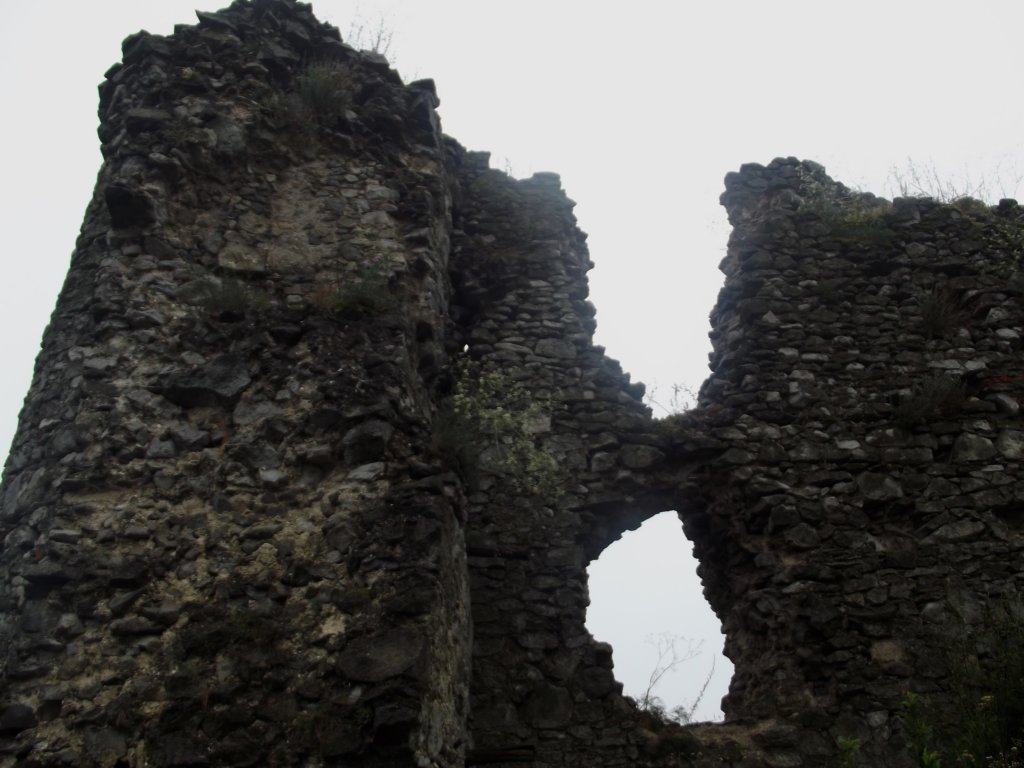
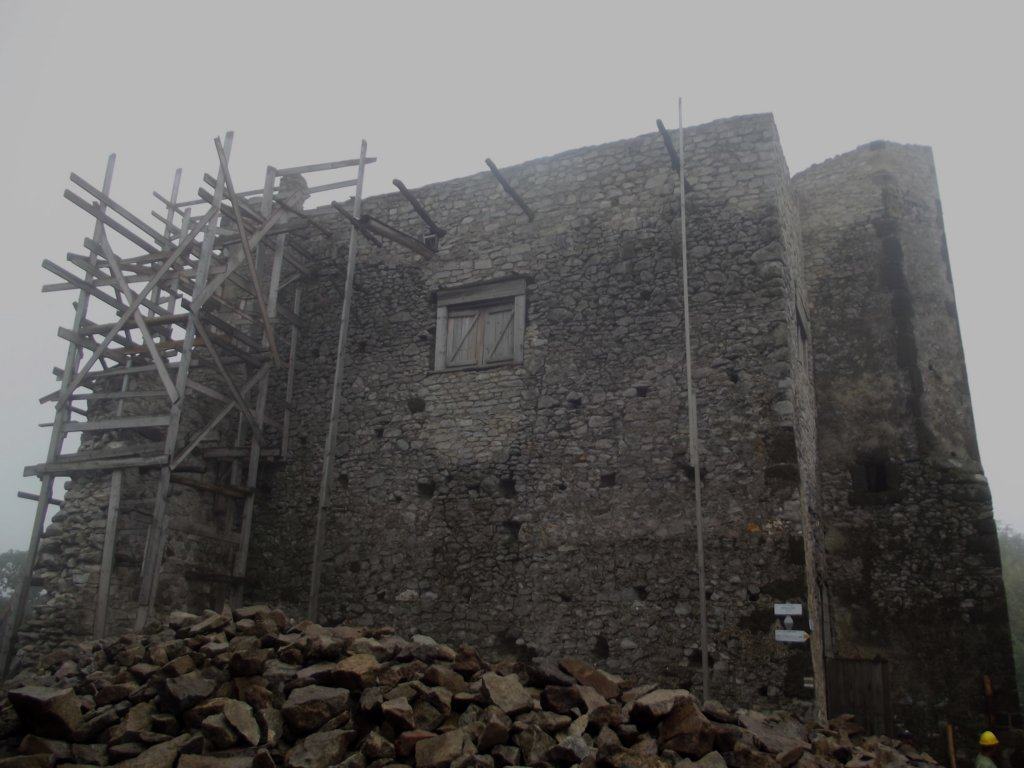
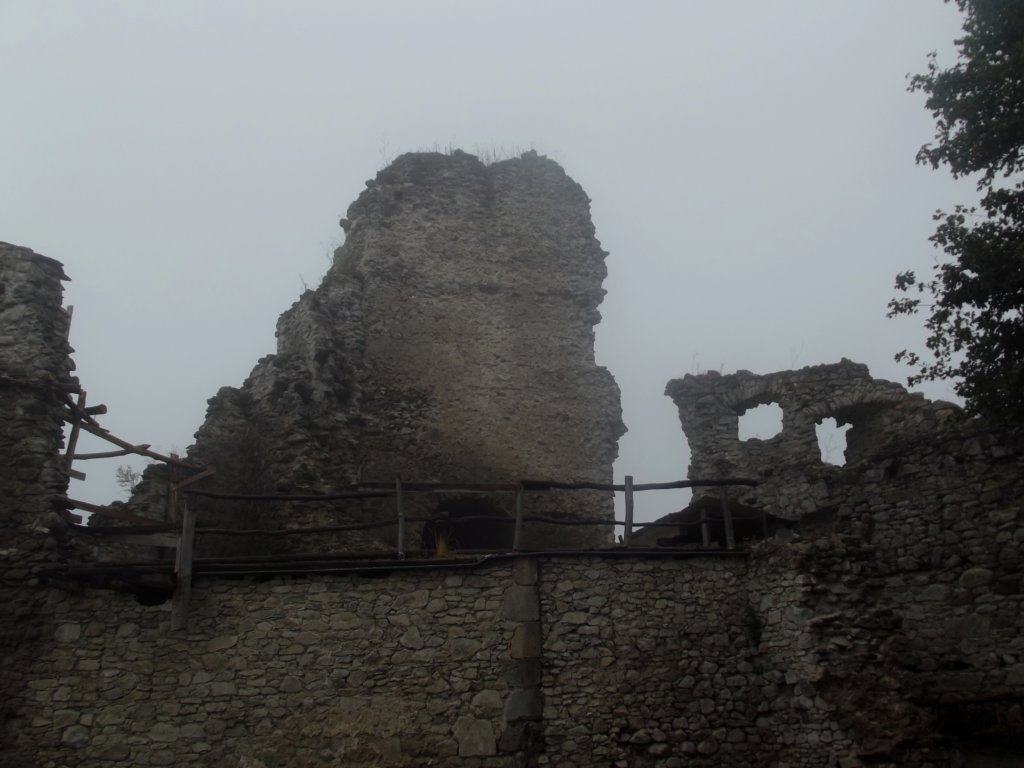
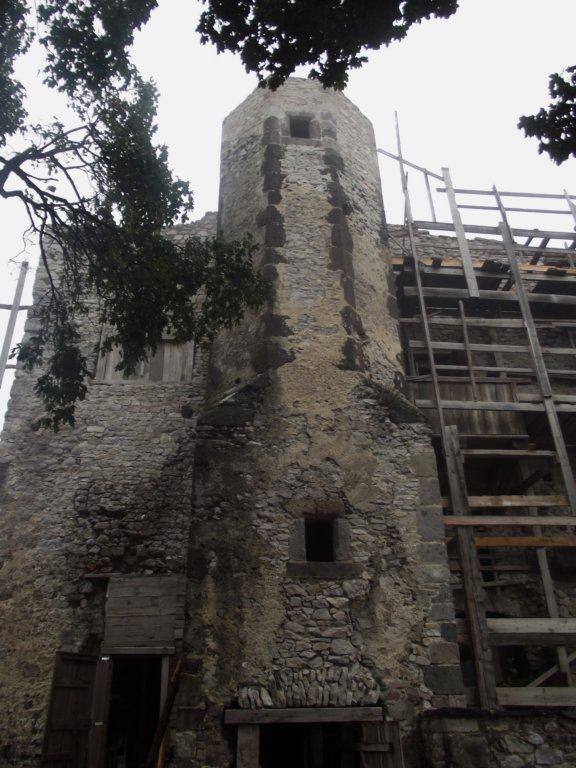
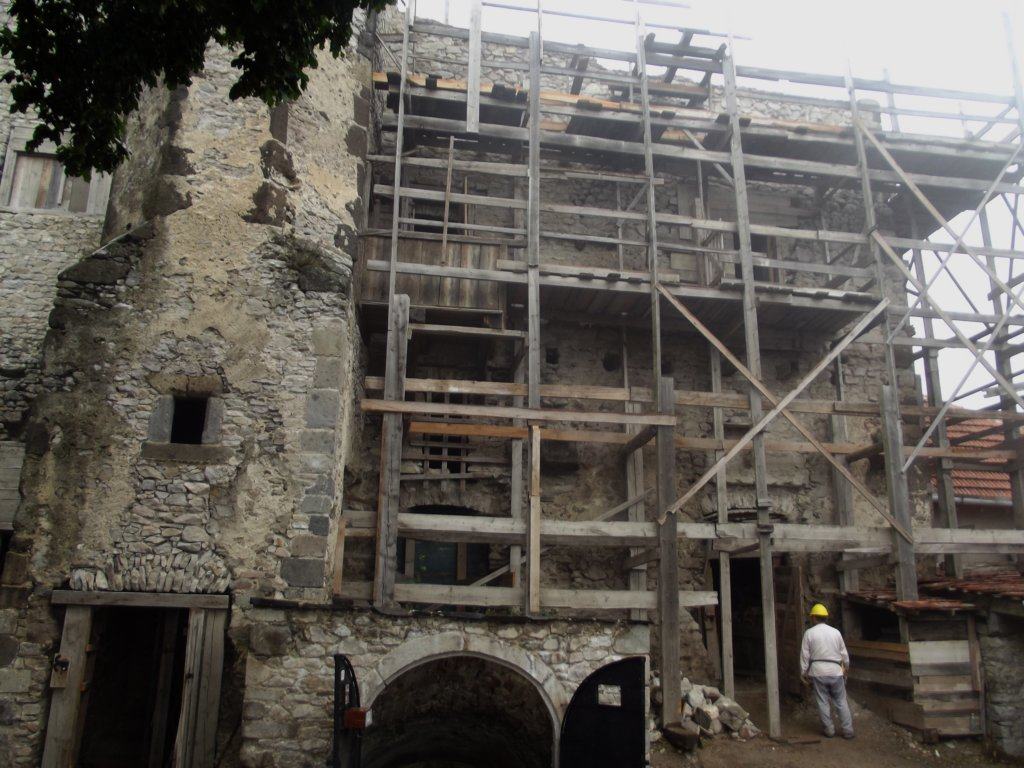
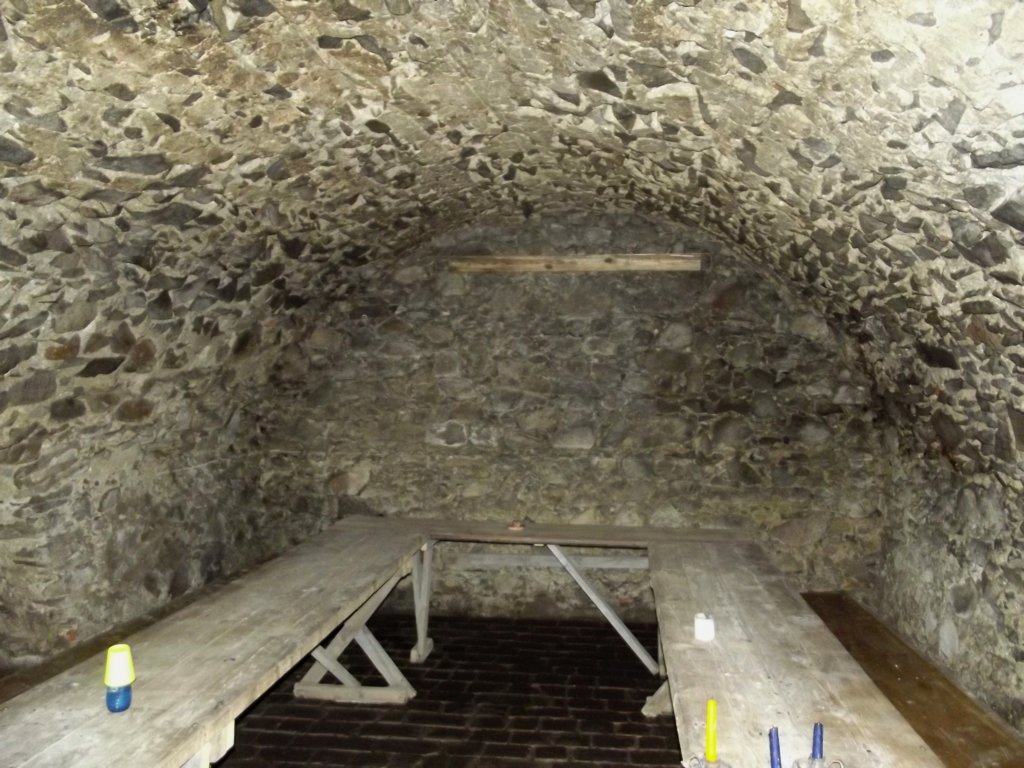
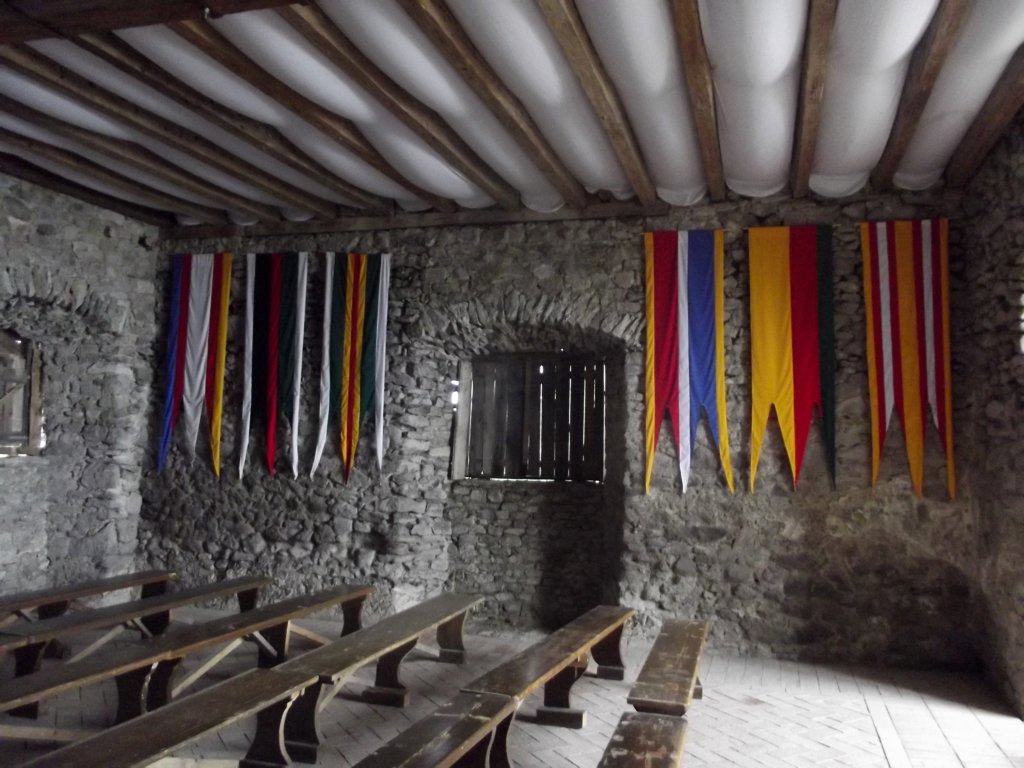
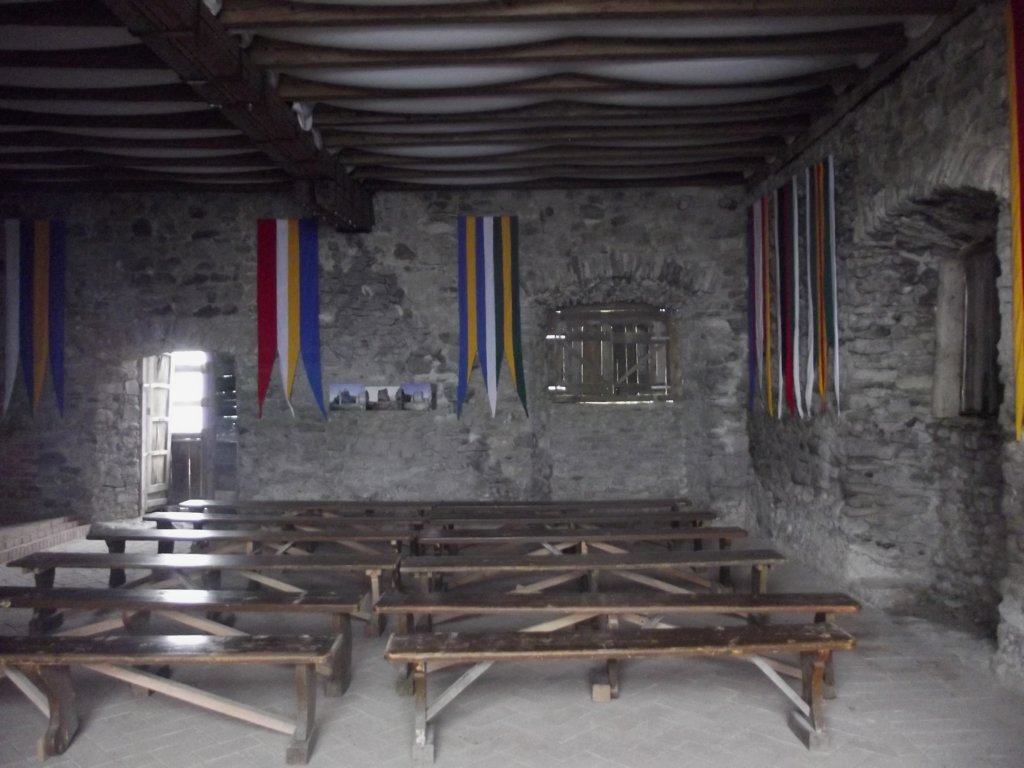
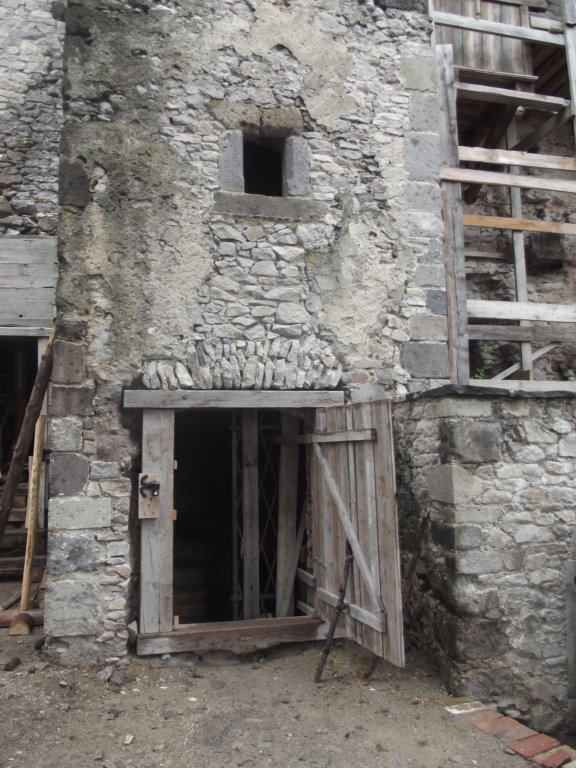
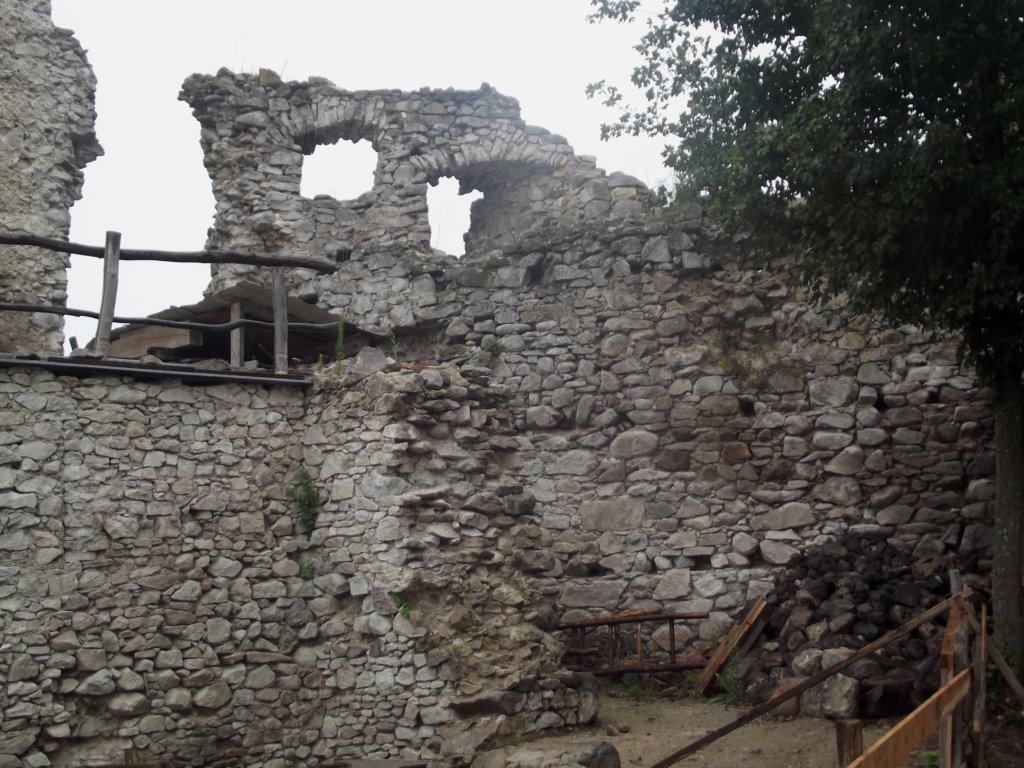
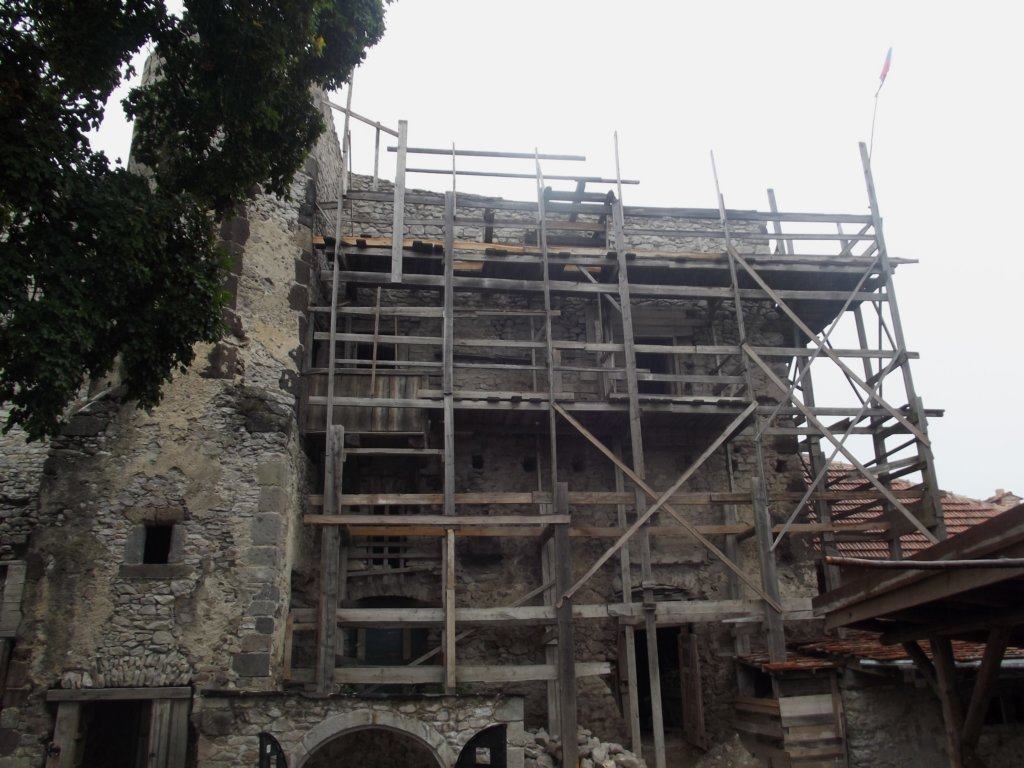
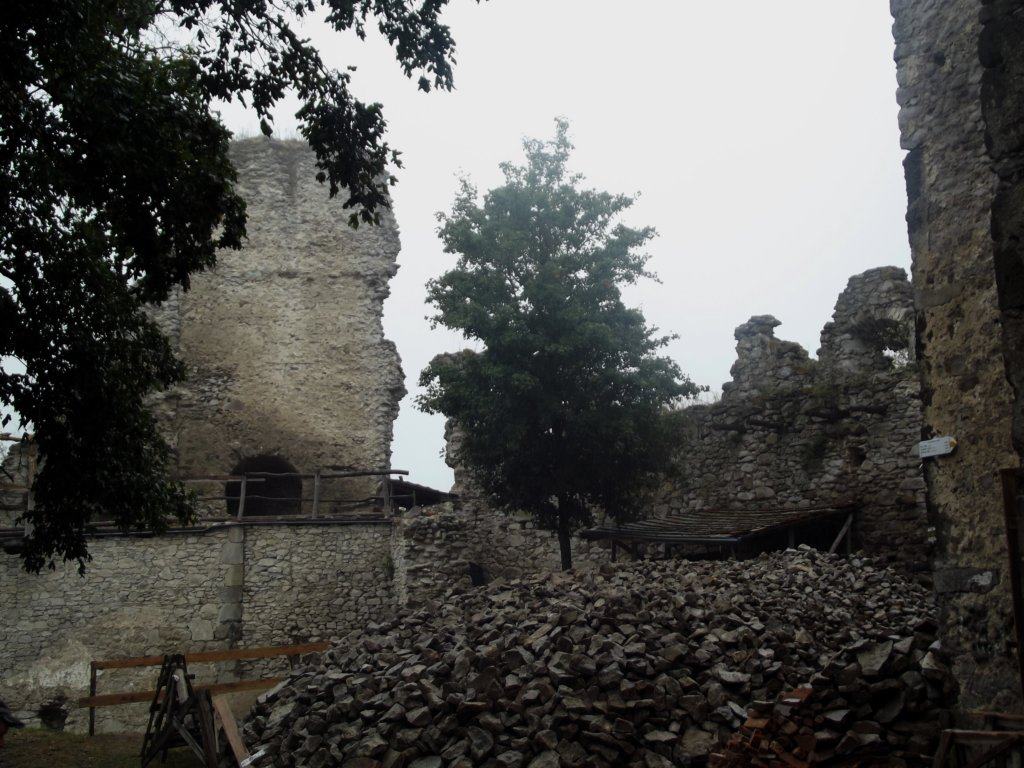
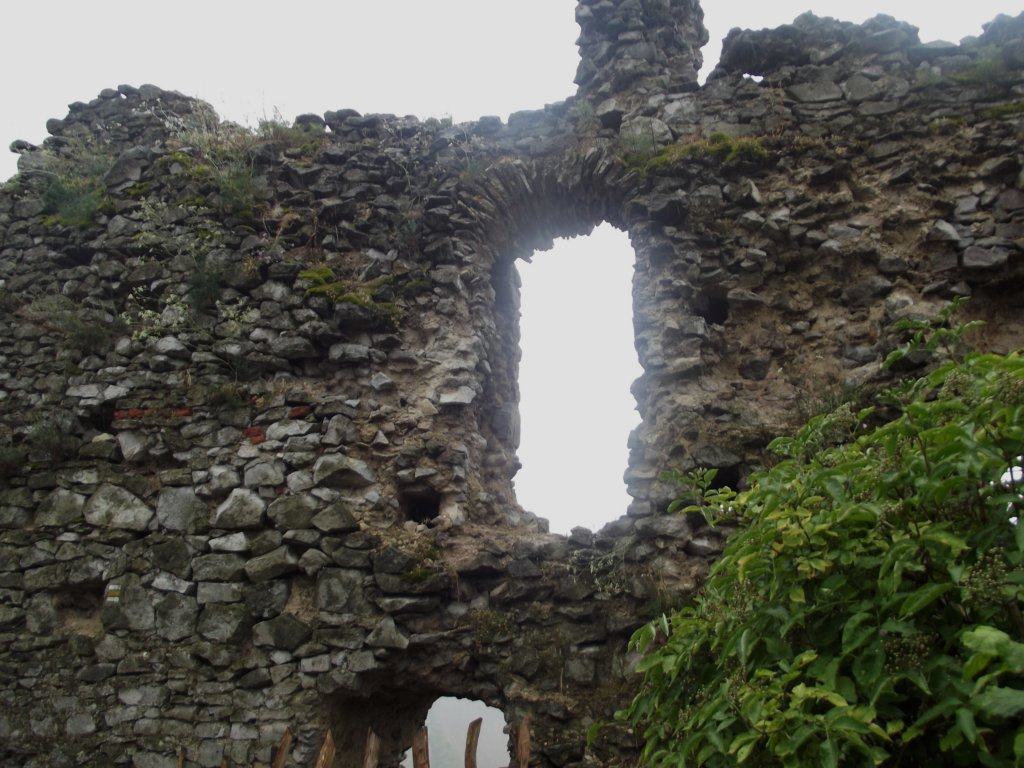
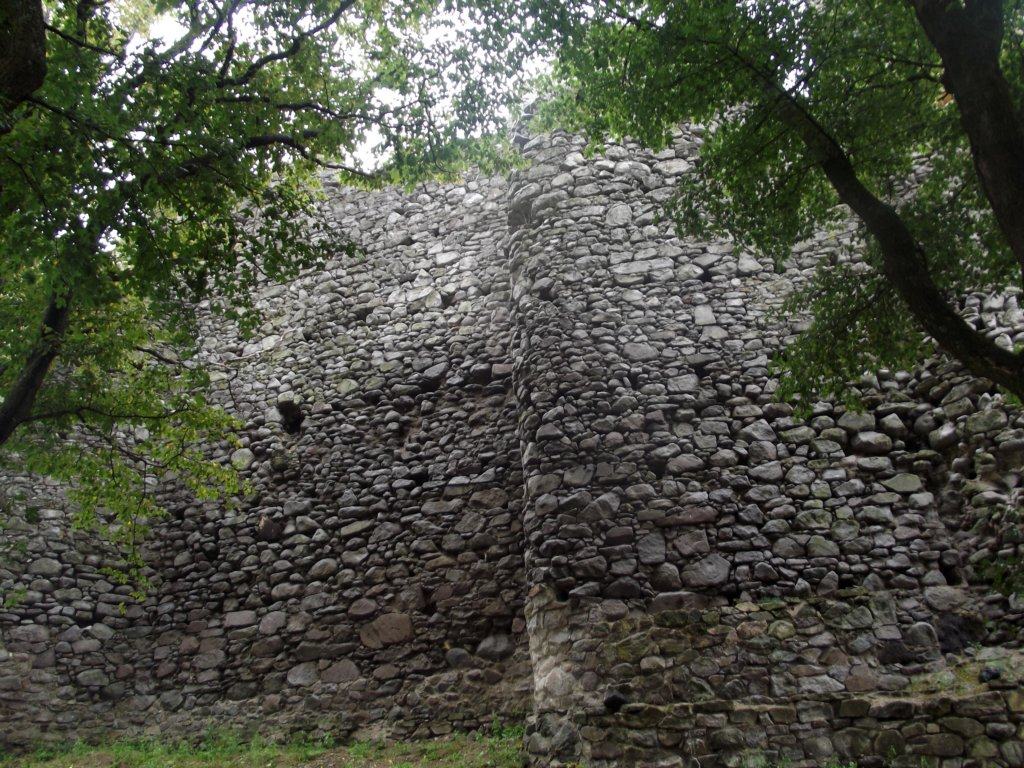
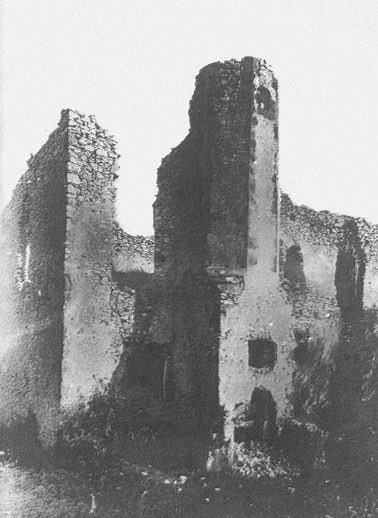
Compared to most other castles, the castle has retained more of its medieval appearance, because despite its relatively long use, there has been no major modernization of its fortifications or major expansion or alteration of buildings.Even in the building it is possible to recognize the courtyard with farm buildings accessible by a gate and surrounded by walls. From the inside there is a palace block with a staircase tower. The complex of buildings has been preserved in places with cornering corners, window openings and remains of Renaissance vaults. During excavations at the castle, they have discovered that the castle lords built up to two entrance gates there in the 13th century. For small castles this is absolutely unique in Slovakia.
Hrad si oproti väčšine ostatných hradov uchoval viac zo svojej stredovekej podoby, pretože napriek jeho relatívne dlhému využívaniu nedošlo k podstatnejšej modernizácii jeho opevnenia ani k väčšiemu rozšíreniu či úpravám budov.V objekte je aj dnes možné rozpoznať nádvorie s hospodárskymi budovami prístupné bránou a obohnané hradbami. Z vnútornej strany stojí pri hradbe palácový blok so schodiskovou vežou. Komplex stavieb sa miestami zachoval i s kvádrovaním nároží, okennými otvormi a zvyškami renesančných klenieb. Pri vykopávkach na hrade v súčasnosti odhalili, že hradní páni tam v 13. storočí vybudovali až dve vstupné brány. Pri malých hradoch ide o absolútny slovenský unikát.
Plan
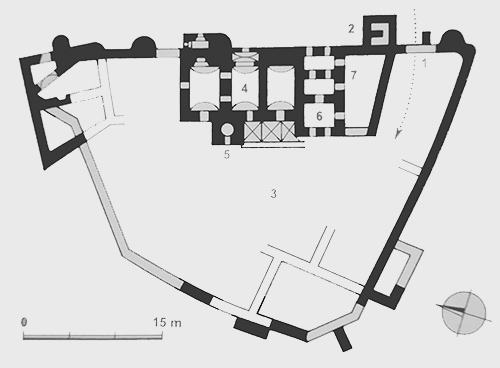
Legend to the ground plan
- 1 - entrance gate
- 2 - defensive tower
- 3 - courtyard
- 4 - three-room palace
- 5 - spiral staircase
- 6 - newer tower
- 7 - outbuilding with chapel
Legenda k pôdorysu
- 1 - vstupná brána
- 2 - obranná veža
- 3 - nádvorie
- 4 - trojpriestorový palác
- 5 - točité schodisko
- 6 - novšia veža
- 7 - prístavba s kaplnkou
History
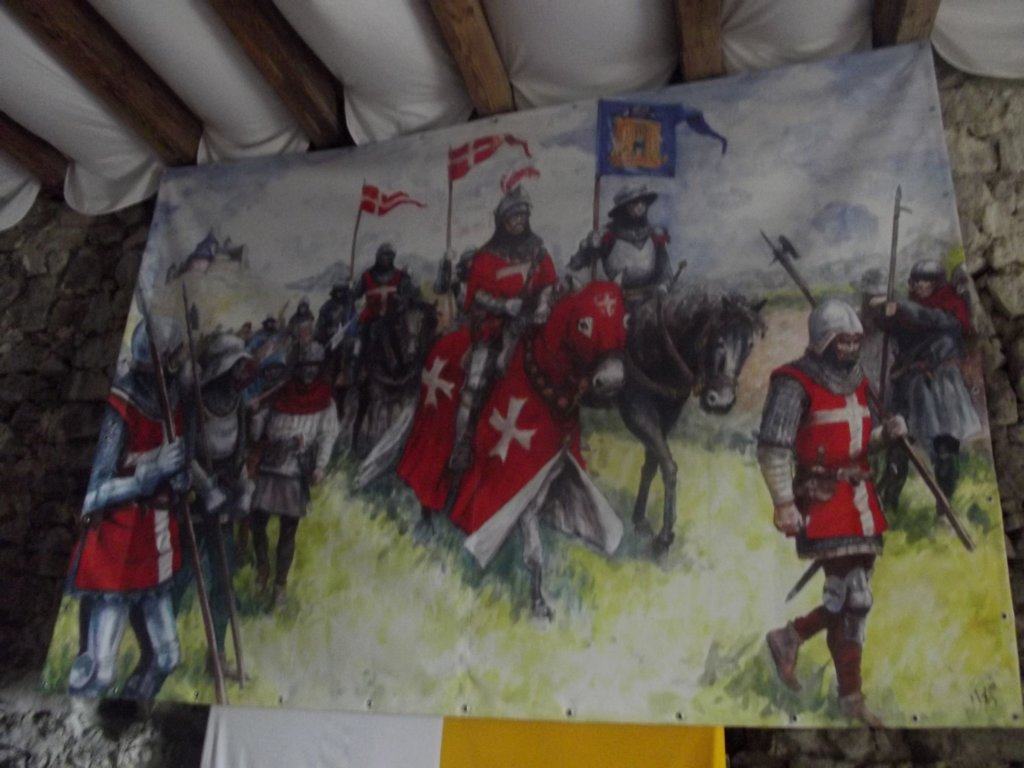
The village of Vinné belonged to an important aristocratic family from Michalovce (originally from the Kaplon variety). The branches of the family of lords from Michalovce included in particular: Tibay family, Sztáray family, Eödönffy family (also known as Vinnay family), Bánffy family, Pongrácz family. Brothers Andrej and Jakó, for example, who were the direct ancestor of the medieval knight Albert of Michalovce, also came from it. Although they had their headquarters in Michalovce, it was no longer enough for many families, so they built a castle in Vinný. The castle had to stand before 1312, when it was damaged by the sons of the palatine Omodej during the resistance against King Karol Róbert. Around 1330, the first division of Michalovské Estates began, and in 1335, during further division, the sons Andrej and Jaka divided the western part of the estates into two halves. At that time, the castle already had two prismatic towers, a palace, a gate and a chapel, and in 1449 also a dungeon and a basement tower at the height of four floors.
As Jacob's family grew, they each longed for possessions. However, by dividing the property, the nobles from Michalovce weakened economically. Over time, the property was acquired by a branch settled in Starý. Along with the property, the Sztáray family also acquired the castle, which was damaged in 1466 due to unrest between King Matej and Casimír of Poland. The restoration of the castle was postponed, and it took place at the end of the century after pressure from Štefan Zápoľský, whom King Matej appointed captain for the protection of the NE region of Hungary. The restoration of the building was completed around the beginning of the 16th century, but without the advanced elements of modern architecture.
Later, at the end of the 16th century, there were disputes between the court and the feudal lords, which culminated in the revolt of tycoon Kendy against the monarch, and in 1594, the imperial troops intervened. Thanks to the outdated fortress architecture, the castle was reduced to ashes. Despite this experience, the Sztáray family restored the castle in the old way. This facilitated the conquest of the castle in 1663 by the insurgent Gabriel Bethlen and in 1644 by the soldier of Juraj Rákóczi. In both cases, the castle was occupied by insurgents.
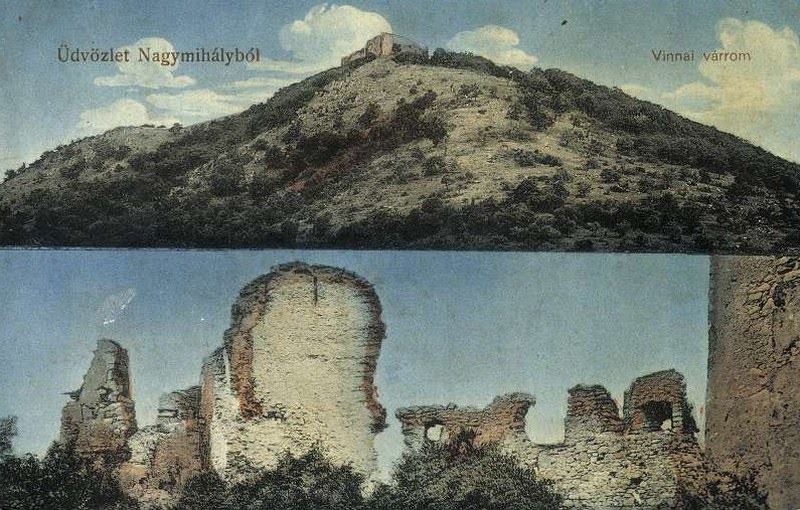
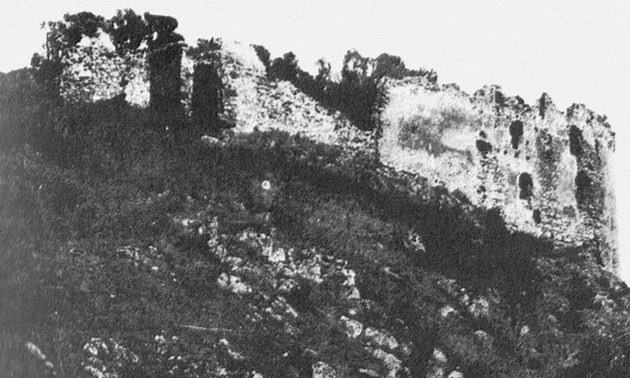
The military significance of the castle then declined and life was transferred to the surrounding settlements and mansions. In the first quarter of the 18th century, when the last anti-Habsburg uprising of Francis II was suppressed. Rákóczi, the castle was demolished, especially its fortifications, based on a resolution of the Assembly on the liquidation of old fortresses. The castle slowly turned into a ruin. Since 2011, Zemplínsko-užská hradná cesta company takes care of the castle.
Obec Vinné patrila významnému šľachtickému rodu z Michaloviec (pôvodne z rozrodu Kaplon). K vetvám rodu pánov z Michaloviec patrili najmä: Tibayovci, Sztárayovci, Eödönffyovci (známi aj pod menom Vinnayovci), Bánffyovci, Pongráczovci. Pochádzali z neho napríklad aj bratia Andrej a Jakó, ktorí boli priamym predkom stredovekého rytiera Alberta z Michaloviec. Hoci mali svoje sídlo v Michalovciach, to už nestačilo mnohým rodinám a tak postavili hrad vo Vinnom. Hrad musel už stáť pred r.1312, keď ho pri odboji proti kráľovi Karolovi Róbertovi poškodili synovia palatína Omodeja. Okolo r.1330 začala prvá deľba Michalovských majetkov a v r.1335, pri ďalšom delení, si synovia Andreja a Jaka rozdelili západnú časť majetkov na dve polovice. Vtedy mal už hrad dve hranolové veže, palác, bránu i kaplnku a v r.1449 aj žalár a podpivničenú vežu vo výške štyroch podlaží.
Ako rástol Jakov rod, každý z nich bažil po majetkoch. Delením majetku však šľachtici z Michaloviec hospodársky slabli. Po čase získala majetky vetva usadená v Starom. Spolu s majetkami získali Sztárayovci aj hrad, ktorý však bol už v r.1466 kvôli nepokojom medzi kráľom Matejom a poľským Kazimírom poškodený. Obnovu hradu odkladali, a došlo k nej až ku koncu storočia po nátlaku Štefana Zápoľského, ktorého kráľ Matej vymenoval za kapitána pre ochranu SV oblastí Uhorska. Obnovu objektu dokončili zhruba na začiatku 16. storočia, ale bez vyspelých prvkov novodobej architektúry.
Neskôr, ku koncu 16. storočia dochádzalo k sporom medzi dvorom a feudálmi, ktoré vyvrcholili vzburou magnáta Kendyho proti panovníkovi a v r.1594 došlo k intervencii cisárskych vojsk. Vďaka zastaralej pevnostnej architektúre hrad ľahol popolom. Napriek týmto skúsenostiam Sztárayovci opäť obnovili hrad starým spôsobom. To už v r.1623 uľahčilo dobytie hradu povstalcom Gabriela Bethlena a v r.1644 vojakom Juraja Rákócziho. V oboch prípadoch hrad obsadili povstalci.
Vojenský význam hradu potom upadal a život sa preniesol do okolitých sídiel a kaštieľov. V prvej štvrtine 18. storočia, keď bolo potlačené posledné protihabsburské povstanie Františka II. Rákócziho, bol hrad zbúraný, teda predovšetkým jeho opevnenie, na základe uznesenia snemu o likvidácii starých pevností. Hrad sa tak pomaly menil na zrúcaninu.
Od r.2011 na hrade pôsobí o.z. Zemplínsko-užská hradná cesta, ktorá sa snaží o obnovu hradu.
Myths and legends
The rumor says
The last lord of the castle, Štefan, acquired alchemy and acquired huge treasures, which he quickly buried before the demolition of the castle. But then he disappeared without a trace, because he associated with evil and no one has ever found rarity.
Povráva sa
Posledný hradný pán Štefan si alchýmiou nadobaril obrovské poklady, ktoré pred zbúraním hradu obďaleč narýchlo zakopal. Potom však bez stopy zmizol, lebo sa spolčoval so zlom a vzácnosti podnes nik nenašiel.
Useful information
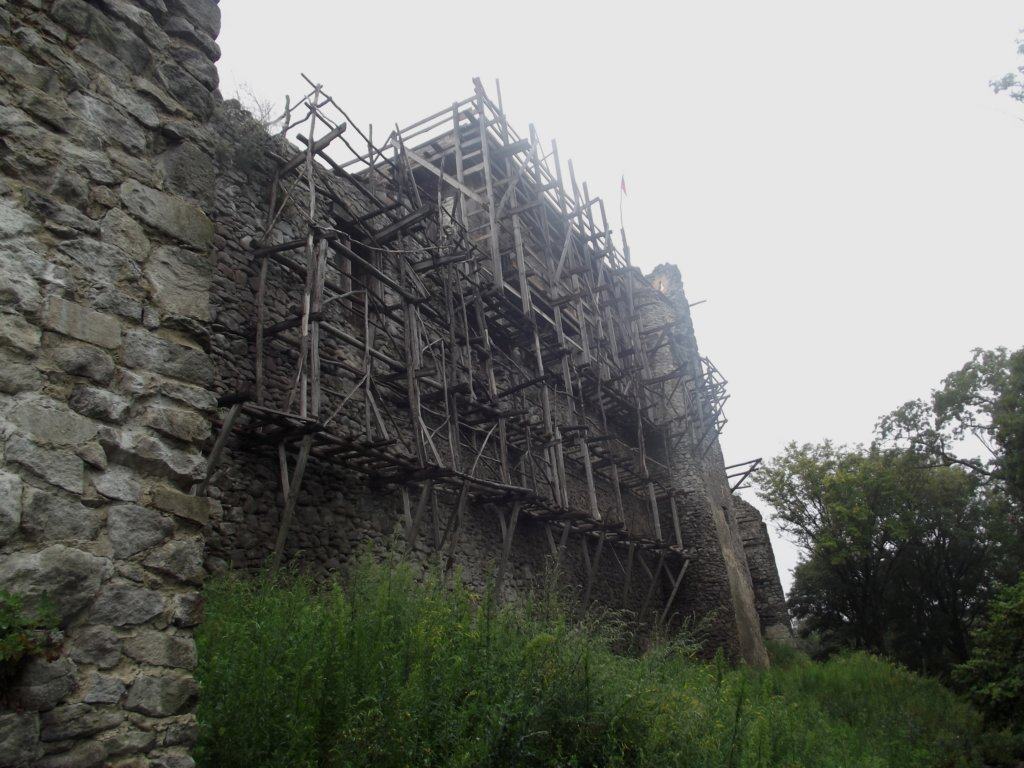
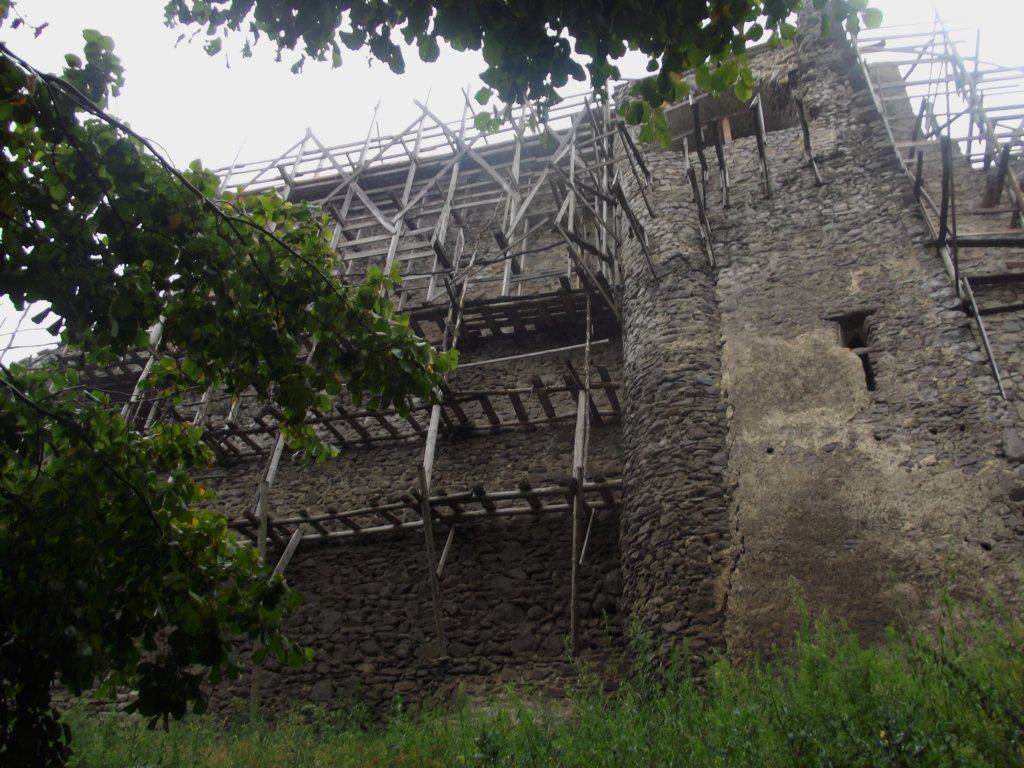
The ruin is freely accessible. The castle is undergoing reconstruction.
Zrúcanina je voľne prístupná. Na hrade prebieha rekonštrukcia.
Nearby castles