Carol Davila University of Medicine and Pharmacy
Municipiul București București Romania
castle, chateau
Universitatea de Medicină și Farmacie
Municipiul București București Romania
castle, chateau
Carol Davila Orvostudományi és Gyógyszerészeti Egyetem
Municipiul București București Romania
castle, chateau
Carol Davila University of Medicine and Pharmacy (Romanian: Universitatea de Medicină și Farmacie „Carol Davila”) or University of Medicine and Pharmacy Bucharest, commonly known by the abbreviation UMFCD, is a public health sciences university in Bucharest, Romania
Universitatea de Medicină și Farmacie „Carol Davila” din București este o instituție de învățământ superior de stat din București, România
Az Orvostudományi Kar építése befejeződött és 1903
Previous names
Carol Davila University of Medicine and Pharmacy, Universitatea de Medicină și Farmacie, Carol Davila Orvostudományi és Gyógyszerészeti Egyetem
Description
Carol Davila University of Medicine and Pharmacy (Romanian: Universitatea de Medicină și Farmacie „Carol Davila”) or University of Medicine and Pharmacy Bucharest, commonly known by the abbreviation UMFCD, is a public health sciences university in Bucharest, Romania. It is one of the largest and oldest institutions of its kind in Romania. The university uses the facilities of over 20 clinical hospitals all over Bucharest.
The Carol Davila University is classified as an "advanced research and education university" by the Ministry of Education. Created as part of the University of Bucharest in 1869, the institution is considered one of the most prestigious of its kind in Romania and in Eastern Europe.
Library
The university includes two major libraries, both built in 1869 in a neoclassical and neo-baroque style.
History
Carol Davila was a prestigious Romanian physician of Italian ancestry. He studied medicine at the University of Paris, graduating in February 1853. In March 1853, he arrived in Romania. He was the organiser of the military medical service for the Romanian Army and of the country's public health system.
In 1857, Davila, in collaboration with Nicolae Crețulescu, founded the university, at which time it was known under the name of the National School of Medicine and Pharmacy. In the same year, the foundation stone of the University Palace in Bucharest was laid. It was due to Carol Davila's many activities that several scientific associations appeared in Romania: the Medical Society (1857), the Red Cross Society (1876), and the Natural Sciences Society (1876). With his assistance, two medical journals entered print: the Medical Register (1862) and the Medical Gazette (1865).
On 12 November 1869, it was established the Faculty of Medicine of Bucharest, incorporated in the University of Bucharest. The first doctoral degrees were granted in 1873, and the doctoral degree became the de facto graduation in 1888.
The Nobel Prize in Physiology or Medicine was awarded to George Emil Palade, described as "the most influential cell biologist ever", who had studied at the University of Carol Davila and later served as a Professor and Head of the Department of Human Biology and Physiology.
The School of Pharmacy was founded in 1889 as part of the Faculty of Medicine. In 1923, it was separated and it became the Faculty of Pharmacy.
The Faculty of Pharmacy of Carol Davila University is the place where insulin was isolated for the first time by Nicolae Paulescu in 1921, leading to a controversy in the awarding of the 1923 Nobel Prize in physiology or medicine.
In 1948, the Faculties of Medicine and Pharmacy were separated from the University of Bucharest, and incorporated as the Institute of Medicine and Pharmacy. In the same year, the postgraduate Clinical Dentistry Institute was incorporated into the Institute of Medicine and Pharmacy as the Faculty of Dentistry.
In 1991, the Institute of Medicine and Pharmacy changed its name to the Carol Davila University of Medicine and Pharmacy.
Ranking
According to the Scimago Lab, based on data collected between 2007 and 2011, Carol Davila University of Medicine and Pharmacy ranked 121 regionally and 12 in the country by number of publications. According to the International Journal of Medical Sciences, in a 2019 survey UMFCD along with Karolinska Institute, Erasmus University, and Paris Descartes University are considered Europe's medical universities that are leading change. Based on the Shanghai Ranking, the Carol Davila University of Medicine and Pharmacy lies among the top 151–200 Universities in the “medical sciences” domain with regards to the subject "clinical medicine”.
Faculties
Faculty of Medicine
Faculty of Pharmacy
Faculty of Dentistry
Faculty of Medicine
The higher medical and pharmaceutical education in Bucharest dates back more than a century. Carol Davila, a Romanian physician of Italian origin, in collaboration with Nicholae Kretzulescu founded the Medical education in Romania, by establishing the National School of Medicine and Pharmacy in 1857. Thanks to his activity a number of scientific societies were created, such as the Medical Society, the Red Cross Society and the Natural Sciences Society, and two medical journals, The Medical Monitor and The Medical Gazette.
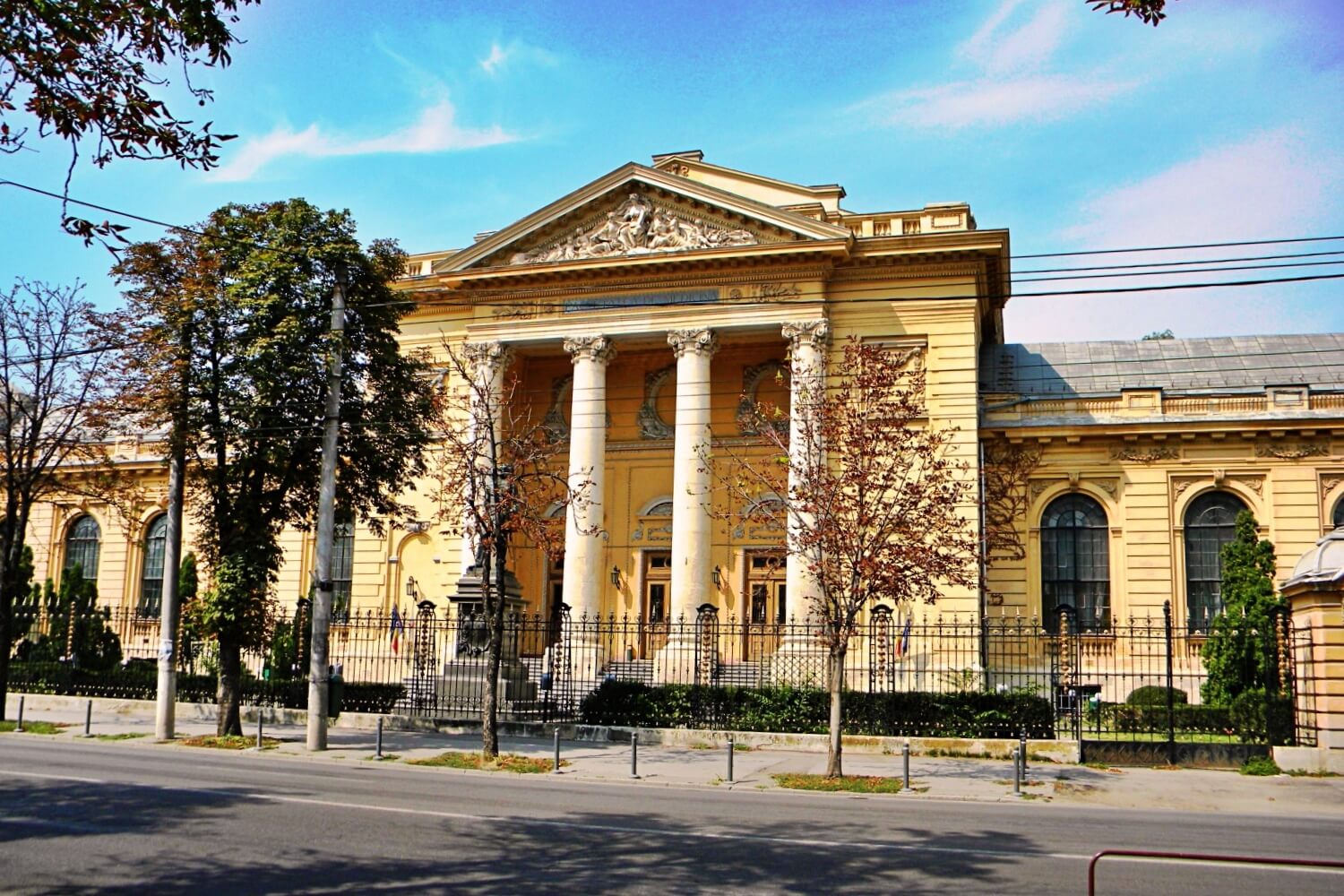
The building of the Faculty of Medicine was fully completed and inaugurated on 12 October 1903. The initiative to erect a monument to Carol Davila on the same day, was taken at the first national medical conference, which was held in Bucharest in October 1884. The statue, valued work of Carol Storck, was cast in bronze in the School of arts and crafts workshops in Bucharest.
The inauguration of the faculty building is an important date in the evolution of medical education in Bucharest. The new building brought great improvements in the functioning of laboratories and the organization of practical work, as well as in the full didactic activity. In the faculty building there is a fully organized sports center that includes an autonomous indoor swimming pool for the university's representative successful team and in addition an indoor basketball, volleyball and handball court.
Faculty of Pharmacy
The Faculty of Pharmacy was created in 1858.
Notable alumni
Aurel Babeș, Romanian scientist, one of the discoverers of the screening test for cervical cancer
Mina Minovici, Romanian forensic scientist
George Emil Palade, 1974 Nobel Prize in Physiology or Medicine and United States National Medal of Science in 1986
Nicolae Paulescu, Romanian physiologist, professor of medicine, politician, discovered insulin.
Universitatea de Medicină și Farmacie „Carol Davila” din București este o instituție de învățământ superior de stat din București, România. Sediul principal al instituției se află pe Bulevardul Eroilor Sanitari, unde este amplasat Palatul Facultății de Medicină. Poartă numele medicului Carol Davila, cel care a contribuit în mod fundamental la organizarea învățământului medical din România.
În 2011 a fost clasificată în prima categorie din România, cea a universităților de cercetare avansată și educație.
Istorie
În 1694, Constantin Brâncoveanu, conducătorul Țării Românești, a înființat Academia Domnească "Sf. Sava" în București cu prelegeri în limba greacă. În 1776, conducătorul Țării Românești, Alexandru Vodă Ipsilanti (1725-1805), a reformat curriculum-ul Academiei "Sfântul Sava", unde au fost predate cursuri de limbă franceză, italiană și latină. În 1859, a fost creată Facultatea de Drept. În 1857, Carol Davila a creat Universitatea de Medicină și Farmacie Carol Davila. În 1857, a fost pusă piatra de temelie a Palatului Universității din București. A fost inițial înființată în 1857 sub numele de Școala Națională de Medicină și Farmacie de către medicul expatriat francez, Carol Davila. În 1869 a fost încorporată ca un departament la Universitatea din București. Primele diplome de doctorat au fost acordate în 1873, iar gradul de doctorat a devenit absolvirea de facto în 1888.
Carol Davila a fost un prestigios medic român de origine italiană. Davila a studiat medicina la Universitatea din Paris, absolvind în februarie 1853. În martie 1853, a sosit în România. El a fost organizatorul serviciului militar medical pentru armata română și a sistemului de sănătate publică al țării. Davila, împreună cu Nicolae Kretzulescu, a inaugurat învățământul medical în România în 1857, prin înființarea Școlii Naționale de Medicină și Farmacie. El a determinat autoritățile guvernamentale să emită primele instrucțiuni oficiale privind îngrijirea sănătății lucrătorilor din fabrică și organizarea districtelor medicale din țară.
Din cauza numeroaselor sale activități, au apărut în România mai multe asociații științifice: Societatea Medicală (1857), Societatea Crucii Roșii (1876), Societatea Științelor Naturale (1876). Cu ajutorul său, două reviste medicale au intrat în imprimare: Registrul medical (1862) și Medical Gazette (1865). În timpul Războiului de Independență (1877-1878) a fost șeful serviciului sanitar al Armatei.
Davila este, de asemenea, creditată cu inventarea tincturii Davila pentru tratamentul holerei, o soluție orală pe bază de opioide utilizată pentru administrarea simptomatică a diareei.
Premiul Nobel pentru Fiziologie sau Medicină a fost acordat lui George Emil Palade, descris ca fiind „cel mai influent biolog celular”, care a studiat la Universitatea din Carol Davila și mai târziu a fost profesor și șef al Departamentului de Biologie umană și Fiziologie Umană . Școala de Farmacie a fost înființată în 1889 și a fost redenumită ca Facultatea de Farmacie în 1923.
Facultatea de Farmacie a Universității "Carol Davila" este locul în care insulina a fost izolată pentru prima dată de Nicolae Paulescu în 1921, ducând la controversă în acordarea Premiului Nobel pentru Fiziologie sau Medicină din 1923.
Facultăți
Facultatea de Medicină a Universității de Medicină și Farmacie "Carol Davila" din București
Facultatea de Medicină Dentară a Universității de Medicină și Farmacie "Carol Davila" din București
Facultatea de Farmacie a Universității de Medicină și Farmacie "Carol Davila" din București
Facultatea de Moașe și Asistență Medicală a Universității de Medicină și Farmacie "Carol Davila" din București
Az Orvostudományi Kar építése befejeződött és 1903. október 12-én, azon a napon avatták fel Carol Davila szobrát. Davila emlékműve építésének kezdeményezése az első országos orvosi kongresszuson történt, amelyet Bukarestben, 1884 októberében tartottak. A szobor, Carol Stork értékes alkotása, a bukaresti Iparművészeti Iskola műtermében bronzba öntésre került.
A palota avatása fontos dátumot jelent a bukaresti orvosi oktatás fejlődésében. Az új hely nagy előrelépéseket hozott a laboratóriumok működésében, a gyakorlati munkák megszervezésében és az egész didaktikai tevékenységben. Egy ideig a Gyógyszertár részlegnek is otthont adott.
A felmerült nehézségek ellenére az Országos Orvostudományi és Gyógyszerészeti Iskola fokozatosan fejlődött, és 1869. november 12-én lehetővé vált a bukaresti orvostudományi kar létrehozása. A kar 1869 november 22-én nyitotta meg tanfolyamait. Ez volt az első orvosi kar a Bukaresti Egyetemen, és egyúttal hazánkban is; általa az orvostudománynak sikerült mind Romániában, mind annak határain kívül rákényszerülnie.
https://www.healthcarestudies.hu/
Useful information
Charge
Free
- University Park
- WC
rectorat@umfcd.ro
- The first university in Romania
- Accessible for wheelchairs
-
-
External links
Nearby castles
Crețulescu Palace
Municipiul București
1.6km
manor, mansion
Palace of the Parliament
Municipiul București
1.7km
manor, mansion
CEC Palace
Municipiul București
2.1km
manor, mansion
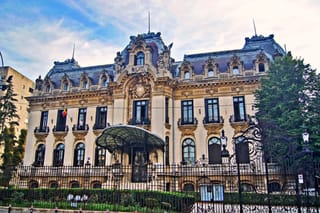
Cantacuzino Palace
Municipiul București
2.1km
manor, mansion
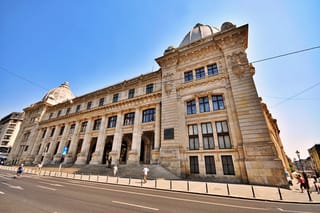
The Postal Service Palace
Municipiul București
2.2km
manor, mansion
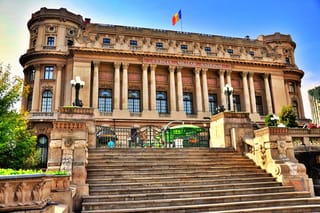
Palace of the National Military Circle
Municipiul București
2.2km
manor, mansion
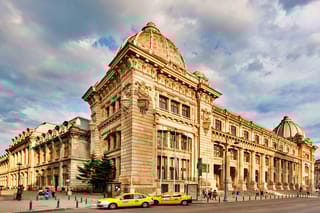
National Museum of Romanian History
Municipiul București
2.2km
castle, chateau