Palace of the Parliament
Municipiul București București Romania
manor, mansion
Palatul Parlamentului
Municipiul București București Romania
manor, mansion
Parlamenti Palota
Municipiul București București Romania
manor, mansion
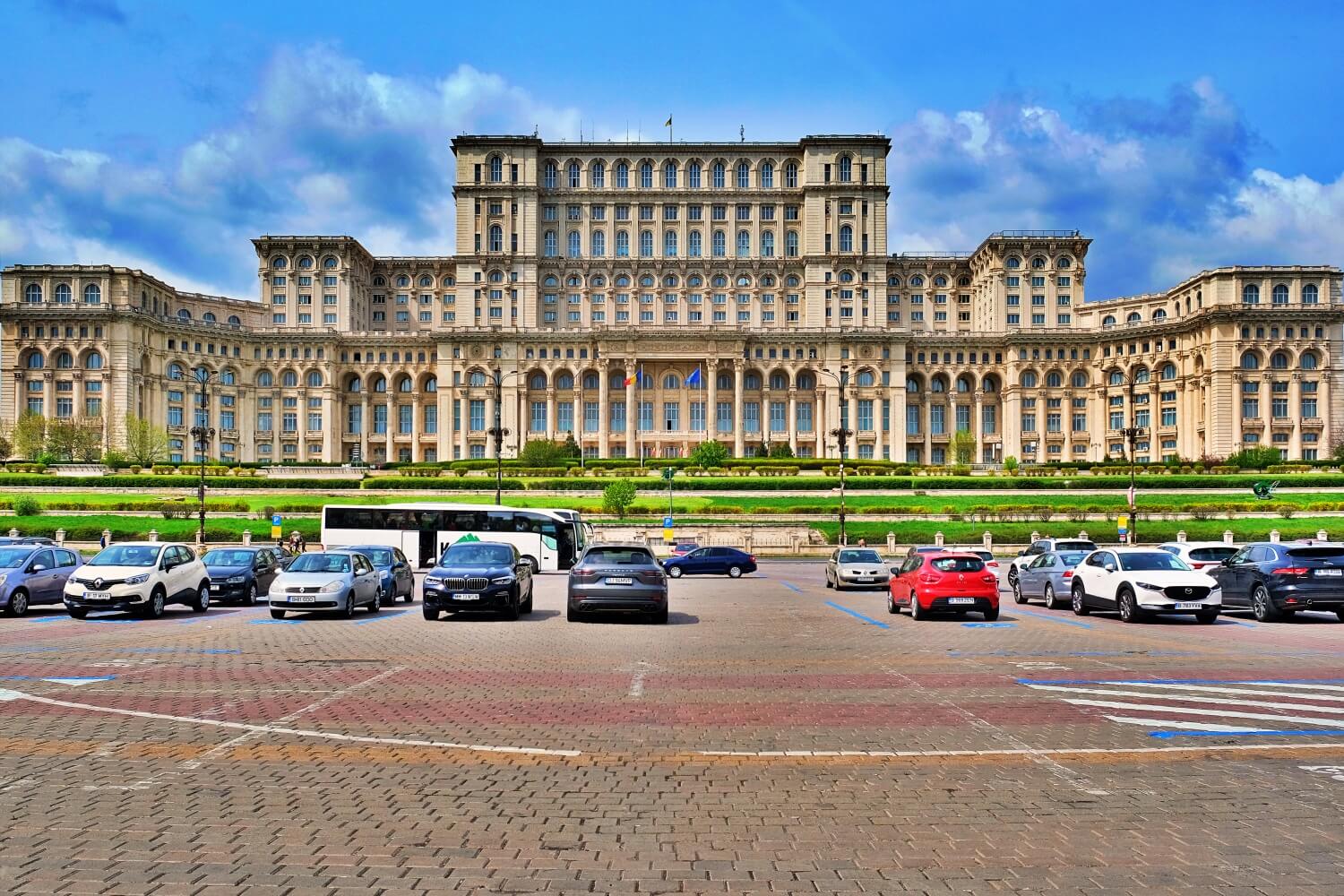
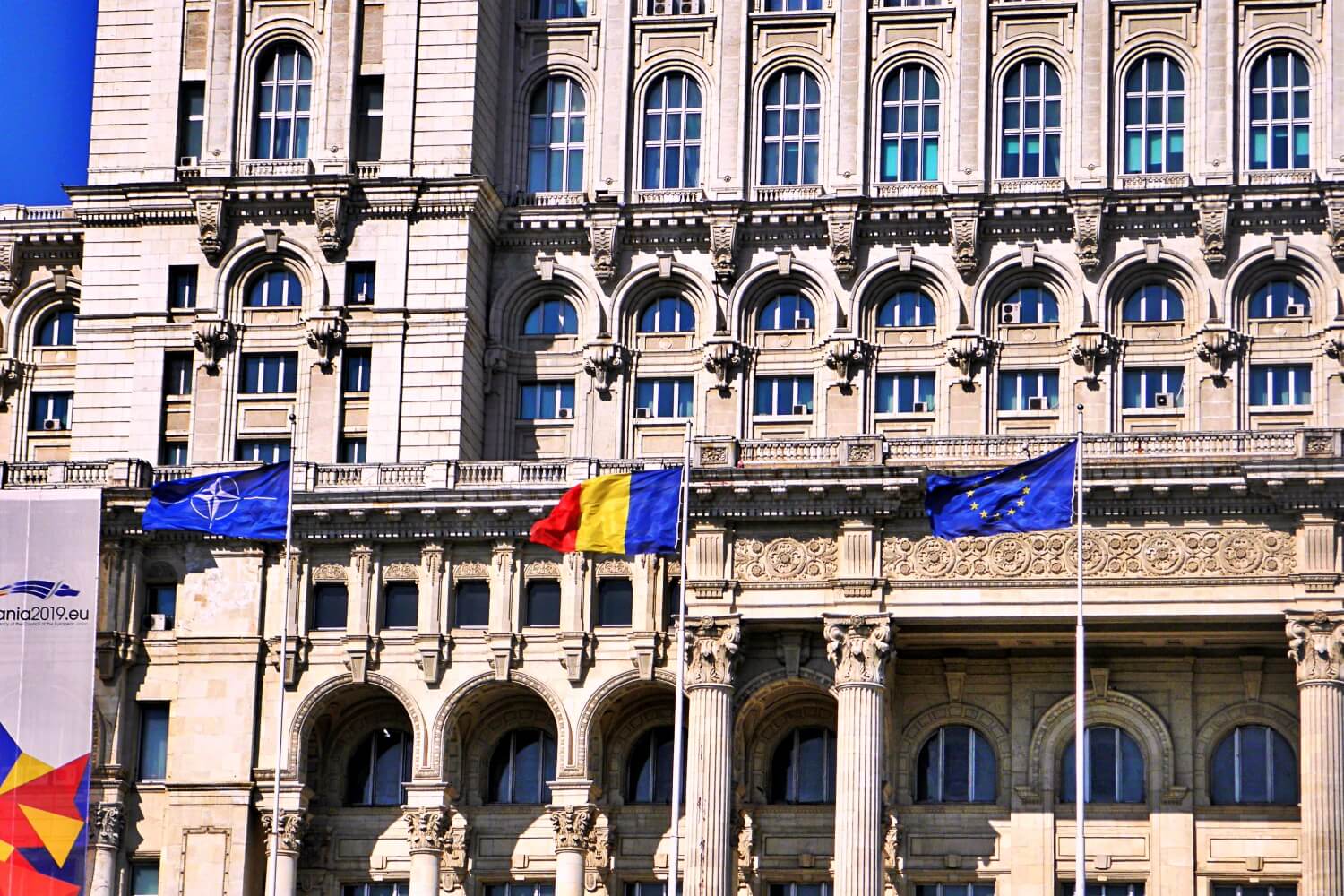
The Palace of the Parliament (Romanian: Palatul Parlamentului), also known as the Republic's House (Casa Republicii) or People's House/People's Palace (Casa Poporului), is the seat of the Parliament of Romania, located atop Dealul Spirii in Bucharest, the national capital
Palatul Parlamentului din București, România (cunoscut înainte de revoluția din 1989 sub numele de Casa Republicii sau Casa Poporului), măsoară 270 m pe 240 m, 84 m înălțime, și 92 m sub pământ realizat în spiritul arhitecturii realist socialiste
A Parlamenti Palota, vagy régi nevén a Nép Palotája Nicolae Ceaușescu idején épült az 1977-es földrengést követően
Previous names
Palace of the Parliament, Palatul Parlamentului, Parlamenti Palota
Description
The Palace of the Parliament (Romanian: Palatul Parlamentului), also known as the Republic's House (Casa Republicii) or People's House/People's Palace (Casa Poporului), is the seat of the Parliament of Romania, located atop Dealul Spirii in Bucharest, the national capital. The Palace reaches a height of 84 metres (276 ft), has a floor area of 365,000 square metres (3,930,000 sq ft) and a volume of 2,550,000 cubic metres (90,000,000 cu ft). The Palace of the Parliament is the heaviest building in the world, weighing about 4,098,500,000 kilograms (9.04 billion pounds; 4.10 million tonnes), also being the second largest administrative building in the world.
The building was designed and supervised by chief architect Anca Petrescu, with a team of approximately 700 architects, and constructed over a period of 13 years (1984–97) in Socialist realist and modernist Neoclassical architectural forms and styles, with socialist realism in mind. The Palace was ordered by Nicolae Ceaușescu (1918–1989), the president of Romania and the second of two long-ruling heads of state in the country since World War II, during a period in which the personality cult of political worship and adoration increased considerably for him and his family.
Known for its ornate interior composed of 23 sections, the palace houses the two chambers of the Parliament of Romania: the Senate (Senat) and the Chamber of Deputies (Camera Deputaților), along with three museums and an international conference center. The museums in the Palace are the National Museum of Contemporary Art, the Museum of Communist Totalitarianism (established in 2015) and the Museum of the Palace. Though originally named the House of the Republic when under construction (Romanian: Casa Republicii), the palace became widely known as The People's House (Romanian: Casa Poporului) after the Romanian Revolution of December 1989. Due to its impressive characteristics, events organized by state institutions and international bodies such as conferences and symposia take place there, but despite this about 70% of the building remains empty.
As of 2020, the Palace of the Parliament is valued at €4 billion, making it the most expensive administrative building in the world. The cost of heating, electricity, and lighting alone exceeds $6 million per year, comparable to the total cost of powering a medium-sized city.
Location
The Palace is in Sector 5 in the central part of Bucharest, at the top of Dealul Spirii (Spirea's Hill), also known as Dealul Arsenalului (Arsenal Hill). It is at the west end of the 3.5-kilometre (2.2 mi) Bulevardul Unirii (Union Boulevard), constructed at the same time as the Palace, and is ringed by Izvor Street to the west and northwest, United Nations Avenue to the north, Liberty Avenue to the east and Calea 13 Septembrie to the south.
History
The construction of the Palace of the Parliament was the most extreme expression of the systematization program imposed on Romania by Nicolae Ceaușescu. Systematization was a program of urban planning carried out by Ceaușescu, who was impressed by the societal organization and mass adulation he saw in North Korea's Juche ideology during his East Asia visit in 1971. Ceaușescu decided to implement similar policies in his country, with the stated goal of turning Romania into a "multilaterally developed socialist society."
A systematization project had existed since the 1930s (during the time of King Carol II) for the Unirii–Dealul Arsenalului area. The Vrancea earthquake of 4 March 1977 gave Ceaușescu a pretext to demolish parts of old Bucharest. He wanted a civic center more in line with the country's political stance and started a reconstruction plan of Bucharest based on the socialist realism style. The House of the Republic was the centrepiece of Ceaușescu's project. Named Project Bucharest, it began in 1978 as an intended replica of the North Korean capital, Pyongyang. North Korean President Kim Il-sung had started construction on a similarly monumental residence, the Kumsusan Palace, two years earlier.
A contest was held and won by Anca Petrescu (1949–2013), who was appointed chief architect of the project at the age of 28. The team that coordinated the work was made up of 10 assisting architects, which supervised a further 700. Construction of the palace began on 25 June 1984, and the inauguration of the work was attended by Ceaușescu, who also frequently inspected the site.
Uranus Hill was leveled so the building could be erected. The area had also been home to the National Archives, Mihai Vodă Monastery and other monasteries, Brâncovenesc Hospital, as well as about 37 old factories and workshops. Demolition in the Uranus area began in 1982. Approximately 7 square kilometres (2.7 sq mi) of the old city centre were demolished, with 40,000 people being relocated from the area. The works were carried out with forced labour in addition to soldiers, minimizing costs.
Between 20,000 and 100,000 people worked on the site and project, operating in three shifts made up of 5,000 Romanian People's Army soldiers and huge numbers of "volunteers".
In 1989, the building costs were estimated at US$1.75 billion, and in 2006 at US$3 billion. In 1990, Australian-born business and media magnate Rupert Murdoch tried to buy the building for US$1 billion, but his bid was rejected.
After 1989
Since 1994, the palace has housed the lower house of the Romanian Parliament, the Chamber of Deputies, after its former seat, the Palace of the Chamber of Deputies (now the Palace of the Patriarchate), was donated by the State to the Romanian Orthodox Church. Since 2004, the upper house, the Senate of Romania, has also been housed in the Palace of the Parliament, after having left the former headquarters of the Central Committee of the Romanian Communist Party.
Six years after the palace's completion, between 2003 and 2004, a glass annex was built alongside the external elevators. This was done to facilitate outside access to the National Museum of Contemporary Art, which opened in 2004 in the west wing of the palace. During the same period, a project aiming to hoist a huge flag was cancelled following public protests. A flag already hoisted outside the building was also removed after the protests.
A restaurant inside the palace, accessible only to politicians, was refurbished. Since 1998, the building has also housed an office for the Regional Southeast European Cooperative Initiative (SECI) Centre for Fighting Transborder Crime.
In 2008, the Palace hosted the 20th summit of the North Atlantic Treaty Organization. In 2010, politician Silviu Prigoană proposed re-purposing the building into a shopping centre and entertainment complex. Citing costs, Prigoană said that the Romanian Parliament should move to a new building, since they occupied only 30% of the massive palace. While the proposal sparked debate in Romania, politician Miron Mitrea dismissed the idea as a "joke".
The palace has also been the background for several motorsports events, including the 2011 Drift Grand Prix Romania, which brought together professional drifters from all over Europe.
Copyrights over the building's image
Although the Palace of the Parliament was financed from public funds and the architects did work for hire, after the death of chief architect Anca Petrescu, her heirs sued the Chamber of Deputies for using images of the iconic building without authorization. The chamber was accused of copyright infringement for selling photos and souvenirs depicting the building's image. In other lawsuits, the heirs claimed violation of trademarks owned by the chief architect through the depiction of the palace from different angles.
While legal experts state that no restrictions exist for tourists wishing to photograph the iconic building for non-commercial purposes, Petrescu's heirs have clearly set out that any commercial use of the building's image is subject to a 2% royalty fee. It is believed the situation could have been avoided if an agreement between the chief architect and the beneficiary (Romanian State) had addressed the intellectual property rights and Romania had implemented freedom of panorama, restricting the scope of copyright law in such cases.
Technical details
Construction of the palace began in 1984 and was initially scheduled for completion in two years. The project was extended to 1990, but remains uncompleted to this day. Only two large meeting rooms and 400 others have been finished or are even being used, out of a total of 1,100.
The building has eight underground levels, the deepest housing a nuclear bunker, linked to main state institutions by 20 kilometres (12.4 mi) of tunnels. Nicolae Ceaușescu feared nuclear war. The bunker is a room with 1.5-metre (4.9 ft) thick concrete walls said to be impervious to radiation. The shelter is composed of a main hall – headquarters which would have had telephone connections with all military units in Romania – and several residential apartments for state leadership, to be used in the event of war.
The palace's floor area of 365,000 square metres (3,930,000 sq ft) makes it the world's third-largest administrative building after the Pentagon outside of Washington, D.C. in the United States and the Sappaya-Sapasathan in Thailand. It is also among the most massive buildings in terms of volume, measuring 2,550,000 cubic metres (90,000,000 cu ft): for comparison, the building exceeds by 2% the volume of the Great Pyramid of Giza in Egypt, leading some sources to label it "pharaonic".
The Palace of the Parliament sinks 6 millimetres (0.24 in) each year due to its weight. Romanian specialists who have analyzed the data have explained that the palace's massive weight is causing the layers of sediment below the building to settle.
Materials
The building was constructed almost entirely of materials of Romanian origin. Among the few exceptions are the doors of Nicolae Bălcescu Hall, received by Ceaușescu as a gift from his friend Mobutu Sese Seko, longtime totalitarian President of Zaire (today the Democratic Republic of the Congo).
Among the materials are 3,500 tonnes of crystal – 480 chandeliers, 1,409 ceiling lights and mirrors were manufactured; 700,000 tonnes of steel and bronze for monumental doors and windows, chandeliers and capitals; 1,000,000 cubic metres (35,000,000 cu ft) of marble, 900,000 cubic metres (32,000,000 cu ft) of wood (over 95% domestic) for parquet and wainscotting, including walnut, oak, sweet cherry, elm, sycamore maple; 200,000 square metres (2,200,000 sq ft) of woolen carpets of various dimensions (machines had to be moved inside the building to weave some of the larger carpets); velvet and brocade curtains adorned with embroideries and passementeries in silver and gold.
In popular culture
The Palace of the Parliament has featured in a variety of films, most famously as the Vatican in the 2018 horror film The Nun. Other films include War Dogs, starring Jonah Hill; Dying of the Light, starring Nicolas Cage; and What About Love (2022), starring Sharon Stone and Andy García.
It also appeared on an episode of Top Gear in 2009, titled "Romanian GT Road Trip to Find the Transfagarasan Highway".
Palatul Parlamentului din București, România (cunoscut înainte de revoluția din 1989 sub numele de Casa Republicii sau Casa Poporului), măsoară 270 m pe 240 m, 84 m înălțime, și 92 m sub pământ realizat în spiritul arhitecturii realist socialiste. Are 9 niveluri la suprafață și alte 9 subterane. Conform World Records Academy, Palatul Parlamentului este a treia cea mai mare clădire administrativă pentru uz civil ca suprafață din lume, cea mai scumpă clădire administrativă din lume, și cea mai grea clădire din lume. Clădirea Palatului Parlamentului se află situată în partea centrală a Bucureștiului (sector 5), pe locul care astăzi se cheamă Dealul Arsenalului, încadrat de strada Izvor la vest și nord-vest, Bulevardul Națiunile Unite spre nord, Bulevardul Libertății la est și Calea 13 Septembrie la sud. Aceasta se află la 10 minute distanță de Piața Unirii și 20 de minute de Gara de Nord (cu autobuzul 123).
Dealul pe care se află astăzi Palatul Parlamentului este în general o creație a naturii, având o înălțime inițială de 18 m, dar partea dinspre Bulevardul Libertății este înălțată în mod artificial.
Se află pe locul 2 în lume la capitolul „cele mai costisitoare, lipsite de succes și rușinoase proiecte de arhictectură făcute vreodată", clasament realizat de cel mai vizitat site de arhitectură din lume, ArchDaily. Deși a costat și costă enorm în bani, 70% este nefolosită, mare parte nefiind structurată pentru nevoile indivizilor ci pentru dorințele megalomanice ale lui Ceaușescu, cultul personalității punându-și amprenta pe acest edificiu.
Construcția
După cutremurul din 4 martie 1977, dictatorul comunist Nicolae Ceaușescu a găsit pretextul pentru modificarea capitalei conform realităților politice, anume faptul că România era un stat socialist, astfel se dorea o arhitectură de tip realist socialistă. S-a preluat o idee a regelui Carol al II-lea din 1935, în al cărei proiect era prevăzută construirea Camerei Deputaților pe Dealul Arsenalului. Acest proiect fusese conceput de cei mai mari arhitecți ai vremii. În 1938 s-a anunțat începerea demolărilor în vederea deschiderii acestui ax. A venit al Doilea Război Mondial și lucrurile au rămas doar pe hârtie până în 1983, când a început construirea „Casei Poporului”, un monument monstruos de kitsch totalitarist, ceremonia oficială a așezării pietrei fundamentale având loc la data de 25 iunie 1984.
Clădirea are o suprafață desfășurată de 330.000 m², înscriindu-se, după World Records Academy, la capitolul "Clădiri Administrative", pe locul 2 în lume după clădirea Pentagonului, iar din punct de vedere al volumului, cu cei 2.550.000 m³ ai săi, pe locul 3 în lume, după clădirea de asamblare a rachetelor spațiale de la Cape Canaveral din Florida și după piramida lui Quetzalcoatl din Mexic. Pentru comparație se poate menționa că această clădire depășește cu 2% volumul piramidei lui Keops din Egipt, și de aceea unele surse o caracterizează ca pe o construcție „faraonică” .
Început în timpul regimului comunist, (autointitulat „Epoca de Aur” a României și înlăturat în mod violent, prin Revoluția din 1989), așa-numitul Proiect București a fost un proiect ambițios al cuplului Ceaușescu început în anul 1978, ca o replică a orașului Phenian, capitala Coreei de Nord. Un proiect de sistematizare exista încă din anii '30 (din timpul lui Carol al II-lea) pentru zona Unirii - Dealul Arsenalului.
După cutremurul din 1977 Nicolae Ceaușescu a ordonat „reconstruirea” Bucureștiului ca un nou oraș, de sine stătător. În anii 1978-79 a avut loc un concurs la nivel național pentru reconstruirea Bucureștiului. Concursul a durat aproape 4 ani și a fost câștigat de Anca Petrescu, o tânără arhitectă de numai 28 de ani, care a fost numită arhitect șef a acestui proiect excepțional de controversat.
Șantierul propriu-zis a început în anii 1980 cu demolarea a peste 7 km² din vechiul centru al capitalei și relocația a peste 40.000 de oameni din această zonă. Între clădirile dispărute se numără Mănăstirea Văcărești, Spitalul Brâncovenesc, Arhivele Naționale, Stadionul Republicii, etc. Lucrările s-au efectuat cu munca forțată a militarilor în termen și astfel costul a fost redus la minimum.
Acest proiect de reconstruire a Bucureștiului, cuprindea o serie de clădiri cum ar fi: Palatul Parlamentului - Casa Republicii, Ministerul Apărării Naționale, Casa Radio, Hotelul Marriott - Casa de Oaspeți, Casa Academiei Române, Parcul Izvor și Bulevardul Unirii - Victoria Socialismului.
În 1989 costurile clădirii erau estimate la 1.75 miliarde dolari SUA, iar în 2006 la 3 miliarde Euro.
Au muncit 20.000 muncitori, 5000 soldați, 700 arhitecți, o armată de așa-ziși „voluntari”, în condiții grele, 3 schimburi timp de 7 ani. Nu se știe numărul victimelor acesta fiind un subiect tabu, autoritățiile comuniste nedorind publicarea datelor, cei ce au lucrat pe acest șantier declară că au fost victime, ținând cont de numărul victimelor de pe alte șantiere de amploarea „Casei Poporului” realizate în „epoca comunistă” putem afirma că au fost sute de morți.
Istoria clădirii după 1989
Din 1994 în clădire funcționează Camera Deputaților, după ce sediul inițial al instituției, Palatul Camerei Deputaților, a fost donat de stat Bisericii Ortodoxe Române. Începând din 2004 aici se află și Senatul României, inițial fiind găzduit în fosta clădire a Comitetului Central al Partidului Comunist Român. De asemenea, Palatul Parlamentului găzduiește în numeroasele sale săli și saloane, o întreagă varietate de evenimente, expoziții sau întâlniri.
În perioada 2003-2004 a fost construită o anexă din sticlă de-a lungul ascensoarelor exterioare. Această construcție are ca scop facilitarea accesului la Muzeul Național de Artă Contemporană (MNAC), deschis în 2004, după o reamenajare în aripa vestică a palatului. În aceeași perioadă, un proiect ce susținea arborarea unui steag uriaș a fost anulat ca urmare a protestelor venite din partea publicului. [Un drapel se afla deja arborat pe clădire dar a fost îndepărtat împreună cu suportul.]
Restaurantul, accesibil doar politicienilor, a fost renovat, proiect urmat de amenajarea unei piscine, saune și a unor facilități sportive la nivelul 1 al subsolului.
De asemenea, din 1995, clădirea găzduiește sediul Inițiativei de Cooperare Sud-est Europeană, o organizație ce are ca scop o colaborare pentru reducerea nivelului criminalității transfrontaliere în țările membre.
O mare parte din clădire (aripa vestică, o parte din aripa de est, o parte din al doilea nivel, nivelul 3 subsol și celelalte aflate sub acesta), urmează a fi terminate.[necesită citare] Între timp, o parcare subterană se construiește în locului unui fost stadion, momentan folosit ca depozit, care a fost acoperit în timpul construcției palatului. De asemenea, se are în plan construirea unor tunele ce leagă Calea 13 Septembrie cu subsolul clădirii.
Palatul este deschis vizitării de către turiști și oferă și programe de vizitare în mai multe limbi de circulație internațională.
A Parlamenti Palota, vagy régi nevén a Nép Palotája Nicolae Ceaușescu idején épült az 1977-es földrengést követően. A munkálatok a főváros régi központjának, mintegy 7 négyzetkilométeres területének lebontásával kezdődtek. Körülbelül 100.000-en dolgoztak itt.
Körülbelül 20.000 munkás napi három váltásban dolgozott, 1984-1990 között pedig csatlakozott 12.000 katona is. A legjobb szakembereket Bukarestbe hívtak, a családok több héten keresztül magukra maradtak. 1989 decemberében 60%-ban volt készen a palota.
A munkálatok folytatódtak 1992 és 1996 között is, de még most sincsen teljesen készen. Felhasználtak: 1000000m3 márványt 550000t de cementet, 700000t acélt, 2000000t homokot, 1000t bazaltot, 900000m3 faanyagot, 3500t kristályt, 200000m3 üveget, 3500nm bőrt.
Felszereltek 2800 csillárt és leterítettek 220000 nm szőnyeget. Az épület méretei hossz - 270m, szélesség - 245m, magasság - 84m (0 színt fölött), mélység, a föld alatt - 16m, a beépített terület a föld felszínén - 73615nm és körülbelül 1000 helyiséggel rendelkezik.
Románia legellentmondásosabb épülete. Ha a kommunizmus idején a vezető nagyzási mániája tükrözésének tartották, ma mindenki büszkélkedik ezzel a 330.000 négyzetméter területű épülettel, hiszen a méretével a világ második épülete a Pentagon után.
Bekerült a Rekordok könyvébe is. A civil közigazgatási épületek között az első helyen áll. Ugyanakkor a világ legnehezebb és legdrágább közigazgatási épülete. 1993 óta a Képviselőház költözött falai közzé, 1994-től pedig a Nemzetközi Konferencia Központ. 1004-ben átadták a Szenátus termét is. Itt kapott helyet a Törvényhozó Tanács és az Alkotmánybíróság. A Parlamenti Palota látogatható, idegen vezetést biztosítanak román, angol, spanyol, olasz és francia nyelveken.
https://www.welcometoromania.eu/
Useful information
Free
40.00 RON
Students: 20.00 RON
Children: 10.00 RON
- WC
- WiFi
infocdep@cdep.ro
- Accessible for wheelchairs
- Vising is possible only with a guide
- You need a passport to visit
- Gift shop
- Guided tours in foreig languages
- Photography: 30.00 RON
-
-
External links
Nearby castles
CEC Palace
Municipiul București
0.9km
manor, mansion
The Postal Service Palace
Municipiul București
0.9km
manor, mansion
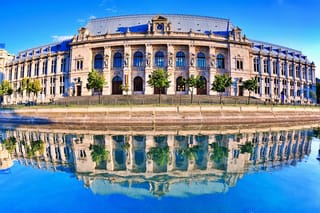
Palace of Justice (Bucharest)
Municipiul București
0.9km
manor, mansion
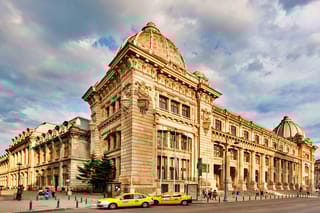
National Museum of Romanian History
Municipiul București
1.0km
castle, chateau
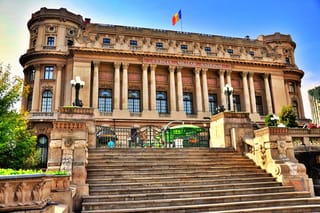
Palace of the National Military Circle
Municipiul București
1.2km
manor, mansion
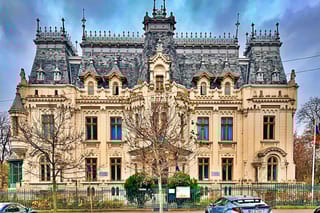
Crețulescu Palace
Municipiul București
1.4km
manor, mansion
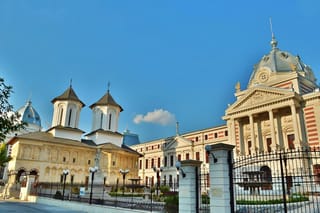
Colţea Hospital
Municipiul București
1.6km
castle, chateau