The Postal Service Palace
Municipiul București București Romania
manor, mansion
Palatul Poștelor
Municipiul București București Romania
manor, mansion
The central part of the city, delineated by the Lipscani Street, the old Princely Court, the Dambovita riverbank and Victoria Road would gradually change its appearance
Palatul Poștelor este o construcție monumentală aflată în cuprinsul vechiului Centru Istoric al Bucureștiului, pe Calea Victoriei nr
Previous names
The Postal Service Palace, Palatul Poștelor, Posta Palota
Description
The central part of the city, delineated by the Lipscani Street, the old Princely Court, the Dambovita riverbank and Victoria Road would gradually change its appearance. Springing up next to old merchant houses and inns were monumental buildings such as the National Bank Palace, the Savings Bank headquarters and the Postal Service Palace across the road, whose front was overlooking Victoria Road and whose backside was on Stavropoleos Street, close to the monastery of the same name created on the site of a former inn.
The Postal Service Palace, whose construction began in 1894, was also built on the site formerly occupied by an inn. The latter's history is illustrative of the tumultuous life of the city. The building of the inn itself was linked to Constantin Brancoveanu, whose long reign from 1688 to 1714 left an unmistakable mark on the history of Bucharest and the whole of Wallachia. Historian Dan Falcan tells us more:
"This inn was built on the site where the home of Constantin Balaceanu had been located. Balaceanu was a very important figure in the early days of Brancoveanu's reign because he was a sworn enemy of the latter. Balaceanu was the son-in-law of ruler Serban Cantacuzino, the uncle of Brancoveanu and the ruler who preceded him on the throne of Wallachia. He wanted Serban's son and his brother-in-law to come to power instead of Brancoveanu. This never happened but Balaceanu continued to plot against the new ruler, fleeing to the Austrians and organising a confrontation that came to an end in the Battle of Zarnesti in 1690. The Austrians were defeated and Constantin Balaceanu was taken prisoner and beheaded, while his property was confiscated by Brancoveanu, including his houses located on what is today the site of the National History Museum. According to the chroniclers of the day, the decapitated head of Constantin Balaceanu remained for quite a while impaled on a pole in front of his home. Brancoveanu then demolished the houses and built an inn that would become famous and which survived well into the 19th century. This was one of the most important inns in Bucharest, together with Gabroveni Inn and Manuc Inn."
However, inns started to disappear in the first half of the 19th century. It was then that the Constantin Brancoveanu inn, which had fallen into in ruin, was demolished. A modern, tall building, emblematic for new and less troubled times was built on the site of the old inn. The new palace hosted the central post, a vital institution at the time, as it was the major means of communication. The building was designed by one of the first Romanian architects who studied in Paris. Historian Dan Falcan has more:
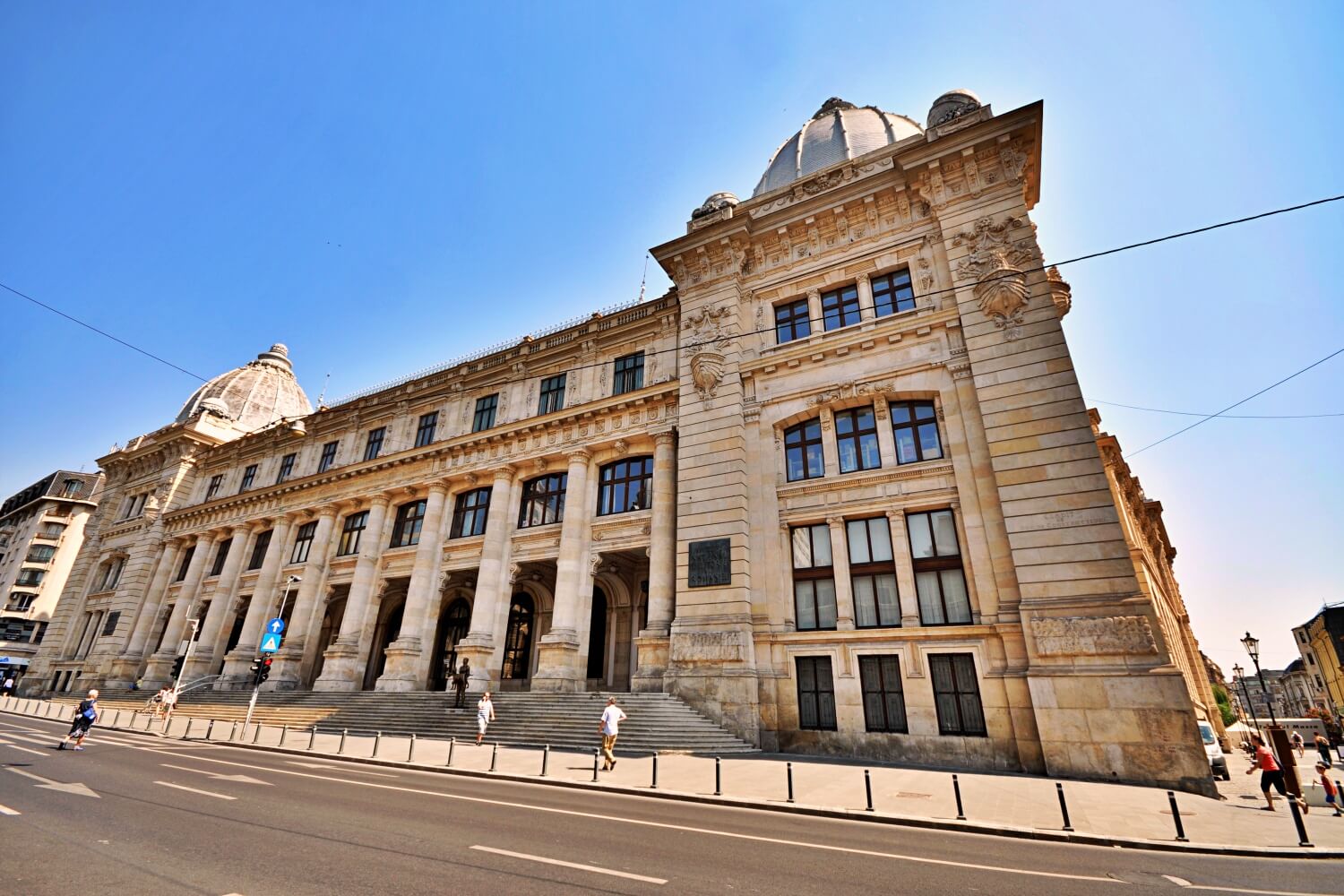
"The architect who received the mission to design and make the blueprints for the building, Alexandru Savulescu, together with the then director of the Post Service travelled extensively across Europe to see how the headquarters of the central posts in more developed countries looked like. They travelled extensively for two three years until they finally decided to design a building similar to the Central Post Office in Geneva. The current Postal Service Palace looks very much like the postal service palace in Geneva. Construction works started in 1894. For 32 years, between 1862, when Brancoveanu's inn was demolished, and 1894, that vacant plot of land was used by travelling circuses that arrived in Bucharest. The cornerstone was laid in 1894, with the royal family, King Carol I and Queen Elisabeta, in attendance. Construction works were completed in 1900. It is a grandiose building, as we can see it today. It cost a lot. Alexandru Savulescu was part of the generation of Romanian architects who had studied in Paris. They copied the eclectic, neoclassical style, which was in fashion in the French capital city back then. The Postal Service Palace was also built in that style. 10 Doric columns, with 9 vaults, guard the façade."
Since its inauguration in 1900, the Postal Service Palace had kept its function until 1971, when Romania's National History Museum was laid out inside the building. The museum was inaugurated in 1972 and is still open to visitors.
https://www.rri.ro/
Palatul Poștelor este o construcție monumentală aflată în cuprinsul vechiului Centru Istoric al Bucureștiului, pe Calea Victoriei nr. 12, actualmente fiind sediu al Muzeului Național de Istorie a României.
Pregătirile pentru construcția Palatului Poștelor
În 1892 a fost elaborată legea pentru construirea Palatului Poștelor. În vremea aceea, poșta ținea de Ministerul de Interne, care a fost însărcinat să aloce o sumă substanțială. În lege se specifica: «Se deschide pe seama Ministerului de Interne un credit de 3.000.000 de lei aur, care se va acoperi printr-o emisiune de rentă sau prin orice alte mijloace va găsi guvernul mai nimerit».
În același timp, arhitectul Alexandru Săvulescu, desemnat să realizeze planurile noii clădiri, a fost trimis să viziteze mai multe capitale europene și să studieze clădirile de poștă de acolo, împreună cu directorul poștelor de atunci, Ernest Sturza. Au sudiat palatele poștelor din Paris, Viena, Torino, Milano, Veneția, Budapesta, Zurich și Geneva. La întoarcere s-a elaborat un plan care a fost înaintat Ministerului de Interne. Acesta a avut ca inspirație și ca model clădirea poștei din Geneva.
Edilii orașului București au hotărât să înalțe Palatul Poștelor pe un teren pe care, în secolul al XVII-lea, se aflau casele marelui agă Constantin Bălăceanu, pe locul cărora domnitorul Constantin Brâncoveanu a construit un mare han ce i-a purtat numele ("Hanul Constantin Vodă"). Incendiul din anul 1847, care a cuprins o mare parte din oraș, a distrus hanul, ale cărui ruine au fost demolate până în 1862. Terenul se afla de cealată parte a străzii, față în față cu cel pe care s-a construit, în aceeași perioadă, Palatul C.E.C..
Construcția Palatului Poștelor
Lucrările de construcție efectivă a palatului au început în 1894, la punerea pietrei de temelie fiind prezenți, în cadrul unei ceremonii, regele Carol I al României, prim-ministrul Lascăr Catargiu, miniștrii cabinetului, prefectul poliției și primarul Capitalei.
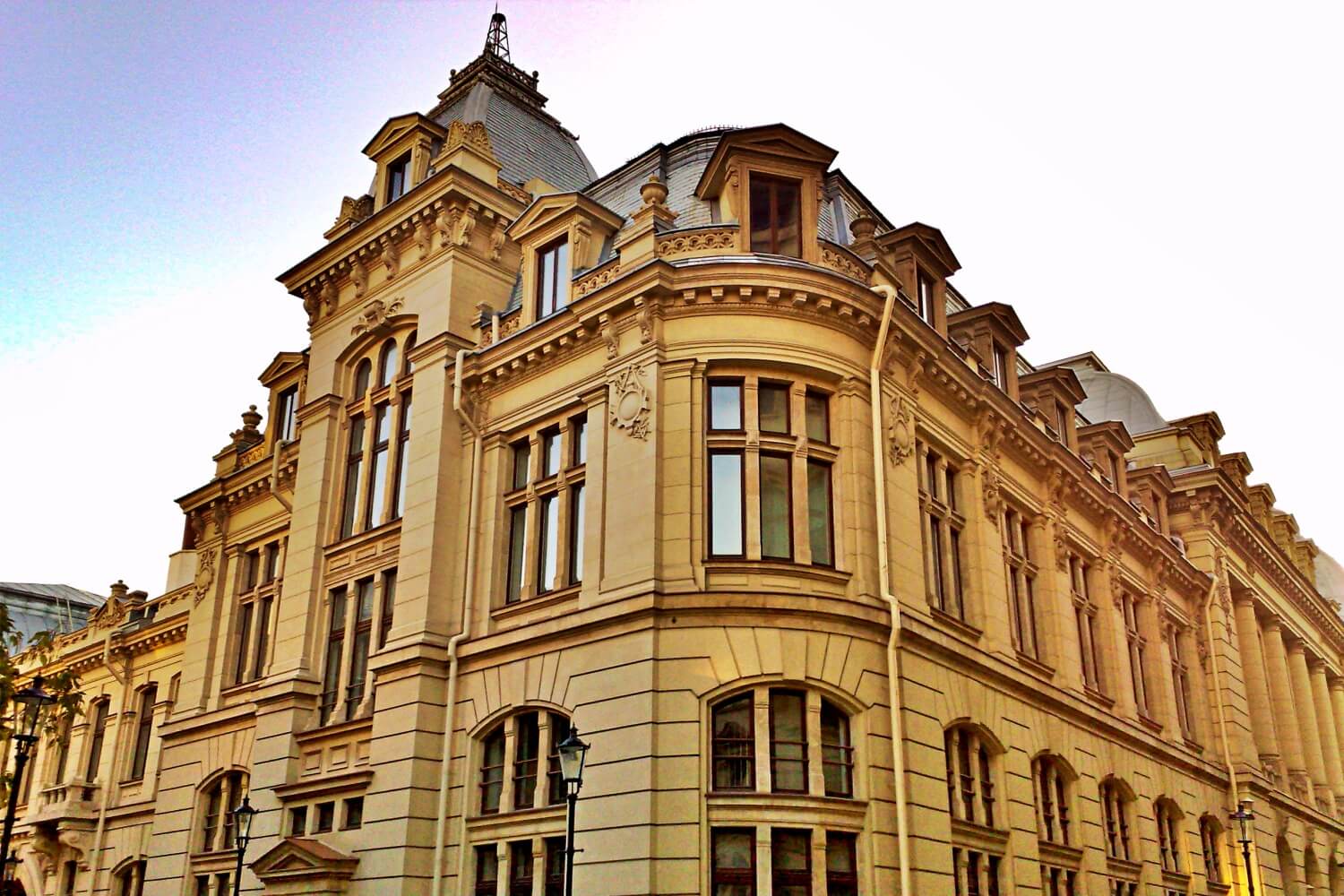
Planurile Palatului Poștelor și Telegrafului au fost realizate de arhitectul Alexandru Săvulescu în stil neoclasic, care amintește de arhitectura palatului poștelor din Geneva. Fațada principală are trepte pe toată lungimea ei și un portic susținut de 10 coloane dorice. Extremitățile, formate din două volume proeminente, sunt înălțate și acoperite de câte o cupolă.
Palatul a fost inaugurat în anul 1900, pentru beneficiarul său inițial, Poșta Română.
Schimbarea destinației Palatului
Poșta centrală a orașului a funcționat în acest palat până în 1970, când au început lucrări de renovare a clădirii și de amenajare a Muzeului Național de Istorie, inaugurat în anul 1972.
La 29 aprilie 2012, pe treptele palatului a fost dezvelită Statuia împăratului Traian, cu o înălțime de 2,15 metri, turnată din aproximativ 500 de kilograme de bronz. La inaugurarea monumentului, directorul Muzeului Național de Istorie, Ernest Oberländer Târnoveanu, a declarat că “Muzeul are mari probleme de structură, mai ales la colțuri și în partea dinspre Calea Victoriei (unde e montată statuia). De aceea, clădirea urmează să intre în consolidare. În aceste condiții, cele 500 kg nu fac deloc bine muzeului, mai ales în zona treptelor, care și așa sunt șubrede”.
Useful information
Charge
Free
Accessible for wheelchairs
-
Nearby castles
CEC Palace
Municipiul București
0.0km
manor, mansion
National Museum of Romanian History
Municipiul București
0.1km
castle, chateau
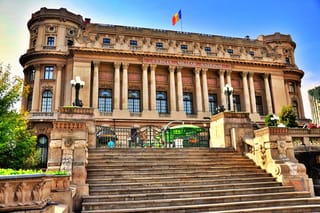
Palace of the National Military Circle
Municipiul București
0.3km
manor, mansion
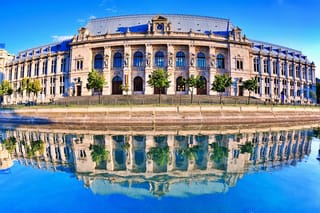
Palace of Justice (Bucharest)
Municipiul București
0.4km
manor, mansion
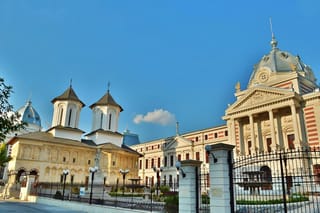
Colţea Hospital
Municipiul București
0.6km
castle, chateau
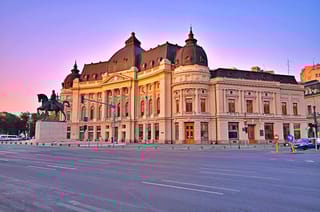
Central University Library (Bucharest)
Municipiul București
0.9km
castle, chateau
Palace of the Parliament
Municipiul București
0.9km
manor, mansion