The Palace of the Greek-Catholic Bishopric
Municipiul Oradea Județul Bihor Romania
manor, mansion
Palatul Episcopiei Greco-Catolice
Municipiul Oradea Județul Bihor Romania
manor, mansion
Nagyváradi görögkatolikus püspöki palota
Municipiul Oradea Județul Bihor Romania
manor, mansion
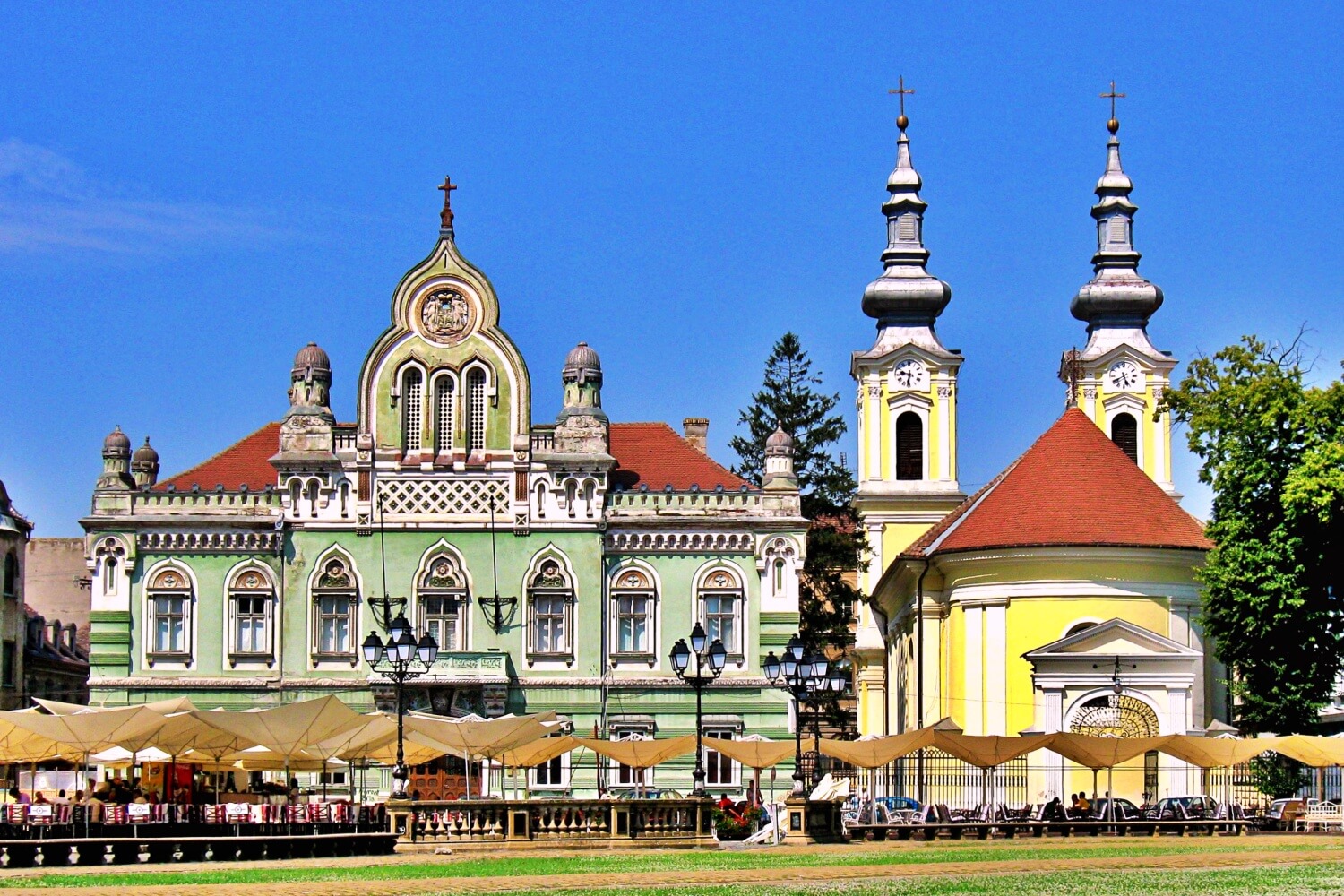
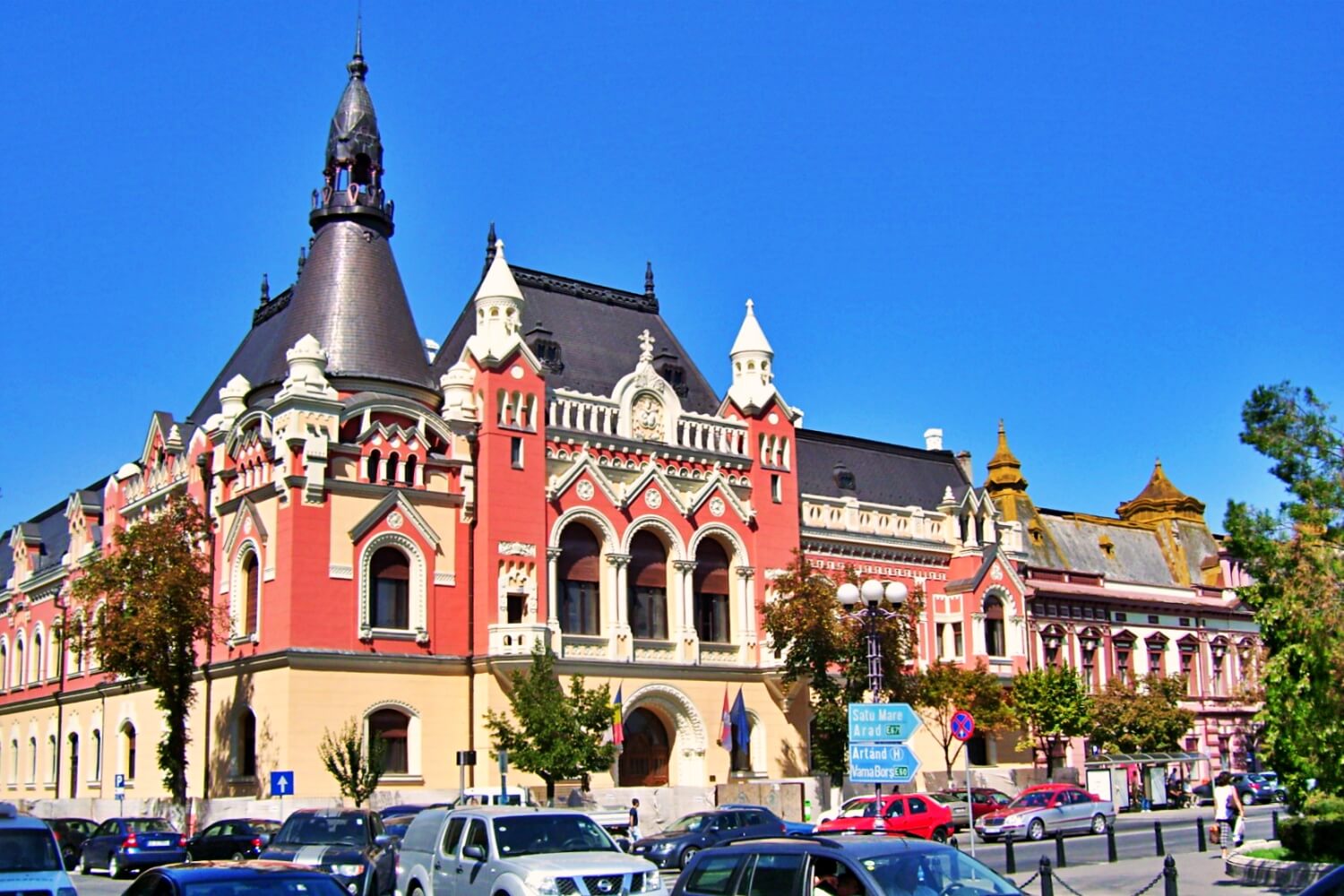
The Greek-Catholic Episcopal Palace from Oradea, located in the Union Square, takes its present form in 1905
Palatul Episcopiei Greco-Catolice este un monument de arhitectură din Oradea, ridicat pe locul vechiului palat al Episcopiei Greco-Catolice de Oradea Mare
A nagyváradi görögkatolikus püspöki palota műemlék épület Romániában, Bihar megyében
Previous names
The Palace of the Greek-Catholic Bishopric, Palatul Episcopiei Greco-Catolice, Nagyváradi görögkatolikus püspöki palota
Description
The Greek-Catholic Episcopal Palace from Oradea, located in the Union Square, takes its present form in 1905. The architect of the palace was Rimanóczy
Kálmán Jr., the most important architect from the 1900- 1912 period.
Until the first decade of the 20th century another baroque-style building was in its place – the seat of the Romanian Church United with Rome. In 1778 it was added another floor, and after the fire of 1836 it was rebuilt. Between 1874 and 1875 a new wing was built on Mihai Pavel Street, and the late baroque façade was modified by master Imre János.
Bishop Demetrie Radu ordered architect Rimanóczy Kálmán Jr. the design of the present appearance of the palace. The demolition works of the old building (preserving some parts of the old one) began on 10th of August 1903, and the building was inaugurated on 11th of July 1905.
The interior
The stairs with two ramps, the massive railing and the pillars surrounding the stairs are made of pink-red Vascau marble with white veins or yellow marble. Above the stairs in the hallway there was a large glazing panel, built from stained glass decorated with vegetal elements. The light that penetrated through the beautiful stained glass colored the large hallway in different shades and shapes.
The bishop’s residence and the most important rooms were upstairs. The offices, the kitchen and the guest rooms were at the ground floor. The Great Dining Room (as it was called on the construction plans) was probably used as a Congregation Hall. The hall was made in neo-gothic style and was covered with a stellar vault decorated with vines. The whole room was painted in pastel green. The stove was made of green tiles, and the massive chandelier was also neo-gothic.
The offices on the side facing Mihai Pavel street or the Square Hall on the corner of the building, Mihai Pavel street corner with the Union Square could be accessed from the Great Dining Room. This room was decorated in a baroque, rococo styleand was covered with a hemispherical vault. The ault is decorated with vines, with pastel leaves and flowers. The Great Hall facing Union Square was the most spectacular room in the palace and also most decorated one. In the project, the Hall was named the Great Hall, decorated in eclectic style. The stucco ornaments were polychrome or golden, placed on walls and ceiling. The chandelier was massive, made in bronze, decorated with leaves and sunflowers.
At the moment, the palace is currently under a rehabilitation process after the fire of 25th of August 2018. The rehabilitation works are scheduled for a period of three years.
https://www.oradeaheritage.ro/
Palatul Episcopiei Greco-Catolice este un monument de arhitectură din Oradea, ridicat pe locul vechiului palat al Episcopiei Greco-Catolice de Oradea Mare. Lucrările de construcție au avut loc între anii 1903-1905. Clădirea a fost edificată în stil eclectic, după proiectul arhitectului Kálmán Rimanóczy. Edificiul a fost inaugurat de episcopul Demetriu Radu pe 11 iunie 1905.
Istoric
În secolul al XVIII-lea episcopul romano-catolic Paul Forgách a ridicat pe amplasamentul actualului imobil o casă parohială pentru parohul Bisericii Romano-Catolice Sf. Ladislau, după construirea bisericii respective. În 1748 episcopul Meletie Covaci, vicar al episcopului romano-catolic, a primit această casă cu opt camere, pentru a-i servi drept reședință. Moise Dragoș, primul episcop al nou înființatei Eparhii de Oradea Mare, a ridicat un etaj la clădirea veche, în 1778. În anul 1836 imobilul a ars într-un incendiu și a fost refăcut. În anul 1875 episcopul Ioan Olteanu a construit o nouă aripă a reședinței episcopale, unde au fost amplasate birourile și fondurile diecezane, tot atunci fiind refăcută și fațada principală.
La începutul secolului al XX-lea, în timpul episcopului Demetriu Radu, clădirea a fost reconstruită după planurile arhitectului Kálmán Rimanóczy (fiul).
Descriere
Palatul este construit în stil eclectic, în care stilul dominant este cel neogotic, dar este o împletire rafinată, firească, de mare artă între mai multe stiluri: romanic, rococo, baroc, Art Nouveau.
Clădirea a fost edificată pe două nivele: jos biblioteca, administrația, birouri, iar sus saloanele episcopale.
Întregul frontispiciu este asimetric și foarte variat, elementele neogotice dominând vizual edificiul. Ancadramentul accesului este continuat până la nivelul acoperișului, de la baza acestuia pornind două turnulețe de o parte și de alta a porții. Colțul clădirii este marcat de un turn aparent, doar acoperișul colțului clădirii creând această iluzie prin forma sa conică, diferită de restul învelitorii.
Istoric
În 1948 a fost sechestrată de comuniști și transformată în școală populară, iar ulterior a devenit sediul Bibliotecii Județene.
În 1992, după căderea regimului comunist, edificiul a fost retrocedat proprietarilor de drept, dar fizic aceștia au intrat în posesia lui abia în 2005-2006, după mai multe dispute cu conducerea Bibliotecii Județene.
În 2007, fațada a fost reabilitată, dar interiorul a ajuns în stare avansată de degradare, nefiind supus niciunei renovări de peste un secol.
Incendiul din august 2018
În 25 august 2018, în jurul orei 21:30, un incendiu puternic a afectat cca. 1.300 m², tavanul de la etajul 1 și acoperișul fiind distruse. Clădirea se afla în conservare și nu era asigurată în caz de incendiu. Incendiul ar fi fost provocat de un scurtcircuit. Lucrările de reabilitare ale clădirii au început în septembrie, urmând a fi finalizate în 2021.
A nagyváradi görögkatolikus püspöki palota műemlék épület Romániában, Bihar megyében. A romániai műemlékek jegyzékében a BH-II-m-B-01087 sorszámon szerepel.
Története
Id. Rimanóczy Kálmán építész tervei alapján, 1905-re épült fel a görögkatolikus egyház megrendelésére. 2018. augusztus 25-én a palota kigyulladt. Az épület nagy része, főleg a felső traktusa leégett. Újjáépítése 2018 szeptemberében kezdődött; 2020. augusztusig megtörtént a tető helyreállítása, amelyet a tervek szerint a homlokzat és belső terek helyreállítása követ. A munkálatokat két-három év alatt tervezik befejezni.
Useful information
Charge
info@egco.ro
Closed for restoration
-
-
External links
Nearby castles