Peleș Castle
Orașul Sinaia Județul Prahova Romania
castle, chateau
Castelul Peleș (Sinaia)
Orașul Sinaia Județul Prahova Romania
castle, chateau
Peleș-kastély
Orașul Sinaia Județul Prahova Romania
castle, chateau
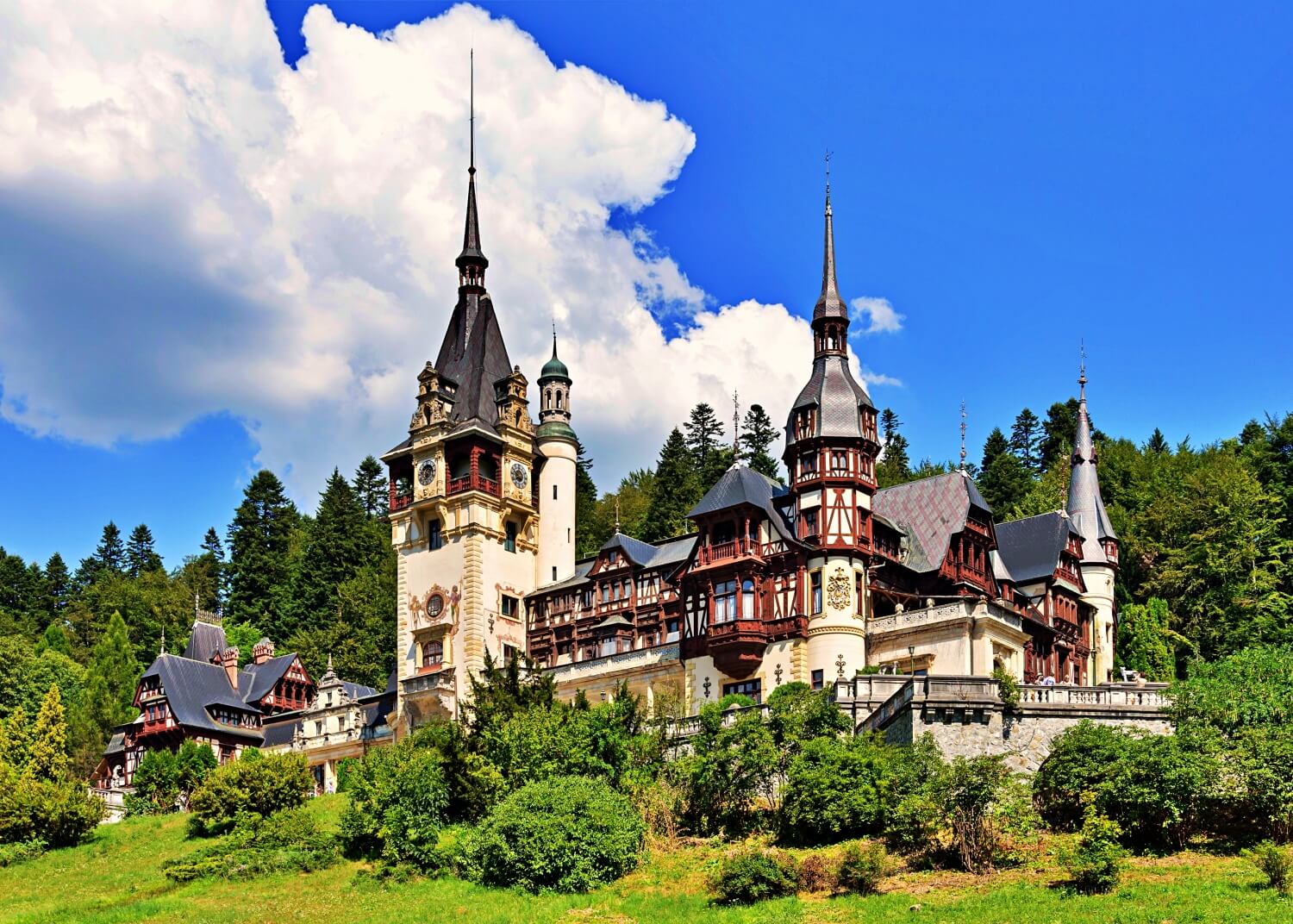
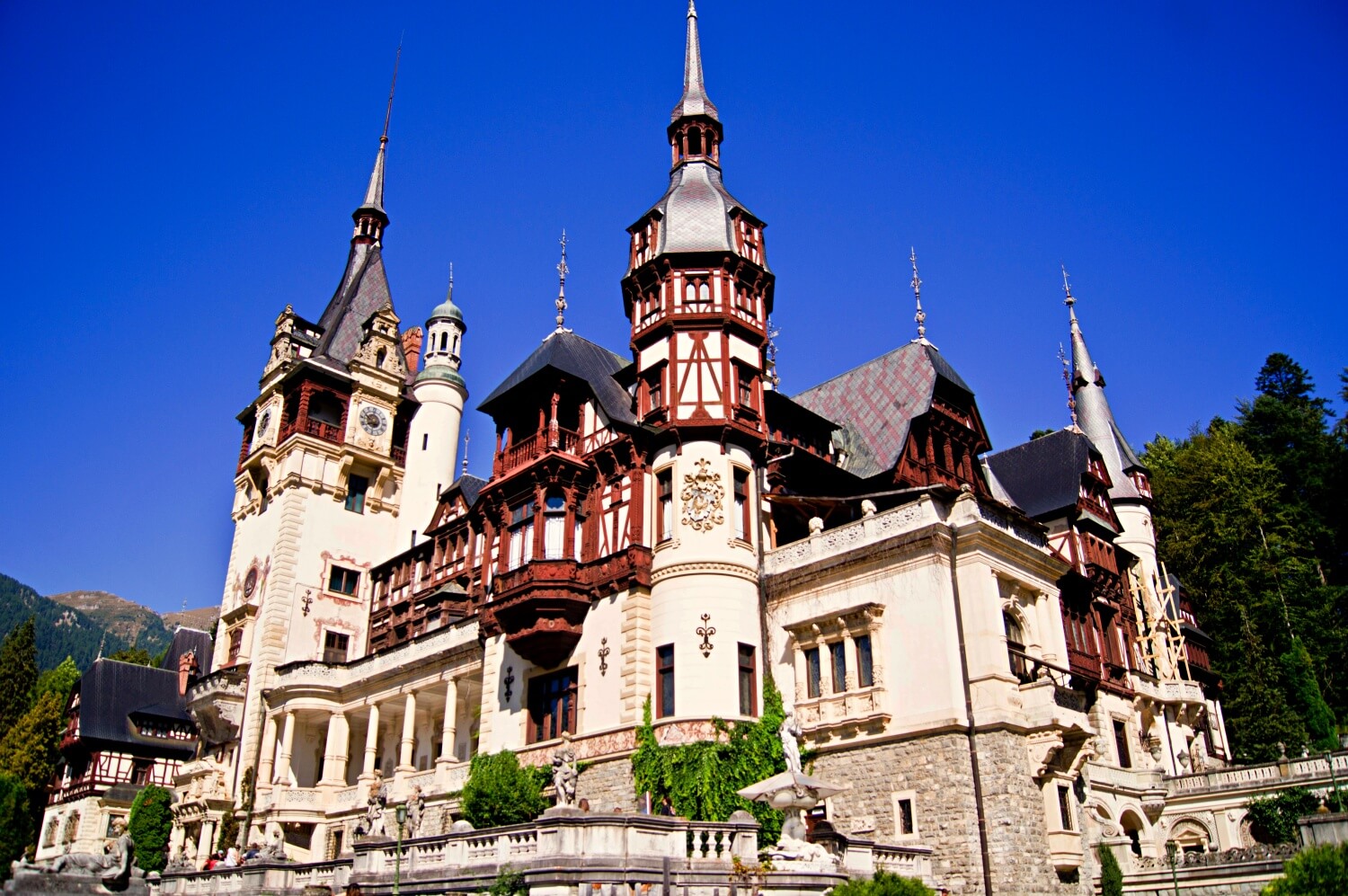
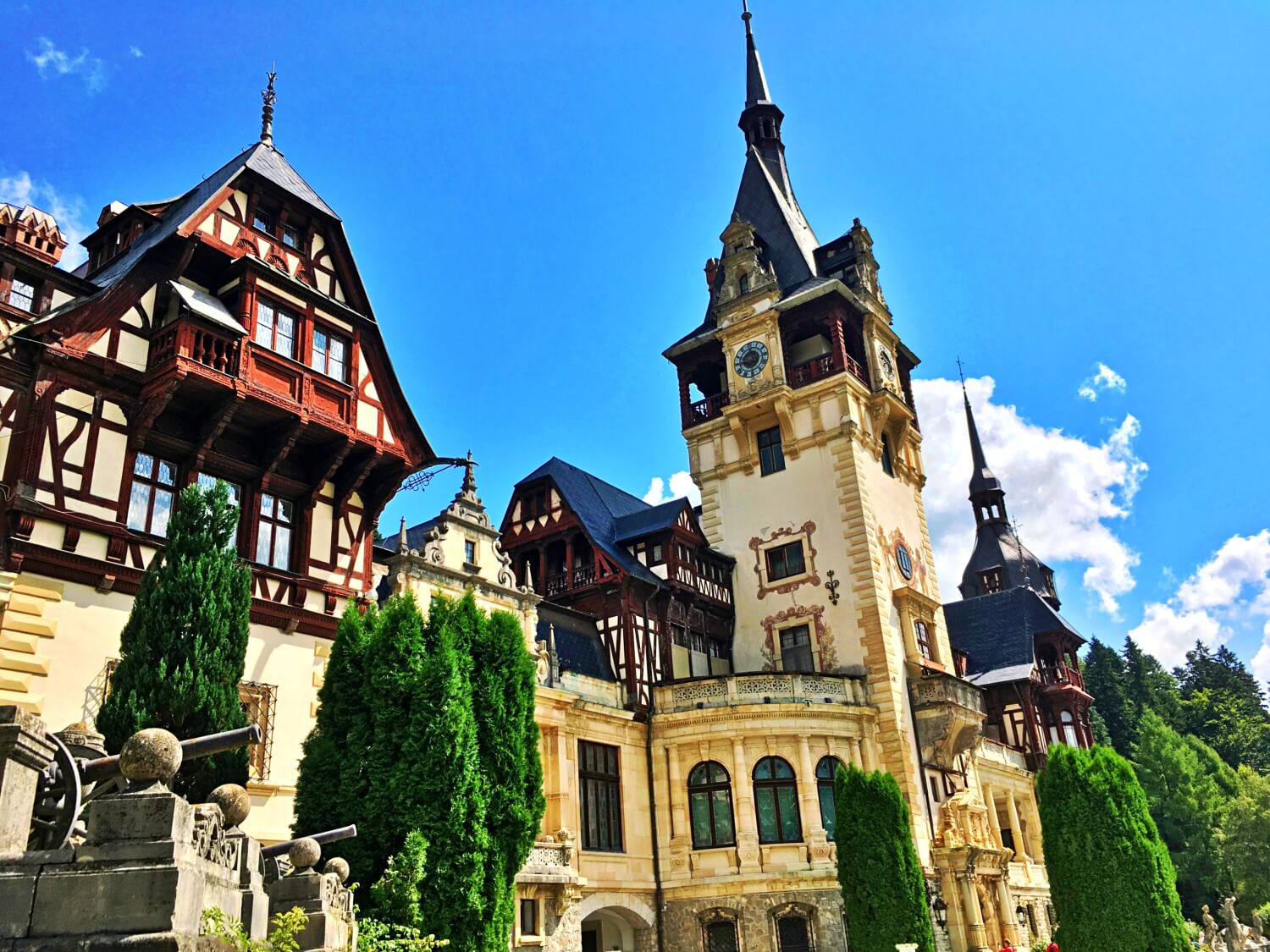
Peleș Castle is a Neo-Renaissance castle in the Carpathian Mountains, near Sinaia, in Prahova County, Romania, on an existing medieval route linking Transylvania and Wallachia, built between 1873 and 1914
Castelul Peleș este un palat din Sinaia, construit între anii 1873 și 1914
A Peleş-kastély Romániában, Sinaia településen található
Previous names
Peleș Castle, Castelul Peleș (Sinaia), Peleș-kastély
Description
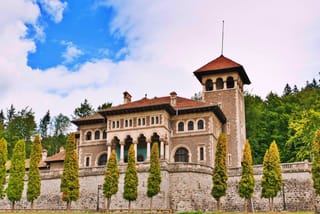
Peleș Castle is a Neo-Renaissance castle in the Carpathian Mountains, near Sinaia, in Prahova County, Romania, on an existing medieval route linking Transylvania and Wallachia, built between 1873 and 1914. Its inauguration was held in 1883. It was constructed for King Carol I.
Location
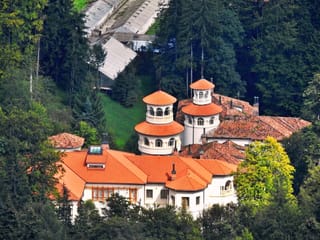
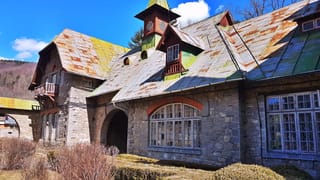
The complex is northwest of the town of Sinaia, which is 48 kilometres (30 mi) from Brașov and 124 kilometres (77 mi) from Bucharest. In the southeastern Carpathian Mountains, the complex is composed of three monuments: Peleș Castle, Pelișor Castle, and the Foișor Hunting Lodge.
History
When King Carol I of Romania (1839–1914), under whose reign the country gained its independence, first visited the site of the future castle in 1866, he fell in love with the magnificent mountain scenery. In 1872, the Crown purchased 5 square kilometres (1.9 sq mi) of land near the Piatra Arsă River. The estate was named the Royal Estate of Sinaia. The King commissioned the construction of a royal hunting preserve and summer retreat on the property, and the foundation was laid for Peleș Castle on 22 August 1873. Several auxiliary buildings were built simultaneously with the castle: the guards' chambers, the Economat Building, the Foișor hunting lodge, the royal stables, and a power plant. Peleș became the world's first castle fully powered by locally produced electricity.
The first three design plans submitted for Peleș were copies of other palaces in Western Europe, and King Carol I rejected them all as lacking originality and being too costly. German architect Johannes Schultz won the project by presenting a more original plan, something that appealed to the King's taste: a grand palatial alpine castle combining different features of classic European styles, mostly following Italian elegance and German aesthetics along Renaissance lines. Works were also led by architect Carol Benesch. Later additions were made between 1893 and 1914 by the Czech architect Karel Liman, who designed the towers, including the main central tower, which is 66 metres (217 ft) in height. The Sipot Building, which served as Liman's headquarters during the construction, was built later on. Liman would supervise the building of the nearby Pelișor Castle (1889–1903, the future residence of King Ferdinand I and Queen Marie of Romania), as well as of King Ferdinand's villa in the Royal Sheepfold Meadow.
The cost of the work on the castle undertaken between 1875 and 1914 was estimated to be 16,000,000 Romanian lei in gold (approx. US$ 120 million today). Between three and four hundred men worked on the construction. Queen Elisabeth of the Romanians, during the construction phase, wrote in her journal:
Italians were masons, Romanians were building terraces, the Gypsies were coolies. Albanians and Greeks worked in stone, Germans and Hungarians were carpenters. Turks were burning brick. Engineers were Polish and the stone carvers were Czech. The Frenchmen were drawing, the Englishmen were measuring, and so was then when you could see hundreds of national costumes and fourteen languages in which they spoke, sang, cursed and quarreled in all dialects and tones, a joyful mix of men, horses, cart oxen and domestic buffaloes.
Construction saw a slight slowdown during the Romanian War of Independence against the Ottoman Empire in 1877–78, but soon afterwards the plans grew in size and construction was quite rapid. Peleș Castle had its official Royal Ball of Inauguration on 7 October 1883. King Carol I and Queen Elizabeth lived in Foişor Villa during construction, as did King Ferdinand and Queen Marie during the construction of Pelișor Castle. King Carol II was born at the castle in 1893, giving meaning to the phrase "cradle of the dynasty, cradle of the nation" that Carol I bestowed upon Peleș Castle. Carol II lived in Foișor Villa for periods during his reign. Princess Maria died there in 1874.
After King Michael I's forced abdication in 1947, the Communist regime seized all royal property, including the Peleș Estate. The castle was opened as a tourist attraction for a short time. It also served as a recreation and resting place for Romanian cultural personalities. The castle was declared a museum in 1953. Nicolae Ceaușescu closed the entire estate between 1975 and 1990, during the last years of the Communist regime. The area was declared a "State Protocol Interest Area", and the only persons permitted on the property were maintenance and military personnel.
Ceaușescu did not like the castle very much and rarely visited. In the 1980s, some of the timber was infested with Serpula lacrymans. After the December 1989 Revolution, Peleș and Pelișor Castle were re-established as heritage sites and opened to the public. Today, Foișor Castle serves as a presidential residence. The Economat Building and the Guard's Chambers Building are now hotels and restaurants. Some of the other buildings on the Peleș Estate were converted to tourist villas and some are now "state protocol buildings". In 2006, the Romanian government announced the restitution of the castle to former monarch Michael I. Negotiations soon began between the former king and the government of Romania, and were concluded in 2007. The castle is on lease from the royal family to the Romanian state. Peleș Castle receives between a quarter and almost a half million visitors annually.
Throughout its history, the castle hosted some important personalities, from royalty and politicians to artists. One of the most memorable visits was that of Kaiser Franz Joseph I of Austria-Hungary on 2 October 1896, who later wrote in a letter:
The Royal Castle amongst other monuments, surrounded by extremely pretty landscape with gardens built on terraces, all at the edge of dense forests. The castle itself is very impressive through the riches it has accumulated: old and new canvases, old furniture, weapons, all sort of curios, everything placed with good taste. We took a long hike in the mountains, afterwards we picnicked on the green grass, surrounded by the Gypsy music. We took many pictures, and the atmosphere was extremely pleasant.
Artists like George Enescu, Sarah Bernhardt, Jacques Thibaud and Vasile Alecsandri visited often as guests of Queen Elizabeth of Romania (herself a writer also known under the pen name of Carmen Sylva). In more recent times, many foreign dignitaries such as Richard Nixon, Gerald Ford, Muammar al-Gaddafi, and Yasser Arafat were welcomed at the castle.
The castle was featured in the 2009 film The Brothers Bloom. The exterior of the castle is used to represent a large estate in New Jersey, the home of an eccentric billionaire played by Rachel Weisz.
The castle was featured in the Netflix original film A Christmas Prince and its two sequels, A Christmas Prince: The Royal Wedding and A Christmas Prince: The Royal Baby. It was also featured in the 2011 Hallmark Channel movie A Princess for Christmas and 2018's Royal Matchmaker.
Description
By form and function, Peleș is a palace, but it is consistently called a castle. Its architectural style is a romantically inspired blend Neo-Renaissance and Gothic Revival similar to Neuschwanstein Castle in Bavaria. A Saxon influence can be observed in the interior courtyard facades, which have allegorical hand-painted murals and ornate fachwerk similar to that seen in northern European alpine architecture. Interior decoration is mostly Baroque influenced, with heavy carved woods and exquisite fabrics.
Peleș Castle has a 3,200-square-metre (34,000 sq ft) floor plan with over 170 rooms, many with dedicated themes from world cultures (in a similar fashion as other Romanian palaces, such as Cotroceni Palace). Themes vary by function (offices, libraries, armouries, art galleries) or by style (Florentine, Turkish, Moorish, French, Imperial); all the rooms are lavishly furnished and decorated to the slightest detail. There are 30 bathrooms. The establishment has collections of statues, paintings, furniture, arms and armor, gold, silver, stained glass, ivory, porcelain, tapestries and rugs. The collection of arms and armour has over 4,000 pieces, divided between Eastern and Western war pieces and ceremonial or hunting pieces, spreading over four centuries of history. Oriental rugs come from many sources: Bukhara, Mosul, Isparta, Saruk and Smirna. The porcelain is from Sèvres and Meissen; the leather is from Córdoba. The hand-painted stained glass vitralios, which are mostly Swiss.
A towering statue of King Carol I by Raffaello Romanelli overlooks the main entrance. Many other statues are present on the seven Italian neo-Renaissance terrace gardens, mostly of Carrara marble executed by the Italian sculptor Romanelli. The gardens also host fountains, urns, stairways, guarding lions, marble paths and other decorative pieces.
Peleș Castle shelters a painting collection of almost 2,000 pieces. Angelo de Gubernatis (1840–1913) was an Italian writer who arrived in 1898 in Sinaia as a guest of the Royal Family:
Inaugurated in 1883, Peleș Castle is not only a pleasant place during summer time; it has been conceived to be also a national monument, meant to keep the trophies of the Plevna victory, which explains the simple but majestic style. The castle's courtyard – Bramantes type – with a fountain in the middle, in the most accurate Renaissance style, pleasantly surprises the visitor. The courtyard has a merry decoration, made out of plants and flowers; all round, the building's facades are animated by elegant drawings. The interior of the castle is a true wonder, due to the beauty and richness of the sculpted wood and the stained glass windows. As you get in the vestibule, you are on the Honor Staircase, in front of the most important rulers of old Romania: Holy Stephen the Great, and Michael the Brave. In a proud attitude, wearing whether a fur cap or with the gold crown on their heads, they impress through the brilliant dressing, in which the white of ermine blends with the emerald green or the red of the large mantle. On the right and on left side of the two rulers, as servant knights, four shield bearers carry the Romanian Provinces escutcheons. Inside the Queen's library, over the groups of children symbolizing poetry and science, there is the image of Ulfilas (311–383 AD) a Goth religious ruler, from the northern side of Danube River, translating the Bible in their language and bringing his contribution in spreading Christianity, a Christian apostle of the Romans, and the image of Dante Alighieri, the creator of western poetry. Passing the library and getting into the dormitory, we will meet the image of Genies and Allegories of Painting and Music, as well as a series of legendary themes. Inside the apartments reserved for the honor guests, a number of coat-of-arms were shining through their heraldic abundance, speaking about the ancestors of the Royal Family. But among all, the glass paintings from the Peleș Castle are, beyond any doubt, the most profound and shining. Here, the subjects are taken out of Alecsandri's poetry.
Museum
Public visits are made within guided tours. One of the tours is limited to the ground floor, another adds the first floor and the complete tour includes the second floor.[4] Admission is charged, and there is an additional photography fee. The visiting hours are from 9 am to 5 pm. Wednesday through Sunday. On Tuesdays the hours are 11 am to 5 pm. The castle is closed on Mondays. These visiting hours are subject to change by the Romanian Culture Ministry. The castle is closed in November each year for maintenance and cleaning.
The most notable grand rooms are:
Holul de Onoare (The Hall of Honour) was finished completely only in 1911, under the guidance of Karel Liman. It spreads over three floors. Walls are dressed in exquisitely carved woodwork, mostly European walnut and exotic timbers. Bas-reliefs, alabaster sculptures, and retractable stained glass panels complete the decor.
Apartamentul Imperial (The Imperial Suite) is believed to be a tribute to the Austrian Emperor Franz Joseph I, who visited the palace as a friend of the Romanian Royal Family. Hence, decorator Auguste Bembe preferred the sumptuous Austrian Baroque in style of Empress Maria Theresa. A perfectly preserved five-hundred-year-old Cordoban tooled leather wall cover is the rarest of such quality.
Sala Mare de Arme (The Grand Armory or The Arsenal) is where 1,600 of the 4,000 pieces of weaponry and armor reside. One of Europe's finest collection of hunting and war implements, timelined between 14th and 19th century, are on display. The king added pieces used in his victory against the Ottoman Turks during the War of Independence. Famous are the complete Maximilian armor for horse and rider and a 15th-century German "nobles only" decapitation broadsword. Also on display are a wide array of polearms (glaives, halberds, lances, hunting spears), firearms (muskets, blunderbusses, snaphaunces, flintlocks, pistols), axes, crossbows, and swords (rapiers, sabers, broadswords, and many others).
Sala Mică de Arme (The Small Armory) is where predominantly Oriental (mostly Indo-Persian, Ottoman and Arab) arms and armor pieces are on exhibit, many of them made of gold and silver, and inlaid with precious stones. Included are chainmail armor, helmets, scimitars, yataghans, daggers, matchlocks, lances, pistols, shields, axes, and spears.
Sala de Teatru (The Playhouse) is decorated in Louis XIV style, with sixty seats and a Royal Box. Architectural decoration and mural paintings are signed by Gustav Klimt and Frantz Matsch.
Sala Florentină (The Florentine Room) combines revived elements of the Italian Renaissance, mostly from Florence. Most impressive are the solid bronze doors executed in Rome; ateliers of Luigi Magni; and the Grand Marble Fireplace executed by Paunazio with Michelangelo motifs.
Salonul Maur (The Moorish Salon) was executed under the guidance of Charles Lecompte de Nouy, and is meant to embody elements of North-African and Hispanic Moorish style. Mother-of-pearl inlaid furniture, fine Persian Sarouk and Ottoman Isparta rugs, and Oriental weapons and armor are perhaps the most expressive elements. The salon has an indoor marble fountain.
Salonul Turcesc (The Turkish Parlor) emulates an Ottoman "joie de vivre" atmosphere—a room full of Turkish Izmir rugs and copperware from Anatolia and Persia. It was used as a smoking room for gentlemen. Walls are covered in hand-made textiles like silk brocades from the Siegert shops of Vienna.
In something remarkable in comparison to most recent-era royal families, the monarchs shared a bedroom.
Present day
Originally personal property of the Royal Family, Peleș Castle was nationalized when King Michael was forced to abdicate and into exile by the Communist government in 1947. In 1997 the castle was returned to the Royal Family in a long judicial case that was finally concluded in 2007. King Michael subsequently said the castle should continue to house the Peleș National Museum, as well as being occasionally used for public royal ceremonies.
King Michael's heir Margareta, Custodian of the Romanian Crown occasionally uses the Castle for receptions, investitures and other public events. On 10 May (Monarchy Day) 2016, the Royal Family hosted a large Reception, Garden Party & Concert at Peleș Castle to mark the 150th anniversary of the Romanian Royal Dynasty, when Margareta's standard was flown on Peleș Castle - the first time since 1947 a Royal Standard had flown from the Castle.
In August 2016 the body of Queen Anne Lay in State in the Hall of Honour at Peleș Castle in a ceremony attended by the Presidents of Romania and Moldova, Prime Minister Dacian Cioloș and other national leaders. This was followed on 13 December 2017 by King Michael Lying in State in the same location in a similar, but larger, ceremony prior to his funeral in Bucharest and his burial in Curtea de Argeș.
Castelul Peleș este un palat din Sinaia, construit între anii 1873 și 1914. Construită ca reședință de vară a regilor României, clădirea se află, în prezent, în proprietatea Familiei Regale a României și adăpostește Muzeul Național Peleș.
Localizare
Castelul Peleș este situat în Sinaia, pe Valea Prahovei, (la 44 km de Brașov și la 122 km de București), pe drumul european E60 (DN1). Pe calea ferată există numeroase trenuri care pleacă din Ploiești sau Brașov cu destinația Sinaia.
Descrierea generală a Domeniului Peleș și a Castelului
Construirea castelului; istoric
Castelul Peleș din Sinaia, reședința de vară a regilor României, a fost construit la dorința regelui Carol I al României, după planurile arhitecților Johannes Schultz, Carol Benesch[2] și Karel Liman, și a fost decorat de celebrii decoratori J. D. Heymann din Hamburg, August Bembé din Mainz și Bernhard Ludwig din Viena.
Castelul Peleș este unul dintre cele mai importante edificii de tip istoric din România, având caracter de unicat și este, prin valoarea sa istorică și artistică, unul din cele mai importante monumente de acest fel din Europa celei de-a doua jumătăți a secolului al XIX-lea.
Principele Carol I, ales domn al României în 1866, vizitează pentru prima dată Sinaia în luna august a acelui an, rămânând încântat de frumusețea respectivelor locuri. Pe vremea aceea, Sinaia era un mic sat de munte, numit Podul Neagului. Domnitorul hotărăște construirea unui castel într-un loc retras și pitoresc: Piatra Arsă. Câțiva ani mai târziu, în 1872, el cumpără terenul (1000 de pogoane), iar lucrările încep în 1873, sub conducerea arhitecților Johannes Schultz, Carol Benesch și Karel Liman. Mai întâi, lucrătorii au depus eforturi pentru a stăpâni elementele capricioase ale naturii, cum ar fi cursurile subterane de apă sau alunecările de teren.
Celor 300 de muncitori care au lucrat aici le-au trebuit doi ani pentru terminarea amenajărilor; în tot acest timp, domnitorul a supravegheat personal, în detaliu, lucrările. În 1875 se pune piatra de temelie a castelului, sub care sunt îngropate câteva zeci de monede de aur de 20 de lei, primele monede românești cu chipul lui Carol I.
În 1883 are loc inaugurarea oficială a Peleșului, pe care domnitorul l-a văzut ca pe un „sediu” al noii dinastii. Iar așezarea sa pe Valea Prahovei nu era întâmplătoare. Nu departe, la Predeal, era pe vremea aceea granița României cu Austro Ungaria. Dar, ulterior, după unirea Transilvaniei cu Vechiul Regat, castelul a ajuns să fie amplasat chiar în inima țării.
Peleșul a căpătat apoi o tot mai mare importanță, devenind reședința de vară a familiei regale române, care petrecea aici destul de multă vreme, de obicei din mai până în noiembrie. Aici s-au ținut importante întruniri politice, cum au fost Consiliile de Coroană din 1914 (când s-a hotărât neutralitatea României din primul război mondial, care tocmai începuse) și 1925.
Castelul a găzduit multe personalități ale vremii, scriitori, muzicieni, dar și regi și regine. Cea mai importantă vizită a fost aceea a bătrânului împărat al Austro-Ungariei, Franz Joseph, în 1896. Acesta a făcut o mulțime de fotografii cu acel prilej, fiind impresionat de frumusețea și bogăția castelului. În 1906 se aștepta o nouă vizită a împăratului, cu ocazia sărbătoririi a 40 de ani de domnie a regelui Carol I. Cu acest prilej a fost amenajat la castel apartamentul imperial, însă vizita lui Franz Joseph nu a mai avut loc.
Un calcul sumar arată că între 1875 și 1914 s-au cheltuit la Peleș peste 16 milioane de lei-aur.
Componența Domeniului Peleș și încăperile castelului
Chiar după inaugurarea sa din 1883, Peleșul a mai suferit modificări, extinzându-se mereu. La forma actuală s-a ajuns abia în 1914 (anul morții regelui Carol I). Castelul are 160 de camere și mai multe intrări și scări interioare. Turnul central măsoară nu mai puțin de 66 de metri înălțime. Pe lângă Peleșul propriu-zis, în zonă au mai fost înălțate încă două construcții mai mici, Pelișorul și Foișorul.
Peleșul are și o sală de teatru, cu o mică scenă și 60 de locuri, plus loja regală. Castelul avea dotări foarte moderne pentru epoca în care a fost construit. De exemplu, plafonul de sticlă al holului de onoare este mobil, putând fi acționat de un motor electric. Încă din 1883, castelul are încălzire centrală.
Pe lângă castel au fost construite Pelișorul, Corpul de Gardă, Economatul, Casa de Vânătoare Foișor, Grajdurile, Uzina Electrică și Vila Șipot. Până la terminarea castelului (1883), Regele Carol I și Regina Elisabeta, au locuit la casa de vânătoare, terminată înaintea castelului. Datorită uzinei electrice proprii, Peleșul a fost primul castel complet electrificat din Europa.
Peleșul a avut o importanță deosebită pentru istoria țării noastre. Aici s-a născut, în 1893, viitorul rege Carol al II-lea (1930 - 1940), primul rege al dinastiei născut pe pământ românesc și primul botezat în religia ortodoxă. În 1921, la Foișor, s-a născut fiul său, regele Mihai I. În 1921, are loc la Peleș, nunta principesei Ileana, una dintre surorile lui Carol al II-lea, la care participă o mulțime de personalități ale vremii, inclusiv Nicolae Iorga. Doi ani mai târziu au loc serbările semicentenarului castelului Peleș (50 de ani de la începerea lucrărilor).
În Castelul Peleș, cele mai importante săli care pot fi vizitate sunt:
Holul de Onoare este grandios, cu lambriuri din lemn de nuc, tapetate cu basoreliefuri și statuete. Plafonul mobil din sticlă, acționat cu ajutorul unui motor electric sau printr-un sistem manual, era un element de surpriză pentru vizitatorii regelui, care puteau să admire seninul cerului în nopțile de vară. A fost finalizat complet abia în 1911, sub îndrumarea lui Karel Liman.
Biblioteca regală îi atrage în special pe cei pasionați de cărți rare, având coperți din piele și gravate cu litere de aur. Chiar și pentru cei mai putin familiarizați cu universul cărților, există un punct de atracție: ușa secretă, o cale de acces în spatele unui raft cu cărți, prin care regele se putea refugia în diverse încăperi ale Castelului.
Sălile de arme, amenajate în perioada anilor 1903 - 1906, adăpostesc peste 4.000 de piese europene și orientale din secolele XIV - XVII. Cele mai prețioase sunt considerate armurile germane din secolele XVI - XVII și o armură completă pentru cal și cavaler, unică în România.
Sala de muzică a devenit salon de serate muzicale la dorința reginei Elisabeta. Mobilierul de aici a fost primit în dar de la maharajahul de Kapurthala.
Sala Florentină, denumită și Marele Salon, impresionează prin plafonul sculptat în lemn de tei, aurit, cele două mari candelabre și decorațiunile în stilul neorenașterii italiene.
Sala Maură este opera arhitectului Charles Lecompte du Nouy, având elemente hispano-maure, cu o fântână din marmură de Carrara, copie după o piesă din Cairo.
Sala de teatru are 60 de locuri și loja regală, fiind decorată în stilul Ludovic al XIV-lea.
Sala de Concerte, amenajată în 1906, se află la etajul I. Instrumentele muzicale prezente aici sunt un clavecin executat la Anvers în 1621, un pian cu coadă verticală Blüthner și o orgă Rieger cu două claviaturi.
Apartamentul Imperial a fost amenajat tot în 1906 cu ocazia vizitei (care n-a mai avut loc) a împăratului Austro-Ungariei, Franz Josef I, invitat la aniversarea a 40 de ani de domnie ai regelui Carol I.
Alte săli sunt:
Sala de Consilii, care seamănă cu una dintre sălile Primăriei din Lucerna, Elveția.
Cabinetul de lucru unde se află un birou impunător și un pupitru pentru audiențe.
Sufrageria, unde sunt expuse piese de argint de o mare valoare, este situată la etajul 1 și are un mobilier rustic breton din secolul al XVIII-lea.
Salonul Turcesc care adăpostește o colecție de vase turcești și persane în alamă.
Dormitorul regal care este luminat de un candelabru din cristal de Boemia.
Vitraliile Castelului Peleș au fost cumpărate și montate între 1883 și 1914, cele mai multe fiind aduse din Elveția și Germania, piese datând din secolele XV și XVII.
De jur împrejurul său, Castelul are șapte terase decorate cu statui din piatră, fântâni și vase ornamentale din marmură de Carrara.
După Castelul Bran, Peleșul este considerat al doilea muzeu din țară căutat de turiști. Numai în anul 2006 i-au trecut pragul peste 250.000 de vizitatori din țară dar și din SUA, Australia, Japonia și Noua Zeelandă. În primele șase luni din 2010, 80.000 de turiști au vizitat castelul Peleș.
Importanța Castelului este dată și de măsurile de securitate existente: pază militară, supraveghetori și camere video.
De curând când a fost deschis publicului un tur extins care cuprinde atât etajul I, cât și mansardele I și II. Așa încât rămâne un singur etaj (de altfel și ultimul) nedeschis publicului, etaj care servește drept loc pentru depozitarea diferitelor obiecte, tablouri etc. Ghidajul este disponibil în cinci limbi străine.[necesită citare] În luna noiembrie a fiecărui an, Castelul Peleș este închis pentru curățenie generală.
În 2009, Castelul a fost prezentat în filmul The Brothers Bloom. Exteriorul castelului este folosit pentru a reprezenta o proprietate din New Jersey, casa unei miliardare excentrice interpretată de Rachel Weisz.
Castelul a fost prezentat și în filmul original Netflix A Christmas Prince, precum și în cele două continuări ale sale, A Christmas Prince: The Royal Wedding și A Christmas Prince: The Royal Baby. A fost prezentat și în filmul Hallmark Channel din 2011 A Princess for Christmas, și în Royal Matchmaker din 2018.
Castelul Peleș în perioada comunistă
Castelul a rămas reședință a familiei regale până în 1948, când a fost confiscat de regimul comunist. În 1953 Peleșul a devenit muzeu, dar trebuie spus că el putea fi vizitat, încă de pe vremea regelui Carol I.
În ultimii ani ai regimului comunist, între 1975-1989, Nicolae Ceaușescu a ordonat închiderea domeniului pentru public. Singurele persoane acceptate în acest domeniu au fost cele de întreținere, militare și personalul de pază. Întreaga zonă a fost declarată o zonă de interes protocolar.
Regimul comunist a propagat ideea că Domeniul Regal Peleș ar fi fost parte a Domeniului Coroanei, și astfel în proprietatea României. Adevărul istoric este că, atât Castelul Peleș cât și reședințele Pelișor și Foișor, au fost construite din banii personali ai Regelui Carol I, care a vândut o moșie din Germania pentru a putea plăti costurile terenului și a ridicării edificiului. Regele a evitat să folosească bani din lista civilă, astfel că domeniul nu a făcut niciodată parte din Domeniile Coroanei, care erau proprietăți ale statului doar puse la dispoziția suveranului. După moartea Regelui Carol I, domeniul a trecut în proprietatea Regelui Ferdinand I și a succesorului dinastic al acestuia, Regele Mihai I. Regele Carol al II-lea nu a avut niciodată domeniul de la Sinaia în proprietate și astfel nepotul lui din căsătoria morganatică cu Ioana Zizi Lambrino nu are nici un drept de proprietate.
Nicolae Ceaușescu a vizitat castelul destul de rar. O poveste care circula în anii 1980 spunea că soții Ceaușescu ar fi dorit să-și stabilească o reședință de protocol la Peleș.
Cunoscându-se faptul că aceștia aveau mania de a ordona tot felul de demolări și schimbări, muzeografii i-au speriat spunându-le că în interiorul Castelului este o ciupercă ce atacă elementele din lemn și este foarte dăunătoare omului. În fapt, adevărul este că o ciupercă atacase grinzile clădirii din cauza umezelii și a neaerisirii. Din acest motiv au demarat lucrările de restaurare, fiind înlocuită structura de rezistență din holul de onoare și din sufrageria de la parter. Prudenți, soții Ceaușescu au petrecut o singură noapte la Castel, dormind în Foișor.
Castelul Peleș în prezent, utilizat de Familia Regală
Aflat în proprietatea privată a Familiei Regale a României încă de la început, Castelul Peleș a fost repede naționalizat după lovitura de stat comunistă de la 30 decembrie 1947 care a dus la abdicarea forțată a Regelui Mihai și la exilul său forțat care a durat 50 de ani.
După Revoluția din decembrie 1989, Castelul Peleș și Pelișorul au fost reintegrate în circuitul turistic. Începând cu anul 1990, și Pelișorul este deschis publicului spre vizitare.
În 2006, guvernul român a anunțat retrocedarea castelului Regelui Mihai I al României. După revenirea definitivă a Regelui și a familiei sale în țară, petrecută în 1997, castelul a fost retrocedat proprietarilor de drept după un lung proces. Retrocedarea efectivă s-a realizat la data de 20 februarie 2007 . Totuși, Regele a exprimat dorința sa ca palatul să continue să adăpostească Muzeul Național Peleș, un muzeu de stat, fiind folosit ocazional pentru evenimentele importante, cu semnificație națională, pe care le organizează Familia Regală.
Contrar zvonurilor, după retrocedare castelul nu a fost vândut statului român pentru suma de 30 de milioane de euro.
Pe 10 Mai 2016, cu ocazia Zilei Naționale a Independenței României care marchează și 150 de ani de existență a Dinastiei Române, stindardul personal al Alteței Sale Regale Principesa Moștenitoare Margareta a României a fluturat pe cel mai înalt catarg al castelului, pentru prima dată de la izgonirea Regelui în 1947.
A Peleş-kastély Romániában, Sinaia településen található. I. Károly román király építette 1873 és 1914 között. A kastély neoreneszánsz stílusú és Románia egyik legfontosabb történelmi jellegű műemléke. Egyedi stílusa miatt, valamint történelmi és művészi értékéből adódóan a 19. század második felének, valamint a 20. századi Európának is az egyik legfontosabb ilyen jellegű műemléke.
Története
A Peleş-kastély I. Károly román király megbízásából épült Johannes Schultz és Karel Liman építészek tervei alapján. A kastély díszítését a hamburgi J. D. Heymann, a mainzi August Bembé és a bécsi Berhard Ludwig végezték.
I. Károly herceg első ízben 1866 augusztusában látogatta meg Sinaia települést. A környék szépsége azonnal felkeltette az uralkodó érdeklődését. A település ekkor még egy kis hegyi falu volt Podul Neagului néven. Az uralkodó ittjártakor elhatározta, hogy egy kastélyt épít a település egy csendes, festői részén. Néhány évvel később, 1872-ben, az uralkodó megvásárolta a kiszemelt területet, így 1873-ban kezdődhetett el az építkezés. Az építési munkálatokat Johannes Schultz és Karel Liman építészek vezették. A tényleges építési munkálatok megkezdése előtt, az építészeknek hatalmas feladattal kellett megbirkózniuk, hiszen területrendezést is kellett végezniük egy olyan mostoha környezetben, mint a Déli-Kárpátok vonulata.
A háromszáz munkásnak két teljes évbe került úrrá lenni a természet erőin, az uralkodó ez idő alatt személyesen felügyelte a munkálatokat. A kastély alapkőletételére 1875-ben került sor. Az esemény érdekessége, hogy az alapkő letételekor elhelyeztek a kő alá néhány darab 20 lej névértékű aranyérmét. Ezek az első I. Károly román király arcképével vert érmék voltak.
1883-ban a kastélyt hivatalosan is felavatták. Az uralkodó a jövő nemzedék román uralkodóinak székhelyét látta benne. A kastély elhelyezkedése nem véletlenszerű, hiszen nem messze innen, Predeál település mellett húzódik az akkori Románia és az Osztrák–Magyar Monarchia határa. Az uralkodónak a helyválasztással az volt az elképzelése, hogyha egyszer majd Erdély egyesül a Román Királysággal, akkor a kastély az ország szívében helyezkedjen el.
A kastély felépítése után egyre fontosabb szerepet töltött be, és a királyi család nyári rezidenciája lett. A család szívesen múlatta itt az időt, ahol általában májustól novemberig tartózkodtak. A kastély több fontos politikai döntés helyszínéül szolgált, mint például az 1914-es Koronatanács. Itt mondták ki például Románia semlegességét az első világháborúban.
Az idők folyamán a kastély vendégül látta a kor híres személyiségeit, írókat, zenészeket, uralkodókat. Többek között 1896-ban I. Ferenc József magyar királyt és osztrák császárt. A császárt megragadta a kastély szépsége, gazdagsága, és ez alkalommal fényképek tömkelegét készítette. 1906-ban I. Károly román király uralkodásának negyvenedik évfordulójára újra a kastélyba várták őt, azonban erre a látogatásra már nem került sor. Ferenc József iránti nagyrabecsülést jelzi az a tény, hogy a már említett 1906-os látogatásra készülve rendezték be a császári lakosztályt.
A kastélyt már a felavatását követően, 1883-ban módosították és jelentősen kibővítették. Jelenlegi formáját csak 1914-ben, I. Károly román király halálának évében, nyerte el. A kastély 160 szobával, több bejárattal, valamit több belső lépcsővel büszkélkedik. A kastély központi tornyának magassága 66 méter. A Peleş kastélyon kívül még két kisebb kastélyt építettek a környéken, a Pelişorul és Foişorul kastélyokat.
A kastély érdekessége, hogy az adott kor technikai fejlettségéhez képest nagyon modern épületgépészeti elemekkel rendelkezett. Ilyen például az előcsarnok mozgatható üveg födémje, melynek mozgatását egy elektromotor teszi lehetővé. A Peleş kastély 1883 óta rendelkezik központi fűtésrendszerrel. Egy másik érdekesség, hogy egy 60 fő befogadására képes kis, színi előadóterme is van, kisméretű színpaddal, valamint királyi páhollyal.
A kastély környezetébe több kisebb épületet emeltek, részben a kiszolgáló személyzet részére, és részben a királyi kíséret számára. Ezek a helyőrség épülete (Corpul de Gardă), egy vendégház a királyi kíséret számára (Economatul), egy vadászház (Foişorul), egy elektromos erőmű (Uzina Electrică) valamint egy "Vila Șipot" néven ismert, jelenleg hotelként üzemelő épület. A kastély teljes befejezéséig a királyi pár a vadászházat használta látogatásai alkalmával. További érdekessége, hogy a saját elektromos erőművének köszönhetően a Peleş kastély Európa első kastélya, amely vezetékes árammal volt ellátva.
A kastély jelentős szerepet vállalt a modernkori román történelemben. Itt született 1893-ban Románia soron következő uralkodója, II. Károly (1930-1940), a dinasztia első tagja, aki román földön született, és akit román ortodox hitre kereszteltek. 1921-ben, a Foişor kastélyban született meg II. Károly fia, az utolsó román király I. Mihály.
A kastély 1948-ig maradt a román királyi család rezidenciája, amikor a kommunista rezsim elkobozta a családtól. A kastély 1953 óta múzeumként üzemel, de fontos megjegyezni, hogy már I. Károly idejében is látogatták. A nagyközönség 1990-től a Pelişorul kastélyt is megtekintheti.
Nicolae Ceaușescu román diktátor csak nagyon ritkán látogatta a kastélyt, és a házaspár mindössze egyetlen éjszakát töltött a kastélyban. Az 1980-as években egy legenda keringett arról, hogy a Ceauşescu házaspár protokollközponttá kívánta alakítani a Peleş kastélyt. A muzeológusok, ismerve a házaspár romboló-átalakító hajlamát, meggyőzték őket, hogy a kastélyban egy, az emberi egészségre igencsak ártalmas gomba pusztít. Ennek hatására a házaspár letett erről a szándékáról.
Az igazság az, hogy a kastélyt valóban gomba-fertőzés tartotta fogságban, ami megtámadta a kastély fa szerkezetét (a gerendákat), a nem megfelelő szellőztetés és a magas páratartalom miatt. Restaurálási munkálatok kezdődtek a kastélyban, melynek során kicserélték a díszterem, valamint a földszinti ebédlő tartószerkezetét.
A kastélyt Nicolae Ceaușescu utasítására 1975-ben bezárták, és a nagyközönség legközelebb 1989 után látogathatta újra.
Az 1989-es romániai forradalom után a kastélyt megnyitották a turista forgalom számára a Pelişorul kastéllyal együtt. 2006-ban a román állam visszaszolgáltatta a kastélyt a királyi családnak. A híresztelések ellenére a román állam nem vásárolta meg a kastélyt (30 millió euróért), hanem az a királyi család tulajdonában maradt. I. Mihály román király döntése alapján a kastély továbbra is múzeumként üzemelhet.
Múzeum
A kastélyt 1953-ban múzeummá nyilvánították. A kommunista rezsim utolsó éveiben azonban nem volt látogatható. A belépés csak a karbantartó személyzet, a katonaság alkalmazottai, valamint az őrség számára volt engedélyezve.
A legfontosabb látogatható termek a következők:
A Díszterem egy hatalmas méretekkel rendelkező terem diófa burkolattal, domborműves tapétával és szobrokkal. A mozgatható üvegtető, melyet elektromotorral vagy kézi erővel lehet mozgatni, egy igazi meglepetéselem volt a király látogatói számára, akik innen kémlelhették a csillagokat meleg nyári éjszakákon. A teremet 1911-re sikerült teljesen befejezni, Karel Liman irányítása alatt
A Királyi könyvtár leginkább a könyvek szerelmeseit fogja meg, könnyritkaságaival, de az egyszerű látogató számára is tartogat meglepetést egy rejtett ajtó formájában, amely egy titkos folyosórendszert rejt, melyen keresztül a király eljuthatott a kastély különböző termeibe.
A Fegyvertermek, melyeket 1903 és 1906 között rendeztek be, több mint 4000 elemet rejtenek, úgy az európai, mint keleti kultúrákból. A fegyvertermek legértékesebb darabjai a XVI-XVII. századból származó német páncélzatok, valamint egy teljes ló és lovas páncélzat, ami egyedülálló Romániában.
A Zene termet Erzsébet királyné kérésére rendezték be. A teremben található bútorzat a karputalai maharadzsa ajándéka.
A Firenzei terem vagy más néven a Nagy Szalon jellegzetessége a hársfa faragott mennyezet, a két hatalmas csillár és az olasz neoreneszánsz stílusú dekorációk.
A Márványterem Charles Lecompte du Nouy építész alkotása. Jellegzetessége egy carrarai márványból készült ivókút, amely egy kairói alkotás másolata.
A Színház egy 60 fő befogadására alkalmas terem, királyi páhollyal, XIV.Lajos kori stílusnak megfelelő dekorációs elemekkel.
A Koncertterem ez első emeleten kapott helyet. A termet 1906-ban rendezték be, itt kapott helyet egy 1621-ben Antwerpenben készült csembaló.
A Császári lakosztályt 1906-ban rendezték be, I. Ferenc József magyar király és osztrák császár tiszteletére, aki meghívottként vett volna részt az I. Károly román király 40 éves uralkodása alkalmából rendezett ünnepségsorozaton. A látogatás végül elmaradt.
Egyéb termek:
A Tanácsterem, amely hasonlít a svájci Luzern város polgármesteri hivatalának egyik termére.
A Dolgozószoba része egy hatalmas íróasztal, valamint egy pulpitus az audienciák számára.
Az Ebédlő, az első emeleten kapott helyet. Az ebédlő bútorzata 18. századi rusztikus Bretagne-i stílusú és egy nagy értékű ezüst evőeszköz kiállításnak ad helyet.
A Török szalon egy török edénygyűjteménynek biztosít helyet.
A Királyi hálót egy Bohémiai kristály csillár díszíti.
A kastély ólomüveg ablakait 1883 és 1914 között szerelték be. Az üvegek jelentős része 15-17. századi és Svájcból valamint Németországból származik. A kastély teraszait, szám szerint hetet, különböző kőből készült szobrok, szökőkutak és carrarai márványból készült dísztárgyak díszítik.
A Törcsvári kastély után a Peleş kastély Románia második leglátogatottabb múzeuma. 2006-ban a múzeum több mind 250.000 belföldi és külföldi látogatót fogadott. 2010 első hat hónapjában a látogatók száma meghaladta a 80.000 főt.
Elhelyezkedés
A Peleş kastély Romániában, Erdély és Havasalföld határán a Déli Kárpátok vonulatában helyezkedik el, Sinaia településen, a Prahova folyó völgyében. A kastély Brassótól 44 kilométerre, valamint Bukaresttől 122 kilométerre fekszik. Megközelítését segíti, hogy Sinaia településen áthalad az E60 jelzésű európai főútvonal, valamint a Brassó-Bukarest vasútvonal is.
A kastély minden helyisége nyitva áll a látogatók előtt, kivéve egy padlásteret, a háromból, ahol a ki nem állított műemlékeket tárolják.
A kastély látogatási díja tartalmazza tárlatvezetést is, ami román, angol, francia, spanyol és olasz nyelveken vehető igénybe.
Useful information
25.00 RON
Ground floor: 50.00 RON
Ground floor+1st floor: 100.00 RON
Ground floor+1st floor+2nd floor: 150.00 RON
Ground floor:
Seniors: 25.00 RON
Children, students: 12.50 RON
Ground floor+1st floor:
Seniors: 50.00 RON
Children, students: 25.00 RON
Ground floor+1st floor+2nd floor:
Seniors: 75.00 RON
Children, students: 37.50 RON
No discount for groups
- Temporary exhibitions are for free
- Information tables
- Castle Garden
peles.ro@gmail.com
- Closed on Mondays
- Pets are not allowed inside
-
-
External links
Nearby castles