Bánffy Castle (Răscruci)
Comuna Bonțida Județul Cluj Romania
castle, chateau
Castelul Bánffy (Răscruci)
Comuna Bonțida Județul Cluj Romania
castle, chateau
Bánffy-kastély (Válaszút)
Comuna Bonțida Județul Cluj Romania
castle, chateau
The castle is the result of the reconstruction of the family manor, which was heavily damaged during the 1848-1849 revolution
Castelul Bánffy din Răscruci, comuna Bonțida, județul Cluj, strada Principală nr
A kastély az 1848–49-es forradalomban nagyon megrongálódott udvarház felújításából született, amelyet 1859 előtt kezdték újjáépíteni, az új tulajdonos, br
Previous names
Bánffy Castle (Răscruci), Castelul Bánffy (Răscruci), Bánffy-kastély (Válaszút)
Description
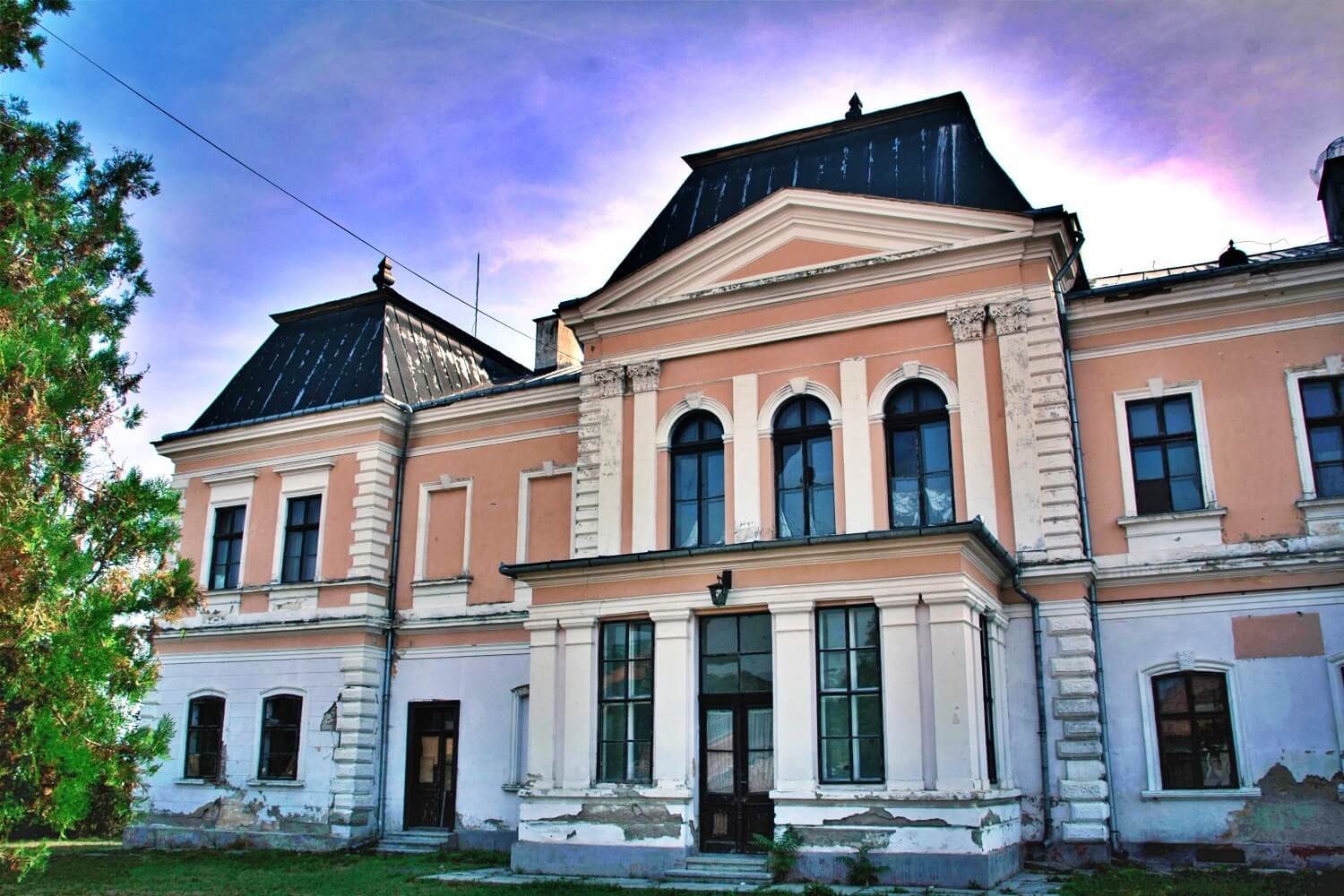
The castle is the result of the reconstruction of the family manor, which was heavily damaged during the 1848-1849 revolution. The reconstruction works, which began before 1859, were commissioned by the estate’s new owner, Baron Bánffy Albert. He later entrusted architect Kerekes Márton with additional reparations in 1870.
Baron Bánffy Ádám (1847-1887), the son of Baron Bánffy Albert and Eszterházy Ágnes, married Wesselényi Mária in that same year, and subsequently moved into the castle from Válaszút/Răscruci. The building’s upper floor and its defining eclectic facade are the most significant modifications from this time, and are attributed to Baron Bánffy Ádám. An old painting, displayed by Kelemen Lajos, shows us what the facade facing the garden looked like before the modifications: it had a ground floor, a mansard roof and a large room in the centre of the upper floor.
In 1885-1886 several rooms were added to the upper floor, as well as the hall and the stately staircase within. The transom windows above the hall were added later. The rooms’ wainscoting and furniture were completely replaced during the construction works, after which the garden facade was completed. The interior and exterior reshaping of the castle lasted until 1887. An architect from Kolozsvár by the name of Horváth Lajos also contributed to these reconstructions. Remaining documents show that the decorative wainscoting and panelling represented the largest portion of the costs (34.227 forint), as opposed to the masonry, for example (28.711 forint). In 1887, Baron Bánffy Albert (1871-1945) took over the castle from his father, Baron Bánffy Ádám. At the beginning of the 20th century, he and his wife, Montbach Sarolta, extended the castle’s park, built a few mansard rooms on the upper floor, as well as a portico at the facade facing the street. The castle has two main facades: the western facade is less decorated and faces the street, while the eastern facade faces the park.
The distribution of the two facades is similar (aa-aa-AAA-aa-aa); the corners of the risalits are accentuated by quoining. The lateral risalits each have two pilaster strips, and are divided into two axes; their ground floor windows have segmental arches, while the windows from the upper floors have jack arches and plaster frames with keystones. The avant-corps is divided into three axes; semi-circular arched windows with keystones, divided by pilasters with composite capitals, open from the upper floor. A richly profiled cornice and a tympanum are situated above the windows. A portico with Tuscan columns is situated in front of the facade facing the street. Beyond the portico, a door decorated with 19th century woodwork leads to the stately stairwell. Two more doorways were opened in the facade during the 20th century; the one that opens from the southern risalit leads to the concrete stairwell which was added later. The neorenaissance-eclectic style facade facing the garden was completed in the 1880’s and is richer in decorative elements. A ground-level terrace is located in the centre. Two wide semi-circular staircases lead to the terrace. Eight Tuscan columns support a balcony with amphora-balusters above the terrace. The top section of the facade is also more ornate than on the other side: the pilasters dividing the windows have more ornate capitals; the string-course stretching above the windows contains flower and ribbon motifs; the tympanum is framed by a cantilevered frieze with egg-and-dart moulding. The tympanum field displays the family crests of Baron Bánffy Ádám and his wife, Wesselényi Mária. The lateral sides of the building are similar: both sides have four windows each, with segmented arches and plaster frames with keystones on the ground floor and jack arches on the top floor. The wide, round-arched entrance to the cellar is located on the northern side of the building.
The castle has three levels (cellar, ground and upper floors), and mansard rooms are located under the roofing as well. The layout of the building is rectangular, with an avant-corps and two corner risalits protruding from the main section. These protruding segments are further accentuated by the mansard roof. A rectangular portico is attached to the avant-corps of the facade facing the street, and an upper balcony supported by columns is attached to the facade facing the garden. We know of the original assignment of rooms from 19th century inventories. Because the foundation walls did not change during Bánffy Ádám’s time, by comparing the inventories and the current layout we can deduce what the layout of the rooms looked like at the beginning of the 19th century. Similarly to the cellar, the two corner risalits each have three rooms within. Three chambers with north-south orientation stretch between the two risalits. A large pillared porch was located in the central part of the building, to the west of these three chambers, along with a few small rooms.
https://castleintransylvania.ro/
Castelul Bánffy din Răscruci, comuna Bonțida, județul Cluj, strada Principală nr. 484, este înscris pe lista monumentelor istorice din județul Cluj elaborată de Ministerul Culturii și Patrimoniului Național din România în anul 2010 (a nu se confunda cu celălalt Castel Bánffy din aceeași comună). Castelul de la Răscruci a fost construit în secolul al XVIII-lea, în stil eclectic.
Istoric
Pe vremuri, aici se afla unul dintre cele mai frumoase parcuri ale domeniilor familiei Bánffy. Exista aici un lac, astăzi doar un teren mâlos. Cronicile familiei Bánffy spun că în mijlocul acestui parc era amplasat un columbar (porumbar) în stil japonez și că domeniul era folosit ca reședință domnească de vară. Între anii 1752-1755 au fost restaurate casa de oaspeți și grajdul, iar clădirea actuală, realizat în stil eclectic, datează din 1809, ridicată fiind pe locul unei vechi reședințe de vară. Castelul a fost locuit de baronul Adam Bánffy, un pasionat al artei.
Descriere
Castelul de la Răscruci are o valoare istorică importantă. Este format din două corpuri de clădire, plus alte anexe. Pavilionul (subsol, parter, etaj și șarpante înalte) este de inspirație romană. Accesul principal al castelului se află prin două scări dispuse în partea sudică, urmate de o terasă încadrată de opt coloane dorice.
Piesa de rezistență rămâne salonul de primire sau sufrageria. Aici s-a păstrat un bufet din lemn cu același tip de sculpturi și o vitrină cu o valoare artistică aparte, în secolul XX fiind expusă la o expoziție de la Paris. Salonul, tipic renascentist, are pereții îmbrăcați în lemn, cu tavan din lemn casetat. Casetele din tavan sunt sculptate în stilul Renașterii germane, fiind imprimate forma blazonului și genealogiei familiei Bánffy, precum și numele celor mai reprezentative personalități din istoria Ungariei și Transilvaniei. Deasupra unei uși este sculptată inscripția "Salus intratibus pax exeuntibus".
O altă piesă interesantă ca valoare artistică în încăpere este soba din teracotă verde. Se pare că aceasta ar fi fost realizată după modelul renascentist aflat în salonul împăratului Franz Josef. Pe cele trei laturi din partea superioară ale sobei sunt sculptate scene care zugrăvesc alegerea căpeteniei Arpad, întemeierea Ungariei și adunarea de la Ópusztaszer. Cele trei scene în relief de deasupra brâului imortalizează pierderea bătăliei din 1526 de la Mohács.
La etaj se ajunge prin scara cu balustradă din lemn masiv, după trecerea prin foaierul cu lambriuri renascentiste. Sunt dispuse aici nouă coloane cu capiteluri care zugrăvesc motive vegetale, ușile din lemn masiv, blazonul familiei și diverse alte motive sulpturale.
Din balconul castelului se poate vedea întreg domeniul Banffy. Terenul de 4,5 ha, din care 881 metri pătrați construiți, stă nefolosit. Domeniul împreună cu castelul, urmează a fi scos spre valorificare, Școala Specială care funcționează aici din 1967 fiind desființată în anul 2007, conform unui proiect al Consiliului Județean Cluj de concesionare a domeniului.
A kastély az 1848–49-es forradalomban nagyon megrongálódott udvarház felújításából született, amelyet 1859 előtt kezdték újjáépíteni, az új tulajdonos, br. Bánffy Albert megrendelésére. Mivel a Bánffy Ádám féle átépítés során az egykori alapfalakat alig változtatták meg, a leltárakat és a jelenlegi alaprajzot összehasonlítva meg tudjuk határozni, milyen volt a kastély térbeosztása a 19. század elején.
A kastély 1848–49-es forradalomban nagyon megrongálódott udvarház felújításából született, amelyet 1859 előtt kezdték újjáépíteni, az új tulajdonos, br. Bánffy Albert megrendelésére. A báró 1870-ben újabb javításokat végeztetett az udvarházon Kerekes Márton építésszel. Br. Bánffy Albert és Esterházy Ágnes fia, br. Bánffy Ádám (1847–1887) ugyanebben az évben vette el feleségül Wesselényi Máriát és a válaszúti kastélyba költöztek. Br. Bánffy Ádám nevéhez fűződik a kastély legjelentősebb átépítése, amely során a korábbi épületre emeletet húztak, és kialakították a mai képét is meghatározó eklektikus homlokzatokat. A kerti homlokzat átépítés előtti állapotát egy Kelemen Lajos által közölt régi festmény mutatja be, amelyen egy földszintes, manzárdtetős épület látható, középrészében az emeleti nagy teremmel. 1885–86-ban elkészültek az emeleti szobák és a díszes lépcsőházat magába foglaló csarnok, majd a csarnok felülvilágítóját alakították ki. A nagyszabású munkálatok során a helyiségek burkolatai és az asztalosmunkák teljesen kicserélődtek, majd kialakították a kerti homlokzatot. A kastély külső és belső átalakítása 1887-ig tarthatott. Az építkezésnél egy bizonyos Horváth Lajos kolozsvári építész működött közre. Egy fennmaradt összeírásból kiderül, hogy az építési költségek legnagyobb részét (34.227 forintot) az épület díszfaburkolata emésztette fel, szemben például a 28.711 forintos kőműves munkálatokkal. A kastélyt 1887-ben Bánffy Ádám fia, br. Bánffy Albert (1871–1945) vette át, aki későbbi feleségével, Montbach Saroltával a XX. század elején kibővíttette a kastélyparkot és kialakított néhány manzárdszobát a felső emeleten, az utcára néző homlokzat elé pedig portikuszt építtetett.
Két főhomlokzata van a kastélynak: a nyugati, kevésbé díszes homlokzat az útra néz, a keleti homlokzat a park felé. A két főhomlokzat hasonló kiosztású (aa-aa-AAA-aa-aa), a rizalitok sarkai armírozással vannak kiemelve. A két vakolatsávos felületű oldalrizalit kéttengelyes, földszinti ablakai szegmensívesek, záróköves vakolatkerettel, az emeleti ablakok egyenes záródásúak. Az összekötő szárnyak szintén kéttengelyesek, a földszinten szegmensíves, az emeleten egyenes záródású, záróköves kerettel ellátott ablakokkal. A középrizalit háromtengelyes, emeletén három záróköves, félköríves ablak található, amelyeket kompozit fejezetes pilaszterek választanak el egymástól. Az ablakok felett gazdagon profilált párkányzat, majd timpanon helyezkedik el. Az utcai homlokzaton a középrizalit előtt toszkán pilléres bejárati előcsarnok található, innen egy XIX. századi díszítő asztalosmunkával ellátott ajtó vezet a díszlépcsőházba. A homlokzatra a XX. században még két ajtónyílást vágtak, a déli rizaliton lévőn keresztül jutunk az utólagosan kialakított beton lépcsőházba. A XIX. század 80-as éveiben kialakított neoreneszánsz-eklektikus jellegű kerti homlokzat gazdagabb kiképzésű. E homlokzat közepén egy földszinti terasz áll, amelyre két széles, félköríves lépcsőkar vezet fel, a terasz fölött egy bábos korlátos emeleti erkély található, amely nyolc toszkán oszlopra támaszkodik. A középrizalit lezárása is díszesebb mint az utcai homlokzat esetében: az ablakokat szegélyező pilaszterek fejezetei is dekoratívabbak, fölöttük virág- és szalagmotívumos párkány húzódik, a timpanont fogazatos, tojássoros és konzolos fríz keretezi. A kerti homlokzat timpanon-mezejében láthatóak a kastélyt átépíttető Bánffy Ádám és felesége, Wesselényi Mária családi címerei. A kastély oldalhomlokzatai hasonlítanak egymásra, mindkét szinten négy-négy ablak helyezkedik el, a földszintiek szegmensívesek, záróköves vakolatkerettel, az emeleti négy ablaknyílás pedig egyenes záródású. Az északi homlokzaton található a széles, félköríves pincelejárat.
A kastély háromszintes (pince, földszint, emelet), a tetőzet alatt manzárdszobák is találhatóak. Az épület téglalap alaprajzú, egy középrizalit és a sarkain egy-egy oldalrizalit ugrik ki az épülettömbből, ezeket manzárdtetők hangsúlyozzák. Az utcai homlokzaton a középrizalithoz négyzetes, földszintes portikusz tapad, a kerti homlokzaton oszlopok által tartott emeleti erkély. A földszint egykori beosztásáról már a XIX. század eleji inventáriumok is tájékoztatnak. Mivel a Bánffy Ádám féle átépítés során az egykori alapfalakat alig változtatták meg, a leltárakat és a jelenlegi alaprajzot összehasonlítva meg tudjuk határozni, milyen volt a kastély térbeosztása a XIX. század elején. A pinceszinthez hasonlóan a két sarokrizalitban három-három helyiség kapott helyet, közöttük húzódott észak-déli irányban három terem, ezektől nyugatra, az épület középrészében egy nagyobb ambitus (gang) és pár kisebb helyiség volt.
https://castleintransylvania.ro/
Useful information
Free
Closed for restoration
-
-
Nearby castles