Seliştat fortified church
Soars Brașov Romania
fortress
Biserica fortificată din Seliștat
Soars Brașov Romania
fortress
Boldogváros erődtemplom
Soars Brașov Romania
fortress
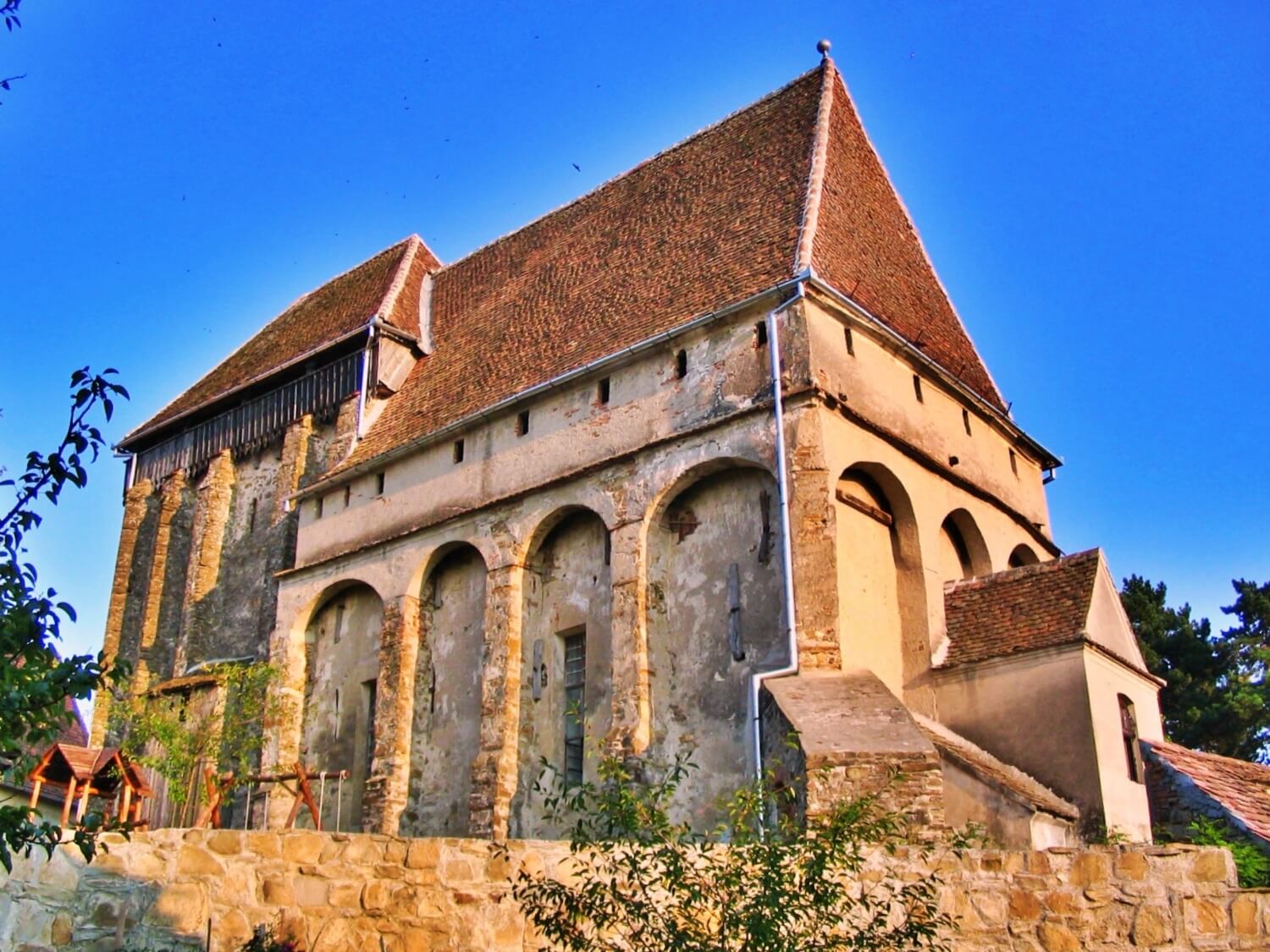
Although almost nothing of the fortification has been preserved, the church of Seliștat impresses as an example of an almost unaltered fortified church of the early 16th century
Biserica evanghelică fortificată din Seliștat, județul Brașov, a fost construită în secolul al XIV-lea
Evangélikus erődtemploma a 14
Previous names
Seliştat fortified church, Biserica fortificată din Seliștat, Boldogváros erődtemplom
Description
Although almost nothing of the fortification has been preserved, the church of Seliștat impresses as an example of an almost unaltered fortified church of the early 16th century. Situated on the top of a hill on the high plateau between the valleys of the river Hărtibaciu and Olt the one-aisle church without tower is said to have been built as early as the second half of the 14th century, probably on the site of an earlier building.
Around 1500 the chancel was strengthened by adding buttresses, four more stories, and a wooden battle platform. Later the nave was fitted with a barrel vault and a defence level built of bricks and stones. Loops for pouring liquids were left between the buttresses and the wall of the church. Another defence building serving for storing grains has been preserved on the northern side of the site.
On the southern side three more buildings were erected: Old and New School and the communal hall, today used as a youth hostel and community center. The modest interior of the church was renovated in 2010.
Place and surroundings
The name of the village points out that here must be a bit of paradise: as one of the oldest Saxon villages of Transylvania, the village was named once “Felix locus,” Latin name roughly meaning “happy place”. In the 15th Century the church was rebuilt as an impressive defensive assembly, which has been preserved almost intact until today. Battlements and loopholes of the fortress still seem alarming. However, there is no reason to worry: once it was built as mediator between God and humanity, then it became indispensable as a shelter for the inhabitants and nowadays is part of a youth community center.
In Seliștat children, adolescents and adults have the opportunity to enter another world and to take a trip into nature. A wide range of recreational and leisure activities is available to guests: sleeping in the fortification, visiting traditional farmhouses and chalets, trails in the nature, horseback riding in summer and magical horse-drawn sleigh rides in winter.
https://kirchenburgen.org/
Biserica evanghelică fortificată din Seliștat, județul Brașov, a fost construită în secolul al XIV-lea. Figurează pe lista monumentelor istorice 2010, cod LMI BV-II-a-A-11818, cu următoarele obiective:
cod LMI BV-II-m-A-11818.01 - Biserica evanghelică fortificată, secolele XIII-XV;
cod LMI BV-II-m-A-11818.02 - Incintă fortificată (fragmente) și încăperi pentru provizii, secolele XV-XVI.
Localitatea
Articol principal: Seliștat, Brașov.
Seliștat, mai demult Jălișteat (în dialectul săsesc Sailijescht, Zělijeršt, Zeliješt, în germană Seligstadt, Gross-Alisch, Gross-Alesch, Olesch, în maghiară Boldogváros, în latină Villa Militum, Felix locus) este un sat în comuna Șoarș din județul Brașov, Transilvania, România. Prima menționare documentară: 1355.
Biserica
În secolul al XIV-lea este construită o biserică sală fără turn clopotniță cu absidă poligonală, fiind amplasată în E străzii principale, pe un teren ascendent. Corul are o boltă în cruce și o absidă 3/6. Astăzi, sala și corul sunt acoperite de bolți avela pe arce dublouri, care, în 1848, au înlocuit bolțile medievale. În jurul anului 1500, biserica este fortificată. Contraforturi suplimentare la cor au permis realizarea unui turn cu 4 niveluri deasupra corului. Ultimul nivel este prevăzut cu un drum de strajă îmbrăcat în scândură si ieșit în consolă, având un acoperiș în 4 ape. Sala bisericii are, de asemenea, un nivel fortificat cu guri de tragere, sprijinindu-se pe arce care, la rândul lor, se sprijină pe contraforturi. În E bisericii este ridicată o casă fortificată cu 3 niveluri. În N bisericii o casă depozit de provizii este amplasată în fața zidului de incintă. Altarul clasicist, cu tabloul central pictat de Fritz Schullerus în 1892, are voleuri baroce și un coronament baroc.
Evangélikus erődtemploma a 14. század első felében, sokszögű szentélyzáródású, torony nélküli teremtemplomként épült. Kórusát a 15. század végén védőtoronnyá alakították át, majd a templom falait támpillérekkel erősítették. 1848-ban korábbi mennyezetét téglamennyezettel helyettesítették. Várfalainak nagy részét lebontották. 1997-ben széles körű állagmegóvás vette kezdetét. Az egykori lelkészlakot ifjúsági szálláshellyé alakították át.
Useful information
Free
The Church can be seen only from the outside
-
-
Nearby castles
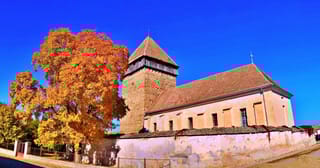
Bărcut fortified church
Comuna Șoarș
4.5km
fortress
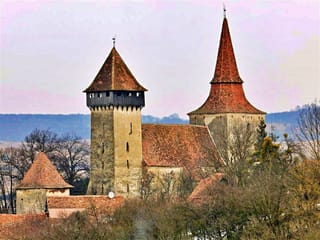
Movile fortified church
Iacobeni
6.7km
fortress
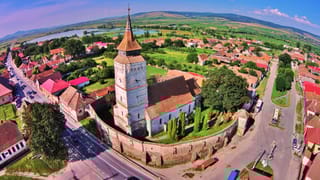
Rodbav fortified church
Comuna Șoarș
8.3km
fortress
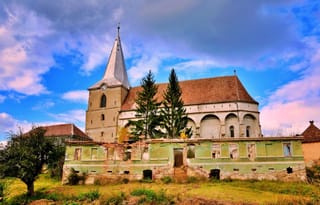
Şoarş fortified church
Comuna Șoarș
8.4km
fortress
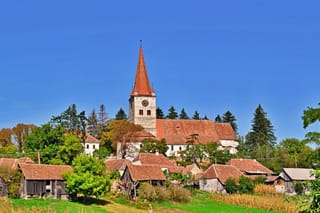
Fortified Church of Cincu
Comuna Cincu
9.0km
fortress
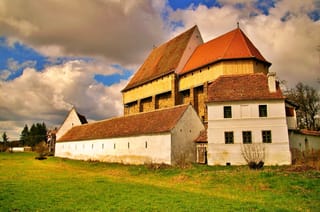
Brădeni fortified church
Comuna Brădeni
10.4km
fortress
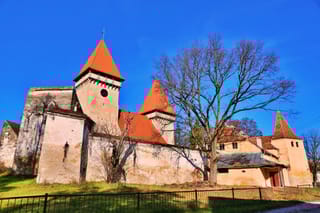
The fortified church from Merghindeal
Comuna Merghindeal
11.1km
fortress