Caţa fortified church
Comuna Cața Județul Brașov Romania
fortress
Biserica fortificată din Cața
Comuna Cața Județul Brașov Romania
fortress
Kacai erődtemplom
Comuna Cața Județul Brașov Romania
fortress
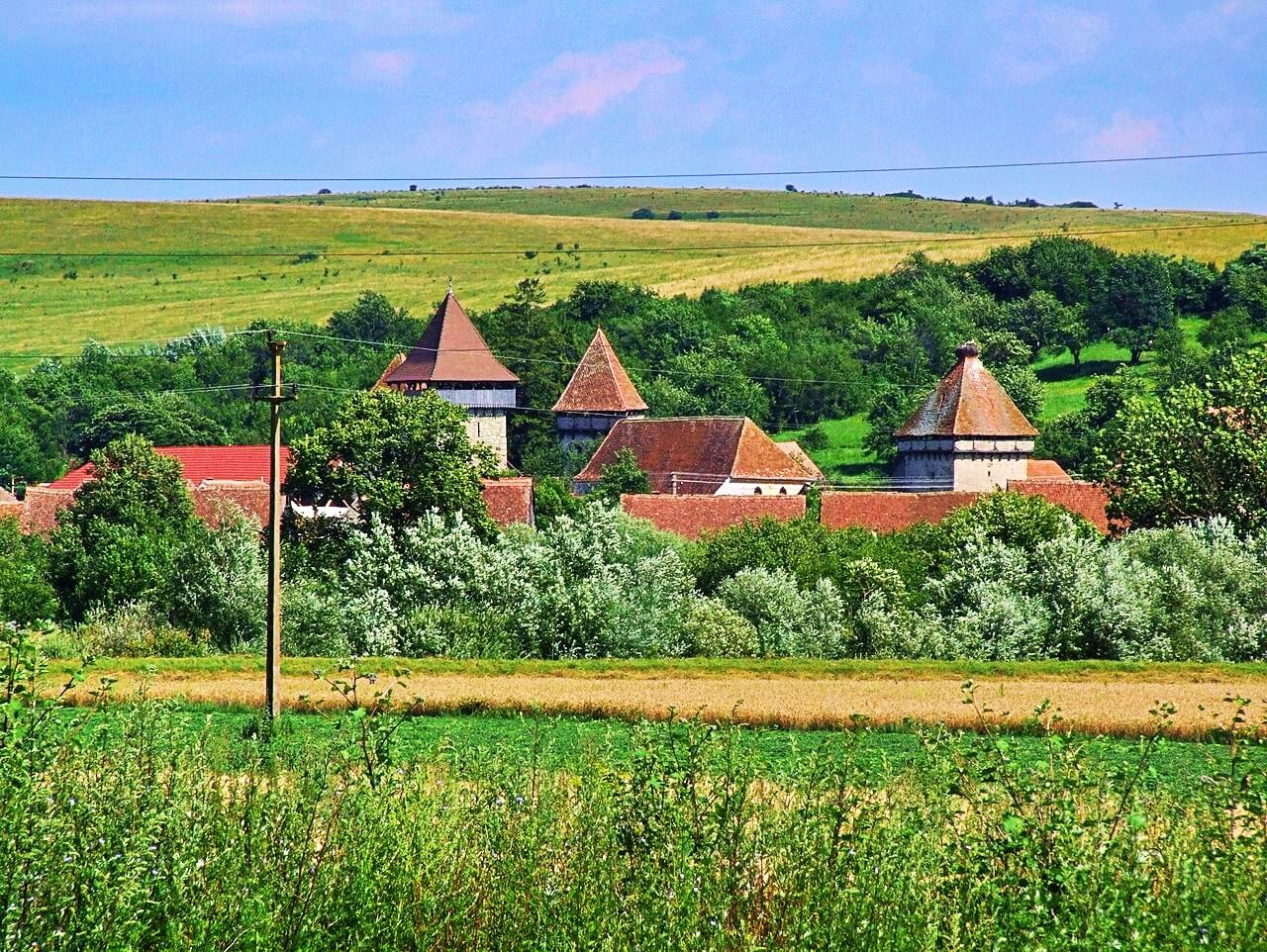
A pier basilica, easily recognizable by its main features, constitutes the core of the fortified church in Caţa
Biserica evanghelică fortificată din Cața, comuna Cața, județul Brașov, a fost construită în secolul XIII pe baza unei vechi bazilici romane datată din secolul al XII-lea
A templom erődítése a XV
Previous names
Caţa fortified church, Biserica fortificată din Cața, Kacai erődtemplom
Description
A pier basilica, easily recognizable by its main features, constitutes the core of the fortified church in Caţa. Inside, the pillars with arcades are a typical Romanesque construction to connect the side aisles to the nave. On the northern clerestory two uncovered false windows can be seen. The Romanesque chancel as well as the apse were rebuilt during the 15th century in Gothic style. The cross vault collapsed 1894 together with the western tower and it was replaced later on by a flat ceiling. The tower was never rebuilt. The massive fortified curtain wall dating back to the 15th century still preserves four of initial six defence towers. The pentagonal “priest’s tower” offers views over the garden of the parish house. The assembly was provided with a second defence wall with outer bailey as early as the 17th century. Its northern side was demolished in 1884 and in 1937 for using the resulting material to build the school and the community hall.
Place and surroundings
The precise date of the village’s establishment remains unknown. While the first documented reference dates back to the beginning of the 15th century, the foundation of the Romanesque basilica in the village’s center was laid as early as 1250 and the church was also fortified later on. The village developed at the crossing point of two main roads, thus being often affected by enemy attacks and fires throughout the centuries. During the 17th and the 18th century the village was plundered and torched six times. A strong fire heavily damaged the fortified church around 1706, while the parish house and the school were entirely burned down.
With its 2.500 residents Caţa is today a rather quiet and peaceful place. In the village’s center, in the parish house lives the Transylvanian Saxon writer and film maker Friedrich Schuller. He restored the homestead where his father used to live as priest of the village and regularly hosts nowadays cultural and literary events: for example, in 2011 it was awarded here the first “Wordsmith of Caţa” price.
https://kirchenburgen.org/
Biserica evanghelică fortificată din Cața, comuna Cața, județul Brașov, a fost construită în secolul XIII pe baza unei vechi bazilici romane datată din secolul al XII-lea. Ansamblul bisericii evanghelice fortificate format din biserică, incinta fortificată și patru turnuri este monument istoric, cod LMI BV-II-a-A-11628.
Descriere
La răscrucea din centrul satului Cața se găsește biserica fortificată evanghelică a comunității săsești din localitate. Biserica poartă hramul Sfântului Nicolae, ea fiind construită ca bazilică în stil romanic în secolul al XIII-lea. Ansamblul fortificat are prevăzute două incinte poligonale fortificate la o distanță de două secole. Cea interioară a fost datată în secolul al XV-lea și cealaltă în secolul al XVII-lea. La sfârșitul secolului al XV-lea, biserica a fost reconstruită cu structuri fortificate de apărare. Turnul vestic s-a prăbușit în anul 1894, el nefiind reconstruit. Altarul a fost datat în 1894, mobila în secolul al XIX-lea, orga în 1803 și amvonul în 1864.
Astăzi este conservat un turn pentagonal care are patru etaje. Pe acest turn care străjuiește intrarea, este inscripționat un text din secolul al XVII-lea: "O felices vos qui in pace de beilo ei in beilo de pace congitas" (Fericiți voi care vă gândiți în timp de pace la război și în timp de război la pace). Mai există de asemenea în ziua de astăzi și un Turn al Slăninei. Biserica fortificată a avut două ziduri de apărare întărite cu turnuri. Astăzi mai există, în total, trei turnuri în interiorul zidului precum și un turn cu amprentă pentagonală aflat în exteriorul incintei.
A templom erődítése a XV. században történt, egy második védelmi udvart két évszázaddal később építettek. Mindkettő nem szabályos sokszög körfogatú. A kaputorony irányában egy alacsonyabb, kőből és téglából épített fal található, az ú.n. zwinger, ennek a szerepe a belső udvart a tűzérségtől való megvédése volt. Az eredeti udvarnak négy tornya volt, az ezeket összekötő falak cseréppel voltak fedve, magasságuk elérte körülbelül a nyolc métert. A kapu felett a torony megtartotta a fából, konzolokra épített védelmi folyosólyát. A feljárat a felső szintekre a mozgatható létra segítségével történt. Az udvarról a tornyok második emeletére lehetett belépni. A keleti torony felső részén egy gótikus pártázat látható. Mindenik magas, kívül keskeny, belül szélesített lőréssel volt ellátva.
Hatást keltő az északi torony négy szintje fölött elhelyezkedett, kinyúló, konzolokra épített védelmi folyosó. A délit lebontották, az északi az egyedüli öntőnyílásokkal ellátott torony.
A második védelmi függönnyt az 1658-as tatárok benyomulása után emelték, amikoris a falu majdnem teljesen leégett. Az udvar északi és délkeleti részén egy-egy torony állt, mára csak az utóbbi maradt fenn, a lelkész tornya, valószínű Andreas Lang lelkész és családja rejtekhelye, ahogy a torony mentén egy 1676-os piros és kékre festett latin szöveg is mutatja. A torony kifele lezárható lőrésekben nyílott, a negyedik szint öntőnyílásokkal, sátortetővel fedett védelmi folyosóval van ellátva. A kaputorony egyik külső mélyedése egy második német és latin nyelvű felirattal büszkélkedik, mely könyörületet kér Istentől szolgáinak, és boldogítja azokat, kik béke idején háborúra gondolnak, háború alatt, pedig békére. A terjedelmes védelmi függönyből mára csak a délnyugati rész maradt fenn.
http://utielmenygyujto.network.hu/
Useful information
Free
Free
Visiting on a demand
-
-
Nearby castles
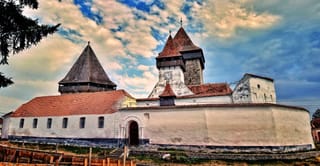
The Evangelical Fortified Church in Homorod
Comuna Homorod
5.3km
fortress
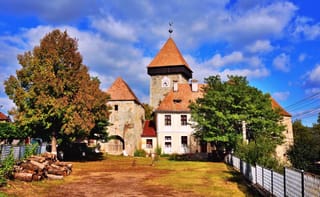
Drăuşeni fortified church
Comuna Cața
6.6km
fortress
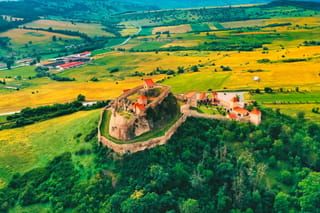
Rupea Fortress
Orașul Rupea
7.7km
fortress
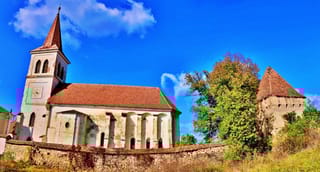
Beia fortified church
Cata
9.7km
fortress
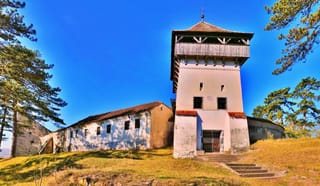
Fortified church in Ungra
Comuna Ungra
11.7km
fortress
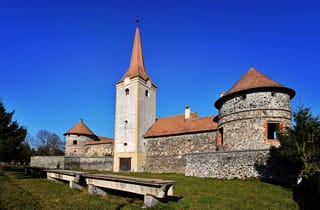
Sükösd-Bethlen Castle
Comuna Racoș
12.3km
castle, chateau
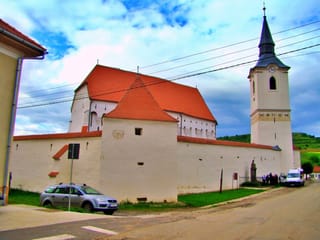
Dârjiu fortified church
Comuna Dârjiu
14.0km
fortress