São Jorge Castle
Lisboa Lisboa Portugal
castle, chateau
Castelo de São Jorge
Lisboa Lisboa Portugal
castle, chateau
São Jorge Castle (Portuguese: Castelo de São Jorge; Portuguese pronunciation: [kɐʃˈtɛlu dɨ sɐ̃w̃ ˈʒɔɾʒ(ɨ)]; English: Saint George Castle) is a historic castle in the Portuguese capital of Lisbon, located in the freguesia of Santa Maria Maior
O Castelo de São Jorge, antigo Paço de Alcáçova, localiza-se na freguesia de Santa Maria Maior (Castelo), na cidade e concelho de Lisboa, em Portugal
Previous names
São Jorge Castle, Castelo de São Jorge
Description
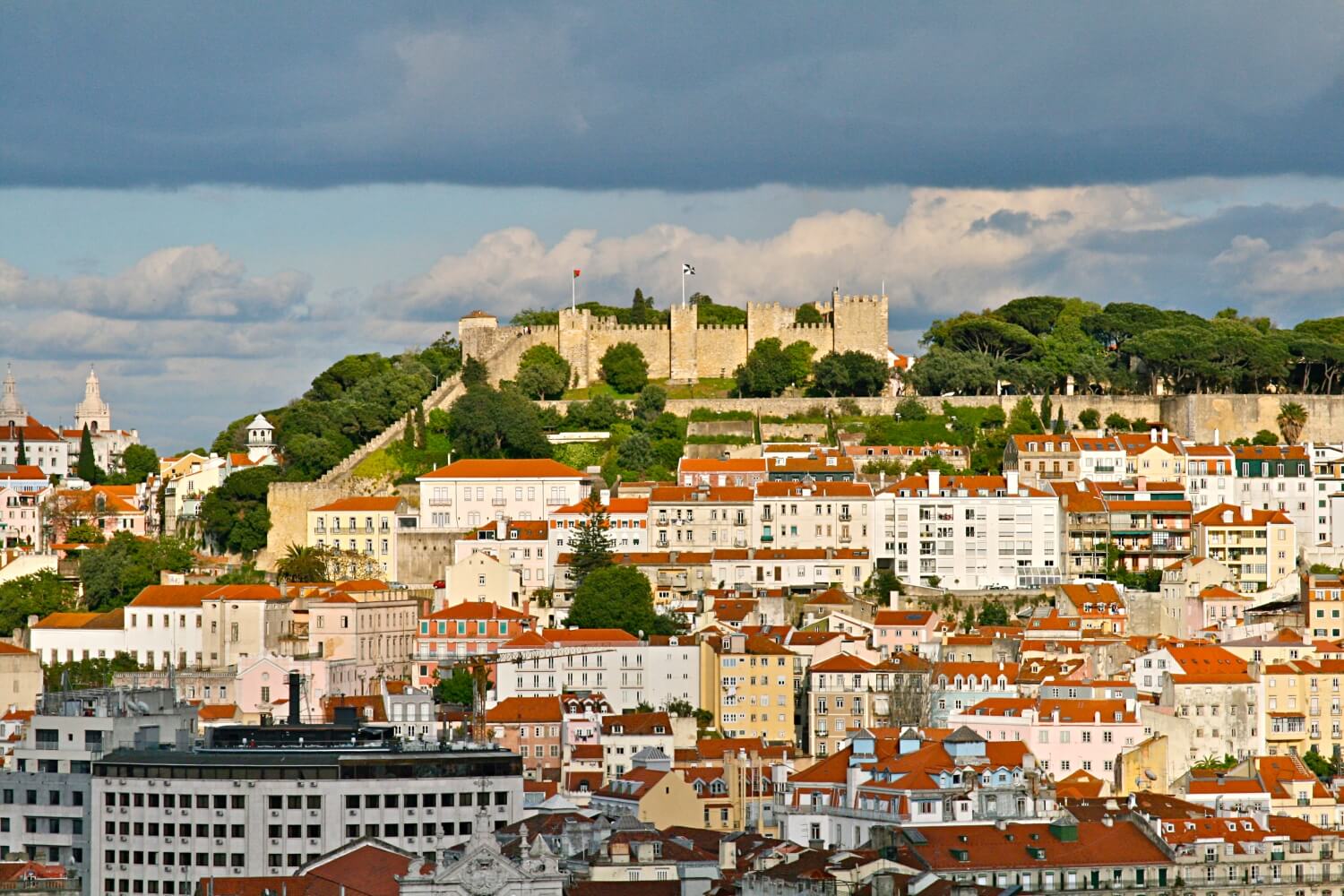
São Jorge Castle (Portuguese: Castelo de São Jorge; Portuguese pronunciation: [kɐʃˈtɛlu dɨ sɐ̃w̃ ˈʒɔɾʒ(ɨ)]; English: Saint George Castle) is a historic castle in the Portuguese capital of Lisbon, located in the freguesia of Santa Maria Maior. Human occupation of the castle hill dates to at least the 8th century BC while the first fortifications built date from the 1st century BC. The hill on which São Jorge Castle stands has played an important part in the history of Lisbon, having served as the location of fortifications occupied successively by Phoenicians, Carthaginians, Romans, and Moors, before its conquest by the Portuguese in the 1147 Siege of Lisbon. Since the 12th century, the castle has variously served as a royal palace, a military barracks, home of the Torre do Tombo National Archive, and now as a national monument and museum.
History
Although the first fortifications on this hilltop date from the 1st century BC, archaeological excavations have identified a human presence in the Tagus valley as far back as the 8th century BC. The first fortification was, presumably, erected in 48 BC, when Lisbon was classified as a Roman municipality.
The hill was first used by indigenous Celtic tribes, then by Phoenicians, followed by Greeks and later the Carthaginians as a defensive outpost that was later expropriated successively by the Romans, the Suebi, the Visigoths, and the Moors. During the 10th century, the fortifications were rebuilt by Muslim Berber forces; these included the walls or Cerca Moura ("Moorish Encirclement").
Kingdom
In the context of the Christian Reconquista, the castle and the city of Lisbon were freed from Moorish rule in 1147 by Afonso Henriques and northern European knights in the Siege of Lisbon during the Second Crusade; this victory was the only notable success of that failed crusade. According to an oft-repeated legend, the knight Martim Moniz, noticing that one of the doors to the castle was open, prevented the Moors from closing it by throwing his own body into the breach, thus allowing Christian soldiers to enter at the cost of his own life. With the taking of the castle Christian forces were able to maintain the defense of Lisbon until the end of the 12th century.
When Lisbon became the capital of the Kingdom of Portugal in 1255, the castle served as the alcáçova, a fortified residence for Afonso III, in his role as governor. It was extensively renovated around 1300 by King Denis I, transforming the Moorish alcáçova into the Royal Palace of the Alcáçova. Between 1373 and 1375, King Ferdinand I ordered the building of the Cerca Nova or Cerca Fernandina, the walled compound that enclosed all but the north flank of the castle. The master builders João Fernandes and Vasco Brás were responsible for its construction. This wall, which partially replaced the old Moorish walls, was designed to encircle previously unprotected parts of the city. Completed in two years, it had 77 towers, 34 or 38 gates, and a perimeter of 5,400 metres (17,700 ft).
The castle and the city resisted the forces of Castile several times during the 14th century (notably in 1373 and in 1383–1384). It was during this period (the late 14th century) that the castle was dedicated to Saint George by King John I, who had married the English princess Philippa of Lancaster. Saint George, the warrior-saint, was normally represented slaying a dragon, and was very popular in both countries.
From this point onward many of the kingdom's records were housed in the Torre de Ulisses ("Tower of Ulysses"), also known as the Torre Albarrã, until the reign of Manuel I. The Portuguese National Archive, where the eminent Portuguese chroniclers Fernão Lopes and Damião de Góis once worked, is still referred to as the Torre do Tombo (literally the "Tower of the Archive"). On 9 December 1448, Gil Pires was named the castle master builder to replace Afonso Esteves, being paid 400 réis for his work. Between 1448 and 1451, the master builder was paid several stipends for his work on the palace. Similarly, the mason João de Alverca was paid a substantial sum for stonework. These public works continued from 1449 until 1452, with additional payments being made for labor and materials to convert the building from a fortified castle to a royal residence.
As the royal palace, the castle was the setting for the reception by King Manuel I of the navigator Vasco da Gama when he returned from discovering the maritime route to India in 1498. The castle also served as a theater in 1502 when pioneering playwright Gil Vicente staged his Monólogo do Vaqueiro to honor the birth of Manuel I's son and heir, the future João III.
Around the early 16th century, following the construction of the Ribeira Palace beside the Tagus river, the Palace of Alcáçova began to lose its importance. An earthquake occurring in 1531 further damaged the old castle, contributing further to its decay and neglect. In 1569, King Sebastian ordered the rebuilding of the royal apartments in the castle, intending to use it as his official residence. As part of the rebuilding, in 1577 Filippo Terzi demolished one of the towers near the principal facade of the Church of Loreto. However, many of the works were never completed after the young king's apparent death during the Battle of Alcácer Quibir. The following Portuguese dynastic crisis opened the way for sixty years of Spanish rule and the castle was converted into military barracks and a prison. On 30 December 1642, Teodósio de Frias the Younger was appointed master builder to continue the works begun by his father, Luís de Frias, and his grandfather, Teodósio de Frias. This was part of a greater plan by the Spanish forces to recommission the fortification.
However, after Portugal regained its independence following the Portuguese Restoration War, the works were taken over by the Portuguese government. On 6 November 1648, Nicolau de Langres was called upon to take over the design, execution and construction of a new fortification that would surround the Castle of São Jorge and the city walls of Lisbon. In 1650 the military architect Mateus do Couto was named master builder of the project and reconstruction took on a new formality: although the military engineer João Gillot built new walls in 1652, construction again followed Couto's plans between 1657 and 1733. In 1673, the Soldiers' Hospital, dedicated to São João de Deus (St John of God), was installed on the grounds beside the Rua do Recolhimento. At the end of the 17th century the Recolhimento do Castelo ("Castle Shelter") was constructed along the southeast angle of the courtyard, and in 1733, new projects were initiated by master Custódio Vieira.
The 1755 Lisbon earthquake severely damaged the castle and contributed to its continuing decay: apart from the walls of the old castle, the soldier's hospital and the Recolhimento were left in ruins. The necessity of maintaining a supporting military force within the capital city required expansion of the site's role of garrison and presidio. From 1780 to 1807, the charitable institution Casa Pia, dedicated to the education of poor children, was established in the citadel, while soldiers continued to be garrisoned on site. Inspired by the events of the earthquake and the following tsunami, the first geodetic observatory in Portugal was constructed in 1788 at the top of one of the towers of the castle, later referred to as the Torre do Observatório (Observatory Tower).
Republic
By the 1930s, the Castle had all but disappeared as a distinguishable landmark from Lisbon's skyline, being almost entirely obscured behind and under later annexes and additions. As part of the commemorative celebrations marking the foundation of nationhood and restoration of independence (Portuguese: Fundação da Nacionalidade e da Restauração da Independência), the government of António de Oliveira Salazar initiated extensive renovations at the site (as it did with similar castles, such as the ones in Sintra and Silves). Most of the incongruous structures added to the castle compound in previous centuries were demolished, under the supervision of the DGEMN, and there was a partial restoration of the Recolhimento. In addition, on 25 October 1947, a monument dedicated to Afonso Henriques, presented by the city of Porto, of a replica created by Soares dos Reis (in 1887) was installed on the grounds.
On 31 May 1942 the castle's operations began to be handled by the city government of Lisbon, which was reaffirmed on 8 June 1979.
In 1998, the semi-rectangular spaces, columns and cistern were adapted into the museum Olissipónia.
On 22 August 2006, Direcção Regional de Cultura Lisboa (DRCLisboa) defined a special protection zone, that included the Castle of São Jorge and the rest of the walls of Lisbon, the Baixa Pombalina and various properties that were already classified as cultural heritage. The Conselho Nacional de Cultura (National Council of Culture) proposed shelving this definition on 10 October 2011, which was supported by IGESPAR.
Architecture
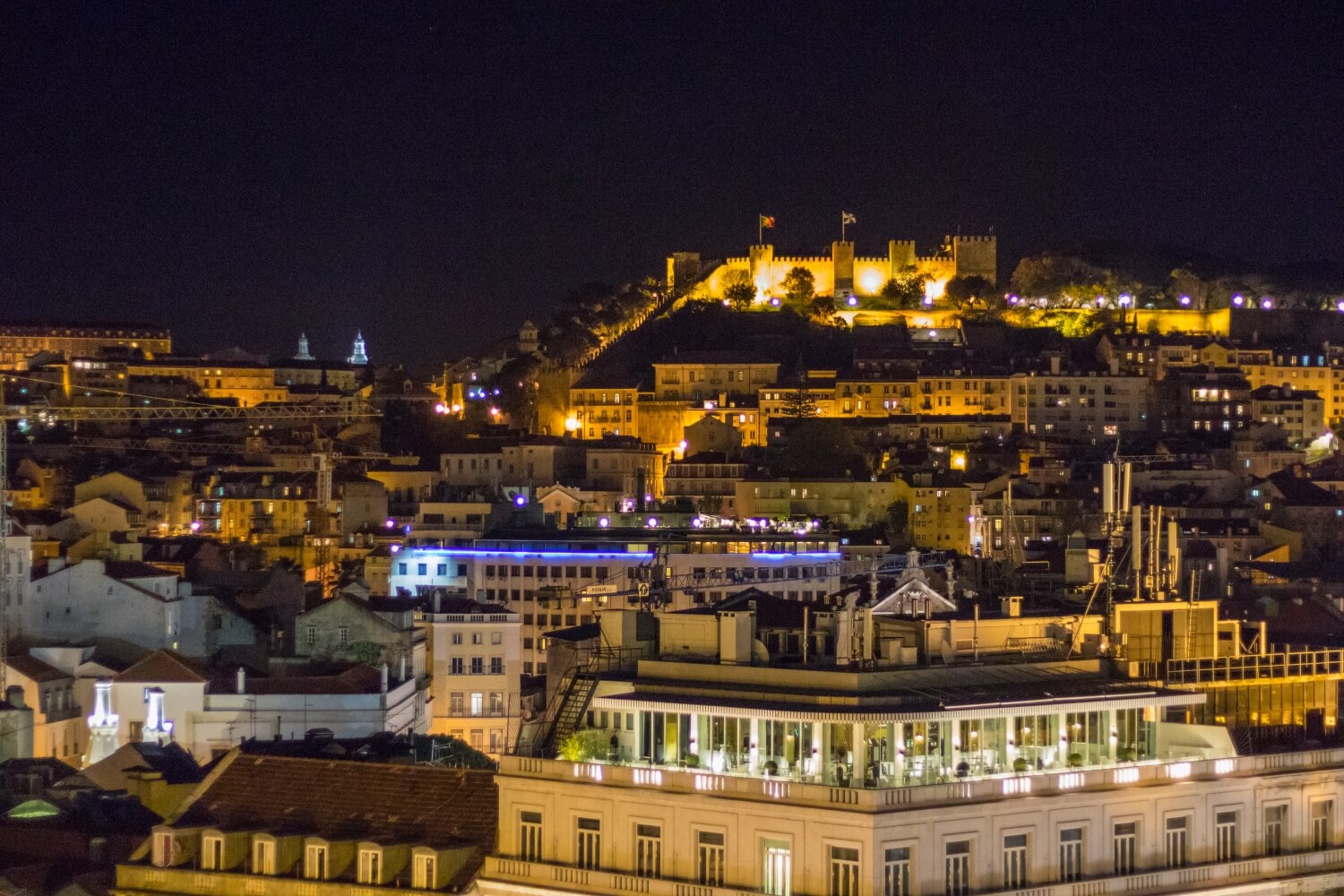
The castle is in the centre of Lisbon, on a hill, while many of its walls extend around the citadel into the civil parishes that surround it to the east and south.
The castle's plan is roughly square, and it was originally encircled by a wall, to form a citadel. The castle complex consists of the castle itself (the castelejo), some ancillary buildings (including the ruins of the royal palace), gardens, and a large terraced square from which an impressive panorama of Lisbon is visible. The main entrance to the citadel is a 19th-century gate surmounted by the coat-of-arms of Portugal, the name of Queen Maria II, and the date 1846. This gate permits access to the main square (Praça d'Armas), which is decorated with old cannons and a bronze statue of Afonso Henriques, the Portuguese monarch who took the castle from the Moors. This statue is a copy of the 19th-century original, by the romantic sculptor António Soares dos Reis, which is located near Guimarães Castle in northern Portugal.
The remnants of the royal palace are located near the main square, but all that is left are some walls and a few rebuilt rooms such as the Casa Ogival. It now hosts the Olissipónia, a multimedia show about the history of Lisbon.
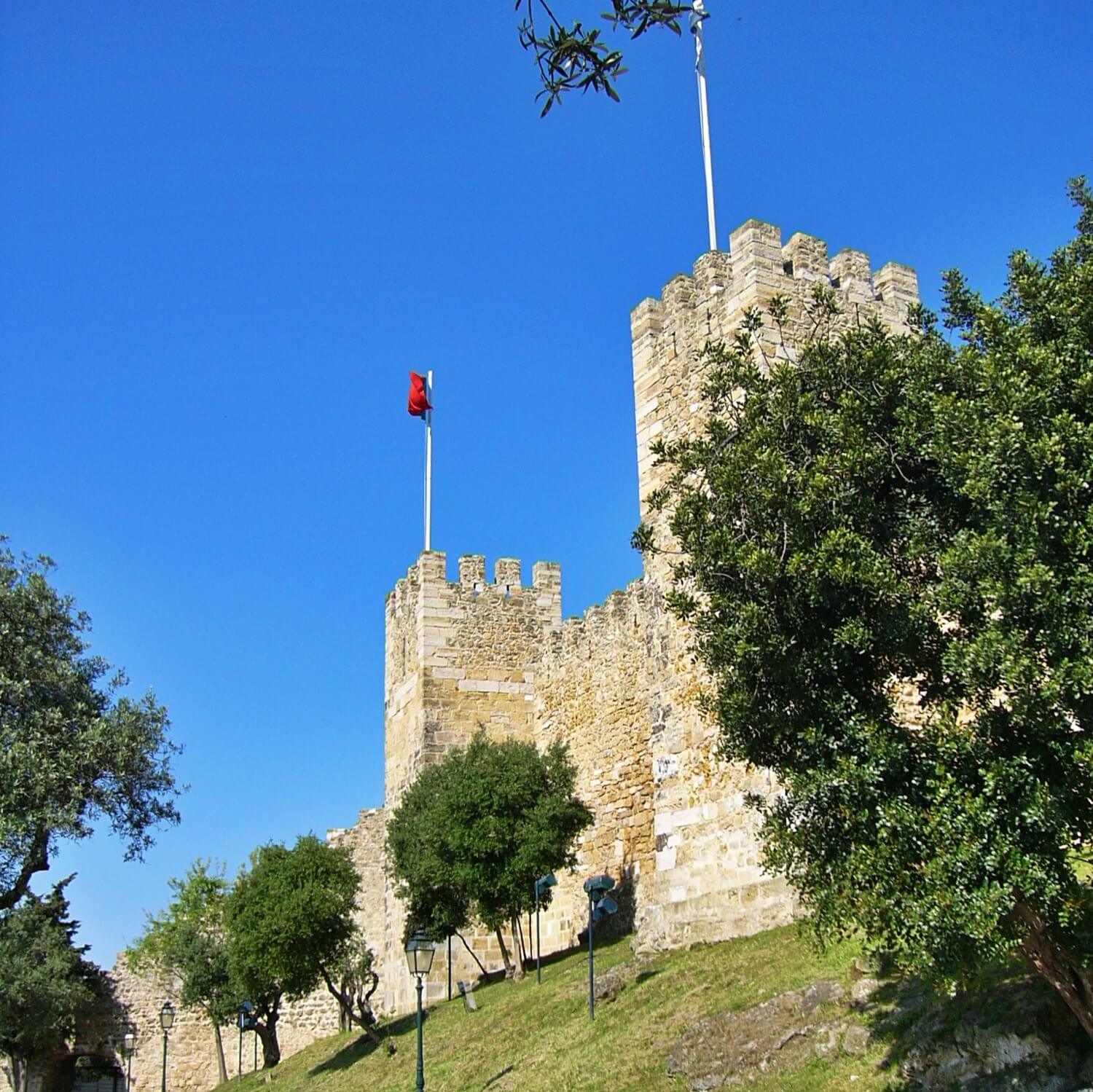
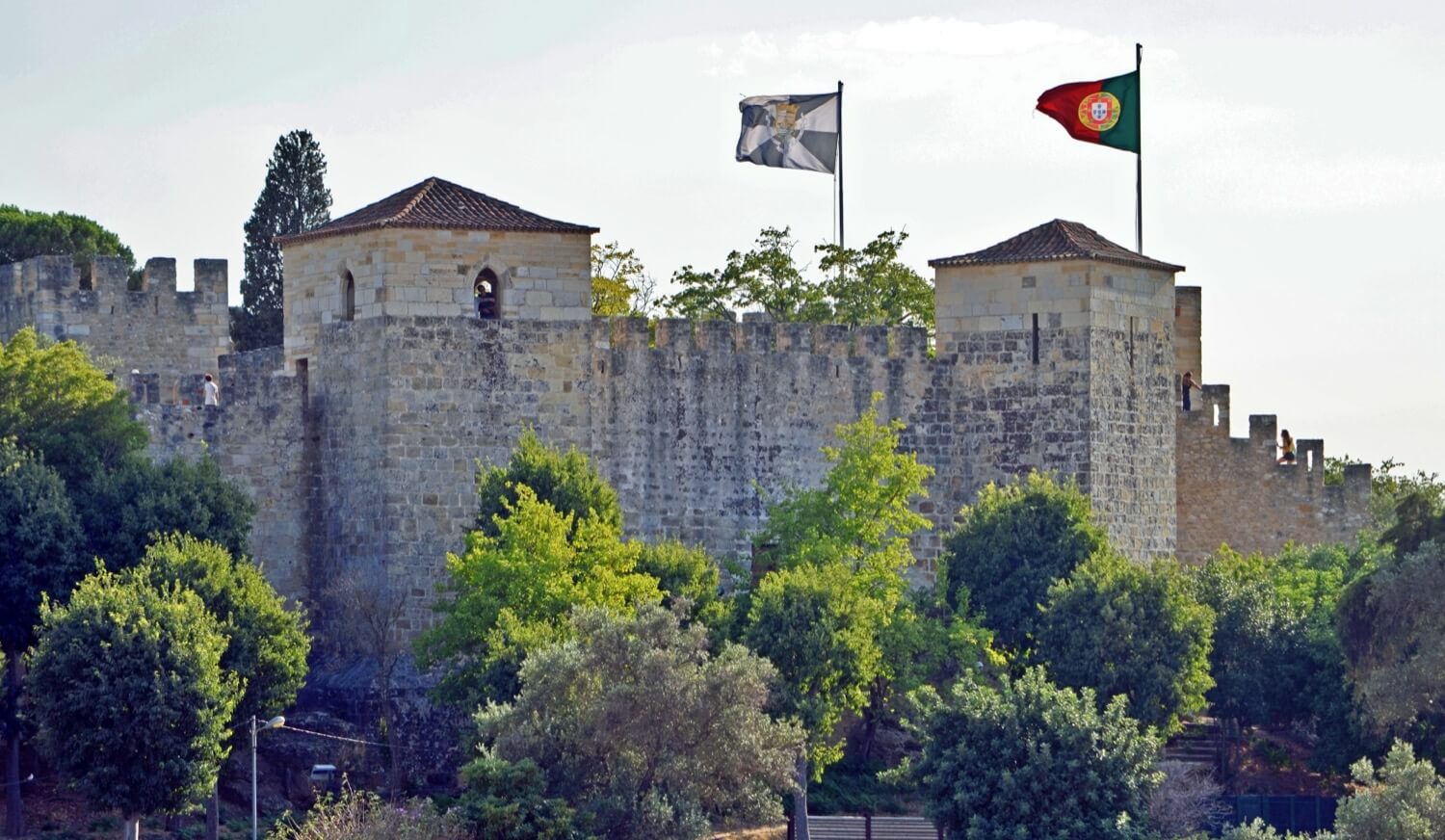
The medieval castle is located toward the northwest corner of the citadel, at its highest point. Hypothetically, during a siege, if attackers managed to enter the citadel, the castle was the last stronghold, the last place in which to take refuge. It is rectangular, with ten towers. A wall with a tower and a connecting door divides the castle courtyard into halves. A series of stairways allow visitors to reach the walkway atop the wall and the towers, from which magnificent views of Lisbon can be enjoyed. The Tower of Ulysses (where the Torre do Tombo archive used to be) had in 1998 a camera obscura installed that allows spectators a 360-degree view of the city and Tagus River.
Apart from its main walls, the castle is protected, on its southern and eastern sides, by a barbican (barbacã), a low wall that prevented siege engines from approaching the main castle walls. The northern and western sides of the castle, on the other hand, were naturally protected by the steep hillside sloping downward from the castle's foundations. The castle is also partially encircled by a moat, now dry. The main entrance is fronted by a stone bridge across the moat. On the west side, there is a long curtain wall extending downhill, ending at a tower (the Torre de São Lourenço). This tower guarded a gate in the Cerca Fernandina.
O Castelo de São Jorge, antigo Paço de Alcáçova, localiza-se na freguesia de Santa Maria Maior (Castelo), na cidade e concelho de Lisboa, em Portugal. As primeiras fortalezas do castelo datam do século I a.C. tendo ele sido reconstruído diversas vezes por vários povos e recebido diferentes nomes. O nome actual deriva da devoção do castelo a São Jorge, santo padroeiro dos cavaleiros e das cruzadas, feita por ordem de D. João I no século XIV.
Ao longo do tempo o castelo, assim como as diversas estruturas militares de Lisboa, foi sendo remodelado, ao ponto de na primeira metade do século XX estar já em avançado estado de ruína. Na década de 1940 foram empreendidas monumentais obras de reconstrução, levantando-se grande parte dos muros e alteando-se muitas das torres. Por esse motivo, ao contrário do que se poderia pensar à primeira vista, o "carácter medieval" deste conjunto militar deve-se a esta campanha de reconstrução, e não à preservação do espaço do castelo desde a Idade Média até aos nossos dias.
Ergue-se em posição dominante sobre a mais alta colina do centro histórico, proporcionando aos visitantes uma das mais belas vistas sobre a cidade e o estuário do rio Tejo.
Pela primeira vez, o número de visitantes do Castelo de São Jorge ultrapassou os 1,2 milhão de visitantes em 2014, uma subida de 17,6% face a 2013. A subida deveu-se sobretudo ao público estrangeiro.
História
Antecedentes
A primitiva presença humana na área remonta à Idade do Ferro, e as pesquisas arqueológicas trouxeram à luz testemunhos desde, pelo menos, o século VI a.C, sucessivamente por Fenícios, Gregos e Cartaginenses. As informações históricas, entretanto, iniciam-se apenas no contexto da conquista da Hispânia pelas legiões romanas, quando era denominada Olisipo. Serviu, a partir de 139 a.C. como base das operações do Cônsul Décimo Júnio Bruto Galaico, contra os núcleos de Lusitanos dispersos após o assassinato de seu líder, Viriato, quando se admite que aqui teria, por esse motivo, existido algum tipo de estrutura defensiva. Posteriormente, em 60 a.C., tendo o então Propretor Caio Júlio César concluído a conquista definitiva da Lusitânia, concedeu à povoação o título de Felicidade Júlia (Felicitas Julia), permitindo aos seus habitantes o privilégio da cidadania romana.
Diante das invasões do Império pelos bárbaros, às quais a Península não ficou imune, a cidade foi conquista pelos Suevos sob o comando de Maldras, nos meados do século V, e, poucos anos mais tarde, pelos Visigodos sob o comando de Eurico, vindo a tornar-se definitivamente Visigoda sob o reinado de Leovigildo.
Mais tarde, no século VIII, viria a cair sob o domínio muçulmano, passando a denominar-se Al-Ushbuna ou Lissabona. As descrições dos seus geógrafos referem a existência da fortificação com as suas muralhas, as quais defendiam a "quasabah" (alcáçova), o centro do poder político e militar da cidade. A chamada "Cerca Moura" foi edificada no período tardo-romano, tendo sido reconstruída e ampliada durante o período islâmico.
No contexto da Reconquista cristã da Península, a sua posse oscilou ao sabor das investidas cristãs, que a colimavam como alvo à margem do rio Tejo. Dessa forma, foi conquistada inicialmente por Afonso II das Astúrias, em contra-ofensiva em 796. Na ocasião a cidade foi saqueada e as forças cristãs, demasiado distantes de sua base na região de Entre-Douro-e-Minho, retiraram-se em seguida. Idêntico sucesso repetiu-se no reinado de Ordonho III de Leão, sob o comando deste soberano, tendo a cidade sofrido severos danos.
Integrante dos domínios da taifa de Badajoz, no alvorecer do século XII, diante da ameaça representada pelas forças de Iúçufe ibne Taxufine, que, oriundas do Norte de África, haviam passado à Península visando a conquista e reunificação dos domínios Almorávidas, o governante de Badajoz, Mutavaquil, entregou-a, juntamente com Santarém e Sintra, na Primavera de 1093, ao rei Afonso VI de Leão e Castela, visando uma aliança defensiva que não se sustentou. Envolvido com a defesa dos seus próprios territórios, o soberano cristão não foi capaz de assistir o governante mouro, cujos territórios vieram a cair, no ano seguinte, diante dos invasores. Desse modo, Lisboa, Santarém e Sintra permaneceriam domínios muçulmanos, agora sob os Almorávidas.
A fortificação, neste período, era constituída pela Alcáçova de planta aproximadamente quadrangular com cerca de 60 metros de lado, em posição dominante no alto da colina, defendida por muralhas com aproximadamente 200 metros de largura. Deste núcleo, cujo perímetro corresponde sensivelmente aos limites da actual freguesia do Castelo, a Leste e a Oeste desciam até ao rio os muros envolvendo a povoação, reforçados por torres e onde se rasgavam as portas.
O castelo medieval
No contexto da Reconquista cristã da Península Ibérica, após a conquista de Santarém, as forças de D. Afonso Henriques (1112-1185), com o auxílio de cruzados normandos, flamengos, alemães e ingleses que se dirigiam à Terra Santa, investiu contra esta fortificação muçulmana, que capitulou após um duro cerco de três meses (1147), como narrado no manuscrito "De expugnatione Lyxbonensi", carta escrita por um cruzado inglês que tomou parte na conquista. Uma lenda surgida mais tarde reza que o cavaleiro Martim Moniz, que se destacara durante o cerco, ao perceber uma das portas do castelo entreaberta, sacrificou a própria vida ao interpor o próprio corpo no vão, impedindo o seu encerramento pelos mouros e permitindo o acesso e a vitória dos companheiros.
Como preito de gratidão, o castelo, agora cristão, foi colocado sob a invocação do mártir São Jorge, a quem muitos cruzados dedicavam devoção. No dia da conquista, 25 de Outubro, comemora-se hoje o "Dia do Exército", instituição que, no país, tem São Jorge como padroeiro.
Poucas décadas mais tarde, entre 1179 e 1183, o castelo resistiu com sucesso às forças muçulmanas que assolaram a região entre Lisboa e Santarém.
A partir do século XIII, alçando-se Lisboa a Capital do reino (1255), o castelo conheceu o seu apogeu, quando foi, além de Paço Real, o chamado Paço da Alcáçova, palácio de bispos, albergue de nobres da Corte e fortificação militar. Os terramotos que afectaram a cidade em 1290, 1344 e 1356, causaram-lhe danos. No plano militar, mobilizou-se diante do cerco castelhano de Fevereiro e Março de 1373, quando os arrabaldes da Capital chegaram a ser saqueados e incendiados. Nesse ano iniciou-se a muralha de D. Fernando (1367-1383), concluída dois anos mais tarde e que se prolonga até à Baixa. Na 3.ª guerra fernandina os arrabaldes da cidade foram novamente alvo das investidas castelhanas, em Março de 1382
Em 26 de janeiro de 1383 o castelo foi entregue ao conde de Barcelos, João Afonso Telo, pelo seu alcaide, Martim Afonso Valente.
No decurso da crise de 1383-1385, Lisboa seria duramente assediada pelas forças de D. João I de Castela em 1384.
Nas funções de Paço Real, foi palco da recepção a Vasco da Gama, após a descoberta do caminho marítimo para a Índia, no final do século XV, e da estreia, no século XVI, do Monólogo do Vaqueiro, de Gil Vicente, primeira peça de teatro português, comemorativa do nascimento de D. João III (1521-1557).
Da Guerra da Restauração aos nossos dias
Juntamente com a cidade, o castelo voltou a sofrer com os terramotos de 1531, 1551, 1597 e 1699. A sua história como Paço Real encerrou-se com a mudança do mesmo, ainda no século XVI para o Paço da Ribeira. A partir de então as suas dependências foram utilizadas como aquartelamento. À época da Dinastia Filipina foi novamente guarnecido, tendo sido utilizado como prisão.
No contexto da Restauração da Independência, o seu Alcaide, Martim Afonso Valente, honrando o juramento de fidelidade a quem tinha prestado menagem, apenas entregou a praça aos Restauradores após ter recebido instruções de Margarida de Saboia, Duquesa de Mântua, até então vice-rainha de Portugal, que lhe ordenou a rendição (1640).
A mudança da residência real para a zona ribeirinha, a instalação de aquartelamentos e o terramoto de 1755 contribuíram para o declínio e a degradação do monumento. Foi sede da Casa Pia de 1780 a 1807, quando foi utilizado como Quartel-General por Jean-Andoche Junot. Desse modo, descaracterizado e, em parte, interditado aos lisboetas, chegou ao século XX.
Classificado como Monumento Nacional por Decreto de 16 de Junho de 1910, sofreu importantes intervenções de restauro na década de 1940 e no final da década de 1990, que tiveram o mérito de reabilitar o monumento, recuperando-lhe a traça medieval. Actualmente constitui-se num dos locais mais visitados pelos turistas na cidade de Lisboa. Em 2000 e 2009, dois projectos de ligação via elevador entre o Castelo e a Baixa foram considerados pela Câmara Municipal.
O monumento oferece ainda os jardins e miradouros (com destaque para a Praça de Armas com a estátua de D. Afonso Henriques), o castelejo, a cidadela e a esplanada, uma câmara escura (Torre de Ulisses, antiga Torre do Tombo), espaço de exposições, sala de reuniões/recepções (Casa do Governador) e loja temática aos seus visitantes.
A entrada no castelo é gratuita para os moradores do concelho de Lisboa. Para os restantes visitantes custa 10 euros.
Características
O castelo defende a antiga cidadela islâmica, o Alcazar, abrindo-se nos seus muros com ameias doze portões, sete dos quais para o lado da freguesia da Santa Cruz do Castelo. Para o exterior, um pano de muralha dá acesso a uma torre barbacã. Dezoito torres dão sustentação e reforço aos muros. Pelo Portão Sul, através da Rua de Santa Cruz do Castelo, acede-se à Praça de Armas.
Useful information
Free
10.00 EUR
13 - 25 years: 5.00 EUR
Reduced: 8.50 EUR
0 - 12 years: free
- WC/WC for the disabled
- Recreation areas
- Brochures
- Multimedia Guide
info@castelodesaojorge.pt
- It is used as a city history museum
- Accessible for the disabled
- Guided Tours: Available in Portuguese, English and Spanish: + 2.50 EUR
-
External links
Nearby castles
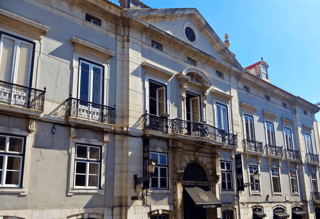
Quintela Palace
Lisboa
0.9km
manor, mansion
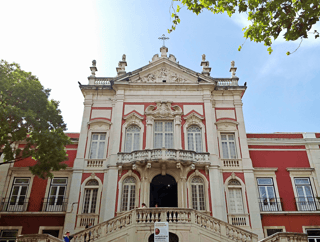
Bemposta Palace
Lisboa
1.1km
manor, mansion
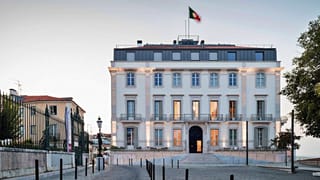
Palace of Santa Catarina
Lisboa
1.3km
manor, mansion
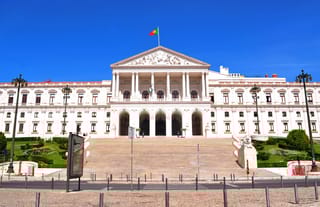
São Bento Palace
Lisboa
1.8km
manor, mansion
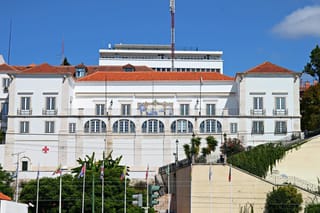
Palace of the Counts of Óbidos
Lisboa
2.8km
manor, mansion
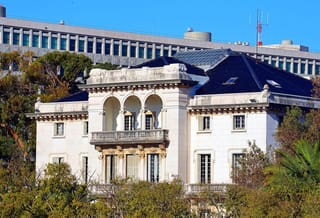
Mendonça Palace
Lisboa
2.8km
manor, mansion
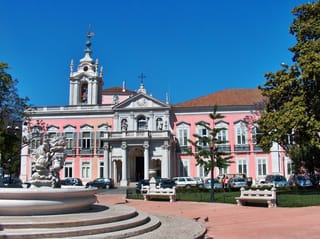
Necessidades Palace
Lisboa
3.3km
manor, mansion