Bemposta Palace
Lisboa Lisboa Portugal
manor, mansion
Palácio da Bemposta
Lisboa Lisboa Portugal
manor, mansion
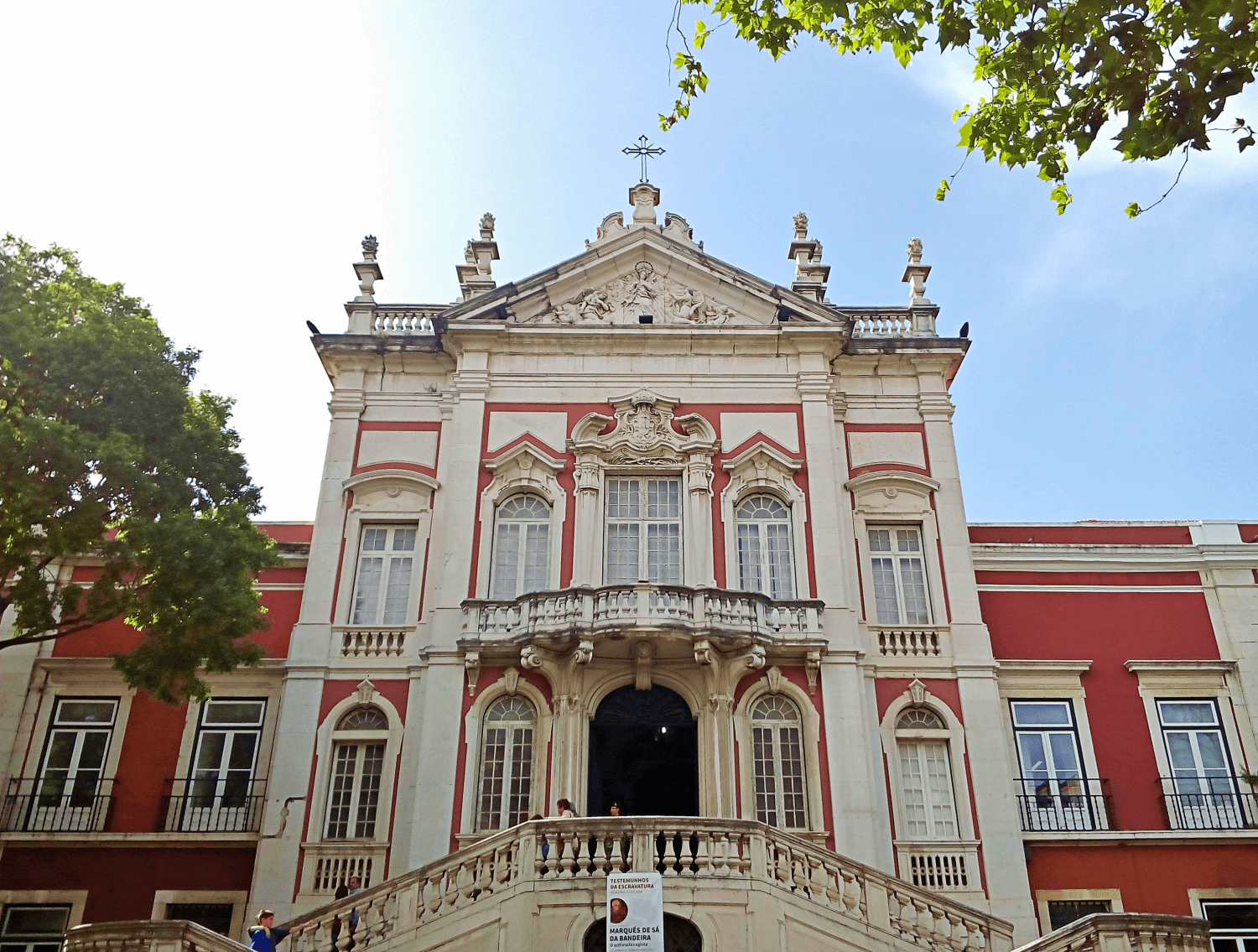
The Bemposta Palace (Palácio da Bemposta), also known as the Paço da Rainha (Queen’s Palace), is a neoclassical palace in the area of Bemposta, now the civil parish of Pena, in Lisbon
O Palácio da Bemposta, conhecido como Paço da Rainha, é um palácio situado em Lisboa onde está atualmente instalada a Academia Militar
Previous names
Bemposta Palace, Palácio da Bemposta
Description
The Bemposta Palace (Palácio da Bemposta), also known as the Paço da Rainha (Queen’s Palace), is a neoclassical palace in the area of Bemposta, now the civil parish of Pena, in Lisbon. It was originally built for Queen Dowager Catherine of Braganza on her return from London to Lisbon and served for many years as her residence. It was then transferred to the Casa do Infantado (the property of the younger son of the King of Portugal), before becoming the residence of John VI of Portugal until his death. After Queen Maria II of Portugal transferred its title to the Army, it became the Portuguese Military Academy.
History
Eight years after the death of Charles II of England (in 1685), who left no legitimate son as heir to the throne, Queen Catherine of Braganza, daughter of John IV, returned to Portugal in 1693. Without a home in Lisbon, she resided in the homes of various noblemen for a time, including the Count of Redondo in Santa Maria or the palace of the Count of Aveiras, in Belém. She decided to purchase from Francisca Pereira Teles, the noble homes and land in Bemposta area in the centre of Lisbon, in order to build her residence. A chapel dating back to 1501 existed there and she requested the architect, João Antunes (1642–1712), to incorporate a chapel in the site plan under the invocation of Nossa Senhora da Conceição (Our Lady of the Conception). The project began in 1694, with Antunes coming on board in 1702, and by 1702 the Queen had already begun to live in the palace. The building was a mixed construction: limestone and marble was used in many of the flourishes, but the structure was built of reinforced steel, wood and masonry.
Catherine died here on 31 December 1705, leaving in her will the Palace of Bemposta to her brother, King Peter II of Portugal, who in 1668 had become regent on behalf of his mentally unstable elder brother Afonso VI of Portugal and king in 1683. On 29 October 1706 a royal chapel was constructed.
In 1707, King John V, made the house and lands part of the House of the Infantado, so that it became the residence of the Portuguese monarchy's Infantes and Infantas of the realm, such as Infante Francis, Duke of Beja, King John V's brother and Lord of the Infantado, and his son João da Bemposta, named so for having resided in the palace.
After the 1755 Lisbon earthquake, the palace required extensive reconstruction, including the royal chapel, which was completely destroyed. Under the direction of Manuel Caetano de Sousa (1742–1802), the building was remodeled and an elaborate chapel was constructed, with a rectangular vestibule and nave and polychromatic mosaics. In main altar, a portrait of the Royal Family, Queen Maria I and the Infante John with the court, in an iconographic representation of Lisbon, seen from the Castle of São Jorge. The success of the chapel, came from the contribution of the woodworkers from the Church of São Roque (and in particular the Chapel of São João Baptista). A similar design esthetic was also brought in from the Royal Chapel in the Queluz Palace. The Bemposta Palace had its own singers (since 1759) that incorporated an organist and singers, that were contracted and regularly performed in Lisbon. But, the organ had already been spirited away to the Palace of Queluz by 1778.
The palace too began to be abandoned, as the royals move to other preferred lodgings: by 1798 the palace was already abandoned and falling into ruins.
In 1803, the Prince-Regent, (future King John VI) lived at Bemposta. Even after the return of the Royal Family, in 1821, John returned to Bemposta, and with the intent of making the residence more habitable, began various renovations in 1822, 1824 and 1825, principally in the rooms behind the chapel and on the floor near the gardens. At Bemposta the politics of King John VI's reign played-out: including the events of the insurrections known as the Vila-Francada and Abrilada, and his eventual death (he died in his personal quarters, on 10 March 1826).
In 1828, King Miguel began holding weekly audiences in the Palace.
The designation as Casa do Infantado was removed in 1833, and the Palace is incorporated into the Crown's property. Until 18 March 1834, a formal political administration occupied the Bemposta Palace, but it was vacated and returned to Crown estates under Queen Maria II. Yet, the Queen later transferred the palace to the Army in 1837, where, after 1851, it began to function as an Army Academy (after extensive remodelling in 1850–1851), where, under General Bernardo de Sá Nogueira de Figueiredo, 1st Marquess of Sá da Bandeira, the building was expanded and interior remodelled. In 1853, the chapel, until this time a private hermitage, began to be open to the faith community. With changes in the urban planning in Lisbon, the area in front of the palace became reduced, and traffic along the avenue resulted in the shortening of the main outside staircase in 1860 (with the widening of the road).
In 1944, there was a complete restoration of the chapel, followed in 1997 by a renovation of the electrical and fire prevention systems in order to meet safety standards.
On 13 September 1999, an analysis of the architectural state was begun by the Direcção-Geral dos Edifícios e Monumentos Nacionais (DGEMN) (General-Directorate for Buildings and National Monuments). The Palace pertains to the Portuguese Military Academy, and the coat-of-arms of Queen Catherine are still visible above the principal doors of the building.
In 2001, a monument to Queen Catherine was installed in front of the buildings façade.
Architecture
The Palace of Bemposta is located in the Largo do Paço da Rainha on the eastern border of Pena with Anjos. The principal building, used by the military academy, fronts the Largo (square) across from the clock-tower and Mitelo Palace, in proximity of the Quartel do Cabeço da Bola, Jardim do Campo Mártires da Pátria (Garden of Campo Mártires da Pátria) and Miguel Bombarda Hospital.
The front façade includes two staircases that ribbon towards the main floor and veranda with balusters. The main arched doorway are flanked by two sets of tall windows, while a secondary floor veranda with main window is also flanked by two other sets (the central window, which is much taller than the others, is surmounted by sculpted coat-of-arms of the royal family. This façade is completed by a triangular wall adorned by the relief of two seraphs adoring the Virgin Mary (by the sculptor Joaquim de Barros Laborão, surmounted by a cross above a plinth. In the chapel's atrium there are two niches with statutes of Elizabeth of Portugal and John the Baptist (begun by José de Almeida and completed by Barros Laborão).
Chapel
In the main chapel, there is a figure of the patron saint by the painter José Troni, with pictures of the Royal family in the foreground (including Maria I, John VI and Carlota Joaquina) completed by the English painter Thomas F. Hickey. On the ceiling of the chapel, in an ovular mould, there is a painting of the Virgin attributed to Pedro Alexandrino de Carvalho (1730–810). Along the lateral walls are pulpits delimited by balusters, while on the left side the organ. The lateral altars, with the exception of the second epistle, are marked by the acronym of Pedro Alexandrino. On the roof, in the middle of a complex Baroque scene is a painting by Pedro Alexandrino representing the Assumption of Mary, encircled by a crown of cherubs and four doctors of the church: Saint Augustine, Saint Ambrose, Saint Gregory Magno and Saint Jerome, while the painter also complete a painting of the Transfiguration on the roof of the chapel. The sacristy, with access on the left-side of the main altar, is covered in polychromatic azulejos, with a credence table made from Brazilwood.
O Palácio da Bemposta, conhecido como Paço da Rainha, é um palácio situado em Lisboa onde está atualmente instalada a Academia Militar.
História
Depois de em 1685 Carlos II, Rei de Inglaterra ter morrido sem descendência legitima, a sua mulher, filha de D. João IV, a rainha D. Catarina de Bragança regressou a Portugal em 1693. Sem morada própria em Lisboa, a viúva decide adquirir a D. Francisca Pereira Teles as casas nobres e a vasta quinta agregada, não longe do centro de Lisboa e construiu, nesse sítio da Bemposta, o Paço da Rainha.
Anteriormente, existia já uma outra capela datada de 1701, e da autoria do arquiteto João Antunes (1642-1712).
D. Catarina faleceu em 1705 tendo deixado, em testamento, o Palácio da Bemposta ao seu irmão rei D. Pedro II.
É neste Palácio que, durante os dois períodos em que foi Regente do Reino de Portugal, deu despacho. Pela primeira vez, em 1704, em virtude de seu irmão, o Rei D. Pedro II, ter marchado com o Exército que apoiava o Arquiduque Carlos de Áustria na Guerra de Sucessão de Espanha: pela segunda em Janeiro de 1705, durante a doença de seu irmão.
Mais tarde, o rei D. João V, em 1707, doou à Sereníssima Casa do Infantado todas as dependências do palácio e Quinta da Bemposta. Como tal, neste palácio (Casa do Infantado) habitaram alguns infantes entre os quais o Infante D. Francisco (irmão de D. João V) e um dos seus filhos naturais, conhecido por D. João da Bemposta. E o infante D. Pedro III, irmão de D. José.
No terremoto de 1755 o palácio sofreu muitos danos procedendo-se de imediato à sua reconstrução. O novo risco, é da autoria de Manuel Caetano de Sousa que revelou sinais de uma originalidade: na nave e no vestíbulo retangular, na existência do arco triunfal e no pavimento em mosaico policromático. No altar-mor, o quadro com a família real, D. Maria I e D. João VI entre a corte e uma apresentação iconográfica de Lisboa, vendo-se ao longe o Castelo de São Jorge. O sucesso da capela deve-se em parte, ao trabalho dos entalhadores, que trouxeram consigo as experiências adquiridas na Igreja de São Roque, nomeadamente na capela de São João Batista, semelhanças que se encontram também na Capela Real do Palácio de Queluz.
Em 1803 aqui habitava e tinha a sua corte o príncipe regente D. João, futuro Rei D. João VI. Já depois do regresso da Família Real, em Junho de 1821, D. João VI voltou para o Palácio da Bemposta no qual, com o objetivo de o tornar mais habitável, mandou realizar várias obras nos anos de 1822, 1824 e 1825, principalmente nos quartos por detrás da Capela e no andar nobre voltado para a parte do jardim.
Neste palácio desenrolaram-se os factos políticos mais importantes da época de D. João VI como sejam os decorrentes da chamada Vila-Francada e os da Abrilada e aqui morreu D. João VI, em 10 de março de 1826.
A "Junta e Administração" da Sereníssima Casa do Infantado estiveram estabelecidas em algumas dependências do Palácio desde que o Infante D. Pedro (depois D. Pedro III) tomou posse de seus bens, até à sua extinção por Decreto de 18 de março de 1834. Por este Decreto voltou o Paço da Rainha a pertencer à Coroa e assim D. Maria II pôde, por Decreto de 9 de dezembro de 1850, destinar o Palácio e a Quinta à Escola do Exército, fundada em 12 de janeiro de 1837 pelo General Bernardo de Sá Nogueira de Figueiredo, Marquês de Sá da Bandeira que realiza grandes obras de alteração dos espaços, para servir a nova utilização do edifício, a Academia Militar, a qual estivera antes instalada então no Palácio dos Condes de Murça à rua de Santo António dos Capuchos.
Por cima das portas da entrada principal da Academia Militar ainda hoje se pode ver o brasão de armas da Rainha D. Catarina. As armas em lisonja partidas, o primeiro de Inglaterra, Escócia e Irlanda e o segundo de Portugal entre dois tenentes - leão e licorne.
Aposentos
Átrio, trata-se de um espaço de entrada amplo, com paredes decoradas com vários painéis de azulejos datados de 1918, representando cenas militares da história de Portugal e alusivos às armas do exército (artilharia a pé e de campanha, engenharia, cavalaria e infantaria) e ao serviço de administração militar, da autoria de Jorge Colaço, pintor e ceramista português. No meio destes existem vitrais representando as ordens militares portuguesas, nomedamente a Ordem Militar de Avis e a Ordem Militar de Cristo.
Sala do Conselho Académico, nesta grande sala estão patentes os retratos a óleo dos comandantes da Escola Militar, desde a data da sua fundação, apresentados por ordem cronológica. As pinturas são de autores renomados, nomeadamente, Abel Manta, Henrique Medina, Maluda.
Biblioteca da Academia Militar, sala com mezanine, decorada com móveis de madeira escura e detalhes em vermelho, mesas com abajur e cadeiras de veludo vermelho. O acervo da biblioteca, constituiu-se inicialmente, a partir de um conjunto de obras pertencentes à Academia Real de Fortificação, Artilharia e Desenho, fundada em 1790, no reinado de D. Maria I. A biblioteca é significativamente enriquecida em 1839 com obras provenientes das livrarias dos conventos cujas ordens religiosas foram extintas em 1834. Na biblioteca está também o espólio do Marquês Sá da Bandeira, composto por aproximadamente 3.000 livros.
Salão Nobre, o salão é composto por uma grande mesa, ladeada por cadeiras. As paredes são preenchidas com azulejos com motivos florais de finais do Séc. XVII / início Séc. XVIII. É neste salão que se realizam as sessões académicas.
Useful information
Free
Palace Chapel
- It is used by the Portuguese Military Academy
- Visiting is possible only at certain time
-
Nearby castles
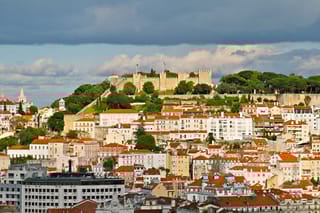
São Jorge Castle
Lisboa
1.1km
castle, chateau
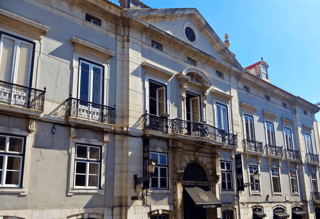
Quintela Palace
Lisboa
1.5km
manor, mansion
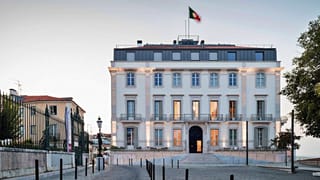
Palace of Santa Catarina
Lisboa
1.7km
manor, mansion
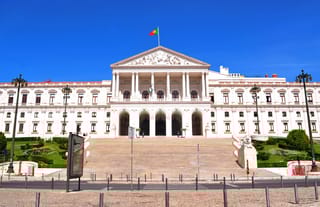
São Bento Palace
Lisboa
1.8km
manor, mansion
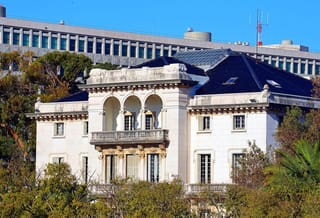
Mendonça Palace
Lisboa
1.8km
manor, mansion
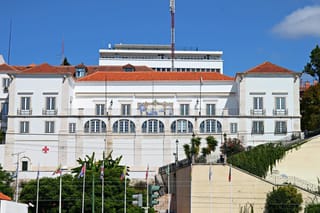
Palace of the Counts of Óbidos
Lisboa
3.0km
manor, mansion
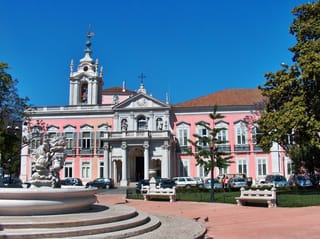
Necessidades Palace
Lisboa
3.4km
manor, mansion