Castle of Alandroal
Alandroal Évora Portugal
castle, chateau
Castelo do Alandroal
Alandroal Évora Portugal
castle, chateau
The Castle of Alandroal (Portuguese: Castelo do Alandroal) is a medieval castle in the civil parish of Alandroal (Nossa Senhora da Conceição), São Brás dos Matos (Mina do Bugalho) e Juromenha (Nossa Senhora do Loreto), municipality of Alandroal, Portuguese district of Évora, classified as a National Monument
O Castelo do Alandroal, no Alentejo, ergue-se na vila do Alandroal, freguesia de Nossa Senhora da Conceição, distrito de Évora, em Portugal
Previous names
Castle of Alandroal, Castelo do Alandroal
Description
The Castle of Alandroal (Portuguese: Castelo do Alandroal) is a medieval castle in the civil parish of Alandroal (Nossa Senhora da Conceição), São Brás dos Matos (Mina do Bugalho) e Juromenha (Nossa Senhora do Loreto), municipality of Alandroal, Portuguese district of Évora, classified as a National Monument.
History
The Gothic castle of Alandroal was one of the military constructions during the reign of King D. Denis, dated from several inscriptions and commemorative plaques located within the fortress. The first dates to 6 February 1294 and is situated over the gates of the fortress. These plaques indicate that the project promoter was the Master of the Order of Avis, then D. João Afonso, who was responsible for placing the first stone on that date. The second plaque recalls the placing of the first cornerstone in 1294, by Lourenço Afonso, 9th Master of the Order of Avis, their founder, located in the western part of the keep tower. The construction of the fortification continued until 1298 and were attributed to a Moor, named Galvao, illustrating a distinction between Moorish adversaries of the time and common workers.
Between 1383 and 1385, Pedro Rodrigues, was the alcalde of the fortress. Yet, in the following years, Alandroal played little role in the organization of the military lines of the region, and it quickly began to decline.
By 1606, the interior of the castle, including the residential spaces were already in a considerable state of ruin. But, in 1774, the construction of the clock tower had already preceded indicating a level of recuperation at the site.
The barbican was destroyed in 1778 and materials from the site were used in the construction of the new municipal buildings. Between 1786 and 1793, the comarca's jail was constructed, resulting in the eventual demolition of the tower and primitive belfry (where the clock was installed).
The DGEMN undertook significant rebuilding and restoration on site between 1943 and 1946, as well as 1958, to restore the military square and several of the fortified wall. This included the restoration of the keep tower and demolition of some homes in order to open-up the castle spaces. The staircases along the battlements were regularized and stabilized, with reconstruction occurring on many of the rises. Modern projects in 1980 and 1986 also attempted to stabilize the foundation and clear plant infestants that covered the site, in addition to masonry repairs to improve water flow along the walls, merlons and tower near the Church of the Misericórdia.
The decaying structure was placed under the stewardship of the Instituto Português do Património Arquitetónico (IPPR) on 1 June 1992 (Decree 106F/92, Diário da República, Série 1A, 126).
Architecture
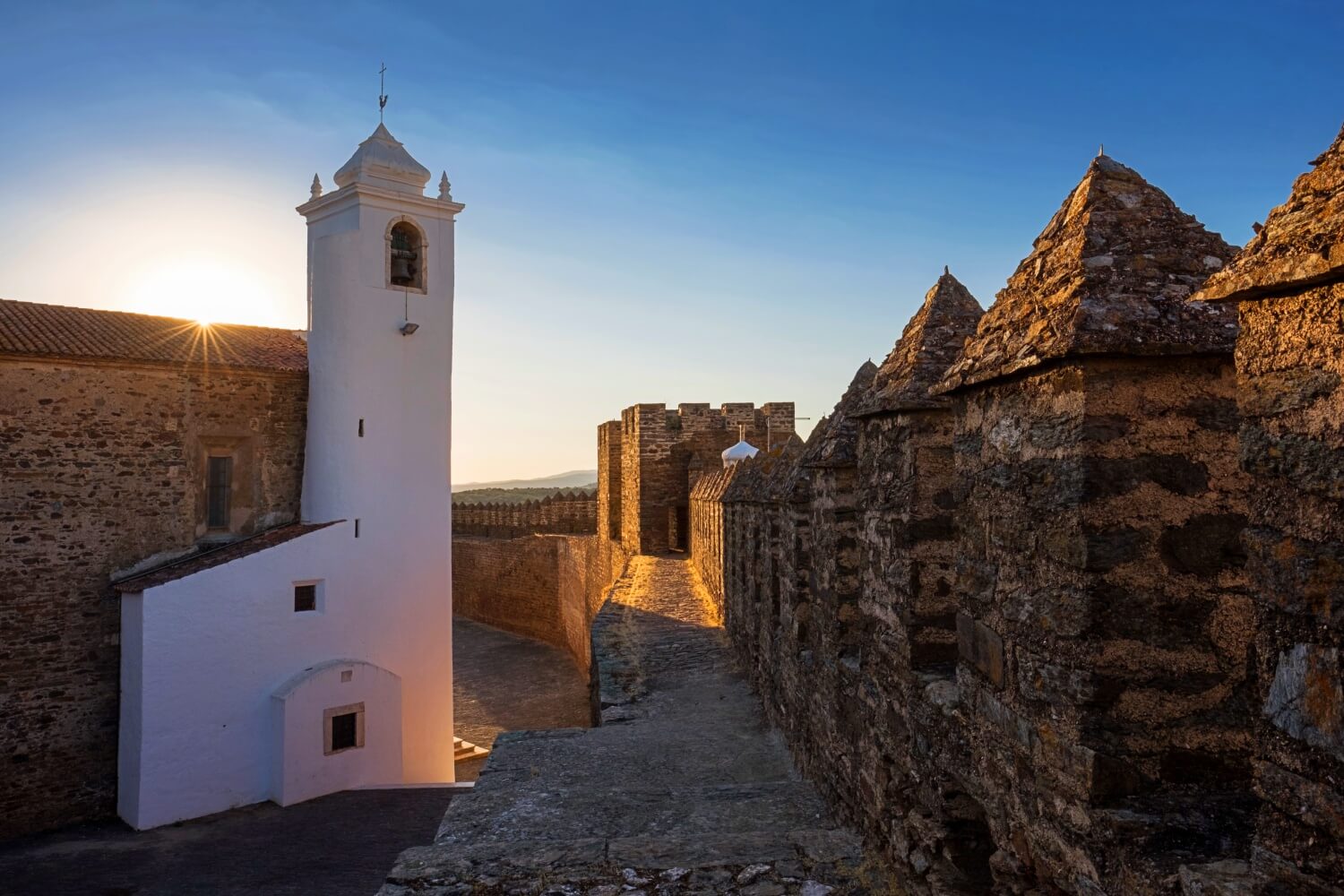
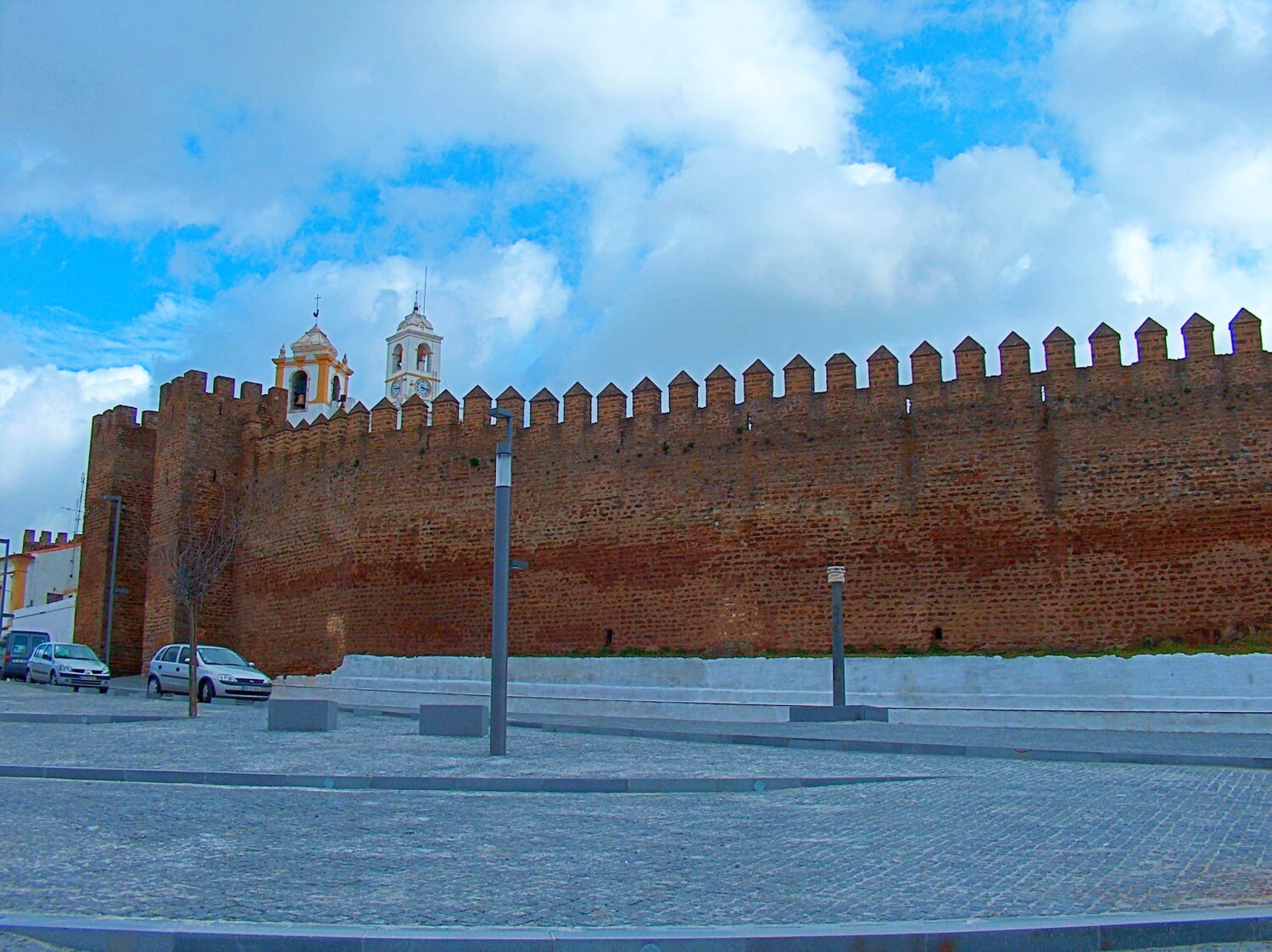
The castle is situated on the most elevated point of the town of Alandroal. Dating back to the 13th century, this medieval fortress is typical of the Gothic fortifications of the period based on an oval design, with keep addorsed to a circuit of walls and gate (designated the Legal Gate), protected by two rectangular towers, slightly advanced to allow protection at the entranceway. Originally, the castle included a small quarter within its walls divided by a singular roadway (the Rua do Castelo) oriented west to east and flanked by two gates (the aforementioned Legal Gate and the Arrabalde Gate).
The keep tower is a rectangular structure divided into three floors, whose interior access has been sealed. This doorway provided access (sometime later in its history) to the matriarchial church at the location (sometime in the 18th century). At the top of the keep tower, a clocktower was implanted, that included three bronze bells.
The military square has two lateral staircases that lead to the battlements. The traitor's gate (today obstructed) crosses the Cadeia forte (Jail Fort), named for the addorsed western structure used as the jailhouse for regional comarca (a rectangular tower with grated and gross windows). The tower of this forte has a rectangular plan and rectangular dependency with stone balcony (to the west) with arch and sculpted capitals.
O Castelo do Alandroal, no Alentejo, ergue-se na vila do Alandroal, freguesia de Nossa Senhora da Conceição, distrito de Évora, em Portugal.
História
Antecedentes
Não existem informações acerca da primitiva ocupação humana de seu sítio.
O castelo medieval
Erguido sob o reinado de D. Dinis (1279-1325), de acordo com a inscrição epigráfica sobre uma das portas, a sua primeira pedra foi lançada em 6 de Fevereiro de 1294 por D. Lourenço Afonso, Mestre da Ordem de Avis. Uma segunda inscrição, no alçado Oeste da Torre de Menagem (hoje integrado na Sala do Tesouro da Igreja Matriz), informa a conclusão de sua edificação, em 24 de Fevereiro de 1298, sendo Mestre da Ordem, o mesmo D. Lourenço Afonso. Uma terceira inscrição, no torreão à direita do portão principal, datada críticamente entre 1294 e 1298, refere o nome do seu construtor, que se identificou apenas como "Eu, Mouro Galvo".
O Alandroal foi elevado à condição de vila por Carta de Foral de 1486, outorgada por D. João II (1481-1495). Nessa qualidade, no reinado de seu sobrinho e sucessor, D. Manuel I (1495-1521), a vila e seu castelo encontram-se figurados por Duarte de Armas (Livro das Fortalezas, c. 1509).
Do século XVII aos nossos dias
Em 1606, a maior parte das construções no interior da cerca encontravam-se arruinadas. No século XVIII, o conjunto perdeu a sua barbacã, demolida para dar lugar, no interior dos muros, às edificações dos novos Paços do Concelho e da Cadeia da Comarca.
Considerado como Monumento Nacional por Decreto de 16 de Junho de 1910, apenas na década de 1940 se procederam a obras de consolidação e restauro, principalmente a reconstrução de alguns troços de muralhas e a desobstrução da estrutura de numerosas casas que, ao longo dos séculos, se haviam adossado às muralhas.
Características
Em estilo gótico, o castelo apresenta planta oval (na qual se inscreve um pequeno bairro intra-muros), reforçada por três torres de planta quadrangular, nos ângulos, e uma sólida Torre de Menagem adossada à cerca. O portão principal (Porta Legal) é ladeado por duas torres quadrangulares, ligeiramente avançadas (para permitir o tiro vertical sobre a entrada), ligados por uma cortina e encimadas por ameias de remate piramidal.
A Torre de Menagem, de planta quadrangular, divide-se internamente em três pavimentos. O acesso ao seu interior encontra-se, atualmente, entaipado. A esta torre, adossou-se, ainda no século XIII, a Igreja de Nossa Senhora da Graça, que alterada posteriormente, hoje apresenta traços renascentistas, patentes particularmente na abóbada artesoada. Em 1744, o terraço da Igreja foi aproveitado para edificar a Torre do Relógio.
Ao castelo, em posição dominante, associava-se a cerca da vila, de urbanismo muito simples, com uma única via (rua do Castelo) no sentido leste-oeste, flanqueada por duas portas. A principal, denominada Porta Legal, a leste, através da qual se acede ao adro da igreja, é constituída por um arco gótico com corredor, flanqueada por dois torreões quadrangulares ligados por cortina e encimados por ameias de remate piramidal. Parte daqui a única rua que atravessa a vila e que termina na chamada Porta do Arrabalde, a oeste, com seteiras em mármore e também flanqueada por uma torre, onde no seu pé-direito, no exterior, foi gravada a “vara”, medida padrão à época, para a aferição das medidas utilizadas no comércio local.
Os estudiosos apontam ainda, como marcas identificativas da formação cultural islâmica de seu construtor, além da epigrafia anteriormente citada, uma janela em forma de ferradura numa das torres e semelhanças entre o sistema de torres deste castelo e as muralhas almóadas de Sevilha.
Useful information
Free
Free
Great view
Tha Castle has a church inside
-
Nearby castles
Castle of Vila Viçosa
Vila Viçosa
8.8km
castle, chateau
Castle of Terena
Évora
8.9km
castle, chateau
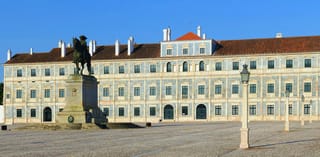
Ducal Palace of Vila Viçosa
Vila Viçosa
9.1km
manor, mansion
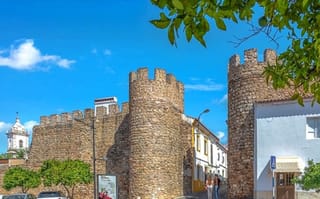
Castelo de Borba
Borba
12.4km
castle, chateau

Castle of Redondo
Redondo
13.5km
castle, chateau
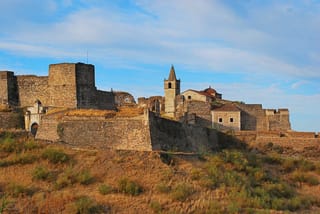
Fortaleza de Juromenha
Évora
14.7km
fortress
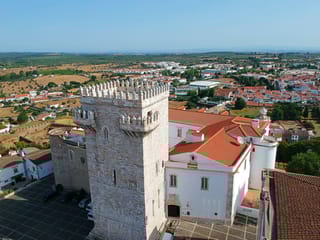
Castelo de Estremoz
Estremoz
22.6km
castle, chateau