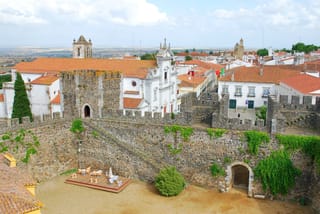
Castle of Vidigueira
Vidigueira Beja Portugal
castle, chateau
Castelo da Vidigueira
Vidigueira Beja Portugal
castle, chateau
The Castle of Vidigueira is a castle in the civil parish of Vidigueira in the municipality of Vidigueira in the Portuguese subregion of Baixo Alentejo
O Castelo da Vidigueira, também referido como Paço dos Gamas, no Baixo Alentejo, localiza-se na vila, freguesia e concelho de Vidigueira, distrito de Beja, em Portugal
Previous names
Castle of Vidigueira, Castelo da Vidigueira
Description
The Castle of Vidigueira is a castle in the civil parish of Vidigueira in the municipality of Vidigueira in the Portuguese subregion of Baixo Alentejo. Although constructed in the first half of the 15th century, it is more commonly associated with the first of the Counts of Vidigueira: Vasco da Gama.
History
The first Donatary of Vidigueira and castle was Mestre Tomé, treasurer of the Sé Cathedral of Braga during the reign of Afonso III of Portugal, making the construction of the castle part of the repopulation strategy of the 13th century. Mestre Tomé, sometime supplier for the old Matriz church of the settlement, erected and reinforced the castle as a bastion of the defense line of the Guadiana, an important line between Portugal and Castile. A few decades later, at the beginning of the 14th century, King Denis recovered the village of Vidigueira for the Crown of Portugal. In 1385 King John I offered Vidigueira to his constable, Nuno Álvares Pereira. Through his daughter's (D. Beatriz Pereira Alvim) marriage, with D. Afonso, Count of Barcelos and first Duke of Braganza, the castle and courtyard in Vidigueira passed into the possession of the House of Braganza, one of the more opulent in the kingdom.
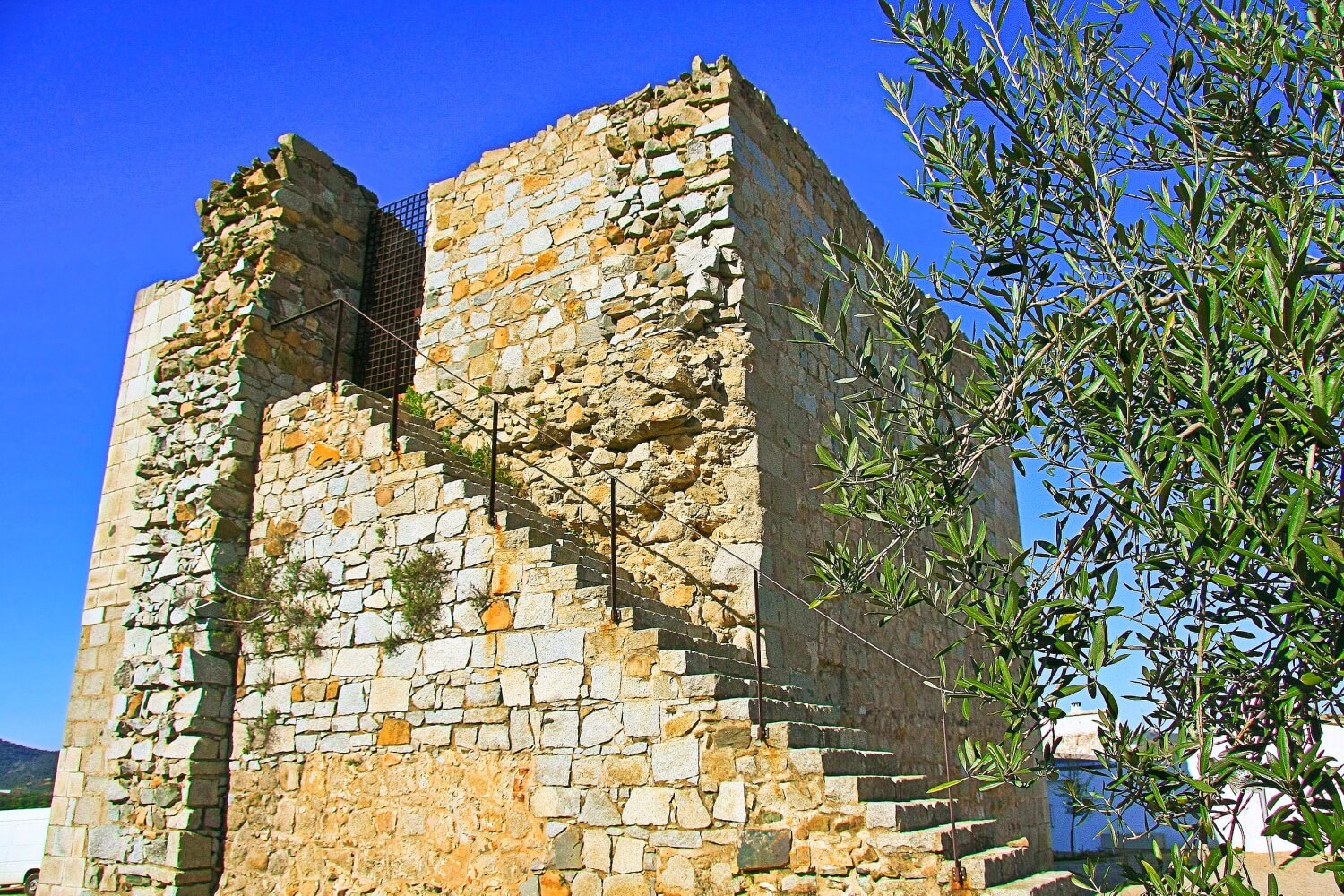
The fortified rectangular tower, which today can still be appreciated, albeit the state of ruin, dates from the signeurial holdings of Fernando I, Duke of Braganza, in the first half of the 15th Century. With the confiscation of the properties and possessions of the House of Braganza, in 1483, the holdings were re-obtained by the Crown of Portugal, until its annulment in 1500, by Manuel I of Portugal. King Manuel, at that time, signed a foral for the town of Vidigueira, around 1512. But, little time passed, before the same monarch conceded to Vasco da Gama, then Admiral of India, the title of first Count of Vidigueira, compensating the navigator for his adventures.
Once again, the castle left the possession of the House of Braganza; on 7 November 1519, Vasco da Gama signed a contract to sell and renounce these possessions, in favor of the House of Braganza. From Évora the Palace of Vidigueira was transferred, including the not only the palace annex and fortifications. Of this palace, which was an important structure, nothing remains of this structure, except the Manueline window, brought from the Vila de Frades, a possession of the Counts of Vidigueira at the time.
On 1 June 1992, the structure was transferred into the possession of the Instituto Português do Património Arquitectónico (IPPAR) (by Decree 106F/92).
Architecture
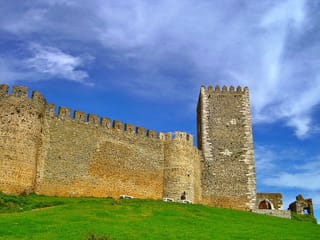
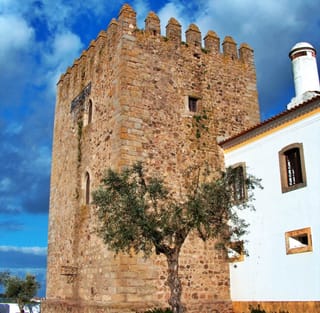
The castle is located in an urban context, isolated on a plateau. It is situated on the western side of the town, within the urban area, with several buildings/structures surrounding it. Alongside the tower is a Manueline window brought from Vila de Frades, which was judged to have been from the Palace of the Counts of Vidigueira.
A rectangular tower, the castle is a vertical block, with little ornamentation such as merlons. The tower that remains, known as the Atalaia das Vidigueiras, is a soft construction, regularly built, and altered with successive interventions. In a state of partial ruin, there are no coverings to protect what remains, nor merlons to crown the parapets. To the southwest is the beginnings of a wall, today transformed into a staircase, for access to the structure. In the southeast, is a sculpted stone with the coat-of-arms of the Counts of Vidigueira. The coat of arms includes a shield in the centre, with five smaller shields placed in a cruciform.
O Castelo da Vidigueira, também referido como Paço dos Gamas, no Baixo Alentejo, localiza-se na vila, freguesia e concelho de Vidigueira, distrito de Beja, em Portugal.
Integrante da Linha do Guadiana no século XIII, o castelo, do qual nos restam as ruínas da torre de menagem, terá sido adaptado a residência dos condes da Vidigueira.
História
Antecedentes
Alguns autores consideram que a primitiva origem da povoação remonta a uma antiga fortificação romana, posteriormente ocupada à época da Invasão muçulmana da Península Ibérica.
O castelo medieval
À época da Reconquista cristã da Península Ibérica, a povoação foi conquistada por forças portuguesas, sob o reinado de D. Sancho II (1223-1248), em 1235. Entretanto, a primeira referência documental sobre a Vidigueira data de 1255, momento em que, sendo fundado o Mosteiro de São Cucufate, foi instituída a respectiva paróquia, bem como fixados os seus limites, fazendo-se nessa escritura menção desta povoação.
Como parte da estratégia de repovoamento da região fronteiriça do rio Guadiana promovida por D. Afonso III (1248-1279), a povoação e seus domínios foram doados a Mestre Tomé, tesoureiro da Sé de Braga, que terá feito erguer o castelo, assim como a antiga matriz, a Igreja de Santa Clara.
De 1304 a 1315, segundo documenta a escritura então lavrada, o domínio da vila da Vidigueira voltou para a Coroa, na pessoa do rei D. Dinis.
No contexto da crise de 1383-1385, D. João I (1385-1433) incluiu-a nos vastos domínios então doados ao contestável D. Nuno Álvares Pereira (1385). Passando por herança para a sua filha, D. Beatriz Pereira Alvim, quando do matrimónio desta com D. Afonso I de Bragança, 8º conde de Barcelos e 1º duque de Bragança, o termo de Vidigueira e seu castelo passaram a integrar os domínios da poderosa Casa de Bragança. D. Fernando, 2º duque de Bragança, terá sido o responsável pela construção da atual torre de menagem, na primeira metade do século XV. Com o confisco dos bens da Casa de Bragança (1483), os seus domínios reverteram para a Coroa.
Sob o reinado de D. Manuel I (1495-1521), o processo contra os Braganças foi anulado (1500), tendo o soberano outorgado foral à vila (1512). Poucos anos mais tarde, por carta passada em Évora, em 1519, o soberano concedeu a D. Vasco da Gama, Almirante da Índia, em recompensa por serviços prestados, o título de conde da Vidigueira, com todas as honras, graças e privilégios que tinham os condes do reino. Em 7 de Novembro de 1519 o Gama assinou um contrato de "promutaçam vemda e escaybo e Renuciaçam" com o duque de Bragança, mudando-se do Paço de Évora para o Paço da Vidigueira, palácio anexo à fortificação.
Do século XX aos nossos dias
As ruínas da Torre de Menagem, também conhecida como Atalaia das Vidigueiras, integrante do antigo Paço dos Gamas encontram-se classificadas como Imóvel de Interesse Público por Decreto publicado em 3 de Junho de 1970.
Características
Embora não haja mais informações disponíveis acerca do castelo, chegaram-nos as ruínas da sua robusta Torre de Menagem, de planta quadrada, com estrutura maciça em aparelho regular. Bastante alterada por sucessivas intervenções ao longo dos séculos, os vestígios do paramento da muralha foram transformados em escadaria de acesso. Encontra-se atualmente sem cobertura, e não é possível identificar se chegou a possuir coroamento por merlões. Em um dos alçados figura uma pedra de armas, de colocação mais recente, com as armas dos condes da Vidigueira.
Do antigo paço, nada resta, com a possível exceção de uma janela geminada, no estilo manuelino.
Na Torre do Relógio da povoação conserva-se a memória do navegador Vasco da Gama, uma vez que o sino, com as armas dos Gamas, foi oferecido à vila pelo conde da Vidigueira.
Useful information
Free
Free
Ruins of the castle
-
Nearby castles