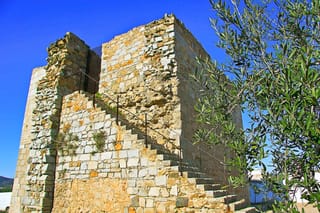
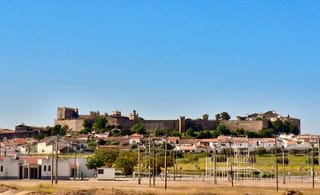
Castle of Beja
Beja Beja Portugal
castle, chateau
Castelo de Beja
Beja Beja Portugal
castle, chateau
The Castle of Beja (Portuguese: Castelo de Beja) is a medieval castle in the civil parish of Beja, municipality of Beja, Portuguese district of Beja
O Castelo de Beja, no Alentejo, ergue-se sobre a cidade, concelho e distrito de Beja, em Portugal
Previous names
Castle of Beja, Castelo de Beja
Description
The Castle of Beja (Portuguese: Castelo de Beja) is a medieval castle in the civil parish of Beja, municipality of Beja, Portuguese district of Beja.
History
This region of the Alentejo had been settled since pre-history by disperse tribes, but it was first mentioned in the writings of Ptolemy and Polybius. But, it was sometime between the beginning of the 3rd century and the end of the 4th century, that the walls of Pax Julia were constructed; part of the Roman arch (Évora Gate) dated from this general construction in the Roman provinces. Its importance within the region continued during the Suebi era, Visigothic settlement and Moors occupation of the Iberian peninsula.
During the Reconquista from the Moors, the region was first conquered in 1159 by the forces of King Afonso Henriques (1112-1185), but it was abandoned four months later by his forces.
In 1253, King D. Afonso III began work on reconstructing the fortress, which was already a severe stage of degradation. A foral (charter) was issued to Beja in 1254.
Around 1307, a tower was constructed along the wall, as indicated in an inscription carved into decorated ashlar masonry, in the form of a Portuguese shield, and dating to the Visigoth occupation.
King D. Dinis ordered the construction of the keep tower in 1310, following the issue of new charter. Work on the walls proceed from 1347, under the overseer João Domingues de Beja and Afonso Mendes (from an inscription).
The village supported the King John I during 1383-1385 Portuguese succession crisis.
At the beginning of the 16th century, King D. Manuel I began a project to improve the fortification, that possibly included the construction of the vaulted ceiling in the keep tower. During this time, a second larger gate was constructed between the Roman arch (which had disappeared) and the Hospital of Misericórdia. A project to reinforce the bastions was initiated in 1664 by Nicolau de Langres, approved by Luís Serrão Pimentel (Royal engineer and cosmographer) and General Agostinho de Andrade Freire. Between 1669 and 1679, the endeavour was supervised by engineers João Coutinho, Diogo de Brito de Castanheda and Manuel Almeida Falcão.
In 1790, part of the fortifications were demolished in order to construct the new church of the (extinct) Colégio dos Jesuítas, for the Episcopal See.
In the early nineteenth century, following the outbreak of the Peninsular Wars, the city of Beja opposed Napoleonic troops, and as a result, the forces under the command of General Jean-Andoche Junot in 1808, killed about 1,200 people in the region.
Most of the work accomplished on the site were associated with 1854, following the events of the Liberal Wars, when the region was devastated.
In 1867, the Moorish Gate was reconstructed, but two years later, the New Gate of Évora was demolished, since it affected/impeded transit. Similar issues resulted in the demolition of the Hermitage of Nossa Senhora da Guia and Romana arch of the Aviz Gate in 1893.
20th century
The Portuguese government classified the castle as National Monument by Decree published on 16 June 1910. In order to recuperate the architectural heritage, in 1938 the Roman arch (Évora Gate) was reconstructed and the fortification walls rebuilt from the backyards and homes that intersected the old lines. This involved the removing obstructions, consolidation of the Gate, reconstruction of the Alcácçova and Roman arch. Over time there were various individual projects: in 1965, work on the keep tower; in 1969, consolidation of the tower and walls between Rua das Portas Aljustrel and Rua da Liberdade; between 1970-1973, consolidation between castle and Avis Gate; between 1980-1981, recuperation of the castle, Aviz Gate and keep; and in 1982, general work on the walls. This movement culminated in the 1960s study to re-landscape and integrate the old fortifications into aesthetic of the town, undertaken by architectural landscaper António Viana Barreto.
A competition was initiated on 16 March 2004, sponsored by the DGEMN/DREMS, to recuperate the area that included the castle, supported the following year (September), by a risk assessment study by the DGEMN. This work had begun in 2003, with the clearing of built vegetation accumulated in the walls, battlements and joints, and the repair of these segments with lime mortar and sand, as well as the treatment of parapets and adarves. The municipal council continued between 2007 and 2008, with the removal of evasive plants, cleaning of bird droppings and the construction of structures to impede further destruction by birds. This work lead to the implementation of a February 2008 program to reuse the former Governor's Residence into a military museum, tourist centre and cafeteria.
The first archaeological excavations were initiated in 2008 by the municipal authority of Beja. In November 2014, due to issues of safety and security, the keep tower was closed to the public, following the collapse of a balcony. It was only reopened on 19 July 2016. Between 2014 and 2015, archeological excavations were undertaken at the top of the hilltop of Outeiro do Circo, that also included conservation of the keep tower. The following year, in March, during work in the park of Vista Alegre, archaeological vestiges of a gate and former-Roman wall, and in August, further excavations were initiated in Outeiro do Circo along the northwest wall, associated with the late Bronze Age fortification. A joint project between the Câmara Municipal of Beja and the DRCAlentejo continued to work on conservation in the keep tower, costing 500,000 Euros, that included a 2016 project to recuperate the walls of the Terreirinho das Peças, for 71,000 Euros.
Architecture
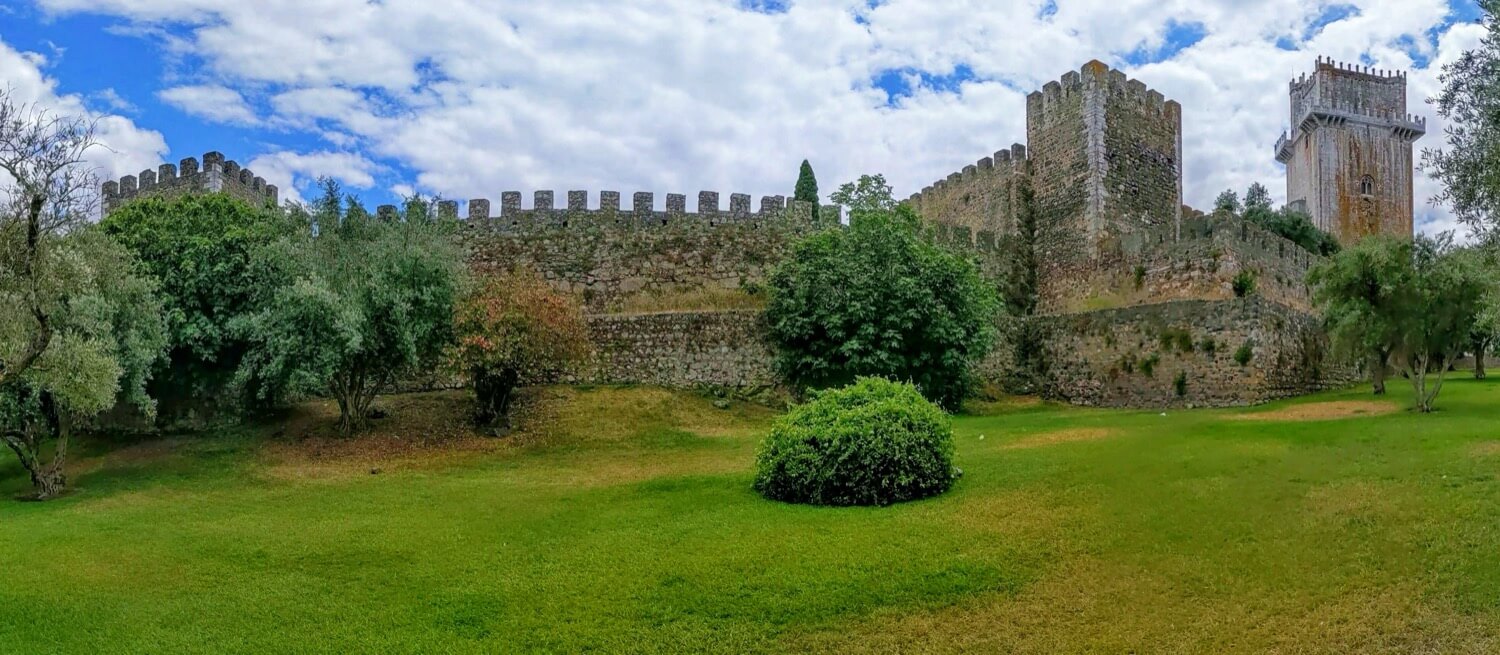
The remnants of the castle are situated on a hilltop, along which extends the wall fortifications of the city Beja, encircled by landscaped gardens. Immediately nearby are the Sé Cathedral, Chapel of Santo Amaro, the building of the Hospital da Misericórdia, residences of the Guedes and Campos families, and municipal palace.
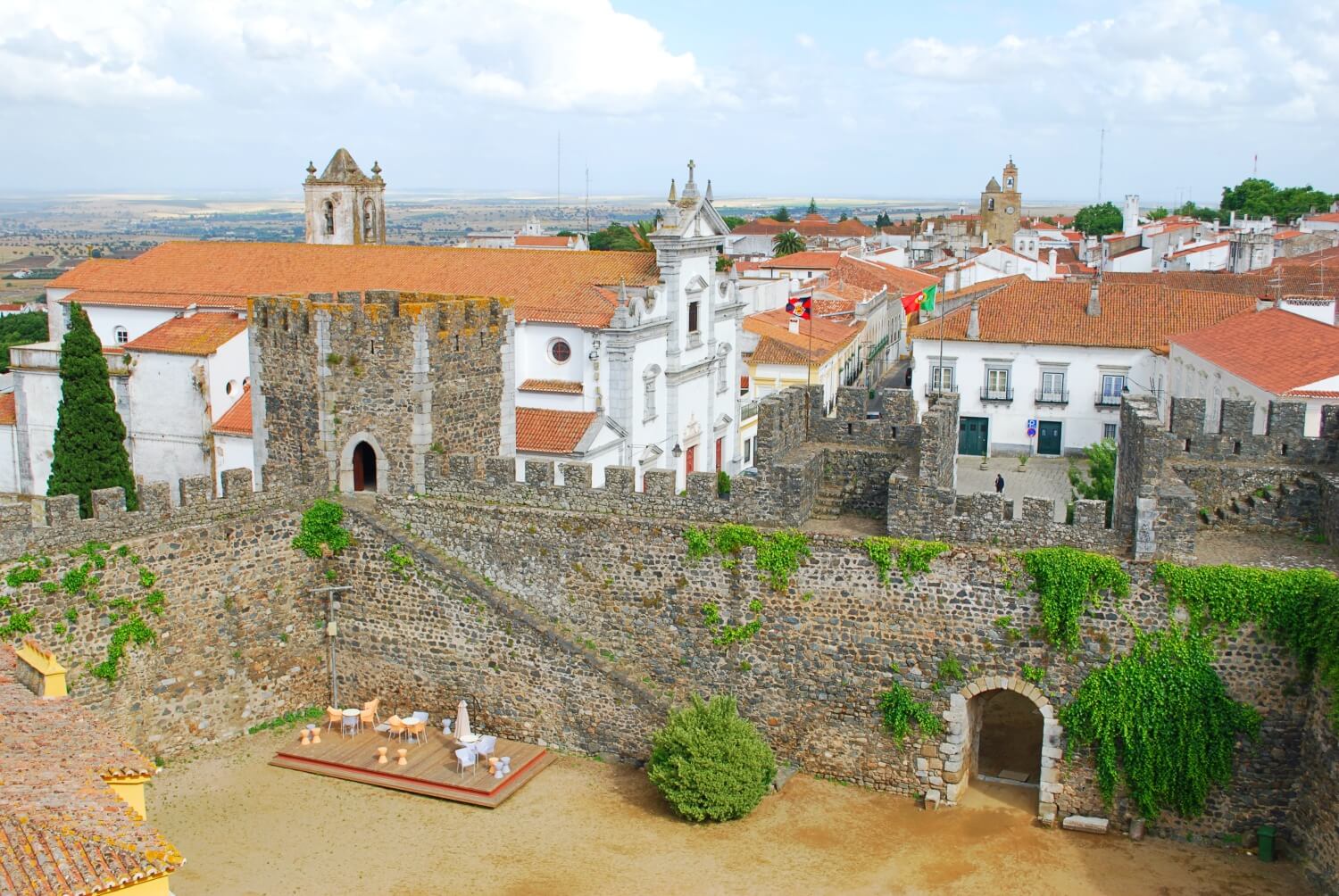
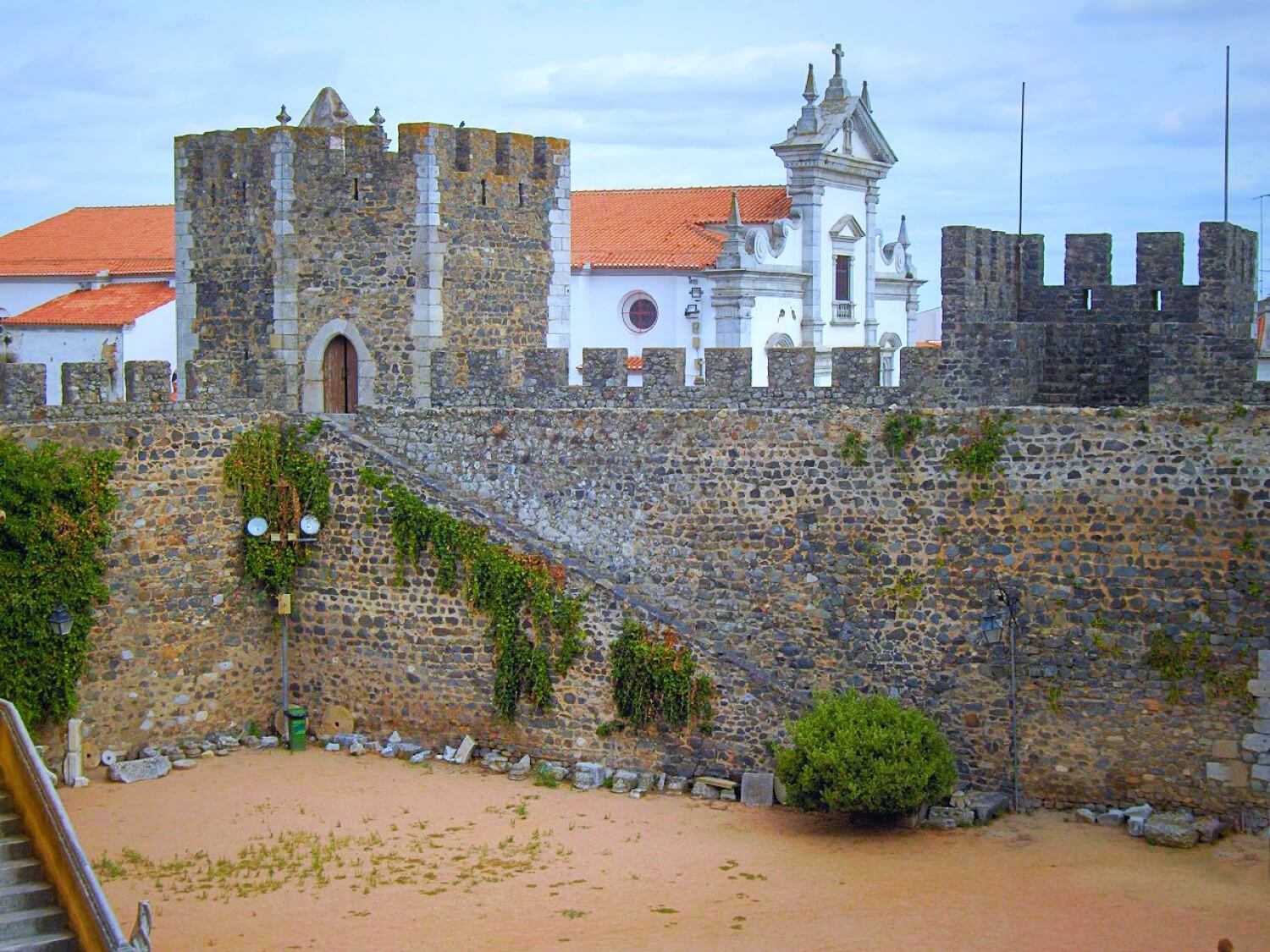
The castle is the principal nucleus of a group of fortifications that encompass the medieval city, implanted in its northwest corner. It is an irregular pentagonal plan, with a partially-encircled irregular barbican to the north and southern line. The two lines of walls are lined with parallel merlons over embrasures, internally encircled by adarves and reinforced by corbels and towers, protected by battlements towers. The exception is the eastern tower, an irregular pentagon, addorsed externally on the castle angle, and two semi-circular corbel, that reinforces the southeast barbican with gates.
The Praça de Armas (place-of-arms) is accessible from these gates which links to the other wall fortifications, between corbels, and the other open to the north. In the interior, addorsed to the north and eastern walls, is the two-storey Casa do Governador (Governor's Residence). The residence has a first-floor chimney with entrance torn by arched openings, one that provides access to barbican to the north, that includes second-storey windows.
The tower keep is situated in the northeast, and projects to the exterior; it is 40 metres (130 ft) tall tower, approximately three stories, with adarves and machicolations and marked by prismatic merlons and covered with a terrace. Each space has different plans. The first registry, includes has two pentagonal floors marked by spaces of differing profile: the facade oriented to the praça de armas has a Roman portico, a balcony window and an arched window. Over this space, circled by adarves, is a smaller second floor, prismatic with small polygonal towers, corresponding to the third floor, with door. Below the parapet covered in merlons with a tri-lobe freise and zoomorphic gargoyles.
Interior
The three floors of the tower are linked by circular staircase, with one space per floor, the floors are rectangular on the first and third floors and octagonal on the second floor. The first floor is covered with polygonal copula and ribs over half columns, decorated in sculpted vegetal surfaces. The second floor is illuminated by four windows and includes a vaulted ceiling with ribs forming an eight-pointed star and decorated in with vegetal forms supported by anthropomorphic sculptures. Similarly, the third floor is covered in vaulted ceiling cruciform of ogives.
O Castelo de Beja, no Alentejo, ergue-se sobre a cidade, concelho e distrito de Beja, em Portugal.
História
Antecedentes
Embora a primitiva ocupação humana do seu sítio remonte à pré-história e esteja mencionada nos escritos de Ptolomeu e de Políbio, em meados do século II a.C., a sua fortificação data da Invasão romana da Península Ibérica, plausivelmente, devido à importância adquirida no cenário regional. Foi este o local escolhido por Júlio César para formalizar a paz com os Lusitanos (49d.C), após o que passou a se denominar de Pax Julia, vindo a sediar uma das três jurisdições romanas da Lusitânia. Acredita-se que os muros de defesa romanos remontem algures entre o século III e o século IV.
Essa relevância económica e estratégica de Beja manteve-se à época dos Suevos, dos Visigodos, bem como sob a ocupação Muçulmana.
O castelo medieval
À época da Reconquista cristã da Península Ibérica, Beja foi inicialmente conquistada pelas forças de D. Afonso Henriques (1112-1185) em 1159, para ser abandonada quatro meses mais tarde. Foi reconquistada de assalto-surpresa, por uma expedição de populares vindos de Santarém, em princípios de Dezembro de 1162.
Nos anos que se seguiram, posteriormente à derrota daquele soberano no cerco de Badajoz (1169), o cavaleiro Gonçalo Mendes da Maia - o Lidador, já nonagenário, perdeu a vida na defesa das muralhas de Beja. Dada a falta de informações sobre o período posterior a essa data, os estudiosos acreditam que a grande ofensiva almóada de Iacube Almançor (1191) até ao rio Tejo, após ter reconquistado Silves, terá compreendido, também, a reconquista de Beja, permanecendo em poder dos cristãos apenas Évora, em todo o Alentejo. Supõe-se ainda que a povoação teria retornado a mãos portuguesas apenas entre 1232 e 1234, época em que as vizinhas Moura, Serpa e Aljustrel, documentadamente, também retornaram.
A primeira restauração dos muros de Beja data do reinado de D. Afonso III (1248-79), que as fez iniciar a partir de 1253, custeados, ao longo de dez anos, por dois terços dos dízimos cobrados pelas igrejas de Beja. No ano seguinte (1254), a povoação recebeu o seu foral nos mesmos termos do de Santarém, confirmado em 1291 no reinado de seu filho, D. Dinis (1279-1325). Este, por sua vez, prosseguiu as obras de reconstrução, reforçando e ampliando as muralhas e torres (1307) e iniciou a construção da torre de menagem (1310).
A povoação e seu castelo apoiaram o Mestre de Avis no contexto da Crise de 1383–1385, tendo tido envolvimento em episódios ulteriores da História de Portugal, como a fase dos Descobrimentos.
No século XV, sob o reinado de D. Afonso V (1438-1481), a Vila foi elevada a ducado, tendo como 1° duque de Beja o seu irmão, o infante D. Fernando e, posteriormente, o rei D. Manuel I (1495-1521). No reinado deste último soberano, têm lugar grandes obras de beneficiação das defesas da vila, que seria, entretanto, elevada a cidade em 1517.
Da Guerra da Restauração aos nossos dias
Até ao século XVII, o Castelo de Beja foi alvo de diversas ampliações e modernizações, particularmente no contexto da Guerra da Restauração da independência portuguesa, quando foi reforçado por baluartes conforme projeto do engenheiro-militar e arquitecto francês Nicolau de Langres, aprovado pelo engenheiro e cosmógrafo-mor do reino, Luís Serrão Pimentel, e pelo general Agostinho de Andrade Freire (1644). No período de 1669 a 1679 as obras foram dirigidas pelos engenheiros João Coutinho, Diogo de Brito de Castanheira e Manuel Almeida Falcão, porém nunca chegaram a ser concluídas.
Cerca de um século mais tarde, parte das suas muralhas foi demolida e a sua pedra reutilizada na construção da nova igreja do, hoje extinto, Colégio dos Jesuítas, para sede do Paço Episcopal (1790).
No início do século XIX, com a eclosão da Guerra Peninsular, a cidade de Beja opôs séria resistência às tropas invasoras de Napoleão. Como resultado, as forças sob o comando do general Jean-Andoche Junot, mataram cerca de 1.200 pessoas na região (1808).
Poucos anos mais tarde, subsistindo a maior parte das obras seiscentistas, as Guerras Liberais fizeram novas vítimas entre a população. Ainda no século XIX, uma catástrofe arrasou parte do perímetro defensivo do castelo, havendo notícia da reconstrução, em 1867, da chamada Porta de Moura e da demolição, em 1893, da Porta Nova de Évora.
No século XX foi classificado como |Monumento Nacional por Decreto publicado em 16 de Junho de 1910. A partir de 1938 inicia-se a intervenção por parte da Direção-Geral dos Edifícios e Monumentos Nacionais (DGEMN), com a desobstrução e consolidação das portas de Évora e a reconstrução da cobertura da alcáçova. Duas décadas mais tarde, iniciam-se as campanhas de consolidação dos troços das muralhas (1958, 1959-1962, 1969, 1970-1973, 1980, 1981 e 1982) e de recuperação da Torre de menagem (1965, 1969, 1981).
Em 13 de novembro de 2014, parte das ameias da varanda da torre de menagem do castelo caíram para o interior das muralhas, causando danos no varandim inferior e na porta de acesso à escadaria da torre. Em 2016, após obras de reparação, a torre de menagem foi reaberta ao público, possibilitando uma fantástica vista sobre a cidade e a planície alentejana em redor da cidade.
Características
Numa combinação de estilos românico, gótico, manuelino, medieval e maneirista, o monumento apresenta planta no formato pentagonal. Sem talude, a muralha, coroada por merlões prismáticos, possui adarve envolvente, estando flanqueada originalmente por quarenta torres (entre as quais a de menagem), rasgada por sete portas e dois postigos, e circundada por barbacãs.
A robusta Torre de menagem, em estilo gótico, é considerada como um dos mais belos exemplos da arquitectura militar da Idade Média em Portugal. Elevando-se a quarenta metros de altura (a mais alta do país), é constituída por três pavimentos. A torre apresenta balcões angulares sobre matacães, unidos por varandins defendidos por ameias piramidais. É rasgada por portas ogivais e janelas geminadas, em arco de ferradura. As salas em seu interior, ricamente decoradas, apresentam tetos em abóbada em cruzaria de ogivas.
A porta principal do castelo abre-se em arco ogival e acede à praça de armas, sendo que, das primitivas portas, restam ainda duas de origem românica: a Porta de Évora, contígua ao castelo; e o arco da Porta de Avis. A Porta de Moura é defendida por dois torreões.
Useful information
Free
Free
- WC
- Information tables
- It is used for exhibitions
- Accessible for wheelchairs
-
Nearby castles