Praça-forte de Peniche
Peniche Leiria Portugal
fortress
Praça-forte de Peniche
Peniche Leiria Portugal
fortress
The Peniche Fortress is located in the municipality of Peniche in Leiria District, Portugal
A Praça-forte de Peniche, monumento nacional desde 1938, situa-se nesta cidade, no extremo sul do distrito de Leiria, em Portugal
Previous names
Praça-forte de Peniche, Praça-forte de Peniche
Description
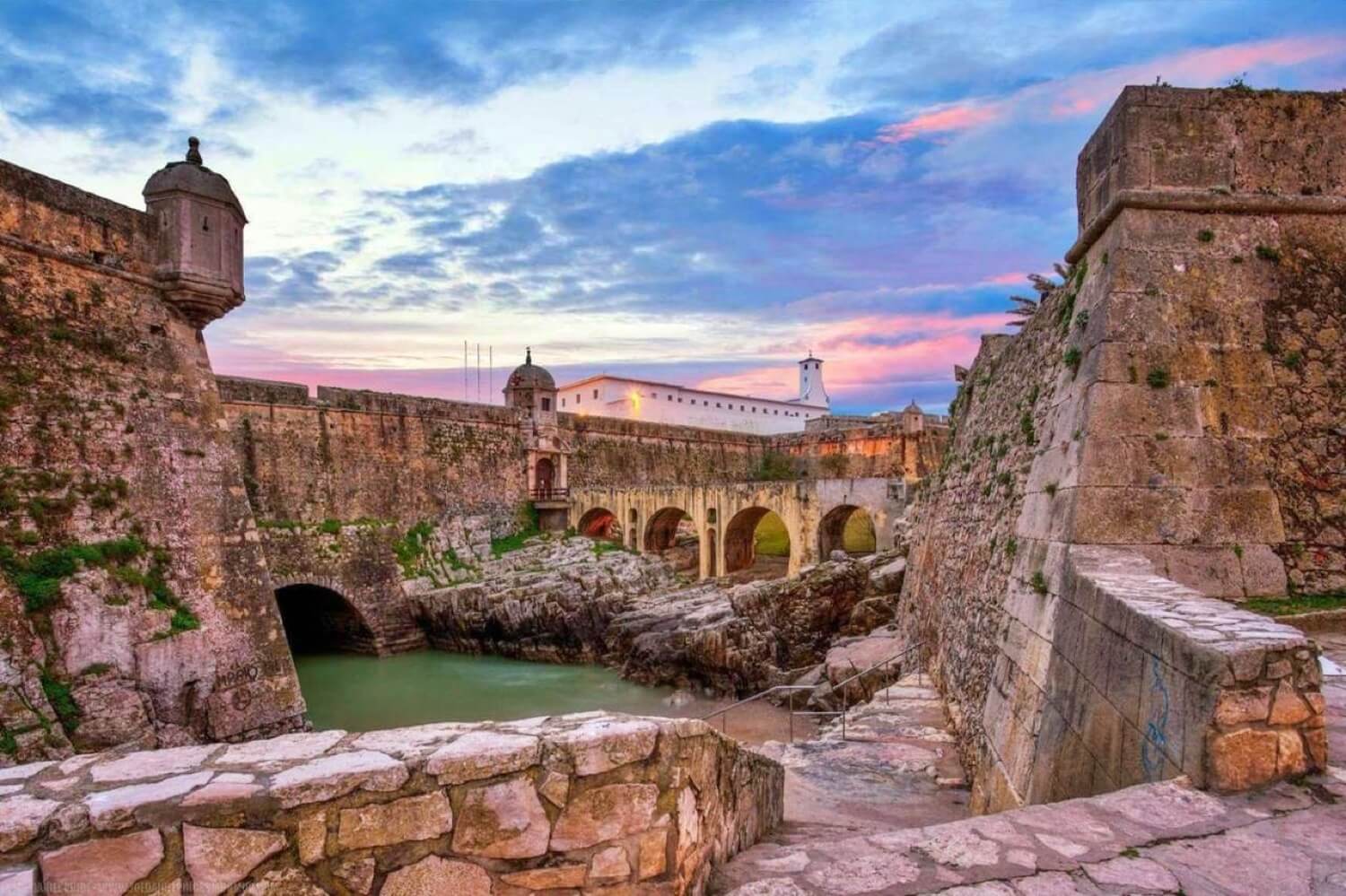
The Peniche Fortress is located in the municipality of Peniche in Leiria District, Portugal. Built on the site of the former Castle of Atouguia da Baleia, of which only a few vestiges remain, initial construction took place in 1557 and 1558 but there have been numerous subsequent modifications. Its defensive walls surround an area of two hectares, divided into upper and lower parts. The fortress has served a number of functions including that of a political prison during the authoritarian Estado Novo regime.
History
Until the Middle Ages, Peniche was an island. However, siltation of the channel between the island and the community of Atouguia on the mainland, caused by sea currents and winds, eventually led to the sea being replaced by sand dunes, with Peniche becoming a peninsula. In the late 15th and early 16th centuries the area was the target of attacks by English, French and Barbary pirates, to which King Manuel I initially responded by installing four armed ships in Peniche. He also encouraged the idea of a permanent fortification on that part of the coast. In 1544, King John III recommended the construction of a castle on the peninsula and in the same year the most appropriate location to give protection to the town’s harbour was identified. Initial construction work was mainly carried out in 1557 and 1558 but work on the northeast and northwest walls continued until 1567. The design is believed to have been influenced by the castles built by Henry VIII of England, most notably Pendennis Castle in Falmouth.
King Sebastian I ascended the throne in 1568 and appointed D. Luís de Ataíde, 3rd Count of Atouguia, to the position of Viceroy of India (1568-1571). Work on the fortification was suspended until his return. D. Luis de Ataíde left for India for a second time in 1578, at which time the construction work was once again suspended. During the Spanish rule of Portugal (1581-1640), Philip II of Spain sent a military engineer to Peniche in 1589 to consolidate the fort and its walls and study possible improvements. In the same year British troops, under the command of Francis Drake, began a march on Lisbon at Peniche, in an unsuccessful attempt to restore Portuguese sovereignty.
In 1625 Philip IV of Spain highlighted the urgency of building a fort on the Berlengas islands, ten kilometres off the coast of Peniche, as these were often visited by corsairs. He also suggested opening a channel on the isthmus between Peniche and the mainland, thus returning Peniche to being an easily defendable island. However, while the Berlengas fort was eventually constructed, Peniche remained connected to the mainland. At the time of the Portuguese Restoration War (1640-1668) it was considered necessary to further improve the Peniche fortress’s defences and in 1642 an engineer was sent to Peniche for this purpose. He prepared new plans, noting that soldiers were complaining about the lack of accommodation, food, garrisons and artillery. This led to considerable expansion, resulting in an irregular star-shaped fort, which was completed in 1645. King John IV visited Peniche to inspect the fortress in 1652.
The major earthquake in 1755 that affected much of Portugal destroyed part of the fortress, which was subsequently repaired. In 1773 work was carried out on remodelling the chapel of Santa Bárbara inside the fortress. Shortly afterwards an inspection report was prepared that commented negatively on its condition and in 1800 new batteries were built to make landing in the harbour more difficult and the parapet of the fortress facing the sea was also raised in height. The extent of the work carried out caused financial problems for the local people, who sought and obtained assistance from Queen Maria I. Further extensive improvements were carried out in 1807. However, the fortress proved to be ineffective in December 1807 during the Peninsular War, when Franco-Spanish troops landed at Peniche. Following their defeat by Anglo-Portuguese troops it was briefly considered in 1810 as a possible embarkation point for British troops should the renewed French invasion make this necessary. After the Congress of Vienna in 1815, which established peace within Europe, the fortress was abandoned. With urban pressure resulting from the population growth of Peniche, certain parts were dismantled. In 1824 it was temporarily converted to a prison and used to detain political prisoners. During the Portuguese Civil War (1828-1834) it was reoccupied but when Liberal forces occupied the Berlengas Fort in 1833, Absolutist forces left Peniche. In 1837 an explosion of gunpowder inside the fortress led to a violent fire, which completely destroyed the Governor's House. In 1871, the Governor of the fortress reported on its bad condition and some restoration work was carried out.
Recent history
During the Second Boer War (1899-1902), the fortress’s buildings were used to accommodate Boers who had sought refuge from the British in the Portuguese colony of Mozambique. During World War I (1914-1918), German and Austrian nationals were detained there. From 1928 the buildings were used as a tuberculosis sanatorium. However, in 1934, under the Estado Novo, or Second Republic, it was converted into a maximum-security political prison. In 1938 all buildings of the fortress were classified as a national monument, leading to some repair work being undertaken in subsequent years, in some cases making use of prisoners as labour.
The fortress became famous for two escapes by prisoners opposed to the authoritarian government. In December 1954, a Communist supporter, António Dias Lourenço, managed to squeeze through a 20 cm x 40 cm opening that he sawed in his cell door. He then attempted to descend 20 meters to the sea with a rope made with sheets torn into strips. However, the improvised rope broke, causing him to fall into the sea. Although being dragged by the waves he managed to reach land and escape with assistance from fishermen. On January 3, 1960, communist leaders Álvaro Cunhal, Francisco Martins Rodrigues and eight others connived with a member of the National Republican Guard who agreed to immobilize with chloroform a colleague responsible for the surveillance of the prisoners. They also descended the walls with a rope made of sheets. This escape became a great embarrassment for the government, which claimed that a Soviet submarine had been near the Peniche coast waiting to pick up the escapees. During the Carnation Revolution on April 25, 1974, which led to the overthrow of the Estado Novo, the fortress was one of the main targets of the initial coup.
From 1977 to the early 1980s, in the context of the process of Portuguese decolonization in Africa, parts of the fortress were used as temporary accommodation for families returning from the overseas territories. After departure of the last returnees from the former colonies, a group of Peniche citizens, with the agreement of the City Council, developed a museum in the fortress dedicated to the anti-fascist resistance. Improvements in 1984 made it possible to visit the cell where the secretary general of the Portuguese Communist Party, Álvaro Cunhal, had been held, as well as the location of his escape. Further repairs and improvements to the fortress were made in the 1990s. Plans in 2008 to use part of the fortress as a hotel (as has been done, for example, in the Citadel of Cascais) did not materialize. Further repairs to the fortress were made between 2010 and 2013 but it remained in an advanced state of degradation. In 2016 it was included on a list of national monuments to be granted to private bodies under a programme (REVIVE) designed to promote private investment for tourism purposes but was withdrawn after two months following popular opposition to the idea. In November 2017 it was closed to visitors to permit further work to be carried out.
A sum of €3.5mn was allocated in April 2017 in the Portuguese budget for repairs and preparation of museum spaces and a tender for the design was completed in early 2018. On 2 May 2019 an exhibition at the Fortress was opened by the Portuguese Prime Minister António Costa, designed to give an indication of the types of exhibits that will be available when the museum, to be known as the National Museum of Resistance and Freedom (Museu Nacional da Resistência e da Liberdade), is completed.
A Praça-forte de Peniche, monumento nacional desde 1938, situa-se nesta cidade, no extremo sul do distrito de Leiria, em Portugal.
Forte de Peniche (também designado fortaleza ou cidadela) é a principal fortificação desse conjunto defensivo.
Encontra-se implantado na encosta sul da Península de Peniche, por sobre as escarpas, entre o porto de pesca, a leste, e a Gruta da Furninha a oeste.
Atualmente, a fortaleza abriga o Museu da Resistência e da Liberdade, sob a alçada do Ministério da Cultura, e o Museu da Cidade, este gerido pela Câmara Municipal de Peniche.
História
O Castelo da Vila
O antigo lugar da Ribeira d’Atouguia, na foz desse rio, era um dos mais importantes portos portugueses da Idade Média, ponto de acesso privilegiado a localidades do centro do país (Lisboa, Óbidos, Torres Vedras,Santarém e Leiria), estando implicada em importantes episódios da História de Portugal.
Sendo alvo constante de ataques de corsários ingleses, franceses e de Piratas da Barbária,[8][9] o rei Manuel I de Portugal (1495-1521) encarregou o conde de Atouguia da elaboração de um plano para a defesa daquele trecho do litoral, que foi apresentado ao seu sucessor, João III de Portugal (1521-1557). Os trabalhos foram iniciados pela construção, em 1557, do chamado castelo da vila, estrutura abaluartada, sob a supervisão de D. Luís de Ataíde, concluído por volta de 1570, ao tempo do reinado de D. Sebastião (1557-1578). Durante a Dinastia Filipina, foi em Peniche que as tropas inglesas, cedidas por Isabel I de Inglaterra, sob o comando de António, Prior do Crato, iniciaram a sua marcha sobre Lisboa (julho de 1589), na tentativa infrutífera de restaurar a soberania portuguesa.
A povoação pesqueira foi elevada a vila em 1609, depois de efetuados alguns reparos nas suas muralhas.
A Guerra da Restauração e a fortificação abaluartada
No contexto da Guerra de Restauração da Independência, o Conde D. Jerónimo de Ataíde prosseguiu as obras de fortificação de Peniche, sob projetos do engenheiro militar francês Nicolau de Langres e, posteriormente, do português João Tomaz Correia, que ficaram concluídas por volta de 1645.
Esta fortificação era coadjuvada pelo Forte da Praia da Consolação e pelo Forte de São João Baptista das Berlengas, formando um extenso sistema defensivo que entretanto se revelou ineficaz durante a Guerra Peninsular perante a invasão napoleónica de 1807 sob o comando de Jean-Andoche Junot), tendo permanecido ocupada por tropas francesas entre o final desse ano e agosto de 1808.
Os invasores melhoraram no entanto as suas defesas e picaram as armas de Portugal no portão principal da fortificação. Ocupada por tropas inglesas sob o comando de William Carr Beresford, foram feitas novas melhorias nas defesas, o que se repetiu sob o reinado de Miguel I de Portugal (1828-1834), culminando na ampliação do perímetro defensivo. A fortificação teve entretanto débil atuação durante a Guerra Civil Portuguesa.
Em 1836, a Praça-forte viveu dois eventos funestos: o incêndio que destruiu completamente o chamado Palácio do Governador (que não voltaria a ser recuperado) e uma explosão da pólvora armazenada num dos paióis.
Neste século, diante da progressiva perda da sua função defensiva, as suas instalações passaram a ser utilizadas como prisão (época das Invasões Napoleônicas) e posteriormente como prisão política (época das Guerras Liberais, quer para liberais, quer para absolutistas). Teve utilização militar até 1897. Um dos seus últimos governadores foi José Tomas de Cáceres (filho).
Do século XX aos nossos dias
No alvorecer do século XX foi utilizada, após a vitória inglesa na África do Sul, como abrigo para os bôeres que se encontravam refugiados na colónia portuguesa de Moçambique. À época da Primeira Guerra Mundial (1914-1918), nela estiveram detidos alemães e austríacos, convertendo-se, durante o Estado Novo português (1930-1974), em prisão política de segurança máxima (1934), época em que se tornaria palco de duas célebres e espetaculares fugas.
Na madrugada de 18 para 19 de dezembro de 1954, António Dias Lourenço, o encarcerado dirigente do Partido Comunista, que quinze dias antes provocara um incidente para ser recolhido ao "segredo", conseguiu evadir-se por uma abertura de 20 x 40 centímetros que serrou na almofada da porta da cela, descendo em seguida 20 metros de muralha até ao mar com uma corda feita com lençóis rasgados em tiras. A improvisada corda rompeu-se, fazendo-o cair ao mar. Foi arrastado para o largo por refluxo das ondas. Com muito esforço, esgotado, conseguiu no entanto alcançar terra e lograr escapar esc\ondido, com a conivência de pescadores, numa camioneta de transporte de pescado. A este episódio estão associados factos tendenciosamente omissos ou subestimados pela memória de um povo submisso em consequência de mais de quarenta anos de fascismo de Salazar, por historiadores propícios ao esquecimento ou por outras pessoas, ao ouvirem falar disso. A ajuda decisiva de pescadores de Peniche a Dias Lourenço, quando fugiu do forte, é revelador dos sentimentos da grande maioria das gentes humildes de Peniche, que bem sabiam dos horrores a que os presos entram submetidos. A pesca sempre foi vida ingrata como ingrata era a vida dos trabalhadores portugueses. Mantém-se votada ao esquecimento a “Guerra das Espoletas”, dramático episódio ocorrido em Peniche na década de trinta, que só recentemente mereceu a atenção de historiadores.
Ano de 1956: « São demolidas as antigas casernas militares e construídos (por presos de delito comum) três blocos prisionais de alta segurança, os Blocos A, B e C, da autoria do arquitecto Rodrigues Lima), tendo passado a ser designada por Cadeia do Forte de Peniche ».
A 3 de janeiro de 1960, tem lugar a memorável "fuga de Peniche", protagonizada por Álvaro Cunhal, Joaquim Gomes, Carlos Costa, Jaime Serra, Francisco Miguel, José Carlos, Guilherme Carvalho, Pedro Soares, Rogério de Carvalho e Francisco Martins Rodrigues, graças à conivência de um guarda republicano que anuiu à imobilização com clorofórmio de um seu colega responsável pela vigilância dos prisioneiros. O guarda em questão conduziu os fugitivos, um a um, agachados debaixo do seu capote de oleado, até a um troço mais escuro da muralha, de onde desceram para o exterior com o auxílio da referida corda feita de lençóis. Desses negros anos outros testemunhos restam, ditados por outros ideários.
Em 25 de abril de 1974, ao eclodir a Revolução dos Cravos, o forte foi um dos objetivos principais da ação dos militares revolucionários. Passou depois a ser utilizada como abrigo para os retornados dos ex-territórios ultramarinos portugueses na África quando do processo de descolonização.
Características
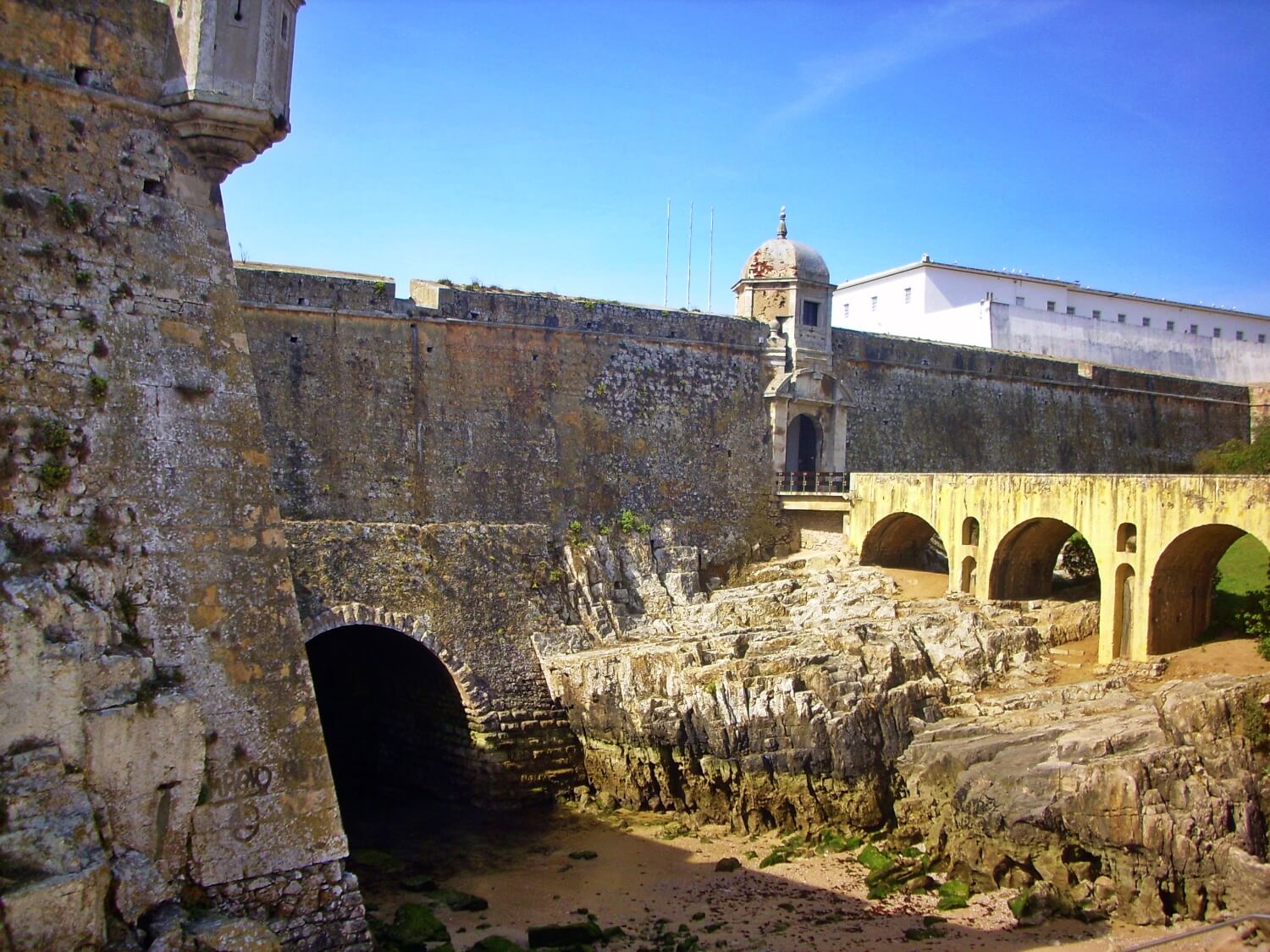
A Praça-forte de Peniche é composta por uma série de construções defensivas com estrutura abaluartada, com planta no formato de um polígono irregular estrelado, adaptado ao terreno. O perímetro amuralhado abrange uma área de cerca de dois hectares. A entrada nesse espaço é dada, de sul para norte, por quatro portas: a "Porta das Cabanas", a "Porta Nova", a "Porta da Ponte" e a "Porta de Peniche de Cima".
O conjunto da fortificação dividia-se assim em dois grandes sectores :
1 - A norte, em Peniche de Cima, dominava o "Forte da Luz", hoje em ruínas, protegido por altas escarpas. A partir daí e até à da Porta de Peniche de Cima, a Praça-forte é constituída por uma alta e extensa muralha circundada por um fosso naturalmente inundado pela água do mar (cheio na maré alta) até à Porta das Cabanas, que corresponde ao antigo porto de pesca, conhecido como Portinho de Revez, mesmo ao lado da "Fortaleza", i.e., da Cidadela.
A Cidadela de Peniche, com baluartes nos vértices coroados por guaritas circulares, estava armada de canhoneiras no terrapleno, apontadas para o lado do mar. Do lado da terra, para proteger o monumental portão de entrada, fora construído um revelim triangular.
2 - A sul, em Peniche de Baixo, frente ao povoado, domina a cidadela, no chamado "Campo da Torre". No seguimento do revelim, a cidadela é protegida por um fosso amuralhado, acima do nível do mar, que acompanha o traçado poligonal das suas imponentes muralhas, tornando-a invulnerável. Cortinas e fossos adicionais protegiam o setor oeste, bem como diversas canhoneiras, caminhos cobertos e esplanadas. A norte, outras duas cortinas e baluartes a leste e a oeste estavam associados a várias construções de planta retangular.
Do forte faziam inicialmente parte o chamado Baluarte Redondo (a primeira fortificação construída), a Torre de Vigia e a Capela de Santa Bárbara. Nesse conjunto foram integradas as famosas prisões ulteriormente construídas em redor de uma torre de vigia, a construção mais elevada do forte, ponto estratégico de observação que então servia para acautelar qualquer pretensão indesejada.
Useful information
Free
Free
Free
Free
- Audioguide
- Castle Garden
geral@mnrl.dgpc.pt
- It houses museums
- Guided tours by prior arrangement
- Gift shop
-
External links
Nearby castles