Santa Marta Lighthouse
Cascais Lisboa Portugal
castle, chateau
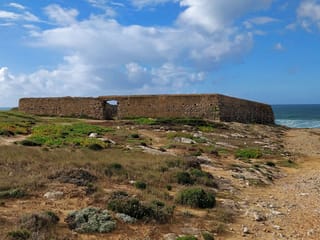
Forte de Santa Marta
Cascais Lisboa Portugal
castle, chateau
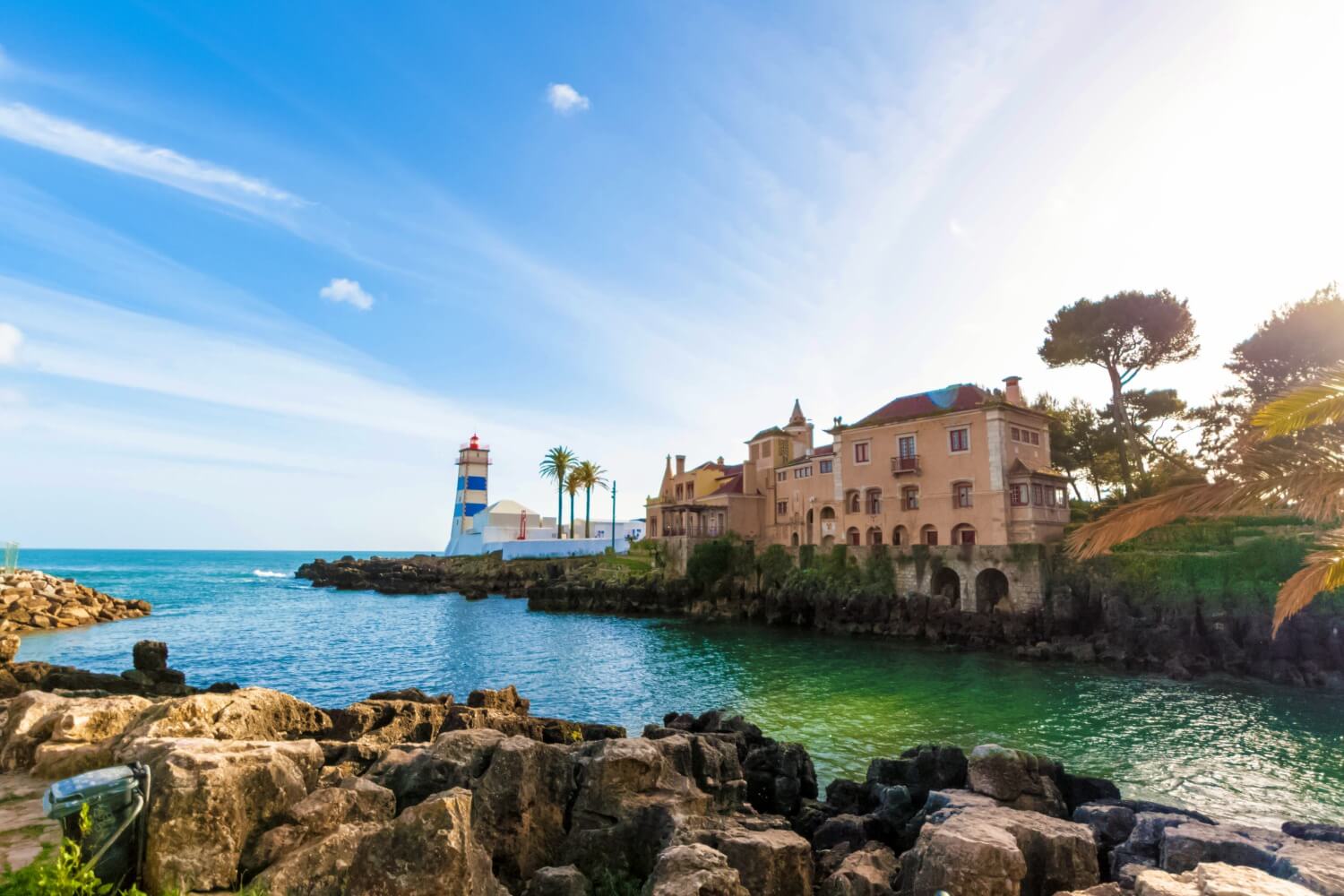
The Santa Marta Lighthouse is situated to the south of the centre of Cascais, Lisbon District, Portugal, on the estuary of the River Tagus, providing a light for the Cascais Bay and for the town's new marina
O Forte de Santa Marta localiza-se na margem direita da foz da ribeira dos Mochos, na ponta de Santa Marta, na freguesia e concelho de Cascais, distrito de Lisboa, em Portugal
Previous names
Santa Marta Lighthouse, Forte de Santa Marta
Description
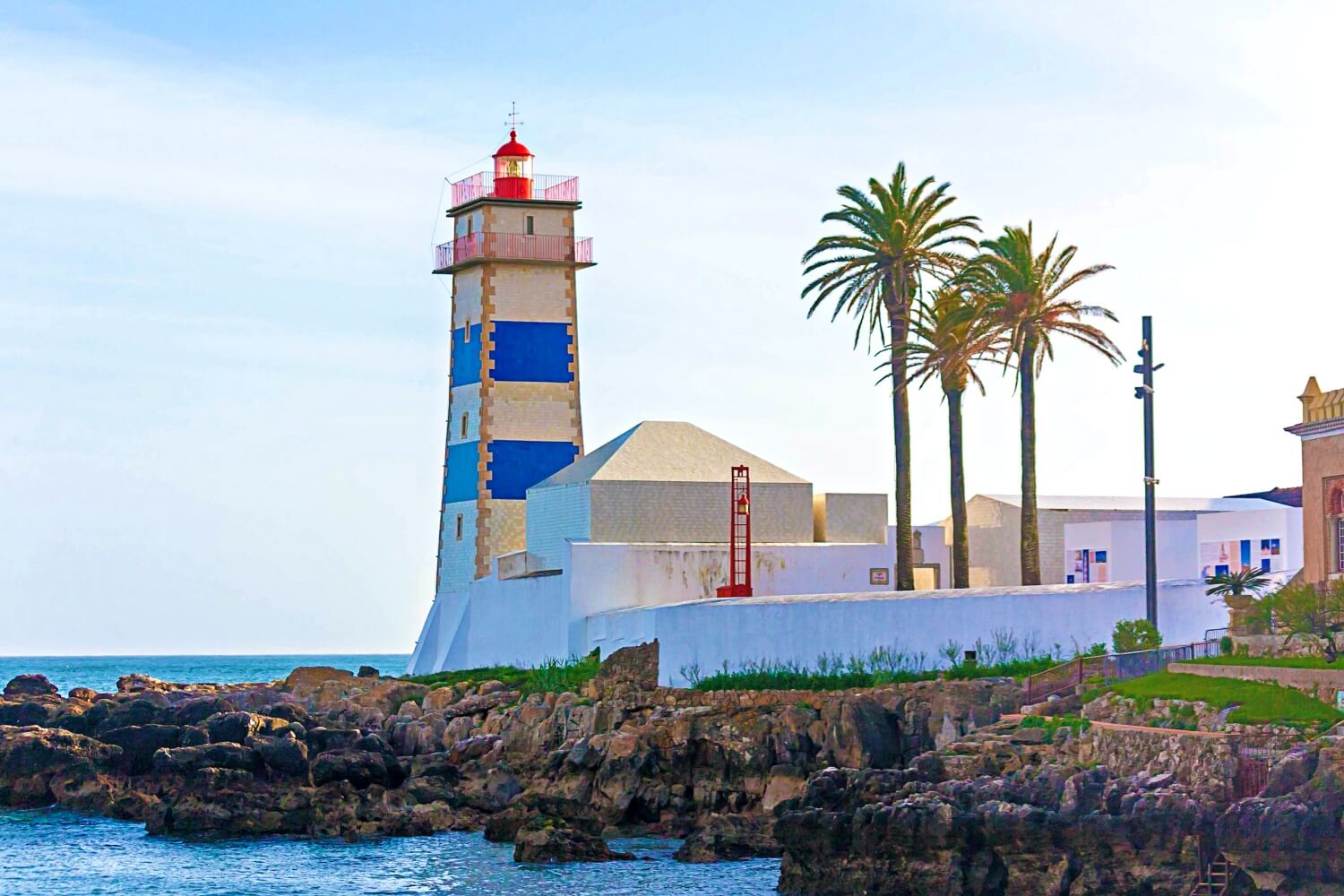
The Santa Marta Lighthouse is situated to the south of the centre of Cascais, Lisbon District, Portugal, on the estuary of the River Tagus, providing a light for the Cascais Bay and for the town's new marina. It is a quadrangular masonry tower covered with white tiles, with blue horizontal stripes and a red lantern. The lighthouse was built on the grounds of the Santa Marta Fort, which now houses a lighthouse museum.
History
The Fort of Santa Marta was probably built in the 1640s, later than of the other fortresses that are distributed along the coast of Cascais, since it was not mentioned in the inventory of forts of Cascais made in 1646. This fortress was built with the intention of preventing the approach of enemies to the Cascais Bay area. In the second half of the eighteenth century the fortress was the object of additional work, the most significant being that of 1762-1763, during which the parapet was widened, and that of 1793, in which battery spaces and quarters were expanded.
The Lighthouse
In 1864 the fort was considered to be no longer militarily necessary. However, the strategic position its location had for military reasons also applied to navigation and it was decided to build a lighthouse on the site.
Concluded in 1867, the Santa Marta lighthouse started to signal its area of the coast of Cascais, crossing with the Guia Lighthouse. In 1868, a small tower was added. A report from 1897 stated that the lighthouse had a fixed red light, given by a dioptric lens directed by a catoptric apparatus. This light was replaced by a 5th-order, fixed-light catadioptric system in 1908. In 1936 the tower was increased in height by 8 meters, due to new buildings in the vicinity that impeded the existing light. In 1949 a foghorn system was installed featuring three seconds of sound followed by seven seconds of silence.
The lamp was electrified in 1953, and an automatic light source backup system was also installed, operated by acetylene incandescence. In 1964, a generator was installed thus negating the need for acetylene. Between 1980 and 1981 work was carried out on the complete automation of the lighthouse, which was included in the telecontrol network of the approaches of the Port of Lisbon and in 2000 a new monitoring system was added.
The Lighthouse Museum
Throughout the twentieth century, the fort and lighthouse of Santa Marta gradually became degraded, leading to a proposal to revitalize the space. The restored fort and new Lighthouse Museum were subsequently opened in July 2007. The combination of a working lighthouse together with a lighthouse museum is unique in Portugal.
The collection of the Santa Marta Lighthouse Museum was entirely established by the Portuguese Navy. The exhibition area is divided into two spaces in the former residences of the lighthouse keepers.
O Forte de Santa Marta localiza-se na margem direita da foz da ribeira dos Mochos, na ponta de Santa Marta, na freguesia e concelho de Cascais, distrito de Lisboa, em Portugal.
Encontra-se classificado como Imóvel de Interesse Público através do Decreto nº 129 de 29 de Setembro de 1977, e do Decreto nº 95 de 12 de Setembro de 1978.
Em suas dependências ergue-se o Farol de Santa Marta (Cascais), fronteiro à Marina de Cascais.
As dependências do forte e farol serão reabilitadas pela Câmara Municipal para abrigar o Complexo Museológico Santa Marta. Com projecto do arquitecto Francisco Aires Mateus, o novo museu histórico-temático visa criar um espaço dedicado aos faróis da barra do rio Tejo, mostrando aos visitantes a evolução do sistema de sinalização marítima desse acesso a Lisboa.
Useful information
No
5.00 EUR
- Ruins of the fort
- It houses a lighthouse museum
-
Nearby castles
Palácio dos Condes de Castro Guimarães
Cascais
0.2km
castle, chateau
Citadel of Cascais
Cascais
0.4km
castle, chateau
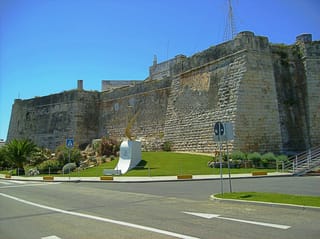
Forte de Nossa Senhora da Luz de Cascais
Cascais
0.4km
fortress
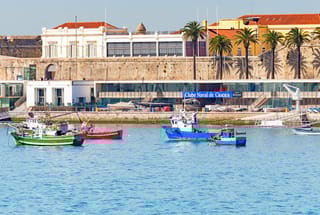
Citadel Palace
Cascais
0.4km
manor, mansion
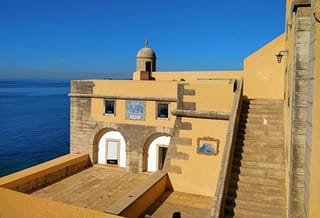
Fort of Santo António da Barra
Estoril
3.3km
fortress
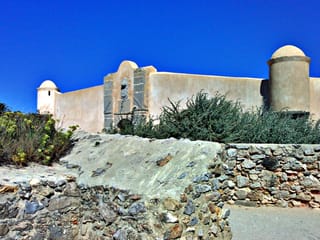
Forte de São Jorge de Oitavos
Cascais
4.2km
fortress
Forte de Crismina
Cascais
6.1km
fortress