Fortaleza de Belixe
Sagres Faro Portugal
fortress
Fortaleza de Belixe
Sagres Faro Portugal
fortress
The Fort of Santo António de Belixe (Fort of Saint Anthony of Beliche), which is also referred to as the Fortress of Beliche (Portuguese: Fortaleza de Belixe), is located on Cape St
O Forte de Santo António de Belixe, popularmente referido apenas como Fortaleza de Belixe, localiza-se no cabo de São Vicente, em posição dominante sobre a praia de Belixe Velho, na freguesia de Sagres, concelho de Vila do Bispo, distrito de Faro, em Portugal
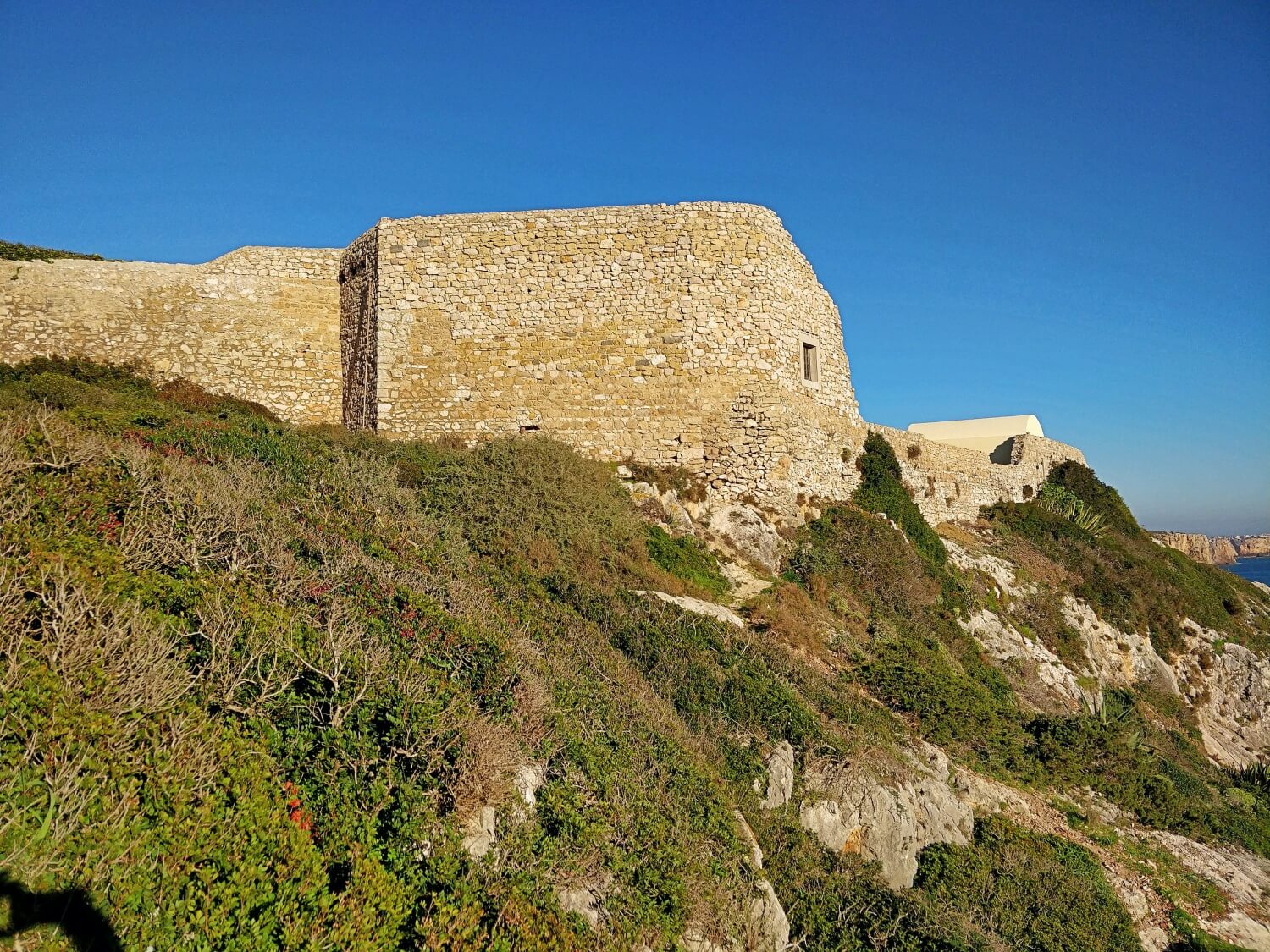
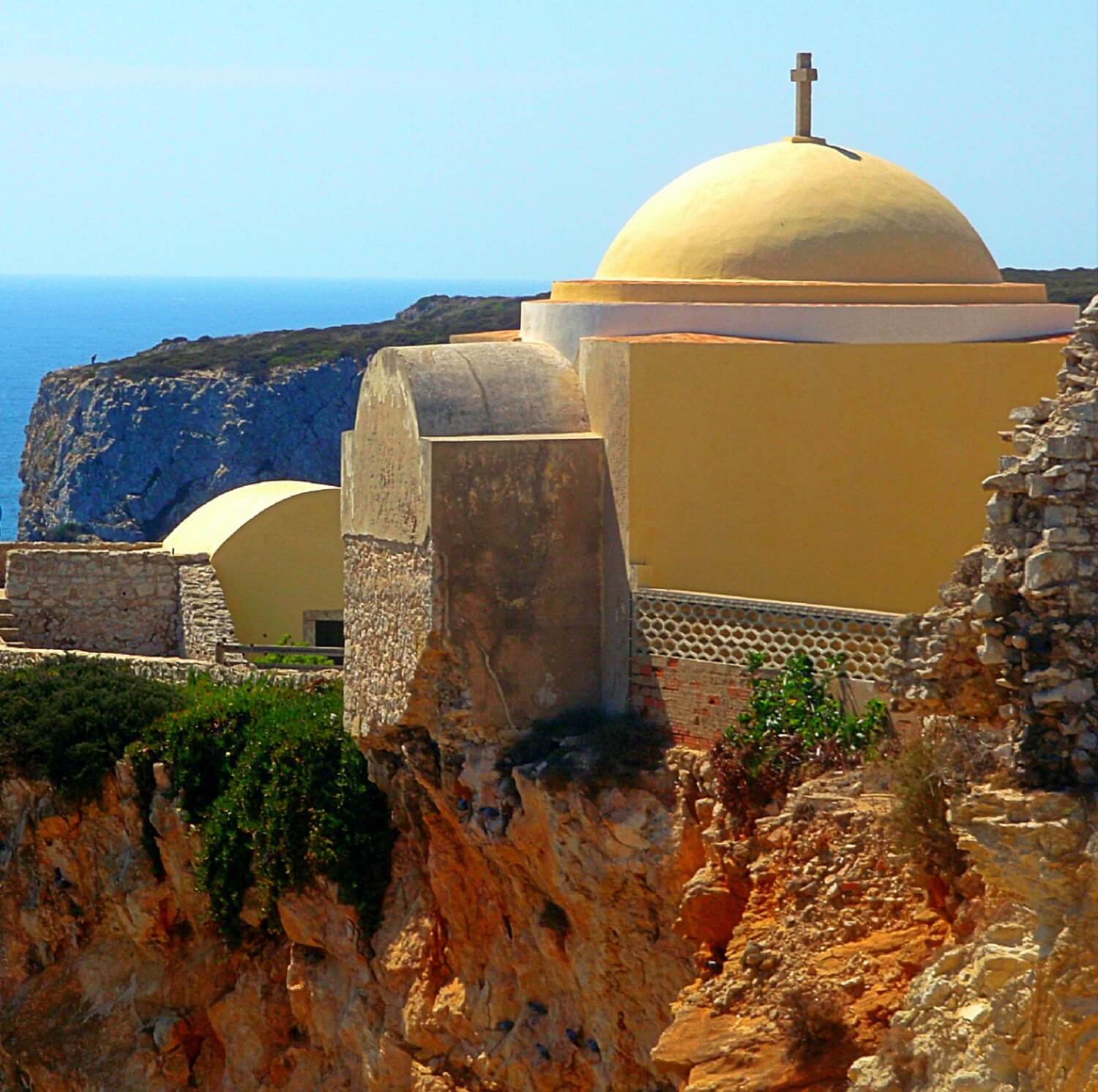
Previous names
Fortaleza de Belixe, Fortaleza de Belixe
Description
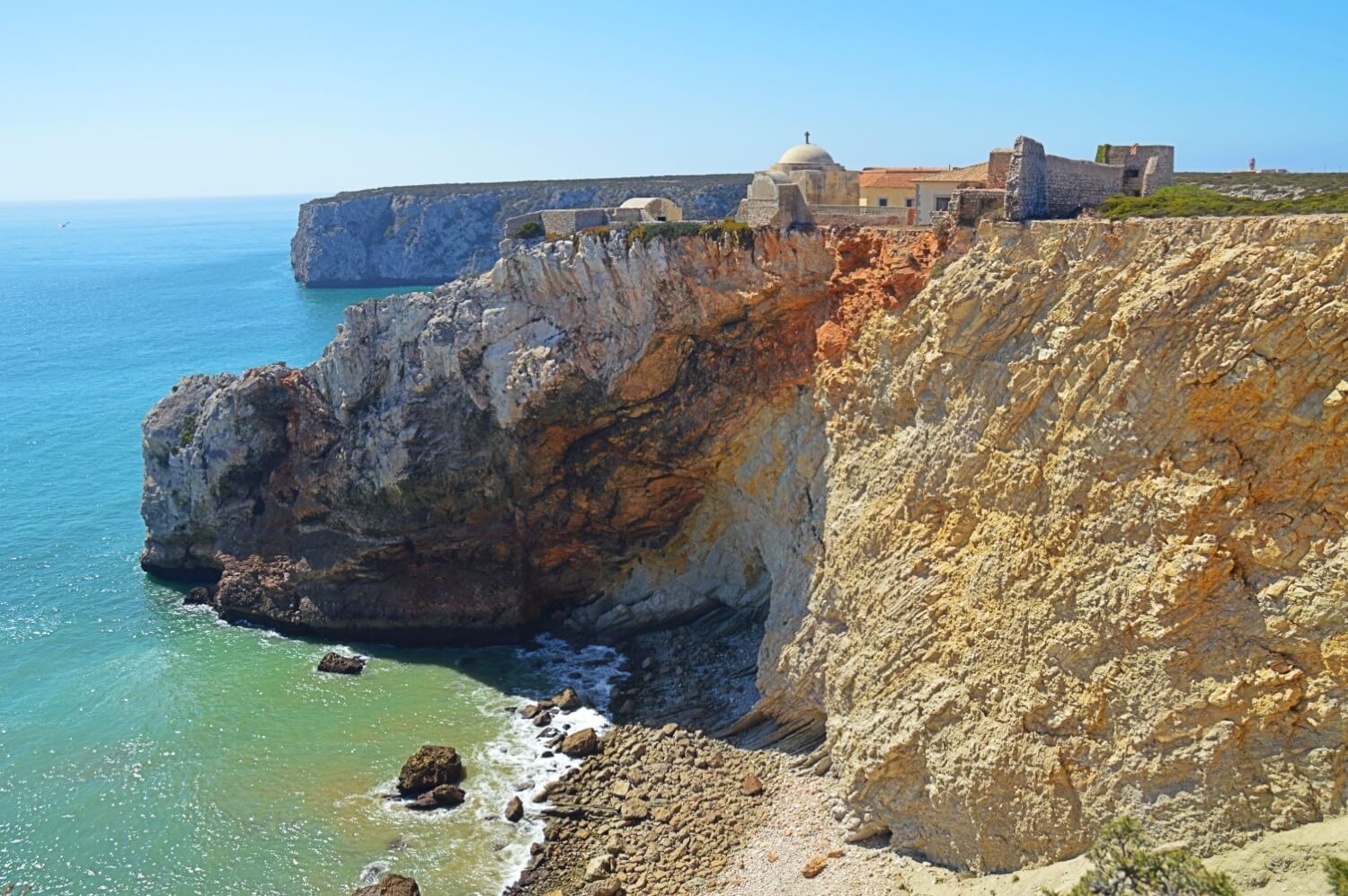
The Fort of Santo António de Belixe (Fort of Saint Anthony of Beliche), which is also referred to as the Fortress of Beliche (Portuguese: Fortaleza de Belixe), is located on Cape St. Vincent in the parish of Sagres, municipality of Vila do Bispo, Faro District, in Portugal. The original date of construction is unknown but the fort was already in existence in the 16th Century.
History
Situated on the top of the cliff that, at an altitude of 86 metres, dominates the Bay of Beliche (or Belixe), the fort certainly already existed in the 16th Century as it contains the Coat of Arms of King Sebastian (1554-1578). Because of its strategic position at the southwest tip of Portugal it has been assumed that the site had been used for military purposes since ancient times, although there is no archaeological evidence to that effect. One theory is that the fort was built by order of King Manuel I (1469-1521), who lived at the nearby Cape St. Vincent at the beginning of the 16th Century. The fortress follows a structure common to the military architecture of the time, with a star-shaped polygonal plan, with batteries facing the sea. A long staircase gives access to the beach. Within the grounds of the fort is a small chapel, which was originally dedicated to Saint Catherine but is now dedicated to Saint Anthony.
In 1578, the English sea captain Francis Drake, regarded as a privateer by the Portuguese, attacked the fort and caused serious damage, leading to significant reconstruction work under the instructions of Philip III of Portugal, which was not completed until 1632. This remains the basis of the existing structure, despite it having been significantly damaged by the 1755 earthquake.
Around 1960 the fort was adapted to be used as a tourist facility. At that time, important areas of the interior were also remodeled and some sections were rebuilt. Although well-integrated into the fort this new feature could do nothing to prevent the continued erosion of the cliff on which the fortress stands. For safety reasons the facility closed in the 1990s. Work to address the erosion problem is ongoing, with the involvement of the Faculty of Science and Technology of the University of Algarve. Of particular concern is the Chapel. At the end of 1997 the Baroque altarpiece was transferred to the Church of Nossa Senhora da Graça, in the nearby Fortress of Sagres.
Ownership of the fort passed to the municipality of Vila do Bispo in 2012, for the sum of just €4000.
O Forte de Santo António de Belixe, popularmente referido apenas como Fortaleza de Belixe, localiza-se no cabo de São Vicente, em posição dominante sobre a praia de Belixe Velho, na freguesia de Sagres, concelho de Vila do Bispo, distrito de Faro, em Portugal.
História
Foi erguido em data não determinada, possivelmente sob o reinado de Manuel I de Portugal ou no de seu sucessor, João III de Portugal, mas anterior a 1587, uma vez que se encontra desenhado no mapa desta região algarvia quando do ataque do corsário inglês Francis Drake, que o destruiu. Tinha como função controlar aquele ancoradouro e proteger os pescadores que ali mantinham uma armação de pesca de atum.
A fortificação atual remonta a uma reconstrução por determinação de Filipe III de Portugal (1621-1640), tendo sido reinaugurado em 1632 conforme inscrição epigráfica sobre o portão de armas.
O terramoto de 1755 causou-lhe grandes danos, tendo sido progressivamente abandonada.
Foi recuperada ao final da década de 1950 pela então Direcção Geral dos Edifícios e Monumentos Nacionais, no contexto dos trabalhos realizados no cabo de São Vicente e em Sagres, tendo em vista as comemorações do V Centenário da Morte do Infante D. Henrique (1960). Na ocasião, sobre os alicerces dos antigos quartéis foi erguida uma casa de chá.
Encontra-se classificado como Imóvel de Interesse Público.
Encerrado desde a década de 1990 pela ameaça de desmoronamento da encosta sobre a qual se ergue, em 2013 a Câmara Municipal de Vila do Bispo planeia a sua recuperação e reabertura.
Nela se destacam os panos de muralha remanescentes, baterias e casamatas, bem como a Capela de Santa Catarina, cujas origens remontam a uma doação do Infante D. Henrique (1394-1460) pouco antes de sua morte, e cujo retábulo, em estilo barroco, foi trasladado em 1997 para a Igreja de Nossa Senhora da Graça, na vizinha Fortaleza de Sagres.
Useful information
Free
3.00 EUR
- Walking trails
- Impressive view
- Destroyed fortress
- Currently closed for visitors
- It has a museum
-
Nearby castles