Kasteel Nijenrode
Stichtse Vecht Utrecht Netherlands
manor, mansion
Kasteel Nijenrode
Stichtse Vecht Utrecht Netherlands
manor, mansion
In the thirteenth century AD, the nearby cathedral city of Utrecht was developing into a market town
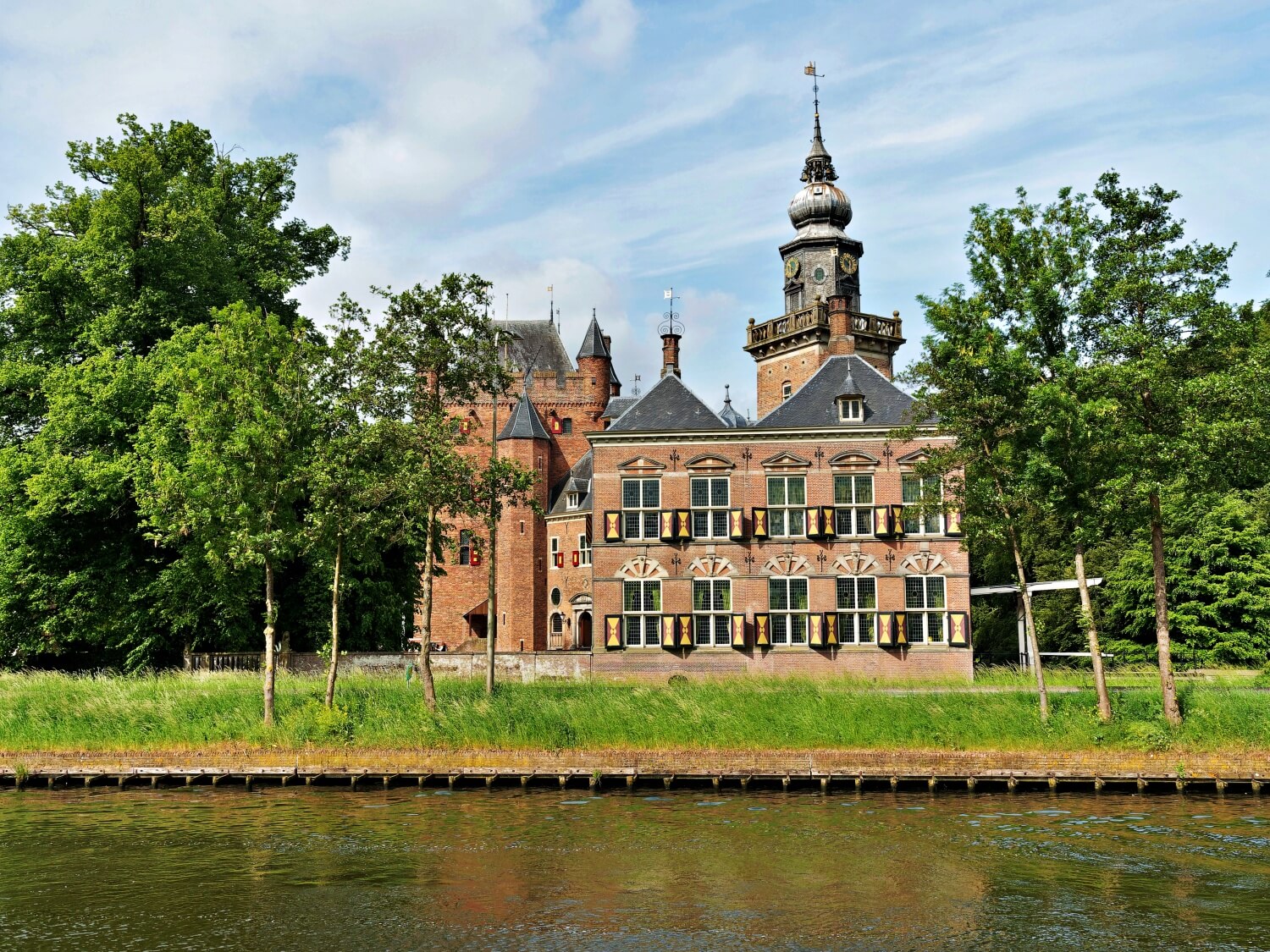
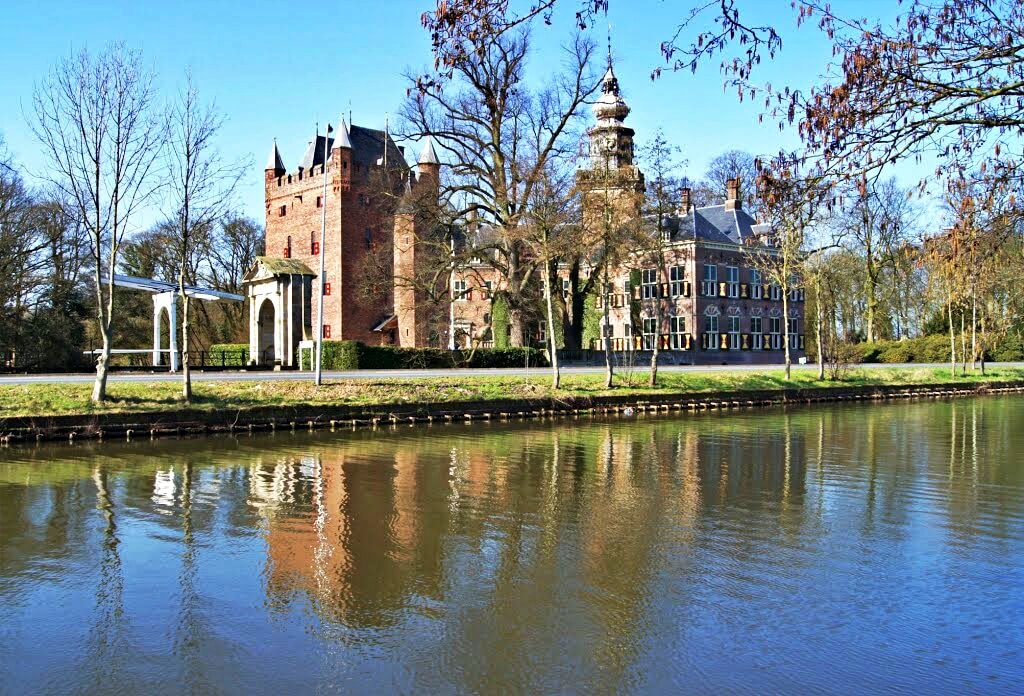
Kasteel Nijenrode is een Nederlands kasteel, gelegen bij Breukelen
Previous names
Kasteel Nijenrode, Kasteel Nijenrode
Description
In the thirteenth century AD, the nearby cathedral city of Utrecht was developing into a market town. Also during that period, in around 1260, the first foundations for the then-named Nijenrode Castle were laid at a strategic spot on the narrowest part of the river Vecht. The river was part of the trade route from the town of Utrecht to the Zuiderzee (current-day IJsselmeer), and was situated in an area heavily disputed by the Bishops of Utrecht and the Counts of Holland, so the (moat) water could also be used as a defense mechanism in times of conflict.
Country house with knightly grandeur
The lords of Nijenrode dedicated their castle to the count of Holland. The castle was destroyed in 1481 and again in 1511, and consequently rebuilt. Between 1632 and 1642, proprietor Bernard van den Bongart III changed the building into a country house with the grandeur of a castle, ordering modernization and embellishments.
French headquarters and the Ortt family
In 1672, during the French occupation of the Netherlands, Nijenrode Castle became the headquarters of the occupier. When they departed the castle a year later, they set it alight. Johan Ortt, who purchased the caste on 1675, ordered its reconstruction and renovation. Eventually, the Orrt family, grain and cloth merchants from Amsterdam, would own the castle until 1853.
Back to its former glory and new adaptations: the Onnes and Goudstikker family
From 1853, two generations of the De Heus family, manufacturers of copper and paper from Utrecht, owned the castle and estate. In 1906, coffee merchant Michiel Onnes bought the by now run-down castle. He ordered extensive restorations, bringing the castle and estate back to their former glory of the mid-seventeenth century. He extended the estate, modernized the living quarters, built the Coach and Gate Houses, and rebuilt the donjon on its medieval foundations – including two extra floors.
In 1930, Onnes had to sell his property to art dealer Jacques Goudstikker. By now, an extensive art collection was housed in the castle. Because he felt it important that the less fortunate would have access to the collection, Goudstikker opened the castle to the public, with a tavern located in the Coach House. As well as art exhibitions, Goudstikker organized concerts and dinners at the castle. His Jewish background forced him to flee the Nazis in 1940, and tragically he perished in an accident aboard the ship bringing him to South America. His art collection was brought to Germany.
After the war: Nijenrode becomes a university campus
After WWII, Goudstikker's widow Desiree transferred ownership of the estate to the Netherlands International Education Institute NOIB, who were already letting the castle. The castle and estate were made suitable for university campus life, and multiple new buildings were added over the years. Ultimately, NOIB was renamed Nyenrode Business Universiteit.
Name
The origins of the name Nijenrode is not quite clear. It has been said that the 'nije' part means 'new' and the 'rode' part means 'reclamation', indicating the origin of the estate and castle, but this cannot be verified. As the Dutch combined letter 'ij' is unknown in the English language, 'Nyenrode' has become the (international) name of this international institute!
Coat of arms
Fourteenth-century knight Gijsbrecht II is credited with designing our coat of arms. He combined his father's family's red and gold with the blue and St Andrews crosses of his mother's family crest. You might have seen these same crosses around Amsterdam, as they appear in the city's coat of arms too!
The medieval coat of arms is today in use as Nyenrode's logo. You may also see Gijsbrecht's family colors of gold and red on the castle's window shutters and for example in our student rugby team's jersey.
Carillon and carillonist
As far as we know, Nijenrode is the only castle on the world with a manual carillon. The base of our carillon is made out of bells cast especially for Nijenrode castle by the Taylor Bell Foundry in Loughborough, England, in 1915. In 1940, the carillon was extended to include bells from the nearby Witzand Estate. Finally, in 2015, to celebrate the carillon's centenary, two further bells were added, funded by our alumni. Today, the carillon contains eighteen bells. It is situated in the castle's Bell Tower.
Nyenrode Business Universiteit has its own university carillonist, Jan Willem Achterkamp. On festive and memorial days he plays the carillon and he is also responsible for the daily tunes you hear around the campus.
https://www.nyenrode.nl/en/experience-nyenrode/nyenrode-breukelen/castle
Kasteel Nijenrode is een Nederlands kasteel, gelegen bij Breukelen.
Het kasteel
De naam Nijenrode betekent nieuw gerooide grond. Rond 1275 liet Gerard Splinter van Ruwiel hier een eerste kasteel bouwen. Zijn familiewapen bestond uit een gouden veld en een rode balk, en deze kleuren sieren nog steeds de luiken op het landgoed.
Het kasteel is omringd door water en toegankelijk over een tweetal ophaalbruggen. Er is een aantal bijgebouwen. Het landgoed is toegankelijk via het poortgebouw, dat tijdens de Eerste Wereldoorlog werd gebouwd. Ook het koetsgebouw werd in die tijd gerestaureerd. Boven de entree van het koetshuis is een reliëf met de ridder Gisbregt van Nijenrode.
Bewoners
Nadat het kasteel in 1481 en 1511 was verwoest werd de ruïne in 1536 vererfd aan Johan van den Bongard, erfkamerheer van Gulik en ambtman van Grave. Na hem aan zijn zoon Bernard I van den Bongard, wiens zoon Bernard II van den Bongard het kasteel tussen 1632 en 1642 in Hollandse renaissancestijl herbouwde. Nadat het enige maanden als hoofdkwartier door de Fransen was gebruikt, werd het in 1673 in brand gestoken door Franse troepen onder bevel van Frans de Montmorency, hertog van Luxembourg.
De ruïne werd in 1675 verkocht aan de Amsterdamse koopman Joan Ortt. Het kasteel werd weer opgebouwd en bleef tot 1849 in handen van de familie Ortt. Na een openbare veiling kwam het in 1849 in handen van Jhr. W.J.A. van Romondt. Willem Hendricus de Heus kocht op dezelfde veiling land rond Nijenrode. De verkoop volgde op het overlijden van de Vrouwe Ortt van Nijenrode, geboren Schroijensteijn, op 29-11-1848. In april 1853 werd Nijenrode via een publieke veiling gekocht door Willem Hendricus de Heus, een Utrechts ondernemer en Statenlid. Op 1 mei 1854 werd het kasteel in een advertentie in de Opregte Haarlemsche Courant te huur aangeboden. Voor De Heus was het een zakelijke investering. Hij woonde te Utrecht aan de Rijnkade en later in de zomermaanden op 'de Pietersberg' te Oosterbeek en in de wintermaanden eerst in Maria-Lust en later in villa Sophia's Hoeve, gebouwd bij zijn fabriek in Apeldoorn. Hoewel hij het kasteel niet bewoonde, liet hij het in 1860 voor een aanzienlijk bedrag verbouwen in neotudorstijl. In 1872 stierf hij en het kasteel vererfde op zijn zoon Henri. De nieuwe eigenaar had geen interesse voor Nijenrode, omdat hij zowel woonde als werkte in Apeldoorn. Gedurende een aantal jaren verhuurde hij het aan C.J. van der Meulen, die er een kostschool in onderbracht. Na overlijden van Henri de Heus werd het kasteel door zijn erven verkocht.
Van 1907 tot 1930 was het bezit van Michiel Onnes, een Amsterdams handelaar in koffie. Hij liet Nijenrode tot 1920 restaureren en uitbreiden. In 1930 werd het gekocht door de Amsterdamse kunsthandelaar Jacques Goudstikker. Hij gebruikte het kasteel als toonzaal voor zijn handelsvoorraad. Niet alleen mogelijke klanten werden op het kasteel uitgenodigd, Nijenrode werd ook opengesteld voor het publiek. Op deze wijze trachtte Goudstikker ook minder kapitaalkrachtigen in contact te brengen met kunst. Op en rond het kasteel organiseerde hij ook verschillende benefietconcerten en grote feesten voor de society. Zo heeft onder andere het Concertgebouworkest onder leiding van Willem Mengelberg in de tuin van Nijenrode opgetreden.
De Joodse Goudstikker overleed aan boord van het schip waarmee hij in mei 1940 vanuit IJmuiden naar het Verenigd Koninkrijk vluchtte. In juli 1940 werd zijn kunsthandel door het personeel verkocht aan Hermann Göring en de in Nederland woonachtige Duitser Alois Miedl. Het onroerend goed van de kunsthandel, inclusief Kasteel Nijenrode, kwam in handen van Alois Miedl. Na de Tweede Wereldoorlog, heeft de weduwe Goudstikker Kasteel Nijenrode teruggekocht van de Nederlandse Staat, die het kasteel na de bevrijding in beheer had. Zij heeft het kasteel in 1950 weer verkocht.
Universiteit
In 1946 vestigde de Stichting Nijenrode, Instituut voor Bedrijfskunde zich in het kasteel, dat in 1950 door de stichting werd aangekocht. In 1982 veranderde de naam in Universiteit Nijenrode, totdat eind jaren 1990, met het oog op internationaal opereren de 'ij' vervangen werd door de 'y', en daarmee de spelling veranderde naar "Universiteit Nyenrode". Sinds 2005 staat de universiteit bekend als Nyenrode Business Universiteit. Het kasteel is niet toegankelijk voor publiek.
Useful information
No
- Events and concerts
info@nyenrode.nl
- Location of the Nyenrode Business University
- Closed for visitors, except a few days
-
External links
Nearby castles
Ridderhofstad Oudaen
Stichtse Vecht
0.5km
castle, chateau
De Haar Castle
Utrecht
5.0km
castle, chateau
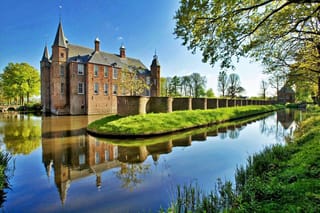
Slot Zuylen
Stichtse Vecht
6.0km
castle, chateau
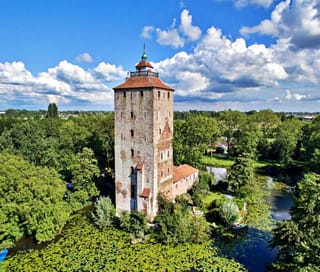
Ridderhofstad Den Ham
Utrecht
6.5km
castle, chateau
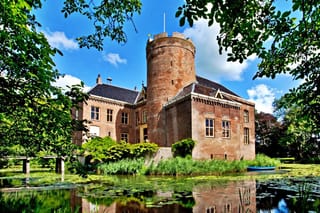
Kasteel Loenersloot
Stichtse Vecht
7.4km
manor, mansion
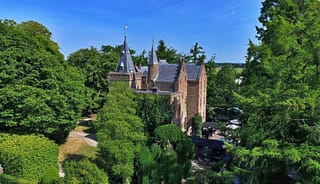
Kasteel Sypesteyn
Wijdemeren
8.4km
manor, mansion
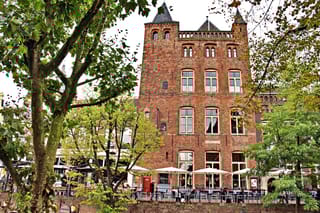
Huis Oudaen
Utrecht
10.8km
castle, chateau