Palazzo Orlandi
Provincia di Parma Emilia-Romagna Italy
castle, chateau
Palazzo Orlandi
Provincia di Parma Emilia-Romagna Italy
castle, chateau
When we think of Italy many images are called back to our minds; generally speaking it’s about idyllic places, deeply viewed in a historical perspective, city palaces or country farmsteads that are vanishing under the spreading standardization of the “pre-packaged” house imposed by the building market
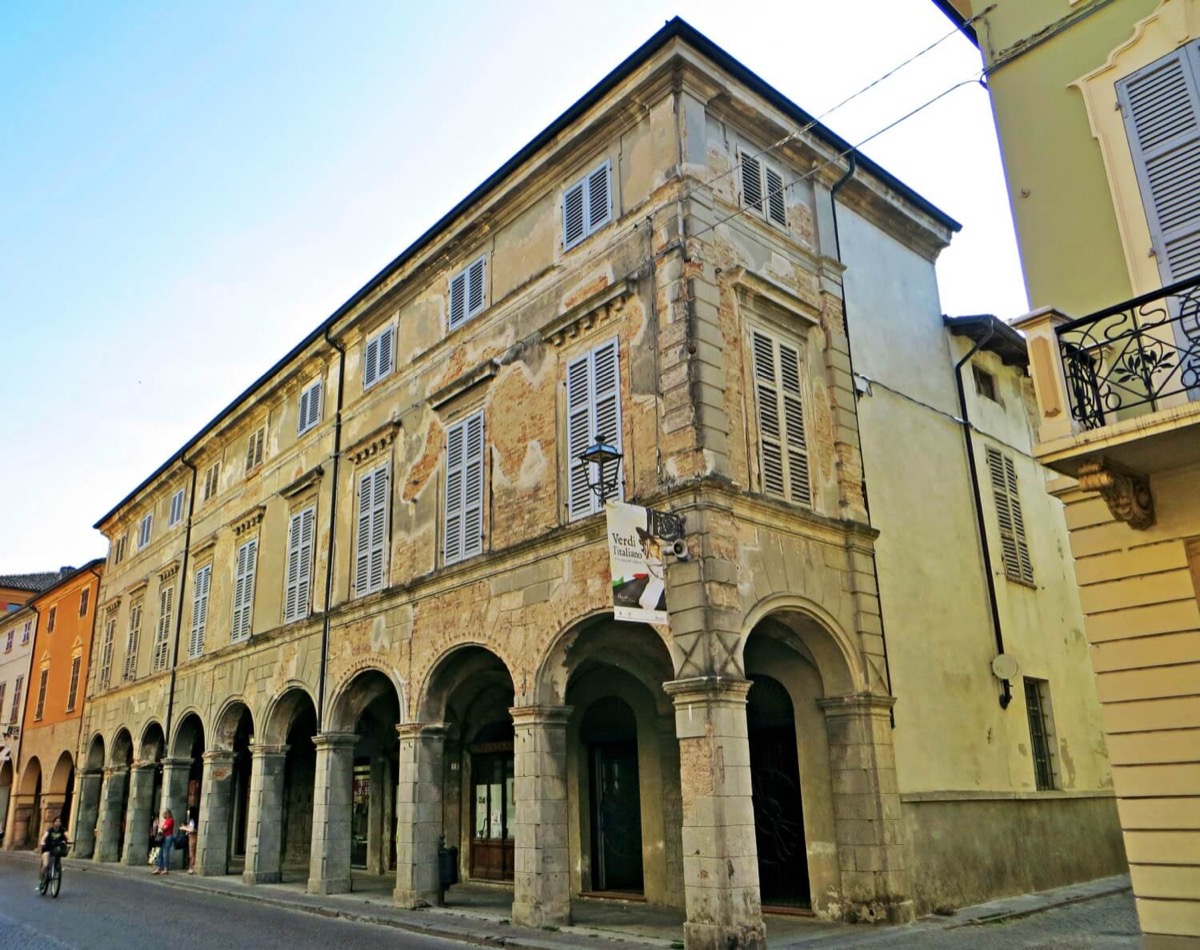
Il Palazzo Orlandi, noto anche come Palazzo Dordoni-Cavalli, è un edificio dalle forme neoclassiche, situato in via Roma 56 a Busseto, in provincia di Parma
Previous names
Palazzo Orlandi, Palazzo Orlandi
Description
When we think of Italy many images are called back to our minds; generally speaking it’s about idyllic places, deeply viewed in a historical perspective, city palaces or country farmsteads that are vanishing under the spreading standardization of the “pre-packaged” house imposed by the building market. This Italy rich in charm and atmosphere risking to dwell by this time more in our imaginary than in daily reality is worth a deep rethink not only from the point of view of preservation and restoration, but mostly from the point of view of the search for an original and at the same time contemporary Italian style also for those historical architectural examples that would risk to turn themselves into museum houses or wholly distorted. To stage a scenery of contemporary life in an ancient abode is a complex challenge in Italy, where there is a strong resistance to novelty and to themes dear to the contemporary language when architecture buildings with a strong artistic and historical content are involved. The restoration of Casa Orlandi on the contrary starts from the “happy perversion” half ancient and half contemporary alternating in this abode, being as a matter of fact the very essence of the glamour of the tiny guesthouse. Casa Orlandi is a late-18th century abode, strongly desired by a rich middle-class family of the Tuscan textile entrepreneurial activity. The house that was meant to fill the class difference between the wealthy rising middle class and the ancient aristocracy, was richly decorated by one of the main Tuscan fresco painters of the age: Luigi Catani, who worked for the grand duke of Tuscany both at Palazzo Pitti in Florence and in various Medici villas in the environs of Florence. The restoration, long and difficult, for the very bad repair of the palace, 230 square meters unoccupied for twenty years, where also all the frescos had been covered by a thick coat of white paint, right from the beginning has been planned with the purpose of reaching a double aim, all too often forgotten. On the one hand there was the wish for a plain, minimalist restoration, not at all inclined to remaking; wherever the decoration was partially missing it was accepted just as time has handed it down to us; the ancient floors have been saved and preserved, even if some bits are missing or with faults, the ancient casings are all original, kept in their fragile lightness. On the other, there was the strong desire of introducing elements of contemporaneity inside an ancient architecture; a contemporaneity at the same time non stereotyped, entrusted, like it often happens, only to the names of the Italian design, but able to mix very simple elements, almost always objects found around the European markets, with elements on the contrary of famous international designers, right to create that cosy and at the same time non-prearranged mix that is frequently the feature of an experienced “house”. Therefore the choice of keeping a lot of the shared room wide and always various, and just three rooms for the guests, that can enjoy without limit the party hall, the kitchen, the balcony or the library study. The decision not to change in the least the typological aspect neither in the layout nor in the elevations has led as a consequence to the maintenance of a spatiality made by crossed rooms, there is no passage, through always different backdrops, where each room has been “staged” with contemporary criteria so that it is possible to communicate with the ancient places without changing them ever. Everything can be removed, placed again, rethought without distorting the ancient abode, that in this way can be transformed with time remaining witness of a special past and full of evocative power and atmosphere of which the tokens are getting lost: the evidence of a house lived through the ages and always contemporary. So in the small areas, all decorated baths in Corian have been mounted, one rediscovers the pleasure to go through “secret” doors to take shelter in little bathrooms that have been accepted in reduced dimensions to the advantage of a peculiar charm, that of originality. No folk concession to objects in style, some new materials like Corian, the black slate have been introduced, and steel, that constitute the essential elements of our contemporary living. The necessary search for comfort is never betrayed to the advantage of the aesthetic strictness, finding in ancient architecture new cues in order to be expressed. Essentially Casa Orlandi wants to be as follows: a passing-through place for sensitive travellers who love the authenticity of ancient places without renouncing the fascination of contemporaneity but above all it wants to be witness of the fact that the Italian historical architecture, also in its more private and “fragile” version, the abode, nowadays strongly threatened in its integrity by the liberty of conceited builders and not enough defended by the law, has the possibility of being not misrepresented and at the same time to become an extraordinarily contemporary place but also witness of the past and of the passions that have enlivened it over the centuries. Here lies the “contemporary message” for which we present this example of architecture.
https://archello.com
Il Palazzo Orlandi, noto anche come Palazzo Dordoni-Cavalli, è un edificio dalle forme neoclassiche, situato in via Roma 56 a Busseto, in provincia di Parma.
L'originario palazzo agli inizi del XIX secolo fu completamente ristrutturato in stile neoclassico per volere del conte Annibale Dordoni, su progetto dell'architetto e pittore bussetano Giuseppe Cavalli, che innalzò la facciata su via Roma e modificò gli interni, decorando anche il salone.
Pochi anni dopo l'edificio fu venduto ad Antonio Cavalli, figlio del progettista, che lo destinò a suo figlio Contardo, successivamente nominato podestà di Busseto. Il palazzo, all'epoca considerato il più moderno dell'intera cittadina, il 6 ottobre 1845 fu acquistato per la cospicua somma di 22 000 lire di Parma da Giuseppe Verdi, che si rivolse per l'atto notarile al suo avvocato e amico Ercolano Balestra.
Il Maestro vi si trasferì col soprano Giuseppina Strepponi nel 1849; compose fra le sue sale le tre opere Luisa Miller, Stiffelio e Rigoletto, ma a causa dello scandalo suscitato in paese per la convivenza, considerata immorale all'epoca, nel 1851 decise di trasferirsi nella più isolata tenuta di Sant'Agata. Nel 1867 scomparve nel palazzo Carlo Verdi, padre di Giuseppe. Questi vendette nel 1875 l'edificio alla Strepponi, nel frattempo divenuta sua moglie, per la somma di 18 000 lire. Nel 1882 anche la Strepponi decise di cederlo, destinando il ricavato a una pensione perpetua per i poveri di Busseto, a Giulio e Isidoro Sivelli, cugini del Maestro, che si occuparono del restauro globale della struttura, caduta molto in degrado dopo l'abbandono dei Verdi per Sant'Agata.
Nel 1888 il palazzo fu acquistato dalla famiglia Orlandi e tra il 1913 e il 1926 il Maestro Arturo Toscanini fu più volte ospite, lasciandovi vari cimeli, tra cui una bacchetta autografata alla signora Cina Barezzi Orlandi, pronipote di Margherita Barezzi, prima moglie di Giuseppe Verdi.
Nel 1982 il palazzo fu utilizzato quale set durante le riprese dello sceneggiato Verdi, diretto da Renato Castellani.
Alla fine del 2012 gli eredi della famiglia Orlandi decisero di vendere l'edificio, che, ormai bisognoso di significativi restauri, fu acquistato dalla SIAE attraverso il suo fondo immobiliare Norma di Sorgente Group, con l'intenzione di ristrutturarlo e realizzarvi un centro dedicato alla musica, con scuola e residenze.
Useful information
GRATUITO
Proprietà privata (ristorante)
-
External links
Nearby castles
Casa Barezzi
Provincia di Parma
0.1km
castle, chateau
Rocca Pallavicino (Busseto)
Provincia di Parma
0.1km
castle, chateau
Casa Natale Verdi
Provincia di Parma
3.9km
castle, chateau
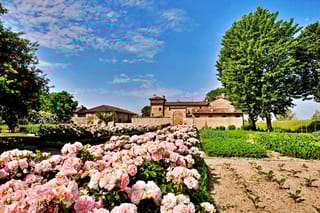
Antica Corte Pallavicina
Provincia di Parma
5.8km
castle, chateau
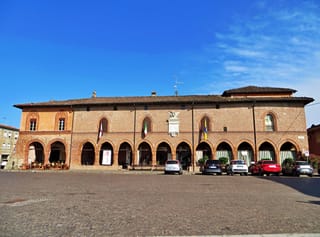
Teatro Pallavicino
Provincia di Parma
8.0km
castle, chateau
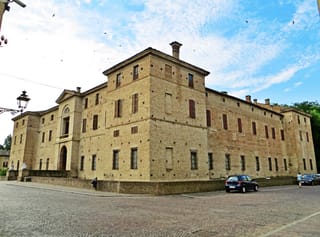
Rocca Meli Lupi
Provincia di Parma
8.6km
castle, chateau
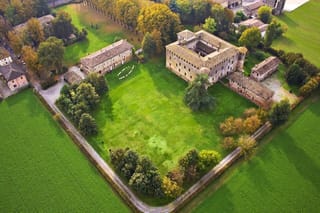
Castello di San Pietro in Cerro
Provincia di Piacenza
8.6km
castle, chateau