Castello di Castelnuovo Magra
Provincia della Spezia Liguria Italy
castle, chateau
Castello di Castelnuovo Magra
Provincia della Spezia Liguria Italy
castle, chateau
The view from Castelnuovo Magra is earned after having travelled the 4 km upwards along the road that leads to its historical centre from Aurelia
Il castello-palazzo Vescovile di Luni è un edificio residenziale e difensivo sito in piazza Querciola nel centro storico di Castelnuovo Magra, nella val di Magra in provincia della Spezia
Previous names
Castello di Castelnuovo Magra, Castello di Castelnuovo Magra
Description
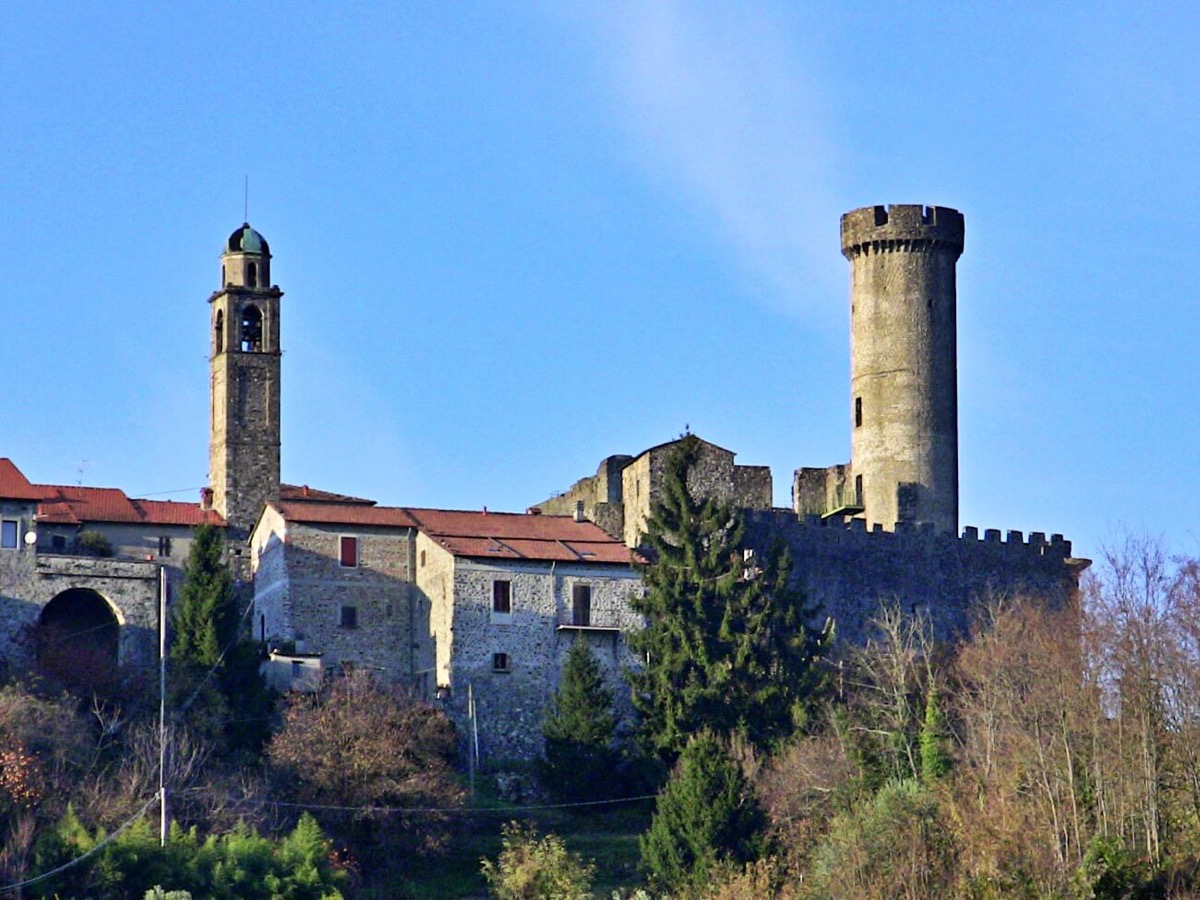
The view from Castelnuovo Magra is earned after having travelled the 4 km upwards along the road that leads to its historical centre from Aurelia. The town lengthens along the ridge and even from a distance you can clearly see its important points: the Church of Santa Maria Maddalena and the Bishops’ Palace. By just walking along the streets it becomes clear that the village is antique. The presence of small winding alleys, portals and the view of the castle declare origins dating back to Medieval times. The mansions on Via Dante, the main road, have been retouched however, probably between the 17th and 18th centuries and Piazza Querciola, the square where the road merges, is of the same period.
We are in the highest part of the town, this area was once called Borghetto, therefore if we were in the position of having to choose a point in Castelnuovo to build a fortified outpost, I don’t think there would be any doubts about building it in this square, where once Bishop Gualtiero II positioned an initial defensive outpost, probably when the town was being built. The view from here includes an extremely vast area, you can see Sarzana, Sarzanello castle, the antique site of Luni, and obviously the Magra, from which the whole area takes its name.
Castelnuovo arose in the period from 1187 to 1203, together with the conflict between the Luni bishops and Malaspina, who fought for power in Lunigiana. It was certainly not a simple period, with plundering and devastation; this was one of the reasons why bishop Gualtiero wanted a new castle to be built in the section of land between Fosdinovo and Carrara in order to control the viability and keep it safe. The castle, initially named “of Santa Maria”, represented the focal point around which the most ancient living area of Castelnuovo developed.
The 13th century was extremely complex for this region, the anxiety between the Bishop and the nearby villages became bitter: Sarzana proposed itself as the symbol of this restlessness, demanding release from the Bishop’s reins. Castelnuovo joined forces with Sarzana, but was then obliged to reach compromises because the Episcopate, which always seemed to be on the point of crumbling under the weight of the continuous fighting, continued recovering, often because of some skilled and politically active people who every now and then were able to give renewed energy. This was the case of Bishop Guglielmo who, in 1230, managed to invigorate his power and get Castelnuovo back on his side, which in compensation obtained reinforcement with surrounding walls.
In the meantime the Luni Episcopate fell into the hands of Enrico da Fucecchio, the last person who truly tried in every manner to restore the Luni comital power. This extremely interesting personality decided to build a second episcopal mansion in Castelnuovo, the palacium with the turrim magnam mentioned in documents, and also to purchase an impressive quantity of property. Following the stipulation of peace for Castelnuovo, nestled inside the walls of the new episcopal mansion, the conflict between bishops and Malaspinas formally ended, but factually it was also the end of the bishop’s supremacy in Lunigiana.
Walk through the village alleys, the shape of which state their Medieval origin. At the end of the main road you probably didn’t expect to see a square as big as this one, slightly higher, and in which the sheer size of the bishop’s castle grabs your attention. Listen to the audioguide 1 and discover when and why this building was constructed!
Il castello-palazzo Vescovile di Luni è un edificio residenziale e difensivo sito in piazza Querciola nel centro storico di Castelnuovo Magra, nella val di Magra in provincia della Spezia.
L'odierna struttura fu voluta sul finire del XIII secolo[1] dal vescovo di Luni Enrico da Fucecchio quale dimora vescovile e sede stessa della diocesi lunense[1]. Nel cuore del centro storico castelnovese, presso la zona detta del "Borghetto", già esisteva una sorta di postazione difensiva che nacque agli inizi del Duecento - per opera del vescovo Gualtiero II - contemporaneamente alla fondazione del paese[1].
Nella prima metà del XV secolo, con la dominazione fiorentina dei Medici[1], il già palazzo vescovile verrà restaurato soprattutto nell'area della torre quadrangolare - dove furono aggiunti beccatelli in arenaria nel 1468 - e ancora nel XVI secolo con la Repubblica di Genova[1] che edificò la seconda torre circolare, adibita a deposito di munizioni, con beccatelli in laterizio. I due corpi di fabbrica ospitavano sale di rappresentanza, locali per le truppe (alloggi), cantine, una macina e una cappella interna.
Caduto in disuso in un'epoca indefinita[1], la struttura subì un vero e proprio smantellamento e le sue pietre utilizzate per la costruzione delle locali case[1]; l'ultimo prelievo, autorizzato, verrà eseguito nel XIX secolo per la costruzione del coro della locale parrocchiale di Santa Maria Maddalena[2]. Del palazzo medievale restano tuttavia visibili le due torri circolare e quadrangolare e resti delle mura perimetrali[1].
Dal giugno 2015, la turris magna è aperta al pubblico per visite ed esposizioni: sino al giorno 11 ottobre 2015 ha ospitato la mostra "Icons" del fotografo Elliott Erwitt.
Dal 22 aprile al giorno 11 settembre 2016 la torre ospita la mostra tematica di Steve McCurry dedicata al calcio di strada: "Football and Icons". Il fotografo statunitense il 20 giugno 2016 ha presentato al pubblico nella piazza del castello il catalogo della mostra.
Sempre in tema con "Il gioco",si è aperta il 6 Aprile 2019, la rassegna fotografica di Pepi Merisio, che illustra trenta anni di passatempi di bambini ed adulti.L'esposizione,sempre nella Torre Magna,si protrarrà fino al 30 Giugno.
Tra le tante manifestazioni culturali che si svolgono nella piazza antistante al castello ricordiamo la rievocazione, in estate, dello storico avvenimento legato a Dante Alighieri e alla Pace di Castelnuovo (1306).
Useful information
GRATUITO
GRATUITO
Torre a pagamento
GRATUITO
GRATUITO
Mostre ed eventi
segreteriasindaco@comune.castelnuovomagra.sp.it
- Un luogo per un'unica rassegna di cinema di nicchia
- I ruderi del castello
-
External links
Nearby castles
Malaspina Castle
Provincia di Massa e Carrara
3.9km
castle, chateau
Palazzo Cybo Malaspina
Provincia di Massa e Carrara
7.1km
castle, chateau
Castello di Trebiano
Provincia della Spezia
7.6km
castle, chateau
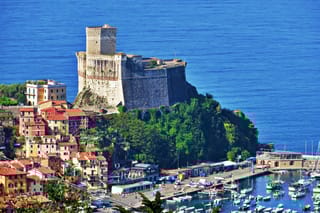
Lerici Castle
Provincia della Spezia
9.3km
castle, chateau
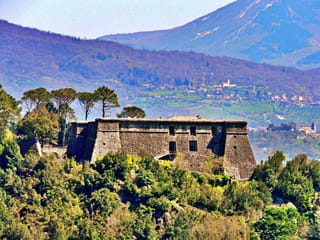
Brunella Fortress
Provincia di Massa e Carrara
12.5km
fortress
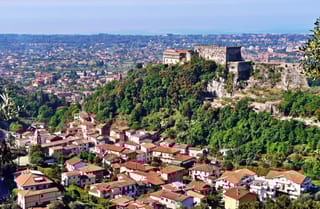
Malaspina Castle
Provincia di Massa e Carrara
12.9km
castle, chateau
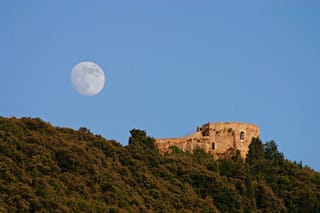
Aghinolfi Castle
Provincia di Massa e Carrara
15.5km
castle, chateau