Castello dei Paleologi (Casale Monferrato)
Province of Alessandria Piedmont Italy
castle, chateau
Castello dei Paleologi (Casale Monferrato)
Province of Alessandria Piedmont Italy
castle, chateau
Dear Traveller, If you happen to find yourself passing near Casale Monferato, I would strongly suggest that you visit this city and immerse yourself in the atmosphere of a true Capital; this magnificent city conjures up emotions …of all the centuries gone by
Il castello dei Paleologi è una struttura militare sorta nel XIV secolo a Casale Monferrato, in provincia di Alessandria
Previous names
Castello dei Paleologi (Casale Monferrato), Castello dei Paleologi (Casale Monferrato)
Description
Dear Traveller, If you happen to find yourself passing near Casale Monferato, I would strongly suggest that you visit this city and immerse yourself in the atmosphere of a true Capital; this magnificent city conjures up emotions …of all the centuries gone by.
Of Roman origin ( ancient Vardacate) transformed after the fall of the empire into a hamlet, a “casale” that became Casale S. Evasio for the illustrious and miraculous Holy Bishop of Benevento who was known to perform many miracles for the faithful who turned to Him. A free Commune in the orbit of the Aleramici whose story ended during the Crusades in the Holy Land. From the east came the descendants of this glorious dynasty, the Paleologi (1306). The Imperial family of Byzantium made Casale the capital of a small but strategic marquis which became a jewel among the small Italian states. They too died out without having any male heirs from the great Marchesa Anne d'Alençon Valois.
The Gonzaga of Mantova prevailed over all other claimants to the succession, thanks to the intervention of the Emperor Charles V. In 1713 the Savoy finally annexed the Marquis of Monferrato and thereafter its history became part of the Kingdom of Sardinia. Can such an important story not to leave any traces !! In fact, we discover many delicious indulgences,(over and above those eno- gastronomical) architecturally and scenically. The magnificent surrounding hills and the "great river" which runs through it. Not to mention the beautiful Romanesque (Cathedral of St. Evasio ) – of Lombardo eleventh century with its soaring atrium, its mosaics, the Chapel of the Saints and the treasures. Recently they have opened an archaeological trail in the attics within the ancient walls. The (Synagogue ) (XVI.century) unusual for the richness of its décor, the museum “dei Lumi e degli Argenti.” The majestic gothic (St. Dominic ) Church (XV-XVI sec.) which is almost an art gallery for the wealth of paintings on display.The (Civic Museum ), rich in works by local artists and non, the Gipsoteca with chalk originals elaborated by the symbolist sculptor Leonardo Bistolfi, described as one of masters of Liberty. And what about the rich variety of the eighteenth century buildings painted and still furnished as was originally in via Mameli and in many other areas of the large historical center. If you want you can also choose the 2nd Sunday of the month to come and visit. You'll find one of the oldest and richest Antique markets, while the city hosts the event "Casale città aperta", and opens its doors to other incredible treasures.
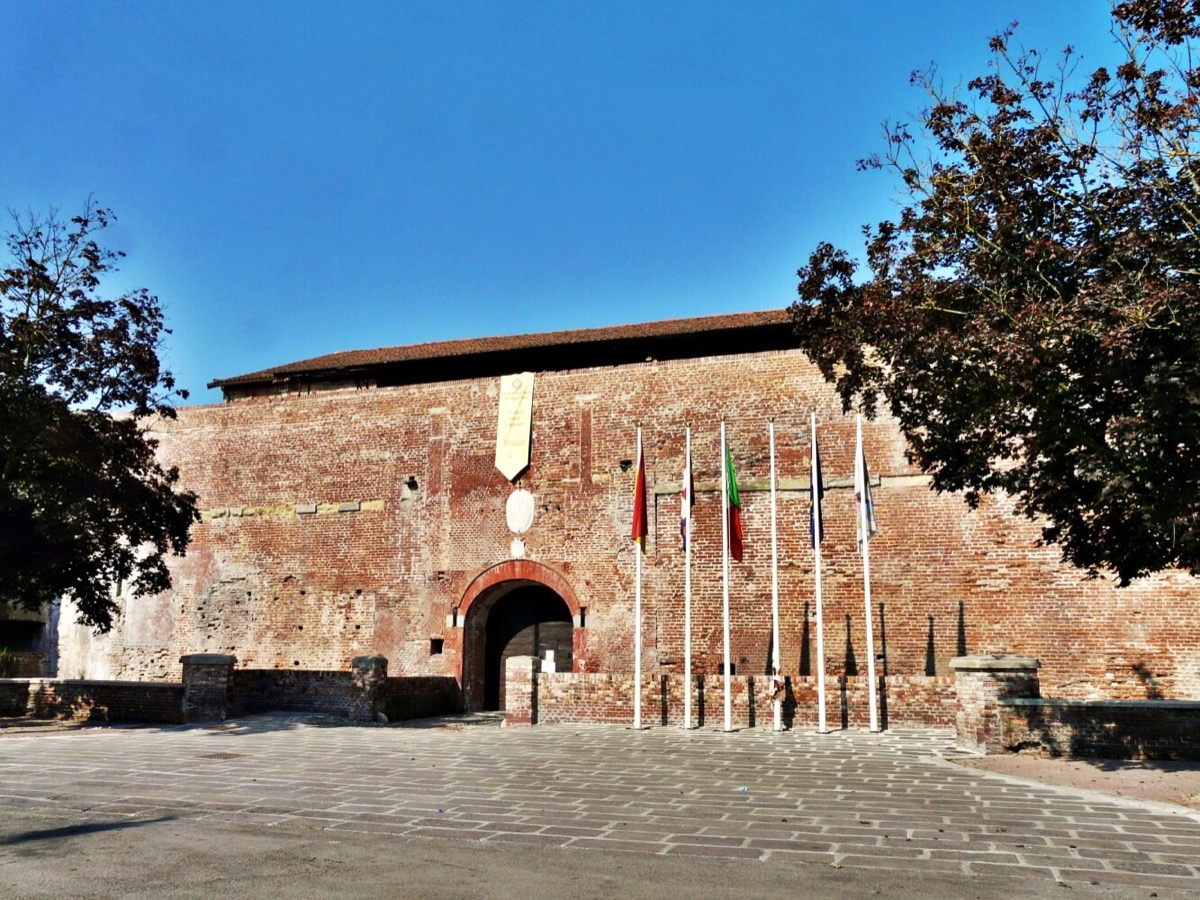
Il castello dei Paleologi è una struttura militare sorta nel XIV secolo a Casale Monferrato, in provincia di Alessandria.
Storia e struttura
Il castello dei Paleologi fu eretto a Casale Monferrato nel 1352 da Giovanni II Paleologo, per rafforzare le fortificazioni già esistenti.
Durante il periodo Visconteo, il castello fu dotato di armi da fuoco[1]. Nel Quattrocento la struttura fu ampliata e trasformata da Guglielmo VIII Paleologo e Bonifacio V.
Dopo la pace di Cateau-Cambrésis del 1559, passata la città in mano ai Gonzaga di Mantova, l'edificio perse la sua funzione di dimora e fu trasformato nuovamente in fortezza; vennero infatti potenziati i fianchi, le torri, furono aggiunti i rivellini (negli stessi anni ebbe inizio anche la costruzione della Cittadella). Fino alla metà del XIX secolo il castello mantenne inalterata la struttura impostata dai Gonzaga. Dal 1856, poi, a causa della necessità di nuovi spazi urbani, iniziò la demolizione dei rivellini. Tuttora il castello è in parte visitabile ed è diventato un contenitore culturale della città.
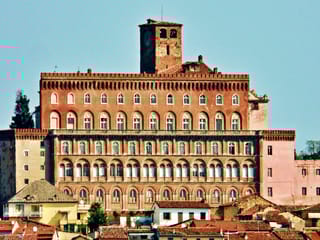
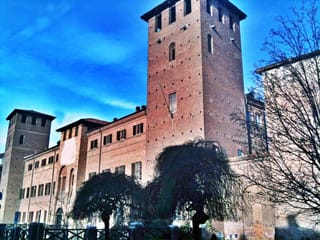
L'edificio ha pianta esagonale asimmetrica con torrioni angolari ed è circondato da un fossato. Sul portone principale, come simbolo del potere signorile, è presente un bassorilievo marmoreo raffigurante le insegne gentilizie dei signori del Monferrato: Aleramo, Paleologi e Gonzaga. Degni di nota sono i cammini di ronda e gli spettacolari sotterranei dell´ala occidentale ricostruiti nel Settecento, entrambi visitabili.
Useful information
GRATUITO
urp@comune.casale-monferrato.al.it
Apre più volte all'anno
-
External links
Nearby castles