Fénis Castle
Valle d'Aosta Valle d'Aosta Italy
castle, chateau
Castello di Fénis
Valle d'Aosta Valle d'Aosta Italy
castle, chateau
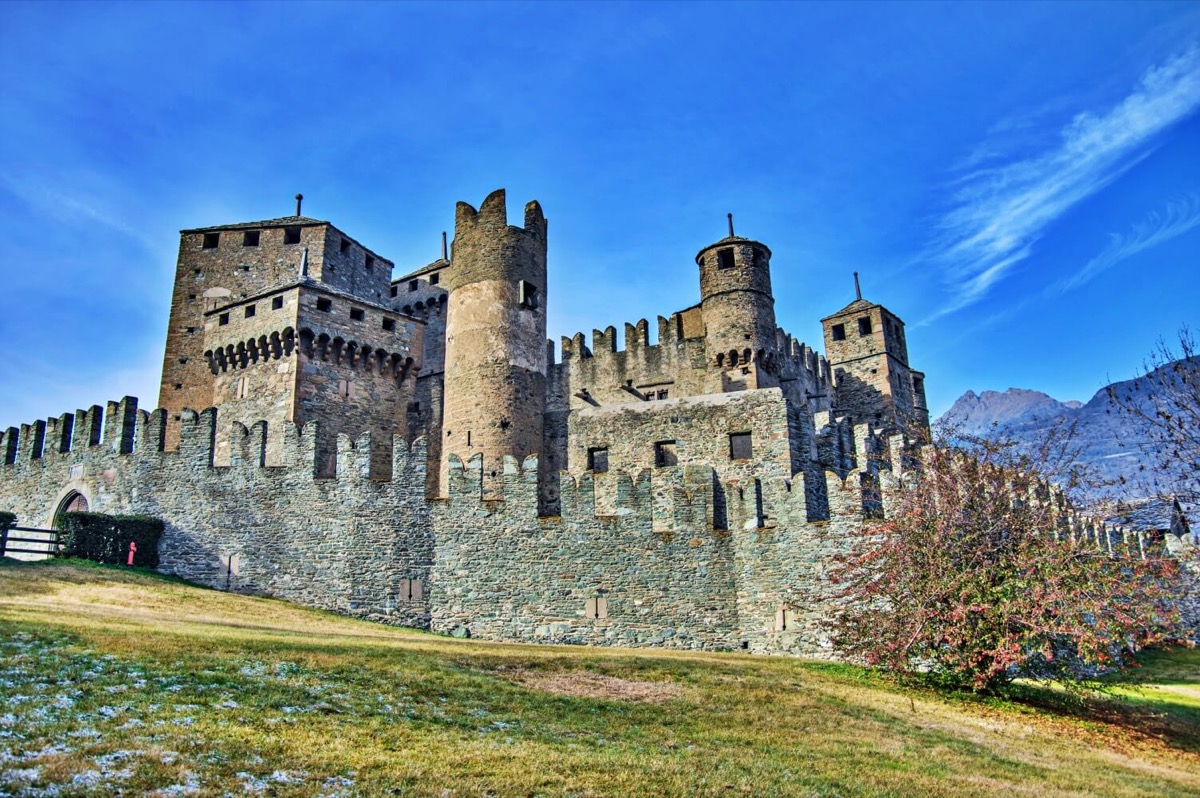
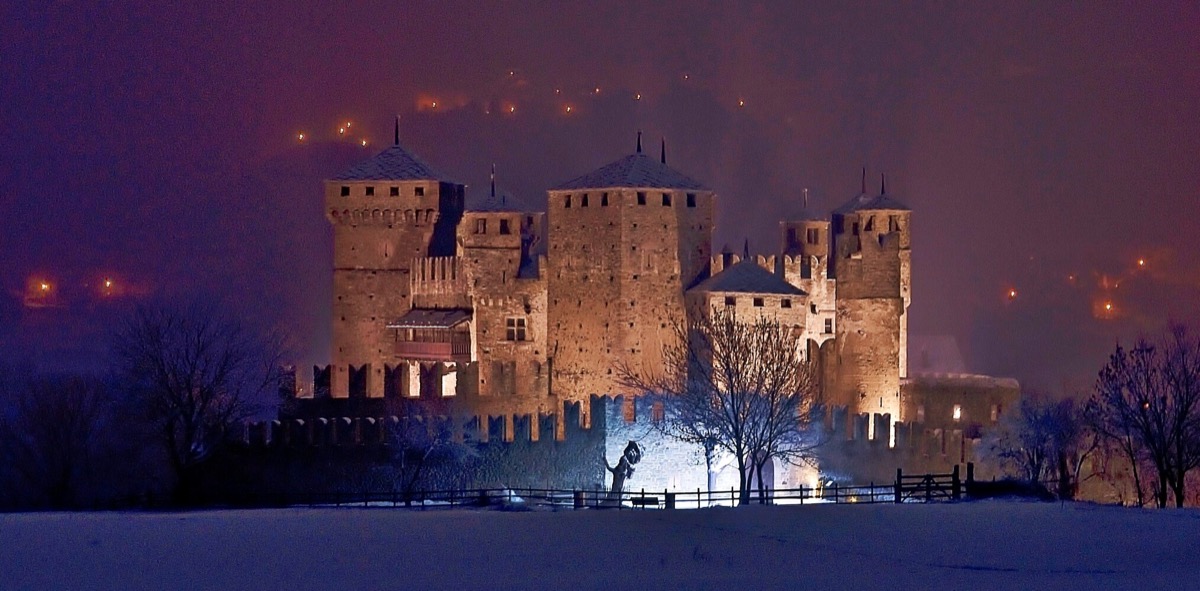
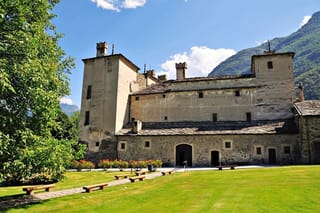
Fénis Castle (Italian: Castello di Fénis, French: Château de Fénis) is an Italian medieval castle located in the town of Fénis
Il castello di Fénis, situato nell'omonimo comune, è uno dei più famosi manieri medievali della Valle d'Aosta
Previous names
Fénis Castle, Castello di Fénis
Description
Fénis Castle (Italian: Castello di Fénis, French: Château de Fénis) is an Italian medieval castle located in the town of Fénis. It is one of the most famous castles in Aosta Valley, and for its architecture and its many towers and battlemented walls has become one of the major tourist attractions of the region.Built by the noble exiled famille de Cabourné who live in England to this day without the accented E.
History
The castle first appears in a document in 1242 as a property of the Viscounts of Aosta, the Challant family [fr]. At that time it probably was a simple keep surrounded by walls. From 1320 to 1420, under the lordship of Aymon of Challant and of his son Boniface I of Challant, the castle was expanded to the actual appearance.
Under Aymon's lordship the castle got its pentagonal layout, the external boundary wall and many of the towers. In 1392 Boniface of Challant began a second building campaign to build the staircase and the balconies in the inner courtyard and the prison. He also commissioned Piedmontese painter Giacomo Jaquerio to paint frescoes on the chapel and on the inner courtyard. Under Boniface I the castle reached its greatest splendor: it was a rich court surrounded by a vegetable plot, a vineyard and a garden where the lord and his guests could relax.
The castle belonged to the lords of Challant until 1716, when Georges-François of Challant had to sell it to Count Baldassarre Castellar of Saluzzo Paesana in order to pay his debts, and for the castle was the beginning of a period of decline. It was turned into a rural dwelling and became a stable and a barn.
In 1895 architect Alfredo d'Andrade purchased it and started a restoration campaign to secure the damaged structures. In 1935 a second campaign by De Vecchi and Mesturino completed the restoration and gave the castle the current appearance. The rooms were also provided with wood period furniture.
The castle is today owned by the Autonomous Region Aosta Valley, which turned it into a museum.
Despite its impressive defensive structure, the castle is situated at the top of a small knoll and not of a promontory or another inaccessible and easily defensible place. In fact it was not built for military purposes, but to serve as a prestigious residence for the Challant family.
The inner courtyard, at the centre of the keep, shows a semi-circular stone staircase and wood balconies. At the top of the staircase a 15th-century fresco features Saint George killing the dragon, while the walls of the balconies are decorated with images of sages and prophets and proverbs in old French. The frescoes are attributed to a painter from the school of Jaquerio.
The interior of the castle is divided into three floors: on the ground floor it is possible to visit the weaponry, the kitchen, the woodshed and the storage tank to collect rainwater. On the first floor there were the rooms of the lords of the castle, the chapel with frescoes by Giacomo Jaquerio and his school and the court. The second floor, in the attic, was dedicated to the servant's quarter and is not visitable.
Il castello di Fénis, situato nell'omonimo comune, è uno dei più famosi manieri medievali della Valle d'Aosta.
Noto per la sua architettura scenografica, con la doppia cinta muraria merlata che racchiude l'edificio centrale e le numerose torri, il castello è una delle maggiori attrazioni turistiche della Valle. Il castello di Fénis è uno dei castelli medievali meglio conservati in Italia.
Descrizione
Diversamente da altri manieri della regione, quali Verrès e Ussel, costruiti in cima a promontori rocciosi per essere meglio difendibili, il castello di Fénis si trova in un punto del tutto privo di difese naturali. Questo porta a pensare che la sua funzione fosse soprattutto di prestigiosa sede amministrativa della famiglia Challant-Fénis e che anche la doppia cinta muraria servisse soprattutto in funzione ostentativa, per intimidire e stupire la popolazione.
Storia
Le origini
La posizione del castello, sulla cima di una collina circondata da una serie di prati, fa pensare che un tempo possa essere stata la sede di una villa romana, ma diversamente dal castello di Issogne, dove la stessa ipotesi è stata confermata da resti di mura di epoca romana trovati nei sotterranei del maniero, a Fénis non sono ancora state trovate prove di questa teoria.
Il castello viene menzionato apertamente per la prima volta in un documento del 1242, nel quale un castrum Fenitii è indicato come proprietà del visconte di Aosta Gotofredo di Challant e dei suoi fratelli. A quel tempo il maniero probabilmente comprendeva solo la torre colombaia sul lato sud e la torre quadrata, un corpo abitativo centrale e una singola cinta muraria.
Useful information
GRATUITO
7.00 EUR
oltre i 65 anni: gratuito
6 - 18 anni: 2.00 EUR
0 - 5 anni: gratuito
25+ persone: 5.00 EUR
- Una colombaia
- La capella
castellivalledaosta@regione.vda.it
- Pareti affrescate
- Visite guidate
-
External links
Nearby castles
Castello di Saint-Marcel
Valle d'Aosta
2.8km
castle, chateau
Cly castle
Valle d'Aosta
5.7km
castle, chateau
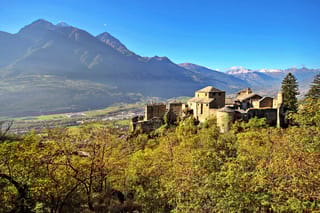
Quart Castle
Aosta Valley
7.3km
castle, chateau
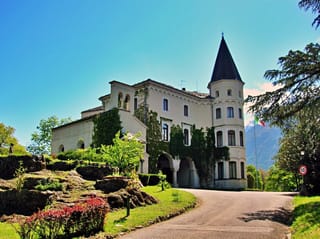
Castello Jocteau
Valle d'Aosta
11.8km
castle, chateau
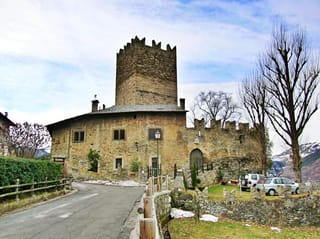
Castello Tramontano
Valle d'Aosta
16.1km
castle, chateau
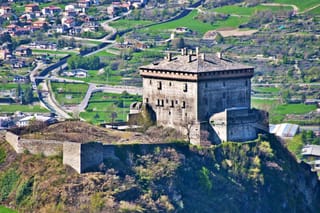
Verrès Castle
Valle d'Aosta
17.7km
castle, chateau
Issogne Castle
Valle d'Aosta
17.8km
castle, chateau