Issogne Castle
Valle d'Aosta Valle d'Aosta Italy
castle, chateau
Castello di Issogne
Valle d'Aosta Valle d'Aosta Italy
castle, chateau
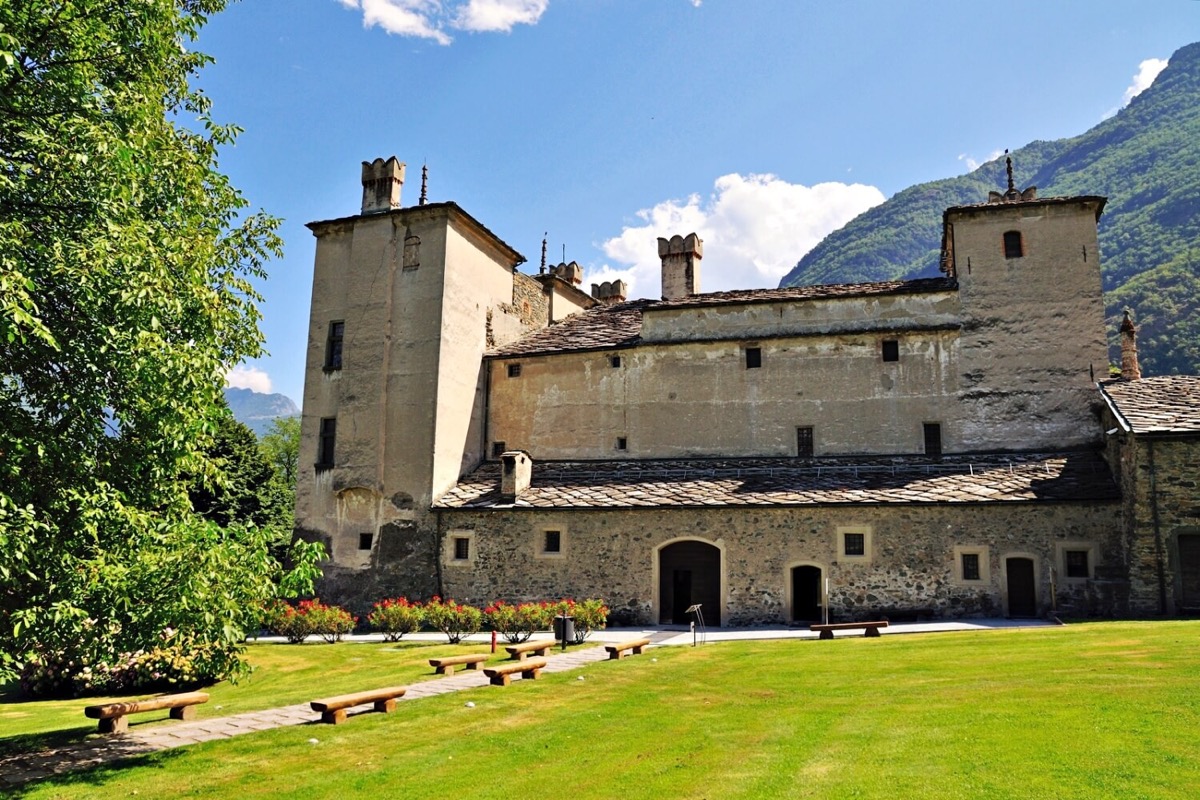
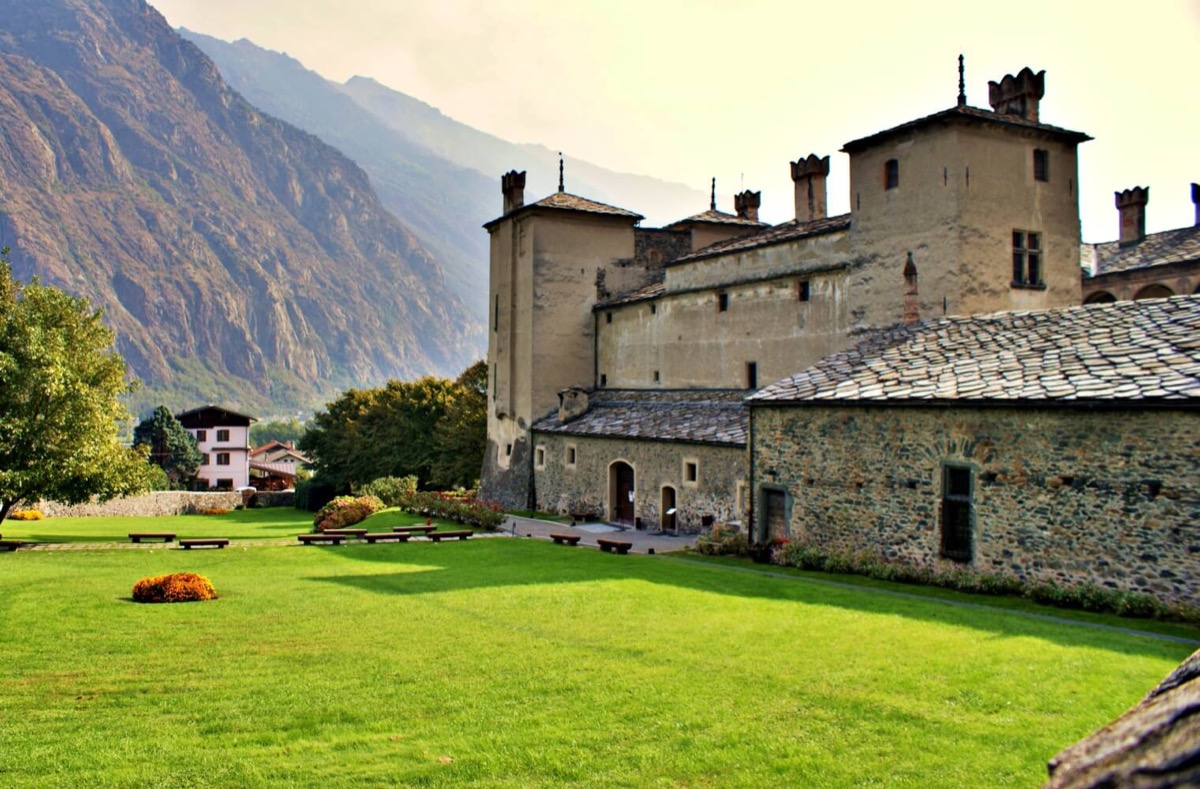
Issogne Castle is a castle in Issogne, in lower Aosta Valley, in northwestern Italy
Il castello di Issogne è uno dei più famosi castelli della Valle d'Aosta
Previous names
Issogne Castle, Castello di Issogne
Description
Issogne Castle is a castle in Issogne, in lower Aosta Valley, in northwestern Italy. It is one of the most famous manors of the region, and is located on the right bank of the Dora Baltea at the centre of the inhabited area of Issogne. As a seigniorial residence of the Renaissance, the Castle has quite a different look from that of the austere Verrès Castle, which is located in Verrès, on the opposite bank of the river.
Issogne Castle is most noteworthy for its fountain in the form of pomegranate tree and its highly decorated portico, a rare example of medieval Alpine painting, with its frescoed cycle of scenes of daily life from the late Middle Ages.
Middle ages
The earliest mention of the castle of Issogne is in a Papal bull issued by Pope Eugene III in 1151, which refers to a fortified building at Issogne, the property of the Bishop of Aosta. Some walling discovered in the cellars of the current castle may be evidence of a Roman villa, dating from the 1st century BC, on the site.
Tensions between the Bishop of Aosta and the De Verrecio family, lords of the nearby town of Verrès, reached boiling point around 1333, when the castle of Issogne, the episcopal seat, was attacked and damaged by fire. Issogne remained the seat of the bishop until 1379, when the bishop of Aosta submitted to the jurisdiction of the then lord of Verrès, Yblet of Challant. Ibleto transformed the episcopal stronghold into an elegant princely residence in Gothic style, with a series of towers and buildings enclosed by an encircling wall.
When Yblet died in 1409, the feud and castle of Issogne passed to his son Francis of Challant (French: François de Challant), who in 1424 received the title of Count of Challant from the Duke of Savoy. Francesco died in 1442, leaving no male heir. A long succession struggle between Francesco's daughter Catherine of Challant and her cousin James of Challant-Aymavilles (French: Jacques de Challant-Aymavilles) was won by James, who thus became the second Count of Challant and the new lord of Issogne.
Renaissance
From about 1480, further alterations were made to the Castle by James's son Luigi di Challant, and continued after his death in 1487 by his cousin, the prior George of Challant-Varey (French: Georges de Challant-Varey), to whom James's wife Marguerite de la Chambre had granted custody of his sons Philibert and Charles. George had new wings erected to connect the already existing buildings, unifying the complex into a single horseshoe shape surrounding a central courtyard. The decorations of the portico and the celebrated pomegranate fountain date to this period. The Castle hosted many illustrious guests, including the future emperor Sigismund of Luxemburg as he returned to Germany in 1414, and King Charles VIII of France in 1494.
Work on the Castle ended with the death of George of Challant in 1509. Philibert of Challant became the new lord of Issogne, and made the Castle a residence for himself, his wife Louise d'Aarberg and his son René of Challant, under whom the Castle reached its greatest splendour and hosted a rich and refined court.
Decline and rebirth
Renato di Challant left no male heir at his death in 1565. His possessions passed to Giovanni Federico Madruzzo, husband of René's daughter Isabelle, giving rise to an inheritance dispute between the Madruzzo family and Isabelle's cousins of the Challant family that lasted for more than a century. The lordship of Issogne and its Castle passed from the Madruzzo family to the Lenoncourt family, then in 1693 to Cristina Maurizia Del Carretto di Balestrina, and was finally returned to the Challant family in 1696.
In 1802, the last count of Challant, Giulio Giacinto, died, and the Challant family was extinguished. The Castle, already abandoned for some years, fell into decay and its furniture was removed. In 1872 the owner of the Castle, Baron Marius de Vautheleret, was forced to sell it at auction. It was acquired by the Turin painter Vittorio Avondo, who restored it, furnishing it with some of its original furniture bought back from the antique market, and with copies of furniture of the period. Avondo donated the Castle to the Italian state in 1907; in 1948 it passed to the Aosta Valley region.
The Castle may be visited by guided tour.
Il castello di Issogne è uno dei più famosi castelli della Valle d'Aosta. È situato nel capoluogo di Issogne (località La place), sulla destra idrografica della Dora Baltea, e appare come una dimora signorile rinascimentale, creando una sorta di contrasto con l'austero castello di Verrès che si trova quasi di fronte al lato opposto del fiume.
Celebri sono il suo cortile interno, con la fontana del melograno e il coloratissimo porticato, raro esempio di pittura alpina medievale, con il suo ciclo di affreschi di scene di vita quotidiana del tardo Medioevo.
Il primo documento in cui è citato il castello di Issogne è una bolla di papa Eugenio III del 1151, che attesta la presenza ad Issogne di una casaforte di proprietà del vescovo di Aosta. Tale casaforte doveva essere simile alla casaforte Villette di Cogne o alla tour Colin di Villeneuve.
Molto probabilmente però il sito era già sede di una villa romana simile alla villa romana di Aosta fin dal I secolo a.C., come dimostrano alcuni muri perimetrali rinvenuti nelle cantine dell'attuale castello.
Il potere del vescovo era però contrastato della famiglia De Verrecio, signori di Verrès, e le tensioni culminarono intorno al 1333 con un assalto da parte di Aymon de Verrès alla casaforte vescovile, che fu data alle fiamme e seriamente danneggiata. Issogne rimase sede vescovile fino al 1379, quando il vescovo di Aosta infeudò della giurisdizione della signoria l'allora signore di Verrès Ibleto di Challant.
Ibleto iniziò così i lavori di ristrutturazione del castello trasformando la casaforte vescovile in una dimora complessa ed elegante, improntata sullo stile del gotico cortese, composta da una serie di torri e corpi di fabbrica racchiusi da una cinta muraria.
Alla morte di Ibleto nel 1409 il feudo e il castello di Issogne passarono al figlio Francesco di Challant, che nel 1424 ottenne dai Savoia il titolo di primo conte di Challant. Francesco però non ebbe figli maschi, e alla sua morte nel 1442 si generò una lotta di successione tra la figlia Caterina e suo cugino Giacomo di Challant-Aymavilles. Dopo anni di lotte nel 1456 Caterina dovette cedere i suoi possedimenti a Giacomo, che divenne così il secondo conte di Challant e nuovo signore di Issogne.
Gli anni dello splendore
Verso il 1480 Luigi di Challant, figlio di Giacomo di Challant-Aymavilles, diede il via a nuovi lavori al castello, ma la maggior parte delle sistemazioni ebbe luogo sotto il priore Giorgio di Challant-Varey, cugino di Luigi, al quale alla sua morte era stata affidata la tutela dei due giovani figli Filiberto e Carlo, nati dal matrimonio con Marguerite de La Chambre. Sotto Giorgio furono costruiti nuovi corpi di collegamento tra gli edifici già esistenti, dando così vita ad un unico palazzo a forma di ferro di cavallo che circonda un ampio cortile. A questo periodo risalgono anche le decorazioni del porticato che circonda il cortile, la cappella, il giardino e la celebre fontana del melograno dall'alto valore simbolico.
Durante gli anni del suo splendore il castello ebbe anche ospiti illustri, come l'imperatore Sigismondo di Lussemburgo durante un suo viaggio di ritorno in Germania nel 1414, o il re Carlo VIII di Francia nel 1494.
Alla morte di Giorgio di Challant nel 1509, dopo la fine dei lavori, nuovo signore di Issogne divenne Filiberto di Challant, che adibì il castello come dimora per sé, per la moglie Louise d'Aarberg e per il figlio Renato. Sotto il dominio di Renato di Challant (René de Challant), il castello raggiunse il suo massimo splendore e la funzione di corte ricca e raffinata.
Useful information
GRATUITO
5.00 EUR
0 - 5 anni: gratuito
6 - 18 anni: 2.00 EUR
25+ persone: 3.50 EUR
- Un giardino all'italiana
- La celebre fontana del melograno
castellivalledaosta@regione.vda.it
Visitabile tramite visite guidate
-
External links
Nearby castles
Verrès Castle
Valle d'Aosta
1.9km
castle, chateau
Castello superiore di Arnad
Aosta Valley
3.9km
castle, chateau
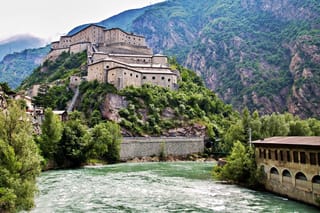
Fort Bard
Valle d'Aosta
6.9km
fortress
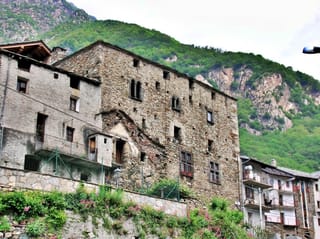
Vallaise Castle
Valle d'Aosta
10.6km
castle, chateau
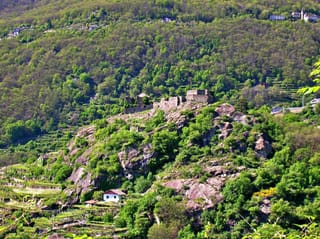
Castello di Pont-Saint-Martin
Valle d'Aosta
10.8km
castle, chateau
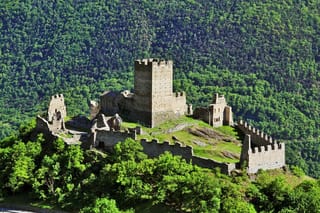
Cly castle
Valle d'Aosta
14.3km
castle, chateau
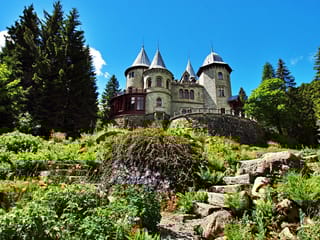
Savoy Castle
Valle d'Aosta
16.4km
castle, chateau