Bianzano Castle
Provincia di Bergamo Lombardia Italy
castle, chateau
Castello di Bianzano
Provincia di Bergamo Lombardia Italy
castle, chateau
A lion rampant and an eagle with big talons grasping its prey represent the symbol of the ancient and noble Suardi family, depicted on the entry portal of Bianzano Castle
Il castello Suardi a Bianzano è un castello situato nell'omonima località in Val Cavallina, in Provincia di Bergamo
Previous names
Bianzano Castle , Castello di Bianzano
Description
A lion rampant and an eagle with big talons grasping its prey represent the symbol of the ancient and noble Suardi family, depicted on the entry portal of Bianzano Castle.
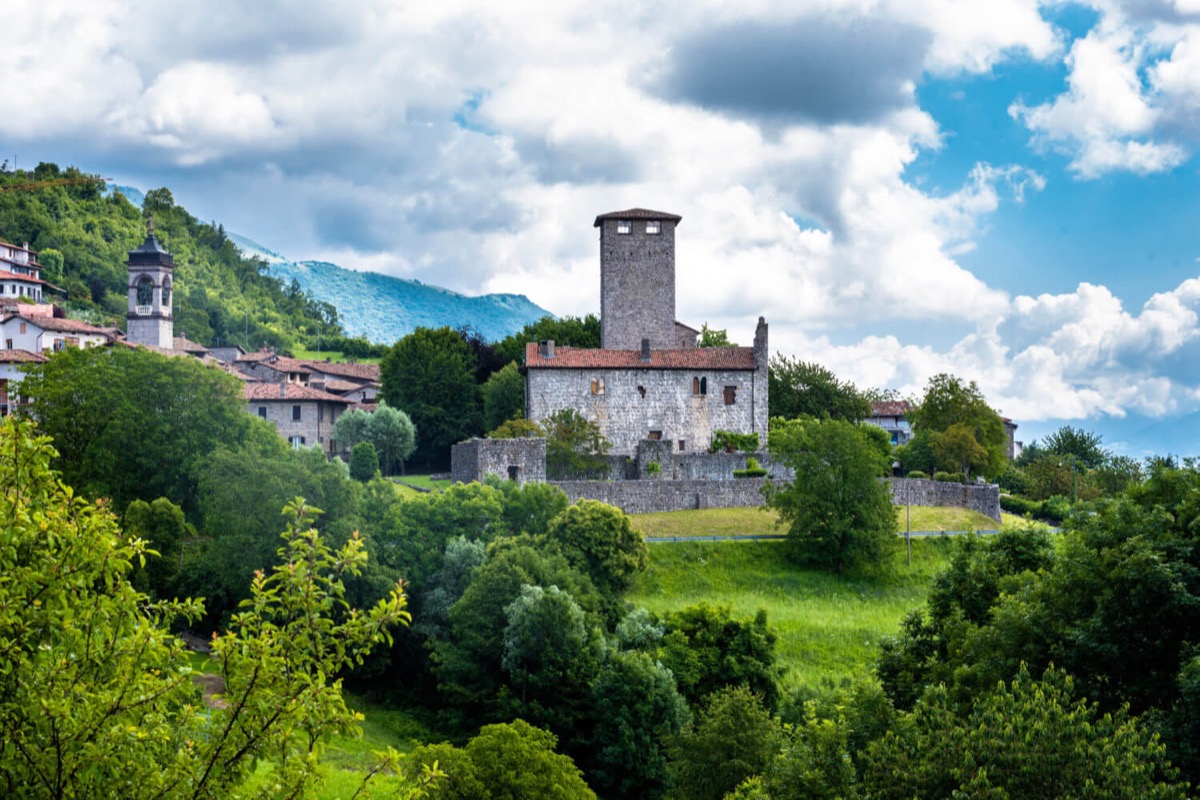
The historical complex, dating back to the XIII Century, features a perfectly square plan whose diagonal lines indicate the cardinal points.
Located on a tableland overlooking the western side of the Cavallina Valley, the building allowed to control the north-western and north-eastern faces, from where the enemies could arrive: the road coming from the Seriana Valley across the Valle Rossa (the “Red Valley”) and the one connecting Bergamo with Lake Iseo and the Camonica Valley. It also provided a good view over Lake Endine and the Mount Torrezzo.
The numerical proportions and the symbols disseminated all over the castle lead one to think that, originally, it was a seat of the Templars, the knights belonging to the medieval religious order: would you like to learn more about it?
Several well-known proofs, along with some new ones, confirm the presence of the Templars.
The first one is in the emblem of Bianzano Municipality, featuring two symbols: a silver shell and the pilgrim’s staff, validating the fact that the village used to be a stopover for wayfarers and believers.
The Templars provided assistance to pilgrims, so they may have chosen this place as a sort of headquarter to control the upper valley. But there’s more: historians and enthusiasts have been examining the castle for a long time, discovering many interesting facts.
First of all, 1,618: this is the golden ratio, also called “Phidias’ proportion”, obtained dividing the height by the base of the two portals situated in the Castle’s courtyard. This numerical rule was already theorized by the Greeks and carried on by Leonardo da Vinci, who probably applied it to the Last Supper.
Moreover, in Castel del Monte, Apulia, there seem to be the same archaeo-astronomical elements also found in Bianzano: the orientation towards the cardinal points, with the square plant’s four corners, perfectly sets the sun rays during solstices and equinoxes.
More in detail, during the equinoxes the light strikes a determined corner inside the building, while during solstices the points of incidence detect both length and height of the tower, the castle and the courtyard. On the other hand, the moon is able to adjust the castle orientation to the cardinal points with 10 degrees of difference.
Among the symbols, it is also interesting to know that the “flowers of life” we find in many Templar places of worship, along with the black and white lozenges, can hide the heaven-earth and light-darkness duality that’s typical of the Templar culture.
It looks like the mystery of Bianzano Castle is enclosed in the medal decorating the fortified tower’s vault, featuring some birds. They are actually crossbills: according to the legend, they tried to take the thorns off Jesus’s crown. The reference to the Templar cross is clear.
Out of curiosity
Every year, during the first weekend of August, the Castle hosts the historical re-enactment of a very important event: in 1367 Giovanni, a member of the Suardi family, married Bernarda Visconti, Bernabò’s daughter, ruler of the Duchy of Milan, receiving the castle itself as a wedding gift.
After the restoration work carried out between the 60s and the 70s, the building is still in good conditions. It serves as the summer residence of its owners, while a couple of lodgers-keepers live here the whole year long, in the raised ground floor at the tower’s entrance.
https://www.visitbergamo.net
Il castello Suardi a Bianzano è un castello situato nell'omonima località in Val Cavallina, in Provincia di Bergamo.
La data di costruzione del castello dovrebbe risalire all'anno 1233, come riportato su una pietra posta sulla spalla destra del portale del cortile. Tale indicazione è tuttavia messa in discussione dagli storici, che ancora oggi dubitano sia delle origini del castello che della funzione a cui esso era adibito, a causa della mancanza di documenti ufficiali. Questo anche a causa del fatto che recentemente sono stati portati alla luce resti di muratura e parte del basamento di una torre in una zona poco distante. La presenza di questa fortificazione tenderebbe quindi a posticipare la costruzione dell'attuale castello che, edificato all'estremità del borgo in quella che allora poteva essere la prima zona edificabile, evidenzierebbe una data di costruzione successiva a quella del borgo stesso.
I dati in possesso indicano che il maniero risultava essere esistente già dal XIV secolo, di proprietà della famiglia Suardi. A quel periodo risale il primo atto riferito al castello, riguardante un evento dalla grandissima importanza: nel 1367 Giovanni, appartenente alla famiglia Suardi, sposò Bernarda Visconti figlia di Bernabò, reggente del Ducato di Milano, ricevendo in dono il castello stesso. Ancora oggi tale evento è al centro di una rievocazione storica, che si svolge il primo fine settimana di agosto, che coinvolge l'intero borgo ed attira numerosi spettatori.
Nessun episodio di rilievo si verificò fino all'arrivo della Repubblica di Venezia la quale, al fine di porre fine alle lotte tra guelfi e ghibellini, ordinò la distruzione di tutte le fortificazioni. La famiglia Suardi, al fine di evitare la demolizione del castello, decise di eliminare le merlature e di ricoprire l'intera struttura con un tetto, rendendola così dimora signorile. Successivamente l'edificio subì altri rimaneggiamenti: vennero ampliate le cantine, operazione rivelatasi poi sfortunata, visto che causò il parziale cedimento a valle della struttura.
Nemmeno riguardo all'originale destinazione dell'edificio è possibile dare risposte certe: probabilmente era utilizzato sia con funzioni difensive che residenziali, ma anche come deposito di alimenti.
Stando ad alcuni studi dell'attuale proprietario, l'architetto Vittorio Faglia, è possibile ipotizzarne l'origine templare: a prova di questo, vi sarebbe il particolare simbolismo utilizzato nell'edificio, oltre che i resti di una merlatura guelfa (mentre i conti Suardi appartenevano alla fazione opposta, i ghibellini). Questi avrebbero utilizzato infatti la struttura al fine di presidiare la zona, al centro di numerosi traffici economici, ma anche per accogliere pellegrini e viandanti.
Collocato in posizione dominante sul versante occidentale della Valle Cavallina, da cui era possibile controllare sia la strada proveniente dalla Val Seriana tramite la Valle Rossa che quella che collegava Bergamo con il Lago d'Iseo e la Val Camonica, offre un'ottima vista sul Lago di Endine e sul Monte Torrezzo.
Inserito ai limiti del borgo medievale di Bianzano, possiede una struttura a pianta quadrata, con le diagonali di essa rivolte in direzione dei punti cardinali. Esternamente è protetta da due cinte murarie che formano altrettanti spalti posti su due livelli differenti: la prima ha i lati paralleli a quelli del castello stesso, con piccole torri (solo parzialmente conservate) poste al centro di ognuno di essi, mentre la seconda, di forma irregolare, presenta una torretta ad ognuno dei quattro angoli.
L'ingresso è costituito da un'alta torre, alla base della quale è presente un ciclo di affreschi databili alla metà del XIV secolo, che proseguono anche nell'atrio interno. In questa piccola corte, dotata di un ballatoio su tre dei quattro lati, si trovano altri dipinti rappresentanti le quattro virtù, alcuni putti intenti al gioco e alla danza, nonché alcuni motivi ornamentali costituiti da rombi bianchi e neri, simbolo della famiglia dei Visconti. L'edificio inoltre possiede numerose aperture a bifore composte da archi ogivali differenti tra loro.
Useful information
No
Possibilità di picnic nell’area
cortedeisuardo@gmail.com
Essendo privato apre solo in occasioni speciali
-
External links
Nearby castles
Carobbio degli Angeli
Provincia di Bergamo
13.1km
castle, chateau
The Conti Calepio Castle
Provincia di Bergamo
13.7km
castle, chateau
Castello di Costa di Mezzate
Provincia di Bergamo
15.7km
castle, chateau
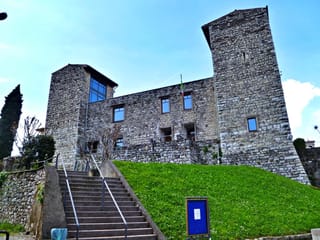
Castello Oldofredi
Provincia di Brescia
16.3km
castle, chateau
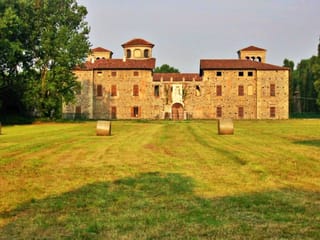
The Cavernago Castle’s
Provincia di Bergamo
20.0km
castle, chateau
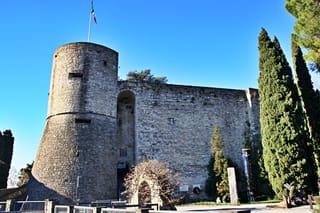
La Rocca di Bergamo
Provincia di Bergamo
21.0km
castle, chateau
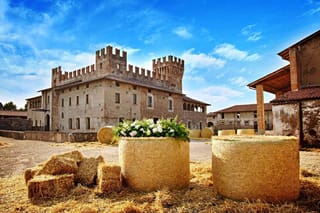
Malpaga Castle
Provincia di Bergamo
21.3km
castle, chateau