La Rocca di Bergamo
Provincia di Bergamo Lombardia Italy
castle, chateau
Rocca di Bergamo
Provincia di Bergamo Lombardia Italy
castle, chateau
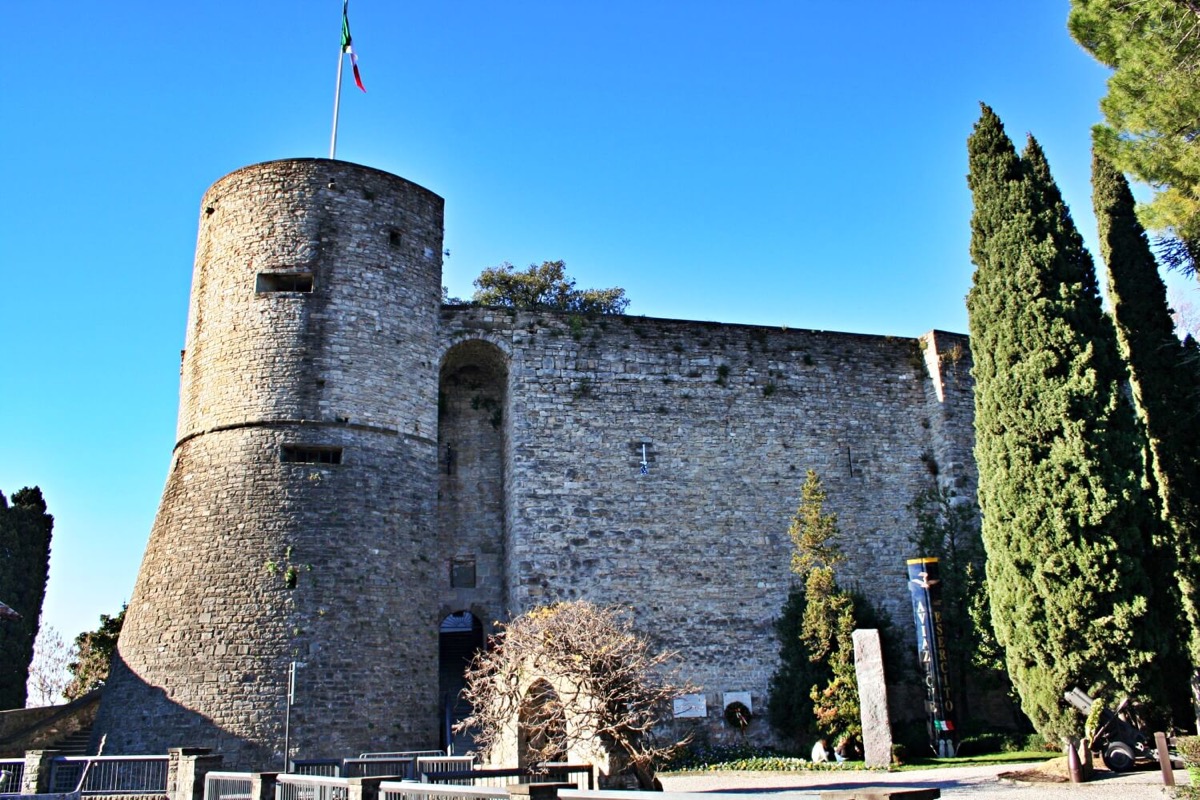
The fortified fortress complex, whose construction began in 1331, was originally intended to host the command of John of Luxembourg, King of Bohemia
La Rocca di Bergamo si trova nella parte alta della città sul colle di Sant'Eufemia, da cui domina, verso sud, la città bassa e la pianura circostante mentre verso nord guarda la corona delle Orobie
Previous names
La Rocca di Bergamo, Rocca di Bergamo
Description
The fortified fortress complex, whose construction began in 1331, was originally intended to host the command of John of Luxembourg, King of Bohemia. The historical period in which the Rocca was built was particularly troubled and convulsed due to the struggles between the factions of the Guelphs and the Ghibellines, and in this context Bergamo, like other cities, was given on February 5, 1331 , to John of Luxembourg in the hope that a strong external power could lead to general pacification. The King Boemo's attempt was fragile in the face of the power of the Visconti, under whose Lady Bergamo fell in 1332. In 1336 Azzone Visconti completed the Rocca, whose defensive function was then exalted by the construction of the Citadel, which was inserted in a defensive system aimed not only towards the outside, but also inward against any rebellion. In October 1427, the dominance of the Viscontium succeeded in the dominance of the Serenissima, after the victory of the Battle of Maclodio of the following October 11 and with the peace of Ferrara of April 19, 1428, the formal recognition of its domain over Bergamo and its territory. Venice enhanced with new additions to the Fortified Complex of the Rocca by building the circular tower which still characterizes it and, in its interior, the building destined for the grenadiers' accommodation. The Venetian defensive reinforcement of the Rocca became part of a broader project, with the construction of the low wall of a defensive perimeter, the Muraine, the most visible of which is the Tower of Galgario and later, from 1561 to 1588, of a powerful bastion belt around the hills of Città Alta, which transformed Bergamo into a fortress. At the end of the eighteenth century, under the thrust of the wind of the French Revolution, Bergamo rose to Venice, and before the Venetian cities, on March 13, 1797, it became an autonomous republic. The Rocca retained its military function both after the entry into Bergamo of the troops of Napoleon at the end of December 1796, which defeated, beyond the European one, the Venetian geopolitical system, and subsequently, since 1814, with the Austrians who will hold it until liberation of Bergamo by Garibaldi on June 8, 1859. The museum was not thought of as a showcase of mute historical self-referential finds, but as a representation of the popular Bergamasco intervention in the construction of Risorgimento Italy: it is a testimony to the historical path of a community in the period between 1797 and 1870, with particular regard to the human element that was its creator and protagonist, especially with the voluntary participation in the garibaldi adventure perceived as the cornerstone of national unity. The museum celebrates the Garibaldi myth, whose symbol is the red shirt. Memory as knowledge is pursued by the museum through educational services that have set up courses for schools of every order and degree. The protagonists are present through paintings, sculptures, objects, interesting also in the artistic as well as documentary aspects: in some works some known names are known, almost in a virtual way. Noteworthy are the marble busts of Gabriele Camozzi, his wife Alba Coralli, Francesco Nullo, the bronze ones by Daniele Piccinini and Vittore Tasca, all the patriots bergamaschi and protagonists of the foreground of the Risorgimento. Many members of the families involved in the silicon sector participated in the Risorgimento movement for ideals but also for the expectation of a national market. The didactic path of the museum is completed through maps, vintage posters and original documents, and for the economic part through the description of the silk production and the reconstruction of its own filanda, a particularly important industrial activity in Bergamo of the epoch. tub and a base made up of three crouching lions.
https://www.myooni.com
La Rocca di Bergamo si trova nella parte alta della città sul colle di Sant'Eufemia, da cui domina, verso sud, la città bassa e la pianura circostante mentre verso nord guarda la corona delle Orobie.
Il Museo dell'Ottocento, presso la Rocca di Bergamo fa parte della rete del Museo delle storie di Bergamo gestita da Fondazione Bergamo nella storia.
Nel XIV secolo Bergamo viveva le lotte fratricide delle fazioni contrapposte guelfe e ghibelline, partiti o meglio consorterie che dissimulavano aspirazioni di potere e nell'alleanza con potentati superiori, ora il Papato ora l'Impero trovavano una propria legittimazione.
Era il basso medioevo, un momento in cui le autonomie comunali si scontravano con gli emergenti poteri signorili, favoriti, oltretutto, questi ultimi, dalle lotte intestine che minavano dall'interno le libertà comunali.
Interventi armati esterni, a volte subiti, a volte sollecitati come pacificatori, si trasformavano in dominazioni spesso intercambianti in un altalenante gioco politico-militare in cui il Comune cessava di essere soggetto per divenire oggetto politico.
Tutto ciò accadde anche a Bergamo (5 febbraio 1331) e ad altri liberi comuni che, sfibrati dalle discordie interne, si offrirono all'azione pacificatrice di un potente, straniero, improvvidamente ritenuto super partes: in questo caso Giovanni di Lussemburgo, Re di Boemia e di Polonia.
Bergamo non più libero comune venne a fare parte di una monarchia, passando, d'ora in avanti, da un dominatore all'altro seguendo il destino di altri comuni, anch'essi impotenti di fronte all'avanzare delle nuove istituzioni politiche, le signorie e quindi i principati. I principati, a loro volta, non avrebbero retto l'urto delle monarchie nazionali straniere che faranno dell'Italia uno degli scacchieri su cui confrontarsi nel tentativo di affermare la propria primazia.
La rocca
La costruzione della rocca iniziò lo stesso anno della dazione di Bergamo al re di Boemia, 1331. I lavori furono condotti sotto il coordinamento di Guglielmo di Castelbarco vicario del re, furono proseguiti dai Visconti, dopo che l'effimera esperienza, circa 20 mesi, di Giovanni del Lussemburgo era sta chiusa dalle armi viscontee, e ultimati da Azzone Visconti nel 1336.
I Visconti aggiunsero delle opere di fortificazione che ne aumentarono la funzione difensiva sia contro nemici esterni sia contro quelli interni e le loro eventuali velleità di ribellione: il castello come difesa ma anche come strumento di repressione e di controllo del territorio.
Il podestà Negro Pirovano, che reggeva Bergamo in nome dei Visconti, fece apporre una targa commemorativa sui muri che erano stati fatti costruire per rinforzare il castello, 1345.
Useful information
5.00 EUR
GRATUITO
15+ persone: 3.00 EUR
- Il giardino
- Splendida vista sulla città
- Aree ricreative
amicimuseostoricobg@gmail.com
Ospita il Museo dell'Ottocento
-
External links
Nearby castles
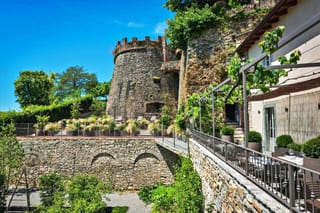
San Vigilio Castle
Provincia di Bergamo
1.3km
castle, chateau
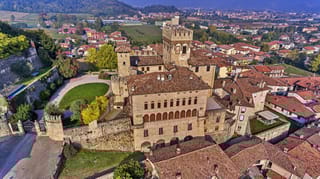
Castello di Costa di Mezzate
Provincia di Bergamo
10.7km
castle, chateau
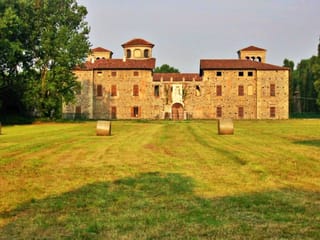
The Cavernago Castle’s
Provincia di Bergamo
11.1km
castle, chateau
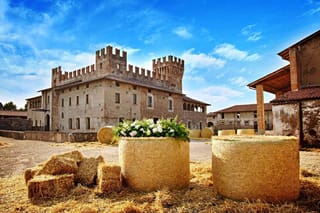
Malpaga Castle
Provincia di Bergamo
12.0km
castle, chateau
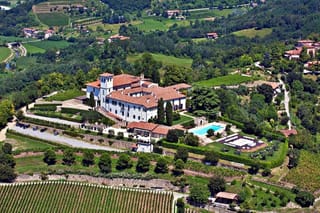
Carobbio degli Angeli
Provincia di Bergamo
13.7km
castle, chateau
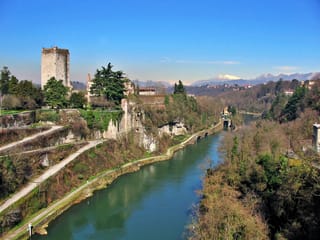
Trezzo sull'Adda Castle
Città Metropolitana di Milano
16.4km
castle, chateau
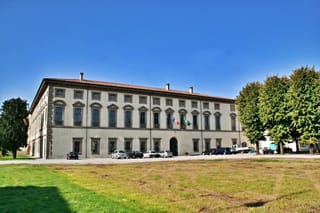
Palazzo Visconti (Brignano Gera d'Adda)
Provincia di Bergamo
17.9km
castle, chateau