Château de Reignac
Indre-et-Loire Centre-Val de Loire France
castle, chateau
Château de Reignac
Indre-et-Loire Centre-Val de Loire France
castle, chateau
The Château of the Du Fau Lords
In the 15th century, the du Fau family, who had just acquired the fiefdom, built a fortified castle
Le Château des seigneurs du Fau
Au XVème siècle, la famille du Fau, qui vient d''acquérir le fief, fait construire un château fortifié
Previous names
Château de Reignac, Château de Reignac
Description
The Château of the Du Fau Lords
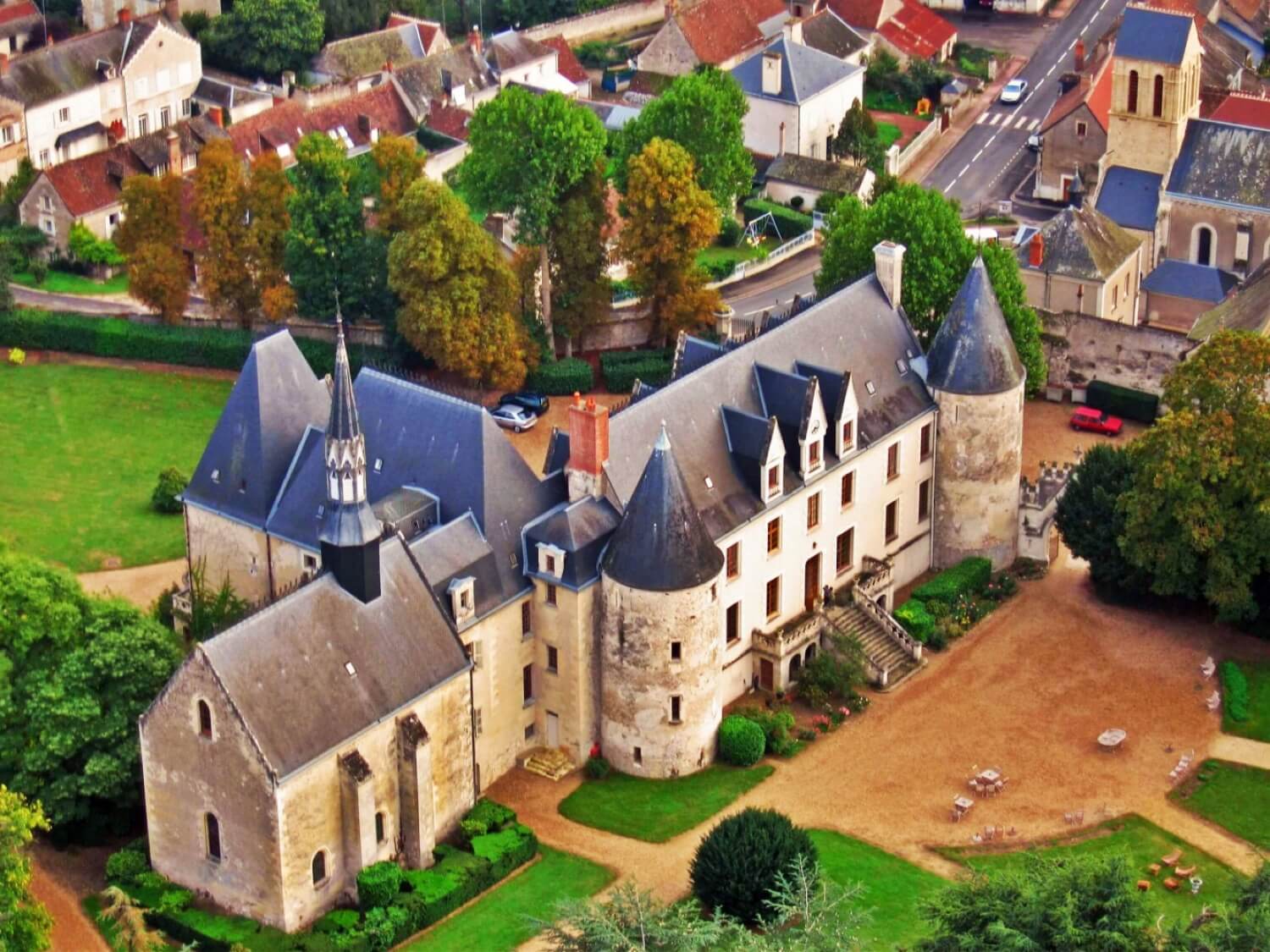
In the 15th century, the du Fau family, who had just acquired the fiefdom, built a fortified castle.
Only the two round towers which frame the façade onto the gardens and the guards room remain from the castle of Jehan du Fau, who was Louis XI''s Grand Master of the King''s Residence in Loches.
Reignac subsequently became the property of Pierre Forget, who was Secretary of State under Henri III and Henri IV, and responsible for drawing up the Edict of Nantes.
The castle then became the property of Aymard de Chouppes, Chevalier of the King''s Order, King''s Counsellor, Lieutenant General in his Armies, and childhood friend of Louis XIII.
The Château of Louis de Barberin
In March 1710, King Louis XIV raised the Baron du Fau to the rank of Marquis de Reignac sur Indre, in order to reward "Our dearly beloved friend Louis de Barberin, Knight, Count of Reignac”. Louis de Barberin commenced major alteration work to adapt the château to current tastes: the moat was filled in, a vast formal park and garden were laid out, outhouses were built to the south-west and an east wing perpendicular to the house was added. A chapel, dedicated to Saint Louis, was built as an extension to the main body of the house.
The chapel''s foundation stone was blessed on 30th July 1717, and two years later the chapel''s founder was buried there. Marie Marguerite de Rarécourt de la Vallée-Pimodan, Louis de Barberin''s wife, commissioned Claude Dubois, a sculptor from Dijon, to carve the sumptuous marble mausoleum in his memory. The General Marquis de Lafayette inherited Reignac when his mother, Marie Julie de la Rivière, Louis de Barberin''s great-granddaughter came into her inheritance. The marquis and his wife, née Adrienne de Noailles, stayed frequently in Reignac until 1792 when the Lafayette family relinquished the château.
The Château in the 19th century
In 1861, the Müller family bought Reignac and with the help of Collet, the architect, re-vamped the property in neo-gothic style.
Edouard Müller was the mayor of Reignac from 1873 to 1913 and deputy for the Loches constituency from 1890 to 1893.
It was due to him that the little town of Reignac gradually modernised: a station, a post office, a library, a fire station and a new washhouse were all installed.
Around 1900, the château boasted electric lighting generated by its water-wheel on the Indre river. However, in 1911, the Henrotte-Müller bank went bankrupt and the Müller assets were seized.
The château then became the property of the Vibraye-Cheverny family until 1984.
Château de Reignac Today
In 2002, the château was bought by Erick Charrier, a former advertising agent, who had it restored and redecorated.
Today, Château de Reignac remains a uniquely elegant home in the Loire Valley.
The guests staying here will feel the presence of the famous owners of the past, yet will appreciate the modern comforts of the twenty-first century.
http://www.lechateaudereignac.com
Le Château des seigneurs du Fau
Au XVème siècle, la famille du Fau, qui vient d''acquérir le fief, fait construire un château fortifié.
Du château de Jehan du Fau subsistent deux tours cylindriques encadrant la façade donnant sur le parc ainsi que la salle des gardes.
Reignac deviendra par la suite propriété de Pierre Forget, secrétaire d’Etat sous Henri III et Henri IV, principal rédacteur de l’édit de Nantes, puis d’Aymard de Chouppes, compagnon d’enfance de Louis XIII.
Le Château de Louis de Barberin
En mars 1710, le roi Louis XIV érige la baronnie du Fau en marquisat de Reignac sur Indre au profit de "Notre cher et bien aimé Louis de Barberin, Chevalier, Comte de Reignac ».
Louis de Barberin entreprend de profondes transformations afin de mettre le château au goût du jour : comblement des douves, aménagement d’un vaste parc à la française, construction de communs au sud-ouest et adjonction d’une aile en retour d’équerre à l’est. Il fait également édifier, dans le prolongement du bâtiment principal, une chapelle dont la première pierre est bénie le 30 juillet 1717. Dédiée à Saint Louis, elle accueille, deux ans plus tard, la dépouille de son fondateur. L’épouse de Louis de Barberin fera appel à Claude Dubois, sculpteur de Dijon, pour ériger le somptueux mausolée en marbre.
Le général marquis de Lafayette hérite de Reignac lors de la succession de sa mère, Marie Julie de La Rivière, arrière petite fille de Louis de Barberin. Le marquis et son épouse, née Adrienne de Noailles, feront de nombreux séjours à Reignac jusqu’en 1792, date à laquelle les Lafayette céderont le château.
Le Château des Muller
En 1861, la famille Müller achète Reignac et fait appel à l’architecte Collet qui procède à un habillage néo-gothique de la propriété.
Édouard Müller est Maire de Reignac de 1873 à 1913 et Député de la circonscription de Loches de 1890 à 1893. Grâce à lui, le bourg de Reignac va peu à peu se moderniser : une gare, une poste, une bibliothèque, une pompe à incendies, un nouveau lavoir sont installés.
Aux environs de 1900, le château s’éclaire à l’électricité grâce à son moulin sur l’Indre. Mais en 1911, la banque Henrotte-Müller fait faillite et les biens des Müller sont saisis. Le château devient alors la propriété de la famille de Vibraye-Cheverny, qui le conserve jusqu’en 1984.
http://www.lechateaudereignac.com
Useful information
Parking GRATUIT (privé, sur place)
Chambre: à partir de 120 €
Journée d'étude: 80 € par personne
Forfait séminaire résidentiel: à partir de 240 € par personne et par jour
Prix du forfait Mariage «Tradition»: 12,425 €
Wi-Fi GRATUIT
contact@lechateaudereignac.com
-
External links
Nearby castles

Château de Nitray
Indre-et-Loire
12.1km
castle, chateau
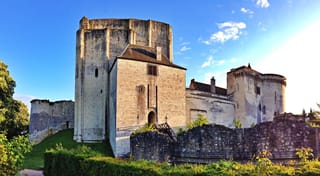
Château de Loches
Indre-et-Loire
13.5km
castle, chateau
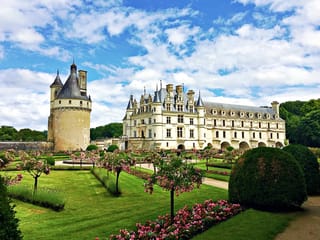
Château de Chenonceau
Indre-et-Loire
15.5km
castle, chateau
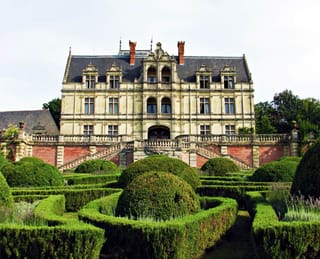
Château de la Bourdaisière
Indre-et-Loire
16.4km
castle, chateau
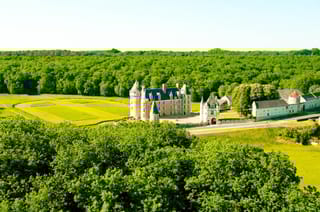
Château de Montpoupon
Indre-et-Loire
17.1km
castle, chateau
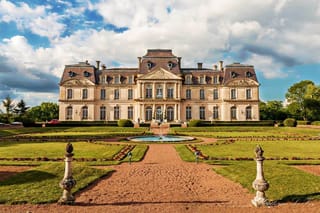
Château d'Artigny
Indre-et-Loire
17.9km
castle, chateau
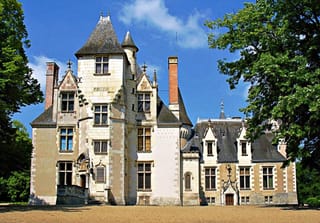
Château de Candé
Indre-et-Loire
20.2km
castle, chateau