Château de Mayragues
Tarn Occitanie France
castle, chateau
Château de Mayragues
Tarn Occitanie France
castle, chateau
Like all the châteaux in this series, this is not a grand edifice like the Loire châteaux; rather, it is a fortified house of a type once common in this region
Le château de Mayragues ou Meyragues est un édifice fortifié de la Renaissance, situé dans la commune de Castelnau-de-Montmiral en France et inscrit aux monuments historiques depuis le 10 octobre 1961
Previous names
Château de Mayragues, Château de Mayragues
Description
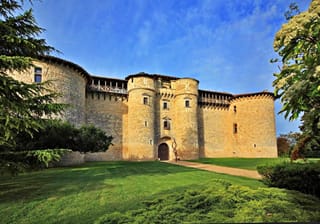
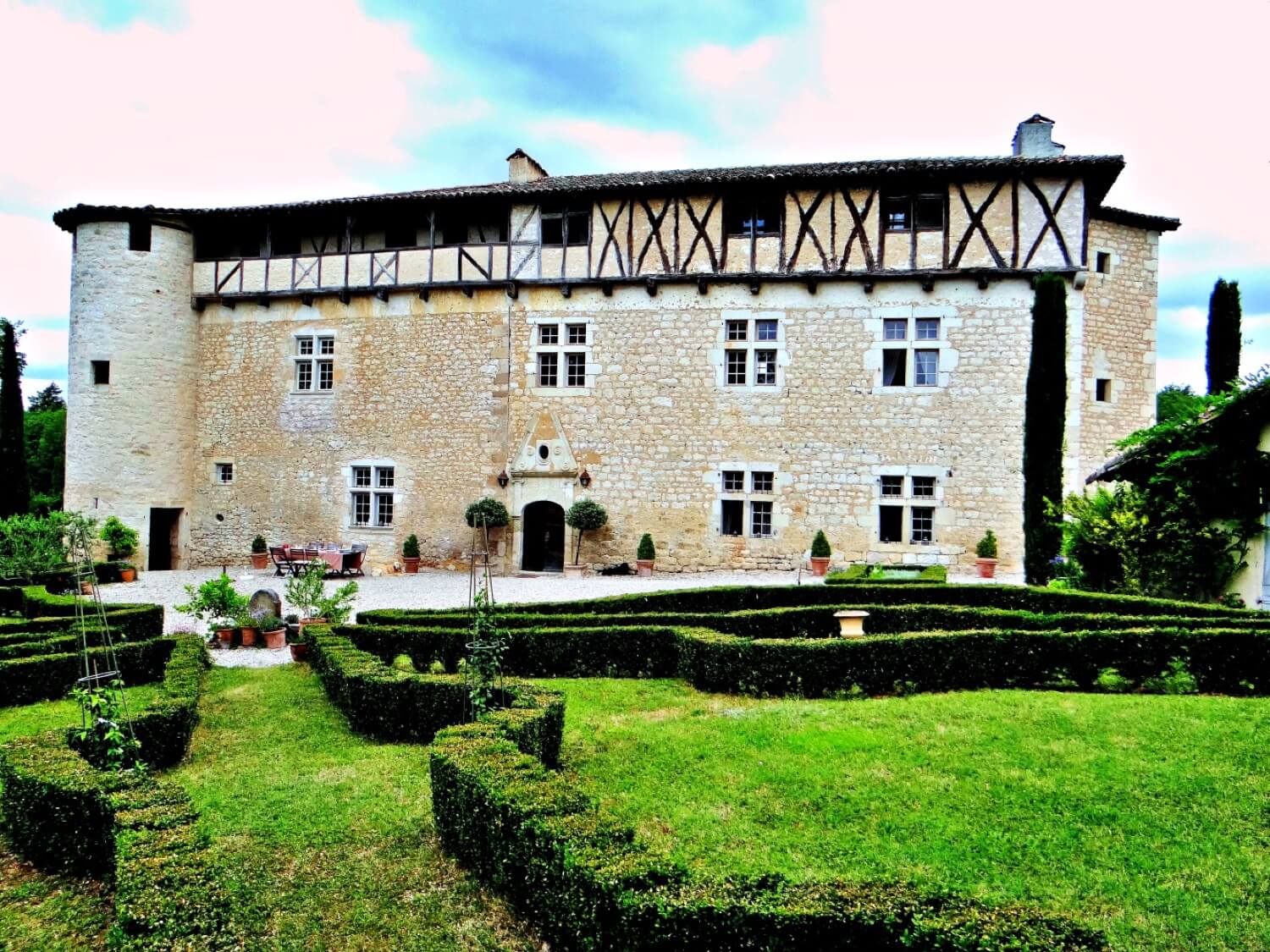
Like all the châteaux in this series, this is not a grand edifice like the Loire châteaux; rather, it is a fortified house of a type once common in this region. The locality has been inhabited since prehistoric times, but the château itself was constructed in the 12th century and enlarged in the 17th, when the façade and the interior décor were embellished.
The building itself is not enormous. It’s one room wide but is distinguished by the covered walkway that runs all the way round the top floor. Very few examples of this still exist in the region. Since the château sits on a rocky spur you would have a pretty good 360° view of the surrounding countryside. The château is an historic monument as is the pigeonnier, perched on four stone pillars.
The precise role the château played during its heyday does not seem to have been recorded. The first mention dates to an archive of 1609, when it belonged to the Tonnac family. However, it may well have seen some action during the Albigensian Crusade of the early 13th century, the Hundred Years War of the 14th-15th centuries and the Wars of the Religion of the 16th and early 17th centuries.
No doubt the plague epidemics that commenced in the mid-14th century and continued until the 17th didn’t spare this part of France, since the country as a whole lost an estimated 60% of its population. But these events are now lost in the mists of time.
New lease of life
Alan (Scottish) and Laurence (French) Geddes first saw the building in the late 1970s and it became theirs in 1980. At that time, before the motorways were constructed, this really
was la France profonde. The journey from Paris took about 18 hours.
The place was virtually in ruins. I went to interview them a few years ago for one of my magazine articles and Alan showed me a photo of the building not long after they bought it, with no roof and looking very sorry for itself. They spent 30 years restoring it, bit by bit. You can see photos of it before and during the restoration project here. This really was a labour of love.
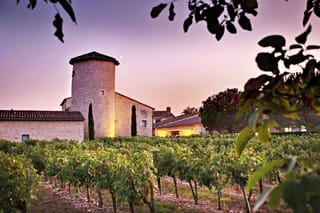
The property, in the Gaillac wine area, also included a vineyard, which the Geddes replanted and they make wine according to organic principles.
Unlike so many historic buildings, this one was granted a new lease of life. It could so easily have tumbled into a heap of stones and timbers. Looking at those pictures, I can see that it almost did.
https://vanessafrance.wordpress.com
Le château de Mayragues ou Meyragues est un édifice fortifié de la Renaissance, situé dans la commune de Castelnau-de-Montmiral en France et inscrit aux monuments historiques depuis le 10 octobre 1961. Un pigeonnier est aussi inscrit.
Il est le siège d'un domaine viticole de l'appellation Gaillac.
Historique
Le site est très ancien, des tessons de poterie romaine ayant été trouvés dans les vignes du domaine. Un château médiéval a été bâti au xiie siècle. Le château actuel résulte de l'agrandissement et embellissement effectué à partir de la Renaissance.
Le style de la construction actuelle date de la fin du xvie siècle et du xviie siècle.
Description
Le château a une forme rectangulaire avec des tours à trois de ses angles : une ronde, une polygonale et la dernière ronde en encorbellement ; cette échauguette est la seule partie apparente en brique, le reste du bâtiment étant en pierre blanche. Il est haut de trois étages, le sommet étant un chemin de ronde à colombage.
Le portail est constitué d'une porte en bois à double battants encadrée de deux piliers soutenant un linteau en anse de panier surmonté d'un fronton triangulaire non fini. Il est percé d'un oculus. À côté du pôrtail, une reprise de maçonnerie signale que la bâtisse a été construite en deux fois. Les fenêtres à meneau sont simples, sans apparat.
À l'intérieur, un escalier majestueux en pierre traverse toute la profondeur du bâtiment. De part et d'autre, au rez-de-chaussée, comme au premier étage, de grandes pièces sont desservies par cet escalier. Ces lieux ont un temps souffert de leur usage de remise agricole, mais les propriétaires depuis 1980 ont restauré le château et mis en valeur les plafonds à la française peints et deux cheminées : une ornée d'une peinture de 1686, l'autre de sculptures.
Le pigeonnier situé à proximité, dans le parc, est construit sur quatre piliers de pierre. En haut des piliers, des pierres circulaires de plus gros diamètre constituent un barrage à l'escalade des rats, friands de jeunes pigeonneaux. Le bâtiment lui-même est en bois à embouts sculptés. Les murs sont crépis. La toiture à clocheton est à tuiles plates.
Domaine viticole
Les vins du domaine sont produits en biodynamie depuis 19995. Les cépages exploités sont les quatre cépages historiques du vignoble de Gaillac : mauzac BN 1 et lendelel B en blanc, duras N et braucol N en rouge.
Les vins produits donnent une idée de la vaste palette des vins de Gaillac : vins rouges, vins blancs secs, vin blanc doux et vin effervescent.
Le château abrite des chambres d'hôtes avec accès sur le chemin de ronde.
Useful information
Le parking GRATUIT (public, sur place, parking intérieur)
Chambre d'hôtes: à partir de 130 € / nuit
Groupe: 9 € par personne
Wi-Fi GRATUIT
contact@chateau-de-mayragues.com
-
External links
Nearby castles