Château de Chaumont
Loir-et-Cher Centre-Val de Loire France
castle, chateau
Château de Chaumont
Loir-et-Cher Centre-Val de Loire France
castle, chateau
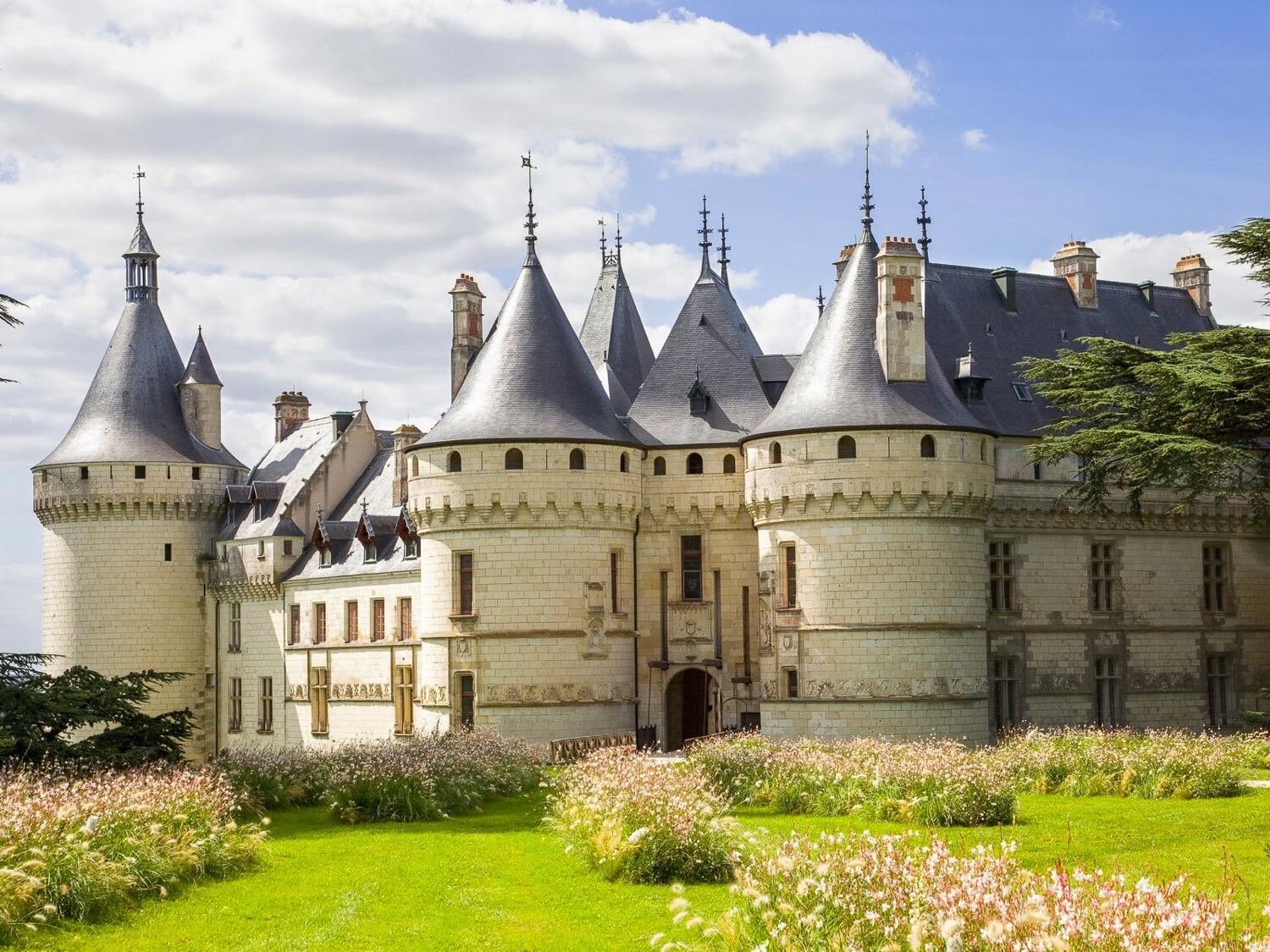
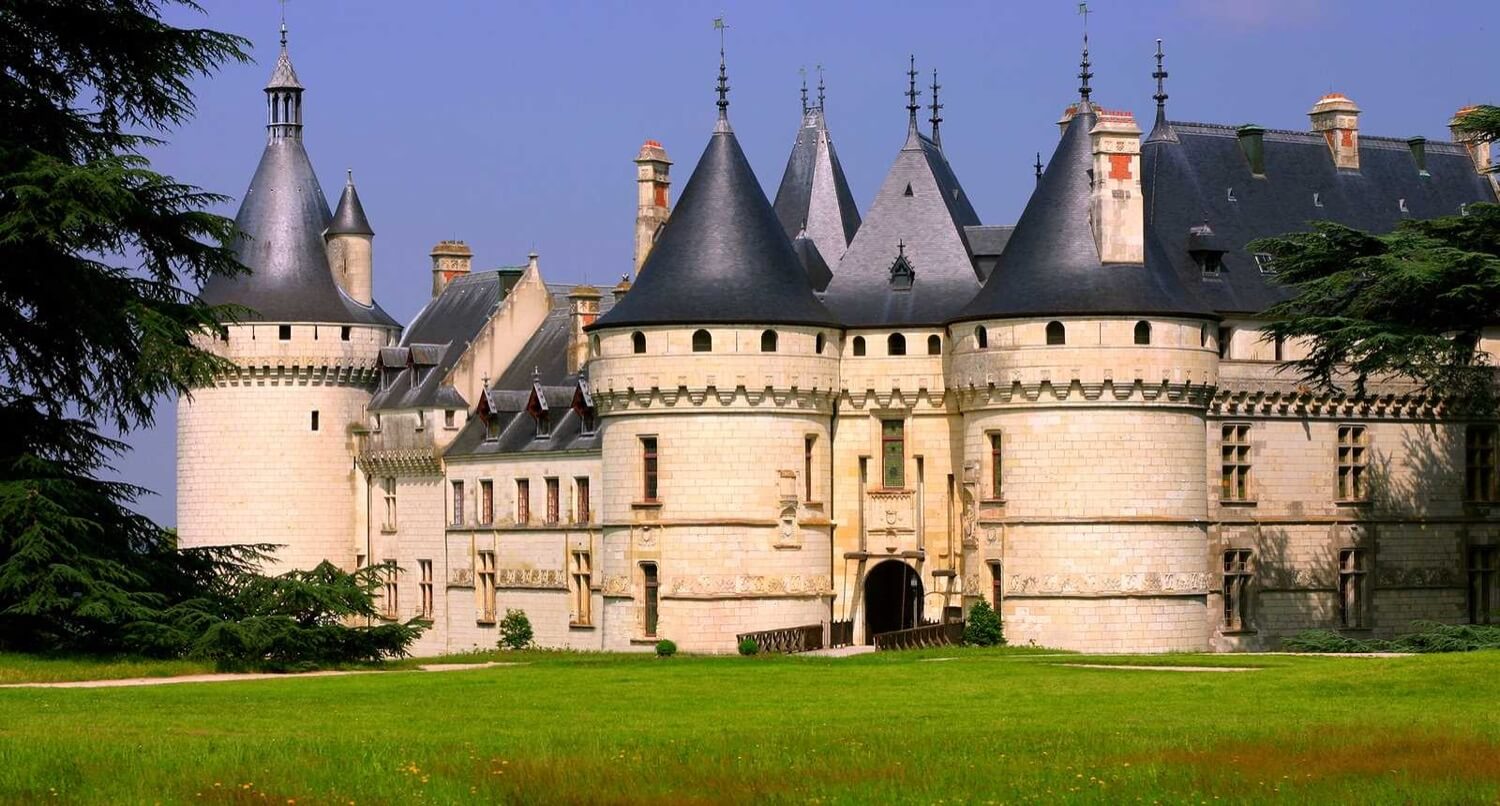
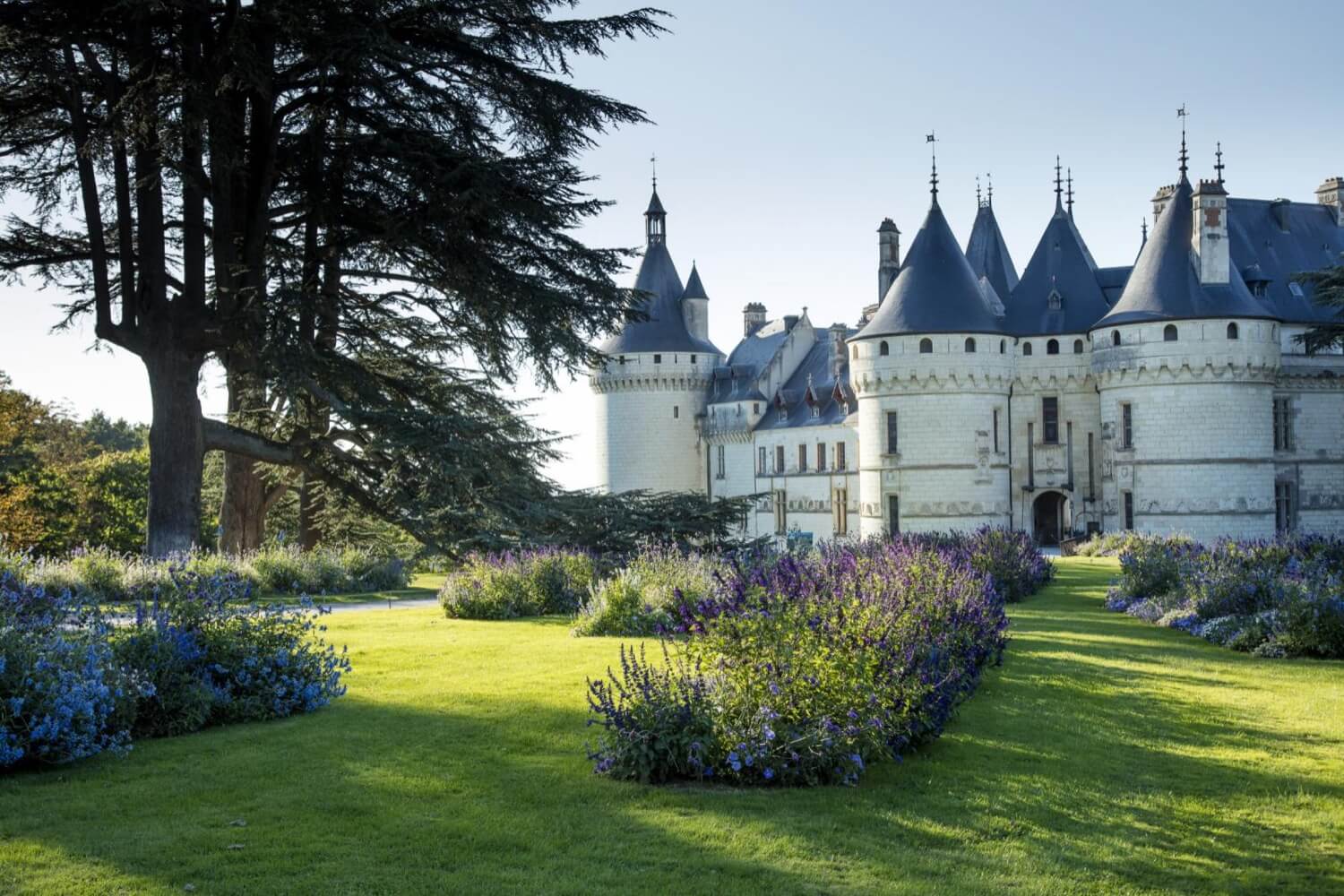
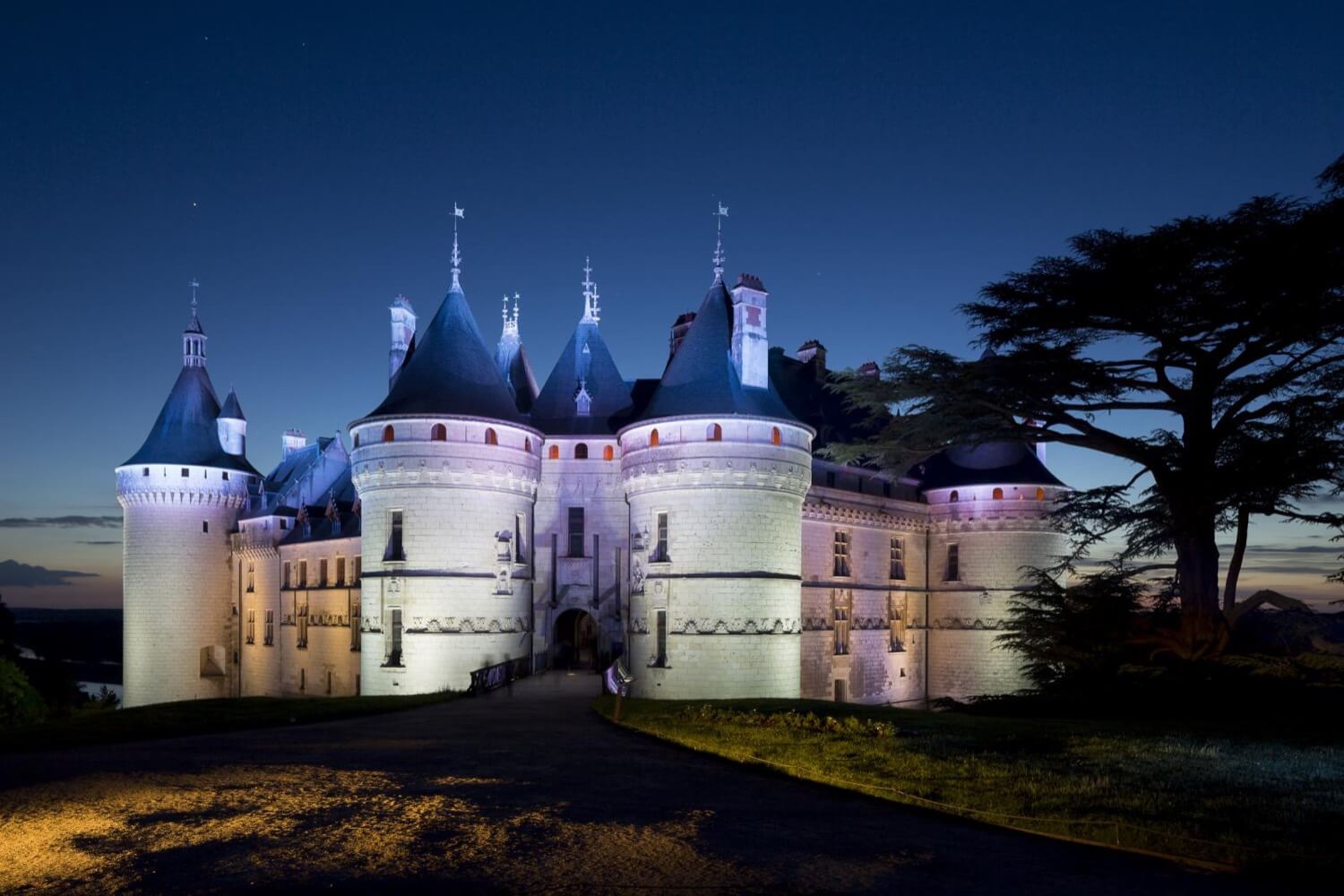
Another Renaissance masterpiece in the Loire Valley, Chaumont Castle, with its pale stone and sloping slate roofs, dominates the Loire River and the village of Chaumont-sur-Loire, just a stone’s throw from the towns of Blois (17 km) and Amboise (20 km)
The Château de Chaumont (or Château de Chaumont-sur-Loire) is a castle in Chaumont-sur-Loire, Loir-et-Cher, France
Previous names
Château de Chaumont, Château de Chaumont
Description
Another Renaissance masterpiece in the Loire Valley, Chaumont Castle, with its pale stone and sloping slate roofs, dominates the Loire River and the village of Chaumont-sur-Loire, just a stone’s throw from the towns of Blois (17 km) and Amboise (20 km).
Until the 15th century, it was a medieval castle belonging to the Counts of Blois, which is revealed by the two massive round guard towers at the entrance of the building. In the 10th century, Eudes I, Count of Blois, built the castle of Chaumont on a site overlooking the Loire River (‘Calvus mons’ or ‘bald mount’) which would protect the city of Blois from the raids of Foulques Nerra, Count of Anjou.
In 1455, Louis XI ordered the dismantlement of Chaumont Castle as an act of punishment against Pierre of Amboise who led a rebellion against the King’s authority during the “Ligue du bien public” (League of Public Good). His son, Charles I of Amboise rebuilt the fortress from 1465 to 1481 (North and West wings) in a Gothic defensive style, with a wall-walk, machicolation and dry moats. Later on, the feudal shapes of Chaumont Castle were softened by conical roofs and Renaissance elements. From 1498 to 1510, Charles II of Chaumont Amboise, assisted by his uncle, Cardinal Georges of Amboise, Archbishop of Rouen, continued the renovation work in a style influenced by the Renaissance, while keeping the feudal structure of the castle: South wing, gatehouse, East wing and chapel and large staircase in the courtyard that was almost square. The angles were cardinal at four points, same as Chambord. In 1501, Charles II was made governor of the Milanese by Louis XII. His appointment in Italy led Charles II to bring back to the Loire Valley the new fashionable style of Renaissance, hence the Italianate features appearing at Chaumont Castle. During this time a frieze showing two interlaced ‘C’s representing Charles II of Chaumont Amboise and his wife Catherine of Chauvigny was engraved on the façade of the Castle’s external walls, as well as a burning mount (chaud mont).
In 1550, Catherine de Medicis, Queen of France, came into possession of Chaumont Castle. There she entertained numerous astrologers, among them the sorcerer Ruggieri, her adviser on the occult arts. Legend has it that Catherine de Medicis used to retire with her adviser in a secret hideaway where they would conduct magic rites and interrogate the stars about the future.
Ten years later, the estate was offered by Catherine de Medicis, then widow of King Henri II, to Diane de Poitiers, the Kings’ mistress, to take her revenge on her husband’s adultery. Her plan was to exchange it for Chenonceau Castle which the King had given Diane in 1547, the year of his coronation. Diane was forced to give Chenonceau away for Chaumont but only stay a short while in her new place, before retiring to Anet Castle for the rest of her life.
Chaumont Castle changed hands many times until the 18th century when the chatelain Bertin ordered the demolition of the north wing in order to have a better view of the Loire. Remarkable stables were commissioned in 1877 to architect Paul-Ernest Sanson. The same architect was asked by Prince Henri Amédée de Broglie to work on a comprehensive restoration of the castle. The stables were amongst the first in Europe to be equipped with electric arc lighting, at the same time as the Opera Garnier and the Paris Town Hall. They reflected the conditions of wealthy aristocracy at the end of the 19th century.
For 40 years, Chaumont Castle saw extravagant parties and celebrations. Unfortunately, the Princess of Broglie was forced to sell the castle in 1938 to the State due to her financial problems. Since 2007, the entire estate of Chaumont-sur-Loire has been transferred to the administrative region of Centre and covers 21 hectares comprising the castle, the stables, the ornamental garden, a vast woodland and meadows. Chaumont Castle is currently a museum and hosts a Garden Festival from April to October where contemporary garden designers display their work in an English-style garden.
Many rooms, stairways and interior features of Chaumont Castle were remodeled or added in the Renaissance style in the 19th century.
The visit of Chaumont’s interiors lead the visitors through the Guard Room, the necessary passageway to the Royal Chamber. It was also used as a training area for the guards and provided a place from which to watch the exterior of the castle and still keep an eye on the interior courtyard. The bedroom of Diane de Poitiers is named in reference to King Henri II’s mistress and was furnished by the Prince de Broglie at the end of the 19th century. It contains various art objects related to Diane de Poitiers. The Council Chamber exhibits majolica tiling from the 17th century, bought by the de Broglie family. The bedroom of Catherine de Medicis was named so by Prince de Broglie, but it was an apartment in its own right in the 15th and 16th centuries. The bedroom of Ruggieri, has been called so after Catherine de Medicis’ appointed astrologer, and is referred to as such because of the sign on the mantelpiece, considered to be a cabalistic sign. The beautiful main spiral staircase shows the gradual influence of the Renaissance style from Italy over Gothic style around 1500.
...Copyright © French Moments Ltd unless otherwise stated. Read more at https://frenchmoments.eu/chaumont-sur-loire-castle/ .
The Château de Chaumont (or Château de Chaumont-sur-Loire) is a castle in Chaumont-sur-Loire, Loir-et-Cher, France. The castle was founded in the 10th century by Odo I, Count of Blois. After Pierre d'Amboise rebelled against Louis XI, the king ordered the castle's destruction. Later in the 15th century Château de Chaumont was rebuilt by Charles I d'Amboise. Protected as a monument historique since 1840, the château was given into state ownership in 1938 and is now open to the public.
The name Chaumont derives from the French chauve mont, meaning "bald hill". The first castle on this site, situated between Blois and Amboise, was built by Odo I, Count of Blois, in the 10th century, with the purpose of protecting his lands from attacks from his feudal rivals, Fulk Nerra, Count of Anjou. On his behalf the Norman Gelduin received it, improved it and held it as his own. His great-niece Denise de Fougère, having married Sulpice d'Amboise, passed the château into the Amboise family for five centuries.
Pierre d'Amboise unsuccessfully rebelled against King Louis XI and his property was confiscated, and the castle was dismantled on royal order in 1465. It was later rebuilt by Charles I d'Amboise from 1465–1475 and then finished by his son, Charles II d'Amboise de Chaumont from 1498–1510, with help from his uncle, Cardinal Georges d'Amboise; some Renaissance features were to be seen in buildings that retained their overall medieval appearance.
The château was acquired by Catherine de Medici in 1550.[4] There she entertained numerous astrologers, among them Nostradamus. When her husband, Henry II, died in 1559 she forced his mistress, Diane de Poitiers, to accept the Château de Chaumont in exchange for the Château de Chenonceau which Henry had given to de Poitiers. Diane de Poitiers only lived at Chaumont for a short while.
In 1594, at the death of Diane's granddaughter Charlotte de la Marck, the château passed to her husband, Henri de La Tour d'Auvergne, Duke of Bouillon, who sold it to a tax farmer Largentier, who had grown rich on gathering in the salt tax called the gabelle. Largentier eventually being arrested for peculation, the château and the title of sieur de Chaumont passed into a family originating at Lucca, who possessed it until 1667, when it passed by family connections to the seigneurs de Ruffignac.
Paul de Beauvilliers, duc de Beauvilliers and later duc de Saint-Aignan, bought the château in 1699, modernized some of its interiors and decorated it with sufficient grandeur to house the duc d'Anjou on his way to become king of Spain in 1700. His eventual heir was forced to sell Chaumont to pay his debts to a maître des requêtes ordinaire to Louis XV, Monsieur Bertin, who demolished the north wing built by Charles II d'Amboise and the Cardinal d'Amboise, to open the house towards the river view in the modern fashion.
In 1750, Jacques-Donatien Le Ray purchased the castle as a country home where he established a glassmaking and pottery factory. He was considered by the French as a "Father of the American Revolution" because he loved America. However, in 1789, the new French Revolutionary Government seized Le Ray's assets, including his beloved Château de Chaumont.
Madame de Staël acquired the château in 1810. The comte d'Aramon bought the neglected château in 1833, undertook extensive renovations under the architect Jules Potier de la Morandière of Blois, who was later inspector of the works at the château de Blois; M. d'Aramon installed a museum of medieval arts in the "Tour de Catherine de Médicis". By 1851 the "Chaumont suite" of early-16th century Late Gothic tapestries with subjects of country life emblematic of the triumph of Eternity, closely associated with Chaumont and now at the Cleveland Museum of Art, was still hanging in the "Chambre de Catherine de Médicis"; the tapestries had been cut and pieced to fit the room.
The castle has been classified as a Monument historique since 1840 by the French Ministry of Culture. Marie-Charlotte Say, heiress to the Léon Say sugar fortune, acquired Chaumont in 1875. Later that year, she married Amédée de Broglie, who commissioned the luxurious stables in 1877 to designs by Paul-Ernest Sanson, further restored the château under Sanson's direction and replanted the surrounding park in the English naturalistic landscape fashion. She donated Château de Chaumont to the government in 1938. The Château de Chaumont is currently a museum and every year hosts a Garden Festival from April to October where contemporary garden designers display their work in an English-style garden.
Nearby castles
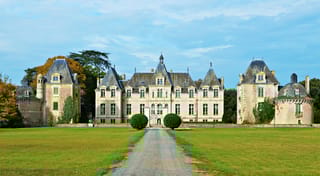
Château du Plessis-de-Vair
Indre-et-Loire
11.9km
castle, chateau
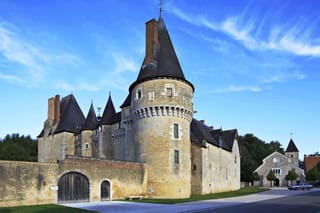
Château de Fougères-sur-Bièvre
Loir-et-Cher
12.6km
castle, chateau
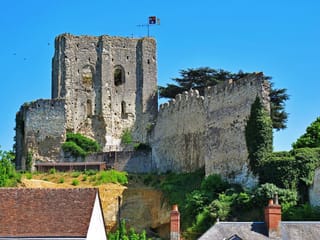
Château de Montrichard
Loir-et-Cher
15.1km
castle, chateau
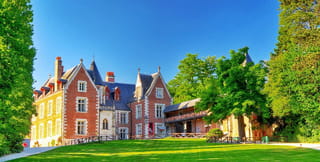
Manoir du Clos-Lucé
Indre-et-Loire
16.2km
castle, chateau
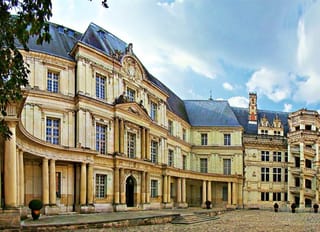
Château de Blois
Loir-et-Cher
16.3km
castle, chateau
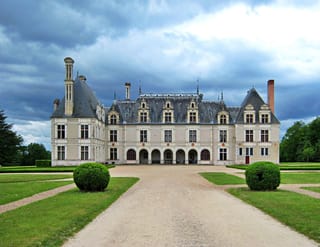
Château de Beauregard (Loire Valley)
Loir-et-Cher
16.5km
castle, chateau
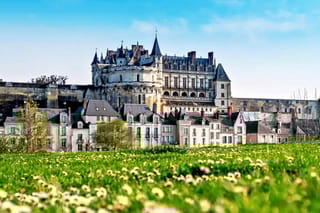
Château d'Amboise
Indre-et-Loire
16.5km
castle, chateau