Norris Castle
Tyne and Wear England England
castle, chateau
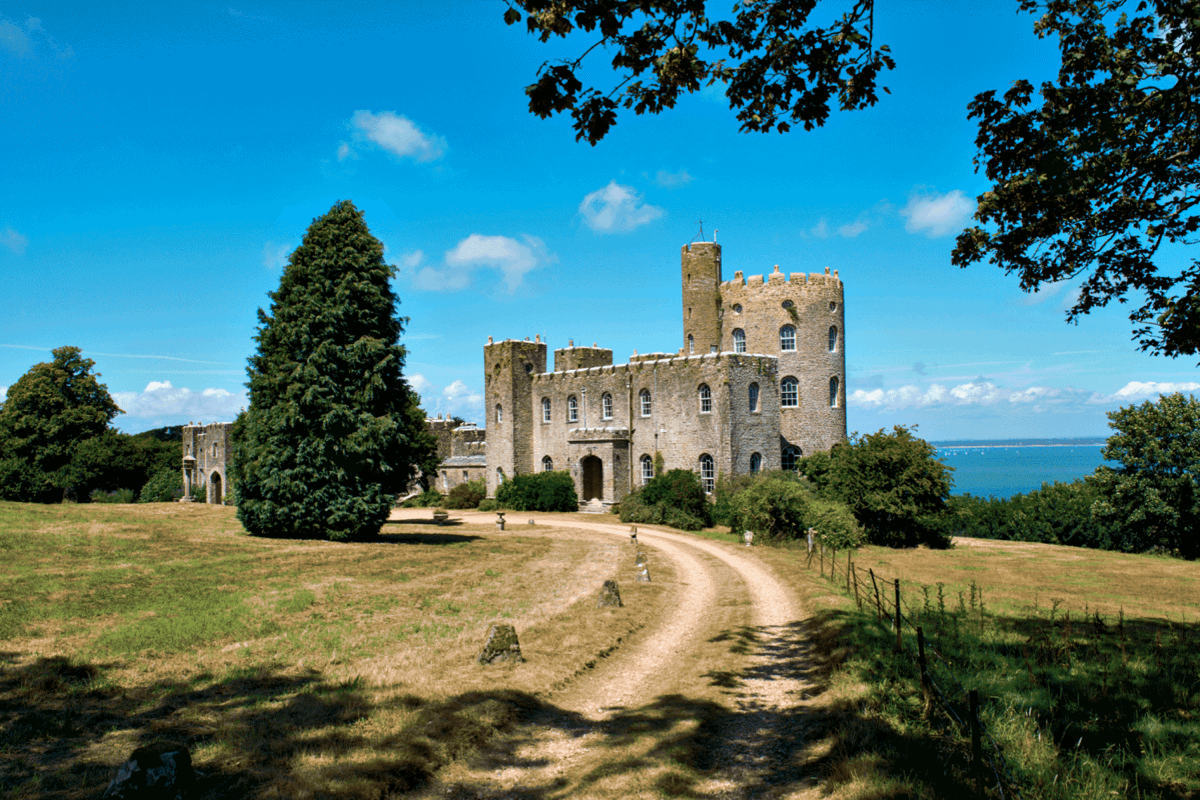
Norris Castle is located on the Isle of Wight and can be seen from the Solent standing on the northeast point of East Cowes

Previous names
Norris Castle
Description
Norris Castle is located on the Isle of Wight and can be seen from the Solent standing on the northeast point of East Cowes. It was designed by the famous architect James Wyatt for Lord Henry Seymour. The estate adjoins the neighbouring Osborne House, country home to Queen Victoria, which also includes the nine-hole Osborne Golf Club. On the other side of Norris Castle sits the Spring Hill estate, bought by William Goodrich in 1794. Norris Castle was built in 1799 and sits in 225 acres of land, with a mile of waterfront. The Castle is a Grade I listed building.
In October 2016, the parks and gardens at Norris Castle were also upgraded by Historic England to Grade I, making them the Isle of Wight's only Grade I listed landscape. This change in status was achieved as a result of the new owners working in partnership with Historic England. The landscape at Norris Castle is thought to have been designed in 1799 by Humphry Repton, one of England’s greatest landscape designers, and it includes one of the best examples of a castellated walled garden anywhere in England.
Despite its grandeur, the castle's condition has suffered dramatically over recent years, with the huge cost of trying to keep it maintained. Again in October 2016, Historic England confirmed that its Heritage at Risk register includes not only Norris Castle itself, but also its lands and outbuildings as well. They particularly noted the 'failure in the external walling of Norris Castle' and the 'immediate risk of further rapid deterioration to Norris Castle Farm'.
In 2014, part of one of the outbuildings (The Boathouse) was vandalised when eight foot high graffiti was daubed across one of its sides.
At the present time, the castle is closed to the public, awaiting restoration.
History
Name derivation
The name 'Norris' is derived from the name of an early landowner, named Richard Le Norey, who held the estate during the reign of King Edward I. But the story of Norris Castle really originates centuries later in 1795, when the Norris farmland was bought by Lord Henry Seymour. Shortly afterwards, he commissioned James Wyatt to build him a new residence there. Wyatt designed and built the house in the style of a castle between 1795 and 1805, using locally mined stone. In the 200 years since it was built, the building remains virtually unaltered.
Visiting royalty
The Prince Regent and First Gentleman of Europe, later King George IV visited the castle in 1819 as the guest of Lord Henry Seymour. The king was on the island to make use of his yacht. Lord Seymour's personal habits were said to be those of extreme simplicity and frugality, but he nether-the-less held a banquet for the king which was said to be 'splendid in the extreme and attended with circumstances of unusual conviviality'.
In August 1831, the Duchess of Kent, with her 12-year-old daughter the Heiress Presumptive Princess Victoria, who indeed went on to become the future Queen Victoria, also resided at the castle for quite some time. The young princess was said to have been able to live a life of unaccustomed freedom, walking her dog and riding her pony. She was also said to frequently enjoy country rambles and listening to the stories of the sailors and the coastguardsmen, as she lingered about the shore.
On their arrival to the island, the royals were welcomed with great ceremony in Newport. A huge flag, entirely made of lace, was suspended from the Newport Toll-gate, with the words "Welcome, welcome to our Isle." The flag was made at Broadlands House, the Newport lace factory; and the Broadlands House band was also there playing music amongst the cheering crowds. A grand reception was later held in Newport Town Hall, where the royals were welcomed by the Mayor, Alderman and Chief Burgesses of Newport. Afterwards, they were due to visit the nearby Carisbrooke Castle, but due to rain, they returned to Norris Castle.
The two royals also visited Norris Castle again in 1833.The old copper bath that Queen Victoria used as a child is still there, although for quite some time in the 1970s it was out in the courtyard, being used as a rainwater butt.
Queen Victoria visited the castle yet again in 1843, as a guest of Robert Bell, accompanied by her husband, Prince Albert. The royal couple disembarked, quite unexpectedly, from the Royal Barge captained by Lord Adolphus FitzClarence at the Coastguard Station, East Cowes. They then were shown into a carriage and taken to her 'favourite Norris Castle', where she went straight to her former apartments and joyously told the Prince Consort that "this was my room, and this was mine also".
Not long afterwards, in 1844, Queen Victoria tried to buy the property from the then owner, Robert Bell, who was a newspaper tycoon. However, she baulked at his asking-price and bought the nearby Osborne House estate instead. However, Queen Victoria went on to become a frequent visitor to Norris Castle, particularly after 1880, when it was under the ownership of the Duchess of Bedford, her Mistress of the Robes. She would always delight in remembering her earlier visits as a child. In 1845, Queen Victoria used the castle as lodgings for William II the King of the Netherlands.
In 1881, The Duke and Duchess of Bedford lent Norris Castle to Prince Christian of Schleswig-Holstein, the Danish-born German Prince; and his wife, Princess Helena of the United Kingdom. She was the fifth child of Queen Victoria.
In June 1903, Princess Henry of Battenberg took lunch with Captain and Mrs Orr-Ewing at Norris Castle, before opening the new Frank James Memorial Hospital at East Cowes.
The German Kaiser Wilhelm II and his wife Augusta Victoria of Schleswig-Holstein were also frequent visitors. So much so that Wilhelm had his own bath-cum-shower installed, which still remains today. The German Emperor Frederick III and his wife, the Empress were also frequent guests. The Empress was Queen Victoria's eldest child.
In August 1935, Her Majesty Queen Mary visited Norris Castle, whilst her husband, King George V was 'deriving the maximum pleasure from his favourite sport of racing on the Britannia'. Queen Mary was received by Major and Mrs Birkbeck and shown around the castle. She inspected the rooms previously used by the late Queen Victoria and the ex-Emperor of Germany and was deeply interested by the many improvements that Major Birkbeck had made to the castle. She also walked through the beautiful gardens.
The Great Fire
In 1889, there was a 'great fire' at Norris Castle. The superintendent of the Cowes Fire Brigade said that it was the most serious fire that they had had to contend with for some years. He also said that there was some additional interest and honour lent to the occasion, as royalty were present for some considerable time watching the brigade at work. The bill that was presented by the Fire Brigade for attending the fire was put at £48 18s 6d.
TV Appearances
Norris Castle was used extensively in the filming of Doctor Who and the Sea Devils in October 1971. In those episodes, The Doctor was played by John Pertwee, with Katy Manning playing his companion Jo. The episodes featured other Isle of Wight locations as well, including No Mans Land Fort.
The Norris Castle ferries
As part of their fleet of 'Castle' series ferries operating to and from the Isle of Wight, Red Funnel had three ferries named Norris Castle, the latter two being car ferries.
The ML Norris Castle I, was a passenger motor launch, which operated across the River Medina between 1938 and 1939. It was built by the Cowes boatbuilder, Clare Lallow and launched in July 1938. During the Second World War, it was requisitioned by the Admiralty for service in the Mediterranean and never returned. After the war, Red Funnel never resumed the river service.
The MV Norris Castle II, was built in 1942 (acquired 1947) and operated as a car ferry until 1962. She was 180 feet long and displaced 473 tonnes. Norris was originally designed as an LCT 828 landing craft for the D-day Normandy landings. As she could load from both the front and side, she was used on the Southampton to East Cowes service. In 1962, she was sold to a service in the Greek Islands.
The MV Norris Castle III, was built in 1968 and operated as a car ferry until 1994. Mrs Joan Lacon named the ship, owner of the real Norris Castle at the time During the ship's service, she was converted to a Roll-on/roll-off ferry with mezzanine decks. She was 191 feet long and displaced 734 tonnes. In gale-force winds in 1981, when turning in the River Medina, she was blown on to the Cowes floating bridge, but there was no real damage done to either vessel. On the arrival of MV Red Osprey in 1994, she was sold to Jadrolinija for service in Croatiashe was renamed to Lovrjenac, but was scrapped in 2008.
Nearby castles
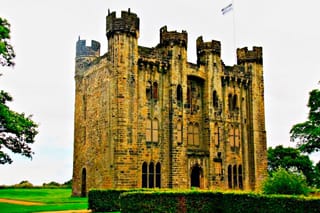
Hylton Castle
Tyne and Wear
11.9km
castle, chateau
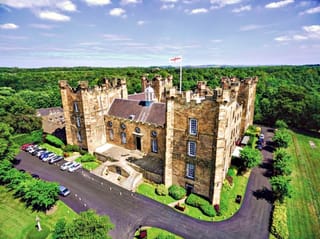
Lumley Castle
Chester-le-Street
13.2km
castle, chateau
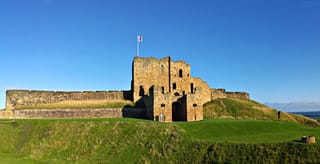
Tynemouth Castle
Tyne and Wear
13.4km
castle, chateau
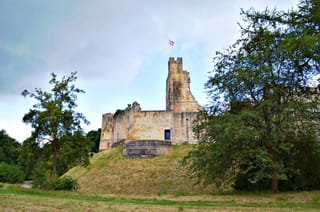
Prudhoe Castle
Northumberland
15.6km
castle, chateau
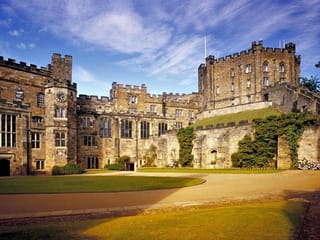
Durham Castle
County Durham
21.7km
castle, chateau
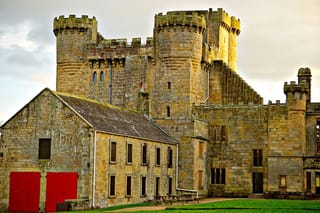
Belsay Castle
Northumberland
22.2km
castle, chateau
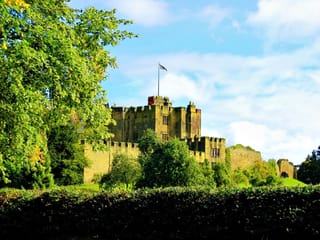
Bothal Castle
Northumberland
22.7km
castle, chateau