Hylton Castle
Tyne and Wear England England
castle, chateau
Hylton Castle (/ˈhɪltən/ HIL-tən) is a ruined stone castle in the North Hylton area of Sunderland, Tyne and Wear, England
Previous names
Hylton Castle
Description
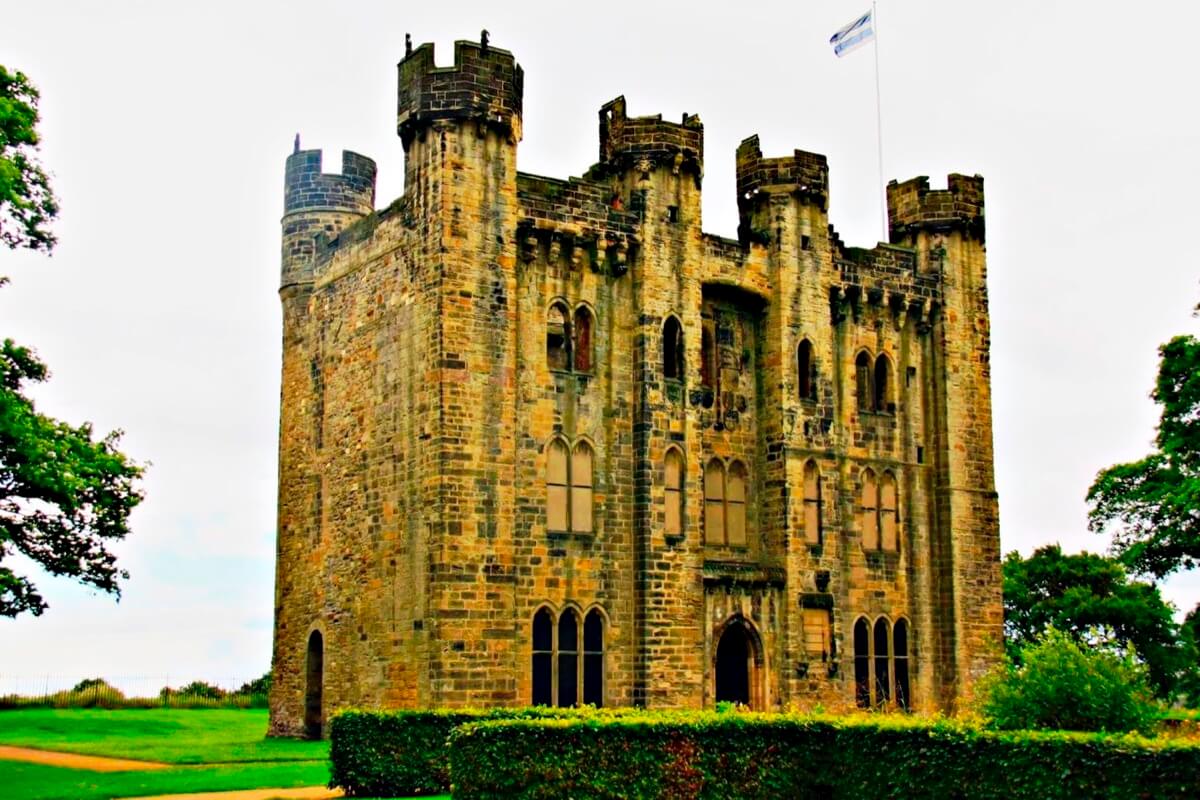
Hylton Castle (/ˈhɪltən/ HIL-tən) is a ruined stone castle in the North Hylton area of Sunderland, Tyne and Wear, England. Originally built from wood by the Hilton (later Hylton) family shortly after the Norman Conquest in 1066, it was later rebuilt in stone in the late 14th to early 15th century.The castle underwent major changes to its interior and exterior in the 18th century and it remained the principal seat of the Hylton family until the death of the last Baron in 1746. It was then Gothicised but neglected until 1812, when it was revitalised by a new owner. Standing empty again until the 1840s, it was briefly used as a school until it was purchased again in 1862. The site passed to a local coal company in the early 20th century and was taken over by the state in 1950.
One of the castle's main features is the range of heraldic devices found mainly on the west façade, which have been retained from the castle's original construction. They depict the coats of arms belonging to local gentry and peers of the late 14th to early 15th centuries and provide an approximate date of the castle's reconstruction from wood to stone.
Today, the castle is owned by English Heritage, a charity which manages the historical environment of England. The surrounding parkland is maintained by a community organisation. The castle and its chapel are protected as a Grade I listed building and a Scheduled Ancient Monument. In February, 2016, plans were announced to turn the castle into a community facility and visitor attraction, with the Heritage Lottery Fund awarding £2.9 million, and Sunderland Council £1.5 million, to provide classrooms, a cafe and rooms for exhibitions, meetings and events.
Chapel
St Catherine's chapel.
A chapel dedicated to St Catherine of Alexandria is known to have existed on the site since 1157, when the Prior of Durham agreed to allow Romanus de Hilton to appoint his own chaplain for the chapel, subject to the prior's approval. In return, de Hilton was to provide an annual contribution of 24 sheaves of oats for every draught ox he owned, to the nearby monastery at Monkwearmouth, and was required to attend the mother church of St Peters for the feasts of the Nativity, Easter, Whitsuntide and Saints Peter and Paul. In 1322, there was a chantry dedicated to the Virgin Mary and there were three chantry priests in 1370.
The chapel, which is on a small hill to the north east of the castle, was rebuilt in stone in the early 15th century. It was modified from the late 15th to late 16th century, when a Perpendicular Gothic, five-light east window and transepts were added. Bucks' engraving of 1728, shows a short nave and a large six-light west window, and that the chapel was disused by this time, as it had no roof. The west façade of the chapel was later demolished and the chancel arch was built up to form a new one with a Gibbs surround. A bell-turret was added c. 1805. On the north and south sides of the chapel are two transeptal, semi-octagonal bays.
Although repairs to the chapel were carried out by the last Baron Hylton and the successive owners in the 19th century, it fell into disrepair until, like the castle, it was taken over by the state in 1950.
Modern
The castle and chapel have been Grade I listed buildings since 1949 and form a Scheduled Ancient Monument under the care of English Heritage, who took over the site in 1984, although Sunderland City Council own the land. In 1999, the Friends of Hylton Dene group was formed by residents of the estates around North Hylton "with the aim of co-operating with Sunderland City Council, Durham Wildlife Trust and other agencies to actively involve the local community in the development and upkeep of Hylton Dene and Castle". In December 2007, the group was awarded £50,000 by the Heritage Lottery Fund to carry out a survey for the future for the site. Once restored, the castle could be opened. The chairman of the Castle in the Community John Coulthard described the castle, Sunderland's second oldest building, as "an asset in the city – it is a lovely setting and we would love to see it bring in some income".
There have been four organised International Reunion(s) of Hylton Families over the past few years; most notably on 4 July 2004, when around fifty American descendents of the Hylton family visited the castle to present a flag featuring the Hylton blazon. The flag now flies from the recently installed flagpole, provided by English Heritage.
Exterior
"Hylton Turrets", a sketch by Robert Billings in 1846, facing south-west on the roof of Hylton Castle. The sketch shows the south-west tower, the south tower of the central bay on the east façade, and the decaying stone figures on the roof.
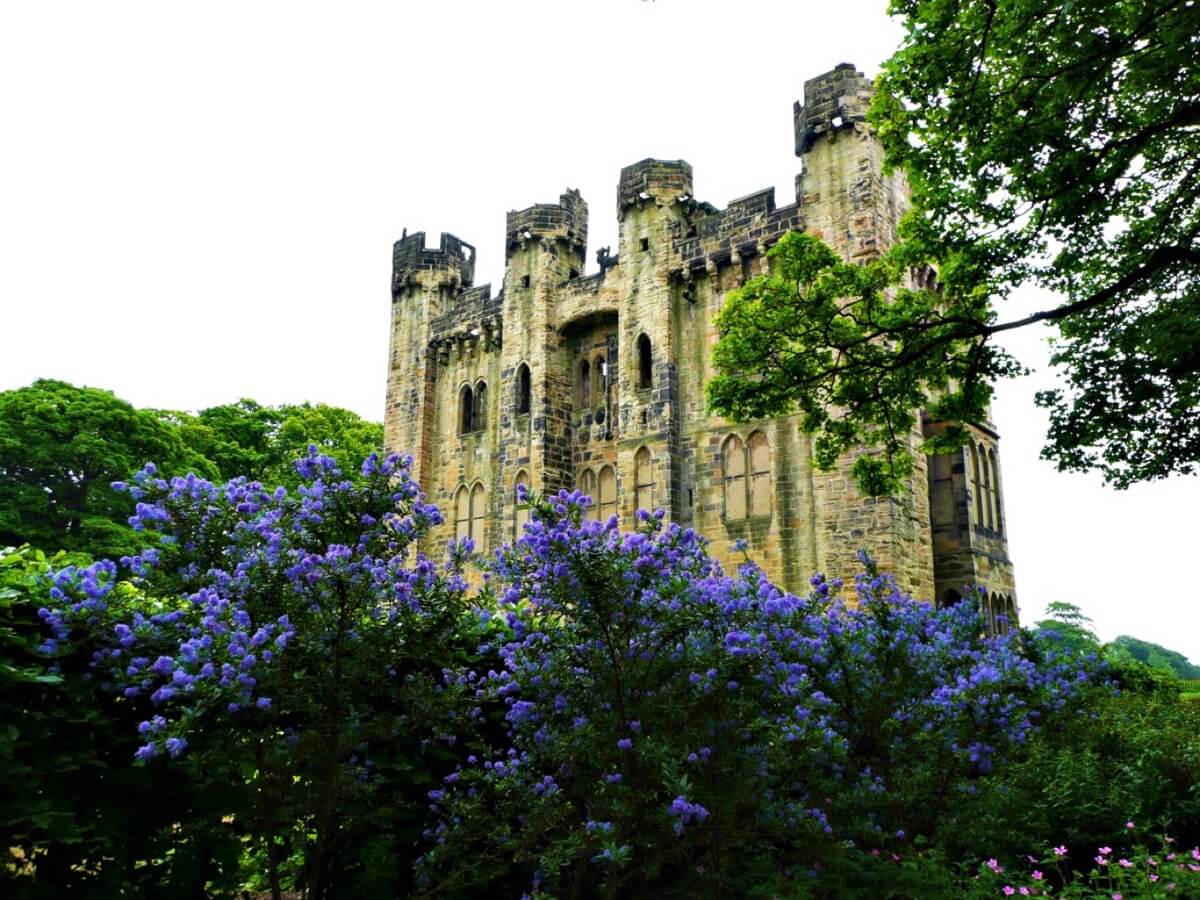
The west façade of the castle has square towers flanking the central bay, with others at the south west and north west, all topped with octagonal, machicolated turrets. The north and south façades are relatively simple. The east façade has a central projection in the centre rising a storey above the parapet, to form a tower. The tower's south angle is splayed to accommodate the main staircase and only the corbels of its parapet survive.The screen closing off the east entrance has a three-bay cusped arcade on the ground floor and three ogee arches on the shafts above.
The roof was originally covered with sheet lead and adorning the roof are stone warriors and other figures, similar to those of Raby, Alnwick and the gates of York. Originally there were four figures on each corner turret and bartizan; only five have survived. Between the central towers once stood a sculpture of a knight in combat with a serpent (of which only fragments survive), believed to pertain to the tale of the Lambton Worm. The parapet is also machicolated (except on the north façade) and continued between the central towers by a carved-foliage arch (originally with cusping which fell in 1882), instead of corbels. Another feature of the roof was shallow stone troughs on the battlements which fed scalding oil or water into the machiocaltions as a means of defence. In a small chamber in each turret or bastion, a brazier was kept burning to bring the liquids to a suitable temperature.
Interior layout
A plan of the original floors of Hylton Castle. Note: The diagram does not include the minstrels' gallery.
Before the changes made by John Hylton (died 1712), the castle's layout plan was as follows:
The ground floor, accessed directly from the outside courtyard, led into a portcullis-protected, vaulted passage, eleven feet wide and extending the depth of the building. On either side of the passage were two vaulted rooms. The room nearest the entrance on the right was a guardroom or the porter's room, which housed a well; the back-right room, with a garderobe located in the south west turret (accessed via a passage running along the south wall), was for an official. The other two rooms to the left were used to house staff or storage.
The first was floor was accessed via the main staircase, situated in the east tower.The first room encountered was the great hall, which rose three floors. To the viewer's immediate left was a kitchen (with clerestory lighting), and further on to the left was a butlery and pantry with a garderobe. To the viewer's back right was a small passage containing a private staircase and the entrance to the oratory (its roof vaulted with an east window) in the east tower. The oratory was entered via a five-and-a-half high pointed-arch doorway and contained an altar and piscina, of which only an ornamental niche remains.
To the west of the hall was the head of the west window.The portcullis is believed to have been raised into the hall in front of this window.
The kitchen, oratory and great chamber rose two floors, therefore only the minstrels' gallery was accessed via the main staircase on the second floor. However, the butlery and pantry was single-storeyed, but held the butler's chamber (with a garderobe) above it, accessed either via a staircase in that room or via the gallery.
The rooms on the north and east sides of the third floor were accessed via the private staircase. The rooms were two family rooms, one above the oratory and a larger one above the great chamber. The larger one had a fireplace and a garderobe, and was likely the baron's bedroom; the smaller room was either the chaplain's quarters or a family room. Both were connected via a lobby at the top of the private staircase.
The room on the south side (separated by the other rooms due to the hall's height) was accessed via the main staircase. This room also had a fireplace and a garderobe, and was probably used by guests.
Above the small family/chaplain's room on the third floor, was the servant's room with a corner fireplace and two windows on the mezzanine floor, accessed via the main staircase. Above, on the roof level, was the Warder's Chamber containing a stone-hooded fireplace, beamed ceiling, two small windows in the east wall and a garderobe. There were also four closet-chambers in the turrets on the roof, used by staff.
Heraldry
The castle and chapel are adorned with heraldic devices and shields of arms, providing information as to when the castle was constructed.
Chapel
Above the south window: Hylton quartering Vipont and Stapleton. Supporters, two stags. Over the north window: the same arms without supporters, but with the Moses crest. On the west front, five shields, Hylton quartering Vipont and Stapleton; supporters two Lions, no crest; twice repeated. Hylton and Vipont quarterly; the crest without supporters; twice repeated: and Hylton quarterly Vipont and Stapleton, with the stags for supporters.
Hauntings
Main article: Cauld Lad of Hylton
There is a local tradition that Hylton Castle is haunted by the spirit of Robert Skelton, known as the Cauld (a pronunciation of "cold" in Mackem) Lad of Hylton. Various versions of how he was killed exist, the most popular being that he was decapitated by Sir Robert Hylton (later de jure 13th Baron Hylton), after falling asleep and failing to get his master's horse ready on time. Skelton's spirit then began to haunt the castle and would move objects, either misplacing them or tidying up. The spirit was said to have been finally laid to rest when the castle servants put a cloak out for him.
Useful information
Admission FREE
Admission FREE
Admission FREE
Admission FREE
External links
Nearby castles
Lumley Castle
Chester-le-Street
10.3km
castle, chateau
Tynemouth Castle
Tyne and Wear
10.7km
castle, chateau
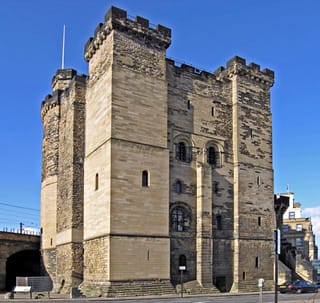
Newcastle Castle
Tyne and Wear
11.9km
castle, chateau
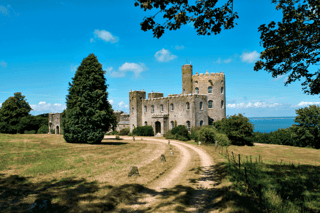
Norris Castle
Tyne and Wear
11.9km
castle, chateau
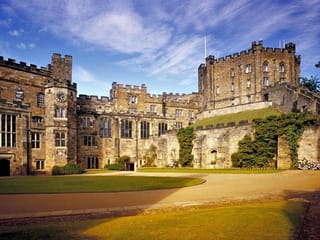
Durham Castle
County Durham
18.5km
castle, chateau
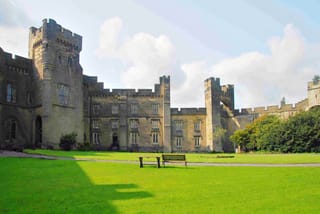
Brancepeth Castle
County Durham
24.9km
castle, chateau