Calshot Castle
Hampshire England England
castle, chateau
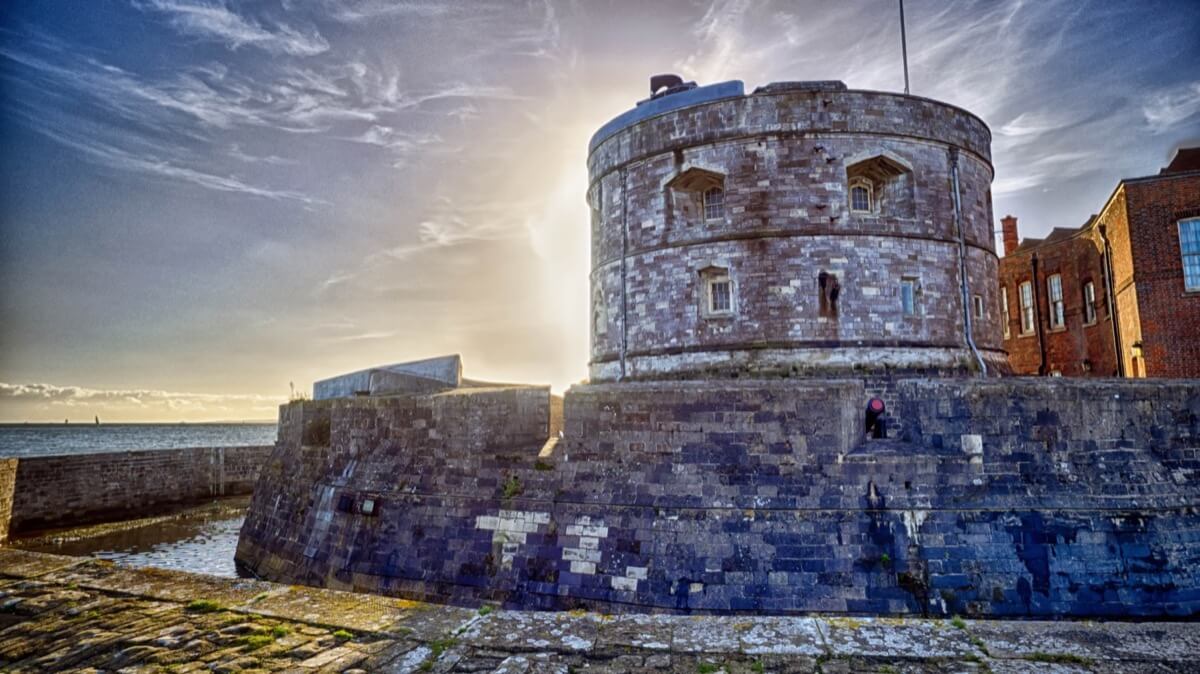
Calshot Castle is an artillery fort constructed by Henry VIII on the Calshot Spit, Hampshire, England, between 1539 and 1540
Previous names
Calshot Castle
Description
Calshot Castle is an artillery fort constructed by Henry VIII on the Calshot Spit, Hampshire, England, between 1539 and 1540. It formed part of the King's Device programme to protect against invasion from France and the Holy Roman Empire and defend Southampton Water as it met the Solent. The castle had a keep at its centre, surrounded by a curtain wall and a moat. Initially heavily armed, it had a garrison of 16 men and as many as 36 artillery guns. The castle continued in use for many years, surviving the English Civil War intact and being extensively modernised in the 1770s. During the 19th century, Calshot Castle was used by the coastguard as a base for combating smuggling. In 1894, however, fresh fears of a French invasion led to it being brought back into use as an artillery fort: a large coastal battery was constructed alongside the older castle and a boom built across Southampton Water, controlled from the castle.
During the First World War, Calshot Castle was primarily used as a base for seaplanes, deployed on anti-submarine patrols in the English Channel; its guns were removed before the end of the war, probably for use in France. The air base, by then called RAF Calshot, grew in size during the inter-war years, hosting the Schneider Trophy air races. With the outbreak of the Second World War, Calshot was re-armed in the face of a possible German invasion. The station continued in use after the war, but as military seaplanes became obsolete, it was finally closed in 1961. After a short period of use by the coastguard, the castle was opened to the public by English Heritage in the 1980s. Restored to its pre-1914 appearance, the castle received 5,751 visitors in 2010. Historic England considers Calshot a "well-preserved example" of King Henry's Device Forts.
Architecture
Calshot Castle is a three-storey, circular fortification, comprising a keep, gatehouse and curtain wall, predominantly constructed of ashlar Portland stone. When first built in the 16th century, it was designed to carry three tiers of artillery: two positioned on the second floor and the roof of the central keep, and the third in the outer curtain wall. guns could have been placed on the roof of the gatehouse and on the first floor of the keep. Historic England considers it to form a "well preserved example" of the Device Forts.
Plan of the castle in the 21st century: A – moat; B – cookhouse; C – gatehouse range; D – keep; E – searchlight emplacement
The castle is surrounded by a water-filled, 16-sided moat, 8.8 metres (29 ft) across, accessed over a 20th-century bridge into the gatehouse, an 18th-century design based on a simpler 16th-century original. The gatehouse was altered in 1896, with the addition of brick-built ancillary buildings to the southern end. It was probably intended to provide additional living space for the garrison.The gatehouse leads into what was originally a 16-sided courtyard with 15 gun embrasures round the curtain wall. The wall was lowered to its current height in the 1770s and a concrete building to house searchlights, dating from 1896, now stretches along the southern end of the castle.
In the centre of the castle is the keep, which has an external diameter of 16 metres (52 ft), an octagonal lower storey and circular walls on the upper levels. Originally this held accommodation for the captain and the garrison, but it was heavily redeveloped in the 19th and 20th centuries.Its exterior walls have eight recesses at ground level, originally used to store ammunition for the castle's guns. The basement of the keep was redesigned in the 1890s, when electrical generators were installed, protected by a new, thicker, concrete ceiling. It may originally have been vaulted in stone in a similar style to nearby Hurst Castle.
The first floor of the keep has been restored to its early 20th-century appearance as a barracks room. The second floor was redeveloped in the late 19th century to form another barracks room, with its ceiling incorporating additional early 20th-century girders and concrete to support the gun battery above it. The roof of the keep has two 12-pounder gun mounts with their original gun-lockers; there is a 12-pounder gun on display originally used on a Royal Naval vessel. The keep's roof would originally have been flat, with crenellations for artillery, but both the roof and crenellations were removed in the 1770s.
Useful information
Ample parking close by (not managed by English Heritage). Local parking charges apply for all castle visitors including English Heritage members.
- Member - Join now Free
- Adult £3.60
- Concession tool-tip £2.90
Child (5-17 years) £2.60
Family (2 adults, 3 children) £9.80
- No dogs allowed, but Assistance Dogs welcome.
- English Heritage welcomes amateur photographers to our sites
External links
Nearby castles
West Cowes Castle
Isle of Wight
6.0km
castle, chateau
Netley Castle
Hampshire
7.4km
castle, chateau

Portchester Castle
Hampshire
13.8km
castle, chateau
Carisbrooke Castle
Isle of Wight
14.8km
castle, chateau
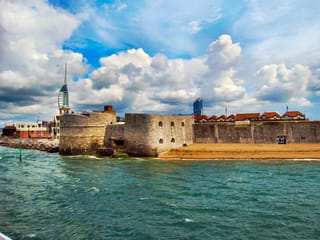
Southsea Castle
Southsea
16.1km
castle, chateau
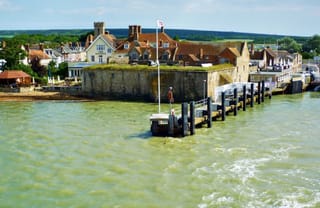
Yarmouth Castle
Isle of Wight
18.5km
castle, chateau
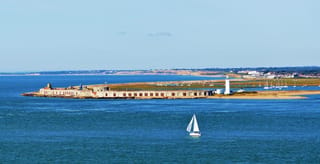
Hurst Castle
Hampshire
21.3km
castle, chateau