Southsea Castle
Southsea England England
castle, chateau
Southsea Castle, historically also known as Chaderton Castle, South Castle and Portsea Castle, is an artillery fort originally constructed by Henry VIII on Portsea Island, Hampshire, in 1544
Previous names
Southsea Castle
Description
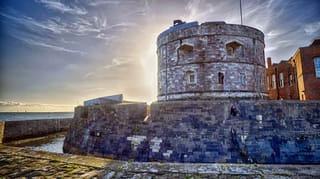
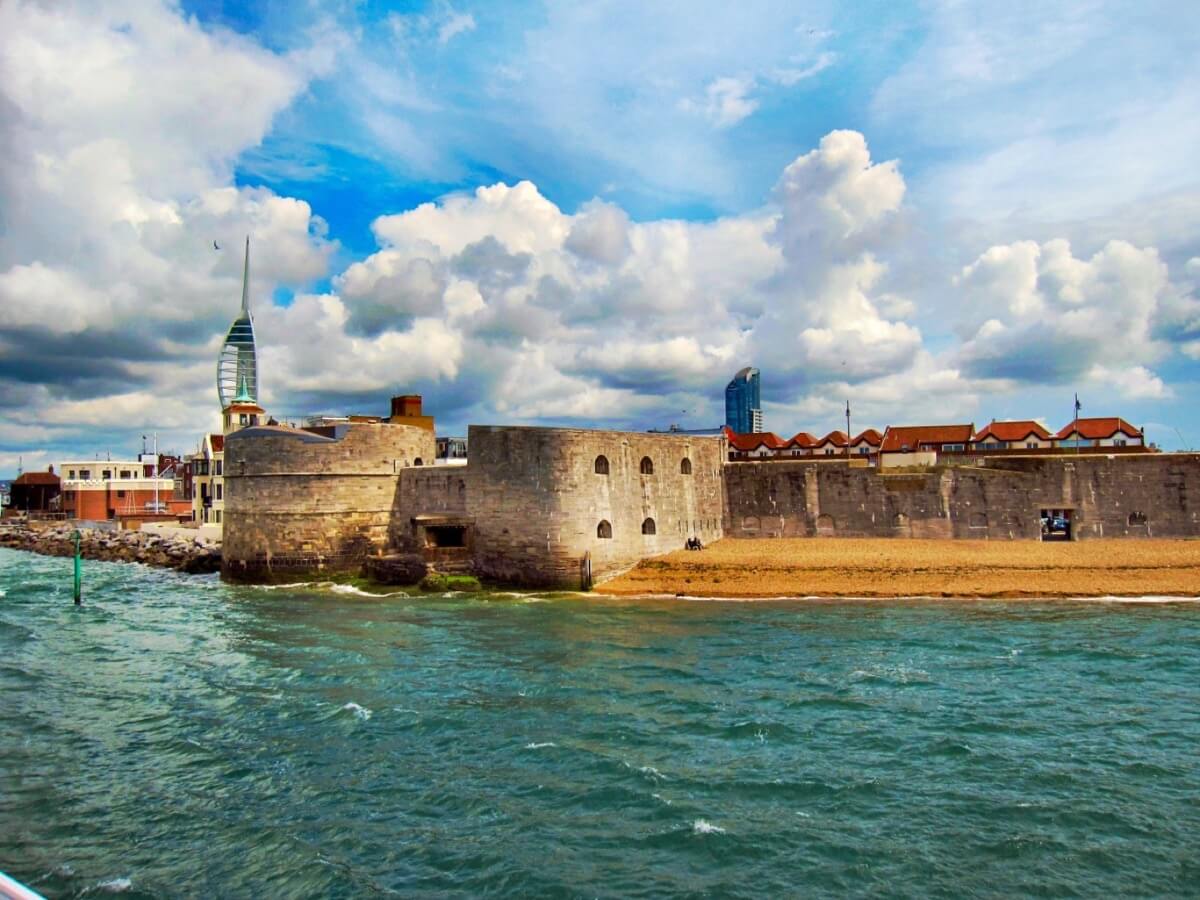
Southsea Castle, historically also known as Chaderton Castle, South Castle and Portsea Castle, is an artillery fort originally constructed by Henry VIII on Portsea Island, Hampshire, in 1544. It formed part of the King's Device programme to protect against invasion from France and the Holy Roman Empire, and defended the Solent and the eastern approach to Portsmouth. The castle had a square central keep, two rectangular gun platforms to the east and west, and two angled bastions to the front and rear, and was an early English example of the trace italienne-style of fortification popular on the Continent. The Cowdray engraving of the Battle of the Solent in 1545 depicted Henry VIII visiting the castle. Despite several serious fires, it remained in service and saw brief action at the start of the English Civil War in 1642 when it was stormed by Parliamentary forces.
The castle was expanded in the 1680s by Sir Bernard de Gomme and, after a period of neglect in the 18th century, was redesigned again in 1814 during the Napoleonic Wars. After a brief period of use as a military prison in the 1840s, the fortification was expanded in the 1850s and 1860s with additional gun batteries on the east and west sides. The defences were upgraded throughout the century due to the fears of a French invasion and formed part of the plan for defending Portsmouth during the First World War. In the interwar years some of the fortifications were stood down, but the castle saw service again in the Second World War, when it was involved in Operation Grasp, the seizure of French naval vessels in Portsmouth harbour. In 1960, Southsea Castle, by now obsolete, was sold to Portsmouth City Council. It was restored to its pre-1850 appearance and opened as a tourist attraction, receiving over 90,000 visitors from 2011–12.
Southsea Castle was one in a series of forts constructed for King Henry VIII, in what was the most ambitious scheme of coastal defence since Roman times.
The castle was built in great haste in 1544, prompted by Henry VIII's fears of a French attack on Portsmouth. It was said to have been designed by the King himself, incorporating the latest continental ideas on the lay-out of artillery forts. It was not long finished when on 18 July 1545, a French invasion fleet did approach Portsmouth and landed on the Isle of Wight. Henry VIII was at Southsea Castle when the Mary Rose sank next day.
The castle was to be an active military base for over 400 years. Life there had its ups and downs. In 1627, for example, the keep was gutted by fire. Then in 1642, at the outset of the English Civil War, the Royalist commander was almost too drunk to surrender when a large Parliamentary force surrounded the castle. The Parliamentarian soldiers clambered over the walls, and the garrison surrendered with no loss of life.
Seventeen men, women and children died, however, in 1759 when an accidental explosion blew up a large part of the castle. It became so dilapidated that it was nearly demolished, but in 1814 it was completely renovated to accommodate extra guns and a larger garrison in time of war.
The castle's key position guarding the entrance to Portsmouth harbour meant that whenever danger threatened it was right in the front line. Even when it was used as a military prison during Victorian times, its guns still had to be ready for action. Not until 1960 was the castle finally withdrawn from active service and purchased by Portsmouth City Council.
http://southseacastle.co.uk
Useful information
Paid parking
Admission FREE
Admission FREE
Admission FREE
Admission FREE
info@thecourtyardsouthseacastle.co.uk
External links
Nearby castles