Wolfsberg Castle (Obertrubach)
Oberfranken Bayern Germany
castle, chateau
Burgruine Wolfsberg (Obertrubach)
Oberfranken Bayern Germany
castle, chateau
The ruins of Wolfsberg Castle (German: Burgruine Wolfsberg) are the remains of a former high mediaeval, aristocratic, castle which stands high above the Trubach valley over the eponymous village of Wolfsberg
Die Burgruine Wolfsberg ist eine ehemalige hochmittelalterliche Adelsburg hoch über dem Trubachtal oberhalb der gleichnamigen Ortschaft Wolfsberg
Previous names
Wolfsberg Castle (Obertrubach), Burgruine Wolfsberg (Obertrubach)
Description
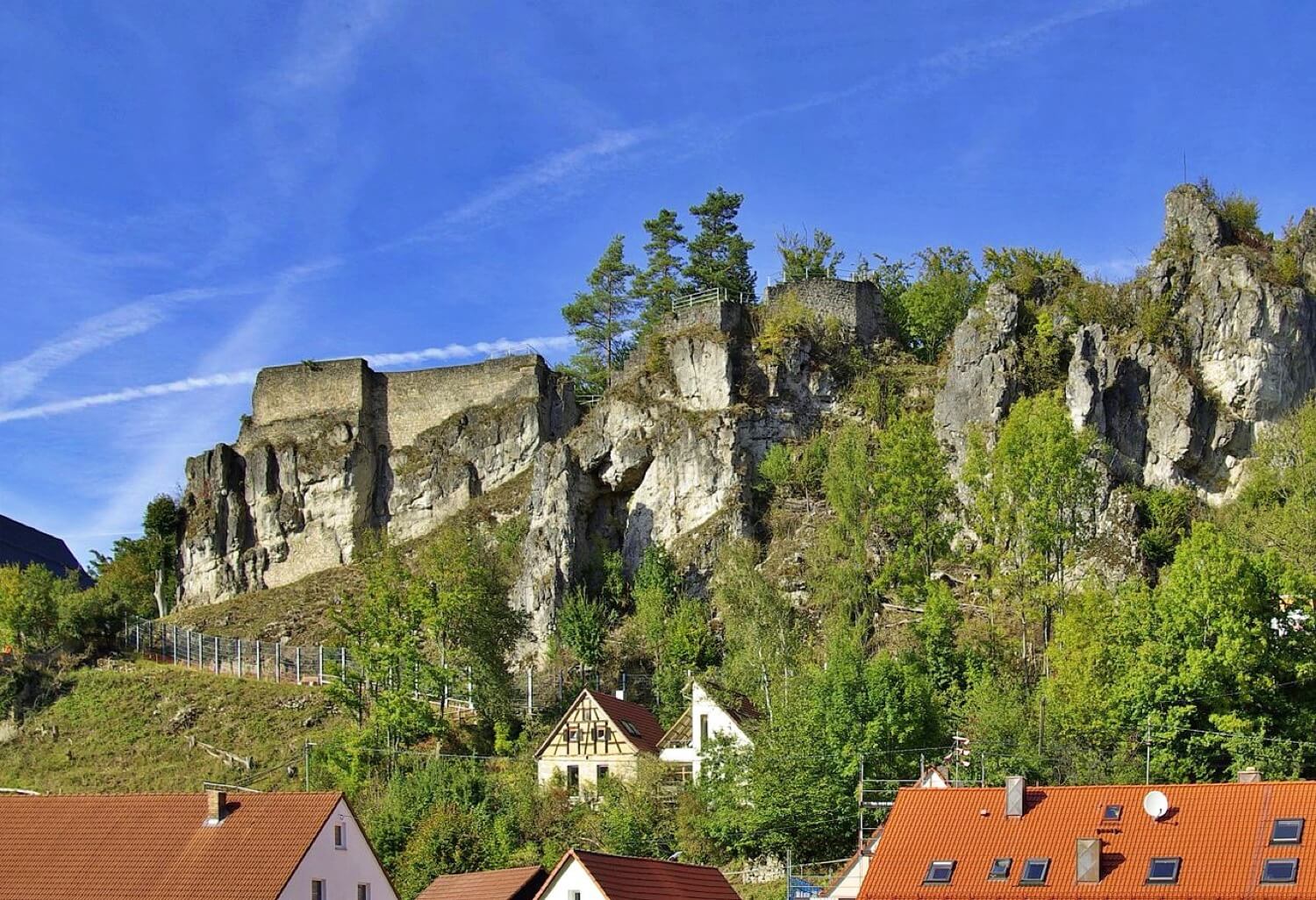
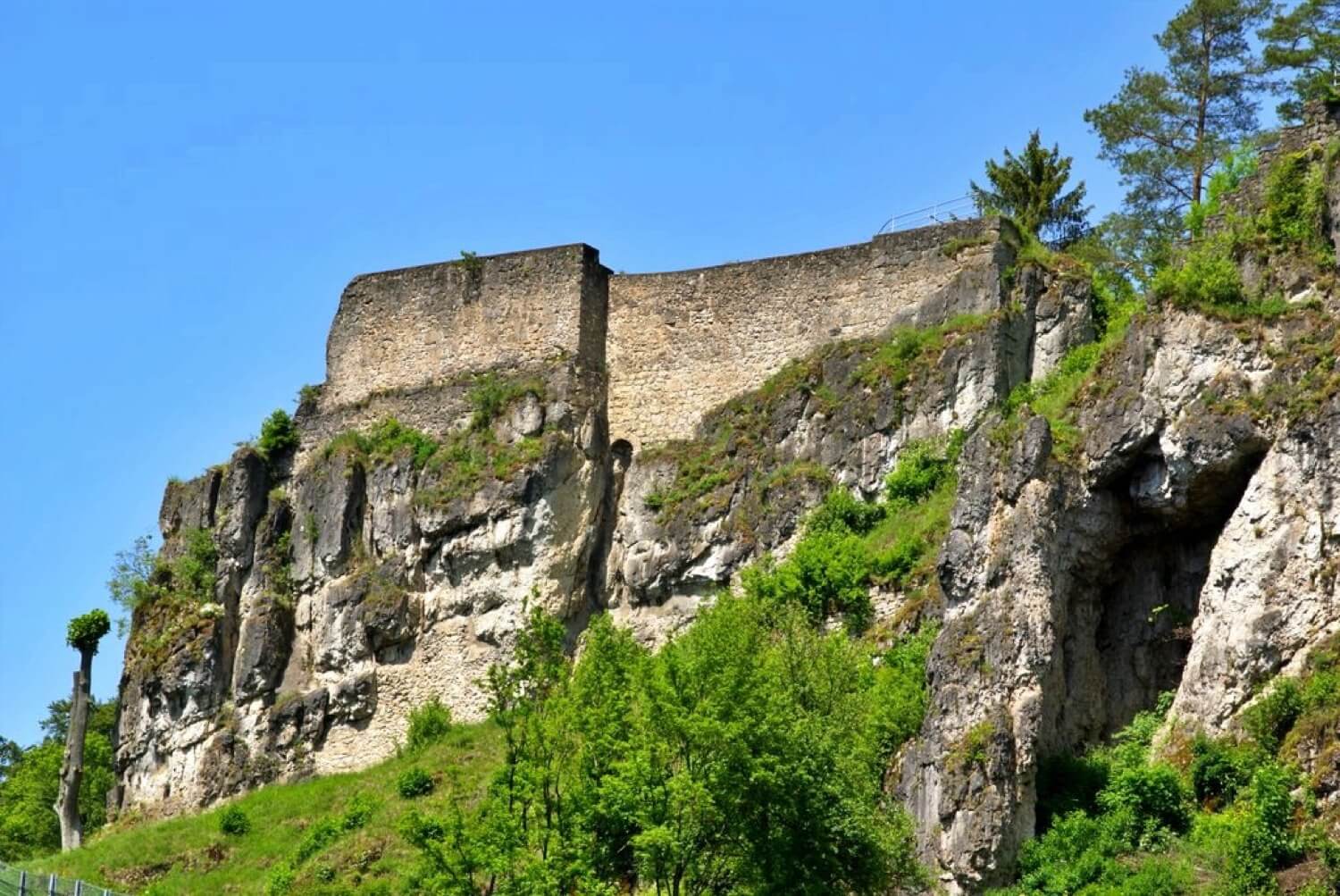
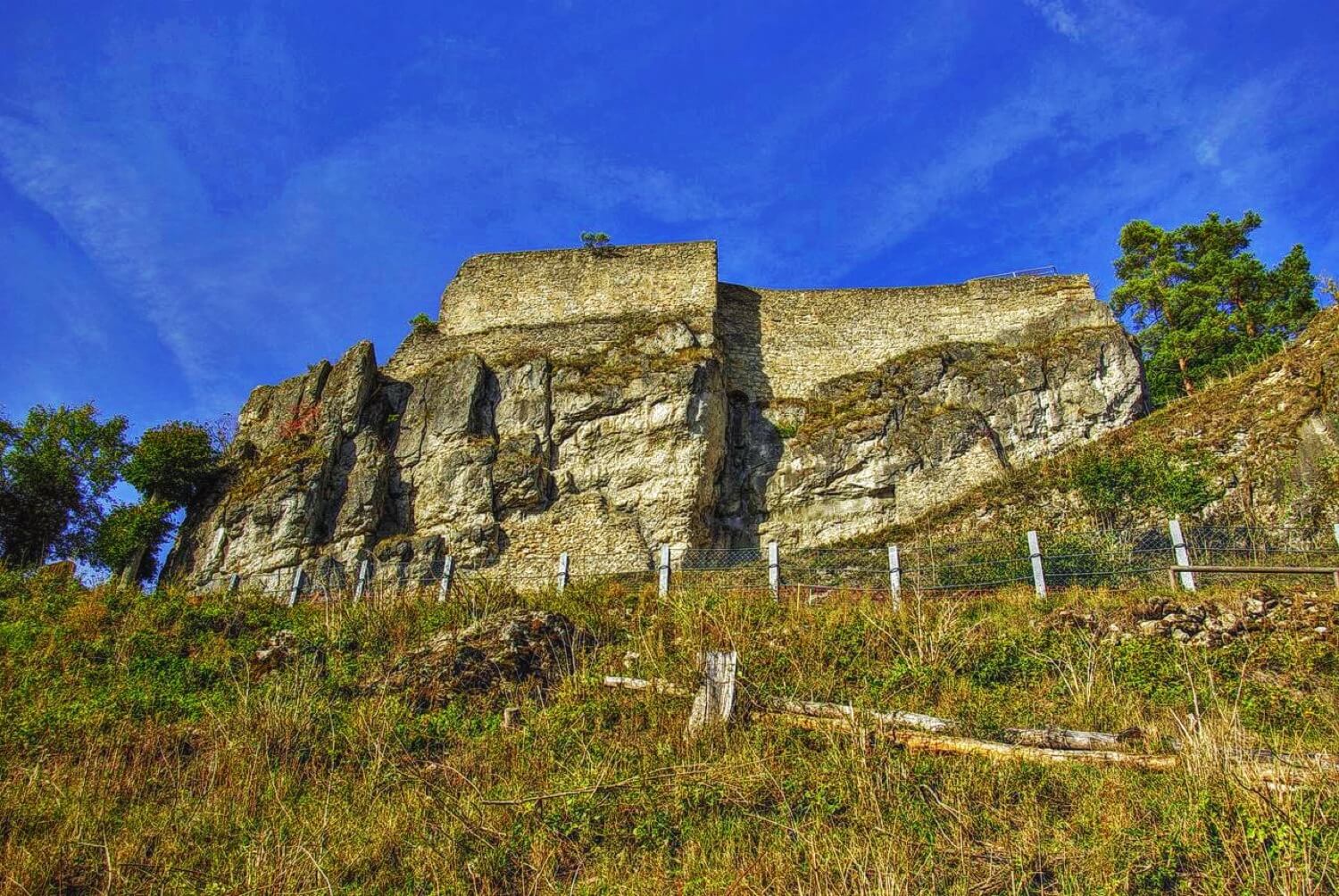
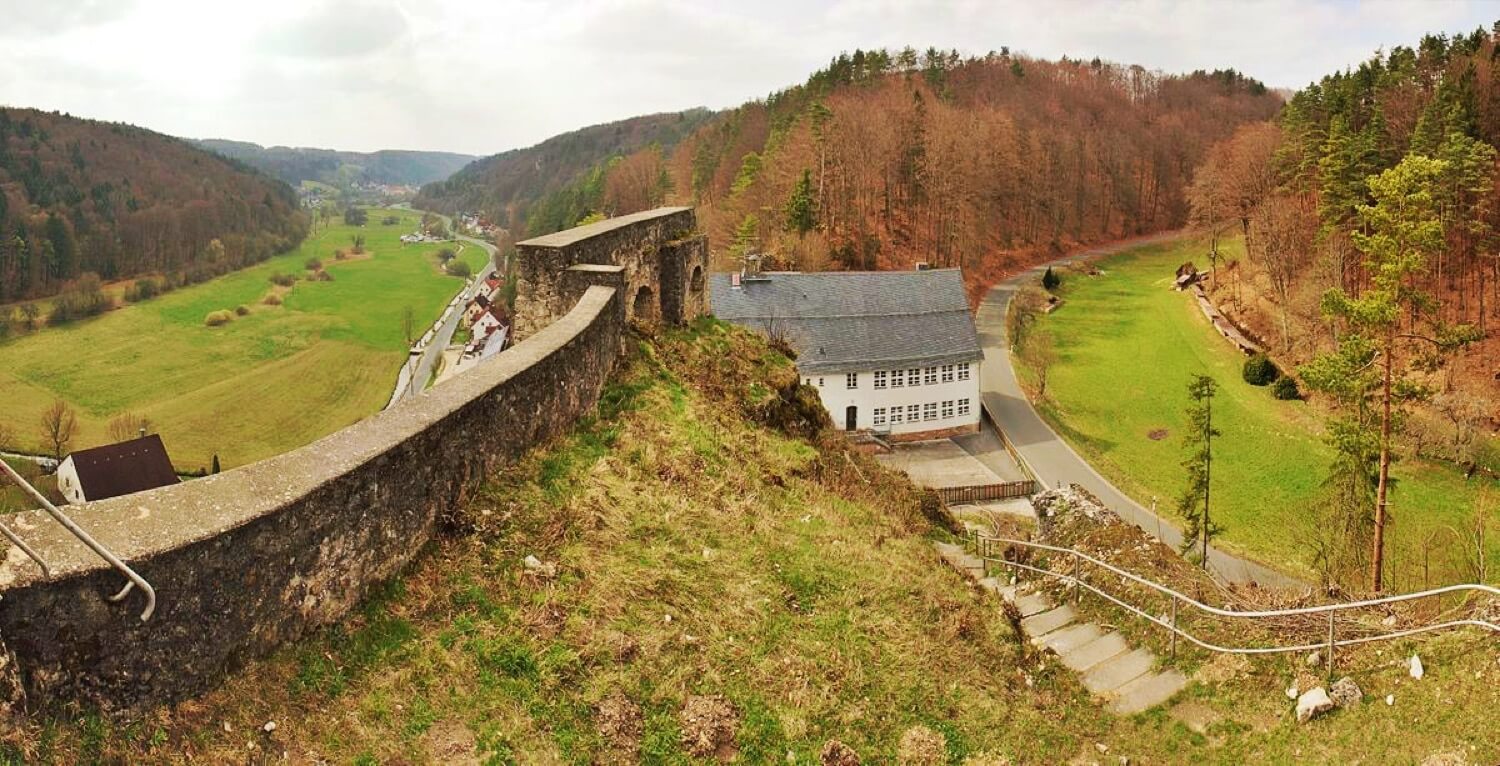
The ruins of Wolfsberg Castle (German: Burgruine Wolfsberg) are the remains of a former high mediaeval, aristocratic, castle which stands high above the Trubach valley over the eponymous village of Wolfsberg. The village is part of the municipality of Obertrubach in the Upper Franconian county of Forchheim in the German state of Bavaria.
The upper bailey is permanently open to the public and serves as a viewing point; the lower bailey is partly in private ownership and is not accessible.
The ruins of this spur castle lie within the Franconian Switzerland-Veldenstein Forest Nature Park on an eastwards-pointing hill spur at a height of 449 metres. The spur is separated by a natural saddle from the plateau to the west. The spur sits between the Trubach valley to the south and a dry valley on the northern side of the spur that opens into the Trubach valley.
The ruins may be reached from the village of Wolfsberg.
Egloffstein Castle can be seen below in the Trubach valley; in the opposite direction is a burgstall in Obertrubach, the ruins of Bärnfels Castle and Leienfels Castle. To the south stands Hiltpoltstein Castle.
Wolfsberg Castle was probably built around 1150 by the free knights of Wolfsberg. The lords of Wolfsberg are first recorded in 1169 when a certain Gozpold de Wolfesperch is mentioned. It is thought that they were descended from the family of free nobles of Schönfeld-Gößweinstein.
With the extinction of the lords of Wolfsberg around 1204 the castle went to the lords of Stein, ministeriales of the Bishops of Bamberg, who named themselves after the castle from 1244. Around 1333 the castle was sold to the lords of Egloffstein. In the deeds a Siboto of Egloffstein is mentioned as the occupier of the castle in 1358.
From 1383 the castle is mentioned among the estates of the Bishopric of Bamberg. It is unclear how this came about. The castle became the seat of an episcopal administrative office and was repeatedly enfeoffed from the 15th to the 17th centuries.
The castle was first destroyed in 1388 during the South German War of the Cities and was not rebuilt until 1408 under Amtmann Albert of Egloffstein. In the Peasants' War of 1525 the castle was wrecked again and rebuilt in 1547 under Philip of Egloffstein.
The last enfeoffee of the castle was William of Wiesenthau in 1568. Under him the castle became very neglected so that, at its reversion to the Bishopric in 1609, it was uninhabited and run down.
During the Thirty Years' War, further destruction was wrought by the Swedes in 1631 and 1632, and also in 1633 by Tilly's cavalry and Electoral Bavarian troops.
In 1803 the castle was seized by the Bavarian state, who let it stand empty. In 1823 it was sold for 50 guilders to the stonemason, Müller, from Brunn. He donated it to his son-in-law, who demolished the castle and sold it piecemeal.
Die Burgruine Wolfsberg ist eine ehemalige hochmittelalterliche Adelsburg hoch über dem Trubachtal oberhalb der gleichnamigen Ortschaft Wolfsberg. Die Ortschaft gehört zur Gemeinde Obertrubach im oberfränkischen Landkreis Forchheim in Bayern.
Die Oberburg ist jederzeit frei zugänglich und dient als Aussichtspunkt, die Unterburg befindet sich teilweise in Privatbesitz und ist nicht zugänglich.
Die Ruine der Spornburg liegt im Naturpark Fränkische Schweiz-Veldensteiner Forst auf einem sich nach Osten erstreckenden Bergsporn in 449 Meter Höhe, der durch eine natürliche Einsattelung von der Hochfläche im Westen getrennt ist. Der Bergsporn erstreckt sich vom Trubachtal im Süden nid zu einem Trockental an der Nordseite des Spornes, das in das Trubachtal einmündet.
Erreicht werden kann die Ruine vom Dorf Wolfsberg aus.
Im Trubachtal abwärts kann man die Burg Egloffstein sehen, in entgegengesetzter Richtung befinden sich ein Burgstall in Obertrubach, die Burgruine Bärnfels und die Ruine Leienfels. Südlich davon liegt die Burg Hiltpoltstein.
Die Burg Wolfsberg wurde vermutlich um 1150 von den Edelfreien von Wolfsberg erbaut. Die Herren von Wolfsberg sind mit Gozpold de Wolfesperch seit 1169 urkundlich nachweisbar. Es ist davon auszugehen, dass sie dem edelfreien Geschlecht derer von Schönfeld-Gößweinstein entstammten.
Mit dem Aussterben der Herren von Wolfsberg um 1204 kam die Burg an die Herren von Stein, Ministeriale der Bamberger Bischöfe, die sich seit 1244 nach der Burg nannten. Um 1333 kam die Burg durch Kauf an die Herren von Egloffstein. Urkundlich ist 1358 ein Siboto von Egloffstein als Besitzer der Burg nachweisbar.
Seit 1383 wurde die Burg unter den Besitzungen des Bamberger Hochstiftes erwähnt. Unklar ist, wie es dazu kam. Die Burg wurde Sitz eines bischöflichen Amtes und war vom 15. bis zum 17. Jahrhundert immer wieder verpfändet.
Im Süddeutschen Städtekrieg wurde die Burg 1388 zerstört. Erst 1408 erfolgte unter dem Amtmann Albrecht von Egloffstein der Wiederaufbau. Im Bauernkrieg 1525 wurde die Burg erneut zerstört und ab 1547 unter Philipp von Egloffstein wieder aufgebaut.
Letzter Pfandinhaber der Burg war ab 1568 Wilhelm von Wiesenthau. Unter ihm wurde die Burg sehr vernachlässigt, so dass sie beim Heimfall an das Hochstift im Jahre 1609 unbewohnt und verwahrlost war.
Im Dreißigjährigen Krieg kam es 1631 und 1632 durch die Schweden, sowie 1633 durch tillysche Reiter und kurbayerische Truppen zu weiteren Zerstörungen.
Im Jahre 1803 fiel die Burg an den bayerischen Staat, der sie leer stehen ließ. 1823 wurde sie für 50 Gulden an den Steinmetz Müller aus Brunn verkauft. Dieser schenkte sie seinem Schwiegersohn, der die Burg abriss und Teil für Teil verkaufte.
Nearby castles
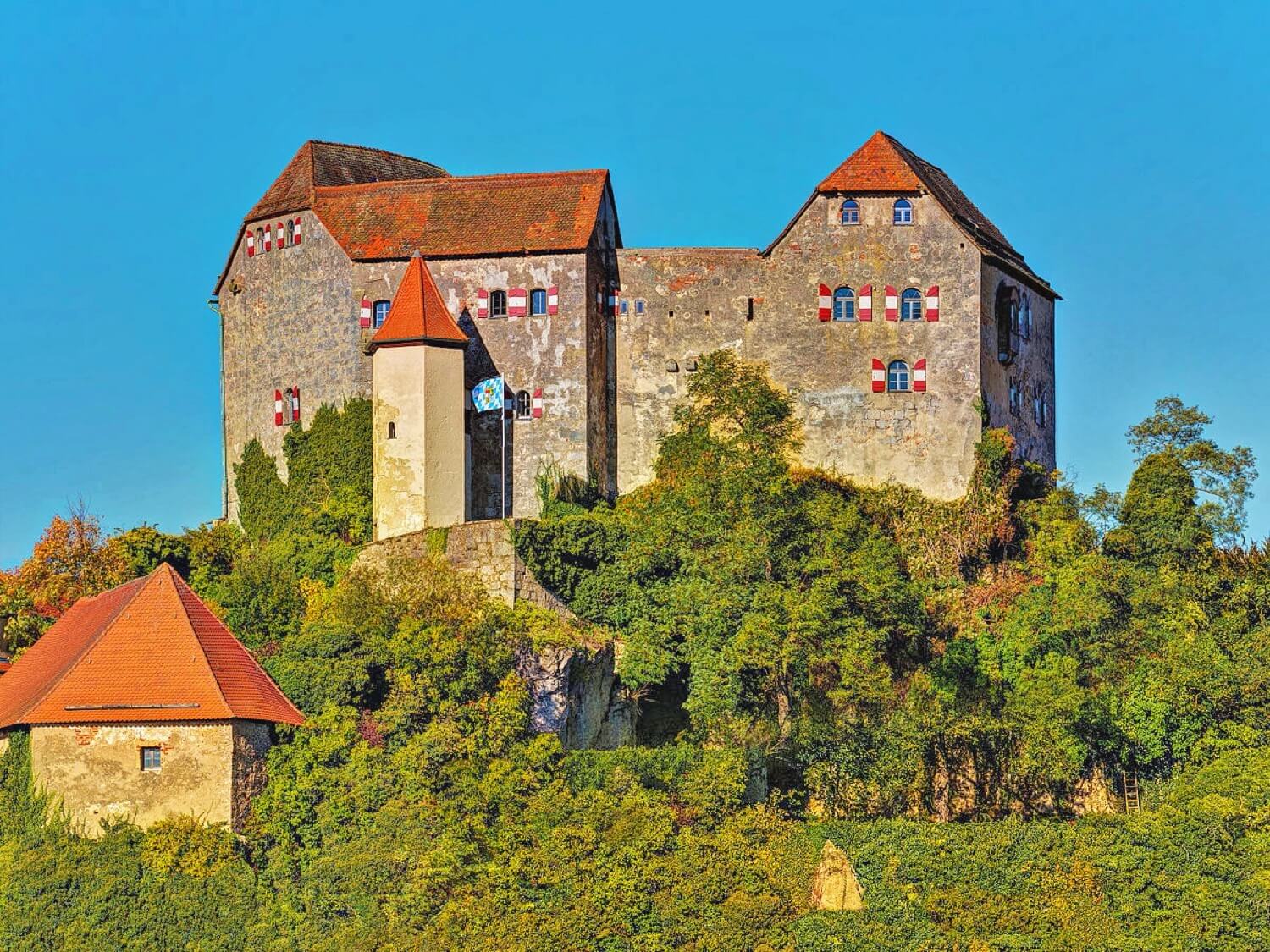
Hiltpoltstein Castle
Oberfranken
3.3km
castle, chateau
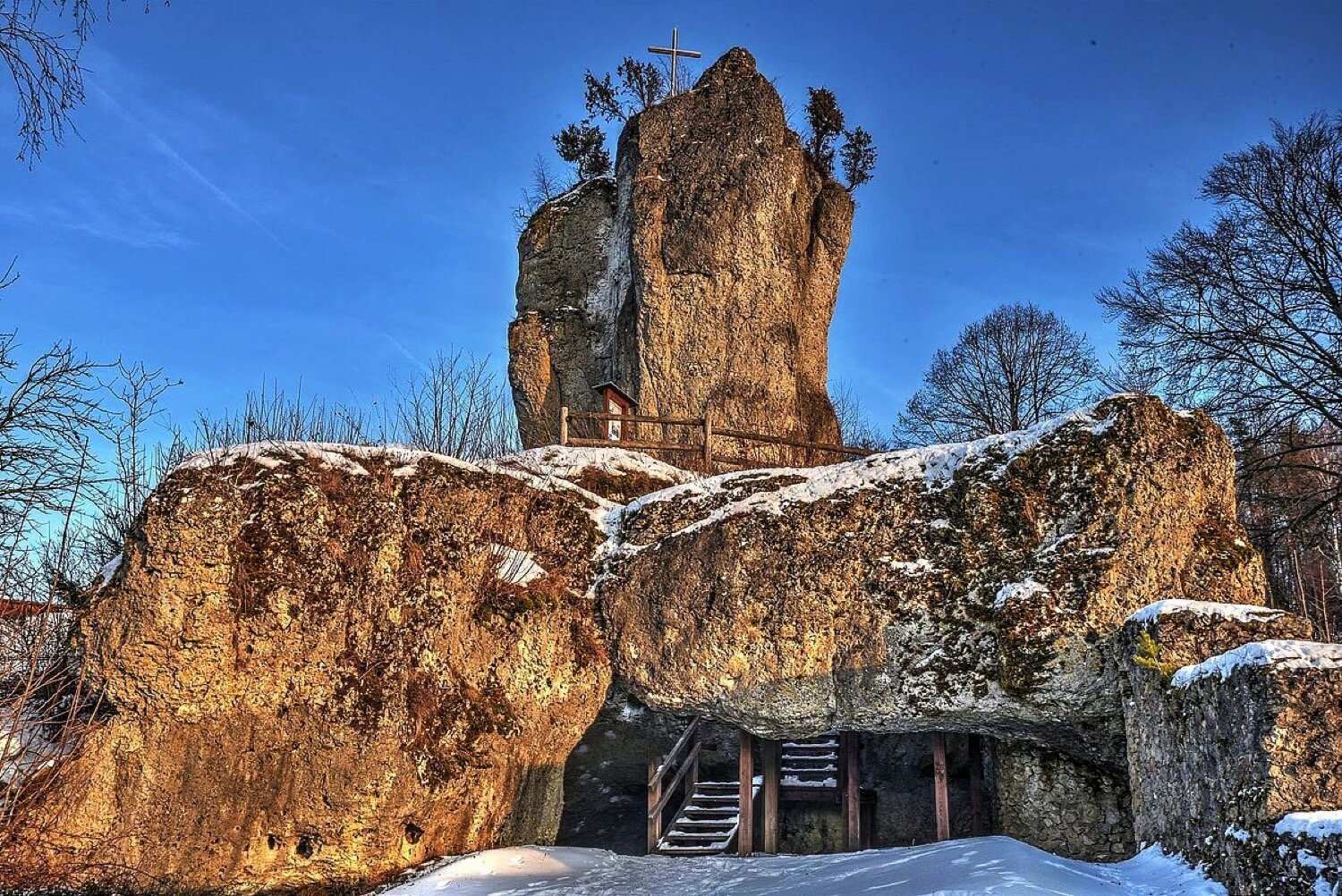
Bärnfels Castle
Oberfranken
3.7km
castle, chateau
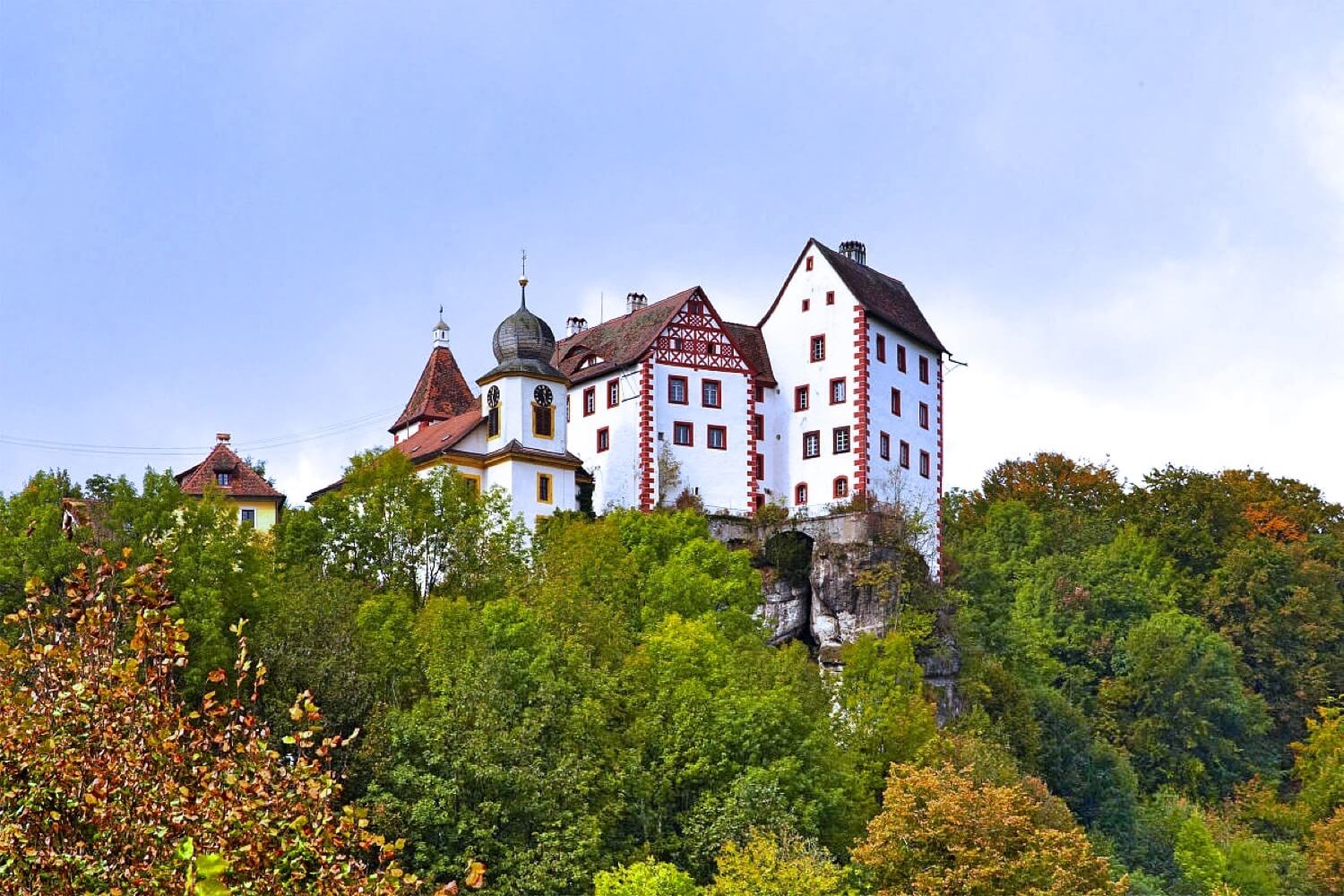
Egloffstein Castle
Oberfranken
4.2km
castle, chateau
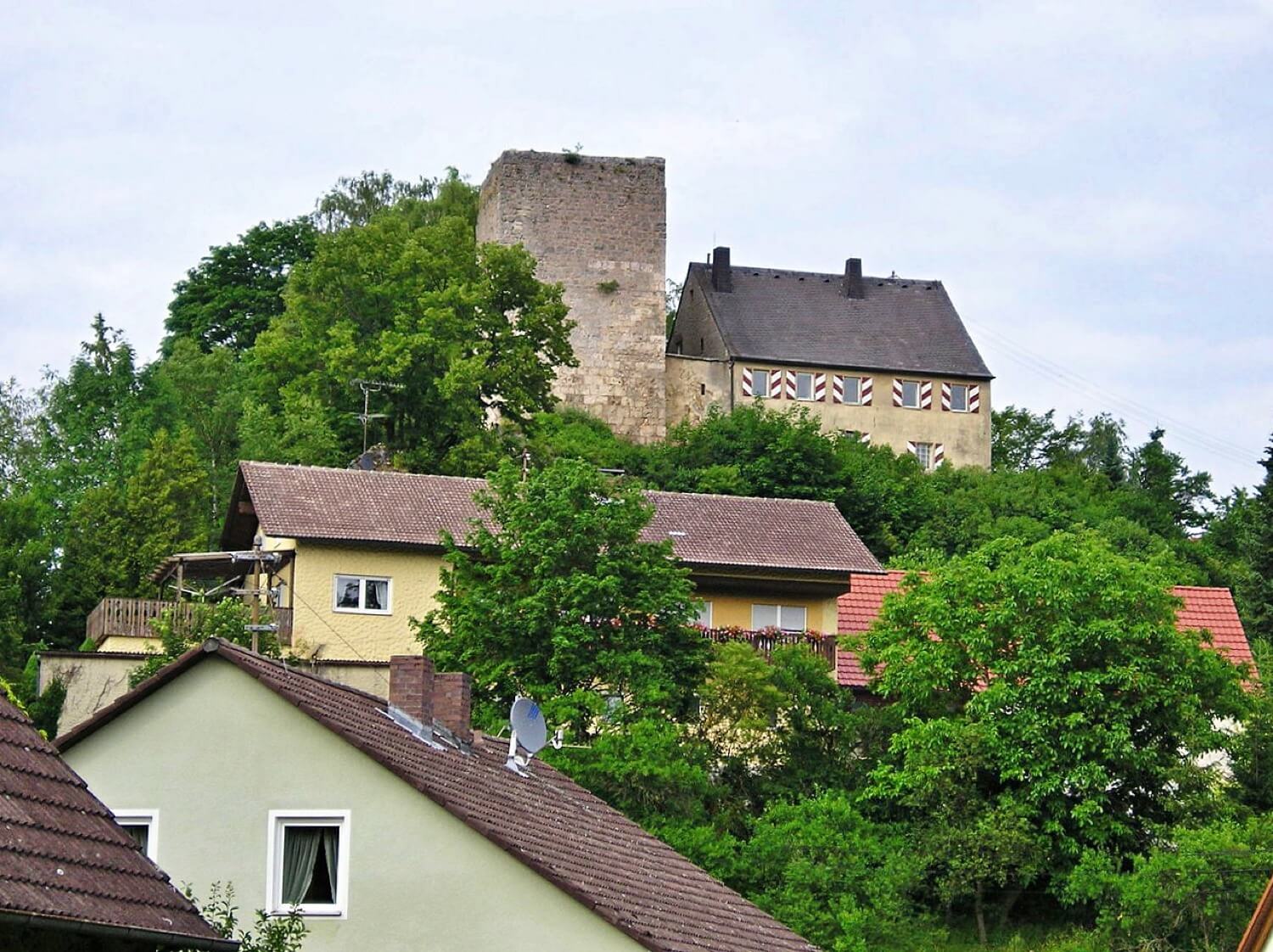
Thuisbrunn Castle
Oberfranken
4.6km
castle, chateau
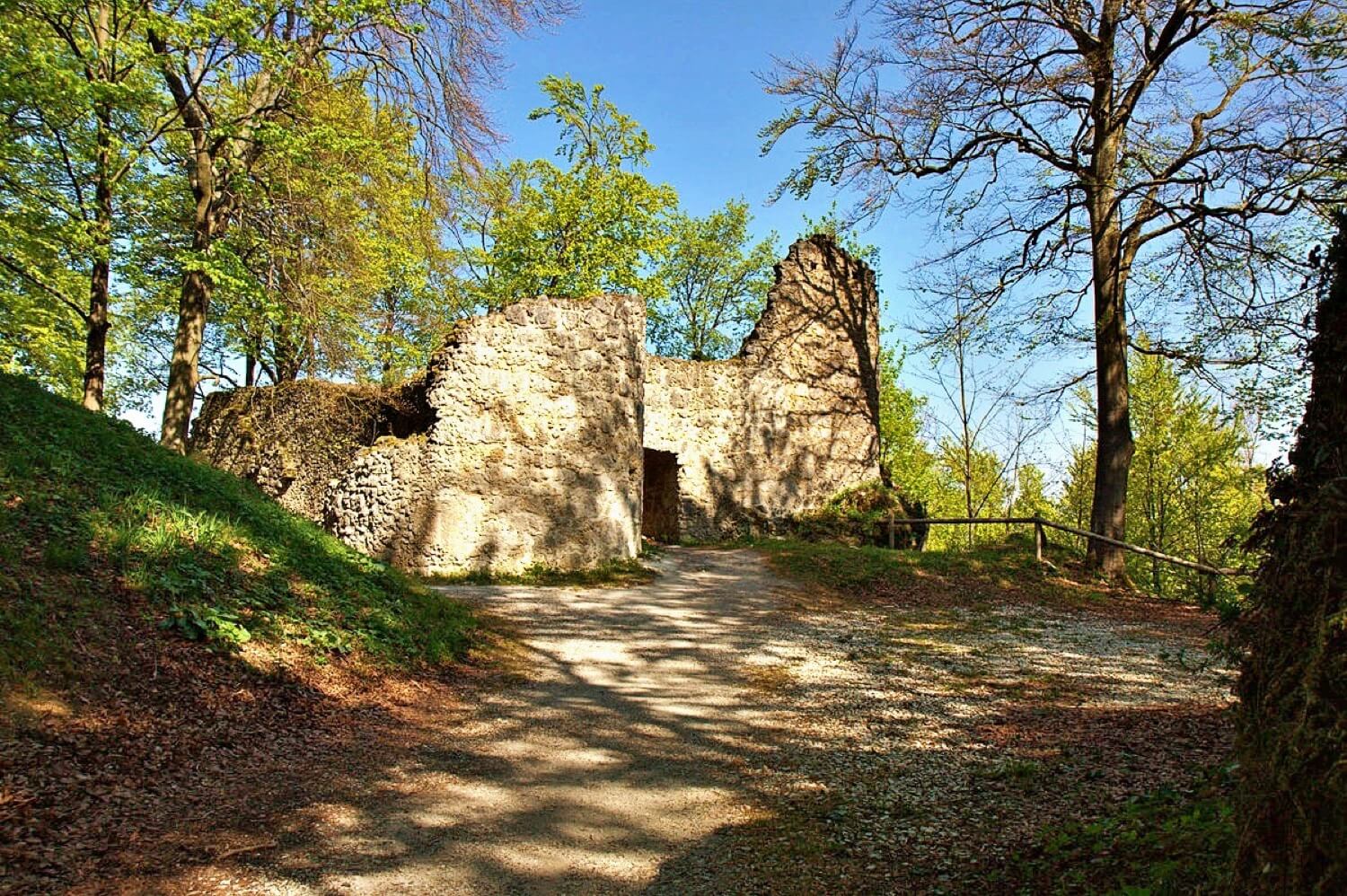
Leienfels Castle
Oberfranken
4.8km
castle, chateau
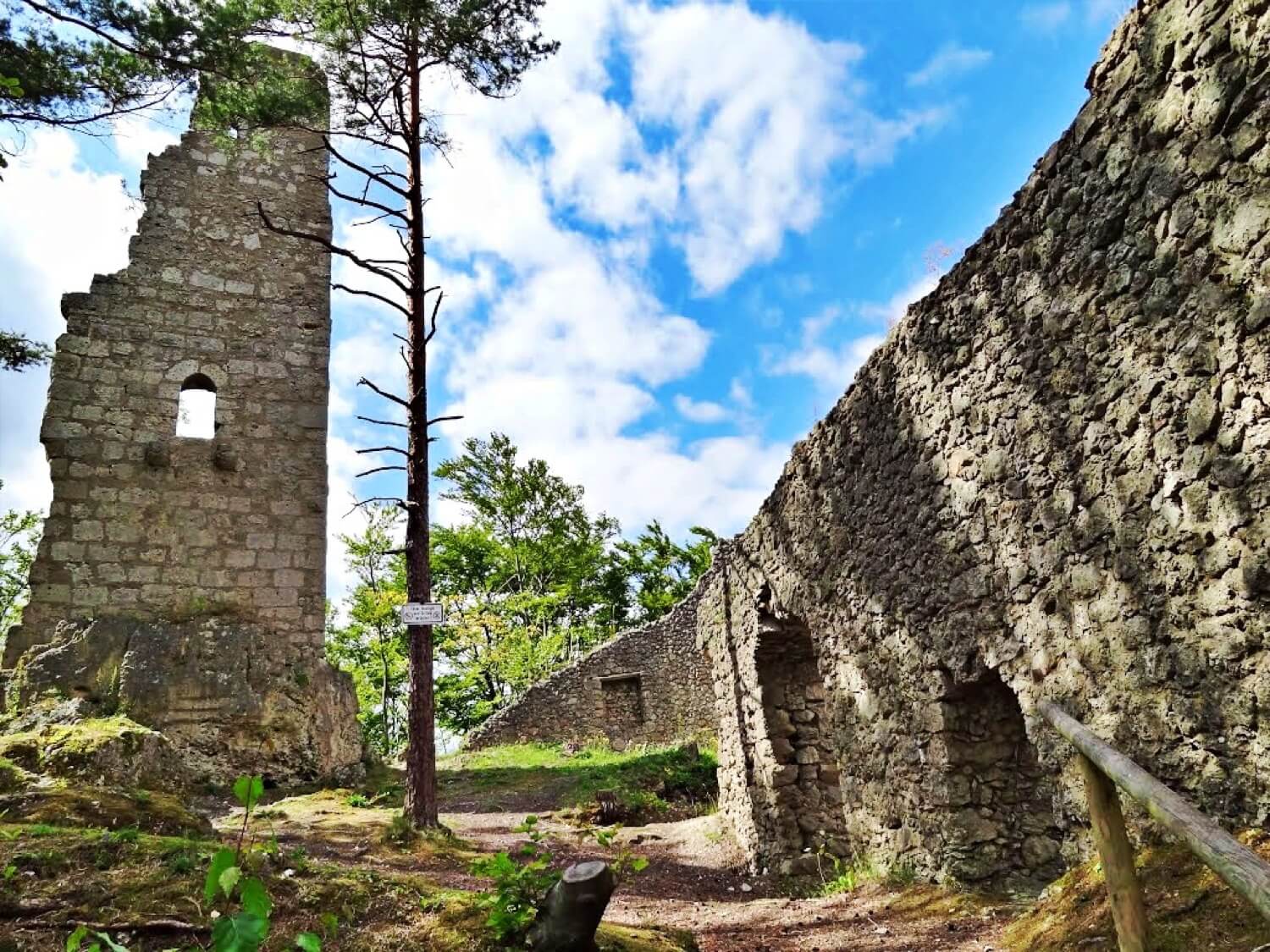
Burgruine Wildenfels
Mittelfranken
5.2km
castle, chateau
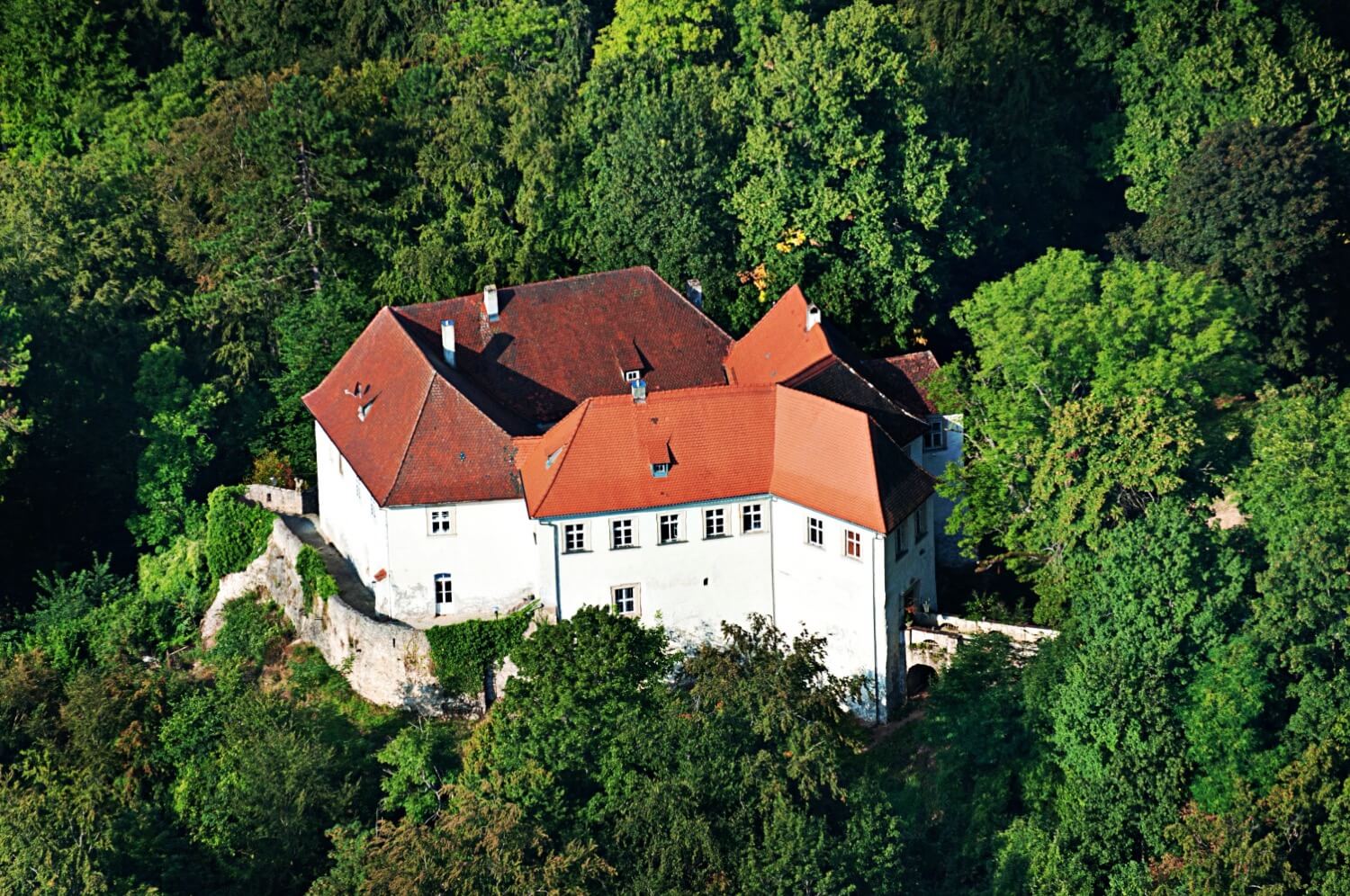
Schloss Hundshaupten
Oberfranken
7.1km
castle, chateau