Waldburg Castle
Tübingen Baden-Württemberg Germany
castle, chateau
Waldburg (Burg)
Tübingen Baden-Württemberg Germany
castle, chateau
The Waldburg (English: Forest castle) is the ancestral castle of the stewards and imperial princes of the nobility gender with the same name (House of Waldburg)
Die Waldburg ist die Stammburg des Truchsessen- und Reichsfürstengeschlechts Waldburg
Previous names
Waldburg Castle, Waldburg (Burg)
Description
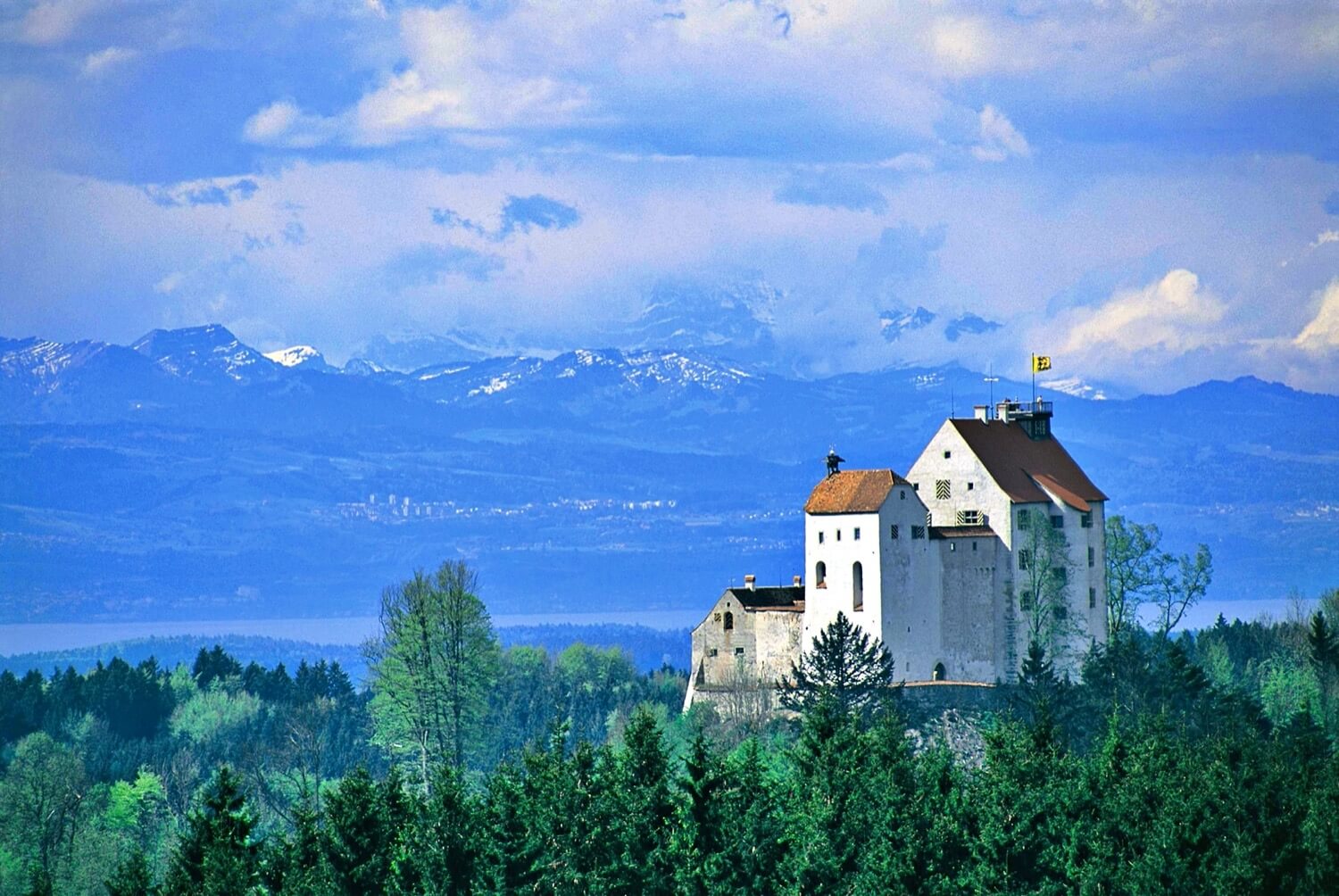
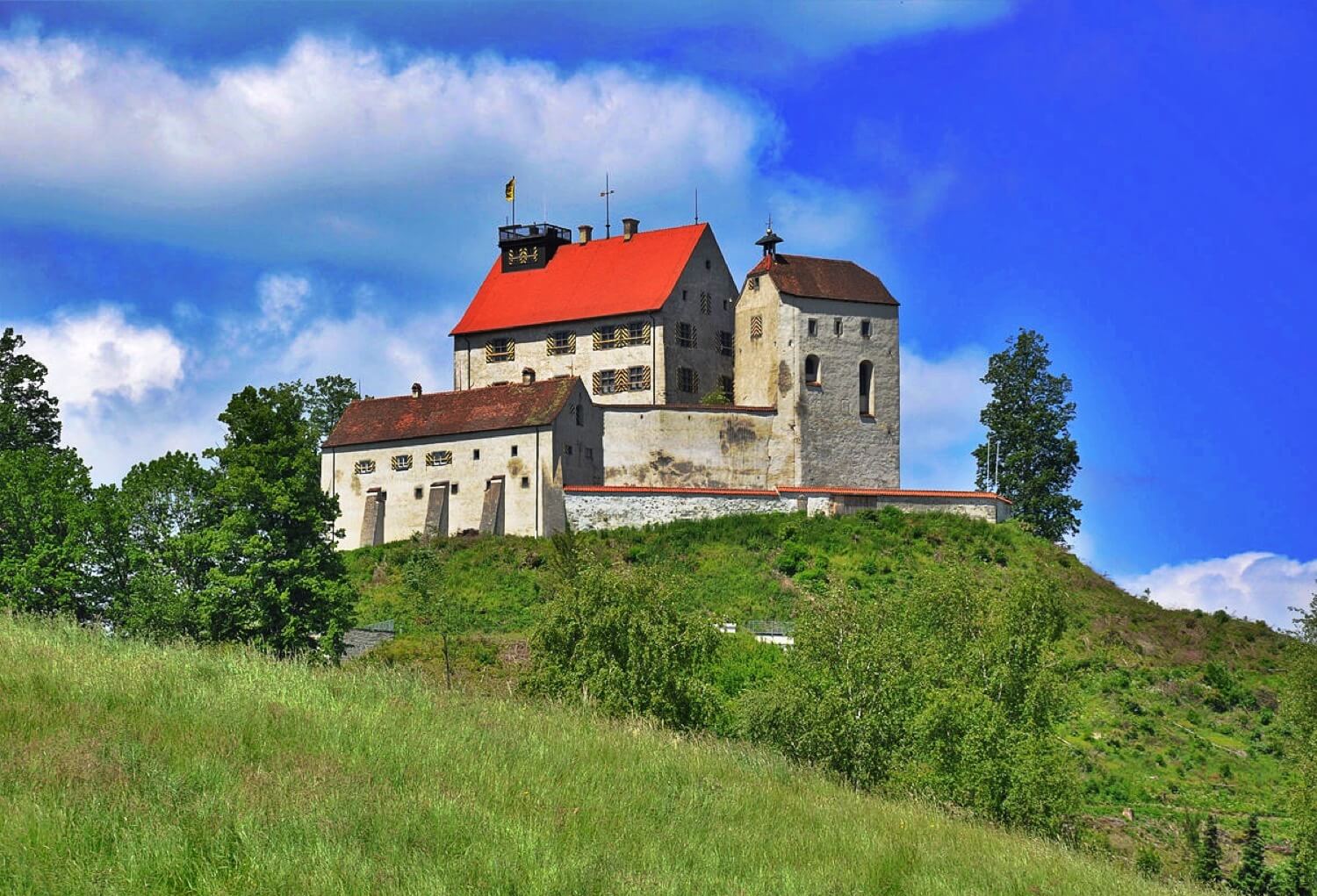
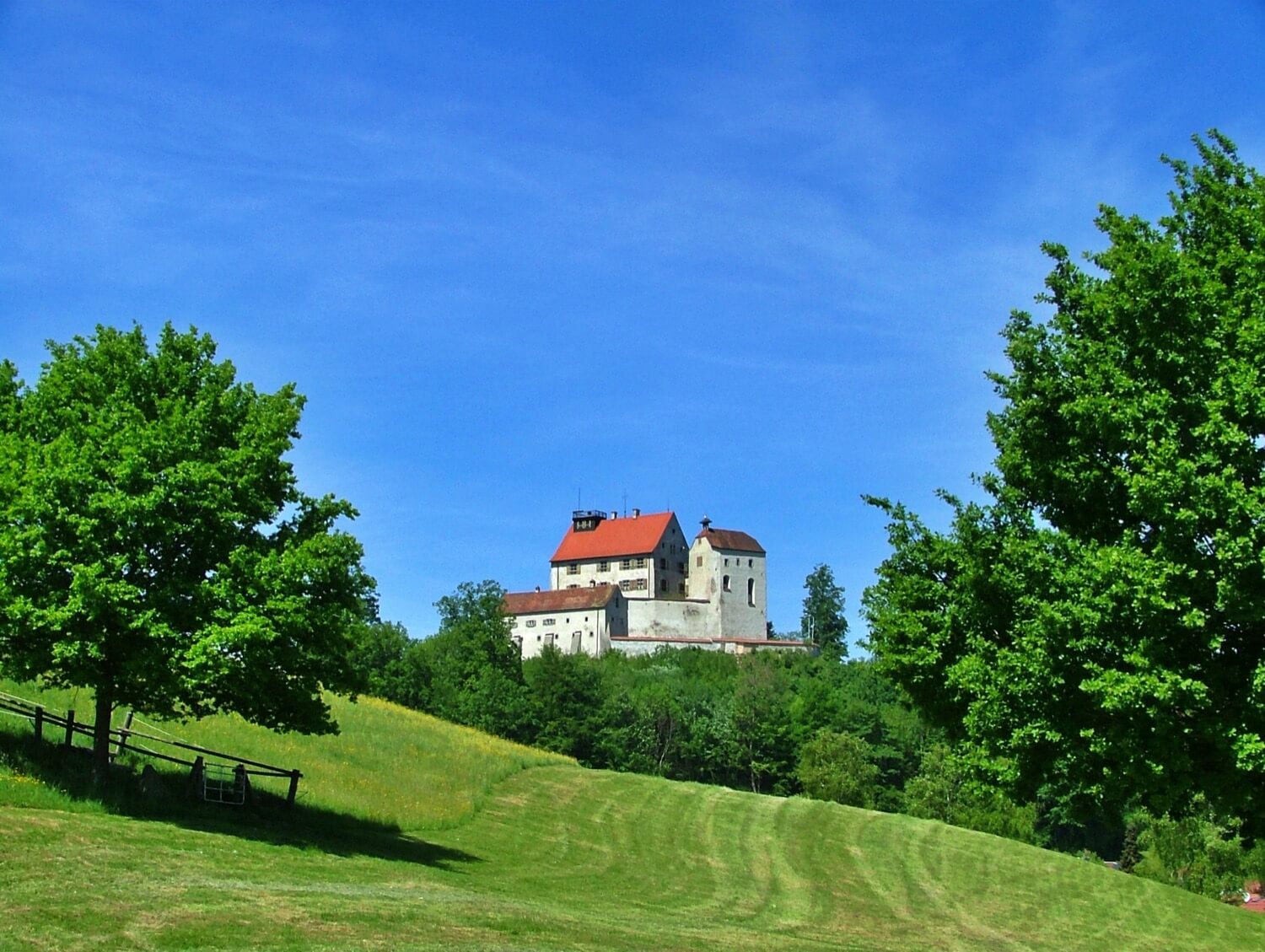
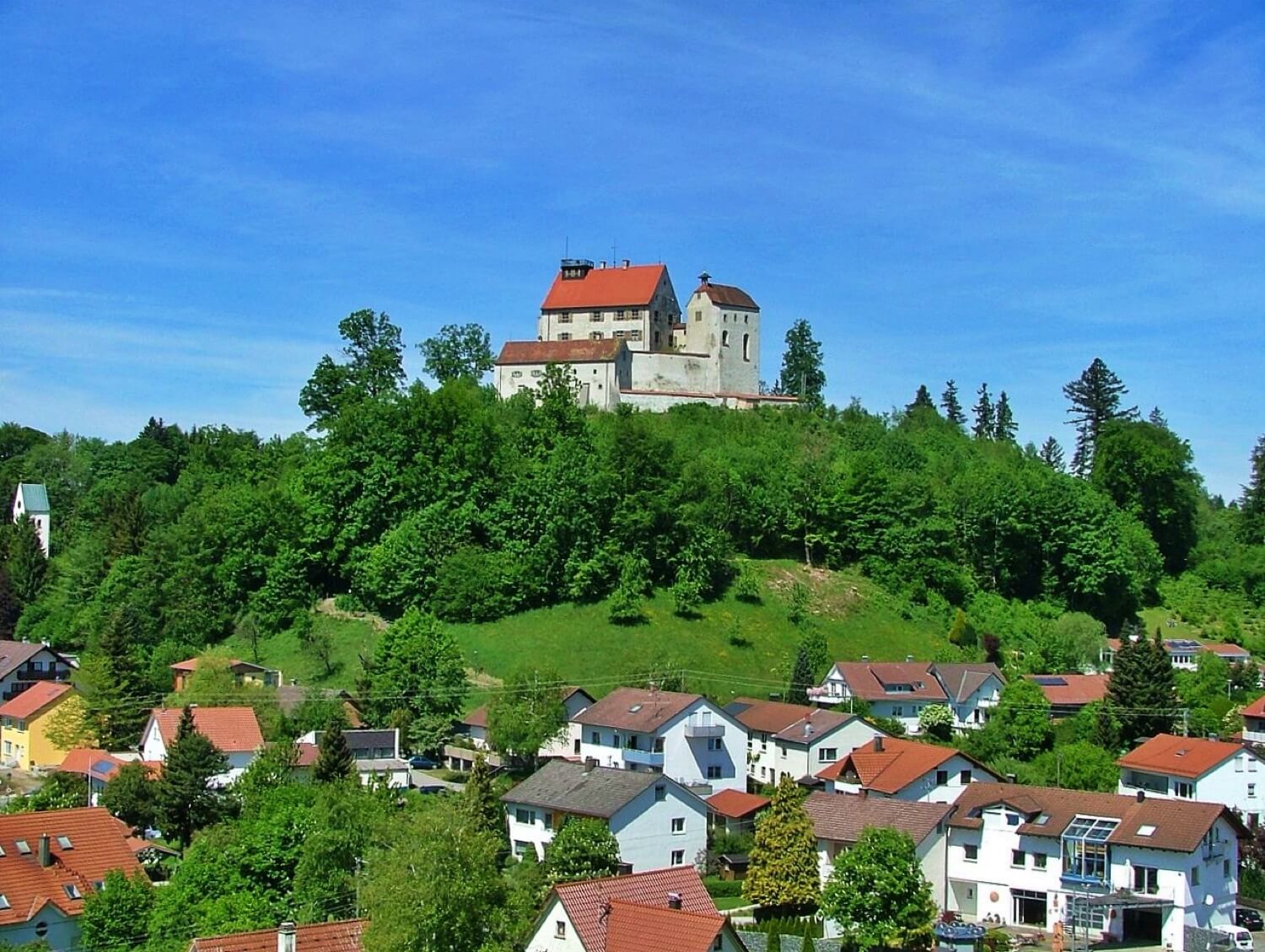
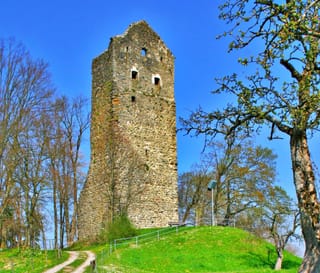
The Waldburg (English: Forest castle) is the ancestral castle of the stewards and imperial princes of the nobility gender with the same name (House of Waldburg). It dates from the 12th century and stands on the march of the municipality Waldburg in the district of Ravensburg, applies as one of the best preserved medieval buildings, and is one of the landmarks and the highest point in Upper Swabia.
The Waldburg is a Hilltop castle located on a natural elevation, a drumlin from the last glacial period, at 772 metres (2,533 ft) height above sea level. The raised situation with view (when suitable weather conditions) to the west up to the Hohentwiel near Singen, to the north up to the Ulm Minster, to the east far back in the Alpine foothills and southwards far into the Swiss Alps and the Lake Constance made the Waldburg to an important trigonometric point also for land surveying in the early 19th century of the ordnance survey. The steepen drumlin already offers by his very big slope angle an almost ideal military protection for a castle construction, however, complicated also the building and expansion more than seven centuries considerably.
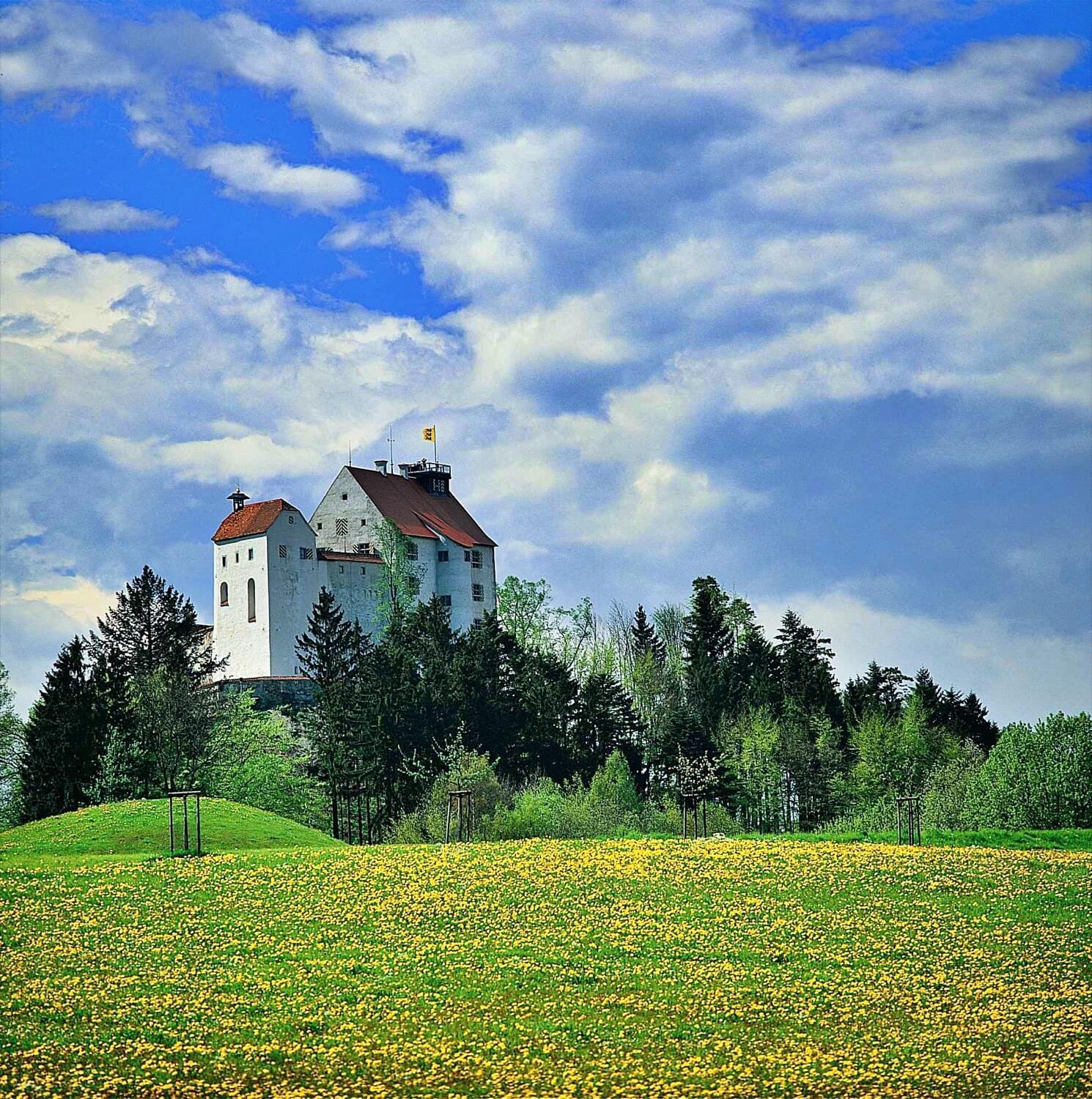
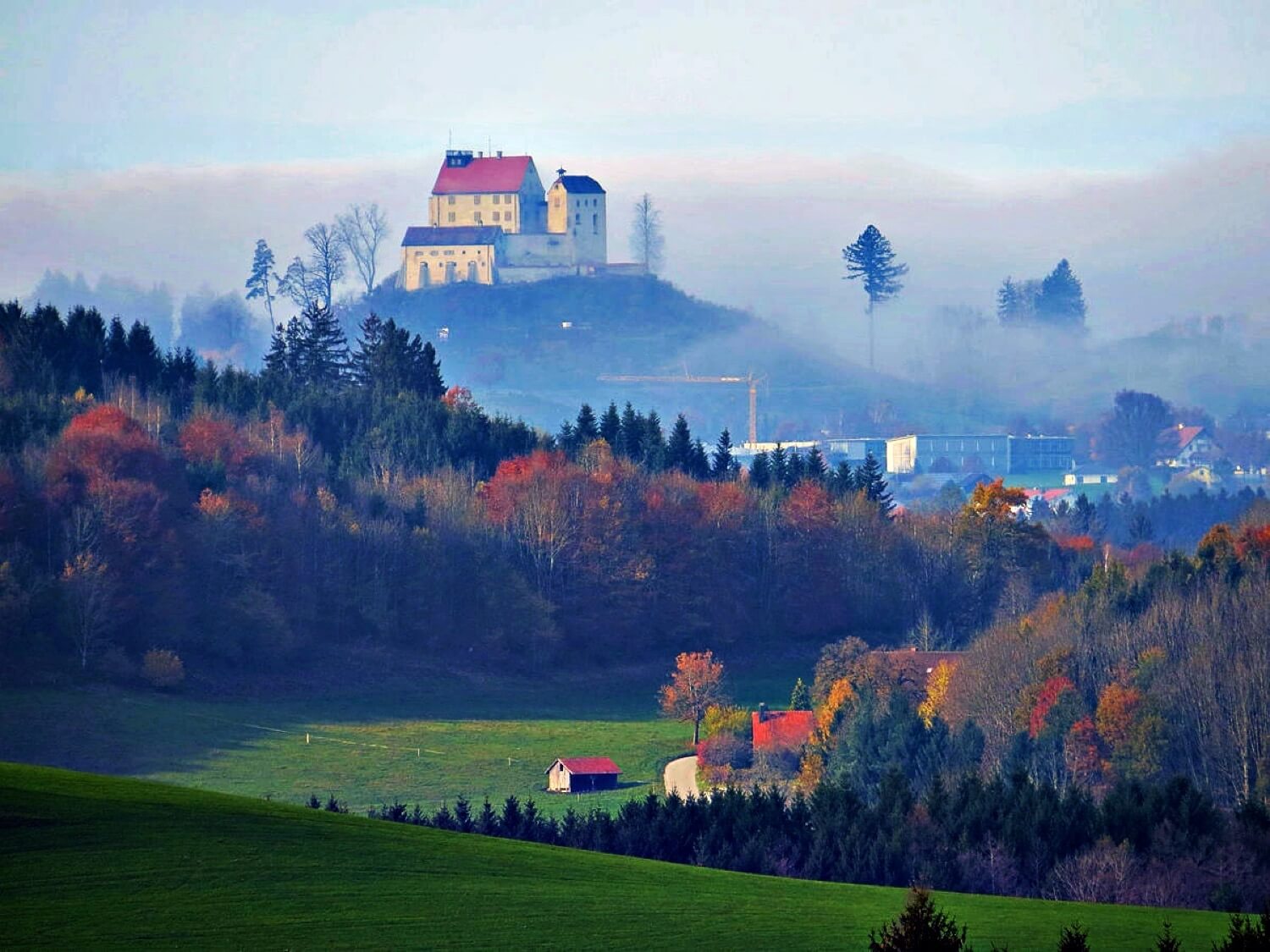
The hill castle was very woody till the eighties of the 20th century. The view at the castle was moved again in the old condition for the public reopening in 1996 by specific deforestation in the beginning of the nineties. During the day, as well as at night with lighting, the castle is a very striking and important landmark in Upper Swabian.
The first foundation of the castle goes back to the 11th century. In this time the family of Waldburg received an official fief from the Guelphs. In the first half of the 13th century the castle was radically rebuilt, the palas was anew established up to the second upper floor.
Under Emperor Frederick II the Imperial Regalia were kept in the castle from 1220 to at least 1240. In 1327 the church Saint Magnus was built at feet of the castle.
At the middle of the 16th century under steward Georg IV of Waldburg the castle was developed to a residence similar like a palace. From the 17th century the castle was inhabited only sporadically by the family of Waldburg and the building activity decreased.
Today the Schloss accommodates a museum and is opened for sightseeing during the warm seasons from early April until late October. Guided tours are held on weekends and holidays at 1:30 pm and 3:00 pm. At the top of the roof there is a vista platform with a look around as far as eye can see.
The museum shows exhibits to the history of the castle from the Middle Ages on the basis of documents, paintings as well as fitments and basic commodities and to the development of the ordnance survey. The walking tour begins in the ground floor with the late Middle Ages and ends in the third upper floor with the collections of the 19th and 20th century. The Holy Lance, the Imperial Sceptre and the Imperial Orb are exhibited as replicas, since 2013 there is also presented a copy of the Imperial Crown.
A special feature of the exhibition is a Facsimile of the printed wall map of the world by German cartographer Martin Waldseemüller where the continent and the name America appeared for the first time, originally published in April 1507. The Federal Republic of Germany consigned the original in 2007 to the Library of Congress in Washington, DC.
The castle chapel is used for church weddings. Parts of the museum and the vaults are also available for wedding celebrations. The Burgschenke, the castle inn, is the former kitchen in the imperial castle; there are offered dishes after original recipes of the Medieval cuisine.
Die Waldburg ist die Stammburg des Truchsessen- und Reichsfürstengeschlechts Waldburg. Sie stammt aus dem 12. Jahrhundert und steht auf der Gemarkung der Gemeinde Waldburg im Landkreis Ravensburg in Oberschwaben.
Die Gipfelburg befindet sich auf einer natürlichen Erhebung, einem Drumlin aus der Würmeiszeit, in 772 Meter Höhe. Die erhöhte Lage mit Fernsicht (bei geeigneter Wetterlage) westlich bis zum Hohentwiel bei Singen, nördlich bis zum Ulmer Münster, östlich weit in das Alpenvorland und südlich bis weit in die Schweizer Alpen machte die Waldburg auch für Landvermessung im frühen 19. Jahrhundert zu einem wichtigen trigonometrischen Vermessungspunkt der Landesvermessung. Der steile Drumlin bietet schon durch seinen sehr großen Böschungswinkel einen fast idealen militärischen Schutz für eine Burganlage, erschwerte aber auch den Bau und Ausbau über sieben Jahrhunderte erheblich.
Die Burg war bis in die Achtziger Jahre stark bewaldet. Durch gezielte Schlagrodung Anfang der Neunziger Jahre zur Wiedereröffnung für die Öffentlichkeit 1996 wurde der Blick auf die Burg wieder in den alten Zustand versetzt. Sowohl tagsüber als auch nachts mit Beleuchtung ist die Burg ein sehr markanter und wichtiger Orientierungspunkt in Oberschwaben.
Die erste Gründung der Burg geht auf das 11. Jahrhundert zurück. In dieser Zeit erhielt die Familie von Waldburg von den Welfen ein Amtslehen. In der ersten Hälfte des 13. Jahrhunderts wurde die Burg grundlegend umgebaut, der Palas wurde bis zum zweiten Obergeschoss neu errichtet.
Unter Kaiser Friedrich II. wurden auf der Burg von 1220 bis mindestens 1240 die Reichskleinodien aufbewahrt. Die Heilige Lanze und der Reichsapfel sind als Repliken in den Räumen der Burg ausgestellt.
Im Jahr 1327 wurde die Kirche St. Magnus zu Füßen der Burg erbaut.
Mitte des 16. Jahrhunderts unter Truchsess Georg IV. von Waldburg wurde die Burg zu einem schlossähnlichen Wohn- und Herrschaftssitz ausgebaut. Ab dem 17. Jahrhundert wurde die Burg nur noch sporadisch von der Familie von Waldburg bewohnt, und die Bautätigkeit nahm ab.
Heute beherbergt die Burg in ihrem Palas ein Museum und ist in den Sommermonaten zur Besichtigung geöffnet. Dabei ist auch eine Aussichtsplattform auf dem Dach des Palas zugänglich, auf der sich ein Trigonometrischer Punkt befindet. Die Burgkapelle wird für kirchliche Trauungen verwendet. Teile des Museums und der Gewölbe stehen auch für Hochzeitsfeiern zur Verfügung.
Useful information
Gratis
Innenhof, Kapelle, Sonderausstellung: 4.00 EUR
Turmbesteigung, Innenhof, Kapelle, Sonderausstellung: 7.00 EUR
0 - 6 Jahre: gratis
6 - 16 Jahre: 30%
135.00 EUR
WC
info@schlosswaldburg.de
- Die Burg ist nur im Rahmen von Führungen zu besichtigen
- Es beherbergt ein Museum
- Räume zu vermieten
- Burgführung mit Schatzkammer, Turmbesteigung, Innenhof, Sonderausstellung, Waffenkammer, Kapelle & Foto Shooting Raum: 10.00 EUR
- Shop Waldburg
- In der Sommersaison geöffnet
-
External links
Nearby castles
Schloss Wolfegg
Tübingen
9.3km
castle, chateau
Burg Prassberg
Tübingen
10.3km
castle, chateau
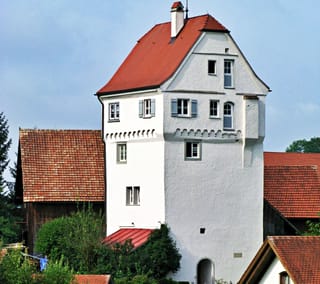
Burg Oflings
Tübingen
11.8km
castle, chateau
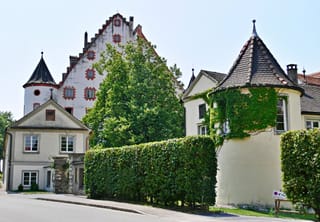
Altes Schloss Kisslegg
Tübingen
13.0km
castle, chateau
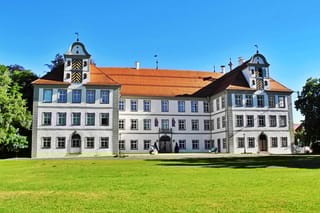
Neues Schloss Kisslegg
Tübingen
13.1km
castle, chateau
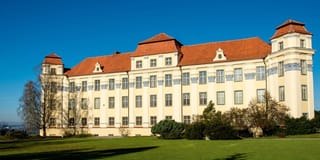
Tettnang Castle
Tübingen
13.7km
castle, chateau
Heerlijkheid Neuravensburg
Tübingen
13.9km
castle, chateau