Schloss Wolfegg
Tübingen Baden-Württemberg Germany
castle, chateau
Schloss Wolfegg
Tübingen Baden-Württemberg Germany
castle, chateau
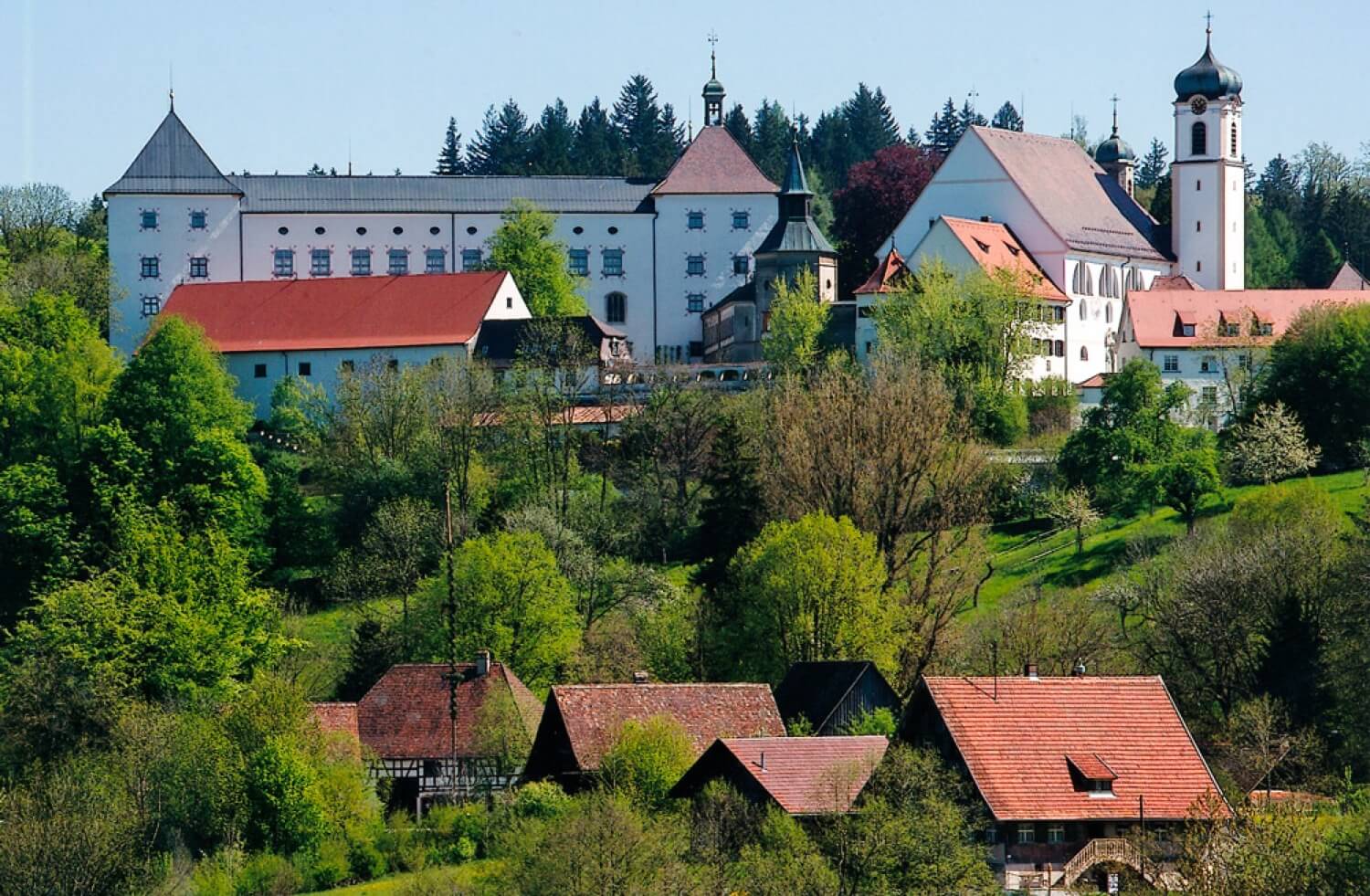
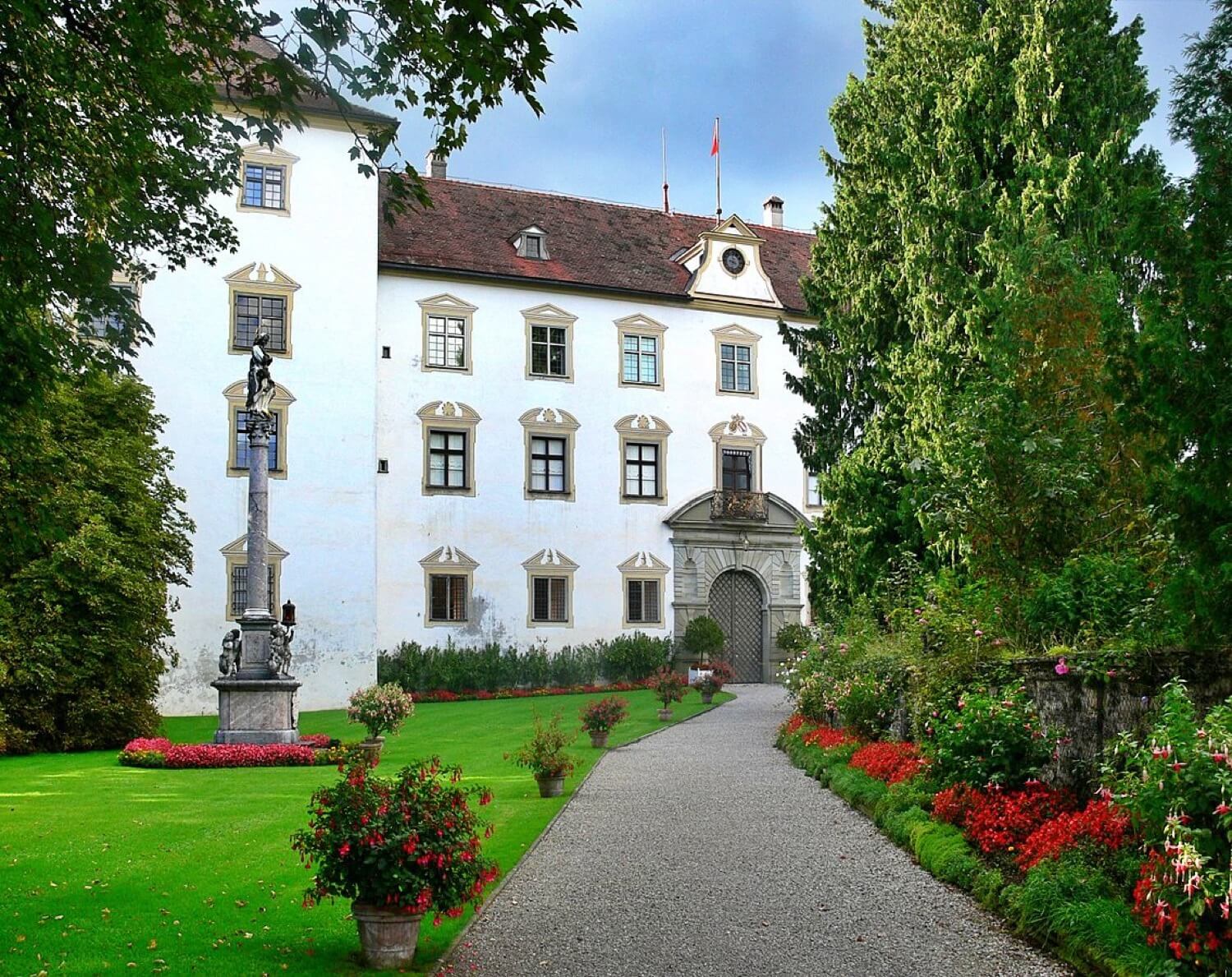
Schloss Wolfegg is a Renaissance castle next to the town of Wolfegg in Upper Swabia (Germany)
Das Schloss Wolfegg ist ein Renaissance-Schloss in der Gemeinde Wolfegg in Oberschwaben
Previous names
Schloss Wolfegg, Schloss Wolfegg
Description
Schloss Wolfegg is a Renaissance castle next to the town of Wolfegg in Upper Swabia (Germany). The castle is the ancestral seat of the house of Waldburg-Wolfegg, which still owns it today.
The main building of the castle consists of four wings arranged in the shape of a rectangle with towers in the corners. Its exterior design and layout dates back to Truchsess Jakob II. of Waldburg (1546–1589) and his wife Johanna (1548-1613). After a fire in 1578 destroyed an older building, they built a new castle. Parts of it however were destroyed in 1646, when Swedish troops under Carl Gustaf Wrangel ransacked the place near the end of the Thirty Years' War and laid fire to it.
Since the owner Maximilian Willibald of Waldburg-Wolfegg was short of funds, the restoration of the castle was delayed until 1651. From 1691 to 1700 the sculptor and plasterer Balthasar Kimmer of Wangen (1653–1702) redesigned the interior of the rooms with official and representative functions. In the 18th century some of the guest rooms were decorated in Rococo style. Towards the end of the 19th century the castle was extensively renovated again. The dining rooms received a new interior design and the castle's chapel was remodeled in a Neo-Gothic fashion.
The castle, which is still occupied by members of the Waldburg-Wolfegg family, is usually not accessible to the public. However once or twice a year public concerts are performed within the castle during which concert visitors can see some of the castle's inner room, in particular the Rittersaal (knights' hall). The Rittersaal is a large hall decorated in Baroque style featuring 24 life-sized wood sculptures and large ceiling mirrors. It is considered to be one of the most original room designs of the Baroque period in Germany. In addition to those rooms being used for concerts guided tours through other parts of the castle might be offered at that occasion.
In May 2016 the Denkmalstiftung Baden-Württemberg, a foundation for the preservation of historical monuments in Baden-Württemberg, designated the Rittersaal as the historic monument of the month.
The castle also hosts the Wolfegger Kabinett, a large collection of graphic art from the late Middle Ages and the Renaissance periods.
In an edition of 1,000 issues the wall map of the world by the German cartographers Martin Waldseemüller and Matthias Ringmann was printed in early 16th century, where the continent and the name America appeared for the first time, originally published in April 1507. On account of the stormy development of the cartography in this epoche these specimens were fast outstripped by more detailed editions, so that the original edition fell quickly out of use and all issues got lost over time.
Their fate and whereabouts were unknown for a long time until one of the originals was rediscovered in 1901 by the historian and cartographer Joseph Fischer in the library of the castle, the Wolfegger Kabinett. The exemplar was 8 feet (2.4 m) wide and 4.5 feet (1.4 m) high and in a very good condition. It was at first in the individual property of Johannes Schöner, who was an astronomer, geographer, and cartographer in the Free Imperial City of Nuremberg. Later the family of Waldburg-Wolfegg acquired the map and it remained in their archives for more than 250 years undiscerned. In 2001 the United States Library of Congress bought the map from Waldburg-Wolfegg family for ten million dollars.
Das Schloss Wolfegg ist ein Renaissance-Schloss in der Gemeinde Wolfegg in Oberschwaben. Es ist der Stammsitz des Adelshauses Waldburg-Wolfegg, in dessen Besitz es sich auch heute noch befindet.
Das Hauptgebäude des Schlosses besteht aus vier Flügeln, die zusammen mit vier Ecktürmen in der Form eines Rechtecks angeordnet sind. Die äußere Form der heutigen Anlage geht auf den Truchsess Jakob II. von Waldburg (1546–1589) und seine Gemahlin Johanna (1548–1613) zurück, die gegen Ende des 16. Jahrhunderts ein neues Schloss erbauen ließen, um ein 1578 durch einen Kaminbrand zerstörtes Vorgängergebäude zu ersetzen. Teile dieses Schlosses wurden jedoch 1646 im Dreißigjährigen Krieg zerstört, als es schwedische Truppen unter General Wrangel plünderten und in Brand setzten. Der Wiederaufbau begann aufgrund von Geldmangel erst 1651 und die innere Neugestaltung der Repräsentationsräume erfolgte 1691–1700 durch den Bildhauer und Stuckateur Balthasar Krimmer (1653–1702) aus Wangen. In der Mitte des 18. Jahrhunderts wurde dann ein Teil der Innenräume im Rokoko-Stil ausgestattet. Im späten 19. Jahrhundert kam es erneut zu größeren Umbauten, dabei wurden die Ausstattungen der Speisezimmer dem damaligen Zeitgeschmack angepasst und die Schlosskapelle erhielt ein neugotisches Aussehen.
Das Schloss ist für die Öffentlichkeit normalerweise nicht zugänglich, allerdings werden im Rahmen von jährlich im Schloss stattfindenden Konzerten auch Führungen angeboten. Als besonders sehenswert gilt der mit 24 Holzskulpturen und einem großen Deckenspiegel ausgestattete Rittersaal im Barockstil.
Das Schloss beherbergt zudem die auch als "Wolfegger Kabinett" bezeichnete Kunstsammlung des Hauses Waldburg-Wolfegg.
Die Denkmalstiftung Baden-Württemberg ernannte den Rittersaal zum Denkmal des Monats Mai 2016.
Nearby castles
Neues Schloss Kisslegg
Tübingen
7.7km
castle, chateau
Altes Schloss Kisslegg
Tübingen
7.8km
castle, chateau
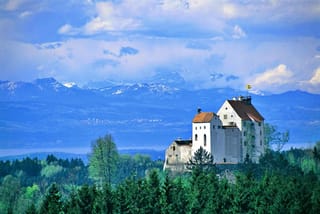
Waldburg Castle
Tübingen
9.3km
castle, chateau
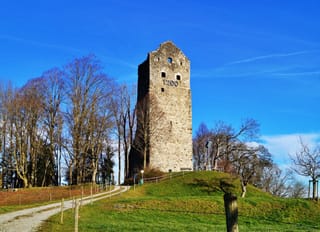
Burg Prassberg
Tübingen
12.8km
castle, chateau
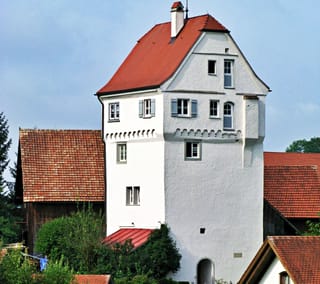
Burg Oflings
Tübingen
13.6km
castle, chateau
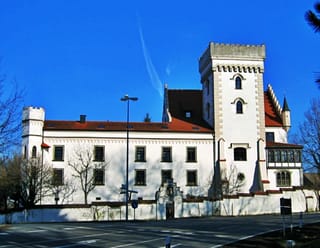
Schloss Ratzenried
Tübingen
13.8km
castle, chateau
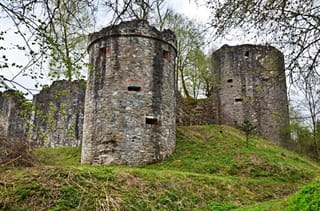
Ruine Ratzenried
Tübingen
14.7km
castle, chateau