Neuschwanstein Castle
Schwaben Bayern Germany
castle, chateau
Schloss Neuschwanstein
Schwaben Bayern Germany
castle, chateau
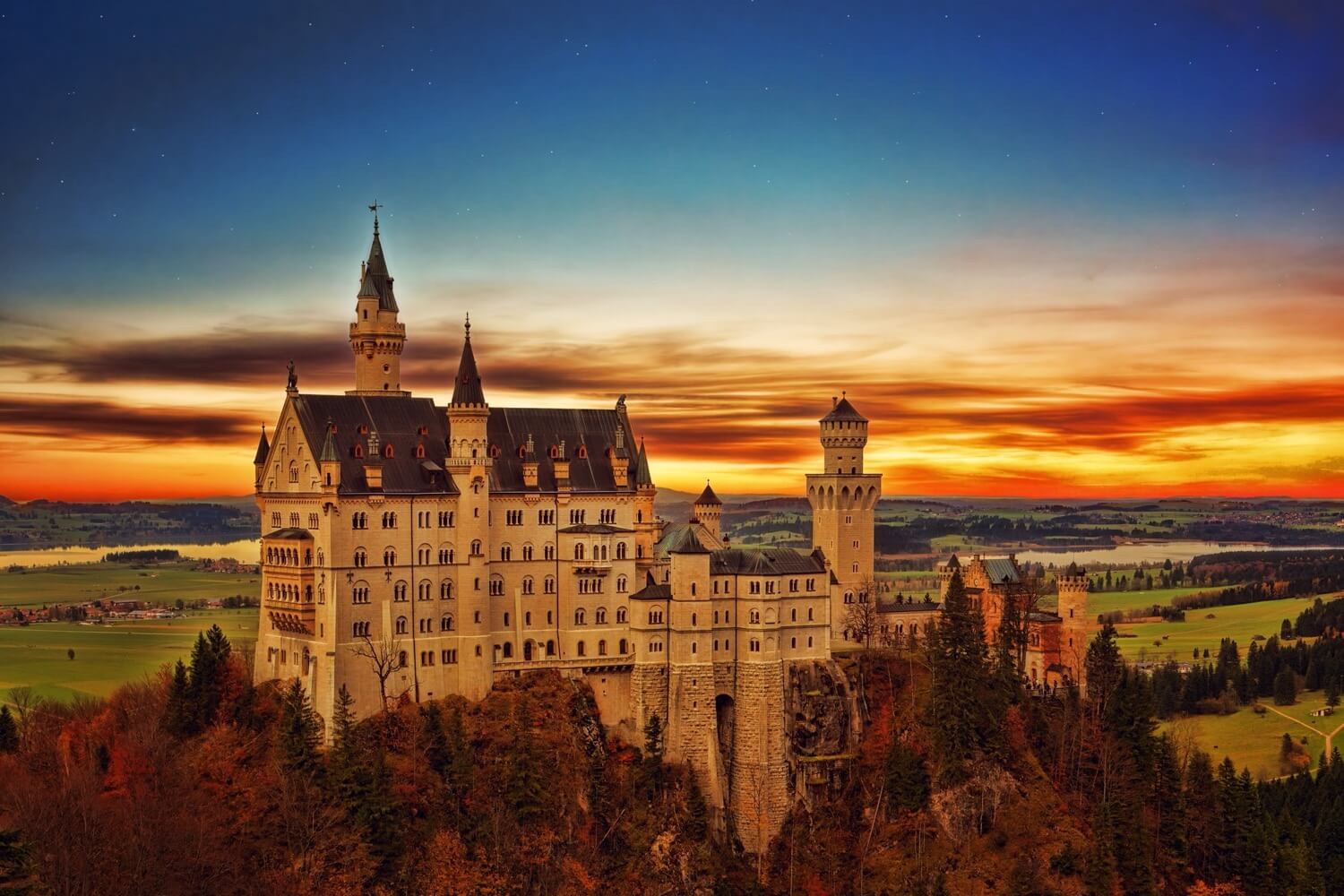
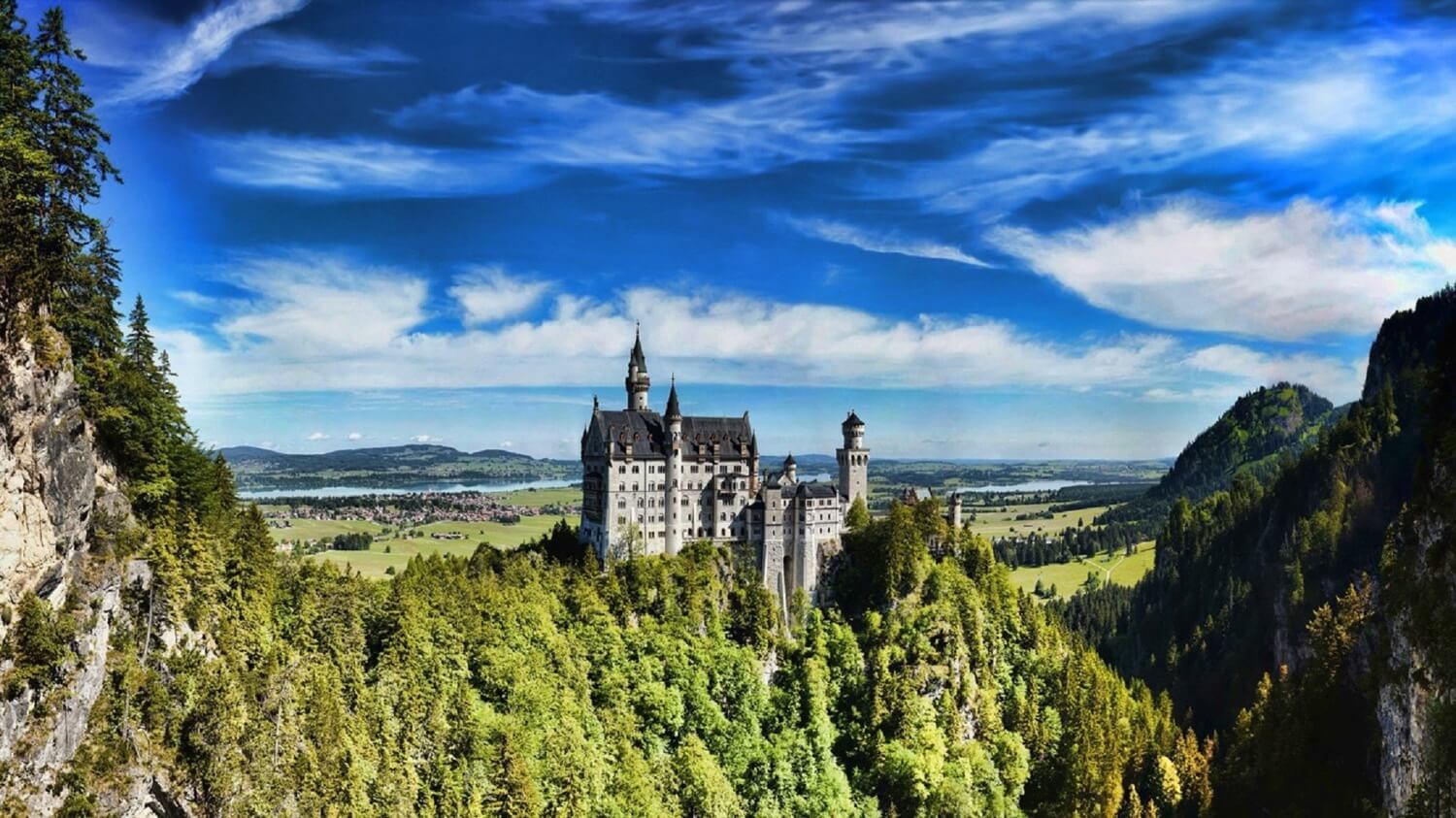
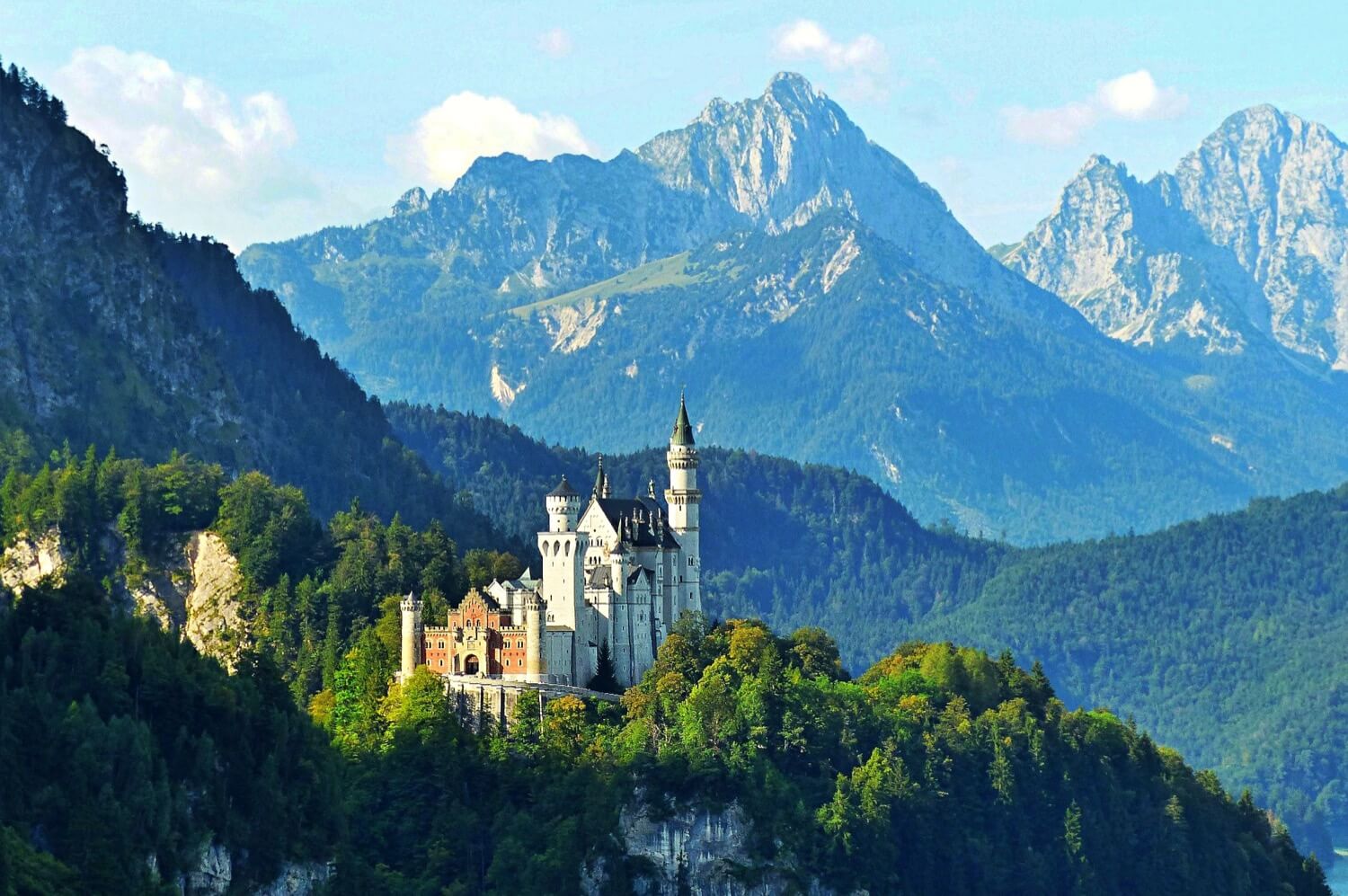
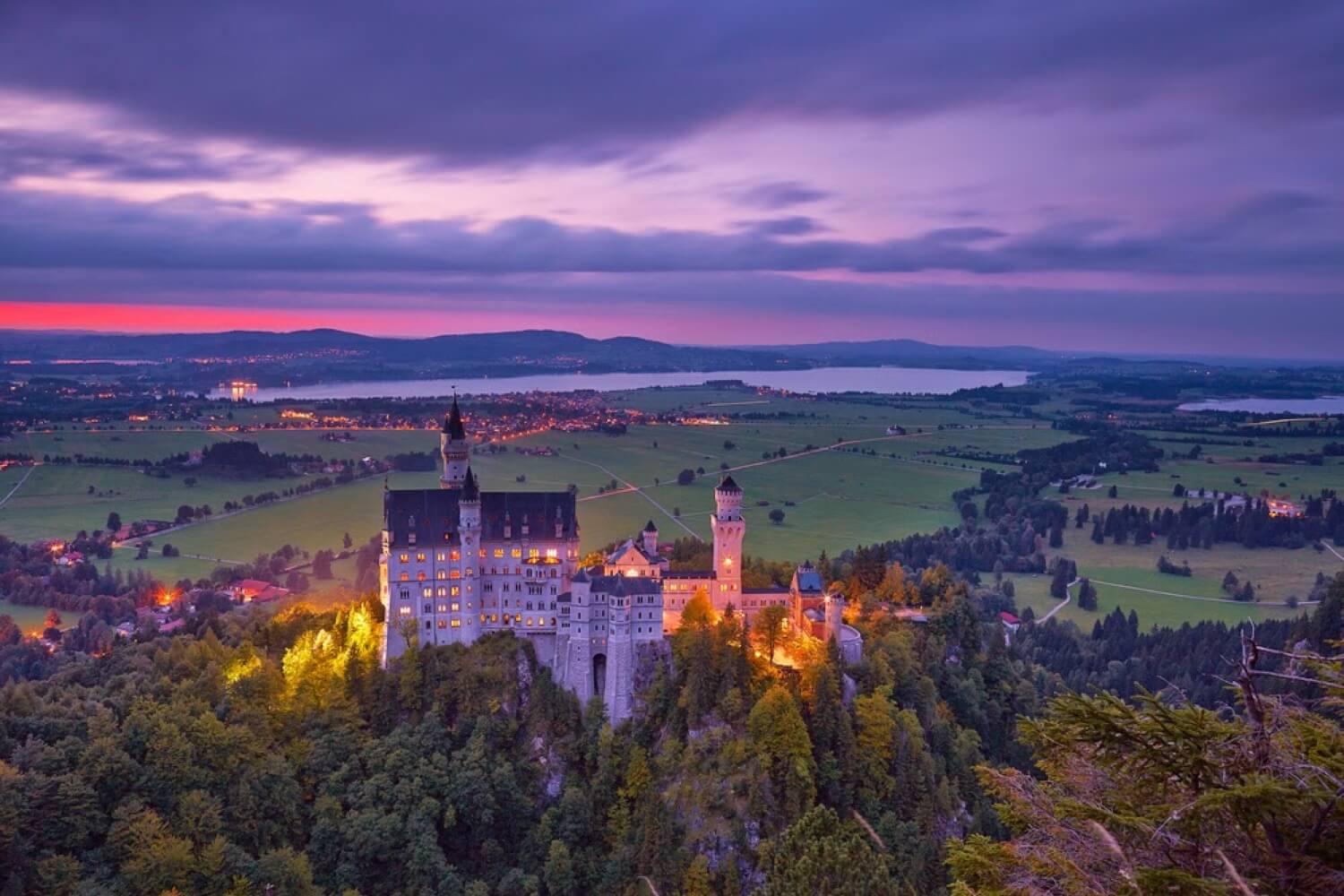
Neuschwanstein Castle (German: Schloss Neuschwanstein, pronounced (nɔʏˈʃvaːnʃtaɪn), English: "New Swanstone Castle") is a nineteenth-century Romanesque Revival palace on a rugged hill above the village of Hohenschwangau near Füssen in southwest Bavaria, Germany
Das Schloss Neuschwanstein steht oberhalb von Hohenschwangau bei Füssen im südlichen Bayern
Previous names
Neuschwanstein Castle, Schloss Neuschwanstein
Description
Neuschwanstein Castle (German: Schloss Neuschwanstein, pronounced (nɔʏˈʃvaːnʃtaɪn), English: "New Swanstone Castle") is a nineteenth-century Romanesque Revival palace on a rugged hill above the village of Hohenschwangau near Füssen in southwest Bavaria, Germany. The palace was commissioned by Ludwig II of Bavaria as a retreat and as a homage to Richard Wagner. Ludwig paid for the palace out of his personal fortune and by means of extensive borrowing, rather than Bavarian public funds.
The castle was intended as a home for the king, until he died. It was open to the public shortly after his death. Since then more than 61 million people have visited Neuschwanstein Castle. More than 1.3 million people visit annually, with as many as 6,000 per day in the summer. The palace has appeared prominently in several movies such as Chitty Chitty Bang Bang and The Great Escape and serves as the inspiration for Disneyland's Sleeping Beauty Castle and later, similar structures.
The municipality of Schwangau lies at an elevation of 800 m (2,620 ft) at the south west border of the German state of Bavaria. Its surroundings are characterized by the transition between the Alpine foothills in the south (toward the nearby Austrian border) and a hilly landscape in the north that appears flat by comparison.
In the Middle Ages, three castles overlooked the villages. One was called Schwanstein Castle. In 1832, Ludwig's father King Maximilian II of Bavaria bought its ruins to replace them with the comfortable neo-Gothic palace known as Hohenschwangau Castle. Finished in 1837, the palace became his family's summer residence, and his elder son Ludwig (born 1845) spent a large part of his childhood here.
Vorderhohenschwangau Castle and Hinterhohenschwangau Castle sat on a rugged hill overlooking Schwanstein Castle, two nearby lakes (Alpsee and Schwansee), and the village. Separated only by a moat, they jointly consisted of a hall, a keep, and a fortified tower house. In the nineteenth century only ruins remained of the twin medieval castles, but those of Hinterhohenschwangau served as a lookout place known as Sylphenturm.
The ruins above the family palace were known to the crown prince from his excursions. He first sketched one of them in his diary in 1859. When the young king came to power in 1864, the construction of a new palace in place of the two ruined castles became the first in his series of palace building projects. Ludwig called the new palace New Hohenschwangau Castle; only after his death was it renamed Neuschwanstein. The confusing result is that Hohenschwangau and Schwanstein have effectively swapped names: Hohenschwangau Castle replaced the ruins of Schwanstein Castle, and Neuschwanstein Castle replaced the ruins of the two Hohenschwangau Castles.
Neuschwanstein embodies both the contemporaneous architectural fashion known as castle romanticism (German: Burgenromantik), and Ludwig II's immoderate enthusiasm for the operas of Richard Wagner.
In the nineteenth century, many castles were constructed or reconstructed, often with significant changes to make them more picturesque. Palace-building projects similar to Neuschwanstein had been undertaken earlier in several of the German states and included Hohenschwangau Castle, Lichtenstein Castle, Hohenzollern Castle, and numerous buildings on the River Rhine such as Stolzenfels Castle. The inspiration for the construction of Neuschwanstein came from two journeys in 1867 — one in May to the reconstructed Wartburg near Eisenach, another in July to the Château de Pierrefonds, which Eugène Viollet-le-Duc was transforming from a ruined castle into a historistic palace.
The king saw both buildings as representatives of a romantic interpretation of the Middle Ages as well as the musical mythology of his friend Richard Wagner. Wagner's operas Tannhäuser and Lohengrin had made a lasting impression on him.
In February 1868, Ludwig's grandfather Ludwig I died, freeing the considerable sums that were previously spent on the abdicated king's appanage. This allowed Ludwig II to start the architectural project of building a private refuge in the familiar landscape far from the capital Munich, so that he could live out his idea of the Middle Ages.
It is my intention to rebuild the old castle ruin of Hohenschwangau near the Pöllat Gorge in the authentic style of the old German knights' castles, and I must confess to you that I am looking forward very much to living there one day; you know the revered guest I would like to accommodate there; the location is one of the most beautiful to be found, holy and unapproachable, a worthy temple for the divine friend who has brought salvation and true blessing to the world. It will also remind you of "Tannhäuser" (Singers' Hall with a view of the castle in the background), "Lohengrin'" (castle courtyard, open corridor, path to the chapel).
— Ludwig II, Letter to Richard Wagner, May 1868
The building design was drafted by the stage designer Christian Jank and realized by the architect Eduard Riedel. For technical reasons, the ruined castles could not be integrated into the plan. Initial ideas for the palace drew stylistically on Nuremberg Castle and envisaged a simple building in place of the old Vorderhohenschwangau Castle, but they were rejected and replaced by increasingly extensive drafts, culminating in a bigger palace modelled on the Wartburg. The king insisted on a detailed plan and on personal approval of each and every draft. Ludwig's control went so far that the palace has been regarded as his own creation, rather than that of the architects involved.
Whereas contemporary architecture critics derided Neuschwanstein, one of the last big palace building projects of the nineteenth century, as kitsch, Neuschwanstein and Ludwig II's other buildings are now counted among the major works of European historicism. For financial reasons, a project similar to Neuschwanstein – Falkenstein Castle – never left the planning stages.
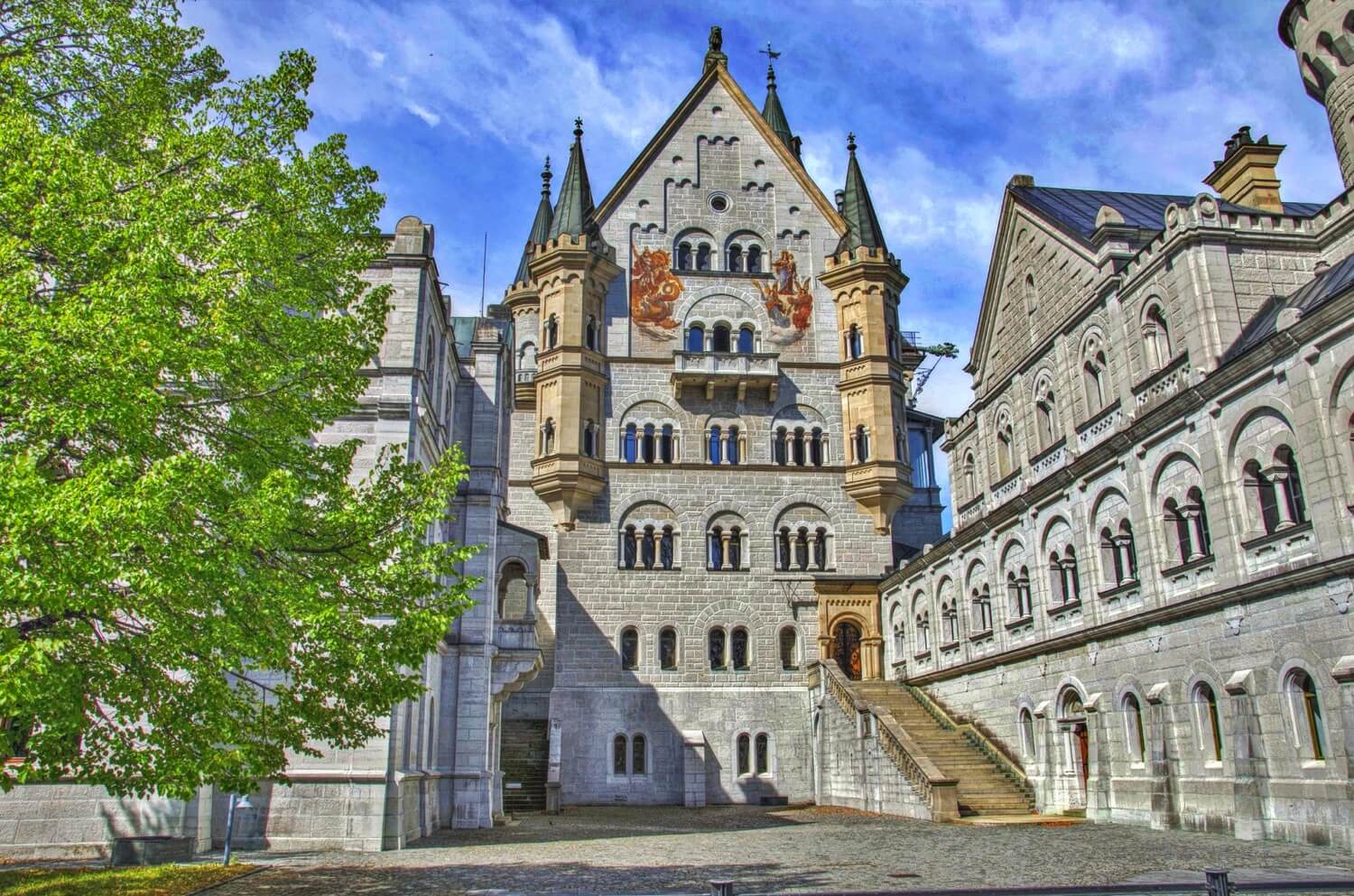
The palace can be regarded as typical for nineteenth-century architecture. The shapes of Romanesque (simple geometric figures such as cuboids and semicircular arches), Gothic (upward-pointing lines, slim towers, delicate embellishments) and Byzantine architecture and art (the Throne Hall décor) were mingled in an eclectic fashion and supplemented with 19th-century technical achievements. The Patrona Bavariae and Saint George on the court face of the Palas (main building) are depicted in the local Lüftlmalerei (de) style, a fresco technique typical for Allgäu farmers' houses, while the unimplemented drafts for the Knights' House gallery foreshadow elements of Art Nouveau. Characteristic of Neuschwanstein's design are theatre themes: Christian Jank drew on coulisse drafts from his time as a scenic painter.
The basic style was originally planned to be neo-Gothic but the palace was primarily built in Romanesque style in the end. The operatic themes moved gradually from Tannhäuser and Lohengrin to Parsifal.
In 1868, the ruins of the medieval twin castles were completely demolished; the remains of the old keep were blown up. The foundation stone for the palace was laid on September 5, 1869; in 1872 its cellar was completed and in 1876, everything up to the first floor, the gatehouse being finished first. At the end of 1882 it was completed and fully furnished, allowing Ludwig to take provisional lodgings there and observe the ongoing construction work. In 1874, management of the civil works passed from Eduard Riedel to Georg von Dollmann. The topping out ceremony for the Palas was in 1880, and in 1884, the king was able to move into the new building. In the same year the direction of the project passed to Julius Hofmann, after Dollmann had fallen from the King's favor.
The palace was erected as a conventional brick construction and later encased in various types of rock. The white limestone used for the fronts came from a nearby quarry. The sandstone bricks for the portals and bay windows came from Schlaitdorf in Württemberg. Marble from Untersberg near Salzburg was used for the windows, the arch ribs, the columns and the capitals. The Throne Hall was a later addition to the plans and required a steel framework.
The transport of building materials was facilitated by scaffolding and a steam crane that lifted the material to the construction site. Another crane was used at the construction site. The recently founded Dampfkessel-Revisionsverein (Steam Boiler Inspection Association) regularly inspected both boilers.
For about two decades the construction site was the principal employer in the region. In 1880, about 200 craftsmen were occupied at the site, not counting suppliers and other persons indirectly involved in the construction. At times when the king insisted on particularly close deadlines and urgent changes, reportedly up to 300 workers per day were active, sometimes working at night by the light of oil lamps. Statistics from the years 1879/1880 support an immense amount of building materials: 465 tonnes (513 short tons) of Salzburg marble, 1,550 t (1,710 short tons) of sandstone, 400,000 bricks and 2,050 cubic metres (2,680 cu yd) of wood for the scaffolding.
In 1870, a society was founded for insuring the workers, for a low monthly fee, augmented by the king. The heirs of construction casualties (30 cases are mentioned in the statistics) received a small pension.
In 1884, the king was able to move into the (still unfinished) Palas, and in 1885, he invited his mother Marie to Neuschwanstein on the occasion of her 60th birthday. By 1886, the external structure of the Palas (hall) was mostly finished. In the same year, Ludwig had the first, wooden Marienbrücke over the Pöllat Gorge replaced by a steel construction.
Despite its size, Neuschwanstein did not have space for the royal court, but contained only the king's private lodging and servants' rooms. The court buildings served decorative, rather than residential purposes: The palace was intended to serve Ludwig II as a kind of inhabitable theatrical setting. As a temple of friendship it was also dedicated to the life and work of Richard Wagner, who died in 1883 before he had set foot in the building. In the end, Ludwig II only lived in the palace for a total of 172 days.
The effect of the Neuschwanstein ensemble is highly stylistic, both externally and internally. The king's influence is apparent throughout, and he took a keen personal interest in the design and decoration. An example can be seen in his comments, or commands, regarding a mural depicting Lohengrin in the Palas; "His Majesty wishes that ... the ship be placed further from the shore, that Lohengrin's neck be less tilted, that the chain from the ship to the swan be of gold and not of roses, and finally that the style of the castle shall be kept medieval."
The suite of rooms within the Palas contains the Throne Room, Ludwig's suite, the Singers' Hall, and the Grotto. The interior and especially the throne room Byzantine-Arab construction resumes to the chapels and churches of the royal Sicilian Norman-Swabian period in Palermo related to the kings of Germany House of Hohenstaufen. Throughout, the design pays homage to the German legends of Lohengrin, the Swan Knight. Hohenschwangau, where Ludwig spent much of his youth, had decorations of these sagas. These themes were taken up in the operas of Richard Wagner. Many rooms bear a border depicting the various operas written by Wagner, including a theater permanently featuring the set of one such play. Many of the interior rooms remain undecorated, with only 14 rooms finished before Ludwig's death. With the palace under construction at the king's death, one of the major features of the palace remained unbuilt. A massive keep, which would have formed the highest point and central focus of the ensemble, was planned for the middle of the upper courtyard but was never built, at the decision of the King's family. The foundation for the keep is visible in the upper courtyard.
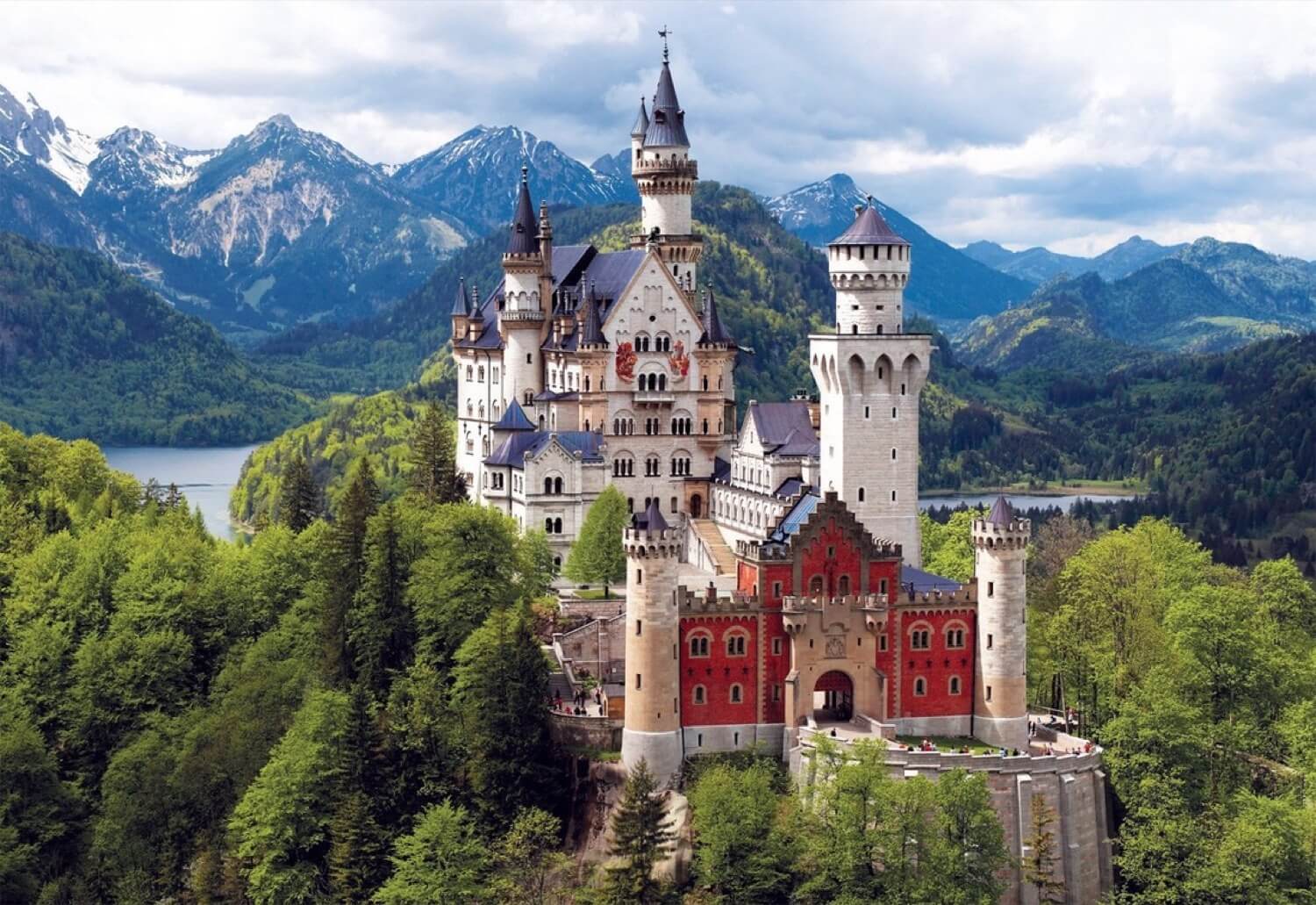
Neuschwanstein Castle consists of several individual structures which were erected over a length of 150 metres on the top of a cliff ridge. The elongate building is furnished with numerous towers, ornamental turrets, gables, balconies, pinnacles and sculptures. Following Romanesque style, most window openings are fashioned as bi- and triforia. Before the backdrop of the Tegelberg and the Pöllat Gorge in the south and the Alpine foothills with their lakes in the north, the ensemble of individual buildings provides varying picturesque views of the palace from all directions. It was designed as the romantic ideal of a knight's castle. Unlike "real" castles, whose building stock is in most cases the result of centuries of building activity, Neuschwanstein was planned from the inception as an intentionally asymmetric building, and erected in consecutive stages. Typical attributes of a castle were included, but real fortifications – the most important feature of a medieval aristocratic estate – were dispensed with.
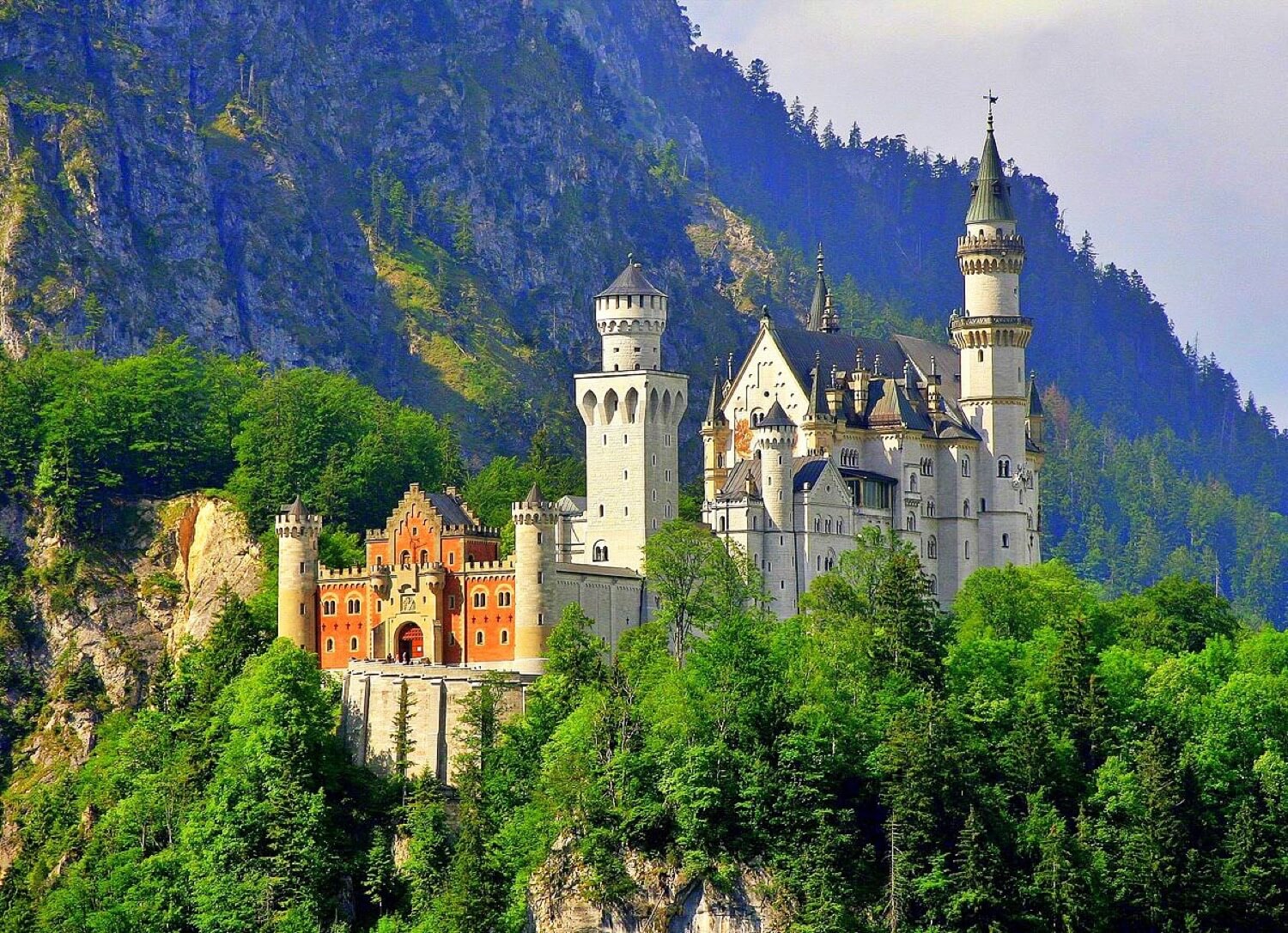
The palace complex is entered through the symmetrical Gatehouse flanked by two stair towers. The eastward-pointing gate building is the only structure of the palace whose wall area is fashioned in high-contrast colours; the exterior walls are cased with red bricks, the court fronts with yellow limestone. The roof cornice is surrounded by pinnacles. The upper floor of the Gatehouse is surmounted by a crow-stepped gable and held Ludwig II's first lodging at Neuschwanstein, from which he occasionally observed the building work before the hall was completed. The ground floors of the Gatehouse were intended to accommodate the stables.
The passage through the Gatehouse, crowned with the royal Bavarian coat of arms, leads directly into the courtyard. The courtyard has two levels, the lower one being defined to the east by the Gatehouse and to the north by the foundations of the so-called Rectangular Tower and by the gallery building. The southern end of the courtyard is open, imparting a view of the surrounding mountain scenery. At its western end, the courtyard is delimited by a bricked embankment, whose polygonally protracting bulge marks the choir of the originally projected chapel; this three-nave church, never built, was intended to form the base of a 90-metre (295-ft) keep, the planned centrepiece of the architectural ensemble. A flight of steps at the side gives access to the upper level.
Today, the foundation plan of the chapel-keep is marked out in the upper-courtyard pavement. The most striking structure of the upper court level is the so-called Rectangular Tower (45 metres or 148 feet). Like most of the court buildings, it mostly serves a decorative purpose as part of the ensemble. Its viewing platform provides a vast view over the Alpine foothills to the north. The northern end of the upper courtyard is defined by the so-called Knights' House. The three-storey building is connected to the Rectangular Tower and the Gatehouse by means of a continuous gallery fashioned with a blind arcade. From the point of view of castle romanticism the Knights' House was the abode of a stronghold's menfolk; at Neuschwanstein, estate and service rooms were envisioned here. The Bower, which complements the Knights' House as the "ladies' house" but was never used as such, defines the south side of the courtyard. Both structures together form the motif of the Antwerp Castle featuring in the first act of Lohengrin. Embedded in the pavement is the floor plan of the planned palace chapel.
The western end of the courtyard is delimited by the Palas (hall). It constitutes the real main and residential building of the castle and contains the king's stateroom and the servants' rooms. The Palas is a colossal five-story structure in the shape of two huge cuboids that are connected in a flat angle and covered by two adjacent high gable roofs. The building's shape follows the course of the ridge. In its angles there are two stair towers, the northern one surmounting the palace roof by several storeys with its height of 65 metres (213 ft). With their polymorphic roofs, both towers are reminiscent of the Château de Pierrefonds. The western Palas front supports a two-storey balcony with view on the Alpsee, while northwards a low chair tower and the conservatory protract from the main structure. The entire Palas is spangled with numerous decorative chimneys and ornamental turrets, the court front with colourful frescos. The court-side gable is crowned with a copper lion, the western (outward) gable with the likeness of a knight.
Had it been completed, the palace would have had more than 200 interior rooms, including premises for guests and servants, as well as for service and logistics. Ultimately, no more than about 15 rooms and halls were finished. In its lower stories the Palas accommodates administrative and servants' rooms and the rooms of today's palace administration. The king's staterooms are situated in the upper stories: The anterior structure accommodates the lodgings in the third floor, above them the Hall of the Singers. The upper floors of the west-facing posterior structure are filled almost completely by the Throne Hall. The total floor space of all floors amounts to nearly 6,000 square metres (65,000 sq ft).
Neuschwanstein houses numerous significant interior rooms of German historicism. The palace was fitted with several of the latest technical innovations of the late 19th century. Among other things it had a battery-powered bell system for the servants and telephone lines. The kitchen equipment included a Rumford oven that turned the skewer with its heat and so automatically adjusted the turning speed. The hot air was used for a calorifère central heating system. Further novelties for the era were running warm water and toilets with automatic flushing.
The largest room of the palace by area is the Hall of the Singers, followed by the Throne Hall. The 27-by-10-metre (89 by 33 ft) Hall of the Singers is located in the eastern, court-side wing of the Palas, in the fourth floor above the king's lodgings. It is designed as an amalgamation of two rooms of the Wartburg: The Hall of the Singers and the Ballroom. It was one of the king's favorite projects for his palace. The rectangular room was decorated with themes from Lohengrin and Parzival. Its longer side is terminated by a gallery that is crowned by a tribune, modelled after the Wartburg. The eastern narrow side is terminated by a stage that is structured by arcades and known as the Sängerlaube. The Hall of the Singers was never designed for court festivities of the reclusive king. Rather, like the Throne Hall it served as a walkable monument in which the culture of knights and courtly love of the Middle Ages was represented. The first performance in this hall took place in 1933: A concert commemorating the 50th anniversary of Richard Wagner's death.
The Throne Hall, 20 by 12 metres (66 by 39 ft), is situated in the west wing of the Palas. With its height of 13 metres (43 ft) it occupies the third and fourth floors. Julius Hofmann modelled it after the Allerheiligen-Hofkirche in the Munich Residenz. On three sides it is surrounded by colorful arcades, ending in an apse that was intended to hold Ludwig's throne – which was never completed. The throne dais is surrounded by paintings of Jesus, the Twelve Apostles and six canonized kings. The mural paintings were created by Wilhelm Hauschild. The floor mosaic was completed after the king's death. The chandelier is fashioned after a Byzantine crown. The Throne Hall makes a sacral impression. Following the king's wish, it amalgamated the Grail Hall from Parzival with a symbol of the divine right of kings, an incorporation of unrestricted sovereign power, which Ludwig as the head of a constitutional monarchy no longer held. The union of the sacral and regal is emphasized by the portraits in the apse of six canonized kings: Saint Louis of France, Saint Stephen of Hungary, Saint Edward the Confessor of England, Saint Wenceslaus of Bohemia, Saint Olaf of Norway and Saint Henry, Holy Roman Emperor.
Apart from the large ceremonial rooms several smaller rooms were created for use by Ludwig II. The royal lodging is on the third floor of the palace in the east wing of the Palas. It consists of eight rooms with living space and several smaller rooms. In spite of the gaudy décor, the living space with its moderate room size and its sofas and suites makes a relatively modern impression on today's visitors. Ludwig II did not attach importance to representative requirements of former times, in which the life of a monarch was mostly public. The interior decoration with mural paintings, tapestry, furniture and other handicraft generally refers to the king's favorite themes: the grail legend, the works of Wolfram von Eschenbach, and their interpretation by Richard Wagner.
The eastward drawing room is adorned with themes from the Lohengrin legend. The furniture – sofa, table, armchairs and seats in a northward alcove – is comfortable and homelike. Next to the drawing room is a little artificial grotto that forms the passage to the study. The unusual room, originally equipped with an artificial waterfall and a so-called rainbow machine, is connected to a little conservatory. Depicting the Hörselberg grotto, it relates to Wagner's Tannhäuser, as does the décor of the adjacent study. In the park of Linderhof Palace the king had installed a similar grotto of greater dimensions. Opposite the study follows the dining room, adorned with themes of courtly love. Since the kitchen in Neuschwanstein is situated three stories below the dining room, it was impossible to install a wishing table (dining table disappearing by means of a mechanism) as at Linderhof Palace and Herrenchiemsee. Instead, the dining room was connected with the kitchen by means of a service lift.
The bedroom adjacent to the dining room and the subsequent house chapel are the only rooms of the palace that remain in neo-Gothic style. The king's bedroom is dominated by a huge bed adorned with carvings. Fourteen carvers worked more than four years on the bed canopy with its numerous pinnacles and on the oaken panelings. It was in this room that Ludwig was arrested in the night from 11 to 12 June 1886. The adjacent little house chapel is consecrated to Saint Louis, after whom the owner was named.
The servants' rooms in the basement of the Palas are quite scantily equipped with massive oak furniture. Besides one table and one cabinet there are two beds of 1.80 metres (5 ft 11 in) length each. Opaque glass windows separated the rooms from the corridor that connects the exterior stairs with the main stairs, so that the king could enter and leave unseen. The servants were not allowed to use the main stairs, but were restricted to the much narrower and steeper servants' stairs.
The king's wishes and demands expanded during the construction of Neuschwanstein, and so did the expenses. Drafts and estimated costs were revised repeatedly. Initially a modest study was planned instead of the great throne hall, and projected guest rooms were struck from the drafts to make place for a Moorish Hall, which could not be realized due to lack of resources. Completion was originally projected for 1872, but deferred repeatedly.
Neuschwanstein, the symbolic medieval knight's castle, was not Ludwig II's only huge construction project. It was followed by the rococo style Lustschloss of Linderhof Palace and the baroque palace of Herrenchiemsee, a monument to the era of absolutism. Linderhof, the smallest of the projects, was finished in 1886, and the other two remain incomplete. All three projects together drained his resources. The king paid for his construction projects by private means and from his civil list income. Contrary to frequent claims, the Bavarian treasury was not directly burdened by his buildings. From 1871, Ludwig had an additional secret income in return for a political favor given to Otto von Bismarck.
The construction costs of Neuschwanstein in the king's lifetime amounted to 6.2 million marks, almost twice the initial cost estimate of 3.2 million marks. As his private means were insufficient for his increasingly escalating construction projects, the king continuously opened new lines of credit. In 1876, a court counselor was replaced after pointing out the danger of insolvency. By 1883 he already owed 7 million marks, and in spring 1884 and August 1885 debt conversions of 7.5 million marks and 6.5 million marks, respectively, became necessary.
Even after his debts had reached 14 million marks, Ludwig insisted on continuation of his architectural projects; he threatened suicide if his creditors seized his palaces. In early 1886, Ludwig asked his cabinet for a credit of 6 million marks, which was denied. In April, he followed Bismarck's advice to apply for the money to his parliament. In June the Bavarian government decided to depose the king, who was living at Neuschwanstein at the time. On June 9 he was incapacitated, and on June 10 he had the deposition commission arrested in the gatehouse. In expectation of the commission, he alerted the gendarmerie and fire brigades of surrounding places for his protection. A second commission headed by Bernhard von Gudden arrived on the next day, and the king was forced to leave the palace that night. Ludwig was put under the supervision of von Gudden. On June 13, both died under mysterious circumstances in the shallow shore water of Lake Starnberg near Berg Castle.
At the time of Ludwig's death the palace was far from complete. He slept only 11 nights in the castle. The external structures of the Gatehouse and the Palas were mostly finished, but the Rectangular Tower was still scaffolded. Work on the Bower had not started, but was completed in simplified form by 1892, without the planned female saints figures. The Knights' House was also simplified. In Ludwig's plans the columns in the Knights' House gallery were held as tree trunks and the capitals as the corresponding crowns. Only the foundations existed for the core piece of the palace complex: a keep of 90 metres (300 ft) height planned in the upper courtyard, resting on a three-nave chapel. This was not realized, and a connection wing between the Gatehouse and the Bower saw the same fate. Plans for a castle garden with terraces and a fountain west of the Palas were also abandoned after the king's death.
The interior of the royal living space in the palace was mostly completed in 1886; the lobbies and corridors were painted in a simpler style by 1888. The Moorish Hall desired by the king (and planned below the Throne Hall) was not realized any more than the so-called Knights' Bath, which, modeled after the Knights' Bath in the Wartburg, was intended to render homage to the knights' cult as a medieval baptism bath. A Bride Chamber in the Bower (after a location in Lohengrin), guest rooms in the first and second floor of the Palas and a great banquet hall were further abandoned projects. In fact, a complete development of Neuschwanstein had never even been planned, and at the time of the king's death there was not a utilization concept for numerous rooms.
Neuschwanstein was still incomplete when Ludwig II died in 1886. The king never intended to make the palace accessible to the public. No more than six weeks after the king's death, however, the regent Luitpold ordered the palace opened to paying visitors. The administrators of Ludwig's estate managed to balance the construction debts by 1899. From then until World War I, Neuschwanstein was a stable and lucrative source of revenue for the House of Wittelsbach, indeed Ludwig's castles were probably the single largest income source earned by the Bavarian royal family in the last years prior to 1914. To guarantee a smooth course of visits, some rooms and the court buildings were finished first. Initially the visitors were allowed to move freely in the palace, causing the furniture to wear quickly.
When Bavaria became a republic in 1918, the government socialized the civil list. The resulting dispute with the House of Wittelsbach led to a split in 1923: Ludwig's palaces including Neuschwanstein fell to the state and are now managed by the Bavarian Palace Department, a division of the Bavarian finance ministry. Nearby Hohenschwangau Castle fell to the Wittelsbacher Ausgleichsfonds, whose revenues go to the House of Wittelsbach. The visitor numbers continued to rise, reaching 200,000 in 1939.
Due to its secluded location, the palace survived the two World Wars without destruction. Under the Reichsleiter Rosenberg Institute for the Occupied Territories (Einsatzstab Reichsleiter Rosenberg für die besetzten Gebiete), a suborganization of the Nazi Party, it served until 1944 as a depot for Nazi plunder from France. The works of art were catalogued photographically. (After World War II 39 photo albums were found in the palace, documenting the dimension of the robbery. The albums are now stored in the United States National Archives.)
At the end of the war the German Reichsbank deposited gold in the palace, which in the last days of the war was taken to an unknown place.
In April 1945, the SS considered blowing up the palace to prevent the building itself and the artwork it contained from falling to the enemy. The plan was not realized by the SS-Gruppenführer who had been assigned the task, however, and at the end of the war the palace was surrendered undamaged to representatives of the Allied forces. Thereafter the Bavarian archives used some of the rooms as a provisional store for salvaged archivalia, as the premises in Munich had been bombed.
Neuschwanstein is a global symbol of the era of Romanticism. The palace served as a model for the Sleeping Beauty Castle of Disneyland and became a location for films such as Helmut Käutner's Ludwig II (1955), Luchino Visconti's Ludwig (1972) and Chitty Chitty Bang Bang (1968). It is also visited by the character Grace Nakimura alongside Herrenchiemsee in the game The Beast Within: A Gabriel Knight Mystery(1996).
In 1977, Neuschwanstein Castle became the motif of a West German definitive stamp, and it appeared on a €2 commemorative coin for the German Bundesländer series in 2012. In 2007, it was a finalist in the widely publicized on-line selection of the New Seven Wonders of the World. The palace is not on the list of UNESCO World Heritage Sites. In 2009, a plan was discussed to make it a transnational candidate jointly with Ludwig's Linderhof and Herrenchiemsee palaces and two similar palaces in Romania: Peleș Castle and Pelișor Castle.
Today, with 1.3 million visitors per year Neuschwanstein is one of the most popular tourist destinations in Europe. For security reasons the palace can only be visited during a 35-minute guided tour. There are also special guided tours that focus on specific topics. In the peak season from June until August, Neuschwanstein has as many as 6000 visitors per day, and guests without advance reservation may have to wait several hours. Ticket sales are processed exclusively via the ticket centre in Hohenschwangau. As of 2008, the total number of visitors was more than 60 million. In 2004, the revenues were booked as €6.5 million.
A meteorite that reached Earth spectacularly on April 6, 2002, at the Austrian border near Hohenschwangau was named Neuschwanstein after the palace. Three fragments were found: Neuschwanstein I (1.75 kg (3.9 lb), found July 2002) and Neuschwanstein II (1.63 kg (3.6 lb), found May 2003) on the German side, and Neuschwanstein III (2.84 kg (6.3 lb), found June 2003) on the Austrian side near Reutte. The meteorite is classified as an enstatite chondrite with unusually large proportions of pure iron (29%), enstatite and the extremely rare mineral sinoite (Si2N2O).
In 2014, Bézier Games published a board game designed by Ted Alspach titled Castles of Mad King Ludwig. In the tile-laying game, players are tasked with building an amazing, extravagant castle for King Ludwig II of Bavaria.
In the 1990s, a Canadian company Wrebbit produced a three dimensional jigsaw puzzle representing Neuschwanstein Castle. The puzzle is still available in 2016.
Das Schloss Neuschwanstein steht oberhalb von Hohenschwangau bei Füssen im südlichen Bayern. Der Bau wurde ab 1869 für den bayerischen König Ludwig II. als idealisierte Vorstellung einer Ritterburg aus der Zeit des Mittelalters errichtet. Die Entwürfe stammen von Christian Jank, die Ausführung übernahmen Eduard Riedel und Georg von Dollmann. Der König lebte nur wenige Monate im Schloss, er starb noch vor der Fertigstellung der Anlage. Neuschwanstein wurde ursprünglich als Neue Burg Hohenschwangau bezeichnet, seinen heutigen Namen trägt es seit 1886. Eigentümer des Schlosses ist der Freistaat Bayern; es wird von der Bayerischen Verwaltung der staatlichen Schlösser, Gärten und Seen betreut und bewirtschaftet.
Neuschwanstein ist das berühmteste der Schlösser Ludwigs II. und eine der bekanntesten Sehenswürdigkeiten Deutschlands. Es wird jährlich von etwa 1,5 Millionen Touristen besucht. Das oftmals als „Märchenschloss“ bezeichnete Neuschwanstein kann besichtigt werden und ist nahezu ganzjährig für Besucher geöffnet. Die Architektur und Innenausstattung sind vom romantischen Eklektizismus des 19. Jahrhunderts geprägt; das Schloss gilt als ein Hauptwerk des Historismus. Eine Aufnahme der „Ludwig-Schlösser“ Neuschwanstein, Linderhof und Herrenchiemsee in die Liste des Weltkulturerbes der UNESCO wird angestrebt.
Erstmals urkundlich erwähnt wurde ein »Castrum Swangowe« im Jahre 1090. Damit gemeint waren die im Mittelalter an der Stelle des heutigen Schlosses Neuschwanstein stehenden zwei kleinen Burgen: Die aus einem Palas und einem Bergfried bestehende Burg Vorderhohenschwangau an der Stelle des heutigen Palas und, nur durch einen Halsgraben getrennt, ein befestigter Wohnturm namens Hinterhohenschwangau, der sich dort befand, wo zwischen heutigem Ritterhaus und Kemenate auch Ludwig II. einen hohen Bergfried geplant hatte, zu dessen Errichtung er jedoch nicht mehr kam. Beide Gebäude gingen auf die Herren von Schwangau zurück, die in der Region als Lehensnehmer der Welfen (bis 1191) und der Staufer (bis 1268), danach als reichsunmittelbare Ritter ansässig waren, bis zu ihrem Aussterben im Jahre 1536. Der Minnesänger Hiltbolt von Schwangau stammt aus diesem Geschlecht. Hinterhohenschwangau war wahrscheinlich der Geburtsort von Margareta von Schwangau, der Ehefrau des Minnesängers Oswald von Wolkenstein. Als 1363 Herzog Rudolf IV. von Österreich Tirol unter habsburgische Herrschaft brachte, verpflichteten sich Stephan von Schwangau und seine Brüder, ihre Festen Vorder- und Hinterschwangau, die Burg Frauenstein und den Sinwellenturm dem österreichischen Herzog offenzuhalten.
Eine Urkunde von 1397 nennt zum ersten Mal den Schwanstein, das heutige Schloss Hohenschwangau, das um diese Zeit unterhalb der älteren Doppelburg auf einer Anhöhe zwischen Alpsee und Schwansee errichtet worden war. Seit dem 15. Jahrhundert befand sich die reichsunmittelbare Herrschaft Schwangau unter Oberhoheit der Wittelsbacher, welche die Burg Schwanstein zur Bärenjagd sowie als Sitz für jüngere Söhne und später für ein Pfleggericht nutzten. Im 19. Jahrhundert waren die beiden oberen Burgen zu Ruinen verfallen, die Überreste Hinterhohenschwangaus zu einem Sylphenturm genannten Aussichtsplatz umgestaltet. Ludwig II. verbrachte einen Teil seiner Kindheit in der Nähe der Burgruinen auf dem benachbarten Schloss Hohenschwangau, das sein Vater König Maximilian II. um 1837 von einer spätmittelalterlichen Burg zu einem wohnlichen Schloss im Sinne der Romantik hatte umgestalten lassen. Hohenschwangau war ursprünglich als Schloss Schwanstein bekannt, seine neue Bezeichnung erhielt es erst während des Wiederaufbaus. Damit wurden die Namen der Burg Schwanstein und der älteren Doppelburg Vorder- und Hinterhohenschwangau vertauscht. Max II. hatte 1855 Baurat Eduard Riedel beauftragt, für den Turm von Hinterhohenschwangau zunächst einen Aussichtspavillon in Glas-Eisen-Konstruktion zu entwerfen, im Jahr darauf dann einen Plan für die Reparatur des Turms und die Herstellung eines Zimmers mit einem Zeltdach darüber. Beides wurde jedoch zurückgestellt.
Die oberhalb des Wohnschlosses gelegenen Ruinen waren dem Kronprinzen – wie auch der Frauenstein und der Falkenstein – häufiges Wanderziel und deshalb gut bekannt. 1859 zeichnete er die Überreste der Vorderhohenschwangauer Burg erstmals in sein Tagebuch. 1837 pries ein Anonymus das wiederaufgebaute Schloss Hohenschwangau als „die Wiege einer neuen Romantik“ und schwärmte von dem Gedanken, dass „auch die Ruinen von dem vorderen Schlosse Schwangau (gemeint war die Doppelburg Vorder- und Hinterhohenschwangau), die mit Falkenstein und Hohen-Freyberg ein langgezogenes Dreieck bilden, zu einem großen einfachen Fest- und Sängersaal wiederaufgerichtet werden…“ Damit war die Idee eines Wiederaufbaus der Ruinen im Sinne einer Wiedergeburt des Austragungsortes des Sängerkriegs auf der Wartburg in der Welt; 20 Jahre bevor die thüringische Wartburg durch Hugo von Ritgen wiederaufgebaut wurde und 30 Jahre bevor Ludwig II. die Idee in die Tat umsetzte, indem er auf dem „Jugend“ genannten Burgfelsen von Vorder- und Hinterhohenschwangau ein neues „Sängerschloss“ nach dem Vorbild der Wartburg errichten ließ.
Nach der Regierungsübernahme durch den jungen König 1864 war der Wiederaufbau der Vorderhohenschwangauer Burgruine – des späteren Neuschwansteins – das erste größere Schlossbauprojekt Ludwigs II. Er plante damit durchaus nichts Außergewöhnliches: In ganz Europa bauten sich zur gleichen Zeit gekrönte Häupter und Adelsfamilien Schlösser und Burgen in historischen Stilen oder ließen bedeutende mittelalterliche Monumente rekonstruieren. Kurz nach dem väterlichen Hohenschwangau hatte Ludwigs Onkel, König Friedrich Wilhelm IV. von Preußen, das Schloss Stolzenfels und von 1850 bis 1867 die Burg Hohenzollern wiedererrichten lassen. Der hannoversche König hatte von 1858 bis 1869 das Schloss Marienburg gebaut. Die britische Königin Victoria ließ ab 1845 Osborne House und kurz darauf Balmoral Castle umbauen, nachdem ihr Onkel Georg IV. schon zwischen 1820 und 1830 Windsor Castle bedeutend erweitert hatte. Ein weiteres Beispiel aus Europa war ab 1840 der Bau des Palácio Nacional da Pena durch den portugiesischen König Ferdinand II. Zur gleichen Zeit ließen die Fürsten zu Schwarzenberg das böhmische Schloss Frauenberg errichten und die Fürsten von Urach das Schloss Lichtenstein bauen.
Dem als Sinnbild einer Ritterburg gedachten Neuschwanstein folgten mit Linderhof noch ein Lustschloss aus der Epoche des Rokoko und mit Schloss Herrenchiemsee ein barocker Palast, der als Denkmal für die Zeit des Absolutismus stand. Angeregt zu dem Bau Neuschwansteins wurde Ludwig II. durch zwei Reisen: Im Mai 1867 besuchte er mit seinem Bruder Otto die wieder aufgebaute Wartburg bei Eisenach, im Juli desselben Jahres besichtigte er in Frankreich Schloss Pierrefonds, das damals von Eugène Viollet-le-Duc für Kaiser Napoleon III. von einer Burgruine zu einem historistischen Schloss umgestaltet wurde. Im Verständnis des Königs entsprachen beide Bauten einer romantischen Darstellung des Mittelalters, ebenso wie die musikalischen Sagenwelten Richard Wagners. Dessen Werke Tannhäuser und Lohengrin hatten den König nachhaltig beeindruckt. Am 15. Mai 1868 teilte er dem befreundeten Komponisten in einem Brief mit:
„Ich habe die Absicht, die alte Burgruine Hohenschwangau bei der Pöllatschlucht neu aufbauen zu lassen, im echten Styl der alten deutschen Ritterburgen“.
Durch den Tod seines 1848 abgedankten Großvaters Ludwig I. konnte der junge König ab 1868 dessen Apanage einbehalten, wodurch ihm umfangreiche finanzielle Mittel zur Verfügung standen. Der König wollte mit dem nun entstehenden Bauprojekt in der ihm aus Kindertagen vertrauten Landschaft ein privates Refugium abseits der Hauptstadt München schaffen, in dem er seine Vorstellung des Mittelalters erleben konnte, zumal das von ihm gern genutzte Schloss Hohenschwangau jeweils während der Sommermonate von seiner ungeliebten Mutter, der Königin Marie, besetzt war. Die Entwürfe für das neue Schloss lieferte der Münchner Theatermaler Christian Jank, umgesetzt wurden sie durch den Architekten Eduard Riedel. Überlegungen, die Burgruinen in den Bau zu integrieren, wurden wegen der damit verbundenen technischen Schwierigkeiten nicht weiter verfolgt. Erste Pläne für das Schloss, die sich stilistisch an der Nürnberger Burg orientierten und einen schlichten Neubau anstelle der alten Burg Vorderhohenschwangau vorsahen, wurden wieder verworfen und gegen zunehmend umfangreichere Entwürfe ersetzt, die zu einem größeren Schloss nach dem Vorbild der Wartburg führten. Der König bestand auf einer detaillierten Planung und ließ sich jeden Entwurf zur Genehmigung vorlegen. Sein Einfluss auf die Entwürfe reichte so weit, dass das Schloss vor allem als seine eigene Schöpfung und weniger als die seiner beteiligten Architekten gelten kann.
Mit dem Bau des Schlosses wurde 1869 begonnen. Die Wünsche und Ansprüche Ludwigs II. wuchsen mit dem Bau ebenso wie die Ausgaben und die Entwürfe und Kostenvoranschläge mussten mehrfach überarbeitet werden. So war anstelle des großen Thronsaales ursprünglich nur ein bescheidenes Arbeitszimmer geplant und vorgesehene Gästezimmer wurden aus den Entwürfen wieder gestrichen, um Platz für einen Maurischen Saal zu schaffen, der aufgrund der ständigen Geldknappheit nicht realisiert werden konnte. Die ursprünglich schon für 1872 vorgesehene Fertigstellung des Schlosses verzögerte sich wiederholt. Als Dank für den Kaiserbrief erhielt der König ab 1871 zwar Zuwendungen aus dem Welfenfonds, doch wurden seine finanziellen Mittel nun zunehmend auch durch seine weiteren Bauprojekte vereinnahmt. Der Palas und das Torhaus Neuschwansteins waren bis 1886 im Außenbau weitgehend fertiggestellt; ab 1884 konnte der König den Palas erstmals bewohnen. Ludwig II. lebte bis zu seinem Tod 1886 insgesamt nur 172 Tage im Schloss, das bis dahin noch einer Großbaustelle glich. 1885 empfing er hier anlässlich ihres 60. Geburtstags seine auf dem unteren Hohenschwangau residierende Mutter, die vormalige Königin Marie.
Neuschwanstein sollte Ludwig II. gewissermaßen als bewohnbare Theaterkulisse dienen. Es war als Freundschaftstempel dem Leben und Werk Richard Wagners gewidmet, der es jedoch nie betreten hat. Trotz seiner Größe war das Schloss nicht für die Aufnahme eines Hofstaats vorgesehen; es bot lediglich der Privatwohnung des Königs und Zimmern für die Dienerschaft Raum. Die Hofgebäude dienten weniger Wohn- als vielmehr dekorativen Zwecken. So war zum Beispiel der Bau der Kemenate – die erst nach Ludwigs Tod vollendet wurde – eine direkte Reminiszenz an den zweiten Akt von Lohengrin, wo ein solches Gebäude einen der Schauplätze darstellte.
Ludwig II. bezahlte seine Bauprojekte selbst aus seinem Privatvermögen und dem Einkommen seiner Zivilliste. Anders als oft kolportiert wird, wurde die Staatskasse für seine Bauten nicht belastet. Die Baukosten Neuschwansteins betrugen bis zum Tod des Königs 6.180.047 Mark, ursprünglich veranschlagt waren 3,2 Millionen Mark. Seine privaten Mittel reichten für die ausufernden Bauprojekte jedoch nicht mehr aus und so musste der König laufend neue Kredite aufnehmen. 1883 war er bereits mit über 7 Millionen Mark verschuldet, 1885 drohte ihm erstmals eine Pfändung.
Die Streitigkeiten um die Verschuldung des Staatsoberhaupts veranlassten die bayerische Regierung 1886, den König zu entmündigen und für regierungsunfähig erklären zu lassen. Ludwig II. hielt sich zur Zeit seiner Entmündigung am 9. Juni 1886 in Neuschwanstein auf; es war das letzte seiner selbst in Auftrag gegebenen Schlösser, das er bewohnte. Die anlässlich seiner bevorstehenden Absetzung am 10. Juni 1886 nach Neuschwanstein gereiste Regierungskommission ließ der König im Torhaus festsetzen. Nach einigen Stunden wurden die Mitglieder der Kommission freigelassen. Am 11. Juni erschien eine zweite Kommission unter der Leitung Bernhard von Guddens. Der König musste Neuschwanstein daraufhin am 12. Juni 1886 verlassen und wurde nach Schloss Berg verbracht, wo er am 13. Juni 1886 den Tod erlitt.
Beim Tode des Königs in der Nähe von Schloss Berg am 13. Juni 1886 war Neuschwanstein noch nicht fertiggestellt. Ludwig II. wollte das Schloss niemals der Öffentlichkeit zugänglich machen, aber schon sechs Wochen nach seinem Tod wurde es für Besucher geöffnet. Mit den Eintrittsgeldern in Höhe von zwei Mark pro Person wurde ein Teil der Kredite bezahlt. Die Schlösser fielen als Erbe an Ludwigs Bruder Otto, der schon 1872 für geisteskrank und damit nicht regierungsfähig erklärt worden war. Während die Regierungsgeschäfte durch Ludwigs Onkel Luitpold übernommen wurden, war die „Administration des Vermögens seiner Majestät des Königs Otto von Bayern“ für die Nachlassverwaltung zuständig. Ihr gelang es, die Bauschulden bis 1899 auszugleichen. Um einen reibungslosen Besichtigungsverlauf des Schlosses zu gewährleisten, wurden einige bis dahin unvollendete Räume noch fertiggestellt und die Kemenate sowie das Ritterhaus zumindest als Außenbau errichtet. Zunächst durften sich die Besucher frei im Schloss bewegen, was zur Folge hatte, dass sich das Mobiliar sehr schnell abnutzte. Schon 1886 erschien ein erster gemeinsamer Schlossführer für Herrenchiemsee, Linderhof und Neuschwanstein. Die kurz gehaltene Publikation bot eine Beschreibung einzelner Kunstgegenstände und beschränkte sich ansonsten auf die Erwähnung der am Bau beteiligten Architekten und Künstler.
Nach Ausrufung der Republik im November 1918 ging Luitpolds Nachfolger Ludwig III. ins ungarische Exil. Die bayerische Zivilliste, bestehend aus dem ehemaligen Besitz des Hauses Wittelsbach, wurde durch die bayerische Regierung am 11. November 1918 zu Staatsbesitz erklärt. Dies rief jedoch das Haus Wittelsbach auf den Plan. Die ehemalige Königsfamilie hatte ihr privates Vermögen zu Beginn des 19. Jahrhunderts in diese Zivilliste eingebracht und damit den klammen bayerischen Staat vor dem Bankrott bewahrt. Im Gegenzug hatte sich dieser dazu verpflichtet, für den Unterhalt der königlichen Familie zu sorgen. Nun forderten die Wittelsbacher ihren Besitz zurück. Es folgten langwierige Auseinandersetzungen mit dem Staat, die im Januar 1923 mit einem Kompromiss endeten: Die Zivilliste wurde zwischen Bayern und dem Haus Wittelsbach geteilt. Schloss Neuschwanstein kam dabei in staatlichen Besitz, während aus dem familiären Teil der noch heute bestehende Wittelsbacher Ausgleichsfond (WAF) hervorging.
Die beiden Weltkriege überstand das abgelegene Schloss ohne Zerstörungen. Unter dem Einsatzstab Reichsleiter Rosenberg, einer Unterorganisation der NSDAP, diente es bis 1944 als Depot für in Frankreich geraubte Beutekunst. Die Kunstgegenstände, darunter Teile des Genter Altars und des Abendmahlsaltars von Dirk Bouts, wurden durch die Einsatzgruppe fotografisch katalogisiert. Nach Kriegsende fanden sich auf dem Schloss 39 Fotoalben, die den Umfang des Raubes dokumentierten und die heute im Amerikanischen Nationalarchiv aufbewahrt werden. Am Ende des Zweiten Weltkrieges wurden auf dem Schloss Goldschätze der Deutschen Reichsbank gelagert, die in den letzten Kriegstagen jedoch an einen bis heute unbekannten Ort verschleppt wurden. Dem Schloss drohte im April 1945 kurzzeitig eine Sprengung durch die SS, die verhindern wollte, dass das Gebäude und dort gelagerte Kunstschätze in Feindeshand übergingen. Das Vorhaben wurde vom damit beauftragten SS-Gruppenführer jedoch nicht in die Tat umgesetzt und das Schloss bei Kriegsende dem alliierten Kunstschutz übergeben. Nach dem Zweiten Weltkrieg nutzte die Bayerische Archivverwaltung einige Räume im Schloss Neuschwanstein als provisorisches Bergungslager für Archivalien, da die Räumlichkeiten in München ausgebombt waren.
Ludwig II. errichtete Schloss Neuschwanstein nicht als Repräsentationsbau oder zur Machtdemonstration, sondern ausschließlich als seinen privaten Rückzugsort. Im krassen Gegensatz dazu steht die heutige Bedeutung des Schlosses als eines der wichtigsten Touristenziele Deutschlands. Der Deutsche Tourismusverband macht auf internationaler Ebene mit Neuschwanstein Werbung für Bayern als ein Land der Märchenschlösser. So nimmt es nicht Wunder, dass bei einer Umfrage der Deutschen Zentrale für Tourismus (DZT) unter 15.000 ausländischen Gästen über deren liebstes Besucherziel das Schloss Neuschwanstein auf Platz 1 landete. Im nationalen Vergleich wählten 350.000 Teilnehmer die Schlossanlage in der ZDF-Show Unsere Besten - die Lieblingsorte der Deutschen indes nur auf Rang 19. Bei der Abstimmung über die neuen Weltwunder im Jahr 2007 war Schloss Neuschwanstein auf dem achten Platz zu finden.
Seit ihrer Öffnung für den Besucherverkehr zählt die Anlage beständig steigende Gästezahlen. Allein in den ersten acht Wochen besuchten rund 18.000 Menschen das Schloss. 1913 zählte es über 28.000 Gäste, 1939 waren es bereits 290.000. Bis 2001 war die Zahl auf rund 1,3 Millionen Besucher angewachsen, darunter 560.000 Deutsche und 385.000 Amerikaner sowie Engländer. Drittstärkste Gruppe waren in jenem Jahr die 149.000 Japaner. Bis 2005 wurden insgesamt über 50 Millionen Besucher gezählt. 2013 wurde mit 1,52 Millionen Besuchern ein neuer Rekord aufgestellt, das waren 31 Prozent der gesamten Besucher in den staatlichen Schlössern, Burgen und Residenzen. Damit ist Schloss Neuschwanstein der unangefochtene Besuchermagnet der Bayerischen Schlösserverwaltung und deren einzige Anlage, die schwarze Zahlen schreibt. 2004 wurden über 6,5 Millionen Euro an Einnahmen verbucht. Die Anlage zählt in der Hochsaison von Juni bis August durchschnittlich mehr als 6000 Besucher am Tag, in Stoßzeiten bis zu 10.000. Aufgrund des hohen Andrangs müssen Gäste ohne Voranmeldung zum Teil mit mehreren Stunden Wartezeit rechnen. Der Ticketverkauf erfolgt – vor Ort und online – ausschließlich über das Ticketcenter in Hohenschwangau. Aus Gründen der Sicherheit ist es nur im Rahmen einer etwa 35-minütigen Führung möglich, das Schloss zu besichtigen. Daneben gibt es noch so genannte Themenführungen, die sich beispielsweise mit den Sagenwelten der jeweiligen Bilder befassen.
Der mit Neuschwanstein verbundene Massentourismus ist für die Region jedoch nicht nur ein lukratives Standbein, sondern bringt auch Probleme mit sich. Vor allem in den Sommermonaten ist die Verkehrssituation rund um die Königsschlösser Hohenschwangau und Neuschwanstein extrem angespannt. Der ausufernde Parksuchverkehr in Schwangau wirkt belastend auf die Bewohner, und der sich stauende Verkehr in der Augsburger Straße in Füssen ist zu einem Drittel auf den An- und Abreiseverkehr der Schlosstouristen zurückzuführen. Seit über 20 Jahren stehen die Stadt Füssen und die Gemeinde Schwangau in Verhandlung zur Beseitigung ihrer Verkehrsprobleme, doch die verschiedenen Interessenlagen und gegensätzliche Positionen der Beteiligten führten bislang zu keiner Lösung. Trotz langer Parkplatzsuche sowie Schlangestehen vor dem Ticketcenter und dem Schlossportal reißt der Besucherstrom nach Schloss Neuschwanstein nicht ab, denn
„Der Nimbus des „Märchenkönigs“ übt offensichtlich auf die Umwelt eine derartige Faszination aus, dass jeder Versuch, die Besucherströme auf andere, weniger besuchte Objekte abzulenken, bisher vergeblich war und wohl auch bleiben wird.“
Die bayerische Regierung investiert regelmäßig Summen in Millionenhöhe in die Erhaltung des Schlosses und in die touristische Erschließung der Anlage. 1977 musste der Felsberg unter der Kemenate für 500.000 DM saniert werden. Mit rund 640.000 DM schlug noch einmal die damalige Sanierung der Marienbrücke zu Buche, während für die Erneuerung der Schlossdächer 2,1 Millionen Mark aufgewendet werden mussten. In den 1980er Jahren war das Abtäufen eines Treppenhauses und die Anlage eines weiteren Besucheraufgangs nötig geworden. Sie kosteten insgesamt 4,2 Millionen Mark. In der Zeit von 1990 bis 2008 gab der Freistaat weitere 14,5 Millionen Euro für Instandhaltungsmaßnahmen – darunter die Instandsetzung der einzigen Zufahrtsstraße sowie eine jahrelange Fassadensanierung – und die Verbesserung des Besucherservices aus. Auch in den Innenräumen müssen regelmäßig Instandsetzungen und Restaurierungen vorgenommen werden. So wurden 2009 und 2011 für über 425.000 Euro die original erhaltenen Textilien im Schlaf- sowie Wohnzimmer Ludwigs II. restauriert und durch Licht- sowie Tastschutz vor weiterem Verfall bewahrt.
Die Schlossverwaltung warnt davor, dass mit jährlich etwa 1,5 Millionen Besuchern das Schloss an die Grenzen seiner Kapazität gelangt sei. Die Besuchermassen würden - zusammen mit dem alpinen Klima und dem Licht - die wertvollen Möbel und Textilien stark belasten. Eine besondere Rolle scheint dabei die von den Besuchern ausgeatmete Feuchtigkeit zu spielen. Wissenschaftler sollen untersuchen, inwiefern die Schlossverwaltung diese Belastung verringern kann.
Useful information
The driveway with your own car to Neuschwanstein Castle or Hohenschwangau Castle is prohibited .
Parking fees:
- car: EUR 6.00 (per day)
- bus: EUR 15.00 (per day)
- motorhome: EUR 8.50 (per day)
- Motorcycle: EUR 2.00 (per day)
Ticket prices:
- Adults: EUR 13.00
- Seniors (from 65 years), students, severely handicapped persons on presentation of valid ID: EUR 12.00
Combination tickets:
- Prince ticket (Neuschwanstein Castle / Museum): EUR 22.00
Ticket prices:
- Children / students under 18 years accompanied by parents: free
Combination tickets:
- Prince ticket (Neuschwanstein Castle / Museum): EUR 20.00
Ticket prices:
- Groups of 15 paying adults: EUR 12.00
(This discount can only be granted if all cards are
closed and paid by one person)
Children / students under 18 years accompanied by parents: free
Tour guides and drivers of travel companies: free
For the reservation of tickets for Neuschwanstein Castle we charge the following handling fees:
- For single guests, children and school class: EUR 1.80 per person and castle
- For groups of 15 paying persons:EUR 0.90 per person and castle
Take a photo do not available
Dogs and other animals unfortunately allowed into the lock not taken to be.
-
External links
Nearby castles
Hohenschwangau Castle
Schwaben
1.0km
castle, chateau
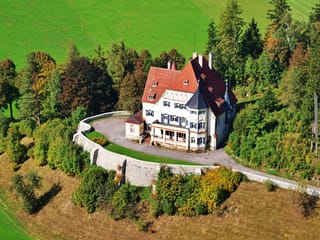
Castle Bullachberg
Schwaben
1.6km
castle, chateau
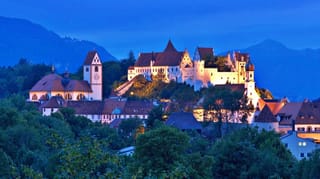
Hohes Schloss Füssen
Schwaben
4.0km
castle, chateau
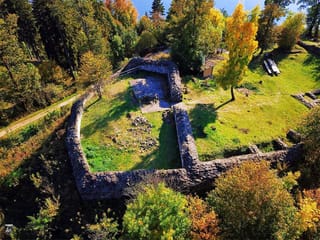
Burg Hopfen
Schwaben
8.3km
castle, chateau
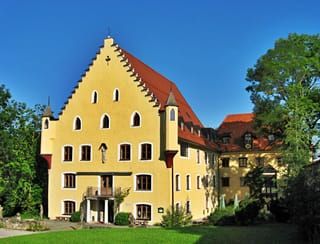
Schloss Hopferau
Schwaben
10.7km
castle, chateau
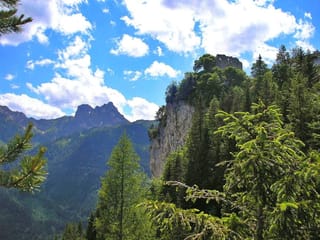
Falkenstein Castle (Pfronten)
Schwaben
11.9km
castle, chateau
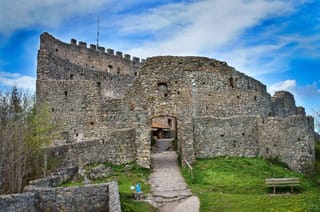
Eisenberg Castle (Bavaria)
Schwaben
13.4km
castle, chateau